



Guess the cyclist!
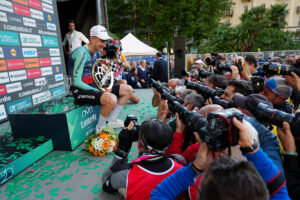
❓Guess the Team dsm-firmenich rider❓
Use the emoji hints below and reply with your answer to be in with a chance of winning a PCM23 game key😊
The “/” is the split of first name and last name clues. We’ll reveal the answer (and winner) tomorrow, good luck! 🤞🏻 pic.twitter.com/7f7bZGh2n0
— Team dsm-firmenich (@TDSM_Firmenich) December 1, 2023
Umm, boat-man/chocolate-calendar? Anyone willing to take a better guess than me? Hint: It might be someone whose son always keeps stealing the show at UCI World Tours, first at Paris-Nice, and then at the mythical Puy de Dôme at the Tour de France.
Our latest podcast is here: Is cycling ‘woke’? Cycling and culture wars discussed with a Conservative aide, plus Lucinda Brand and Eli Iserbyt on the future of cyclocross
Yes, we went there. Cycling’s curious relationship with so-called wokeness is up for discussion on the latest episode of the road.cc Podcast, plus a much less loaded chat and pro interviews about the crazy sport of cyclocross…
The two subjects we’re discussing on episode 66 of the road.cc Podcast are arguably chalk and cheese, but equally as interesting we hope you’ll agree! In part one, Jack and Ryan are joined by Jack Gebhard, an avid cyclist who happens to be Chief of Staff for the Conservative MP for Worcester, Robin Walker, about cycling’s curious relationship with ‘wokeness’.
In part two, Ryan is speaking to Lidl Trek’s Lucinda Brand and cyclocross specialist Eli Iserbyt at the recent Cyclocross World Cup even in Dublin, before sitting down with Jamie to discuss how ‘cross fits in to the modern pro cyclist’s schedule.
Listen to the podcast: > Is cycling ‘woke’? Cycling and culture wars discussed with a Conservative aide, plus Lucinda Brand and Eli Iserbyt on the future of cyclocross
PSA: With the pothole season upon us, a guide on how to position yourself on road
Pothole season is upon us, so please remember that cyclists may sometimes choose to ride in the centre of the lane to keep away from hazards in the gutter. 🚧 This road positioning also increases a rider’s visibility and ensures drivers overtake safely.👀
📸: @davewalkercartoons pic.twitter.com/SYi5FymfJS
— Cycling UK (@WeAreCyclingUK) December 1, 2023
Tandem blues: Aero positioning, cadence doubts, and two-together sprints?!
if you want a cheap tandem go on facebook marketplace, people want rid of a failed relationship fast. a hard sell at best this is quite the niche and worth it to try, once. look at that seat tube, the stoker’s gear shifter, that massive gear, and look at that Campag disc wheel pic.twitter.com/jifdFoE1X4
— Jo Burt (@VecchioJo) December 1, 2023
Umm, I don’t really know the mechanics of tandems, so I have questions about cadence. Neither I’ve ever thought much about the finer detail of getting aero in the rear tandem position before.
Let me have a quick look…
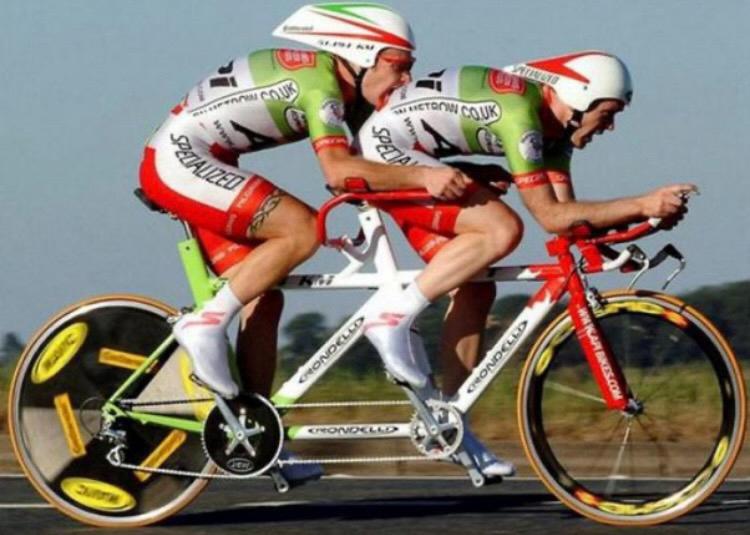
My eyes… Anyway enjoy this video of the 1982 World Track Tandem Championships at Leicester, as the British pair Terry Tinsley and Paul Sydenham take on the defending Czech champions in an early round of the tandem sprint, and I have to say, it looks stupendous.
Tandem track sprinting folks, quite the discipline.
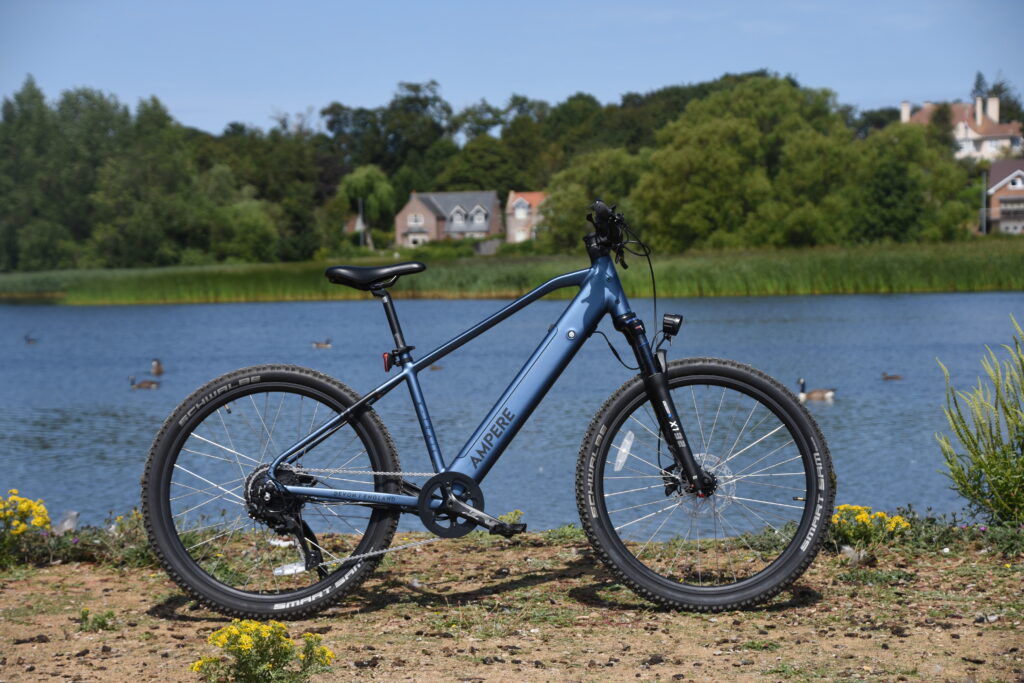
Christmas gift idea: Tadej Pogačar's €30,000 time trial bike
Was having a look at BikeRoom, and just came across the actual time trial bike used by none other than the swashbuckling Slovenian Tadej Pogačar during the 2022 season.
An Italian reseller of previous used race bikes by pros, BikeRoom has kind of made a name for itself by selling bikes owned by riders from teams such as Lidl-Trek, UAE Team Emirates, AG2R, Bahrain Victorious, EF Education, and Movistar.
The most recent addition to their lineup is a special one though, the Colnago TT1 time trial bike from 2022, introduced first at the opening day of the Tour de France, which saw Pogačar finish on the podium stage, just seven seconds behind winner Yves Lampaert from Soudal Quick-Step, and again for the stage 20 ITT, with Pogaćar finishing third once again, but this 27 seconds behind Wout van Aert and falling even further behind runner-up Jonas Vingegaard in the general standings.

The bike was used for the remainder of the season by the Slovenian rider, and this model is only one of the four used. So how much does it cost? Of course it doesn’t have a price tag, but BikeRoom speculates that the potential owner will have to put up a bid of somewhere around €30,000 at the auction to get their hands on the bike.
So in case any of our esteemed live blog readers have deep coffers and our feeling very generous this Christmas, spare a thought about your good ol’ live blog host and all the arduous shifts he’s put through to bring the best of all the news from the cycling world right to you…
Women cite badly-lit routes and lack of safe infrastructure as major barriers to cycling

A new report from bike and scooter share firm Lime has found that badly lit streets at night and the lack of safe infrastructure are major barriers to cycling for most women, helping explain why, in the UK, men on average make three times as many trips by bicycle than women do, according to government figures.
Publishing the findings of its research under the title Tackling the Gender ‘Pedal Gap’ – Women’s Night Safety Report 2023, Lime also found that anti-social behaviour and the prospect of harassment from other road users were issues that each prevented around one in three women from getting in the saddle.
Just one in five women responding to the survey commissioned by Lime for the report agreed that they felt safe riding a bicycle at night, while more than three quarters said that a car was their preferred option for travelling in the hours of darkness.
Read more: > Women cite badly-lit routes and lack of safe infrastructure as major barriers to cycling
Tour of Britain organisers could face legal action as Isle of Wight council's claims near almost a million pounds
The 2022 Tour of Britain, which was supposed to go around all the way from up north in Aberdeen and conclude with a hill-top finish at the Needles in Isle of Wight, the island located just off the south coast of England.
However, the death of Queen Elizabeth II midway through the race on 8 September forced the organisers to cancel the Tour’s remaining three stages, leading to an insipid denoument without the promised fireworks of British rider Tom Pidcock versus then leader and eventual winner Gonzalo Serrano.
Following the state of events, the island’s council had claimed that the organisers’ decision cost the local authority £350,000, including the £250,000 paid to SweetSpot to host the event.
The council said that its contract with SweetSpot stipulated that in the case of an extraordinary event beyond either party’s control, a ‘force majeure’, the authority would be entitled to a refund of the host venue fees, after real costs had been deducted.
Now, Cycling Weekly has reported that the Isle of Wight council is considering potential legal action to claim back the race hosting fee at a minimum and may yet seek to recover its other costs too.
A spokesperson said: “We had been in an ongoing dialogue with SweetSpot about a future stage of the Tour and are taking advice on how we might be able to proceed.”
Considering the race fees combined with the hosting fee, the Isle of Wight’s claims against the company to around £950,000.
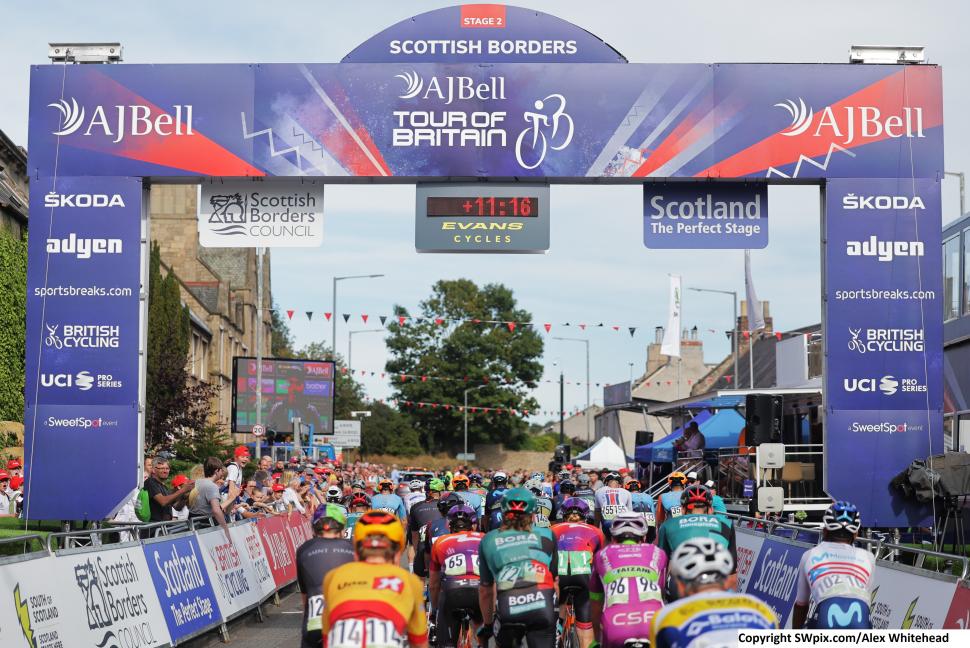
Previously, Sweetspot had responded to a request for a comment from road.cc and told us that it had been talking with the Isle of Wight Council since September’s cancellation about next steps, with its first and preferred option being to host a stage of a future edition of the Tour of Britain, possibly 2024.
A spokesperson from Sweetspot told road.cc: “Given the excitement around the stage and huge amount of work over the previous two years that had gone into it, it would be a real shame if a stage of the Tour of Britain could not now take place on the Isle of Wight.
“Therefore, our hope is that we are able to agree to this with stakeholders following a long-scheduled meeting with them this week. If this agreement is not possible then we will discuss alternative options with colleagues from the Isle of Wight Council.”
However, Isle of Wight radio had reported in August that the island will not host the Tour in 2024, with a council spokesperson confirming the decision as the finishing stage had already been decided for next year’s route. They said: “While we are keen to look at the options of considering a future stage, there are costs to consider in the context of the current financial position.
“We are keen to stage a future finish for the event rather than just a mid-week stage. Presently the 2024 finish has been secured, so we have a little more time to consider our options.”
Would you pay £3K for an aluminium Specialized Allez?
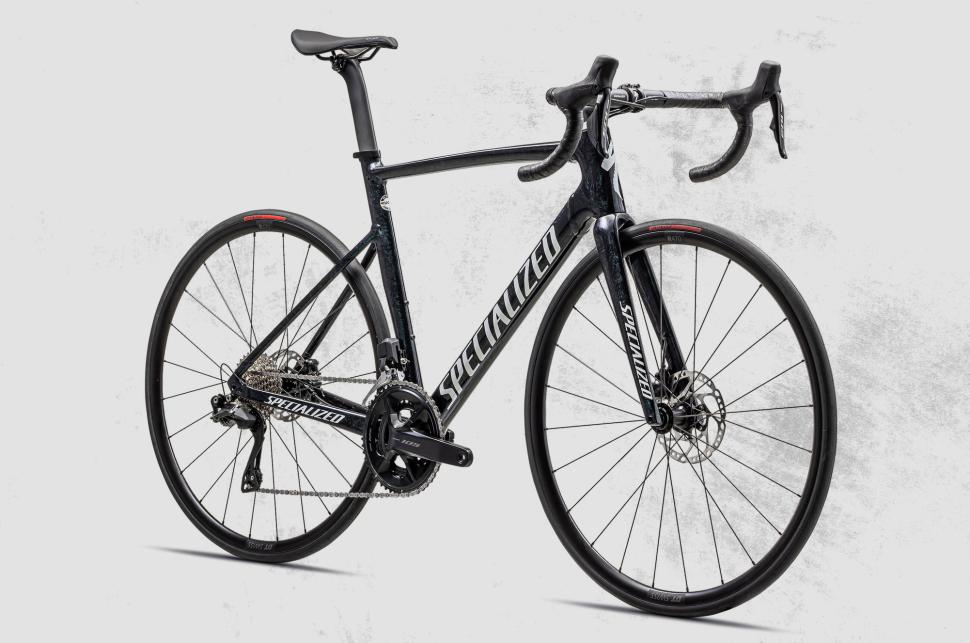
Would you be tempted by Specialized’s new Allez Sprint Ltd road bike, equipped with Shimano’s 105 Di2 12-speed groupset, for £3,100? This bike is available in the UK for the first time today.
South London cycleway repeatedly targeted with drawing pins
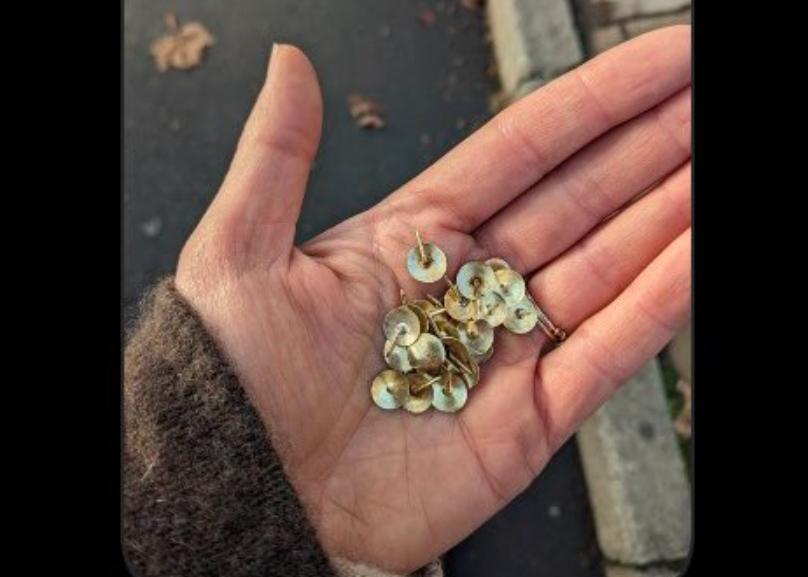
A segregated cycle lane in south London is being targeted by someone dropping drawing pins on it, with a number of cases of such sabotage happening over the past two years, causing cyclists to puncture.
Police have been made aware of the problem and say that they will keep an eye out for such criminal behaviour while on patrol in the area around Bermondsey Underground station on Jamaica Road, which is on the route of Cycleway 4, which opened three years ago.
Read more: > South London cycleway repeatedly targeted with drawing pins
“The most exciting construction sign in central London right now”: Over 10 years of campaigning bears fruits for cyclists as work for cycle lane finally begins on dangerous junction
Who says campaigning doesn’t work?
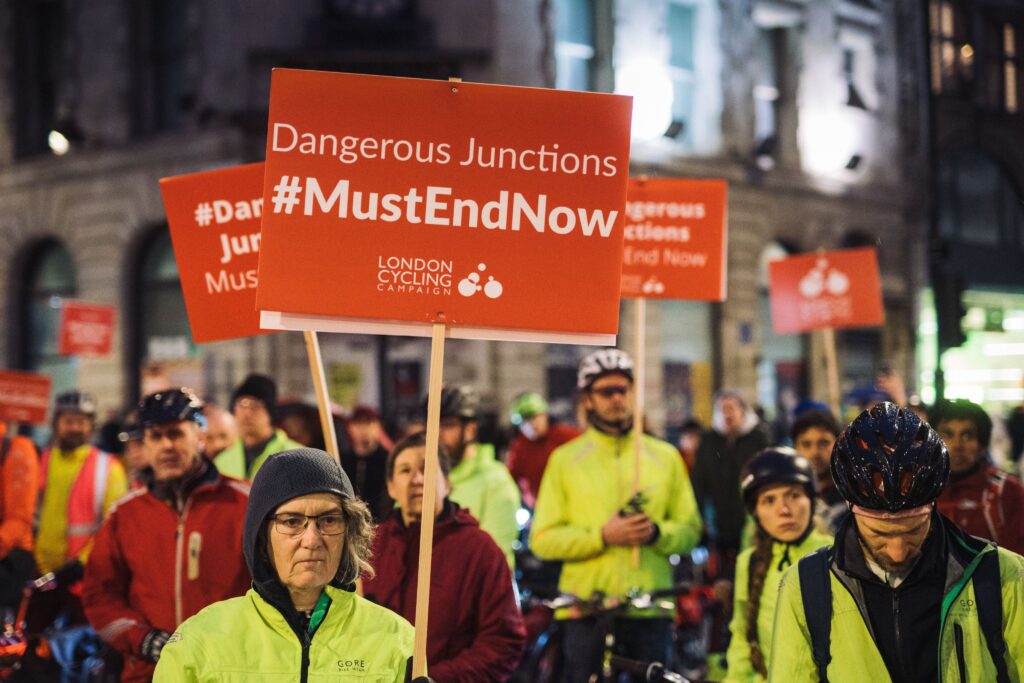
After over 10 years of painstaking, backbreaking efforts from London cycling campaign, construction for a segregated cycle lane at Holborn, one of central London’s deadliest junctions according to many cyclists has finally begun.
Construction has started at #Holborn. We have been campaigning to make this junction safe for cycling for 10+ years.
Tour by Katy @KatyCycles pic.twitter.com/doId6aVKTx
— London Cycling Campaign (@London_Cycling) November 30, 2023
“This is probably the most exciting construction sign in central London right now,” says Katy from LCC. “We have been campaigning for years to sort out this junction and the Holborn gyratory, and finally, construction is starting.”
She continued: “The construction you can see right now is actually the beginnings of a cycle lane which we’ve campaigned for for ages.”
The junction in question is as you join the A40 at High Holborn coming from the Drake Street. Over the last 15 years, at least eight cyclists have lost their lives to crashes involving lorries and coaches in Holborn, including the architect Francis Golding, Alan Neve, Peter Fisher, Dr Marta Krawiec, and most recently, Shatha Ali last year.
> Hundreds ride in Central London to protest cyclists’ deaths and call for safer streets
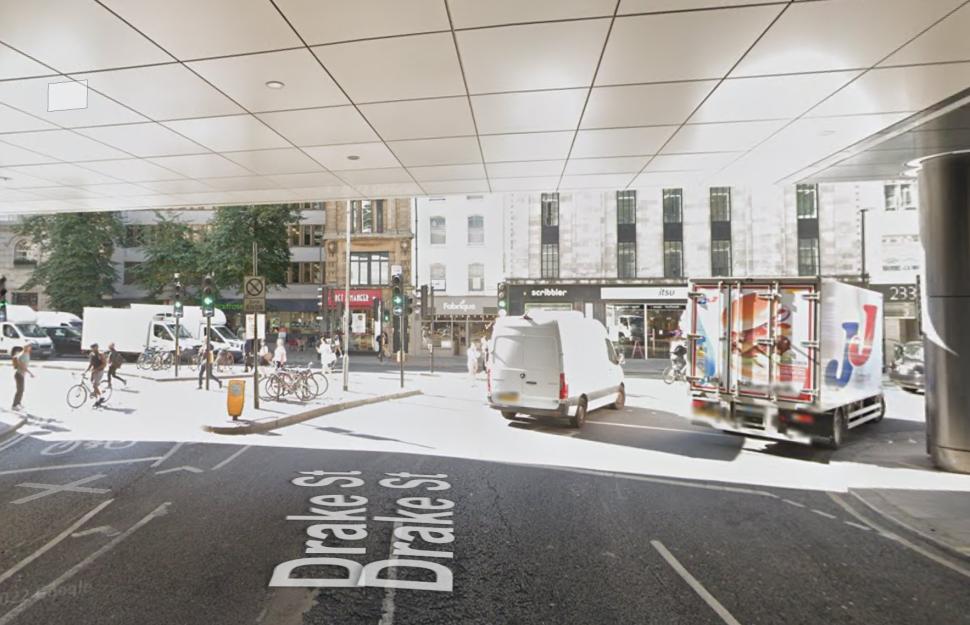
Cyclists now will have their own space and will be able to get in and out of Drake Street without having to share it with other motor traffic, who will be signalled separately.
Katy said: “Letting bikes go early through this space means they get to the next junction much more safely.”
💯 junctions like this have no place in a 21st century city
— London Cycling Campaign (@London_Cycling) November 30, 2023
This marks two victories in two days for cyclists, after yesterday Cycling UK won a legal challenge against Bournemouth, Christchurch and Poole (BCP) Council over the latter’s decision to keep the narrow road underneath the ‘Keyhole’ railway bridge in Poole open to motor vehicles, marking a huge win for cyclists and walkers alike.
It’s only the first of December and it’s already feeling very Christmas-y! Long may this tradition continue, and kudos to both London Cycling Campaign and Cycling UK for their persistent efforts in making lives safer and better for cyclists.
1 December 2023, 09:58
Latest official statistics reveal that 83 cyclists lost their lives on Great Britain’s roads in the year to end-June 2023, a 22.5 per cent fall on the previous 12 months.
Sharp fall in number of cyclists killed on British roads
Number of deaths falls by a quarter with injuries also down, but full stats are not yet out
1 December 2023, 09:58
The administrators of WiggleCRC have told road.cc that they will close down the international websites of both online retailers to focus exclusively on the UK market.

Wiggle Chain Reaction ditches international websites to focus on UK citing "rising international air freight costs and Brexit"
Administrators of business say that it is proving “incredibly attractive” to potential buyers as sale process continues




10 thoughts on ““The most exciting construction sign in London”: Over 10 years of campaigning bears fruits for cyclists as work for cycle lane begins; Pogačar’s Tour de France TT bike on sale; Tour of Britain organisers could face £1m legal action + more on the live blog”
“dangerous junction”
“dangerous junction“
There is no such thing; only dangerous road users.
I understand your sentiment,
I understand your sentiment, but disagree. Good infrastructure mitigates against a lot of dangerous road use; shitfrastructure makes it far worse.
Benthic wrote:
Strongly disagree. Its possible and common for road designs to cause distraction, conflict, confusion and make it difficult for even careful drivers to safely navigate them.
If there was no such thing as unsafe infrastructure and it was only dangerous road users that caused hazards there would be no such thing as an “accident black spot”, every junction would be equally likely to see a collision.
Have a watch of this.
Have a watch of this.
Rubbish. Roads can be
Rubbish. Roads can be design or modified in a way that creates blindspots or uneccessary conflicts.
Row Man Bar Day.
Row Man Bar Day.
Complete psycho
Complete psycho
Must have been checking for the reaction.
As I have learnt on here, if the driver stops ahead stay 20-30m back, then they have to walk a way toward you and most likely will give up.
The sad thing here is that if
The sad thing here is that if the cyclist had simply rode on and reported the close pass to the police the most likely result would have been no further action. Having let the driver know he was too close the reaction he got is more likely to result in some form of police action which may make this driver think again next time he overtakes a cyclist.
the reaction he got is more
the reaction he got is more likely to result in some form of police action
Whereas I am confident that, if the incident was reported, the result was no action at all. They would have just used the V-sign as an excuse, even though it occurred after the offence
You should always do the w*
You should always do the w**ker sign below the sight line of the camera . . . . apparently.