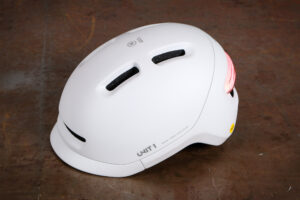
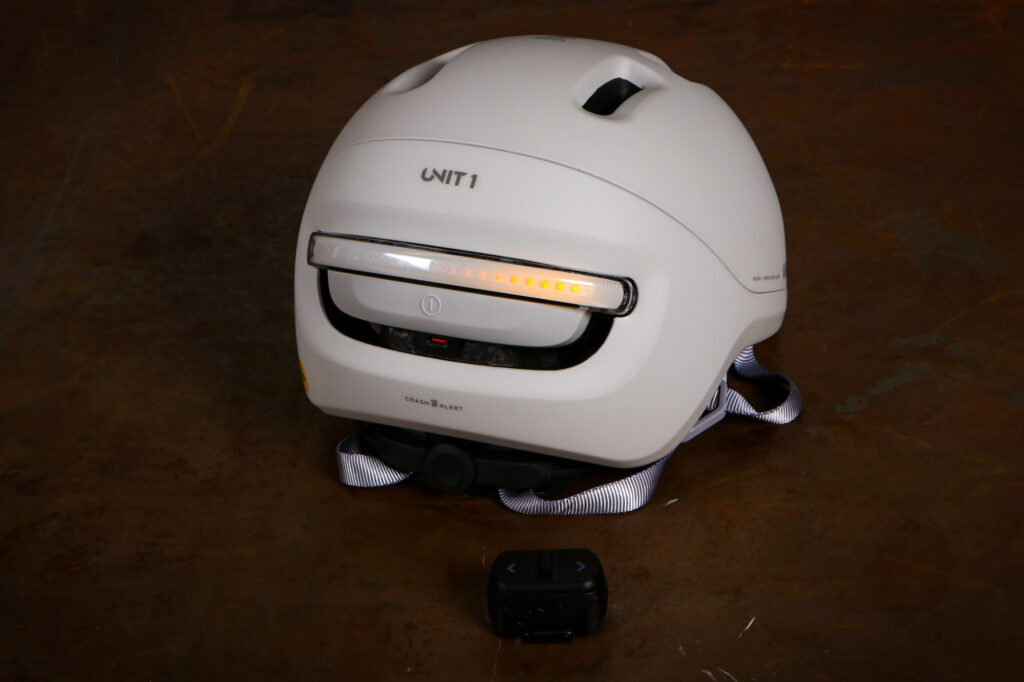
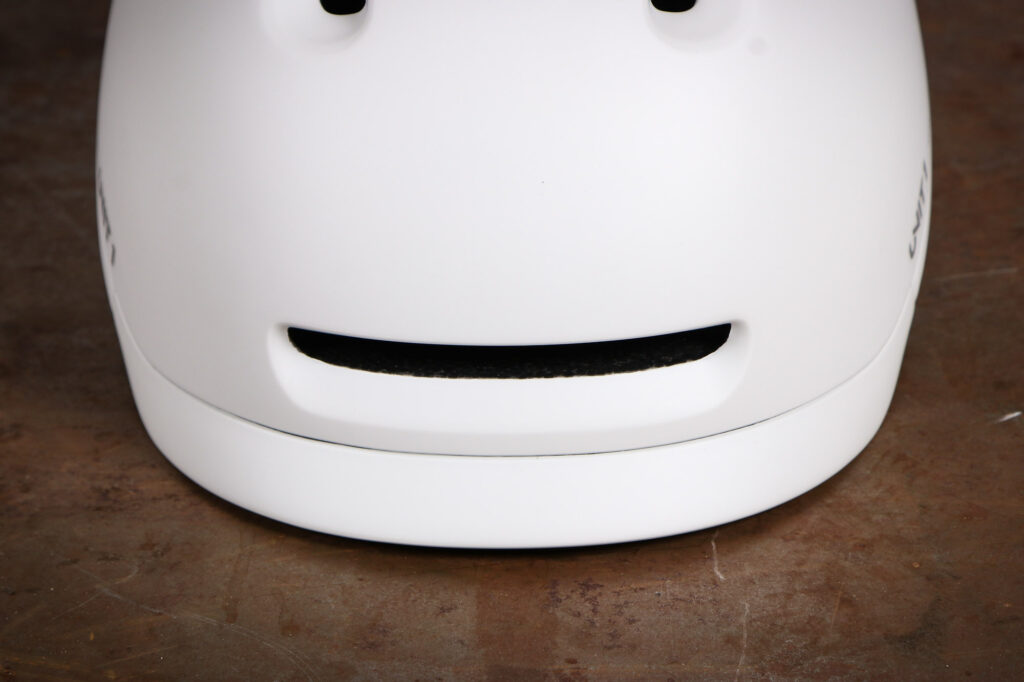
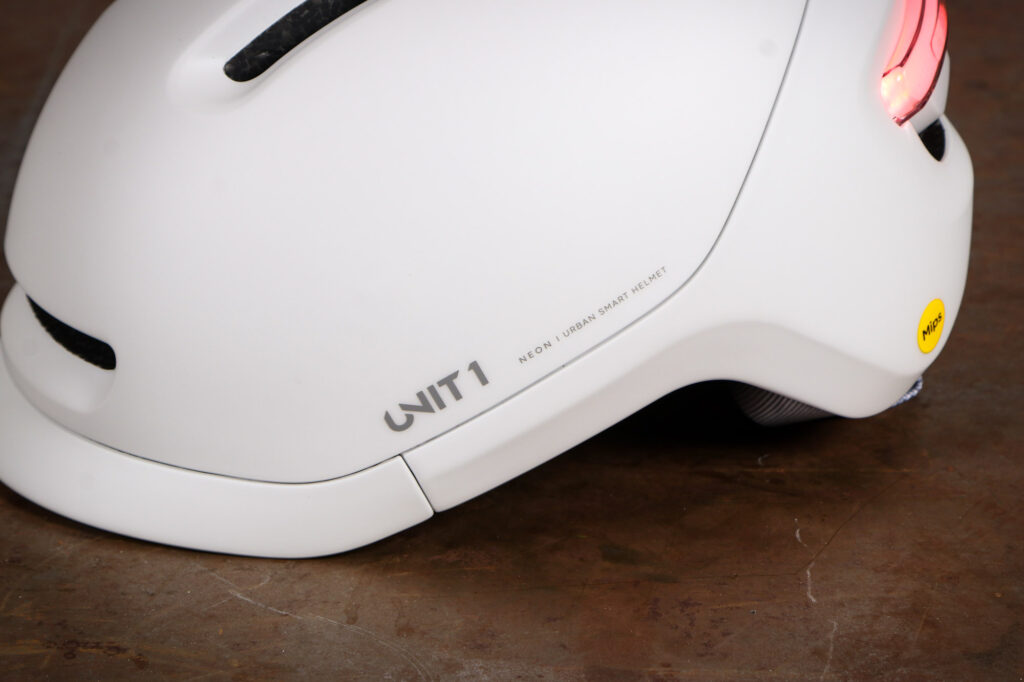
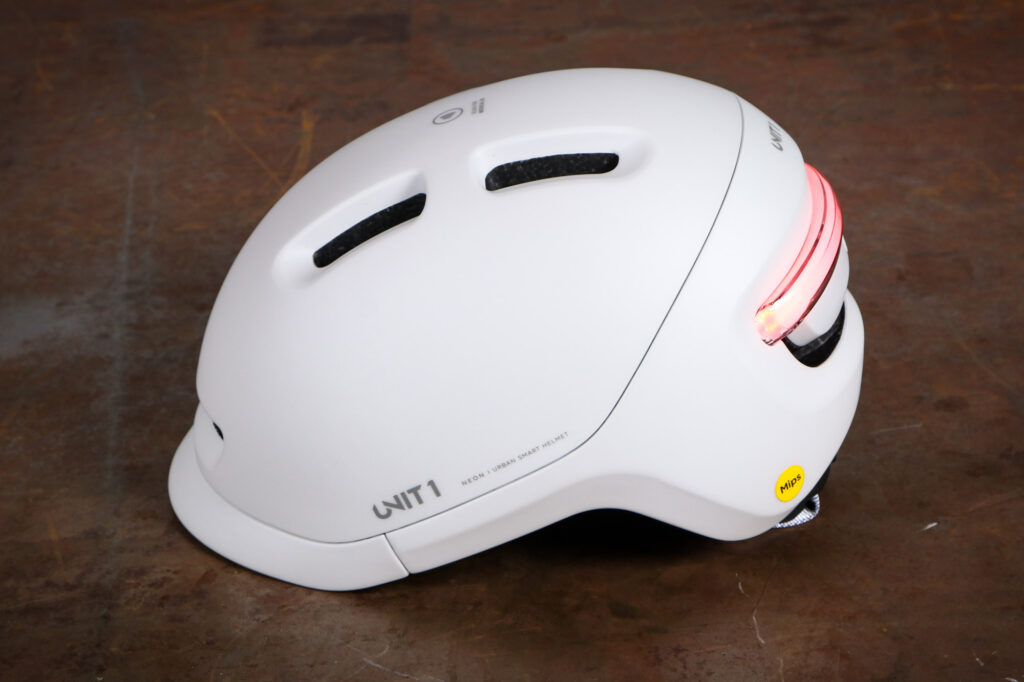
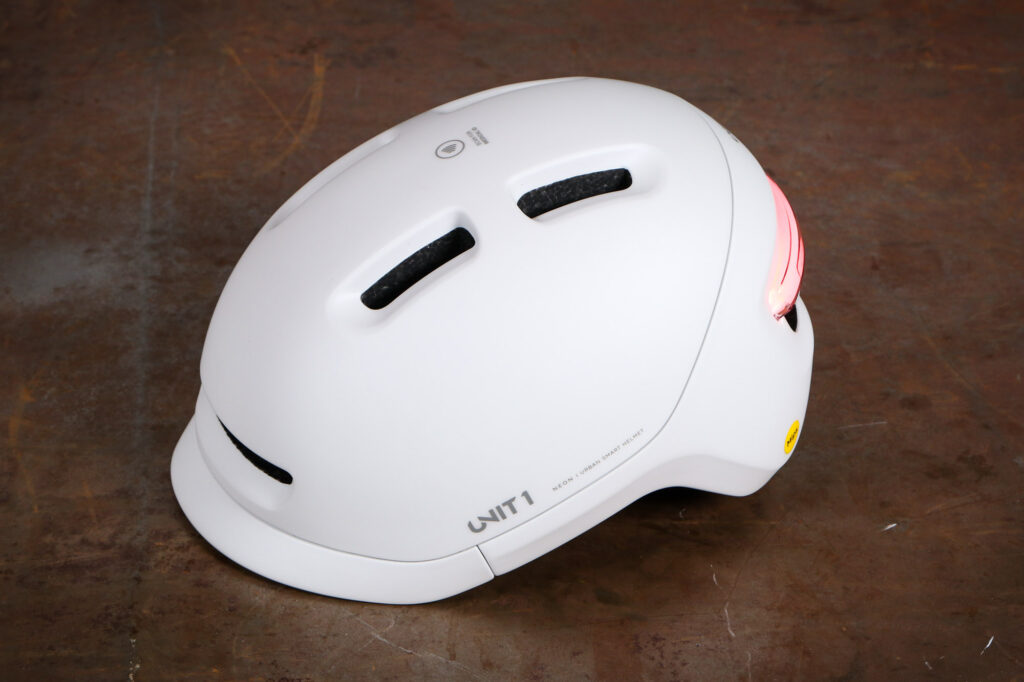
The Unit 1 Neon Mips is a so-called ‘smart’ helmet. This means it boasts electronically powered features, including a rear LED light bank, Bluetooth connectivity that links to an optional wireless handlebar remote (also on test) and crash detection sensors. It’s neat and comfortable with strong safety credentials, but the brake light and indicators enabled by the remote don’t add a great deal.
In addition to the smart electronics packed into the helmet, there is a double layer of extra safety features that many cheaper helmets may not feature.
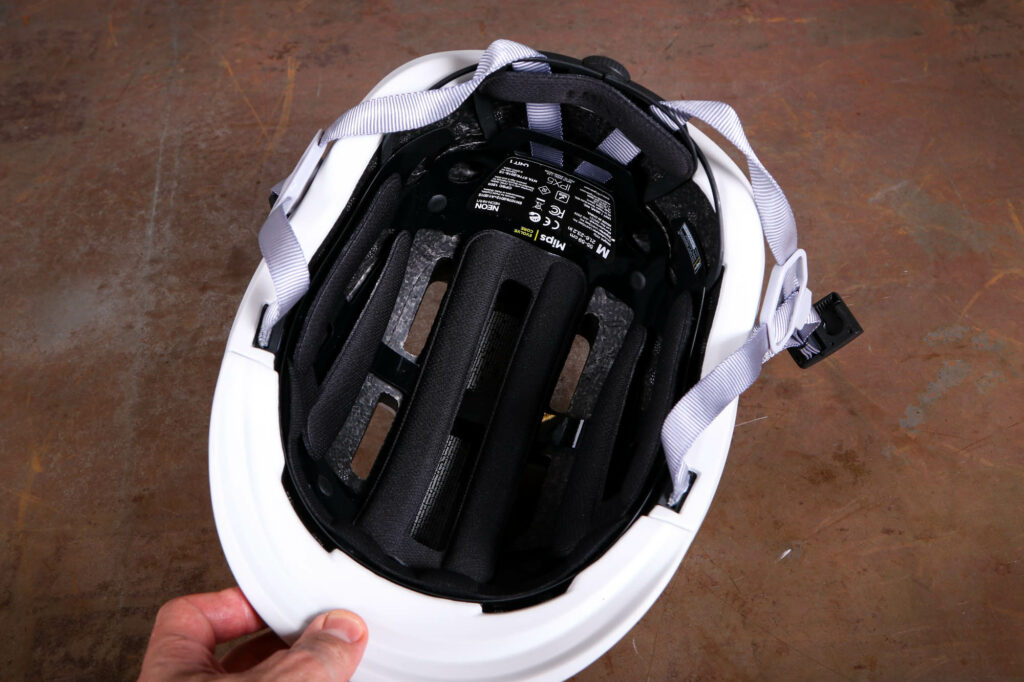
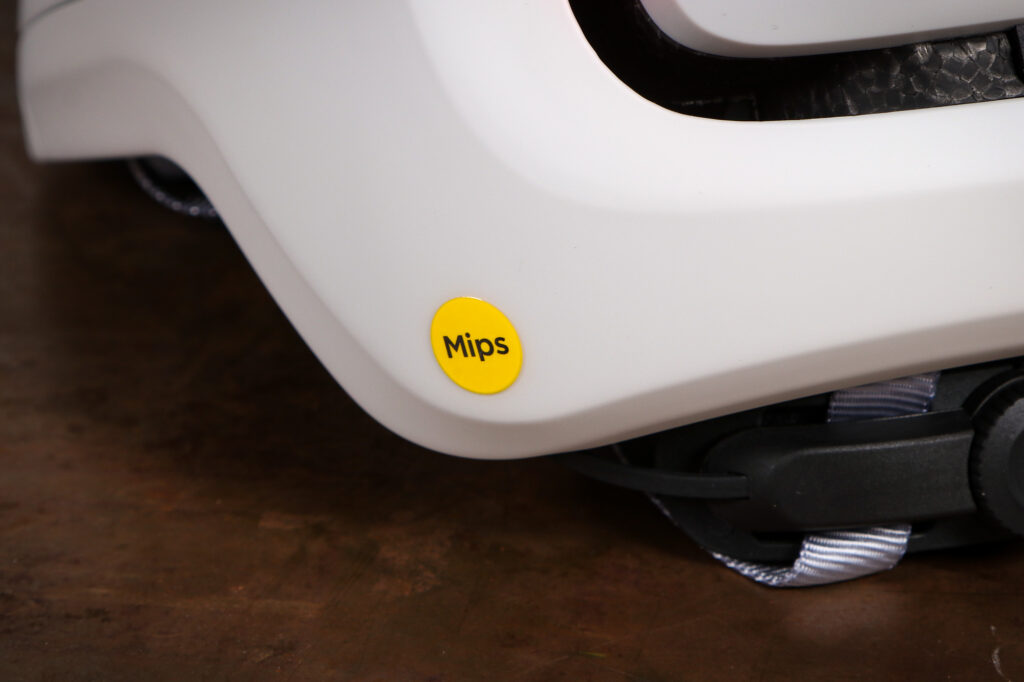
One is Mips (multi-directional impact protection system), a low-friction, inner liner that allows the helmet to slide a little relative to the head – said to mimic the brain’s own protective fluid. The Neon 1 is also NTA-8776 certified (to withstand crashes of up to 45kmh/28mph – the speed pedelec assistance limit.
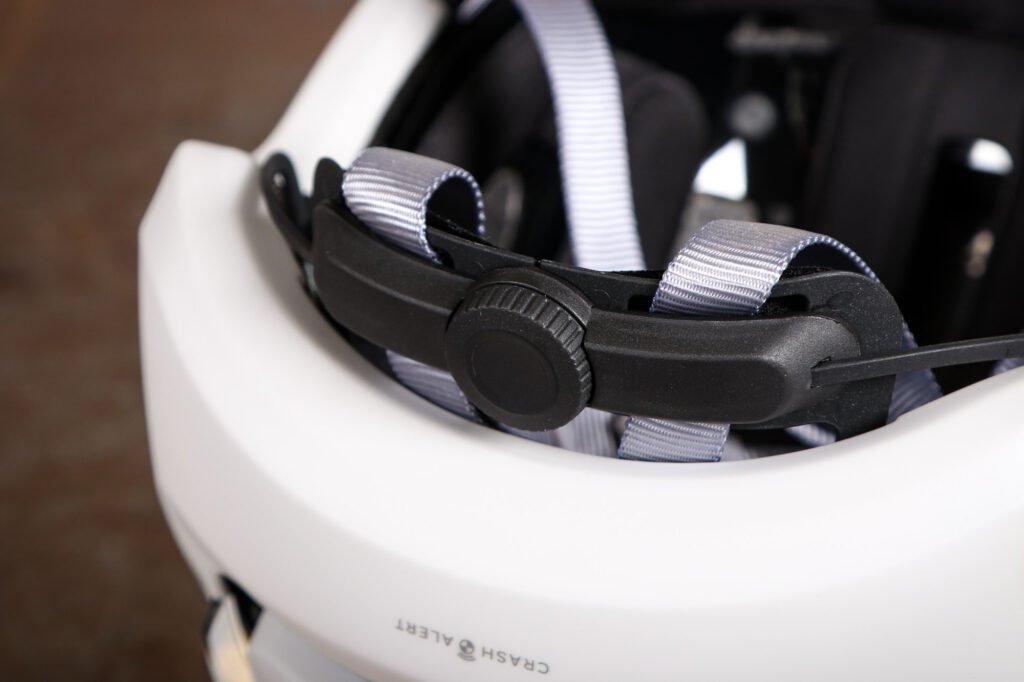
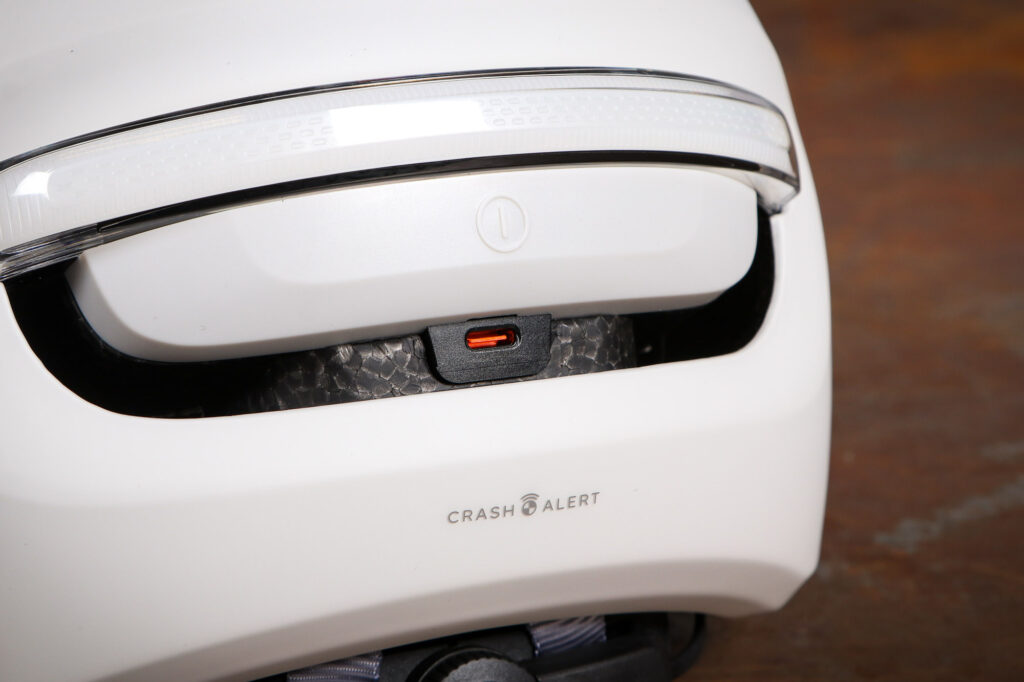
On top of this, there is a crash alert feature, enabled via the Unit 1 app.
The first question I asked was would I really need all these features? I ride quite a lot in city conditions and on fast rural roads, so anything that makes me more visible to road traffic is a good thing in my book.
The safety potential of the lights was obvious and the extra safety of both Mips and the speed pedelec rating looked promising too – after all, a helmet is there to protect you and the more protection it affords the better, right?
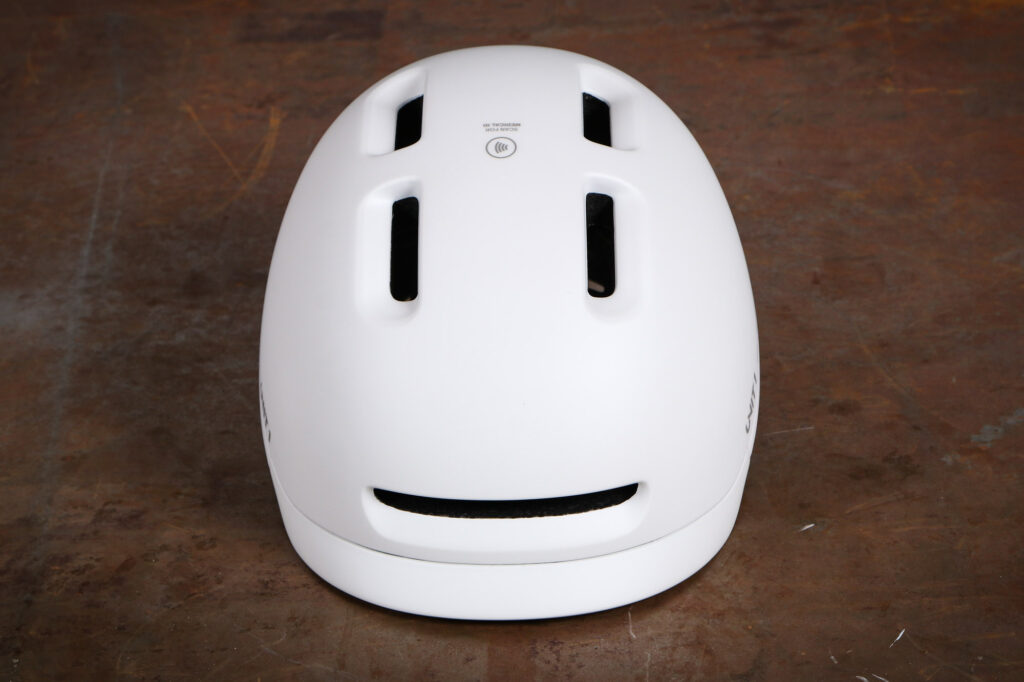
First impressions were good. The Neon is only very slightly more bulky than a typical urban style cycle helmet, if it all, which is impressive given all the features it packs in.
There is noticeably more protection around the back and sides than more minimalist racing lids, which is all part of the design needed to get NTA-8776 speed pedelec conformity approval. At 436g it feels nice and light, both in the hand and on the head.
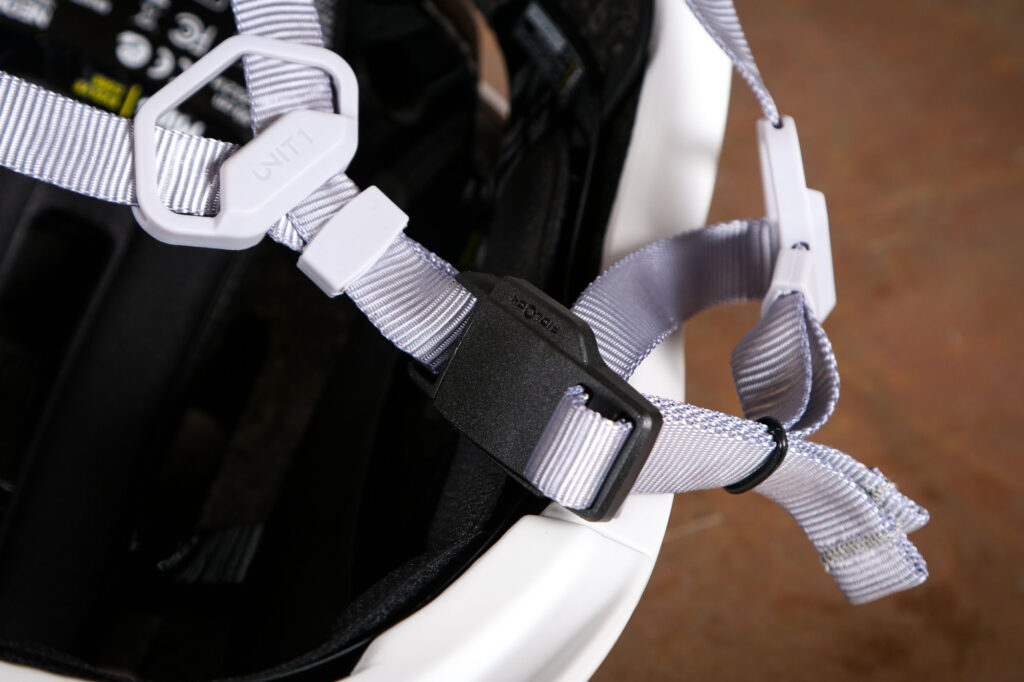
Fit-wise, I have a 58cm circumference head, but the medium fit model (55-59cm) I was sent felt a little narrow, so perhaps a large would have suited better. It wasn’t a big issue though. Once I’d altered the chin straps to get a firm fit, it felt comfy enough and I was happy to wear it for extended periods. Once I’d gotten used to the magnetic clasp fastening I found this easy to use and it felt firm and secure when closed.
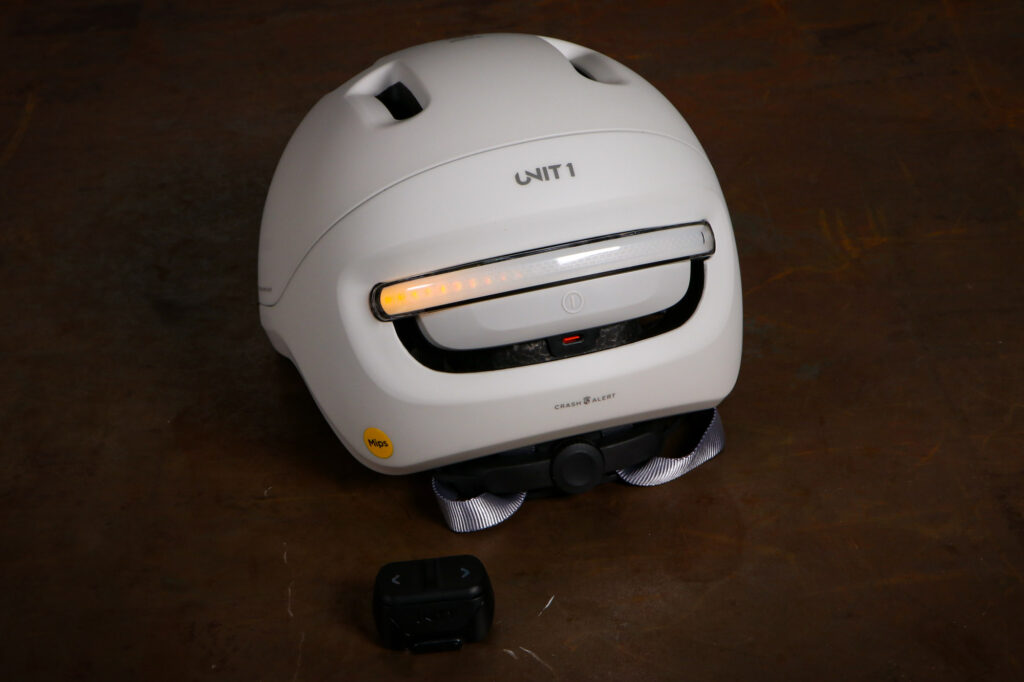
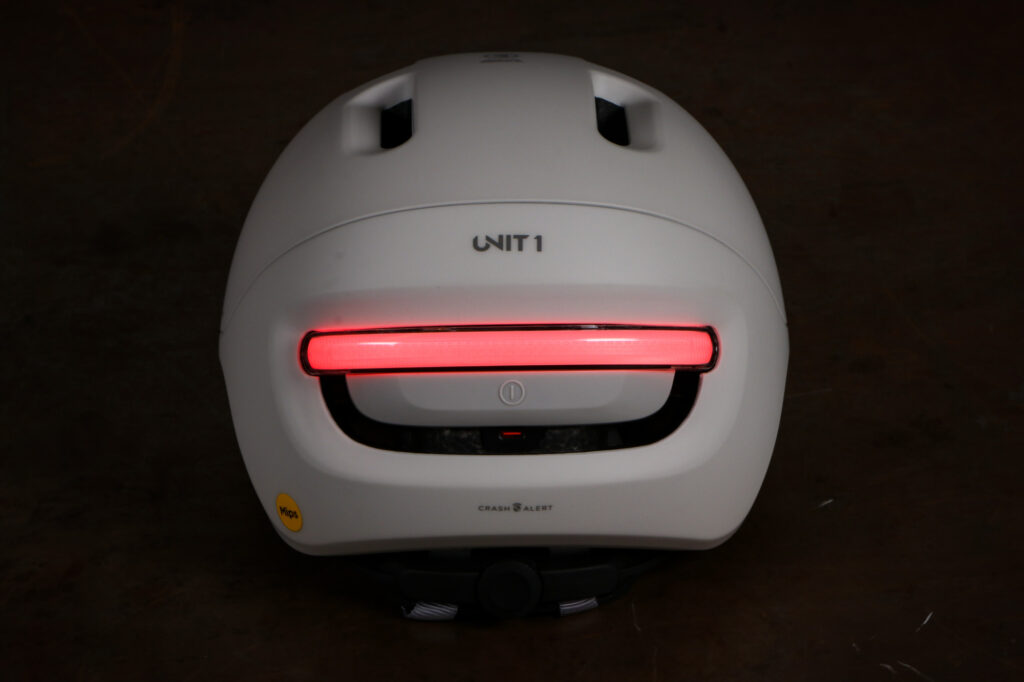
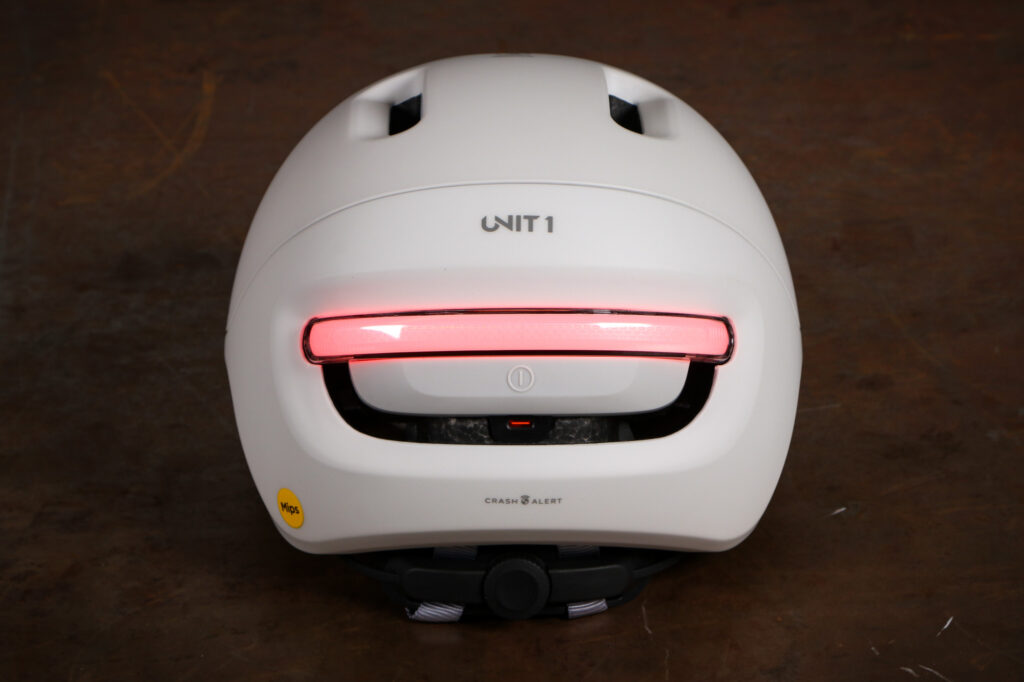
There is a single LED strip across the back of the helmet which acts as visibility lighting (always on once you’ve turned the helmet on) as well as a brake light.
The large visibility light was superb, being highly visible even in bright sunlight and apparent to drivers approaching from the side and rear. Other Unit 1 models, such as the Aura, feature front lighting too and to me it would make more sense to include this.
Unit 1 stresses the rear light is not sufficient to act as your sole lighting, in the UK at least, and you still need legally compliant lights on the bike itself. Despite that, I think the rear light is an excellent add-on safety aid.
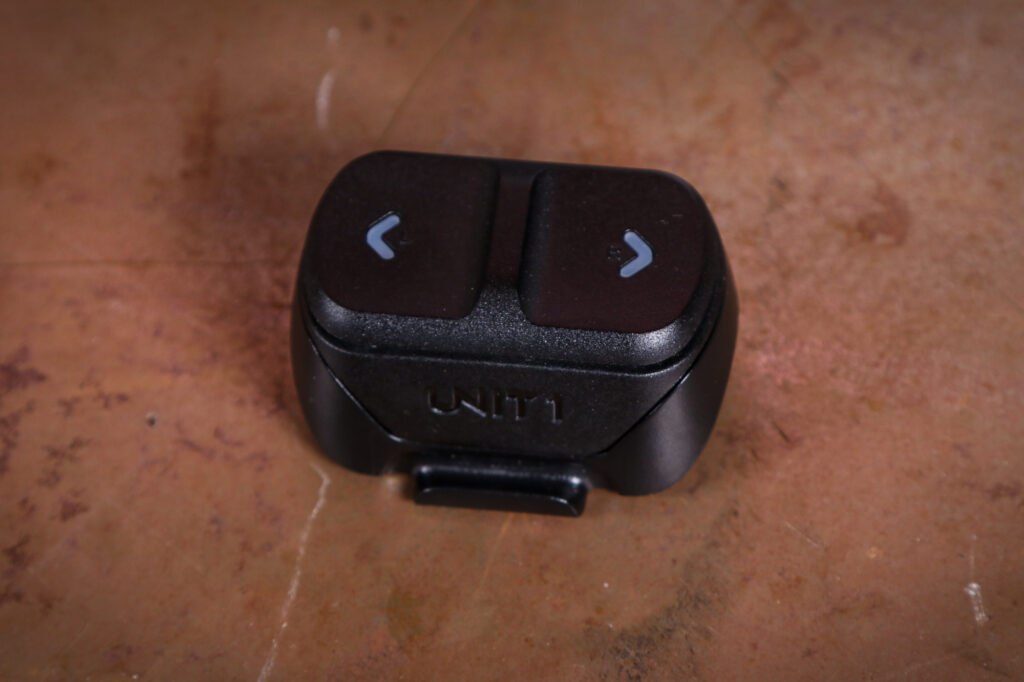
The brake lights are activated by an accelerometer within the optional Unit 1 Remote (which costs another £35 on top of the £170 price of the helmet). They are pretty visible, though they don’t respond to gentle braking – only sharper decelerations. Surely brake lights that come on when you depress your bike’s brake levers are a better idea – whether the lights themselves are on a helmet or the bike or both.
I love the concept of not having to rely on hand signals – especially in dangerous feeling situations where you don’t want to have to take a hand off the bars, such as when riding at speed downhill or on a potholed road – but I wasn’t convinced by the indicators.
They too are activated by the handlebar unit, which implies that plenty of riders won’t actually want to bother with them in the first place.
There don’t appear to be any bike or e-bike standards for indicators. This means those designing them are rather left to their own devices. Often the lights are a bit too weak to be easily noticed and that’s the case here.
Signalling also needs to be incredibly clear, because even if motorists see the lights, some may not get what’s going on. I’d say the left and right indicators need to be more discrete from each other, while one person observed that because half the rear light bar flashes, it looks a little like it could just be malfunctioning. Other, potentially less ambiguous indicator light patterns are however available via the app.
In any case, Unit 1 says you should also make hand signals anyway, and as far as I know this remains the legal situation.
So, nice idea, but in practice I think the indicators are more bother than they are worth – especially as the remote button costs extra and can slip around on the bars (if I did stick with the system I’d probably end up using some tape to secure the switch).
It’s worth noting that Unit 1 has an ‘ecosystem’ of smart devices that will all connect to the app and sync with each other. You can also get light strips that will fix to the bike and show safety, brake and indicating lights in similar fashion.
These should also sync with high end e-bike systems, like the one on the Tarran L1s that I looked at recently.
You may be disinclined to install apps as a matter of principle and for my uses of the helmet, I probably wouldn’t have bothered. But in the interests of producing a comprehensive report, I connected it to the helmet and handlebar unit via Bluetooth.
It was quick and easy to do so and the app then allows all manner of customisation of the light bar. You can choose from an array of flashing patterns and select how the indicators flash and whether they automatically shut off or have to be manually switched off using the handlebar unit.
Most intriguing though was the crash detection feature. I added a friend’s mobile number and warned them in advance that they may get a text saying I’d fallen off my bike.
This is a tough feature to test. I tried dropping the helmet onto spongy carpet, but it took a few attempts before the warning was triggered, at which point a text was received which included a link to my location.
This seems potentially useful, but without any more scientific testing than my rather half-hearted attempts, it’s hard to know exactly how reliable it would be – and of course false alarms could also be very alarming, or at least irritating.
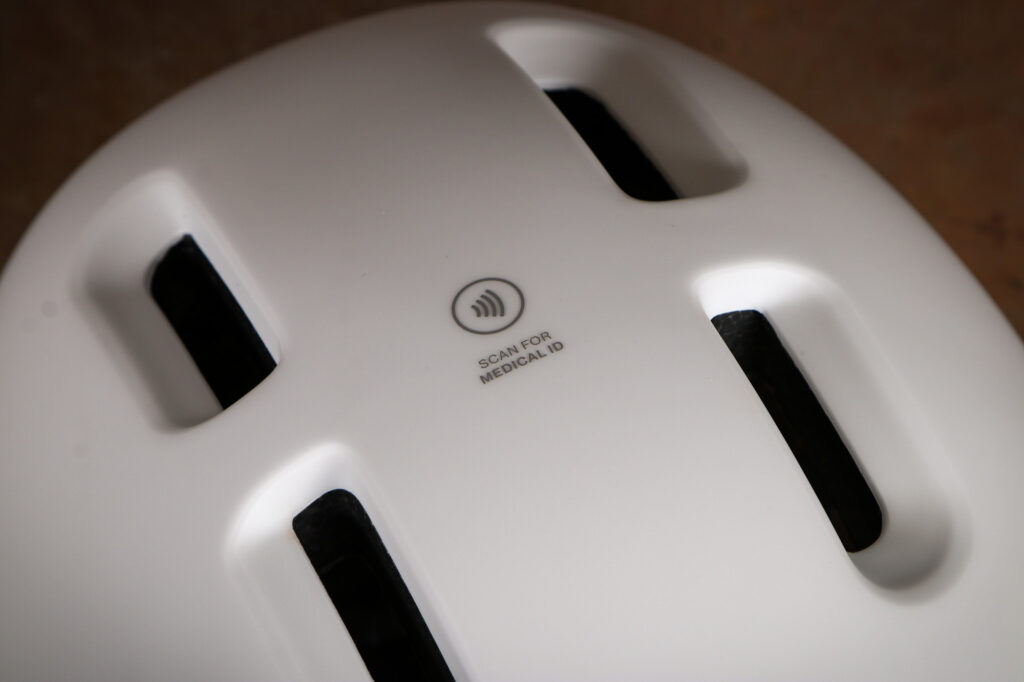
Something I did not test out, but that you can set up in the app, is a list style record of medical info. An NFC tag located on the helmet means it can be scanned via a smartphone to view this health information. Again, this sounds handy, but only real life usage would prove its worth.
The helmet will also need charging fairly frequently if in regular use – although you can extend battery life by turning down the intensity of the lights in the app. Unit 1 claims run-time of 3-30hrs. With the lights on all the time in ‘solid’ mode and using the brake lighting and indicator features, I would say you would get 3hrs riding at least.
It charges up from a USB-C outlet quite quickly – from a low battery level to over half full in around an hour was typically my charging pattern.
The battery is however not replaceable – a big minus in my book and something that seems at odds with the EU’s recent battery and right to repair regulations.
Value
To be clear, the Neon Mips costs £170 on its own, but you would need to spend an additional £35 for the handlebar remote to access the smart lighting features. There are a couple of helmets out there with some similar characteristics.
Giro’s Ethos Mips LED Shield has an RRP of £254.99, but is currently reduced to £152.99. It too boasts remote activated turn signals, plus front and rear ‘be seen’ lights and Mips, though it lacks the speed pedelec rating of Unit 1’s offering.
The Lumos Ultra and has the same range of features as the Unit 1, including NTA-8776 certification, for £169.95 and goes a step further by offering the front light as standard. It even promises to be visible from a very specific 1,475ft away and you can sync lights across several helmets on a group ride.
We’ve also previously tested the Lumos Nyxel, which is £189.95 with Mips, and Quin crash detection, but it doesn’t have the speed pedelec level safety rating.
> Best cycling helmets — choose a bike lid that’s right for your riding
Overall
I found the Unit 1 Neon Mips a stylish, smart and pretty comfortable helmet – though I have significant reservations about the indicator functions and battery replaceability.
Personally, it would be most use to me as a safety aid rather than something to signal your intentions. Indicator technology just doesn’t seem to be developed enough to be meaningfully effective. However, the safety ratings and the bright rear light are certainly confidence inspiring.
Test Report
What does the manufacturer say about this product?:
Smarter than a helmet should be
Neon comes with a rear light that delivers 180° visibility and powerful brightness
Show your intentions on the road with the UNIT 1 Remote
Make your stops unmistakable with our handlebar-mounted Remote. It instantly turns your helmet’s rear light into a bright brake signal
Tell us some more about the technical aspects of this product:
The Unit 1 Neo smart helmet has ‘smart’ features that include a rear light, brake light and indicators, the latter controllable by a wireless handlebar unit. In terms of physical features it also has MIPS (Multi-directional Impact Protection System) and is NTA-8776 certified (to withstand crashes of up to 45km/h – the speed pedelec assist limit). Crash Alert enabled via Unit 1 app.
It is water resistant to IPX5 level (low pressure water jets)
Any further comments on quality?:
Appears nicely made and has a robust yet light feel which is what the manufacturers claim.
Any further comments on performance?:
Indicators are the main performance weak point
What protection standards does the helmet conform to?:
NTA 8776 is a bike helmet standard specifically designed for e-bikes, e-scooters, and other micromobility devices that can reach speeds of up to 28mph (45km/h). Helmets certified to the NTA 8776 standard should provide more coverage at the back and sides of the head and extra layers of protection.
Does the helmet incorporate any rotational injury protection? If so, what?:
Yes – Mips (multi-directional impact protection system)
Any further comments about fit?:
Feels a little narrow for me
Does the helmet size up especially big, or small?:
Yes – small, medium, large sizes available
Any further comments about the retention system?:
Secure and adjustable
Does the manufacturer make any specific aero claims about the helmet?:
No
Is the helmet easy to care for? Are the pads removable and washable?:
Yes
Any issues with durability?:
No
Did you enjoy using the product? Yes
Would you consider buying the product? No
Would you recommend the product to a friend? No
Use this box to explain your overall score
A high quality product that performs well overall but with the score dragged down by very poorly performing indicators
About the tester
Age: 59Height: 172cmWeight: 70kg
I usually ride: E-bikes of any descriptionMy best bike is: Riese & Muller Homage
I’ve been riding for: Over 20 yearsI ride: Most daysI would class myself as: Experienced
I regularly do the following types of riding: Commuting, Touring, Fitness riding