


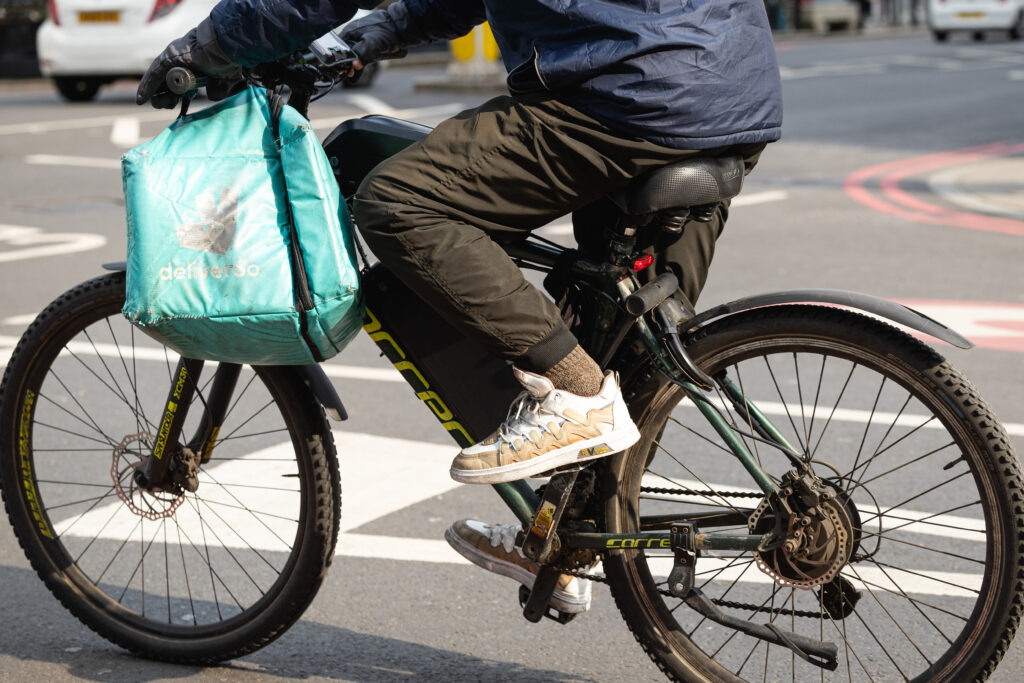

High-speed illegal bikes endanger pedestrians and motorists and have no place on the UK’s roads and pavements, the Labour government has said, after new data revealed that the number of e-bikes seized by police officers soared by 83 per cent this year.
According to new data supplied by 31 police forces across the UK, 7,049 bikes were deemed to be illegal and confiscated by police in the 12 months to 19 May, compared to the 3,858 seized the previous year.
The Metropolitan Police were the busiest force when it came to e-bike seizures, with 2,367 bikes confiscated in London alone during the documented period. 11 of the 31 forces also reported that the number of bikes they had seized had doubled year on year.
The City of London’s lead sergeant Stuart Ford noted that the force has begun to use portable rolling road devices, similar to those used by police in the Netherlands, to gauge the motor’s top speed and determine whether it’s legal.
Using this method, Ford said his officers seized four illegal bikes – which he described as a “menace” – in just half an hour last month.
Pointing out that some illegally modified bikes can weigh up to three times as much as a standard bike, Ford told Sky News: “If that were to hit a small child, it can cause serious injuries.”
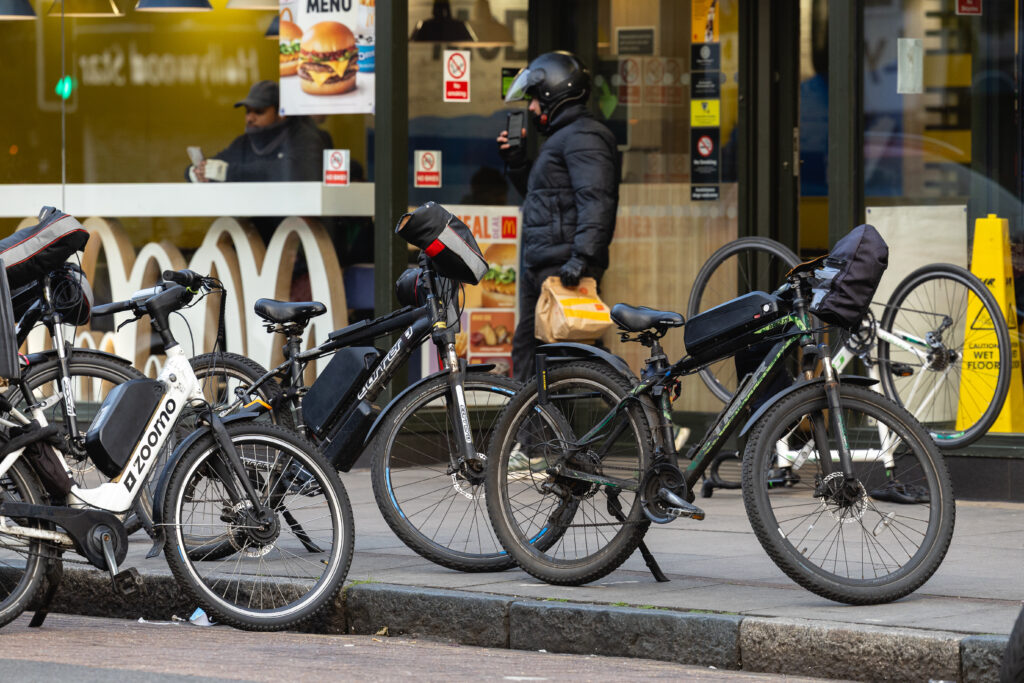
Meanwhile, a government spokesperson said: “Illegal e-bikes that can reach dangerous speeds have no place on our roads and pavements, and the rise in seizures shows the scale of the problem police are dealing with.”
Labour MP Julie Minns has been campaigning to ban sales of illegal bikes and conversion kits, and responded to this week’s figures by arguing that they pose a threat to both pedestrians and motorists.
Describing the illegal bikes as the “perfect accessory to phone theft, mugging, and drug dealing”, Minns renewed her calls for the government to designate the illegal bikes as an “unsafe product” that cannot be sold by online retailers, similar to the clampdown enacted by New York mayor Zohran Mamdani earlier this month.
At the end of June, the new Crime and Policing Act strengthened police powers, enabling officers to seize illegal bikes if they are being used for anti-social behaviour without having to issue a warning first.
However, the extent to which police officers in the UK are aware of what constitutes an illegally modified electric-powered bike and a standard legal e-bike was brought into question last month, after we reported on a cargo bike that was wrongfully seized and destroyed by police in Birmingham.
The term e-bike generally refers to an electrically assisted pedal cycle (EAPC), legal electric cycles that can be treated the same as a conventional pedal cycle, provided the user is age 14 or over.
They must have pedals that can propel the bicycle, have an electric motor with a maximum continuous rated power not exceeding 250 watts, and cut off electrical assistance when it reaches 15.5mph. Riders of these compliant e-bikes do not need to register or insure their bicycle.
However, the use of illegally modified bikes, which do not cut off assistance at 15.5mph and can reach high speeds without pedalling, has become an increasing issue on the UK’s streets, leading to widespread confusion with their legal counterparts.
That confusion was underlined in April, when a delivery cyclist’s Tern e-cargo bike – hired under a council-funded scheme – was seized as part of West Midlands Police’s Operation FRISLEN, a “targeted initiative” aimed at “addressing the growing concerns surround the misuse of e-bikes and electric scooters in Birmingham city centre”.
In bodycam footage of the seizure obtained exclusively by ebiketips, three officers can be seen talking to the cyclist, who repeatedly tells them that the bike is legal.
At that point, one of the officers raises the back wheel of the bike and spins the pedals, causing the bike’s computer and rear wheel sensor to purportedly record a speed of 47kph – which they deemed evidence that the cargo bike was illegally powered, despite the cyclist telling them: “It’s off, there’s no assist”.

Nevertheless, the officers proceeded to hand the rider a fixed penalty notice, including a £300 fine and six points on his driving licence, and seized the bike. The Birmingham Bike Foundry, the shop which hired out the cargo bike, then attempted to track down the bike, only to be told a month later that it had been destroyed, prompting them to launch an appeal against the decision.
However, after the case attracted national media coverage, West Midlands Police apologised for erroneously seizing and destroying the £6,000 cargo bike, while also agreeing to stop using the test carried out by its officers, admitting that, while there was “no malice” in their actions, it was inaccurate.
Last week, the Department for Transport told ebiketips that there is no way of finding out how many collisions and incidents on British roads involve electric motorbikes and illegally modified e-bikes from its own recently published annual road casualty statistics.
The release of the Department for Transport’s latest reported road casualties in Great Britain at the end of last month coincided with numerous stories in the media about crackdowns on electric motorbikes and illegally modified bikes.
However, with confusion rife amongst the public and even the police about the differences between compliant e-bikes (EAPCs) and pedal assist bikes that fall foul of the rules, the DfT confirmed that although there is guidance available for the reporting of vehicles when making collision reports, there is currently no category for unregistered electric pedal cycles.












2 thoughts on ““No place on our roads and pavements,” says government as number of illegal bikes seized by police soars by 83%”
PEDELEC is the correct name for a bicycle powered by human muscles via pedals assisted by an electric motor limited to 250 Watts that cannot exceed 15.5 mph under power.
Why do the media insist on labelling these as E-Bikes thus confusing the general public and politicians.
Strictly speaking, a pedal-assist bicycle limited to 250W and 25 km/h is a pedelec (pedal electric cycle), whereas a true e-bike can operate via a hand throttle without any pedaling.
The media label everything an “E-Bike” for several practical reasons:
Linguistic SimplicityShorter and punchier: “E-bike” has two syllables and is easy to say in headlines.
Catchall umbrella term: General vocabulary evolves faster than technical or legal definitions.
Public recognition: Most consumers already know the phrase “e-bike,” making niche terms like pedelec or EPAC less commercially effective for broad communication.
Media and Political Impact/Sensationalism: Lumping all motorised cycles together makes it easier to write dramatic stories about speed, weight, or pavement/sidewalk danger.
Policy confusion: Politicians react to generalised media terms, sometimes blurring the legal lines between a gentle 250W pedelec and a high-powered throttle bike or a 45 km/h speed pedelec.
@mikeclarke Well, no, “pedelec” is not really that helpful a term because it doesn’t actually refer to a 250 W 25 km/h electrically assisted bicycle, it can refer to any electrically assisted bicycle where the power is only supplied when the pedals are being turned. In many jurisdictions, including the UK and EU, the power and speed are legally restricted to the above mentioned figures, but that does not apply everywhere plus it’s very easy to buy 500 watt or even 1000 watt pedelecs in the UK, they’re just not legal for road use. Pedelec has no legal status as a term in UK law, the correct term for a 250W 25km/h electrically assisted bicycle that requires the pedals to be turned before power is supplied is an EAPC.