


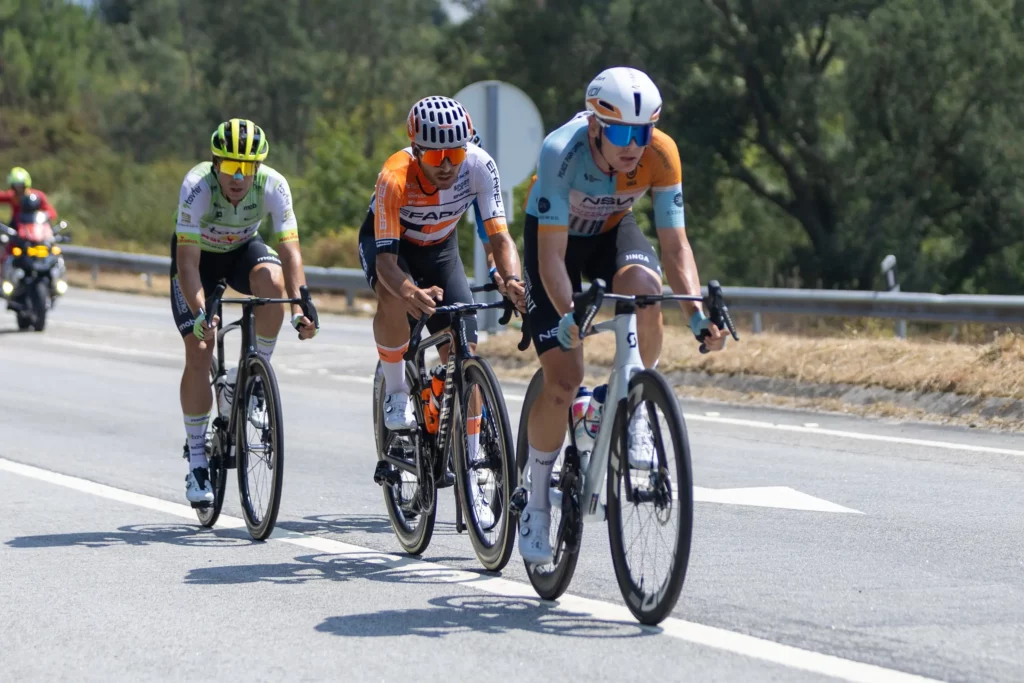

Following Finlay Tarling’s tragic death in a collision with a van driver at the Volta a Portugal on Friday, the president of the riders’ union has called for more stringent safety measures concerning race traffic management and helmets, but admits that “closing every single road and driveway is difficult”.
19-year-old Tarling, riding for the NSN development team, was killed during the eighth stage of the Portuguese race in a head-on collision with a member of the public who drove his van onto the course, travelling in the opposite direction to the peloton.
The fatal collision has provoked a wave of sadness and anger within a cycling community mourning the latest rider to die while racing, the CPA – the union representing the peloton – describing itself as “speechless and filled with anger” at the “preventable” tragedy.
According to new details released by the National Republican Guard (GNR), which has launched a full investigation into the young British rider’s death, Tarling was one of three riders attempting to catch the rear of the peloton, which had been split into three groups, on a steep downhill section at the time of the collision, which occurred 85km into the 167km stage.
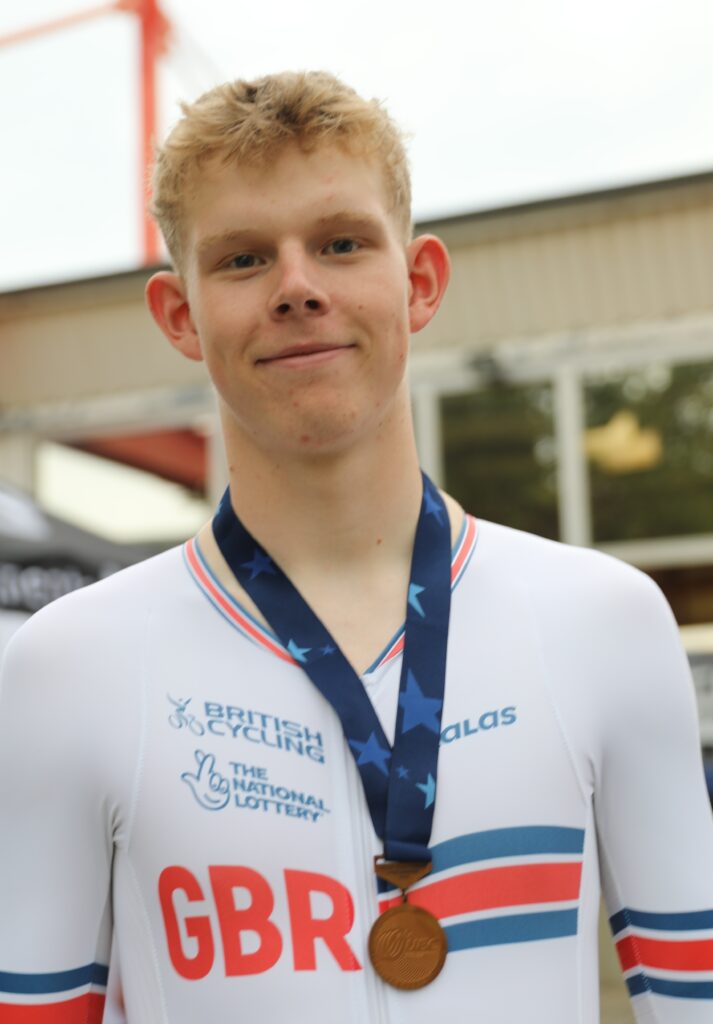
Colonel Carlos Canatario told RTP that the GNR police escort “could not keep up with Tarling” on the descent, after the 19-year-old had raced clear of his NSN support car. The broom wagon, the vehicle signifying the end of the race convoy and the rolling road closure, was behind him.
Like many bike races, the Volta a Portugal operates a rolling road closure system, stretching from the very front of the race convoy to the back, and policed by both officers and volunteer marshals. Once the full convoy passes, the road can reopen to external traffic.
According to Canatario, the van driver entered the course via an access road after waiting at the road closure. He drove onto the course after being told by spectators that the race had passed, despite signs indicating that the road was still close. There were no police officers present at the junction.
“We know that he stopped at the access road, saw the peloton pass, waited for a moment, and asked bystanders if the race was over yet. They reportedly told him that the last riders had passed and that he could drive on,” Canatario said.
“In that specific location, we know there were no officers present because it was not one of the locations prioritised in the assessment that had been carried out.
“It is impossible to station an officer at every access point to the course. Priority is given to access points where there is a greater chance that vehicles and people will enter the course. This was a secondary access point without officers, but with signalling.”
A number of other riders taking part in the Volta a Portugal have claimed that they encountered members of the public driving on the course during Friday’s eighth stage.
Meanwhile, one local told road.cc that when the race passed through Bensafrim he was forced to shout at a motorist who had emerged from an unmanned junction and started driving in the direction of the oncoming peloton, the driver performing a U-turn and heading off the course seconds before the riders passed.
Canatario continued: “It is important to understand this: throughout the entire race, the mobile security team must constantly adapt because the composition of the peloton is constantly changing.
“At the broom wagon, we have a police car and two motorcycles to protect the riders. Three riders, including Tarling, started dropping back from the peloton at intervals. The two motorcycles rode ahead to catch up with them.
“The vehicle was going in the opposite direction to the direction of the race. The cyclist [Tarling] cut across the curve on the left lane – as is natural, as [racing] cyclists do – and that is what caused the cyclist and the vehicle to collide.”
Tarling’s death has raised serious questions concerning professional cycling’s approach to safety and traffic management, coming as it does after a number of incidents in recent years involving motorists straying onto race routes and endangering riders.
In 2023, the peloton at the Tour Féminin des Pyrénées refused to start the race’s third and final stage in protest at a range of safety issues, which included members of the public driving on the course, metres away from the riders at times.
The organiser of the race Pascal Baudron attracted criticism after branding the protesting riders “spoiled children”, before claiming that it is “impossible” to completely close the roads in France.
In February 2025, a number of WorldTour teams pulled out of the Étoile de Bessèges stage race following two incidents involving motorists driving on the course, while later that year a stage of the Tour of Holland was cancelled after an oncoming motorist, seemingly ignoring the warnings of the event’s volunteer marshals, entered the course and drove towards the riders.
In the wake of Friday’s fatal collision, the CPA issued a statement on social media saying it was “filled with anger” at the news that yet another rider has died racing their bike professionally.
“It is not right that a young athlete’s life should end this way, and we are furious that even today it is still not possible to prevent such serious accidents,” the union said.

Speaking to the BBC, the CPA’s president, former pro Adam Hansen, argued that an overhaul of cycling’s safety measures – concerning both traffic management and equipment – is necessary.
“One thing we have to look at is helmets,” Hansen said. “They need a major upgrade. Bike helmets only need to meet standard testing like all helmets, EU standard CE EN 1078 is only rated for 19.5kph and I do not believe this is enough for road racing.”
Hansen also pointed out that the circumstances leading to Tarling’s death exposed a flaw in the rolling road closure system.
“The organisation is [generally] very good, but what happened is a bit of a hole in the system,” he said.
“When the breakaway or the main group goes past, sometimes the drivers [from the general public] think that’s the whole race. But in fact, there are riders behind and on some mountain stages the difference can be 45 minutes.
“If people do not know racing, then they just naturally think the race has passed and go on to the course, where in fact there can be many groups.
“To close every single road and driveway is difficult and it gets to the point how little risk the organisers want to take and if it’s even possible for them to have people at all those points.”
Tarling’s NSN Development team withdrew from the Volta a Portugal on Saturday as the race continued as planned, with other races across Europe paying tribute to Finlay over the weekend.
View this post on Instagram
On Sunday morning, Tarling’s parents Michael and Dawn, whose other son Josh races for Netcompany Ineos, posted the following message on social media: “This has been the hardest couple of days of our lives and it’s taken us a bit of time to be able to post this.
“One of the things that has helped carry us through is the wave of posts, messages, emails, articles and calls from across our family, friends, team, local and sporting communities. Hearing how lovingly and fondly Fin was thought of has been a huge help to us.
“We simply can’t thank you all enough for the support we’ve had. I don’t know how we carry on from here but we’ll figure out with the support of all of our family, friends and community.
“Whilst our broken hearts will never be fixed, he was not only our son and brother but our best mate. Gentle, loving with the driest sense of humour we will miss him terribly.
“Whilst he was only 19 his short life was packed full of wonderful experiences and achievements and we couldn’t be prouder of him.
“If you’re heading out on your bike in the next few days give him a thought as you clip in.”








9 thoughts on ““We have to look at helmets”: Riders’ union president calls for “major upgrade” on helmet safety standards after Finlay Tarling killed by van driver on race route – but admits “closing every single road is difficult””
With all due respect to Adam Hansen, his comments regarding helmets are not helpful at this time. Thankfully it seems to be a minor part in his message to the more significant issue of how rolling road blocks are managed, but I question the inclusion of it in this brief.
Measures for race course management may be immediately implementable, but any changes to safety equipment would take R&D, QC, and production time, and all that after the discussion of the minimum efficacy and overall role of helmets can be agreed. A topic infamous for never being resolved to anyone’s satisfaction.
The Tarling family don’t need knee-jerk reactions to already contentious debates distracting from their grief, and the riders in the peloton need effective changes to give assurance that their safety is paramount in the minds of the race organisers.
*Edit – I commented here before I caught up on the daily blog, seems the head of EF has similar concerns but in fewer words.
The death of this young lad is a tragedy, and my thoughts are with his family.
While Adam Hansen is right about the system used to control external traffic on a race, his comments about helmets are misplaced.
“One thing we have to look at is helmets,” Hansen said. “They need a major upgrade. Bike helmets only need to meet standard testing like all helmets, EU standard CE EN 1078 is only rated for 19.5kph and I do not believe this is enough for road racing.”
He’s right that the standard is insufficient for road racing, but it is also insufficient for daily use, as all the reliable data shows that they don’t reduce deaths. We don’t know what the collision speed was in this incident, but assuming that the driver was doing 50kph and Finlay was doing something similar, a combined speed of 100kph, there is no helmet on earth that would have prevented the death. Even if such a helmet existed, it seems likely that other injuries would have been serious enough to have caused death.
Another problem is that any helmet that could prevent brain damage in a 100kph collision would be the size of a transit van and weigh about the same, completely impractical to use. I haven’t looked at the figures recently, but last time I did, the helmet rule for professional riders hadn’t reduced their death rate, with the obvious caveat that the figures are too small to be reliable.
I can understand Adam Hansen’s immediate reaction to the needless waste of a young life, I hope calmer reflection will lead to the problems with the system being addressed, not a futile attempt to make helmets effective.
A few strips of brittle and soft polystyrene do not give much head protection, but a lot of people have been fooled into believing they do.
@kingleo Agreed. If you come to an immediate stop from 50mph, no degree of head protection is going to protect what’s inside from irreparable damage. To consider helmets as part of this discussion is nothing more than a distraction.
He was killed by a driver, not a ‘vehicle’. Nor are pedestrians hit by a bicycle. Unless Murdoch is funding the reporting.
I don’t think that comment is fair in this case.
The driver had taken all the reasonable steps he could think of to check that the race had passed, before driving onto the course.
Clearly more thought needs to be given to this aspect of road racing.
Maybe portable stop signals could be placed at intersections where barriers aren’t feasible and these are activated some time before the race passes and deactivated after it has gone.
However, this will still not stop a driver (perhaps with early onset dementia) emerging from a residential driveway onto the course.
Risk can be reduced but not totally eliminated.
The race organisers clearly must employ more police and official marshals. Leaving it up to spectators to tell drivers that the race has passed is not acceptable, especially in a society dominated by the culture of impatient motorists.
Helmet design is another contributing but separate factor – why is it the title of this article? It’s barely mentioned.
Only police in Portugal can properly ‘marshall’ / stop traffic, unlike UK, France & Italy (maybe others).
They often only have enough marshalls & outriders to cover the main peleton in a Caterpillar/leapfrog system.
Maybe the broom wagon needs to be closer to the peleton, or maybe they need minimum number motorbike outriders for longer stages, or maybe races that dont have enough legal traffic stopping marshalls shouldn’t go ahead.
Ive done multiple UK events with fully coned & closed roads for the whole course, where cars have been driving on course. The signs are not aggressive enough IMO. Signs should read “Road closed, £500 fine & penalty points”
The levels of aggression towards cyclists are off the charts in Britain, certainly in the South East of England. Even when halted by BC Accredited Marshals, who DO have powers to stop traffic (like school crossing patrols), drivers will regularly drive around them, shout abuse, or even drive at the marshals themselves. I witnessed such an incident during, yet another, ‘memorial’ road race this weekend. Unfortunately, despite reporting incidents like this to the police, there is ZERO response from them and ZERO support from BC. BC refuse to work with the police to give their own motorcycle marshals CSAS powers to stop traffic (unlike Wales). The NEG put themselves at risk on every event to try to discourage motorists from getting inside the race bubble, in an effort to keep EVERYONE safe, and receive the same levels of abuse in return. Personally, I think BC are complicit by their lack of action and have a lot to answer for.