


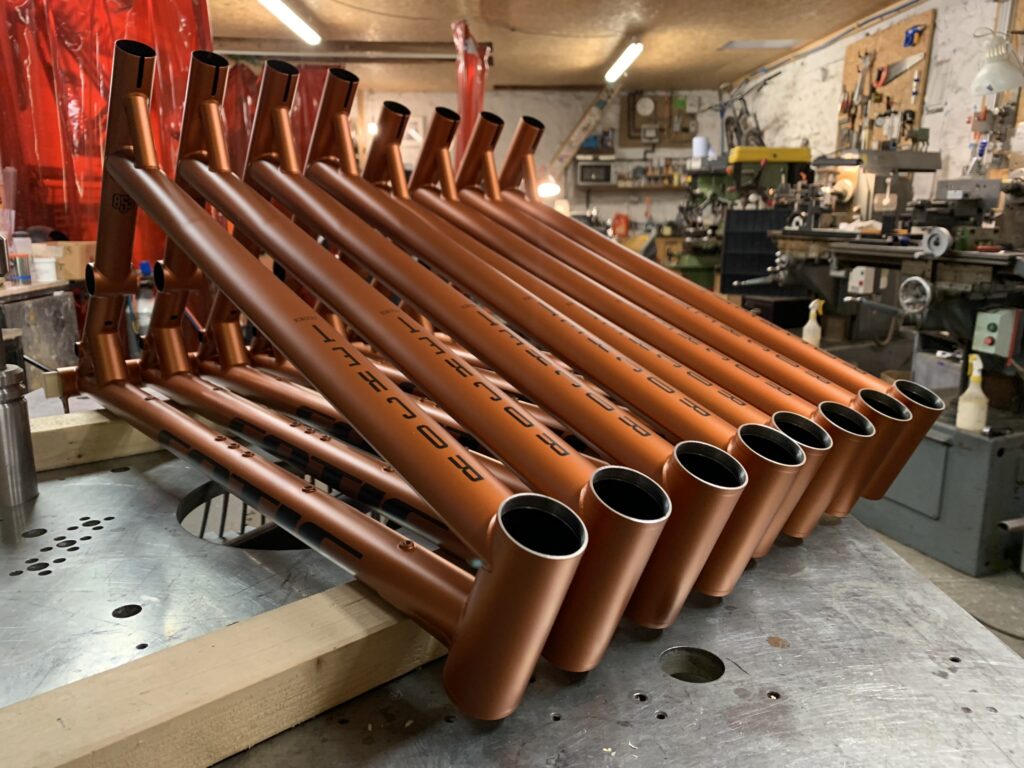

Hope Valley in the Peak District is synonymous with mountain biking, and it’s also been the long-time home to the small family-founded and run Bear Frame Supplies. The name will likely ring a few bells for many riders, and those in the bike industry. Still, the products and services offered by its founders, Aaron Ward and his wife Sarah, have been invaluable to many British frame builders over the years.
From axles to dropouts, bottom bracket shells, brake parts, head tubes and hangers, in both stock, custom and prototype versions, Bear Frame Supplies’ parts can be found hidden beneath the paint on quality frames all over the land, from brands such as Cotic, Mason and Five Land Bikes (the latter also builds for other premium brands).
Diminishing demand, issues sourcing raw materials, and other contributing factors were cited by the owners for their decision to close shop, which is a sad sign of the times for the home-brewed UK bike industry.
Scratching beneath the gloss of the paint, we asked the founders of the three aforementioned bike brands what this will mean for them, and other builders in future.
Cy Turner, founder of Cotic Bikes
offroad.cc: How important has Bear been to small UK bike brands and frame builders, and where have they fit in with Cotic?
Cy Turner: It was important, but I guess with it closing this is self-evident that there either weren’t enough of us, or they weren’t important enough.
ORCC: The services and products it offered: how easy are they to replace locally?
CT: We are in the process of finding out. Aaron made a lot of our turned parts (head tubes, pivot axles, etc) as well as some more intricate CNC bits, like the shock mounts on the droplink bikes. I have enquiries in with a few firms to make us parts for the Jeht and Rocket, as I would ideally like to keep things in the UK, even if it’s not as local as Aaron. Ultimately, I will be able to get the parts, but it might mean going to China or Taiwan to get them.
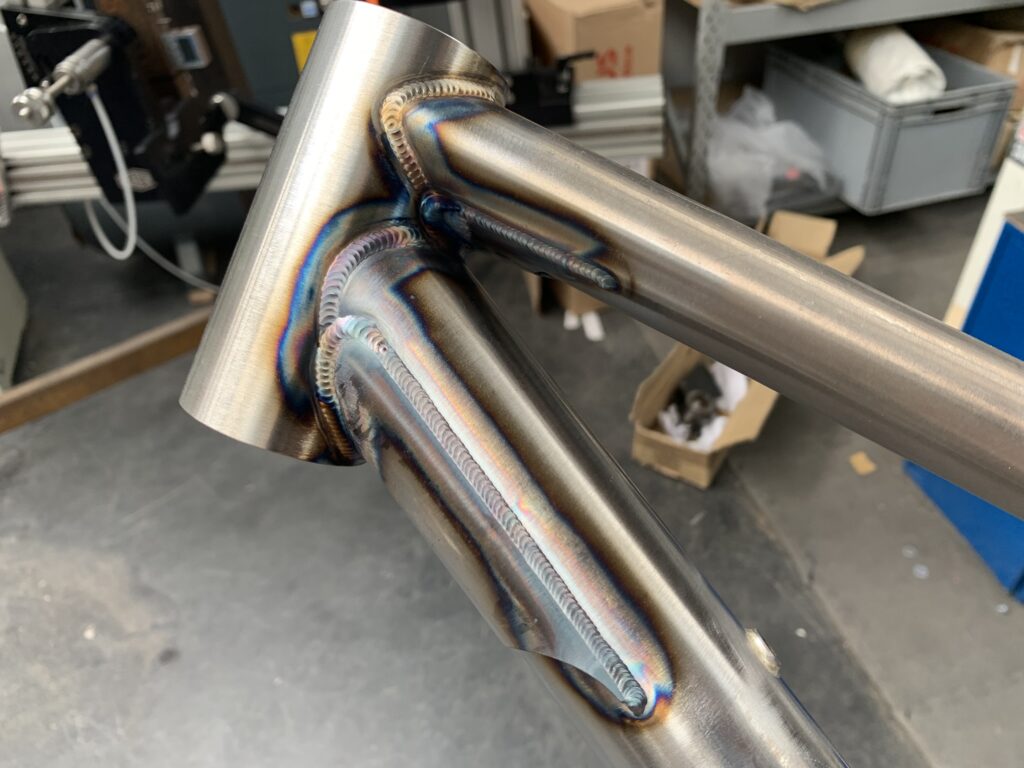
For the parts we need to source, it’s relatively easy to find alternatives because we design and engineer all the parts ourselves. We have all the manufacturing information; we just need to find someone to make them for us.
I enjoyed working with Aaron because he’s a friend. He understood bikes, the prices were good, and there were never any issues with very small batches. We’ll certainly miss that.
The people who will struggle are the other brands who don’t have that in-house engineering expertise, or small builders who relied on Aaron’s designs for things like dropouts.
ORCC: Being a relatively local brand to Cotic, and with the small brands and builders in the UK often being closely linked in one way or another, how much of a surprise has the news been to you?
CT: It wasn’t a surprise at all, even though I was sad to hear it when he called to tell me. Aaron and I chat at length whenever I pop over to collect parts. I know it’s been a really tough couple of years, just as it has been for all of us. Unfortunately, they couldn’t figure out a way to turn it around.
ORCC: The supply chain/raw material sourcing issues and a downturn in demand that was noted – is this something you have noticed with Cotic and the UK frame building industry of late, and in the current ‘climate’, is this making it harder for smaller UK brands and builders to survive?
CT: The downturn in demand is definitely something that’s happening. Sales are down across the industry, and that’s meant we haven’t been buying as many parts from Bear as we used to.

I think a lot of one-man-band builders have given up over the last couple of years as well, and Brexit makes sending parts to the EU such a pain. It’s not easy. We’re making it work, but we have mixed sourcing in Taiwan, the EU and the UK.
Matt Stitt, co-founder of B2B frame builder Five Land Bikes and the new Method Frameworks
off.road.cc: How and where has Bear fitted into your frame building over the years?
Matt Stitt: Frame parts made by Bear have gone into a majority of the frames we’ve built since we started in 2017. Head tubes, bottom bracket shells, and other off-the-shelf parts are often specced by clients, and we’ve always been happy to use them as they were great quality.
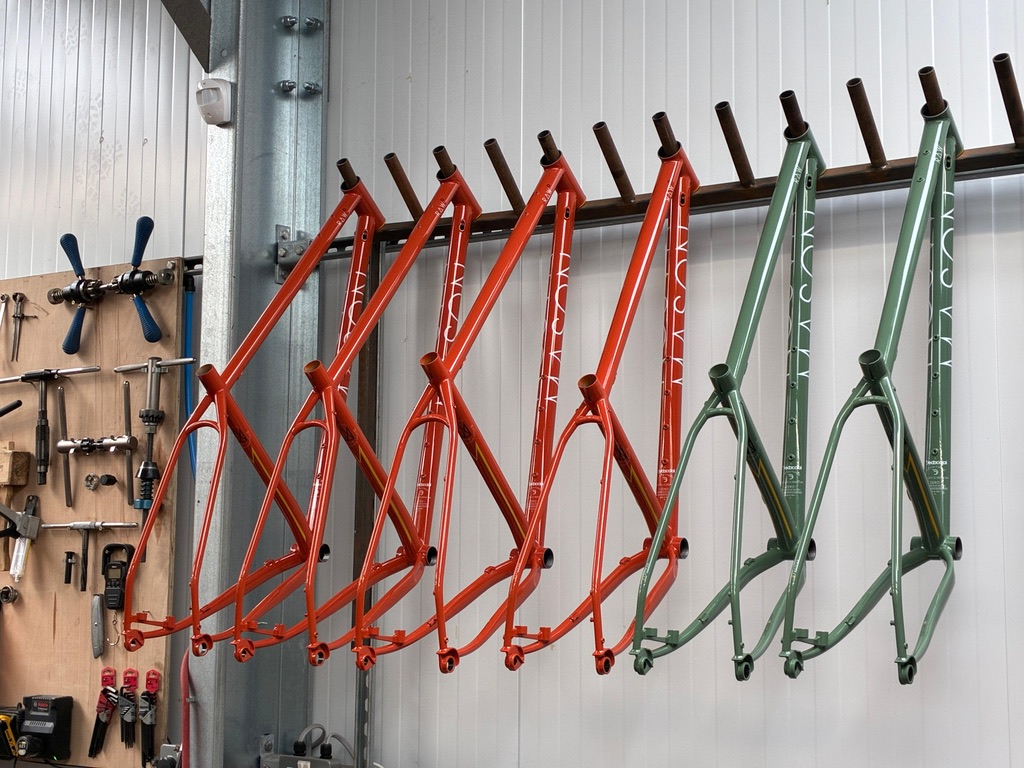
Bear Frame Supplies have also been really helpful in producing custom CNC parts for prototypes and small production runs. The very first bit of contract work we did was building swing arms for Swarf Cycles, and all the machined parts on that project were made by Bear, and its head tubes are still used on the Mason Raw MTB frame we currently make.
ORCC: The need for custom solutions from Bear – how important is that for the UK frame-building scene?
MS: There are a lot of custom and hobby builders that rely on access to quality frame parts that can be purchased in small volumes. Anything that makes it more difficult to manufacture frames in small numbers isn’t a good thing. Bear was a company working in the background that helped a lot of folk get into frame building, and those small builders can turn into larger manufacturers down the line.
We’d like to see the number of frames being built in the UK increase, and the more people taking ideas and turning them into businesses, the better. Bear closing is a barrier we don’t need, and they were an important part of infrastructure for manufacturers in the UK.
ORCC: Did the closure come as a surprise to you, and what does it mean for you and other builders now? Are there other obvious UK alternatives?
MS: It was a shame to hear, but maybe not a surprise given how tricky things are for a lot of companies in the bike industry at the moment. I really wish them all the best, as they are nice guys that are good at what they do.
There are some alternatives in the UK, and we can make use of other CNC machinists, although hitting minimum order quantities to make pricing work is often the challenge when working on prototypes or small runs.
It won’t stop us building frames, but we want to see more companies in the UK that add to the industry – not less. Custom builders and those working on personal projects in sheds may feel it most.
In the UK, we still have Ceeway that imports a lot of parts from the Far East, as well as having hard-to-find parts manufactured locally, and slightly larger builders will have their own supply chains that often include some imported parts.
ORCC: From your perspective, has demand over the past few years changed for your frames, and have geopolitical issues and changes made it harder on supplies, costs, and sales?
MS: We have been lucky enough to stay busy, but the type of work we do has changed a bit; we are doing more prototyping or development work for more niche frames. Margins are definitely being squeezed for all involved, as the industry is overstocked and there are a lot of bargains, so a new frame that has been developed and manufactured in the UK is still competing with that at a time when the cost of overheads and materials has shot up.
Brexit continues to be a pain when it comes to sourcing frame materials, or sending frames into the EU for lab testing or to customers. The UK frame building scene is small enough without feeling a bit cut off from the rest of Europe.
Dom Mason, co-founder of Mason Cycles
ORCC: How important has Bear been to Mason over the years, and where exactly has the company fitted in to your system?
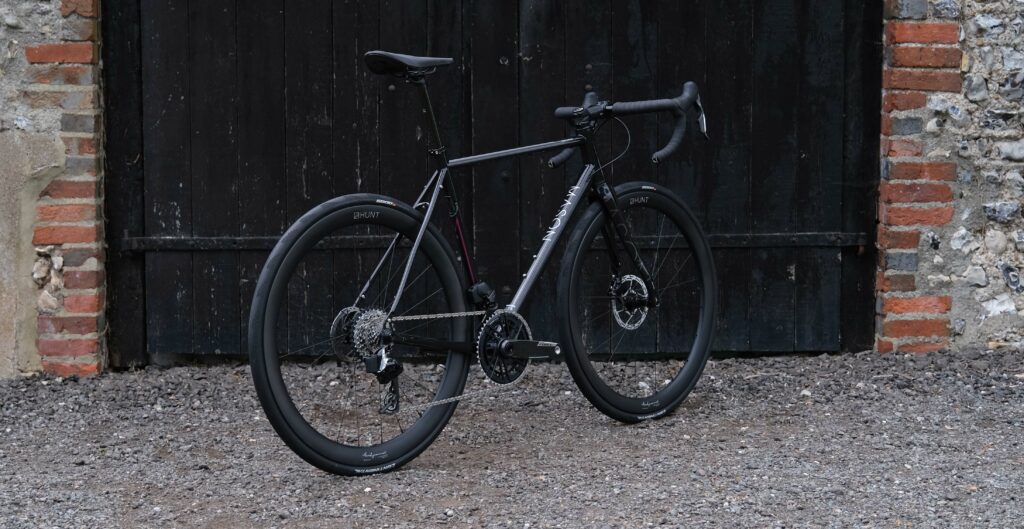
Dom Mason: Right from the start of Mason, the goal has been to keep production of our frames and components within Europe, and also to use UK makers and suppliers whenever possible. So when we were developing the second version of our steel endurance road frame, the Resolution2, I went to Bear to ask if we could co-develop the dropouts.
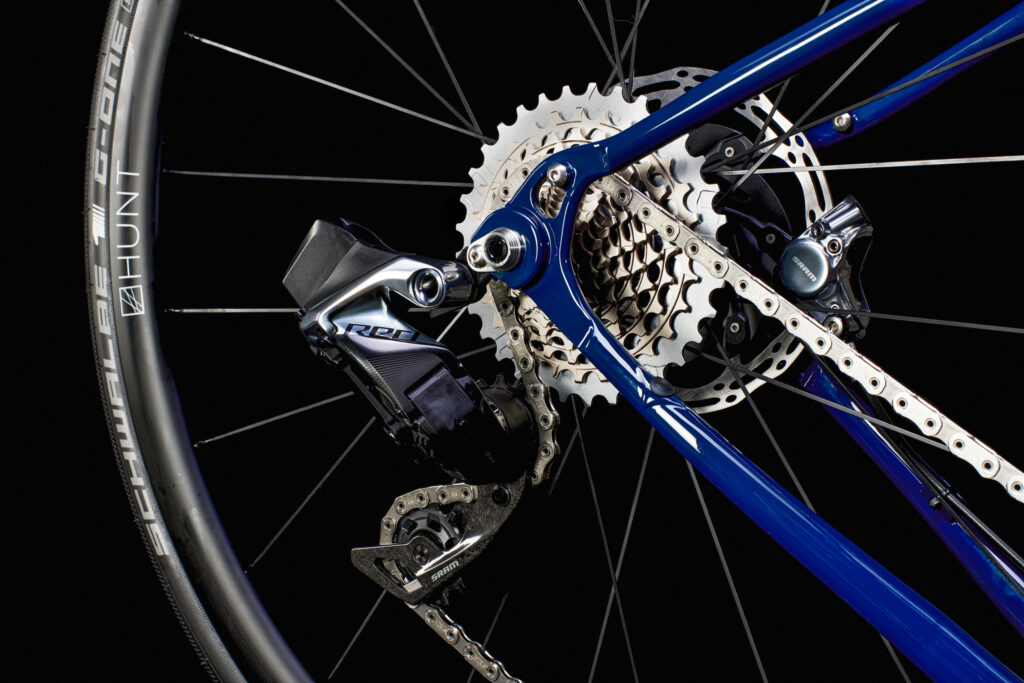
We based them on one of [Aaron’s] existing thru-axle/flat-mount designs, but with custom dimensions and features for Mason. I loved the way it turned out, with the beautifully machined hanger fitting from the inside and a stainless axle end cap that was like ‘bicycle jewellery’.
In the following years, we would go on to develop updated versions of the BEAR x MASON dropouts for models like the ‘MASON ISO’ and ‘SLR’. When UDH came along, we worked with Aaron to develop new dropouts to accommodate the new hanger standard, along with innovations like an ‘eccentric insert’ for the non-drive side dropout to ensure perfect frame accuracy, and to help speed up the frame-making process.
ORCC: Working with small, local and niche companies like Bear, how important and personal is that for brands like Mason? What did they do that the major parts manufacturers can’t?
DM: It’s hugely important for Mason, and me personally, to work closely with all our suppliers and makers. This was one of the reasons that I started Mason, after feeling a disconnect from suppliers when working with a Taiwanese brand. We worked together to develop exactly the parts that we needed to complement our refined framesets.
With a big supplier, we would just have to pick a component from a catalogue, and we don’t ever do that. So, Bear has been very important to us over the years. I’ve enjoyed working with Aaron and Sarah, and always appreciated how hard they worked, and the fact that they always kept the parts that we co-developed exclusively to us.
ORCC: Has the closure surprised you, and with and where Mason frames are made, have supply chain/raw material issues been a similar problem of late?
DM: It surprised all of us when Paragon Machine Works went down, and it did worry me for other makers like Bear, but I also hoped it might help to send business in their direction.
We are devoted to using the best possible tubing, fittings and components to build our framesets, but I guess when brands feel the pinch, they need to help balance things, and making parts in the UK is not always the most economical.
Raw material costs have skyrocketed, and Brexit has helped absolutely nobody. We are seeing many brands struggle; working very hard to produce the very best product isn’t a guarantee of success in today’s climate, so I’m sad to say that I wasn’t entirely surprised when I heard this sad news.
Our tubing suppliers, such as Dedacciai and Columbus, and our frame makers in Italy are very established and solid, so our supply has continued to be good, although raw material prices are increasing and affecting margins.
As a final note, Sara and Aaron have been kind enough to supply me with the drawings for our dropouts, so I’ll be able to ask our Italian makers to machine them for us, keeping supply within Europe.











4 thoughts on “What does Bear Frame Supplies’ closure mean for UK frame builders?”
Please remove this from Road CC. I go on the website to read ROAD cycling stories. Stop padding your content out with irrelevant stuff.
@Surreyrider Many brands affected by this produce road bikes too.
Don’t be so ignorant.
I think its a shame you have a view like this. I strongly applaud UK manufactures and am always intrested to see how they are getting on, even if they are not. Road.cc ran an intresting story here and it outlines that we need to support uk based companies.