


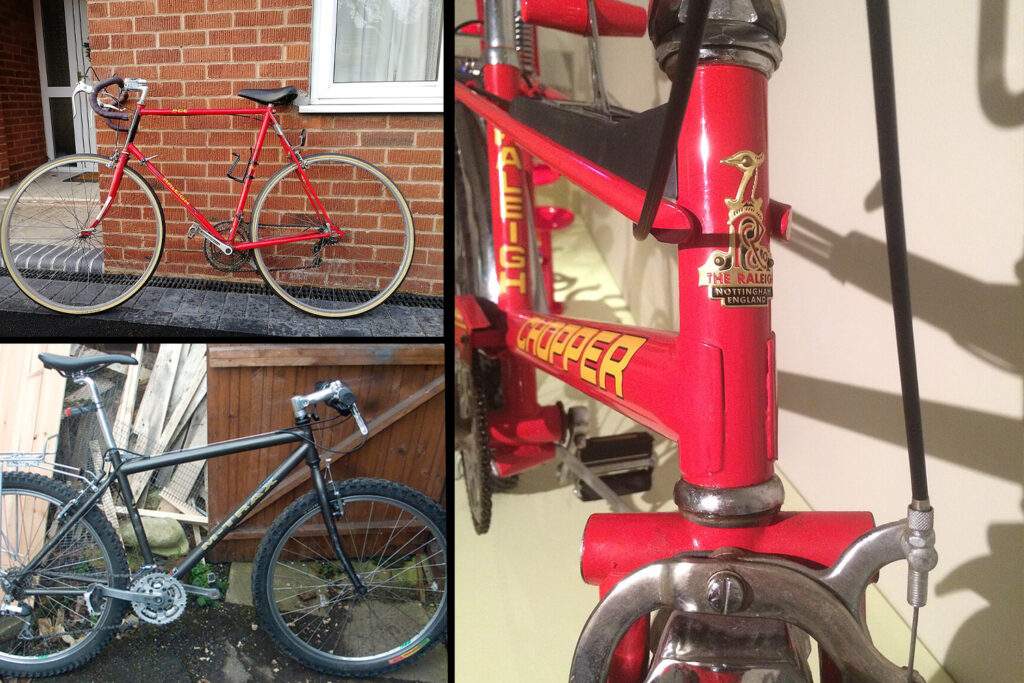

Stabilisers? Nah, they’re for softies. I’ll do it the hard way, unsupported, with blood, bruises, bells, and a bold but terrified grin all in. That was my mentality when I was four or five years old, and my attitude to riding a bike hasn’t changed much in the decades since.
As a young boy, my dad took me to the local bike shop to collect my birthday weapon of his choice – a spangly blue Raleigh Gresham Flyer, which was my first ever bike. This was just after taking my first unsupported ride on a mate’s balloon tyre bike, which provided an addictive mix of terror and elation. It was something that only a Mr Softy 99 ice cream and an Irn-Bru could quell.
I’ve written about some of my Raleigh bikes in the past, both here and on road.cc, so I’ll spare you too much of the patchy retro details here. Instead, I’ll do my best to explain what Raleigh meant to me.
Raleigh were bikes, and bikes were me
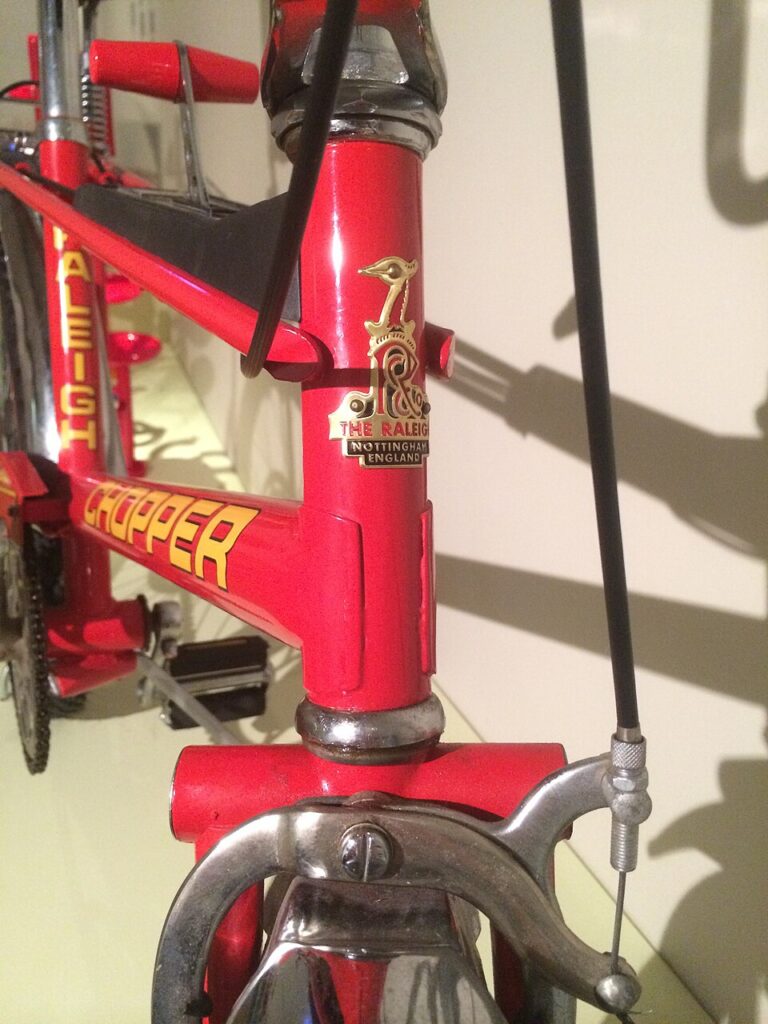
The history and story of Raleigh’s rise and fall (read more about Raleigh owner, Accell’s threat of administration here) have been clinically dissected and regurgitated everywhere over the past few days – including in the tabloids and institutional news platforms. Rather than that, this is my personal long story with Raleigh and its bikes.
What the mainstream attention of the situation does show in graphic detail is exactly how important Raleigh bikes were to generations of Brits, of all ages and from all walks of life. Raleigh was a genuine quality household name. In its heyday, it was said to be the biggest bike manufacturer in the world.
Sadly, its slow but sure fall from prominence over the last couple of decades (and more), combined with the birth of mountain biking, and the mass arrival of the major early American brands to the arena, perhaps combine to diminish their stature amongst those who’ve come to the sport during this time.
Choppers and icons to droppers and legends
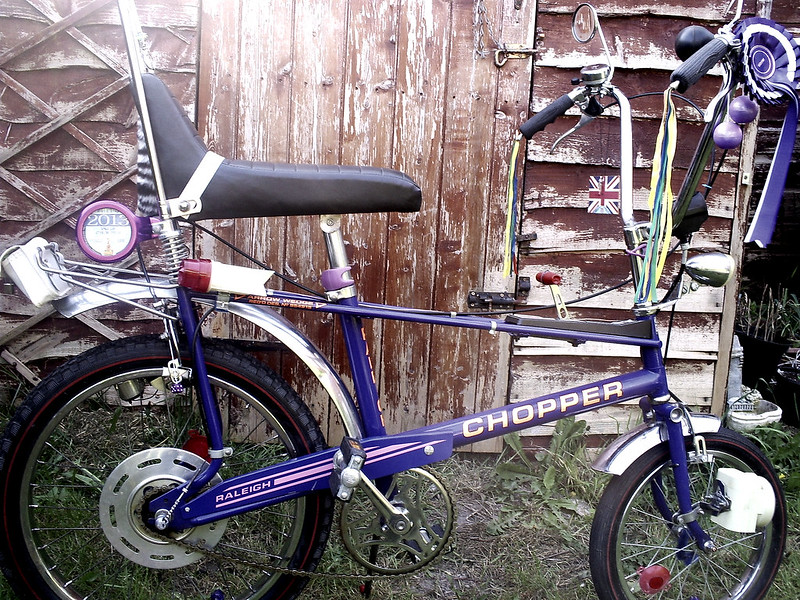
Christmas 1972 was when I got my wonderful new Raleigh Chopper for Christmas (you can read about it over on road.cc). That bike, oh that wonderfully cool yet precariously eccentric bike, and the freedom it gave a pre-teen me was the stuff of plank-jumping, foghorn-blasted personal history, and another step on my great Raleigh ride through life.
I never wanted to surrender that bike to the perils of ‘growing up’, but the choice was made that I needed to chop the Chopper and get a proper bike for my 12th Christmas – a racer.
Opening the Raleigh brochure, and one bike, just one, jumped off the page and into my imagination. It was a Raleigh Europa, a budget ten-speed racer. Why? Because it was in the famous (then not to me) Tour de France-winning TI Raleigh road team colours, who were also pictured in their red, gold and black splendour and peaked caps in that brochure, which was my first ever sight of a pro racing cyclist.
That was my third and arguably most personally influential step on the Raleigh and the cycling ladder that would shape the rest of my life, and lead me to chasing bicycle dreams ever since. This was all pre-mountain bike, and it soon led me away from Raleigh bikes into racing other dropped bar bikes around the country and Europe, always backed with those red, gold and black dreams of racing icons in the back of my mind, largely unfulfilled dreams.
The fat-tyred disrupter
View this post on Instagram
After a little time out of racing and serious riding, I heard tell of mountain biking, a sport that those around me deemed to be a ‘mad fad’ for non-serious cyclists, though I knew that new sport and way off riding had my name stamped all over it.
Once again, that step to the dirty and potentially dark new side of the sport was taken on a Raleigh bike; the late 80s Elkhorn, which I wrote about here a while ago. Maybe that bike, or rather what it led to, was equally as progressive and important as those other Raleigh bikes for me.
Purple haze and irony
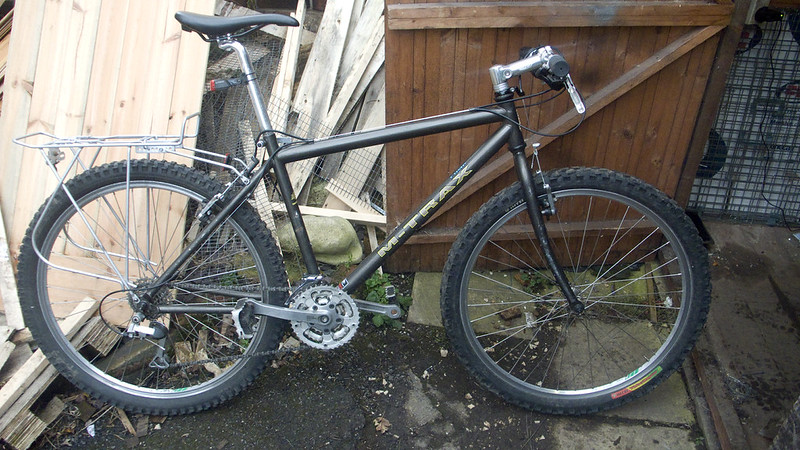
As our fine sport evolved and became popular during the early 90s, when Raleigh had a fully-fledged top-tier MTB team, I somehow got re-engaged with chasing my bicycle dreams, only in a whole new way.
The fateful irony is only just dawning on me, through a sea of purple haze. Much as my radical purple Chopper had taken me on a wild side ride to freedom, the purple Raleigh M-Trax bikes I was aboard from the early-mid 90s would open up a whole new and uncharted chapter of life for me.
For many years, through the ‘golden era’ (or purple patch for me) of 90s MTB, I was sponsored by Raleigh. I was privileged enough to be able to pretty much write and make my own oddball way and my own story on a purple and dayglo shoestring thread through an oddball and groundbreaking era for the sport.
From the racing down Cresta Run to tracing the Nile, chasing impossible speed, tackling some of the highest and most dangerous peaks and ridges around, to making TV ads and appearing on posters, to riding with and racing with legends of old and new – often decked out in the dayglo goodness of Raleigh, it was a bit of a time.
The end of the Raleigh dream?
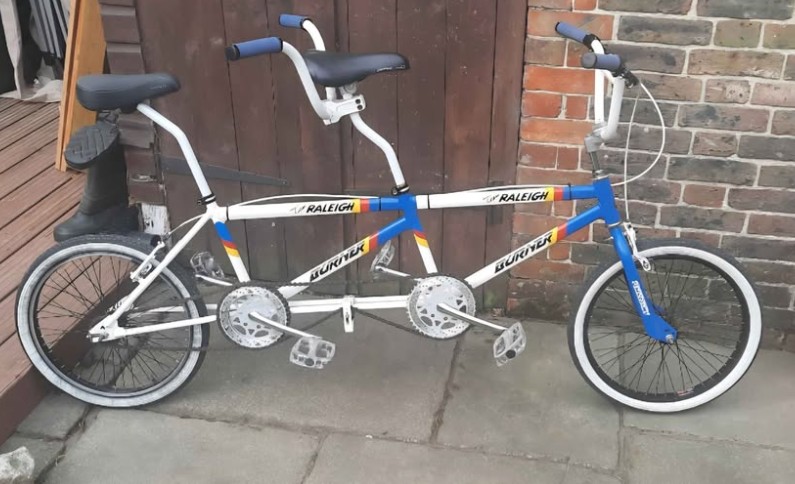
Be it a Chopper, a Burner, a Grifter, a Chipper, a Bomber – or perhaps even an Activator, Raleigh bikes were, for decades, a part of the fabric of British society, especially for us (once) young guns of the analogue era. Should they fall by the cheap and cheerless shelf-brand wayside, it will be a travesty far beyond the balance sheets of life for many of us.
The great 1970s Chopper bar salute of true myth will never die at the hands of corporate inevitability.















8 thoughts on “The fall of Raleigh is a British cultural tragedy: To me and many other riders of my generation, this feels personal”
A blue Gresham Flyer was my first bike too, handed down from my big sister in about 1972. I can’t recall much about the handling or feel but I remember we put it through an awful lot of torture in terms of riding off road, doing jumps on it etc so it must have been pretty solidly built!
Wish I still had it seeing the prices they fetch now, but I grew up riding a Burner. Red frame with yellow tyres and pads, gold brakes and the awful plastic saddle. When I finally outgrew it I got a Criterium 12 road bike, which I still have to this day, although it gets very little use (old 2×6 with downtube shifters and very skinny tyres is no fun to knees in their 40s, especially on UK roads these days)
The fall of Raleigh happened long before this week.
Just because somebody bought the name does not mean they were the same bikes.
And if you care about the name so much, noone says it won’t be purchased by another inverstor as Accell Group is liquidated!
If I had purchased my special products division 650 back in ’96, rather than obtaining it under a warranty replacement, I would apparently have received a signed picture of the fine Nottingham artisan that welded her.
The 750 of that year won Barry Clarke another British xc cup, as I recall.
Didn’t move with the times, consequently it failed. Sad for the employees, but the real Raleigh died years ago.
@SecretSam I agree about the real Raleigh dying years ago – when I worked in a village bike shop in Cape Cod in the US in the late 80’s, lots of the local homes had a few US-market Raleigh 3-speeds from the 1950’s or 60’s still knocking around the shed/garage/basement (with the script “Made by Raleigh of England” on the chainguard) and the quality was amazing – the steel items like the stem and cranks were stamped out of really high quality steel and had razor-sharp edges, like parts of a gun, whereas on my own eighties-made Raleigh at home those parts looked like they were stamped out of fondant icing…
Believe it or not, Raleigh was a major cultural icon in the USA also – at least for serious cyclists of my age. My first geared bike was a Robin Hood three-speed.
I longed for a Chopper, but it was never to be. Then, in 1970, my father bought himself a Raleigh Gran Sports. It was third in line of the racing bikes in the US catalog.
Luckily for me, my father discovered that he was afraid of cars. So in 1974, when I was 13, he gave that bike to me. I became obsessed. It had 531 tubing. It was chrome. I was in love. I eventually ended up road racing from the late 1978-1982. Then I moved to NYC to be a junior “executive” (a YUPPIE). I left that bike with my parents in the suburbs where it would be safe and bought a series of NYC-safe bikes – two of which were stolen.
That bike had legs. I eventually started riding it again in the 2000s once I was in the suburbs. Eventually it sat and rusted.
Finally in 2017 I started a restoration project to resurrect it into a city bike. It took two years to complete.
That bike is still with me today. My faithful Raleigh. When I ride it, I am in love.
My first road bike was a Raleigh, too. A 1976 Raleigh Record. I dragged it out of the shed a few years ago and got it working again. 14kg it weighed! A 52/42 crank and a 14-28 five speed ‘cluster’ at the back made hills pretty hard work…