


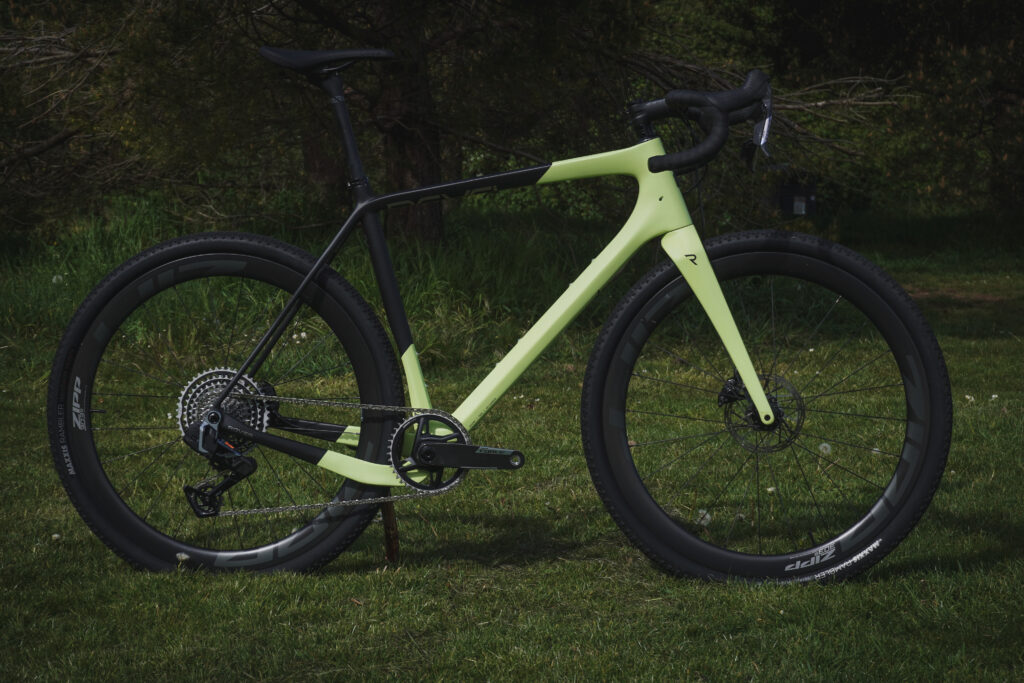

Revel’s Rover is a fast, lightweight gravel bike that’s designed for covering distance at speed. It’s fun to ride and pretty comfy considering its racy feel, and the asking price for this privateer build is pretty reasonable too. It’s the kind of bike you might cast a serious eye over if building up to some big events is more your idea of what gravel is than larking about in the woods, and it’s definitely worth your consideration if you want to ride quickly off-road, especially if riding quickly off-road means riding quickly on-road to get there.
Revel Rover SRAM Force XPLR – Technical details
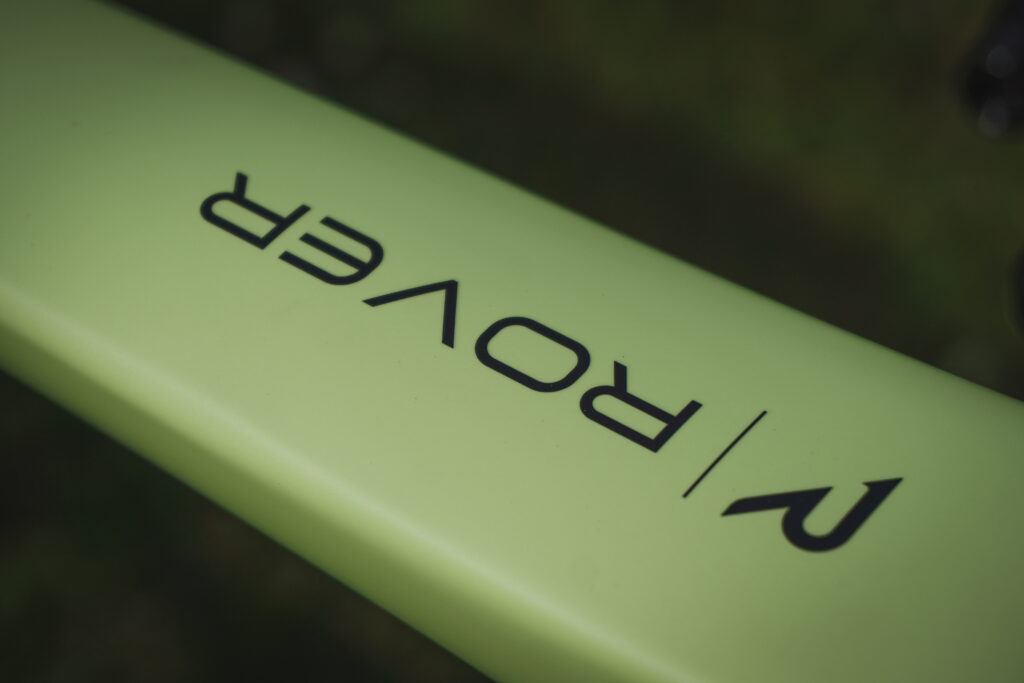
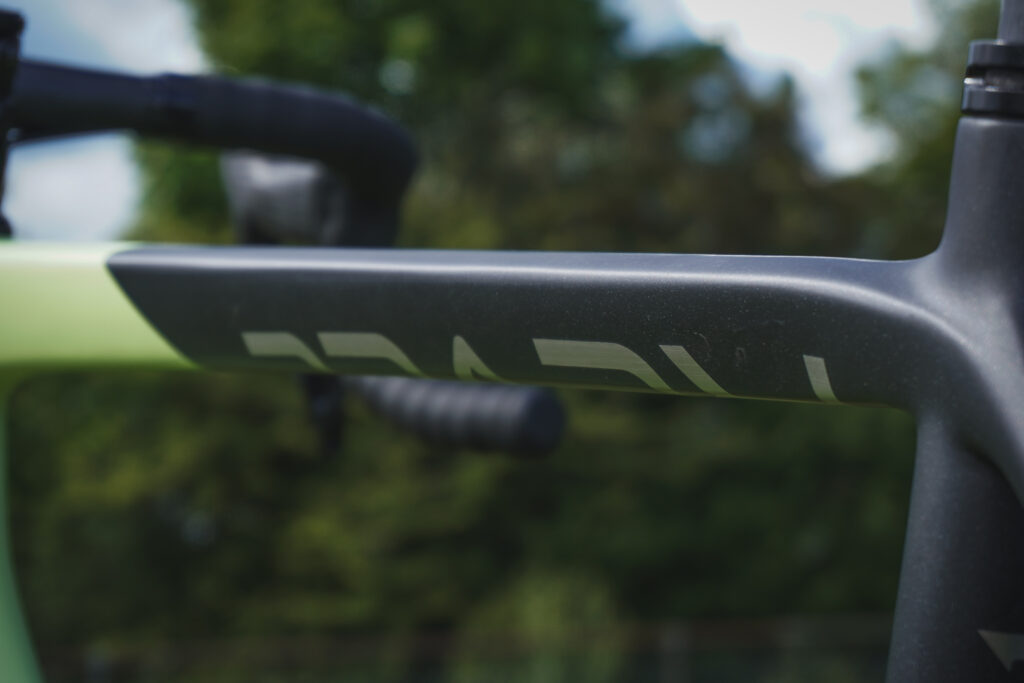
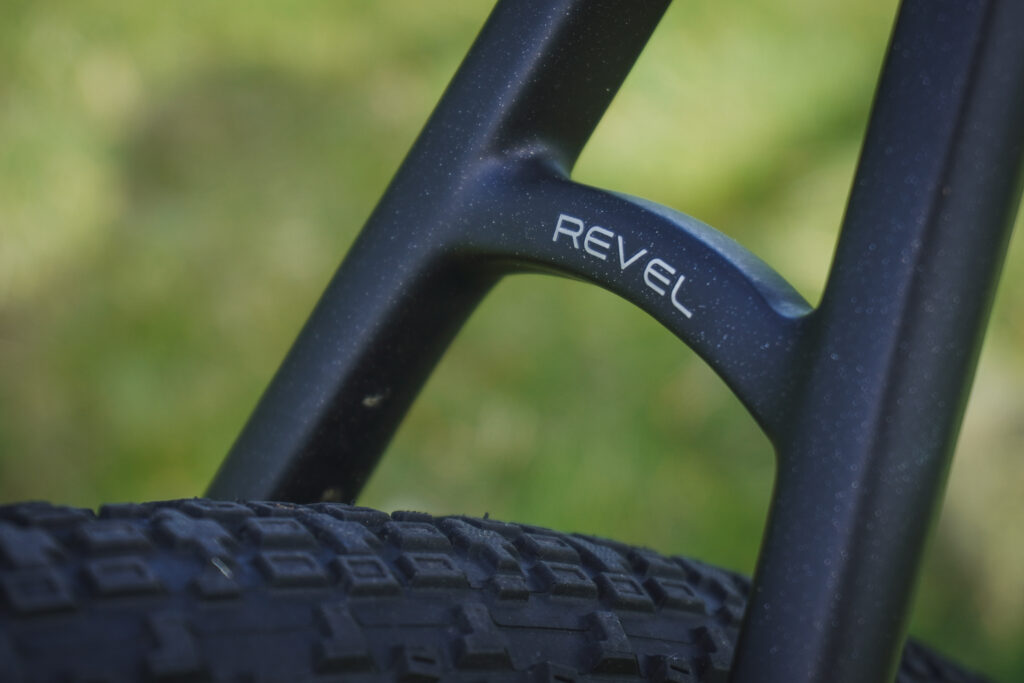
The Revel Rover frame is, according to Revel, constructed from “the highest-end Toray T700 and T800 carbon fiber, designed with a layup to magnify carbon’s ride-damping comfort and lateral stiffness.” It’s a nice mix of the angular and the smooth, and the paint job, with its slightly iridescent finish, is much nicer than a flat photo would suggest.
Hose routing isn’t fully internal, so it’s not as neat as some, but you’ll save yourself an hour either side of packing it into a box for a flight, and you can easily tweak your position. For me, the benefits outweigh the disadvantages; your mileage may vary there.
The drive-side chainstay is dropped, and the bike is designed for 1X transmissions only: there’s no front mech mount. The fork is UD carbon to match the frame, and both frame and fork are capable of swallowing a 50mm tyre with no issues.
Revel says the bike has “Tons of bottle mounts and accessory mounts for bikepacking adventures or long races,” but really you’re getting what you’d expect on a racier bike. There are no cage mounts on the fork, or bento box mounts on the top tube. You do get a double mount on the down tube, which is handy for fitting a bottle low down when you’re running a frame bag, and there’s a mount under the down tube too for a third bottle, or tools, or fuel. There are none of the internal storage cavities that are becoming more prevalent on gravel bikes. The derailleur hanger is a SRAM UDH standard, and the Rover has a normal BSA-threaded bottom bracket.
Revel Rover SRAM Force XPLR – Componentry
There’s the old saying: if you have to buy Dura Ace, you shouldn’t be riding Dura Ace. You can apply it to any groupset ecosystem, and the logic is simple: top-tier groupsets are very expensive, and only offer marginal gains over their cheaper siblings, so anyone that’s not a sponsored rider probably isn’t good enough for the cost-benefit sum to really work. That’s not to say you can’t have it – it’s your money – but it probably won’t make you measurably faster.
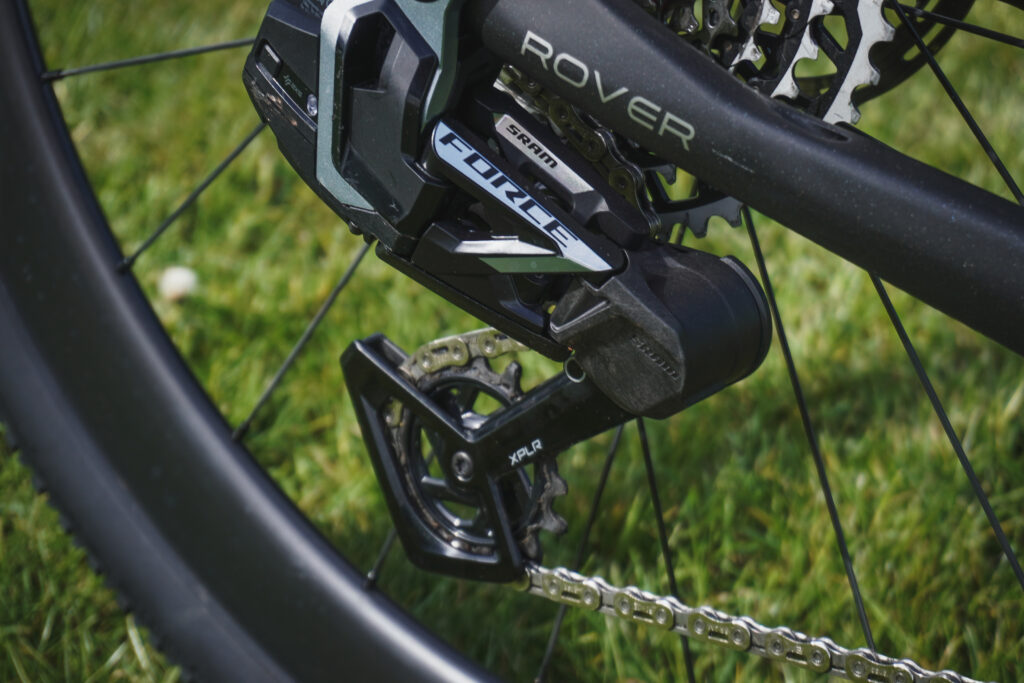
This is what I’d call a good privateer build: good enough for anyone but the very fastest riders, but at a reasonable price. One man’s reasonable is another man’s astronomical, of course, but £5,599 for a race-spec gravel bike isn’t top of the market: you can literally have two of these for the price of an S-Works Crux, and the 3T Racemax 2 and the Cervélo Aspero 5 will both cost you about eight grand in a comparable build.
SRAM RED would be lighter, of course, but not much lighter – we’re talking in the region of 250g – and from a functional point of view you’re a better rider than me if you can discern any meaningful difference. There’s no doubt those extra thousands would be better poured into some personal coaching rather than swankier gears. But that’s no fun, is it?
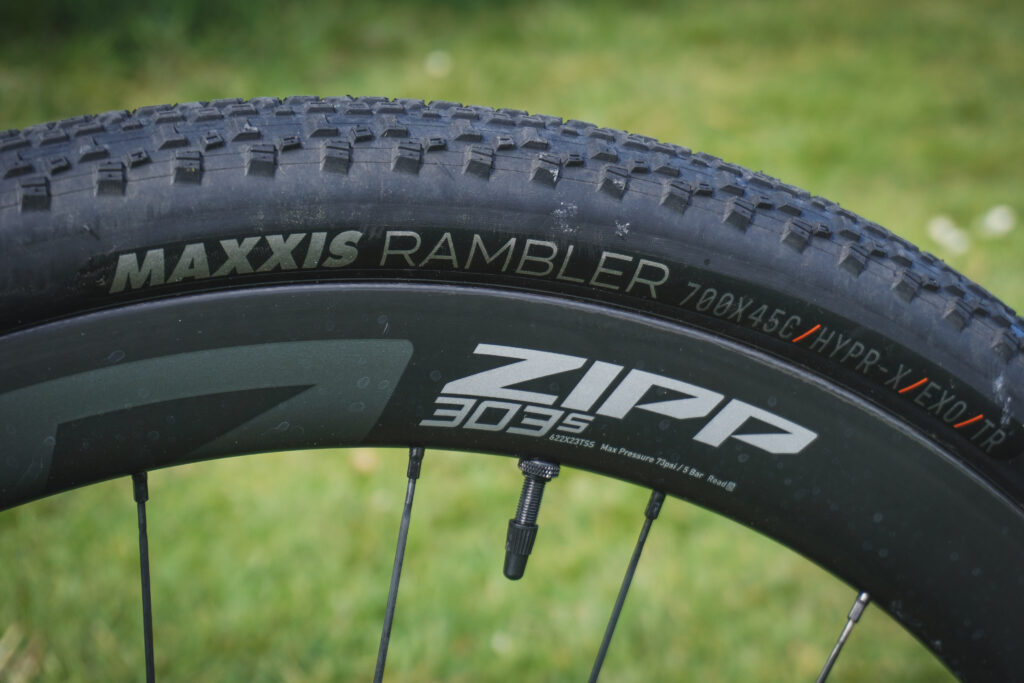
Zipp’s 303S wheels are a very solid spec and sit at a sensible spot in the strong/light/cheap triangle. We reviewed them in 2020, and they’re largely unchanged since then. They’re a 45mm mid-section hookless rim with a modern, wide profile, and designed for tubeless tyres; at 1,530g they’re a sensible weight. Our only gripe at the time of review was that they had a slower pickup in the freehub than some competitor wheels, but I never really found it an issue. These are technically road wheels – the much wider 303 XPLR S is the gravel version – but they’re strong enough to cope with some abuse. The 23mm internal width, certainly not the widest you’ll find, is enough to mount tyres up to the 50mm the bike is designed to take, but those wider tyres do match up better with a wider rim and the sidewalls tend to be less pinched in, making the tyres a bit more stable, especially if you’re running them soft.
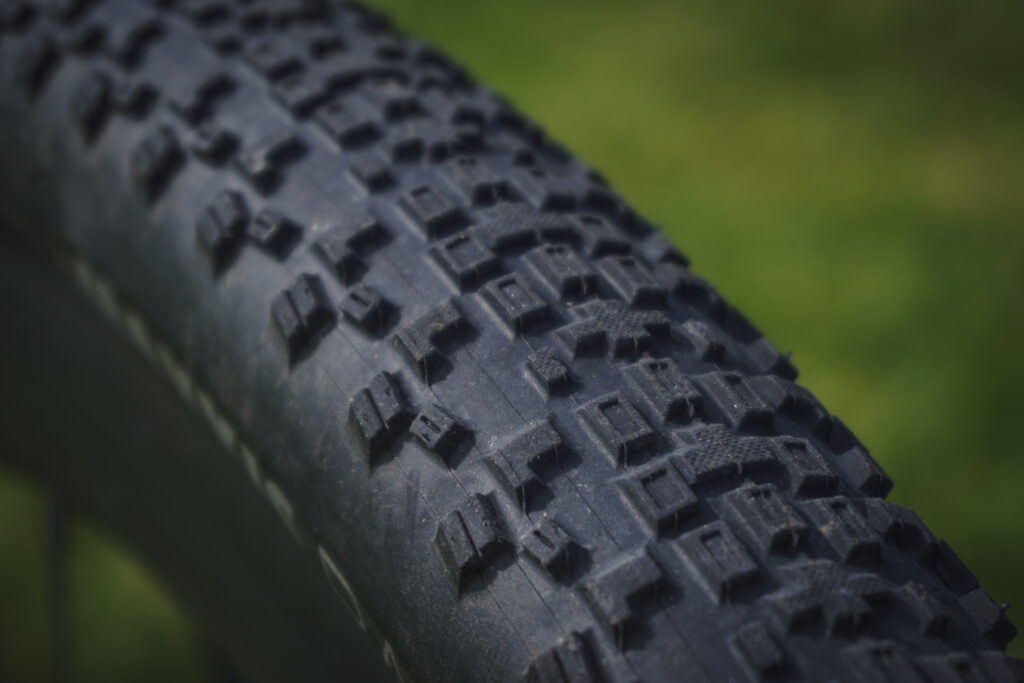
The Revel is fitted with Maxxis Rambler HYPR-X EXO 700×45 tyres, which I reviewed back in December, and right now, as I sit writing this in the middle of a heatwave, they’re a great tyre for a mix of tarmac speed and trail grip and comfort. The close-spaced tread isn’t as good in sticky conditions, but as an all-round UK tyre they’re a good choice, and the 45mm chamber means you can run them pretty soft for off-road comfort and grip.
Finishing kit is really good quality. Zipp supplies the stem and the SL70 XPLR bar, which is a nice gently-flared design that works well on trails and tarmac. Revel itself supplies the carbon seatpost and it’s topped off with an SDG saddle that I found pretty comfortable, although I get on pretty well with most saddles.
Revel Rover SRAM Force XPLR – Performance
I’ve hopped onto this bike from the Sonder Camino Ti, which is ostensibly the same size but very different in approach and feel. The Rover is about two kilos lighter, the wheelbase is 67mm shorter, and it’s steeper both at the head tube and the seat tube, giving a bike that has a similar stack-to-reach ratio a very different feel.
This feels like a fast bike: the ride is involving, and it benefits from your constant input. That’s not to say it’s hard to ride, or twitchy, because it’s not that: you can happily cruise around on it, but it’s better if you’re pushing yourself, and the bike, a bit harder. It’s good on tighter and more technical stuff, but it’s also happy blasting along the flat, open gravel roads up on Salisbury Plain. If you’re after something for a longer gravel event – the Dirty Reiver, maybe, or even Unbound – and you’re looking to get up the standings, this bike would be a good tool for the job. Especially in this privateer-focused build.
I’ve ridden the Rover around the local roads and trails, and I’ve not found anything yet that I wasn’t happy to pilot the bike down. Even the bridleway descent down the back of Cheddar quarry – which in reality is mountain bike territory – didn’t faze it too much, although it’s certainly not my fastest time down there. Riding gravel trails round here generally means quite a lot of road sections to join them up, and most gravel bikes are a compromise between off-road ability and on-road speed. Revel says the Rover has “progressive gravel geometry” and it’s comparable to other more race-focused gravel bikes like the S-Works Crux, the 3T Racemax 2 or the Cervélo Aspero 5.
The steeper seat tube makes it a little tighter at the rear, and it’s longer than any of those bikes in a comparable size. Certainly you’re at the business end of gravel here, and that makes it a much more purposeful bike on the road too. It’s closer in geometry to some all-road bikes like the Ridley Grifn RS than it is to a lot of gravel bikes, and that shows in the overall performance.
This is the kind of bike you could sling some slick tyres on and head out on the local pace line ride, and you wouldn’t feel hugely compromised: it’s light, and quick, and the position is fine at speed. If you were looking to find a bike you could use for blasting the dusty summer trails but also press into service as a road-focused training bike with a spare set of wheels, then that’s certainly a possibility.
With the 1X setup there’s a slight compromise on top gear here, but we’re talking about the equivalent of the second-highest gear of a compact or semi-compact setup, so it’s not a major issue. Bottom gear is low enough that lack of skill and fitness were generally the deciding factors rather than running out of ratios. Jumps between the ratios are marginally bigger than a 2x setup, but with thirteen speeds we are talking marginal: from one to eleven the jumps are between 7% and 17%, which is broadly comparable with a 12-speed 10-33 cassette. The last two jumps are bigger (19% and 21%) as it ramps up to the big 46T sprocket. Those winching gears were not an issue; the 13-15 jump on the AXS cassette (15%) is the only one I found a touch jarring at times, but you get that on a 12-speed 10-36 cassette too.
Revel Rover SRAM Force XPLR – Verdict
Revel says that it’s designed the Rover to deliver “a smooth, confident ride over long miles and mixed terrain” and I’d say that it’s certainly a bike that fulfils that brief. At £5,599 is competitive in terms of price, and we’ve already touched on some of the bikes that it’s undercutting by a decent margin. More direct competitors include the Orbea Terra Race M31eLTD, which we tested in a SRAM Rival build at £5,199. Matt was really impressed with the comfort levels of that one, whereas I’d say that the Revel was more or less as I expected in that regard: It’s not uncomfortable, but neither does it feel like comfort was the first thing on the brainstorming sheet.
Probably the bike that’s most similar is the Vielo V+1 Race Edition, which has an aero cockpit and the wider, more gravel-focused Zipp 303 XPLR S wheels. The Canyon Grail CF SLX 8 Di2 is probably marginally better value, but not quite as racy, even though the weight is similar. The Guava Spot looks like really good value in a SRAM Force build, but front end stiffness lets it down a bit.
Overall I think the Revel Rover is a very good package, and there’s a lot to like. It’s quick and comfy, and good value. Maybe the wheel package is due a refresh, and the less clean lines of the cable routing may be an issue for you, although it’s not for me. But the bike performs really well, and likes to be ridden fast, and it’s capable enough for tricky terrain without losing out on the easy bits.
Test Report
What does the manufacturer say about this product?:
The Rover is our take on what a modern gravel bike should be: fast when you want it, comfortable when you need it, and capable enough to keep exploring when the pavement ends. Built around progressive gravel geometry and a dialed carbon layup, the Rover delivers a smooth, confident ride over long miles and mixed terrain. It feels equally at home on pavement, rough dirt roads, rolling singletrack, and everything in between.
SPEED AND VERSATILITY
The Rover blends efficiency with real versatility. A compliant carbon frame and fork help take the edge off long rides, while modern gravel geometry keeps handling stable, comfortable, and fast.
Multiple mounts for bottles and gear make it easy to go long, and dropper post compatibility adds confidence when the route turns technical. With updated builds and 45mm tires spec’d, the Rover is ready for everything from gravel racing to weekend overnighters.
Tell us some more about the technical aspects of this product:
FRAME: UD CARBON
The highest end Toray T700 and T800 carbon fiber, designed with a layup to magnify carbon’s ride-damping comfort and lateral stiffness.
FORK: UD CARBON
Stiff under braking, compliant, and monster tire clearance.
Dedicated 1X Drivetrain
Designed specifically for 1x drivetrains. The Rover has clearance for up to a 50T chainring to handle any terrain you may encounter.
SRAM Universal Derailleur Hanger
No more games having to track down a specific a specific hanger. The Rover comes equipped with a SRAM Universal Derailleur Hanger (UDH).
Large Tire Clearance
With 700c x 50mm / 27.5 x 2.1″ tire clearance, the Rover accepts the biggest gravel tires available with ample mud clearance. All while keeping class-leading 420mm chainstays.
CLEAN INTERNAL CABLE ROUTING
Easy assembly and maintenance with guided routing tubes and a quiet ride.
FRAME MOUNTS: BOTTLE AND STORAGE
Tons of bottle mounts and accessory mounts for bikepacking adventures or long races.
COMPATIBLE WITH DROPPER POSTS
Easy internal routing for dropper posts if you want them. (fun fact- we love droppers on gravel bikes)
BSA: THREADED BOTTOM BRACKET
Standard BB
How does the price compare to that of similar products in the market, including ones recently tested?:
For a SRAM Force privateer build it’s nearer the bottom of the market than the top. You can pay eight grand for a similar build elsewhere
List the components used to build up the bike:
Frame: Rover Carbon
Fork: Revel Gravel Fork $12times100$ 47mm
Headset: Cane Creek 40-Series
Seat Collar: Revel 31.6 Dia
Wheels: Zipp 303 S Carbon
Tires: Maxxis Rambler 700x45c HYPER-X/EXO/TR
Handlebar: Zipp SL-70 XPLR Carbon 42cm (S/M) / Zipp SL-70 XPLR Carbon 44cm (L-XXL)
Stem: Zipp Service Course SL 80mm
Seatpost: Revel Carbon 27.2×400
Saddle: SDG Bel-Air Lux-Alloy
Brakes: SRAM Force XPLR E1
Rotors: SRAM Paceline 160mm Centerlock
Shifter: SRAM Force XPLR E1 13spd
Rear Derailleur: SRAM Force XPLR E1 13spd
Chain: SRAM Force E1 118L
Cassette: SRAM XPLR XG1371 10-46t
Crankset: SRAM Force XPLR E1 172.5mm 42t
Bottom Bracket: SRAM DUB Wide BSA 68mm Road
Tell us what the bike is for and who it’s aimed at. What do the manufacturers say about it?:
Revel says “the Rover delivers a smooth, confident ride over long miles and mixed terrain. It feels equally at home on pavement, rough dirt roads, rolling singletrack, and everything in between.” so it’s kind of designed as a jack-of-all-trades, but really it’s more at the racy end.
Where does this model sit in the range? Tell us briefly about the cheaper options and the more expensive options:
You can have any of the SRAM XPLR groupsets so this Force build is the second-most-expensive of four
Tell us about the build quality and finish of the frame and fork:
Nicely built and finished
Tell us about the materials used in the frame and fork:
FRAME: UD CARBON
The highest end Toray T700 and T800 carbon fiber, designed with a layup to magnify carbon’s ride-damping comfort and lateral stiffness.
FORK: UD CARBON
Stiff under braking, compliant, and monster tire clearance.
Tell us about the geometry of the frame and fork:
Effective Top Tube Length: 583mm
Seat Tube Length: 550mm
Seat Tube Angle: 75°
Chain Stay Length: 420mm
Bottom Bracket Drop: 70mm
Bottom Bracket Height: 285mm
Head Tube Angle: 71.5°
Wheel Base: 1064mm
Head Tube Length: 178mm
Axle to Crown: 395mm
Fork Offset: 47mm
Trail: 69mm
Stack: 600mm
Reach: 423mm
Standover: 803mm
How was the bike in terms of stack and reach? How did it compare to other bikes of the same stated size?:
Just right for me, numbers matched what I expected
Was the bike comfortable to ride? Tell us how you felt about the ride quality:
It’s pretty comfy; we’re at the racier end of gravel here and it feels very planted and firm without necessarily feeling ‘comfortable’ as such.
Did the bike feel stiff in the right places? Did any part of the bike feel too stiff or too flexible?:
no issues
Was there any toe overlap with the front wheel? If so, was it a problem?:
no issues
How would you describe the steering? Was it lively, neutral or unresponsive?:
Lively side of neutral
Tell us some more about the handling. How did the bike feel overall? Did it do particular things well or badly?:
Better when you’re engaged and putting some work in. Good turn in on gravel and climbs. Decen through singletrack.
Which components had the most effect (good or bad) on the bike’s performance? Would you recommend any changes?:
I’d have liked to have seen the newer XPLR wheels
Any comments on drivetrain performance?:
Hard to fault
Any issues with drivetrain durability?:
no
Tell us some more about the drivetrain. Anything you particularly did or didn’t like? Any components which didn’t work well together?:
SRAM Force XPLR AXS is a great groupset, and the main reason not to buy the much more expensive Red.
Any comments on wheel performance?:
They performed fine
Any issues with wheel durability?:
no issues
Any comments on wheel weight?:
Good for a semi-deep
Any comments on wheel comfort?:
Hard to judge with big tyres
Tell us some more about the wheels. Did they work well in the conditions you encountered? Would you change the wheels? If so, what for?:
Zipp 303 S are good wheels, no doubt. The more gravel-focused 303 XPLR S would be a better fit here
Any comments on tyre performance?:
Great in the dry, and it’s currenty VERY dry
Any comments on tyre durability? How much did the tyres wear during testing?:
barely any wear
Any comments on tyre weight?:
They’re not heavy for their size
Any comments on tyre comfort?:
Pretty supple, good run soft
Tell us some more about the tyres. Did they work well in the conditions you encountered? Would you change the tyres? If so, what for?:
I’d change them once it starts raining again, if it ever does. but for dry riding, they’re great.
Any comments on brake performance?:
Excellent power and feel
Any issues with brake durability?:
No
Tell us some more about the brakes. Did they work well in the conditions you encountered? Would you change anything? If so, why?:
I prefer the feel of GRX personally in terms of bite and lever feel, but they’re hard to fault in terms of actual function.
Any comments on controls performance?:
all good
Any issues with controls durability?:
no
Tell us some more about the controls. Any particularly good or bad components? How would the controls work for larger or smaller riders?:
Zipp bars and stem work well across surfaces
Did you enjoy using the product? Yes
Would you consider buying the product?
If I was looking to do some big events, yes
Would you recommend the product to a friend? Yes
Use this box to explain your overall score
This is a very good bike and enjoyable to ride. It’s not cheap, but it is decent value.
About the tester
Age: 53Height: 189cmWeight: 104kg
I usually ride: whatever I’m testing…My best bike is: Dward Design Custom Audax, Lauf Úthald, Cannondale Topstone
I’ve been riding for: Over 20 yearsI ride: Every dayI would class myself as: Expert
I regularly do the following types of riding: Road racing, Gravel riding, Indoor riding, Indoor racing, Bikepacking, Commuting, Touring, Club riding, Audax, Fitness riding, Leisure riding

1 thought on “Revel Rover SRAM Force XPLR gravel bike”
Decent value for money at £5599.00. Pull the wool over the other one.