


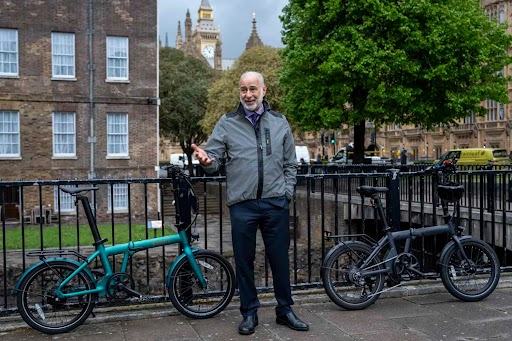

The Labour MP for Leeds North East has written to the BBC’s director of editorial policy and standards to demand that an article about millions paid out in compensation to people injured by the riders of illegal e-bikes and e-scooters be amended, saying the article had factual inaccuracies and that the use of the generic term ‘e-bike’ was misleading.
In his letter to David Jordan, backed by the Bicycle Association, Fabian Hamilton says the article, titled ‘E-bike injury payouts top £110m and push up insurance premiums’, does not distinguish clearly enough between road legal electric bikes (EAPCs) and “illegal electric motorbikes”. The broadcaster also ran an accompanying TV segment based on the article on BBC Breakfast.
While we’ve heard of cases where police on the ground have struggled to distinguish between EAPCs and illegal bikes, and data such as TfL’s collision stats don’t always tell us the category of bikes that were involved in incidents, Hamilton points out that the £110m paid out by the Motor Insurers’ Bureau (MIB) since the first claim was made seven years ago all involved bikes that are not legal to ride on the road.
“Not a penny of the reported £110m paid out by MIB can relate to a road-legal e-bike, because by definition the MIB cannot pay out for one”, says Hamilton in the letter.
“Every “e-bike” claim it has settled concerned a machine that is, in law, an uninsured and unregistered motorcycle, and the headline and standfirst should say so. This is backed up by the MIB spokesperson in the article specifically referring to “e-scooters or electric motor bikes”, rather than e-bikes.”
Hamilton points out the original version of the article stated that micromobility vehicles were all “legally classified as motor vehicles”, which is untrue, since EAPCs are treated almost exactly the same as conventional pedal cycles in UK law. The article also wrongly stated that EAPCs have a maximum legal riding speed of 15.5mph, when this is actually the speed at which the motor stops offering assistance. Both of these inaccuracies were corrected, but Hamilton complained that the corrections were not acknowledged in full.
> E-bikes and UK law: everything you need to know
“The BBC’s Editorial Guidelines are clear that significant errors should be corrected transparently”, said Hamilton.
“Readers who saw the original wording, and the outlets and social media accounts that repeated it, have been left with a false understanding of the law.”
As well as the correction notes, Hamilton has demanded the BBC amends the language in the article so that it refers to ‘illegal e-bikes’ throughout, rather than just ‘e-bikes’. He also suggests that BBC editorial teams are briefed “across BBC News, online and broadcast, on the legal distinction between EAPCs and illegal electric motorbikes”, noting that a previous BBC article about a hit-and-run was amended – with correction notes – to make it clear that the offender was riding an illegal electric motorbike.
“Language matters here”, says Hamilton.
“Every time the word “e-bike” is attached to these machines, a legal, healthy and increasingly important form of transport takes the blame for the behaviour of people riding illegal motorbikes. The consequences for the responsible industry are real: unwarranted restrictions, rising costs and public distrust of a product that is central to cutting congestion and transport emissions.”
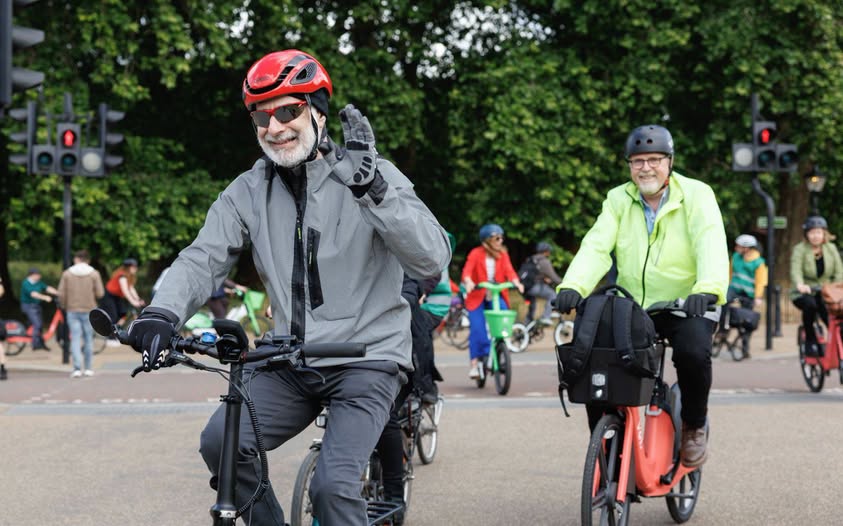
Hamilton, a member of the All-Party Parliamentary Group for cycling and walking, regularly talks about his enthusiasm for active travel, and rides an Estarli e20.7 folding e-bike according to an article on the brand’s website.
Mentioning in his letter to Jordan that the Bicycle Association is set to launch a national campaign to help the public to purchase legal e-bikes, including an industry trustmark, Hamilton continued: “We understand this is a complex issue and the general public need clearer information to be able to understand the law and the issues and we would suggest the BBC has a duty to educate in this area.”
It’s not the first time the BBC has been accused of misleading its audience when it comes to the distinction between EAPCS and illegal electric bikes.
In January last year, the Bicycle Association lodged a formal complaint with the BBC over a Panorama episode presented by Adrian Chiles, titled ‘E-Bikes: The Battle For Our Streets’, again arguing that the use of the term ‘e-bike’ was inaccurate in the context of the program, in which Chiles largely referred to the safety risks posed by illegal bikes: “Panorama confuses legal with illegally modified e-bikes and ignores their benefits compared to the UK’s car use”, the BA said at the time.
Yesterday’s road.cc live blog highlighted a BBC Nottinghamshire article with the headline ‘E-bike capable of 72mph seized in crackdown’, noting that the title failed to mention the bike in question was not legal to ride on the roads.







28 thoughts on ““A false understanding of the law”: Labour MP demands BBC amends ‘e-bike injury payouts’ article that failed to mention £110m in claims all involved illegal bikes”
Well done that MP. While they’re at it, perhaps they could contextualise the numbers. By my maths, if you discount the clearly exceptional one-off payout of £20m, and if you assume it’s proportionately distributed, this must be contributing less than* £2.50 to the cost of (what Google tells me is) the average policy of £750. That’s not nothing, but it’s hardly the ‘major contributor’ claimed in the article.
[* I’ve rather optimistically assumed that the insurance industry isn’t making any profit on these policies – if you account for their cut it would be an even smaller proportion.]
If the BBC need a primer, there’s a very easy to follow thread elsewhere on this site.
The BBC article says: “The cost of payouts has been a major contributor to increases in annual premiums for ordinary members of the public, experts say.”
So taking your £2.50 figure – it may not be major to the average £750 premium, but could conceivably still be a major contributor to the year on year *increase* in that premium (though I thought the trend was downward premiums)? But from that line alone, it’s not clear if they’re saying the contributor is the cost of payouts *for illegally ridden e-motorbikes / escooters only* or the cost of all MIB payouts.
Yes – it’s all a bit mealy-mouthed and obfuscatory throughout – I should perhaps have said *implied* in the article.
I’m pleased Mr Hamilton is doing this – it’s about time the media in general got the facts straight on “e-bikes” and “electric motorbikes”.
I used to be a little sympathetic when it came to the food delivery / Deliveroo type bikers – unfortunately their road-sense and behaviour does little to help cyclists. We cyclists get tarred with the same brush – time after time.
Sick of this. You expect it from the Telegraph, since they are heavily pro-motorist and waste no opportunity to stir up sentiment against cyclists.
But what is the BBC’s excuse? Simple ignorance, or deliberate shit-stirring? Neither deserves to be publicly funded.
I read that article and raised the same points as the MP. Apart from the automatic acknowledgement I’ve not heard anything and probably don’t expect to.
Unfortunately while we (probably) know what he means, technically if ” BBC amends the language in the article so that it refers to ‘illegal e-bikes’ throughout, rather than just ‘e-bikes’ “…
… then they’ll still be inaccurate. As (last I checked) it’s the use of the machines for riding anywhere other than on private land that is illegal *.
… although that might be good propaganda? Certainly I wouldn’t mind at all if there was also more done to steer sellers away from flogging them to the public with nothing but possibly a warning buried on page 94 of the manual.
* That is, without them being type-approved. And then assuming that’s done and they fall under the motorbike rules getting a suitable licence (driver would need to be old enough), insurance, paying any tax, then riding them *only* in accordance with those rules eg. only on (some) roads always wearing a suitable helmet and having the machine pass MOTs as required … is this right? Obviously you could still legally use them as eg. a paperweight most places…
Just call them electric motorbikes, or e-motorbikes. Stick a battery in a car and your still a motorist, but stick a battery in a motorbike and suddenly you’re a cyclist – why?
@ grumpyoldcyclist I had a reply from the BBC last year on this issue when it reported someone knocked down by a Surron-style bike as having been hit by an ebike, they acknowledged they were mistaken and changed the wording in the story, so you never know.
The BBC seem to get ‘confused’ a lot; they confuse genocide and ‘self defence’ for example.
That’s the funniest thing I’ve read in ages. An MP complaining about language that obscures facts. An MP complaining that someone has bent the truth, altered the meaning and the perception.
Maybe if he did that for everything that comes out of every politician’s mouth or is written by them, our politics would be in a far better place and our people would be more knowledgeable.
But I agree, he is correct to correct the article.
That’s the funniest thing I’ve read in ages. An MP complaining about language that obscures facts. An MP complaining that someone has bent the truth, altered the meaning and the perception.
Maybe if he did that for everything that comes out of every politician’s mouth or is written by them, our politics would be in a far better place and our people would be more knowledgeable.
But I agree, he is correct to correct the article.
@Sriracha
” Stick a battery in a car and your still a motorist “.
I think you’ll find a lot of motorists who disagree with you there 😉
Perhaps we could call EAPCs e-cycles leaving e-bikes to be used for electric motor bikes. This would fit in with motorcyclists being called bikers and pedallers being called cyclists.
Apologies if this has been suggested before.
Stop press – BBC may have now got the message about e-motorbikes, for now anyway: https://www.bbc.co.uk/news/articles/cx2xd555levo
If electric powered motorcycles are called e-bikes, shouldn’t gas powered motorcycles be called g-bikes? (It makes too much sense to call them both motorcycles!)
“The BBC’s Editorial Guidelines are clear that significant errors should be corrected transparently”, said Hamilton.”
Good luck with that one, Fabian. Having spent thirty years trying to get the BBC to correct the significant errors in their reporting of cycle helmets and failing completely, you’ll need a hell of a lot of luck.
@Sriracha
They have got what makes bicycles be recognized by the public as bicycles, and what motorbikes haven’t got – pedals, that’s why.
@mdavidford
Too bad the Police themselves, whose job it is to discriminate between legal and illegal and promote public understanding of the same, don’t know the difference:
“doing wheelies on what the force described as a Sur-Ron “e-bike”
Maybe, but legal e-motorbikes & conventional e-scooters seem to be rather rare (Autotrader only lists ~30 used nationally).
There probably should be a list of recognised electric vehicle names/descriptions. (Though it seems hard to even recognise that cycles are vehicles/traffic).
@Sriracha Too bad the Police themselves, whose job it is to discriminate between legal and illegal and promote public understanding of the same, don’t know the difference
They certainly don’t know the difference between criminal offences proven by indisputable evidence, and reports they can just ignore with no action required – to the police they’re the same thing. While preparing today for our Britain in Bloom regional Judgement Day I looked at the parish council notices display case. There was a Lancashire Constabulary poster urging people to report offences to the Neighbourhood Policing Team. I know, as result of choosing offences to report where I am not prevented from finding out what they actually did, the fate of those reports: straight into the bin
> Sick of this. You expect it from the Telegraph, since they are heavily pro-motorist and waste no opportunity to stir up sentiment against cyclists.
>
> But what is the BBC’s excuse? Simple ignorance, or deliberate shit-stirring? Neither deserves to be publicly funded
The BBC’s excuse is that they are every bit as pro-motorist and anti-cyclist as the Telegraph. Jeremy Vine not withstanding.
“shouldn’t gas powered motorcycles be called g-bikes”
@Geoff H By gas I presume you mean gasoline which is commonly known as petrol in the UK. So perhaps c-bikes for combustion which would cover petrol, 2-stroke, diesel (yes they do exist!) and anything else.
A g-bike’s one of these, isn’t it?
Hmm – didn’t seem to like my image – try again.
.
Nope – OK – never mind…