



Sometimes just a shout isn’t enough. If you’re trying to find a mate in a sportive pack, or trying to keep a group together as leader and sweeper, it’s really useful to be able to communicate when you’re out of earshot. And there are quite a few ways to do this.
We’ve tried out five different systems here that you can use for talking to your ride buddies, and we’re going to put them through their paces. How well do they work? How easy are they to use? What’s the range like? Would we recommend them? Let us know your experiences too. Have you ever used on-bike comms? Let us know what, and how it went, in the comments!
The systems on test
Lazer Velovox

Firstly we’ve got Lazer’s Velovox system (£159.99), which was developed in partnership with Cardo who have a long heritage in motorbike systems. The Velovox fits on your helmet straps and pairs with your phone, which takes care of the transmission of messages over mobile data in the Cardo app. It works a bit like a pair of open-ear headphones, but not as much as our second system. Read our review of it here.
OpenRock X
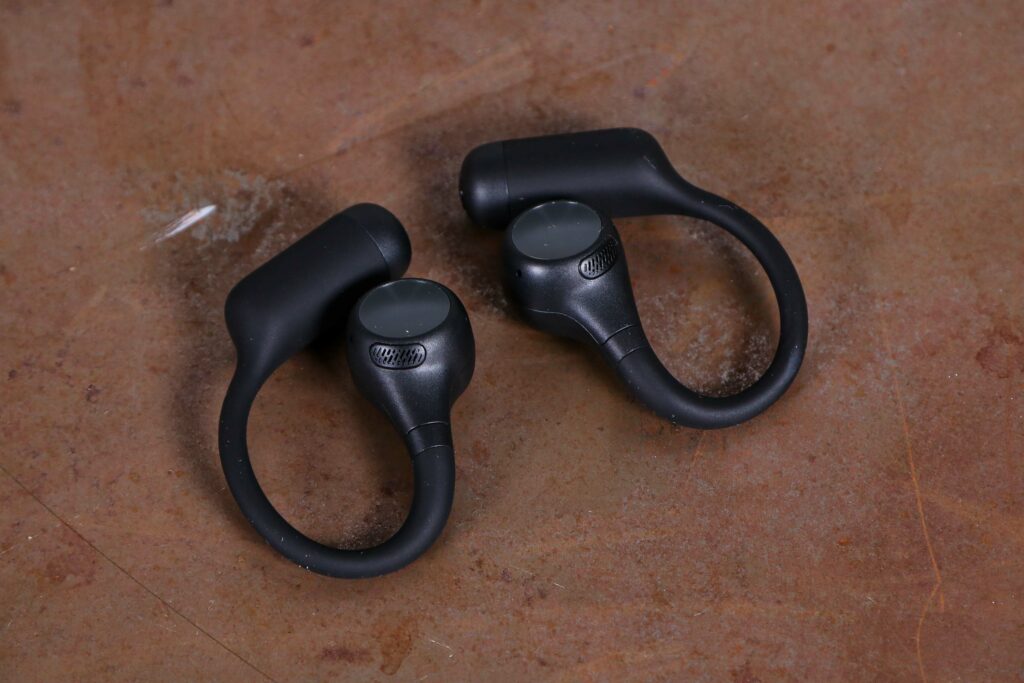
The OpenRock X (£169.99), a pair of open-ear headphones, were reviewed a while back on road.cc. Again, the phone’s doing the actual donkey work of sending and receiving. You can use any app that works; we used a Whatsapp call for testing.
Milo Action Communicator
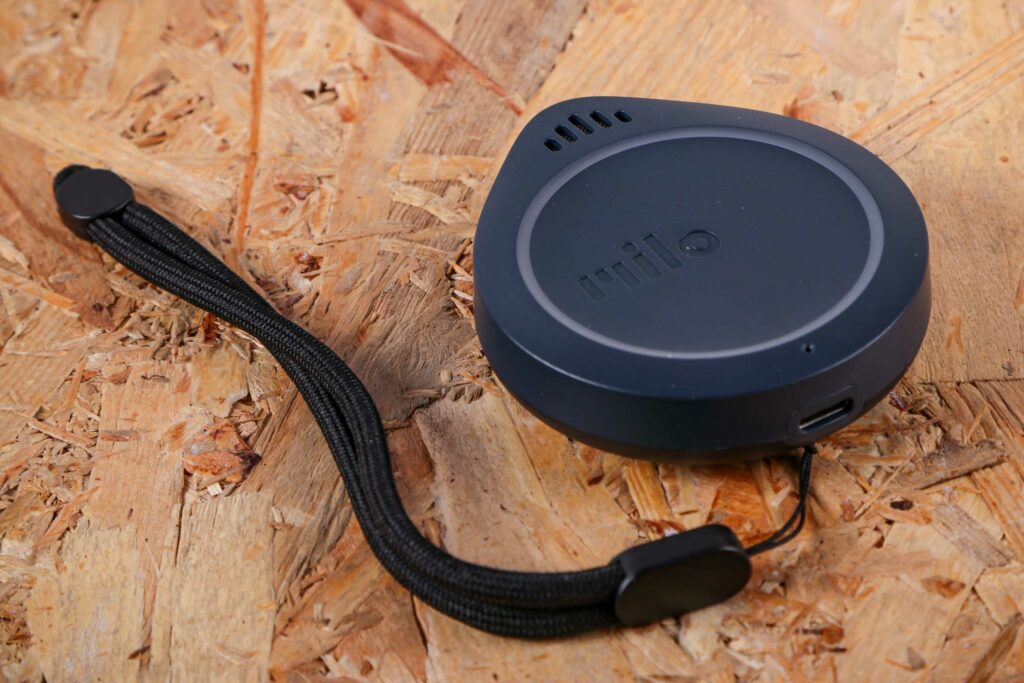
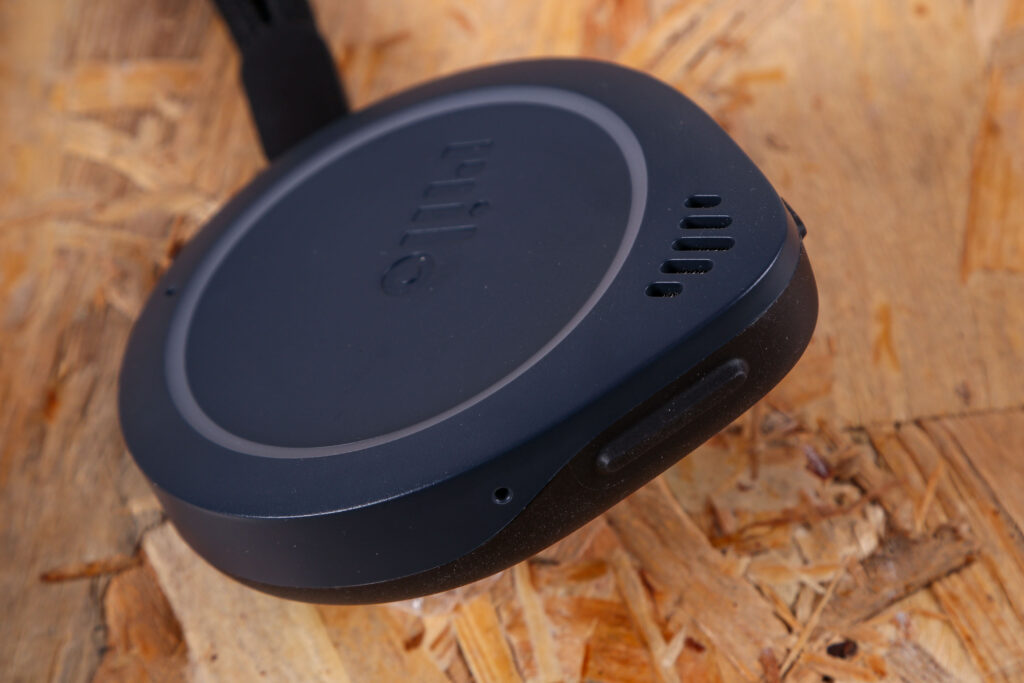
Milo describes this £199 device as the “walkie-talkie reimagined”. Reimagined as a droplet-shaped unit which sits on your bars, that you can chat through. The Milo comes from a watersports and skiing background, so it’s fully waterproof, and it uses a Bluetooth Mesh connection that can extend the range if there are more than two of you on the same call.
Apple AirPods Pro 2
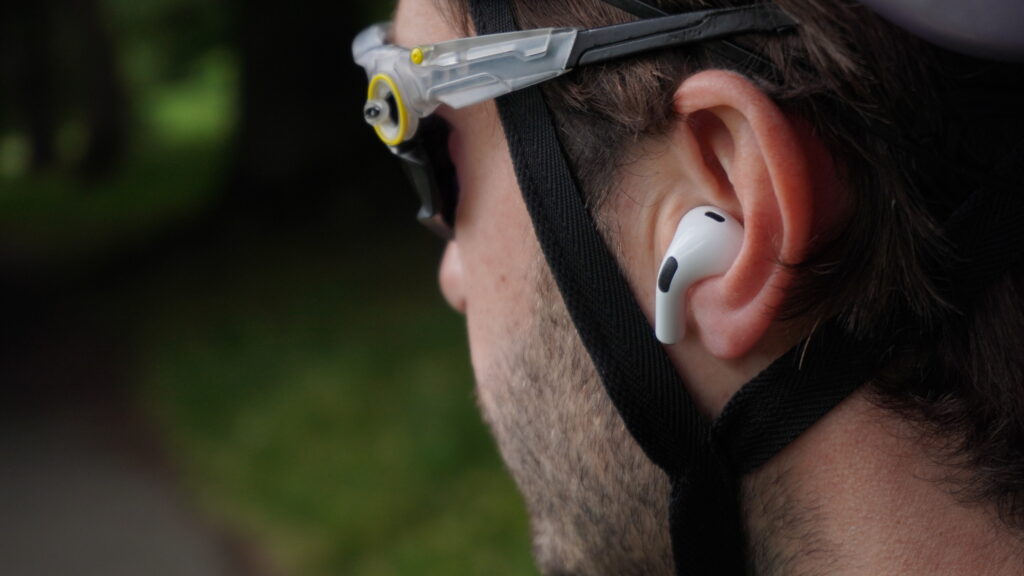
A somewhat late entrant to the test were Liam’s AirPods. He has the Pro 2 model, which has since been superseded, but they were in his pocket when we left for testing and they represent some of the most popular in-ear ear buds on the market.
And last but not least… a cheap walkie talkie
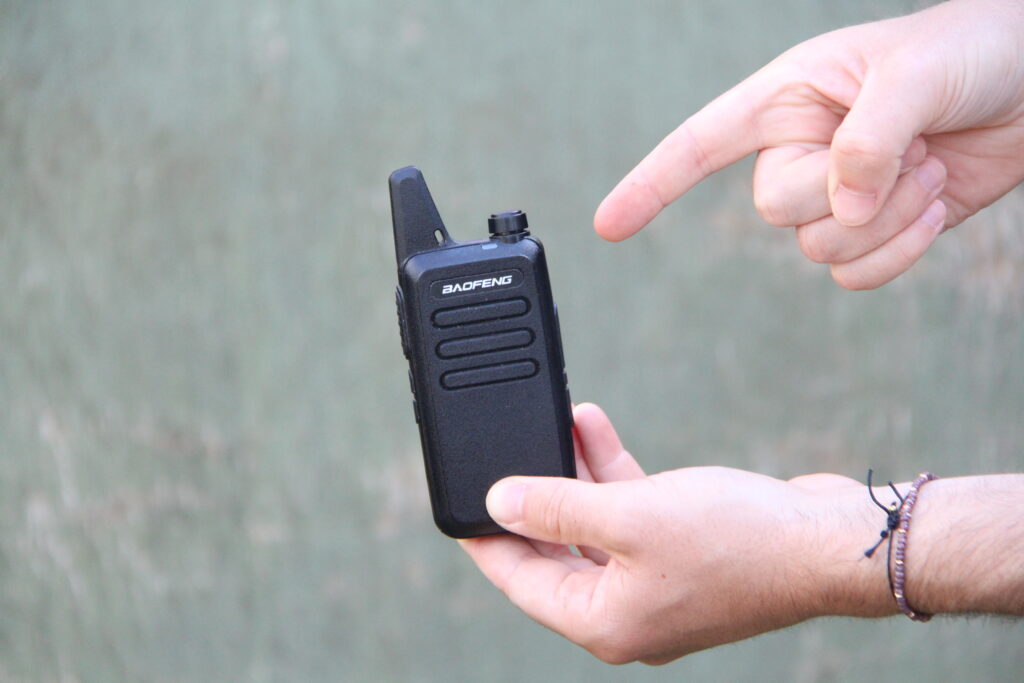
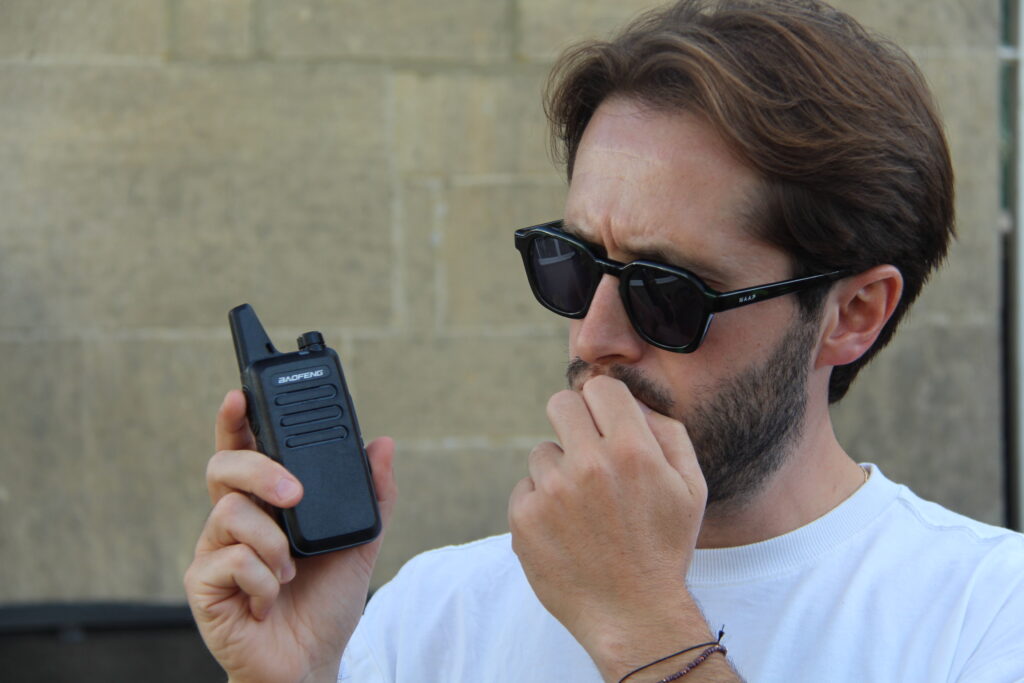
Finally, the “walkie-talkie not reimagined”. Pro Cycling race radio is basically walkie talkies, and I’ve chosen a small, weatherproof Baofeng unit with a basic push-to-talk headset, which claims a range of up to 5km and is cheap as chips – you can get two of them for just 15 quid on Amazon. Your shorts do have a race radio pocket, right?
Audio at speed
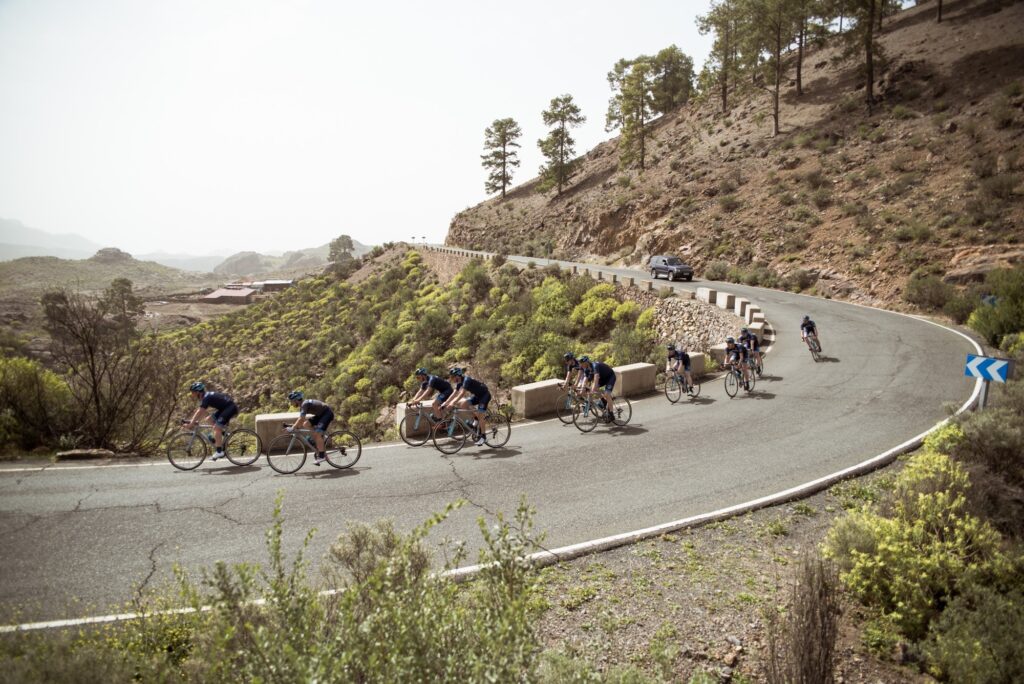
First things first: there’s not much point having a communication system if you can’t hear anything. To test the quality of each device’s audio, we rode a steady climb, flat road and a small descent with speeds ranging from 10-45kph.
The Milo system worked ok at slow speed, making this an acceptable system for use when climbing or going slowly, but the audio became very hard to hear when riding at normal pace on the flat. On the descent it was inaudible: it’s just too far away on the bars.
Most of the other systems faired better. The OpenRock provided decent audio for Liam as he was riding, though wind noise became an issue at higher speeds. The quality coming from them when he spoke, however, was seriously lacking at even the moderate speed.
The AirPod 2 Pros were better again, with the only real fault being that Liam started to sound suspiciously under water as the ear buds tried to isolate his voice from the increasing wind noise on the descent.
Lazer’s Velovox provided Liam with excellent audio quality. His suspicion was that having the device located on the helmet strap, in front of the ear, shields them somewhat from the wind.
But the clearest of the devices was the Baofeng radios. Their in-ear design eliminates the wind noise issue and having the push-to-talk mic under your jersey does a lot to isolate the mic from the wind too.
As we know from recording audio while making our YouTube videos, a small wind muff on the mic can further enhance this and be a very cheap upgrade to an already very good system.
Ease of use
Let’s talk about ease of use. Mostly this is very good. Two of the systems, the Baofeng and the Milo, can be configured to be push-to-talk and that’s my favoured way of talking on the bike. Technically you could have a push-to-talk Discord chat with the headphones, but that means keeping your phone on all the time, on your bars, so not really workable.
You might prefer voice activation if you’re worried about moving your hands about, or taking them off the bars. All of them can do that, but only the Milo has a proximity mute so that when you’re in normal speaking range you don’t get the voice through the speaker too.
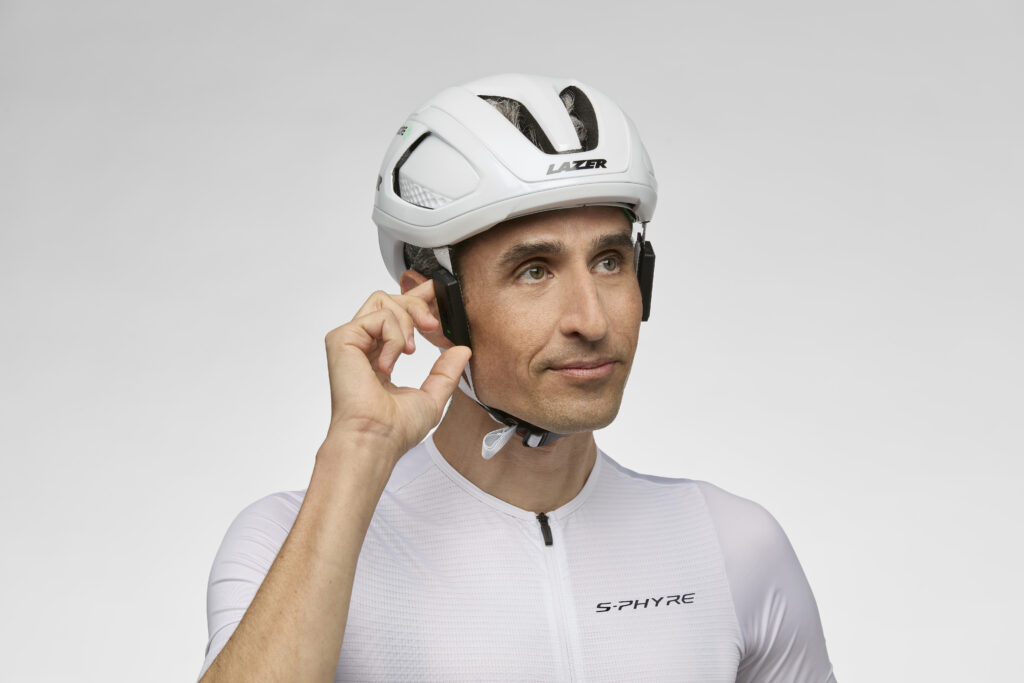
The Velovox and the two headphones have significant lag, which means that you need to remember to mute them when you’re together and unmute them when you’re not, which is annoying. The Velovox is the worst for lag and they were also a pain to set up, taking numerous tries to pair.
In terms of how many people can join your chat, the limit for all of these systems is well above what you’ll actually need. The Cardo app for Velovox, and a WhatsApp voice call, can both handle up to 32 people. Milo tops out at 16, and Baofeng, using a public transmission frequency, is essentially unlimited.
Really though, it’s not likely to be more than a handful of you, and all the systems can cope with that, although the more people that want to join in, the less effective voice activation is as people start to talk over each other: you really want push-to-talk for that, so the systems that allow that score slightly higher.
Range
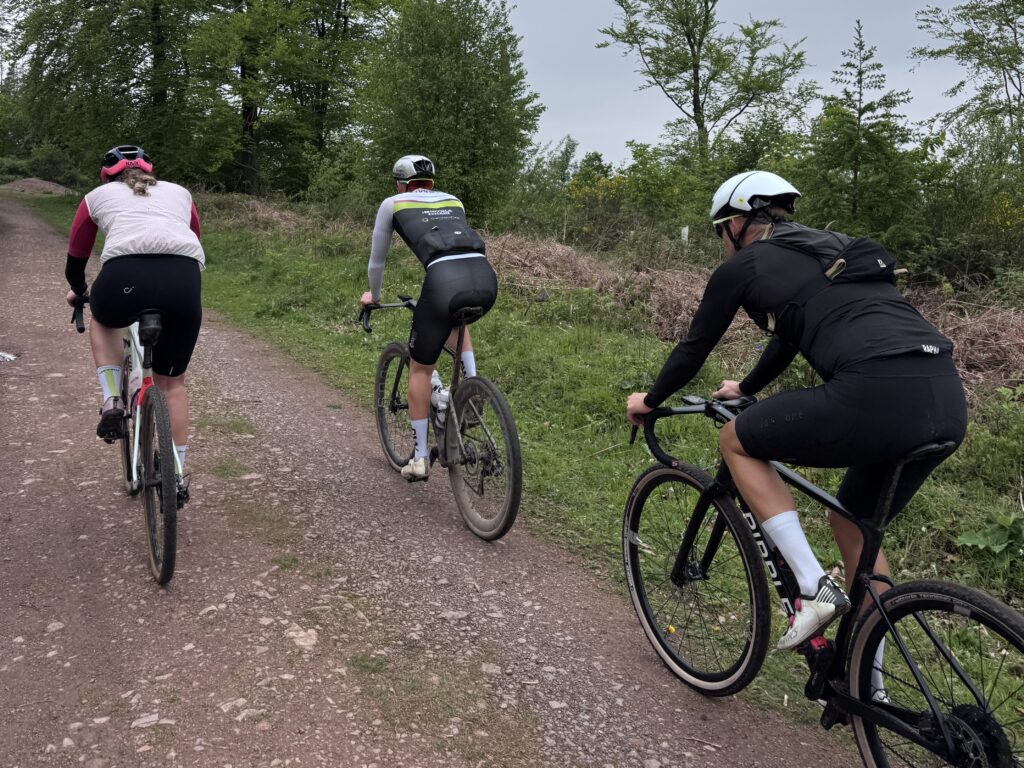
There are two types of system here, a couple that transmit directly from one unit to another, and three that use your phone, and mobile data. Because of this, we chose a location with an area where there was a good line of sight before buildings and trees got in the way.
The Milo offered the shortest working distance, operating at roughly a stone’s throw. Even with a clean line of sight the connection started to break up while Liam was still within sight. Not great. Next worst for range were the walkie talkies. These fared a lot better than the Milo, though, working up to around 300m even with plenty of trees in the way. That’s a usable range.
The rest of the devices rely on your phone signal: al long as you have data, the range is essentially unlimited. In Bath we have decent 5G coverage, though it must be said that we did experience some dropouts, and in more rural areas the lack of a reliable data signal could mean your comms devices stop working altogether.
Weatherproofing

We’ll score these systems on weatherproofing too, based on their rating on the Ingress Protection scale, where a bigger number is better. The Milo has come from watersports so it’s properly dust and waterproof at a 7, you could chuck it in a pond and it’ll be fine.
The OpenRock X headphones and Airpods both score a 5, so good for anything up to a deluge and the Velovox is rated at 4, which means it’ll be fine in the rain too. The Baofeng is rated 5 for the actual radio but we’re not sure about the headset, which doesn’t appear to have a rating and certainly doesn’t look well sealed, so that might be an issue on a wet ride. You could get a more weatherproof one though.
Battery Life
Battery life on all of these systems is at least all-day. Or half a day, depending on how pedantic you are. Baofeng claims 8-12 hours, Lazer 11 hours for the Velovox, and Milo just says ‘All day’. The OpenRock headphones will run for a claimed 12 hours on one charge but if you bring the case you can top them up from its battery, so they’ll last for ages. Same with the Airpods: the case extends the 6-8 hour battery life to well over a day.
The two sets of headphones are the winners here, although any of these options are going to work fine for a day ride, and you can charge any of them on the go if you have a battery pack.
Value
On value, The Baofeng radios wipe the floor with everything else. You could have sixteen of them for the price of one Milo Action Communicator, and you can get much better radios, with bigger range, for a fraction of the price of the more expensive systems.
The others aren’t a whole lot cheaper than the Milo, although there are plenty of headphones – including others from OpenRock – that are a lot cheaper than the ones we have, and the range isn’t going to differ, although the sound quality might. We’ve marked them up in our scoring a bit because you’re not tied to these exact ones.
The winner
Given the solid range and battery life, coupled with the excellent audio quality, ease of use and value, our clear winner are the Baofeng radios. It seems that this established and very simple tech is yet to be beaten.









2 thoughts on “We tested some of the best on-bike communication devices… but a much cheaper solution beat all the expensive tech”
Top GEar always used CB Radio, did they not !
You state for the audio for the baofeng that they use an in ear design however they don’t ship with any headphones with a mic. What did you use for this?