



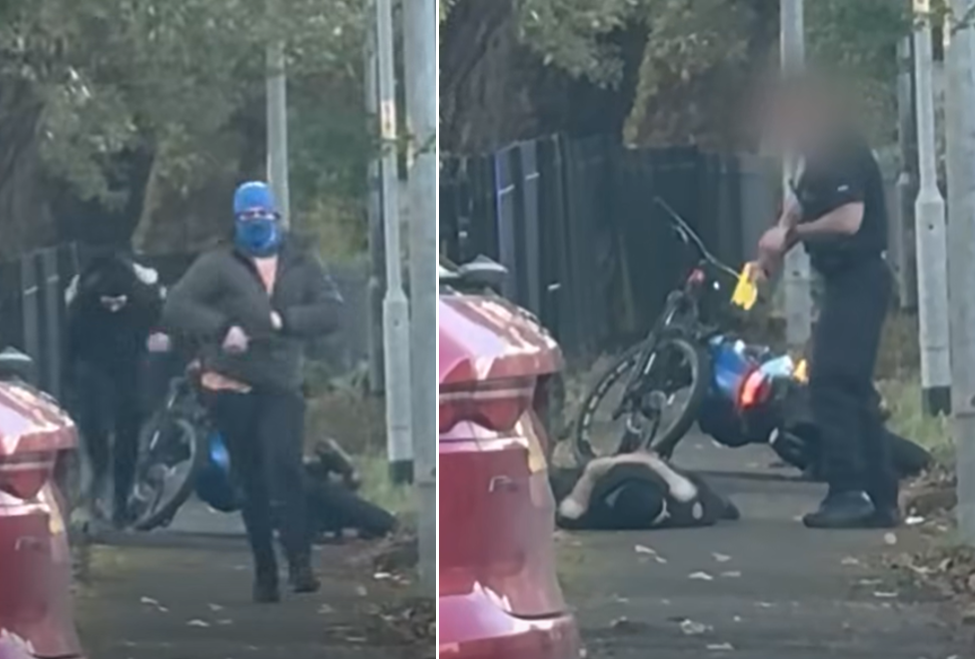
The BBC amended coverage of a collision in Scotland which it claimed involved the rider of an e-bike, a vehicle that was in fact an electric motorbike, the case the latest example of media inaccuracy around e-bikes.
While the BBC are not the only regular offenders — reports in print, online and broadcast media consistently call vehicles e-bikes when they are in fact high-powered electric motorbikes that require a licence, registration, Vehicle Excise Duty, and the rider to wear an approved motorcycle helmet — it was the public service broadcaster’s coverage of a recent collision in Aberdeen which required correction after a cyclist rightly pointed out the inaccuracy.
E-bike refers to electrically assisted pedal cycle (EAPC), legal electric cycles that can be treated the same as a conventional pedal cycle, provided the user is age 14 or over. They must have pedals that can propel the bicycle, have an electric motor with a maximum continuous rated power not exceeding 250 watts, and cut off electrical assistance when it reaches 15.5mph. Riders of these compliant e-bikes do not need to register or insure their bicycle.
As was the case in the latest BBC story, an electric motorbike was called an e-bike, in this case a high-powered model by a brand called Talaria, which makes electric dirt bikes and electric motorbikes. While the exact model is unclear, none of Talaria’s products are EAPC-compliant and only some are road legal, even then with a Compulsory Basic Training (CBT) certificate for moped or motorbike riders, registration, insurance and Vehicle Excise Duty.
The cheapest of its models, the £3,000 ‘X3 ROAD LEGAL’, is an electric motorbike with a maximum power of 3,500w and “restricted top speed” of 28mph.
Cycling campaigners have long pointed out the danger in incorrectly calling these electric motorbikes ‘e-bikes’, incidents involving high-power vehicles often wrongly attributed to legal EAPCs by the public and press.
In the latest case, the BBC News story (which also featured some questionable adherence to the Road Collision Reporting Guidelines) stated that an e-bike rider had been “critically injured after being involved in a crash with a car [driver]”.
road.cc reader Constantine made a complaint to the BBC who changed the story to refer to a motorbike rider.
“I’m an e-biker as well and it riles me up to no end when the two are conflated like this,” he told us.
The complaint to the BBC, said: “Please stop calling [vehicles] e-bikes that are actually illegal electric motorbikes. People are confusing regular pedal e-bikes which are restricted to 15.5 mph with these that do not have pedals. The make you refer to does not have pedals and to be used on UK roads [would] need to have registration plates/tax [Vehicle Excise Duty] /insurance/MOT.”
BBC Scotland’s complaints department said they “appreciate” the matter being raised and confirmed the story had been amended.
“We appreciate you bringing this matter to our attention. After reviewing our coverage we have updated the story so it refers to a motorbike rather than an e-bike. Thank you again for your feedback which we value. Complaints are sent to senior management and included in our overnight reports, among the most widely read sources of feedback in the BBC. This ensures that your concerns have been seen by the right people and helps to inform decisions about current and future content.”
It’s not the first time the BBC has faced criticism for its reporting of e-bikes. Back at the start of the year a controversial Panorama episode, fronted by Adrian Chiles, prompted numerous complaints.
The episode’s prolonged focus on modified e-bikes – which exceed the maximum 250 watts and 15.5mph cut-off speed for electrically assisted pedal cycles (EAPCs) permitted under UK law to ride on public roads – and the failure to consistently and fully distinguish between these machines proved controversial and provoked strong criticism from cycling campaigners and bike industry groups.
In June, the cross-party group of MPs and peers the All-Party Parliamentary Group for Cycling and Walking warned that dangerous “fake” e-bikes are undermining the UK’s cycling efforts and putting industry at risk.
The cross-party group said “reputational damage to a critical mode of transport” must be addressed, while urging the government to protect “exploited” food couriers.
It’s not just the BBC and other news outlets getting e-bikes wrong, of course. Swindon’s council recently claimed all e-bikes are banned and gave “Community Safety Wardens” powers to fine “reckless” cyclists up to £1,000. However, despite the announcement of the new e-bike ban, the council’s own documents showed that it only applied to bikes that were not EAPC compliant. In other words, meaning it did not apply to one single e-bike.



21 thoughts on ““Stop calling them e-bikes”: BBC corrects inaccurate coverage claiming powerful electric motorbike was an e-bike”
I would say “hooray”, but it
I would say “hooray”, but it is not enough (of a correction by the BBC in their inaccurate reporting) so I’ll say “baby steps”.
Is this why old videos are
Is this why old videos are suddenly popping up on their most watched list? Are they retroactively editing articles? There’s three “electric motorcycle” articles in the top 5 at the moment.
Ooh, good point.
Ooh, good point.
I noticed the old clips were there this morning and was wondering why but hadn’t considered this.
Looks like it.
Looks like it.
Yep, the media can be stupid
Yep, the media can be stupid like that:
https://road.cc/content/news/cyclingmikey-confronted-suspected-mobile-phone-thieves-315527
Congratulation Constantine,
Congratulation Constantine, you managed to get the BBC to acknowledge a mistake and change a report, something I’ve been trying to do for forty plus years, with absolutely no effect. Despite producing a lot of evidence of bias, complaints have proved fruitless, because the BBC was judge and jury in its own court. I thought it might make difference now that you can report the BBC to OFCOM, but like most public watchdogs, they are toothless and unaccountable.
Anybody who is concerned
Anybody who is concerned about this kind of misreporting on the BBC should use the link in the article to make a complaint. I’ve done this several times for exactly this issue about e-bike reporting and had positive replies from the BBC and they have updated the article on each occasion.
Also interesting to see
Also interesting to see correct language being used here, even though it is not long since the incident and early in the investigation…
https://www.bbc.co.uk/news/articles/c7072kjdz1zo
I’m quite happy to advocate
I’m quite happy to advocate using “e-bike” to refer solely to a lawful EAPC. I certainly agree with regards to the Talaria vehicle pictured, “electric motorbike” is a far more accurate description that would be well understood by most people.
However, I think part of the problem is that many “e-bikes” (sensu lato) look far more like EAPCs than “electric motorbikes”, even if under the letter of the law, they are the latter. If you look at the pictures on the linked article (https://road.cc/content/news/police-continue-crackdown-illegal-e-bikes-314163), most of them are very much “bike shaped objects” with pedals etc., and indeed the majority of them may well have started life as regular pedal cycles or lawful EAPCs and subsequently “upgraded” with conversion kits or limiters removed. It will be much harder to convince people to use the term “electric motorbike” over “e-bike” for those contraptions.
But the “problem” you
But the “problem” you describe is actually almost the raison d’être for many things in this category. The “but we can’t tell the difference” aspect suits buyers, sellers, government (just another problem for them, better if it’s one more easily ignored) and probably the police too (“better things to be doing with our time…”)
Already have a bike but want a powered machine, but for super cheap?
Want to get about with less effort but can’t afford a motorbike, can’t be arsed to wear a helmet and have zero interest in paying tax, passing tests etc? Oh, and riding on the roads has no appeal – you’re not a nutter!
Actually do want a motorbike (perhaps to rag about the streets) but age / money precludes you, plus unlike the bigger boys your mum would actually kill you if you attracted serious attention from the cops?
Would perhaps like a car/motorbike but you’re working a food delivery job where again money is a serious concern, finding a place to store something chunkier / more stealable is a concern, and being able to “nip about” on footpaths / not worry about parking on the job is a must. And perhaps you can’t get a licence / don’t need any enquiries into the legality of you working in the UK?
You’re a retailer which wants to turn over stuff without the space / regulatory overheads / worries about holding expensive stock of motorbikes or cars?
Step this way…
I reported as well, got the
I reported as well, got the same response. It is so lame having to push back on this kind of thing to try and change the narrative around cycling and cyclists.
Well done for getting BBC
Well done for getting BBC result.
We’re having a sustainable streets consultation prior to implementation. I support it all… except for what it doesn’t consider. So I’ve attended events, completed the survey, spoken and written to councillors, and it does seem to have an effect.
Three types of ebike problem not considered in the righteous push for cycling and pedestrians.
1) Legitimate ebikes (and pedal cycles) being ridden contrary to Highway Code ranging from mild infringements to seriously dangerous to pedestrians (especially sight and hearing impaired), baby and disability buggies, and other cyclists. Eg ‘respectable’ middle-aged ladies riding on narrow public footpath with high fences through old folks home grounds, and clearly labelled ‘No Cycling’, smiling apologetically as they know they are doing wrong – I’m older than them and ride bikes on the slightly longer safe psrallel road.
2) Legitimate hire ebikes dropped carelessly blocking footpaths and bike lanes. Serious hazard to blind and partially sighted.
3) emotorbikes ridden recklessly fast by people who seem unaware Highway Code and legislation even exists. Had a very scary moment last Thursday when one such low slung rocket coming straight at me on a pavement. At least 35 mph = 56 kph undertaking cars on 30 mph tarmac, wind sweeping back the rider’s hair, no helmet, small child braced behind handlebars. 2-person wide pavement, grass verge, flexible bollard shielded wide cycle lane, road lane, mirror imaged t’other way. Guy was going too fast for bike lane, hence using pavement. Age 70, I’m still sprightly, my wife is not (hit by runaway motorbike 20 years ago).
Councillors, highways dept, and the consultation have responded in ways I think will help. I did refute the initial ‘irresponsible minority’ comment with sone actual counts I’ve done while pushing my now 20-month granddaughter.
Meanwhile, otherwise health conscious folk a few years older than me are getting back in cars due to the real danger of such bike behaviour. Having spent £100 on new (sale clearance, brilliant fit) shoes for my 2018 Roubaix, I’m nearly at the point of joining them
Looks like the message didn’t
Looks like the message didn’t get through to BBC North West – unless someone actually pedalled the ‘e-bike’ whilst the back wheel was on the kids Roundabout:
https://www.bbc.co.uk/news/articles/c1kz9kemgnjo
No, the message definitely
No, the message definitely did get through – I sent it! They chose to ignore it. Maybe they need a few more messages?
I suspect their defence is that they are quoting the words of the Police person. But I thought the BBC had “fact checking” policy before they lend credence to pernicious errors. Not in this case.
E-bike refers to electrically
Says who? Gov.uk uses e-bike to refer to both EAPCs and electric motorbikes: https://www.gov.uk/electric-bike-rules.
Exactly. The term e-bike is
Exactly. The term e-bike is not exclusive to EAPC and is routinely used by both government and law enforcement in communications to describe both EAPC and non-EAPC vehicles as a type of transport.
That page you link to doesn’t
That page you link to doesn’t even use the term ‘e-bike’. Is there another one that supports your claim?
No, but it uses the term
No, but it uses the term electric bike. What do you think the e in e-bike stands for?
Or coming at it from a different angle, if the government page which explains what EAPCs are doesn’t use the term e-bike, then how do you support the claim “e-bike refers to… EAPCs”? In practice, e-bike (that’s short for electric bike, remember) is used to refer to both EAPCs and electric motorbikes.
quiff wrote:
You will search that page in vain for the term “e-bike” or “ebike”.
I suspect they’ll stop
I suspect they’ll stop calling them e-bikes about the same time they stop calling yoots on Motocross bikes “bikers”.
For as long as I can remember
For as long as I can remember, bikers have ridden bikes & cyclists have ridden bikes. Motorbikes or bicycles neither has exclusive rights to “bike” or, logically, “e-bike”.