



"It's been other things fatiguing me mentally this year": Tom Pidcock insists his "training won't change"

Yep, that’s the Tom Pidcock talking about Ineos Grenadiers klaxon going off again. Speaking to Rouleur, the 25-year-old committed to putting “a bit more mental energy towards specifically the road” next season, but insisted his training “won’t change”.
“It’s not like I’ve been training this year on the mountain bike all the time, I just focused on it because it was the one race I wanted to win this year if I was going to pick any,” he said.
“I have more potential on the road. What I said after the Olympics to my girlfriend was that I wanted to try and prove myself there.”
Bringing an end to the topic of discussion, Pidcock reportedly gave a wry smile as he commented, “It’s been other things fatiguing me mentally this year…”

No prizes for guessing what those other things might be… Pidcock’s future one of the most talked about topics in pro cycling during the latter stages of the season. Reports of tensions with the Ineos Grenadiers hierarchy came to a dramatic crescendo at the final Monument of the season Il Lombardia. On the eve of the race Pidcock was deselected by his team despite being “in great shape”, cue weeks of speculation about whether he’d be leaving the team this winter.
Geraint Thomas weighed in on the situation, questioning the “people who are around Tom”.
“I don’t actually know what has gone on, but all I know is, when you’re the highest-paid rider in your team, and it’s obviously a really c**p situation,” he said. “He’s not happy, the team’s not happy. How has it got to this point? I don’t know.
“People who are around Tom, I don’t think help. I don’t know how… The fact is that he had a great chance of performing today [at Il Lombardia]. I saw that Zak had said it’s a management call, it’s not a performance call. I certainly don’t know anything about that. We’re just riders, eh? What do we know about management?
“It’s just not good, is it? All the bull**** aside, he’s a great talent. He’s a good guy, when I’m around him we have a nice time, so it’s not good to see that situation. We’ll see what happens.”

Not long after, an anonymous pro cyclist writing in the Belgian press claimed Tom Pidcock is “a bit of a loner” at Ineos Grenadiers and caused friction. The saga rolled into November, two-time British national champion Brian Smith dubbing Ineos “Team Circus” and sticking up for Steve Cummings (a rider he managed at MTN-Qhubeka back in the mid-2010s) who has left his DS role at Ineos.
“No real surprise to see Steve Cummings leave Team Ineos,” Smith wrote. “Must be hard to do your job when gagged for most of the year.
Turning to the Pidcock saga, Smith addressed the rumours linking the rider to the Q36.5 team: “Team Circus continues, after allowing your marquee rider to leave the team while willing to pay 20 per cent of his salary then doing a U-turn to keep him. Not sure this is over. Ivan Glasenberg has invested in Q36.5 and owns Pinarello. A match for Pidcock who was keen on the move.
“These decisions were helped by Team Circus pulling Pidcock from Lombardia. Why you may ask? Had the form, thought he could win but did not want to risk paying the high bonus.”
Anyway, after all that Pidcock is still at Ineos Grenadiers and looks set to ride for the team in 2025… something tells me these aren’t the last chapters that’ll be written on the Tom P x Ineos epic…
"Remember when we just rode?"
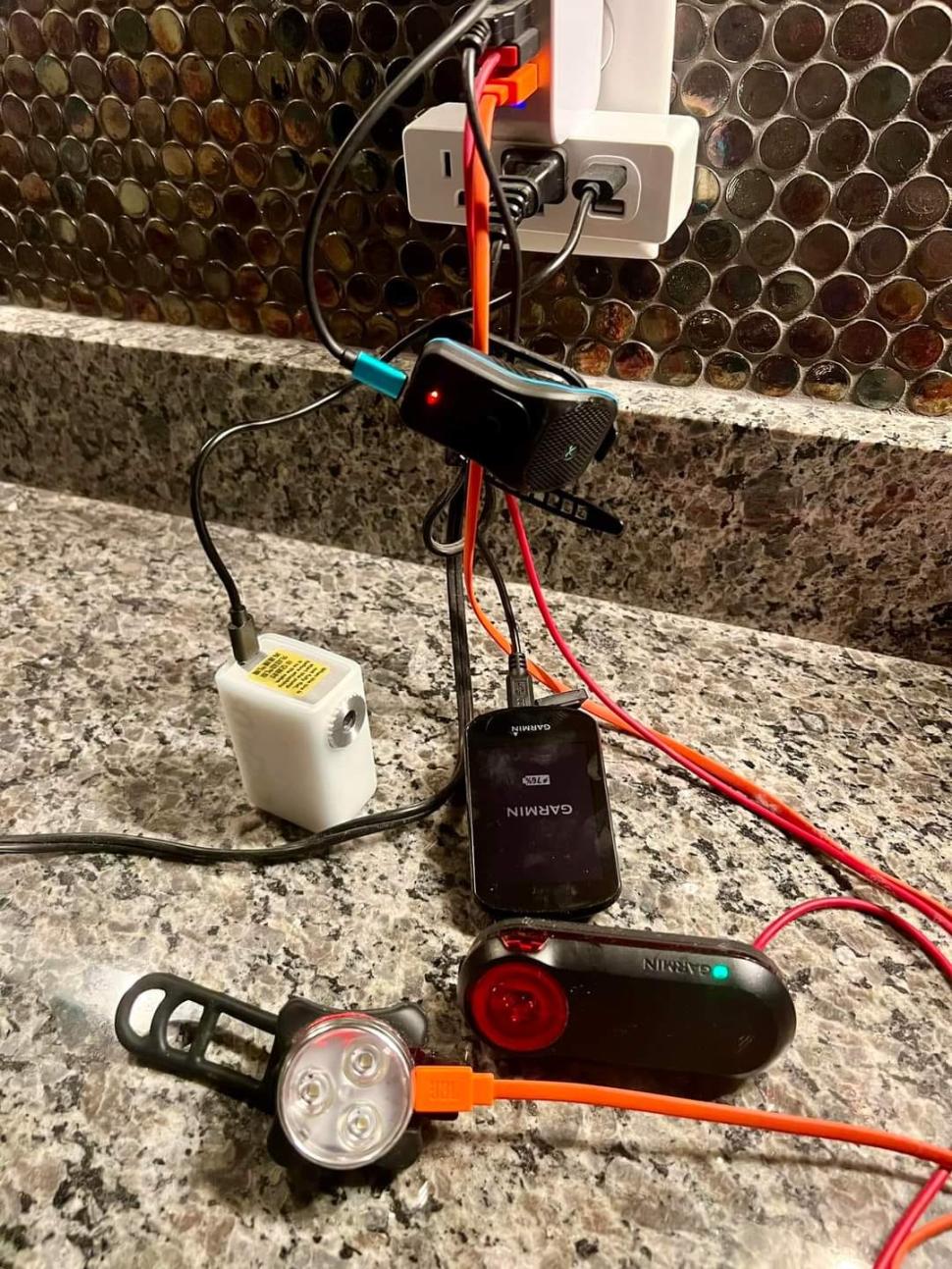
Richard Emel on Facebook: “Remember when we just rode? I’m not complaining, the stuff is all good for the ride, (esp. the Varia), But I do remember a simpler time without gadgets or batteries or anything but the bike and the road..”
And that’s without a phone and possibly Di2, power meter, heart rate monitor…
EF Education-EasyPost rider Andrey Amador retires six months after suffering broken leg when run over by lorry driver near Barcelona
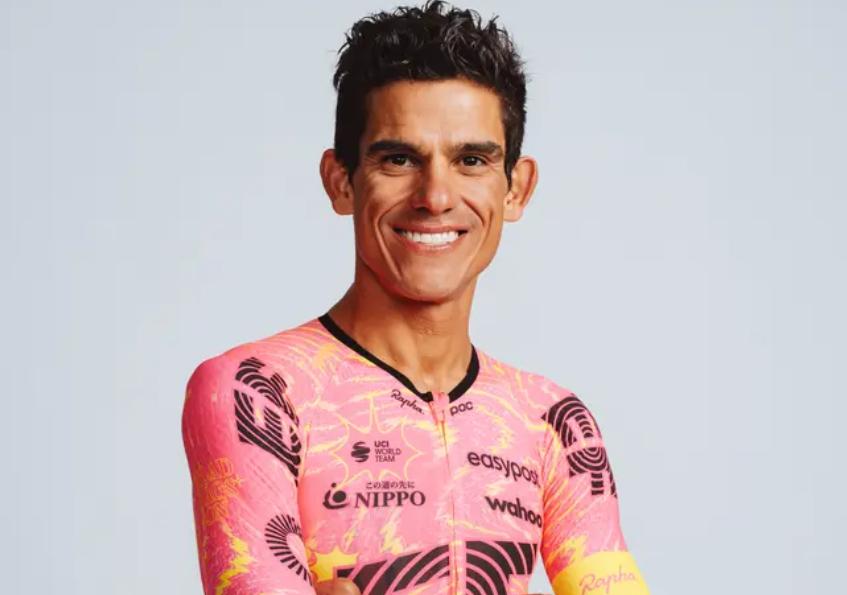
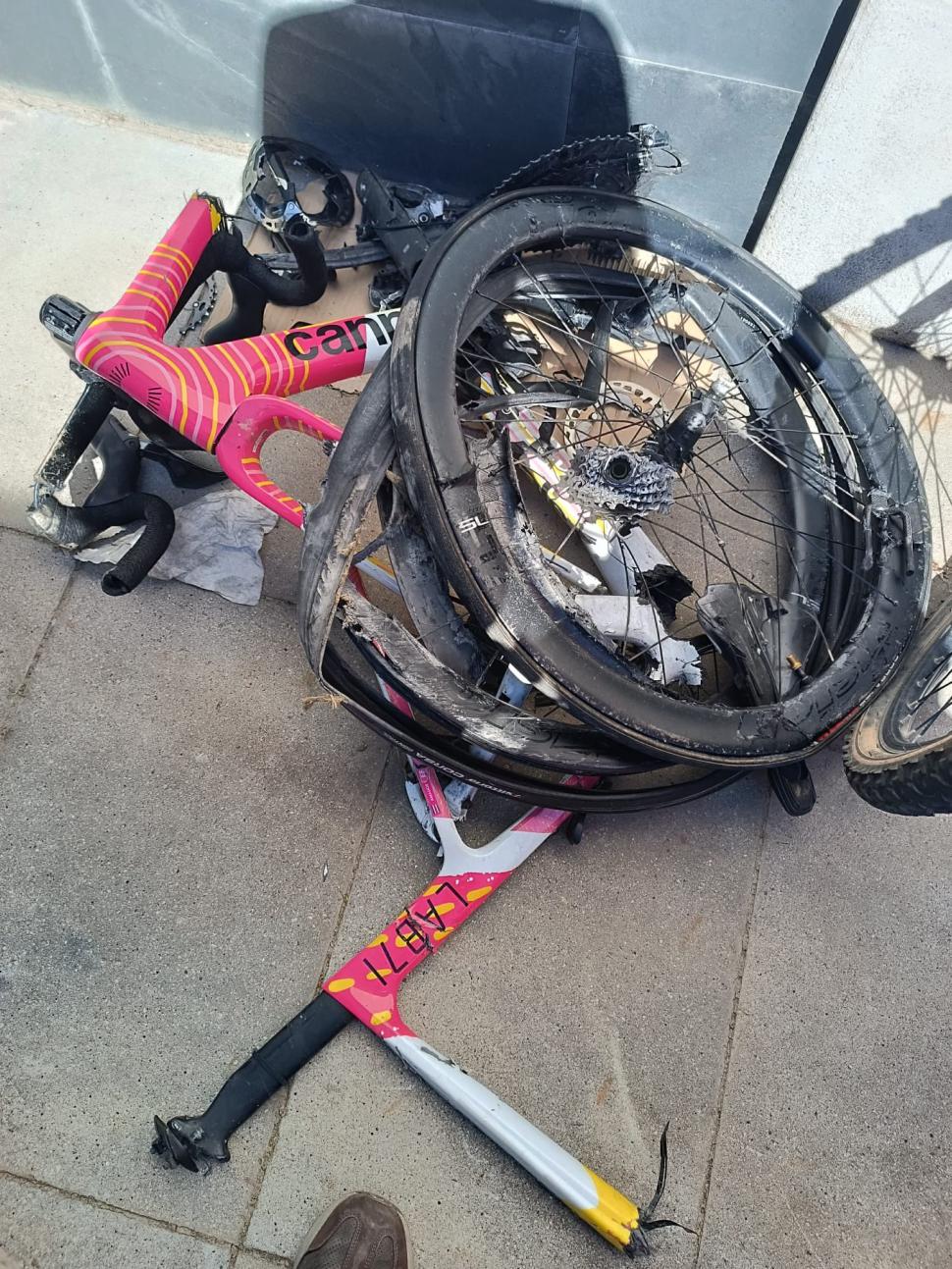
Costa Rican cyclist Andrey Amador has retired from professional cycling. The 38-year-old shared a video on Instagram explaining the decision and it comes six months after he suffered fractures when his bike and leg were run over by a truck driver near Barcelona in May.
“It was not an easy decision. It wasn’t planned, but in life and cycling, there are times when you have to listen to your body and where taking care of your health should be the priority,” he explained.
Amador won a stage at the 2012 Giro d’Italia and enjoyed some of the best performances of his career at the Italian Grand Tour, finishing fourth on GC in 2015. He was also a loyal domestique and helped Nairo Quintana to Giro glory in 2014 and Richard Carapaz to the maglia rosa in 2019.
Revenue up at Merida by six per cent, but profits fall

During the first three sales quarters of 2024, Merida generated TWD 23.8 billion (£560m) in revenue, up 5.8 per cent on the same period last year. However, Bike Europe reports that the profits for the nine-month period were £44m, down 15 per cent on the previous year’s comparable period.
"There is still considerable local support for this scheme... the sooner the segregated cycle lanes are installed, the better": Calls for £1.3m cycle lane project in Reading to be completed... but council suggests funding "insufficient" to complete scheme
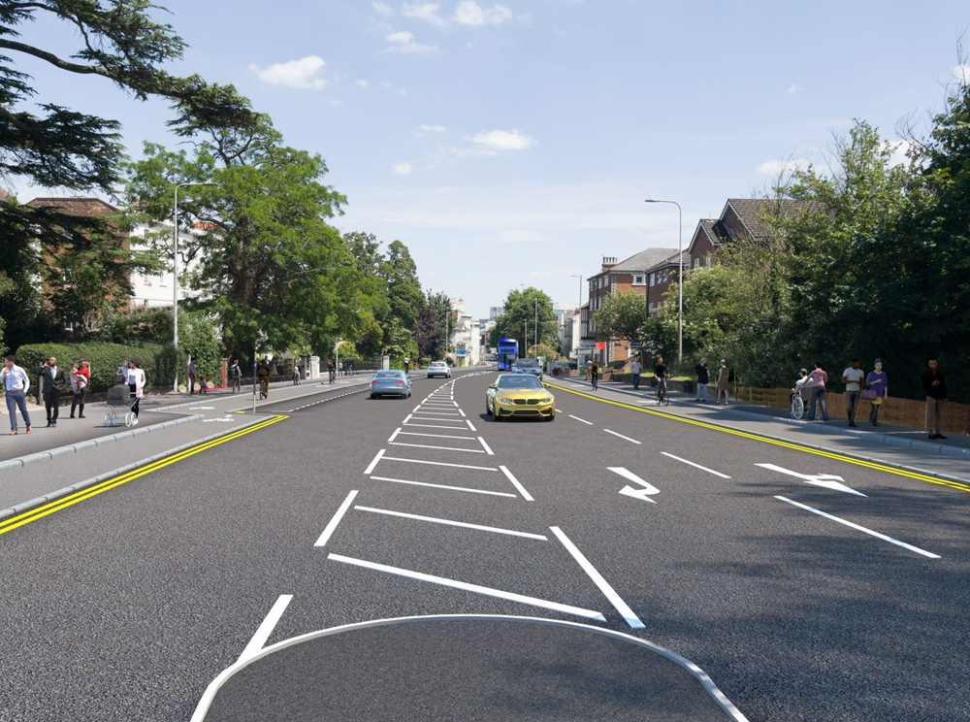
Reading’s mayor, a Labour councillor of 51 years, has called for a cycle lane project in the town to be seen through to improve “the respective safety of pedestrians and cyclists”.
The Reading Chronicle reported how Tony Page told a council meeting there is “still considerable local support for the scheme” on Bath Road and Castle Hill, with £1.3m funding having been won by the council back in March 2022.
“As a resident of Castle Hill I can report that there is still considerable local support for this scheme, which was the subject of high-level and detailed public consultations some years ago,” he told the meeting.
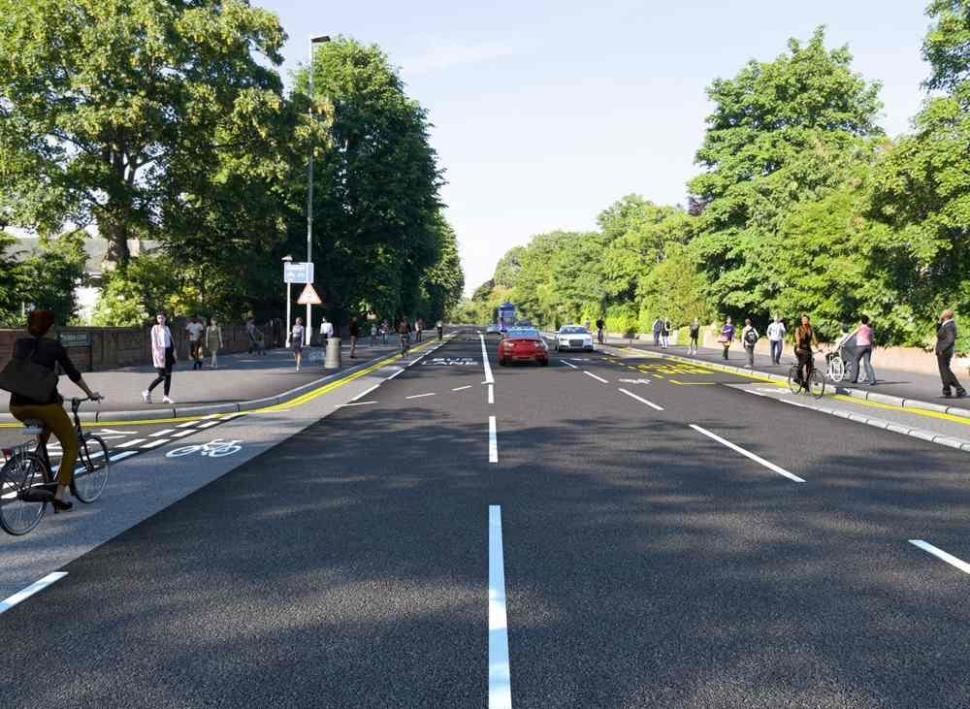
“Local residents along Bath Road and Castle Hill are facing daily challenges with often speeding cyclists using the pavements in a dangerous manner. The sooner the segregated cycle lanes are installed, the better it will be for the respective safety of pedestrians and cyclists.”
In reply, a Labour councillor concerningly suggested they forecast having “insufficient funding for the full scheme as originally designed”, with transport officers having consequently paused the tendering process to instead “put together a series of options which will be discussed with members before an agreed approach is taken”.
Councillor Ennis said: “These predominantly relate to the signals on the Castle Hill roundabout, and the design option for cyclists and pedestrians to traverse through this junction. Once the updated design has been approved by members, officers will recommence the tendering process and aim to commence construction on this scheme next year.”
"Gone in fixie seconds": Opinion split over minimalist bike lock set-up... but is it actually that bad?
“A handy lock position in the event you lose the keys to the lock…”
“First time anyone ever stole a bike using a 4mm hex wrench…”
“Keeps a random passer-by from taking it. No lock is 100%…”
“Totally legit…unless they came with a set of Allen keys…”
“Gone in fixie seconds…”
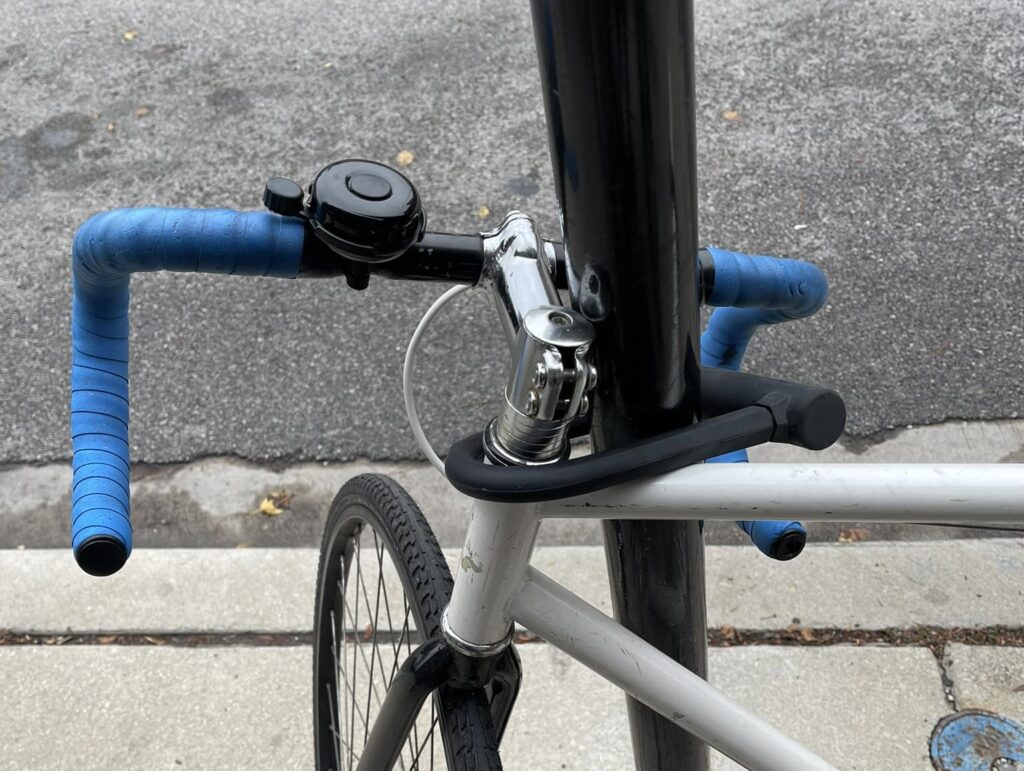
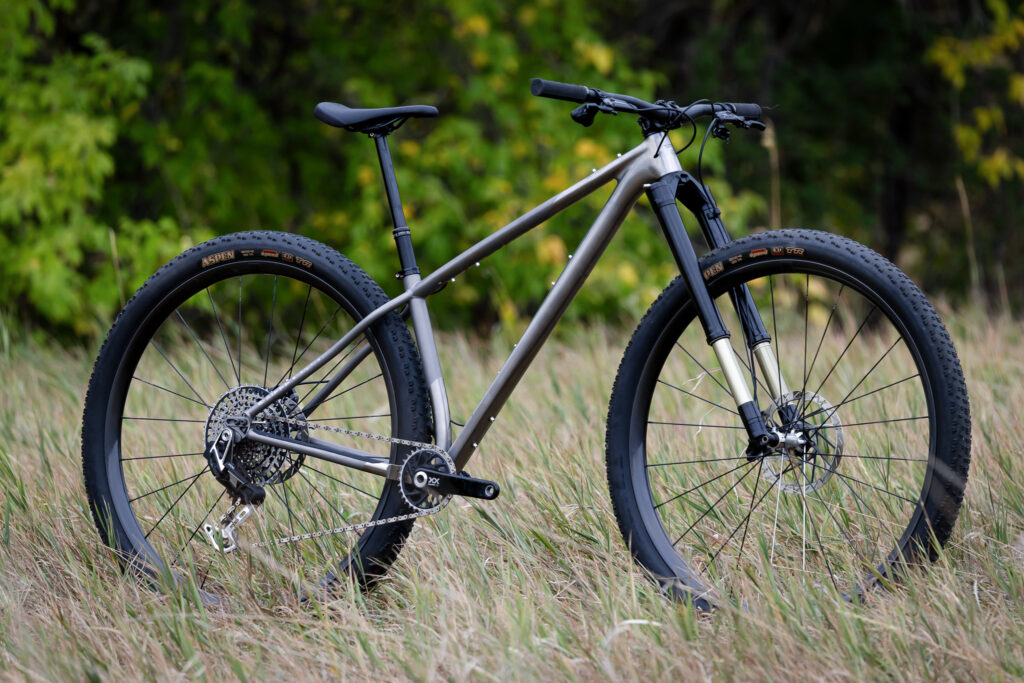
Those are just some of the comments about this bike lock set-up that’s caused quite the discussion on Facebook, riders debating this interesting-looking way to secure your fixie (or any bike for that matter) to a post.
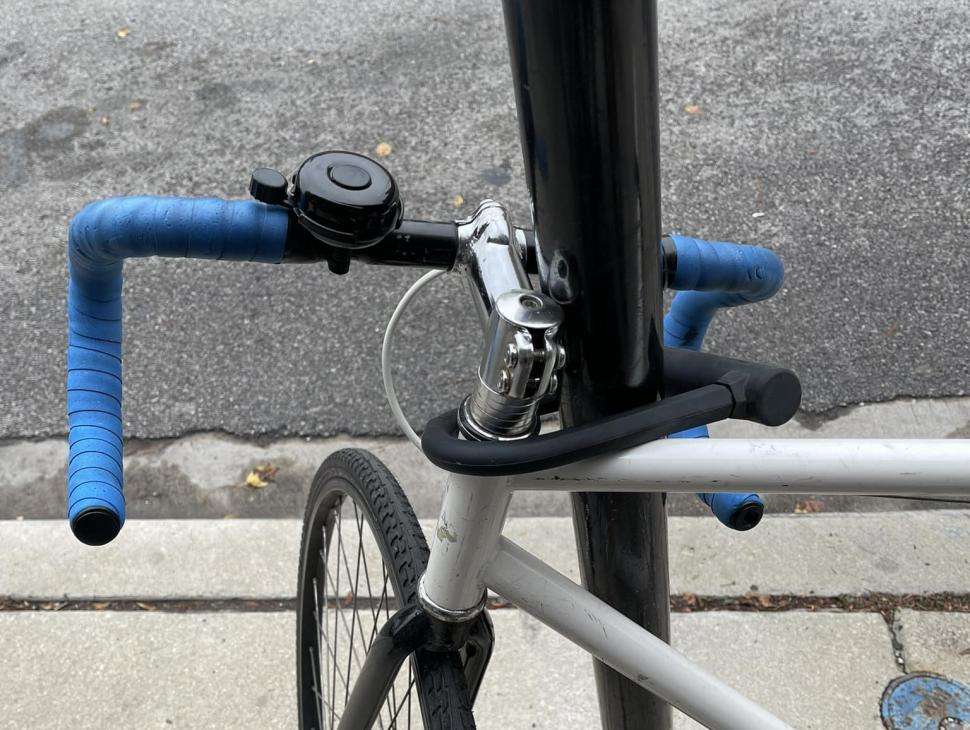
Needless to say, the comments are filled with laughs aplenty, many guessing just how many seconds it would take for a bike thief to nab this and be on their way. 12 seconds was one particularly popular estimate… others pointing out all said thief would need is a set of Allen keys to release those stem bolts, lift the lock free from underneath, tighten everything back up, get on their way… and probably crash comically when they realise it’s a fixie with no brakes.
With all that said, the case for the defence have pointed out most thieves are opportunistic and, if the bike is in sight as you quickly nip into a shop for a couple of minutes, even the most minimal of minimalist locking techniques would probably be enough to delay the crime for sufficient time. Others pointed out just how quickly an angle-grinder would cut through plenty of locks anyway, regardless of how you’ve used it. Admittedly, I’d be hooking that through the frame, rather than around the bars (and doing my usual cable lock around the wheels too, but then again I’ve got quick releases, so have to).
Of those looking less critically at the locking technique…
“Really depends. A light cable lock and similar position would be fine in my country for a quick stop at the shop or a gas station, for example. Not too likely to meet a ‘professional’ thief in these few minutes. Completely unlocked – some random kids or drunks would take it just for fun etc.”
“I think it would take longer to remove the stem, put it back on, and ride off than it would to grind through the lock with an angle grinder. The people who really want that bike have the grinder in their pack.”
Thoughts? I don’t think I’ll be trying it any time soon, but can see the point that if your bike’s in view and you’re just nipping in somewhere, it’s probably got just enough inconvenience to slow someone down until you can get back, but yeah, I’d probably lock it better…
London e-bike share operator Forest investigated over 'free 10-minute ride' claims
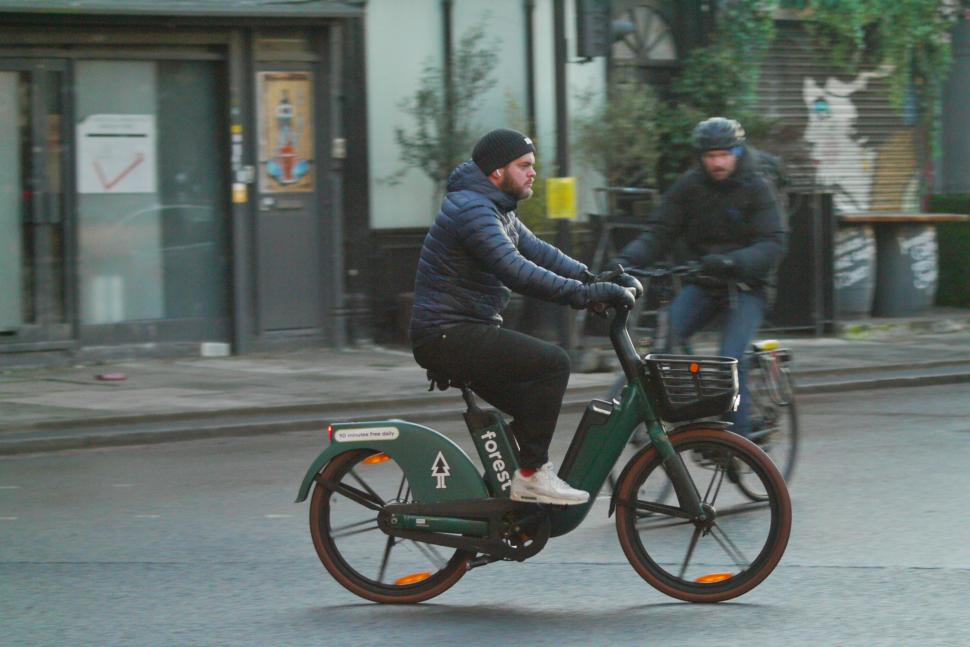
As first reported by London Centric, the e-bike firm Forest (originally called Human Forest) is understood to be under investigation by the ASA for its free 10-minute ride promotion… that it turns out isn’t exactly completely free of charge.
The bikes cost 29p per minute to use, but as a sweetener Forest claims to offer the first 10 minutes of your journey for free; however, you’ll still need to pay an unlock fee and a £1.90 service fee.
Human Forest told UK Tech News that the service and unlock fees are “well communicated” when users sign up, therefore it is implied that the free ten minutes applies to the £2.90 you’ll save for your first 10 minutes of riding, rather than saving on those fees.
Forest claimed in a September blog post that it had “sacrificed 11m” to offer the ‘free’ rides: “Our 10 free minutes of riding every day is a unique, unwavering and unmatched identifier of the Forest brand and our mission. It’s something we’ve offered riders since day one so we wanted to shout about how far we’ve come,” said Agustin Guilisasti, the CEO of Forest.
So, can you claim something is free if you need to pay to access the free bit? We’ll be following this case with interest and reporting back soon…
If there was any doubt that Copenhagen is serious about cycling...
Here is a picture from today, from central #Copenhagen. A tight space for renovating a building. But as you see the bottom containers are a continuation of the bike lane. Mandatory. Keep it rolling. #cycling #bikelane @theurbanist.org @jeffspeck.bsky.social
— Lasse Schelde (@lasseschelde.bsky.social) 20 November 2024 at 22:10
…check this out! It appears cabins required to carry out renovation work on this row of buildings would have impeded one of the Danish capital’s free-flowing bike routes, so they’ve simply been stacked on top of opened up shipping containers that cyclists can carry on through.
"Remember when we just rode?" pt. 2
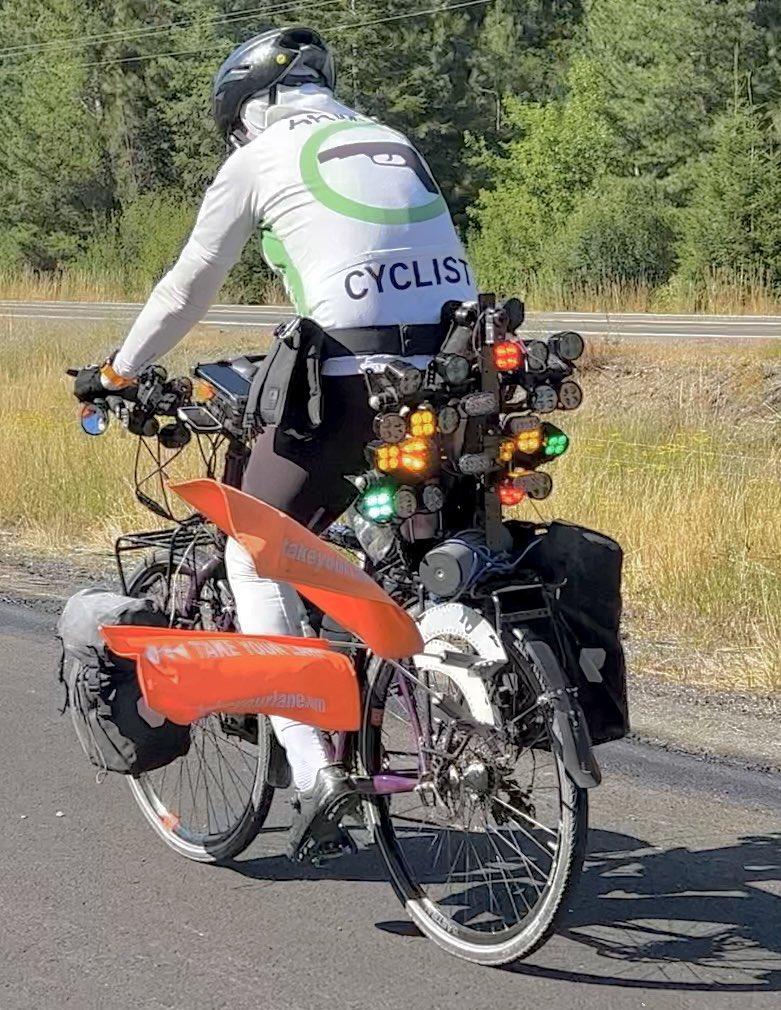
I wonder if this chap remembers that time? I’m guessing not…
Our top sub-£50 Christmas gift picks
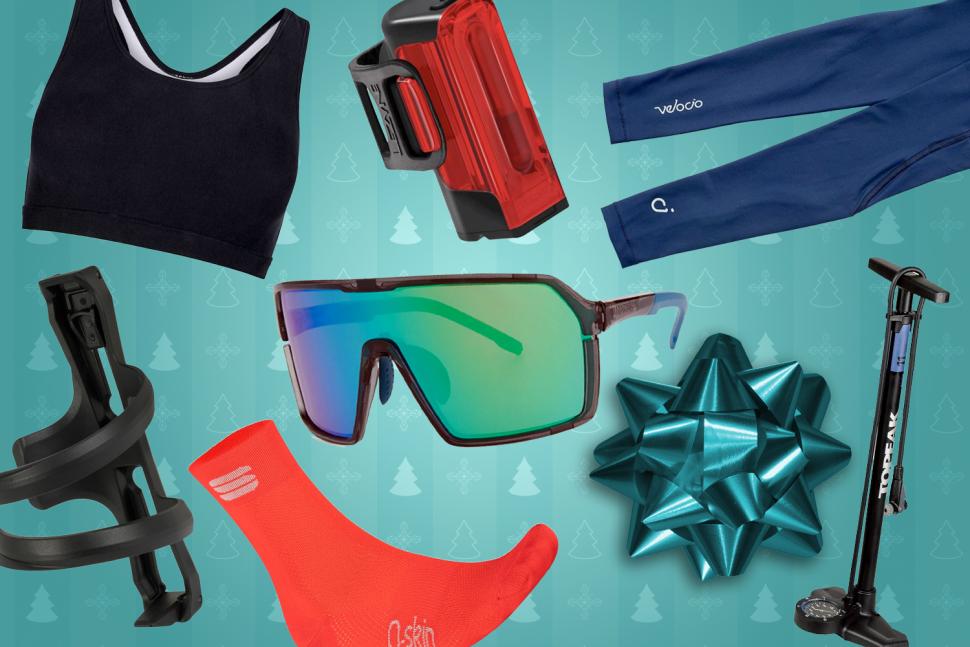
It’s creeping up, so if you need to buy something for a cyclist this Christmas then we’re here to help.
What’s more, these are all things we’ve rated highly in full reviews rather than a list of hot products off of Amazon that we make a commission from like some nefarious publishers produce at this time of year, increasing the chances that your loved one (or you, because presents to yourself are the best presents) won’t be needing to keep the receipt. Oh, and if you want to know what to steer clear of, VecchioJo should be delivering his annual Don’t Buy Me This! list next week.
Your thoughts on that poorly affixed fixie
It’s a mixed verdict on this unusual bike locking method, and here are some of your top comments:
IanGlasgow says: “My commuter bike was securely locked through the frame with a D-lock. Somebody spent some time going over it with a toolkit to remove everything that wasn’t secured. Luckily my wheels, brakes and gears were all protected bey security fittings but I still had to cycle home with no bar-ends or grips and no light brackets to attach my lights too. It cost me about £100 to replae everything.
“So I can confirm that some bike thieves will have a hex key and be willing to take the time to use it.”
quiff says: “Leaving actual security aside, I can see one potential benefit with that method – bike may be less moveable in relation to the pole, minimising (or at least localising) scratches. Not that that appears to be a prime concern.”
Sredlums adds: “Maybe it’s just our Dutch situation, but over here, non-ebikes are almost completely off bike thieves’ radar. E-bikes are hot, and you need at least two super heavy locks to have a chance of finding it back where you left it. And ebike handlebar units and batteries are what QR wheels and saddles used to be; quick grabs.
“With a normal bike, the chances of it being stolen have almost slimmed to none. Only drunks and addicts will maybe bother, but for them locking it like in that picture will be enough deterrent.”
Guess that means I’ve got the all-clear to use the Pinarello Dogma we’ve got in for review at the moment as my pub bike for a few weeks!
21 November 2024, 08:50

21 November 2024, 08:50
Almost as if the CCTV should have been installed some time ago...

Robber caught by police within 24 hours of council installing CCTV cameras on popular cycling and walking path, dubbed the “Wild West” after several violent bikejackings
Calls for installing CCTV cameras on the Bristol & Bath Railway Path, made by cyclists for months, were finally heeded by the council after two bikejackings at knifepoint left cyclists saying they felt “safer between buses and cars”









65 thoughts on ““Gone in fixie seconds”: Opinion split over minimalist bike lock set-up… but is it actually that bad?; Tom Pidcock insists “training won’t change” and talks of mental fatigue; Merida revenue up but profits down + more on the live blog”
Agree that a thief with an
Agree that a thief with an angle grinder would probably get through the lock just as quick as removing/replacing the handlebars. But the angle grinder would make much more noise – and while we’ve seen videos of brazen thieves who don’t care, I would have thought plenty would still prefer not to draw attention to themselves. And if a thief would rather just cut the lock anyway (because it would be faster, or because they brought an angle grinder but no allen keys), they still could – so you haven’t gained any security by locking the steerer.
Plus if the bike is covered by an insurance policy, if the thief needs to cut the lock then you’re covered. If the thief takes the bike without cutting the lock, the claim is likely to be rejected.
So I think I’m with Dan – sure, it’s better than nothing and probably fine if you’re away for a few minutes, but if you’ve gone to the trouble of bringing a d-lock with you, it seems dumb not to put it through the frame – it’s not exactly any more effort.
Worth it for the pun though..
Worth it for the pun though…
OnYerBike wrote:
Agreed. If there was some reason why this was the only/easiest way to lock it I could see it being ok for a few minutes; but surely it would be no harder to lock through the frame.
Steve K wrote:
Maybe they just missed?
brooksby wrote:
I did actually wonder if that might be the case.
Steve K wrote:
I’ve definitely done that before. Locked my bike (I thought) and as I walked away I heard my lock clatter to the ground at the bottom of the Sheffield stand.
andystow wrote:
Yep – I’ve done that too…
Leaving actual security aside
Leaving actual security aside, I can see one potential benefit with that method – bike may be less moveable in relation to the pole, minimising (or at least localising) scratches. Not that that appears to be a prime concern.
quiff wrote:
Especially given the paintwork hardly looks pristine.
Perthshire man left with
[b]Perthshire man left with container full of 500 old bicycles in row with environment chiefs[/b]
https://www.thecourier.co.uk/fp/news/perth-kinross/5128014/bicycles-africa-comrie-sepa/
Read that article yesterday,
Read that article yesterday, the bit that struck me was
He collects bikes from all over Scotland and takes them to UK-based charities, who have their pick.
The remaining bicycles are returned to Nigel, who then offers them to other organisations that distribute them to people in Africa for as little as £3.
So basically the UK charities get to pick off the good stuff and the tat is then offloaded. He has a container full of bike shaped objects that he is sending to Sudan – not ‘other organisations’…
RE: Remember when we just
RE: Remember when we just rode?
Typically I’ve got 7 things to charge up:
If we had proper cycling infrastructure (segregated and well signed) I wouldn’t need the first 6 of those.
To be fair unless “proper
To be fair unless “proper cycling infrastructure” means everyone having a segregated cycle lane directly outside their front door, you would still need lights to reach it, and actually I am finding people riding on segregated cycle lanes without lights on, particularly around Hyde Park, quite a hazard, so I don’t think you could/should really dispense with them however good the infra becomes.
Proper Dutch cycling infra
Proper Dutch cycling infra will be (for the majority of the distance) traffic-evaporated streets, so people will definitely be needing lights. Riding without lights in the dark is not good for several reasons of course. (And the Dutch police are quite happy to stop and fine you apparently!)
Dutch cyclist here.
Dutch cyclist here.
We have good cycling infrastructure – especially compared to most other places – but the typical trip is far from ‘traffic-evaporated’. We have bike lanes, yes, but that’s always just a portion of the trip.
What makes cycling safe(r) here is, more than anything, the fact that most people ride a bike at least now and then. That means that even when driving in a car, cyclists are not dehumanized lycra clad weirdo’s, but actual people, who could be anybody. Family, friends, neighbours, collegues.
That simple fact means people drive more considerately.
Also, I can’t even remember myself or anybody I know got fined for not running lights. There’s a shortage of police officers to spend enough time on that.
Sredlums wrote:
Hope you don’t mind some small corrections? Unless it’s got much worse since I was last travelling there (over a decade ago now).
My point was just that by UK standards much of the places where cyclists share with motor traffic in NL seem to be a) quieter places – e.g. residential and/or where through traffic has been removed and b) while car use is still going up in NL I believe compared to the UK traffic is generally less.
In the UK where there is through traffic (which is many places) speed limits tend to be 48km/h (which means over 50 because UK drivers struggle to “go slow”). Or more, for arterial routes.
* Apparently Copehagen is not good enough – although still light years – or a generation – ahead of the UK [1] [2] [3]. I haven’t been but have heard reports that seem to confirm this.
Sredlums wrote:
Also, I can’t even remember myself or anybody I know got fined for not running lights. There’s a shortage of police officers to spend enough time on that.— Sredlums
Thanks for the note on policing. I would imagine that, but I have heard they will bust people.
Putting the rest out for comment if you will. I haven’t lived in NL, I’ve just been cycle touring there and stayed a few weeks for work – but sometimes a foreign perspective can pick up things that locals just take for granted because “that’s how it is.” OTOH foreigners have their own biases and misunderstandings.
I would agree that “they could be my family and friends” is likely one of the motivators for slightly more careful or considerate driving (or at least tolerance for cyclists). I’m not sure just how much impact that has on safety though – humans everywhere are fallible and lazy (not to insult Dutch drivers, but they are human too…)
I think it’s many factors; but from a UK perspective what stands out is the whole philosophy. What do we want from “transport” and from our public spaces? In the UK it often comes down to the maximum safe capacity for motor vehicle throughput and/or storage. As Chris Boardman points out, the government “machine” (which lawmakers command, but will often take the advice of since they’re the “experts”) revolves around what we measure. So anything that reduces that “score” won’t get support even when people think it might fix problems or be “nicer”!
Meanwhile in NL you have the Sustainable Safety principles / philosphy – taking a subtly different starting point.
So I think it ends up being as much to do with bigger, more “political” things, which then influence the planning of the built environment, where responsibility for provision of that rests. (That includes operation/maintenance of that and management of “services”. Notably the UK highways suffer from being regularly damaged by poor work by utilities and other private “works”). Included in that is who exactly is responsible for safety and “healthy places” and how they’re held accountable.
I think that also then feeds down to more “tactical” things like the design of infra and the “rules of the road”.
Sredlums wrote:
And presumably you don’t have as much media over there stoking the divisions and encouraging the view of cyclists as “other”?
brooksby wrote:
Maybe one and the same thing though. They’re not exactly short of populists over there, any more than we are. I’m sure if those people thought they could use cycling as a wedge issue, they’d be more than happy to. But it’s harder to get any traction with that when it’s normalised to start with.
mdavidford wrote:
Yup – although as a more “distributed” / low cost kind of “good” (which the public purse pays towards) cycling will likely always be susceptible to being elbowed out by people out to make a big chunk of money quickly.
I’d imagine the Dutch have many of the same “bad’uns” as in the UK as you say. But interestingly there’s quite a number of “people on bikes” who are pointing at … petrol-engined scooter riders! (Who are also possibly members of certain other demographics people might not like e.g. immigrants, poorer people trying to get ahead, yoof trying to impress, “criminal types” etc.) David Hembrow has a slightly contrary look at this one in his article.
“I am finding people riding
“I am finding people riding on segregated cycle lanes without lights on,”
Have a big problem with these people. Dangerous on narrow 2 way lanes and shows huge disrespect for other riders and their safety.
Dynamo lights? That can do 2
Dynamo lights? That can do 2 of those lights (unless you’re wanting e.g. particularly fast rides in completely unlit countryside, and/or off-road)?
… and in fact you’d still want those with proper cycling infra.
I don’t choose to run the bottom 3 and currently all my bikes have dynamo lighting so I’m a bit closer to “just ride”. (Always carry a lock though and make sure I’ve got my basic tools with so there are still some extras).
Nice articles about these lights here and more here [1] [2] about why a boring “slow and heavy” Dutch-style bike is ideal for mass cycling. Same reason as 99+% of cars people buy are not F1 racers, or jeeps – people just want something they can get on and go, day or night, without spending every evening / weekend on maintenance. And that works at night, keeps you clean, carries things and is secure “out of the box” without needing to buy extra accessories.
The 3 lights are what I have
The 3 lights are what I have for cycling in daylight – 800 lumens at the front, 300 at the rear, helmet light is 100 front and 100 rear. All of them set to flashing.
I’ve recently aquired a 4th light for night cycling – 1100 lumens with a dip function.
Tom_77 wrote:
This is an expression of the problem right there. And we’d be embracing a hopeless arms race if more people get the idea. Doubly so if more people start cycling – which of course they won’t while such conditions prevail (except for brief “transition periods” like e.g. in a few parts of London).
Of course, people wanting to feel safe is partly why we have massive cars which are unsafe for everyone on the outside. Life is full of entirely wasteful and often harmful arms races. But … meanwhile in NL…
(Some of those bikes probably have lights on but that is likely because in NL bikes come with “batteries included” including dynamo lights. Because people aren’t racing, the drag when running is pretty low and the LEDs last forever having a switch to turn them on and off may be an anti-feature. But flashing lights are a distraction to everyone…).
Tom_77 wrote:
My front light is a Cateye AMPP 800, which does the job for me.
But it always irritates me when I get headlight-flashed.
There’s one particular section it happens – I’m riding uphill on a shared-use path with the road to my left, so the oncoming traffic is coming right at me. I put the light on full beam, because anything less doesn’t actually help me in seeing anything, given all of the oncoming car headlights, and yet I’ve been flashed (presumably for having a bright light on?).
I just wonder whether these people have considered that their car headlights are far bigger and far brighter than anything I can put on the front of my bike…
But I think car headlights
But I think car headlights (at least the older ones) are in part brighter because they have light being emitted over a much bigger area. At least – some of the bike front lights around now appear to be one LED and sear a hole in my retina…
Or perhaps it’s a psychological / contrast thing? I’ve got a < 3W front light (dynamo powered, German light law compliant) but have had a few quite angry complaints from pedestrians – I was a bit baffled about this but of course this occurred on shared-use spaces, which are probably less well lit than the roads and where they would likely have been looking out from the light part into the darkness. So my light seemed very bright (whether or not they should be is another matter…)
Or perhaps we just stare at them in a way we don’t with car lights? That could be because a single light is harder to gague speed and distance from than the “separated by a known distance” pair of a motor vehicle?
Maybe there’s a “moths to flame” effect – “look at that really bright light!” ?
wot no radar?
wot no radar?
good job they’re on a black friday special at the mo…
“Remember when we just rode”,
“Remember when we just rode”, well that sort of sounds a chord, having at 6AM gone round to various power outlets unplugging three back lights, three front lights, one front helmet light, one back helmet light, GoPro and the batteries for my electrically-heated gloves…on the other hand I can also remember scrabbling through the drawers desperately trying to find enough batteries to have a working set of lights, and with the state of my hands in middle age (Raynaud’s) on a morning like this morning in London (0°) without the electric gloves I wouldn’t be riding at all so I find the spaghetti junction of wiring a price worth paying.
Remember when we just stared
Remember when we just stared at a wall?*
* I never had a ‘dumb’ trainer, but dislike the amount of electrical stuff required to ride indoors
If I do ride indoors I boot
If I do ride indoors I boot up the PC and get YouTube going before I put my shoes on, Bluetooth speaker connects in a couple of seconds. Not that challenging TBH and a lot quicker than putting on all the layers to ride outside ?
PS lucky to have retired early so no longer need to commute, and if it’s raining I’ll ride tomorrow instead. Indoors only if it’s going to be wet the next 2 or 3 days. I used to have a dumb trainer back in the day and only used it if it was icy outdoors, I even preferred the rain ?
Which heated gloves do you
Which heated gloves do you use?
I’m also a middle-aged commuter and last winter my fingers were in agony despite trying various combinations of winter gloves, lobster claws, both with and without liner gloves. Seriously thinking about investing in heated gloves this winter.
I use Sealskinz, which are
I use Sealskinz, which are about the most expensive option but I did try a number of cheaper ones before settling on them and always ended up returning them as not up to the job. They aren’t a panacea but they do make an enormous difference; I often use them in conjunction with bar mitts (pogies) for drop bar bikes and while there’s still some pain it’s nothing like I experienced before, when I simply couldn’t ride in temperatures below about 3°C. I would recommend them.
Richard Emel on Facebook
[checks Strava] …nope… it’s not here: didn’t happen.
Remember when we just rode
Remember when we just rode with these battery-munching bricks? They were deeply shite.
God yes, awful in every way,
God yes, awful in every way, feeble light, gobbled batteries and so un-weatherproof that you had to take the batteries out and wipe out the innards after a wet ride if you wanted them to last the winter! Oh and the battery springs were so weak that after a ride over rough ground you’d have to open the back up and stretch them by hand to maintain contact! I switched to Wonderlights in my later childhood, probably still awful by today’s standards but felt better at the time and were defintitely cooler…
The batteries were not the
The batteries were not the easiest to find, and the brackets broke easily. The switch was far better than the D cell quick release ever readys that I replaced them with.
Lights have gotten so much better.
I have a visual memory from
I have a visual memory from childhood of one of this species of bricks popping loose from a bracket on a downhill section and flying away to smash (even though the plastic was pretty heavy as well).
Probably worth an extra 10 watts up the next hill.
lesterama wrote:
I used to cycle to school in the suburbs with those. They were useless.
When I found myself cycling to university on unlit rural roads I upgraded to a dynamo. Initially a bottle type which was noisy, trashed tyre walls and made cycling hard work. Later upgraded to a bottom bracket one running on the tread which was excellent – I discovered my front light was bright enough to flick upwards and “flash” oncoming drivers who hadn’ dipped their lights.
Now my main commuter has a hub dynamo now so I can still “just ride”. Though for some reason I seem to have aquired a crazy number of lights (including indicators – don’t ask).
I still just ride.
I still just ride.
No head unit, no power meter, no electronic shifting, no electronic pump, no radar (though, admittedly, living in The Netherlands with its good infrastructure, that is way more viable).
Just lights when needed, charged weekly.
No electrical gloves either, though my hands get painfully cold, but for me pogies solved that wonderfully.
Sredlums wrote:
Unfortunately such is the state of my circulation that I use electric heated gloves and pogies and it’s still painful – though bearable – when the temperature hits minus figures.
About that lock, there’s an
About that lock, there’s an factor that hasn’t been mentioned.
Maybe it’s just our Dutch situation, but over here, non-ebikes are almost completely off bike thieves’ radar. E-bikes are hot, and you need at least two super heavy locks to have a chance of finding it back where you left it. And ebike handlebar units and batteries are what QR wheels and saddles used to be; quick grabs.
With a normal bike, the chances of it being stolen have almost slimmed to none. Only drunks and addicts will maybe bother, but for them locking it like in that picture will be enough deterrent.
You’re going to have to add
You’re going to have to add “new / shiny” to that list. My new Cube was nicked from “secure” storage for my flats *.
Dunno if it was a drunk or an addict, and/or just someone with a little local knowledge. I had tried to disguise it a bit with tatty bits of tape, stickers, innertube etc.
Of course, could just be that they mistook it for an ebike (it was a belt drive internally geared hub design, plus dynamo lights). Or just because it was there, and one of the better-looking ones (they left the “under 100 quid second hand” bikes).
* Turns out it was “security theatre” and just provided a nice, dry and discreet working area for someone overnight.
That sucks
That sucks
I guess I got a bit hyperbolic there.
I’m glad is sneaked in that almost when I said “the chances of it being stolen have almost slimmed to none” ?
That locked bike is clearly
That locked bike is clearly owned by an idiot. Who else would have a fixie and add the only brake to the back wheel?
Interesting. Though there’s
Interesting. Though there’s no conclusive proof (1) of where the brake actually is; (2) that it’s a fixie.
quiff wrote:
Well there’s definitely no rim brake on the front wheel and the cable clearly can’t be going down to a disc brake in the same location; it’s true that we can’t be certain it’s a fixie (in fact with a brake on the back wheel the odds are it isn’t, most likely a single speed freewheel) but it’s still lunacy if you are only going to have one brake to select the back wheel as the location.
“but it’s still lunacy if you
“but it’s still lunacy if you are only going to have one brake to select the back wheel as the location”
You’ve clearly never been to The Netherlands
Our typical, old style Dutch bikes usually only have a coaster brake. Nothing else. And coaster brakes really do operate on the rear wheel.
Sredlums wrote:
I’ve been to the Netherlands many a time: I spent a substantial part of my childhood living next door in Belgium and have enjoyed many visits since and I’ve ridden plenty of coaster brake only bikes in both countries. They’re great in flat terrain when riding slowly (I defy anyone to ride one fast), you wouldn’t want to try a descent in the rain on one though, would you?
TBF the rain would be less of
TBF the rain would be less of an issue than with rim brakes. (I guess you could argue over “modulation” though?)
Coasters take getting used to but do have practical pluses. Zero maintenance, no cables (useful in a place where you may often get your bike in and out of a logjam of parked bikes). Not needing a hand to brake with (so you can signal with one and hold beer / coffee / frikandel speciaal in the other).
I’d probably keep the disc brakes now I’ve turned to the dark side – but as a happy medium I would rate the modern Sturmey Archer drum brake (combined with dynamo) – better braking than coaster, also not affected by the wet, even less maintenance than hydraulic disc (and it’s simple and not messy if you ever do). For “utility” use though as it’s one hefty chunk of metal!
Agreed that coaster brakes
Agreed that coaster brakes aren’t suited for descents, but when you said “but it’s still lunacy if you are only going to have one brake to select the back wheel as the location” you didn’t make that distinction. I reacted to your broad statement.
Wait a minute – coaster
Wait a minute – coaster brakes not suited for descents? Someone better time-travel back and tell the embryonic MTB community…
Interesting article but it
Interesting article but it does in fact seem to prove that coaster brakes indeed aren’t suited for descents: “the bikes’ antiquated hub coaster brakes would get so hot that the grease would vaporize. After a run or two, the hub had to be repacked with new grease”. Of course one might get a different point of view interviewing some of the original riders but they’re quite difficult to understand because they are all missing their front teeth…
Rendel Harris wrote:
Well if you *can* interview the original riders at all surely they worked, at least?
TBF I wouldn’t seek out anything less effective than the drum brake (can you even lock a wheel with the coaster one? If so how easy is it to avoid doing so?). And “sales and marketing” may ensure that if the UK ever gets to mass cycling the “bare minimum” may be an eBike with ABS…
But I think for most people (who in NL would be going a few km per trip max) even in the UK a coaster wouldn’t be a bad compromise on the rear with say a drum up front (I think the UK “two separate breaking systems” rule is a good one). Because both don’t fail in the sludge like many rim brake set ups, and will cope with the maintenance most people will do (none – if it breaks, take it to the shop).
You can have too much brake for casual use – I guess why some companies have done stuff like producing whatever kind was “the best” (helps salesmen) but adding in various “modulators” – presumably to reduce the numbers locking up and coming off?
I’d counter that those brakes
I’d counter that those brakes were in fact so inadequate that they eventually developed a whole new type of bicycle that was actually suited for it
They fell a lot, on what would now be qualified as a winding gravel road, and after one or two runs they had to overhaul their hubs. So I stand by my opiniom: not suited.
Sredlums wrote:
Very well, I revise my statement: it’s lunacy if you are only going to have one brake to select the back wheel as your location unless you are going to ride very slowly along flat ground.
You’d think that, but dirt
You’d think that, but dirt jump bikes usually only have a rear brake, and they are very much not riding on flat ground, nor are they riding very slowly
https://www.vitalmtb.com/news/press-release/pro-bike-check-erik-fedkos-custom-yt-dirt-jumper
Not sure I’d hang around
Not sure I’d hang around going through those containers, though…
Take two packets of jaffa cakes: McVitie’s, of course.
Now place one on top of the other.
Great – that works really well.
Right: eat one of the packets… nom-nom… you know it makes sense to work off all that exercise.
Next, open up the other end of the carton you just emptied.
Make sure the flaps at both ends are out of the way.
Now, put the full packet on top of the empty one…
Oh.
Your analogy is completely
Your analogy is completely unrealistic, though.
You left one of the packets of Jaffa Cakes uneaten.
Self control: I’ve got the
Self control: I’ve got the ride home to think about.
My commuter bike was securely
My commuter bike was securely locked through the frame with a D-lock.
Somebody spent some time going over it with a toolkit to remove everything that wasn’t secured. Luckily my wheels, brakes and gears were all protected by security fittings but I still had to cycle home with no bar-ends or grips and no light brackets to attach my lights to. It cost me about £100 to replace everything.
So I can confirm that some bike thieves will have a hex key and be willing to take the time to use it. In my case the bike was locked up in a busy, public space (St Enoch Square in Glasgow).
“Remember when we just rode?”
“Remember when we just rode?” pt. 2
WTAF is going on there? I feel like that’s a much longer story…
https://road.cc/content/news
https://road.cc/content/news/florida-man-armed-cyclist-jersey-sparks-debate-303035
RE: Copenhagen containers –
RE: Copenhagen containers – there’s also the classic (a series) “Roadworks vs. the Dutch cyclist“.
And another “how to do detours around – or through – building works” here.
Meanwhile in the UK – if you’re lucky enough to find cycle infra worth the name, you will be familiar with “cyclists dismount” or “cycle lane closed” signs (again – if they bother to put up any, rather than just digging up / dumping materials in the cycle facility…)
Re: the shipping container
Re: the shipping container bike lane…
Most countries moving at a glacial speed to improve cycling infrastructure (ie safe bike lanes)…
Copenhagen: Hold my beer.
Having said that, I’d be mindfull of what might happen if there is any sort of collision that requires everyone to stop inside as there would be no way for the parties involved to get out of the way quickly (if possible) as would be the case with open/normal cycle lanes.
Think of any tunnel used by drivers…
But… the last is only not
But… the last is only not the case with drivers on normal roads because driving on the cycle path / footway / rolling a vehicle up there is seen as a standard action.
Consider it the other way round – if the cycleway is moving more people than the road next to it (almost certainly – and this is the usual “argument” in the cars on pavements case) then surely that should get priority? So if there’s a crash in the container tunnel someone should just stop a lane of car traffic so the cyclists can keep riding while the problem is fixed! (Another reason why cycling is better – we only need to “borrow” one lane!)