



Gravel bikes have moved very quickly from being the latest bike-related craze to a significant part of most bike companies’ ranges. Designed for everything from smooth roads to rugged off-road adventures, could a gravel bike be the only bike you need for commuting, training, and exploring? Let’s get into the pros and cons…
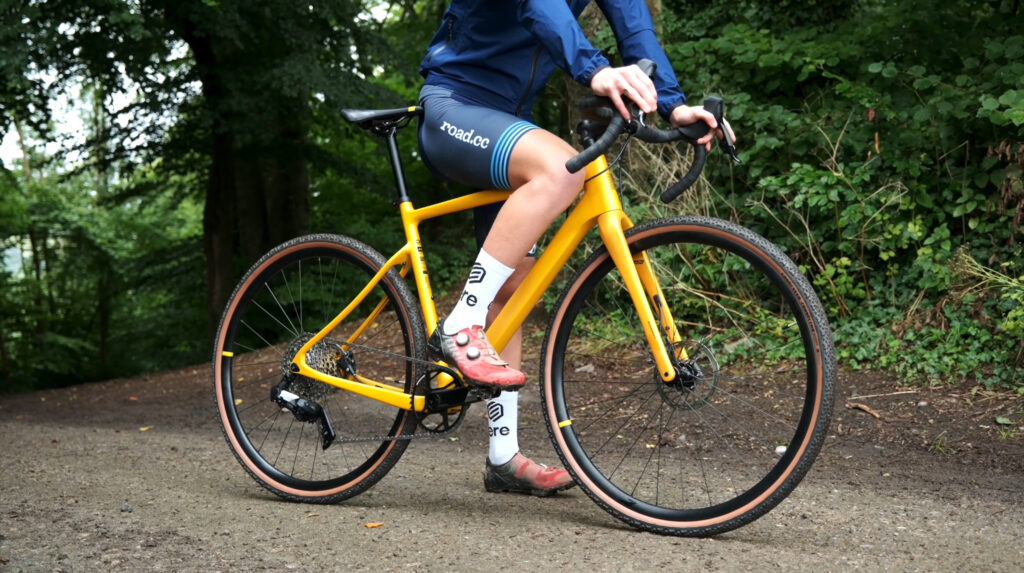
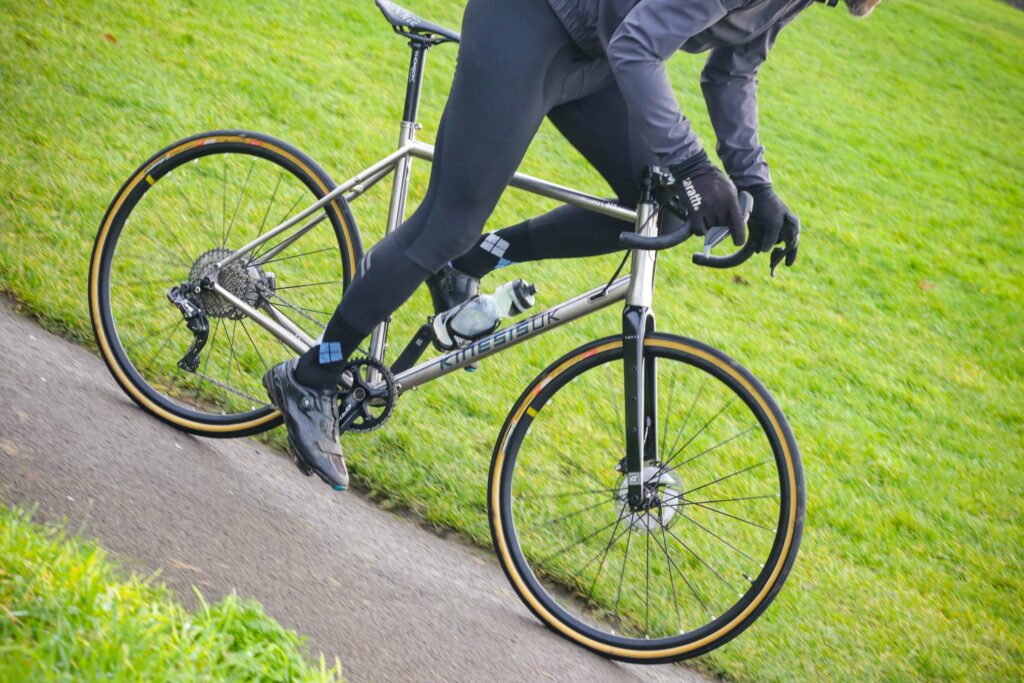
Gravel bikes have been around for some time now, but have seen a surge in popularity in recent years. We tested one of the first gravel-specific bikes back in 2013 – the Kinesis Tripster ATR. At the time, a drop-bar bike with a longer wheelbase, more relaxed geometry, and clearance for high-volume tyres was a pretty new concept.,
Until that point, drop bar bikes designed for rough surfaces were primarily cyclocross bikes, built for fast handling and usually designed around the 33mm maximum tyre size that the UCI imposed on races. In terms of the geometry and ride characteristics, the closest thing to a gravel bike from years gone by was perhaps the touring bike, and some of these could take wider volume tyres than typical road bikes for brief off-road forays.
By the time the Tripster ATR arrived, bikes like the Kona Rove and Salsa Warbird -among the first commercially available gravel bikes – had already hit the market. However, the Kinesis Tripster is a bike that was there at the very birth of the gravel movement.
Fast forward to today, and gravel bikes are no longer a niche category. UK sales reached approximately 30,000 in the 12 months leading up to July 2024 – a 15% increase compared to the previous year, according to The Bicycle Association, which tracks both in-store and online sales.
With their growing popularity and versatility, you might be considering a gravel bike as your next bike, or even selling your other bikes and committing to just one. While they’re designed for mixed terrain, gravel bikes aren’t limited to gravel riding and could become your commuter or training bike. Let’s dive into the pros and cons of making a gravel bike your one and only bike.
Pros
1. Customisation
> How to customise your road or gravel bike
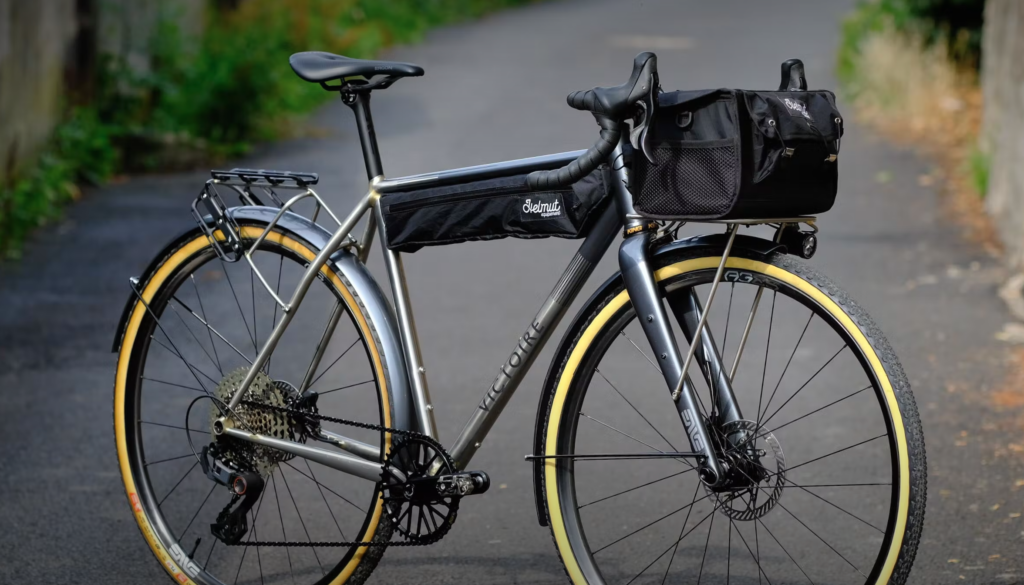
A big positive of gravel bikes is that the possibilities to customise them are endless, with multiple mounting points allowing you to fit racks, mudguards, bottle cages, frame bags and more, making them ideal for long-distance rides, commuting or bikepacking.
Tyre choice adds another layer of adaptability. Swap in wider, knobbly tyres for off-road adventures or slicks for smoother, faster road riding.
For even greater flexibility, having two sets of wheels allows you to switch between a rugged off-road setup and a fast road machine with minimal effort.
2. Versatility
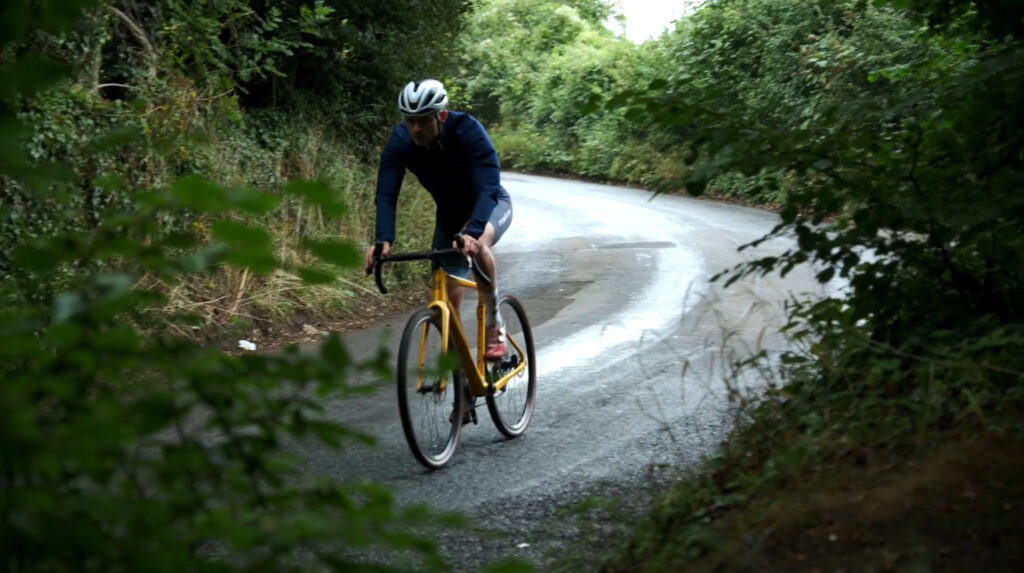
Repeating the same routes can become monotonous and that’s where the versatility of a gravel bike makes it a great option, allowing you to explore new places and ride across different types of terrain without being restricted to just one.
With the ability to handle roads, fire tracks, grassy fields, and more, you can mix up your routes for more variety and even adapt your ride mid-way to suit changing weather or light conditions.
3. There’s a bike for everyone

Whether you’re after a lightweight race bike or a model designed to carry plenty of accessories, there’s a gravel bike to suit every need, and the variety continues to grow.
Since most of us won’t fully utilise the specialised benefits of an aero- or climbing-specific bike, the diverse range of gravel bikes ensures you can find one that’s tailored to your style of riding.
4. Robustness and durability
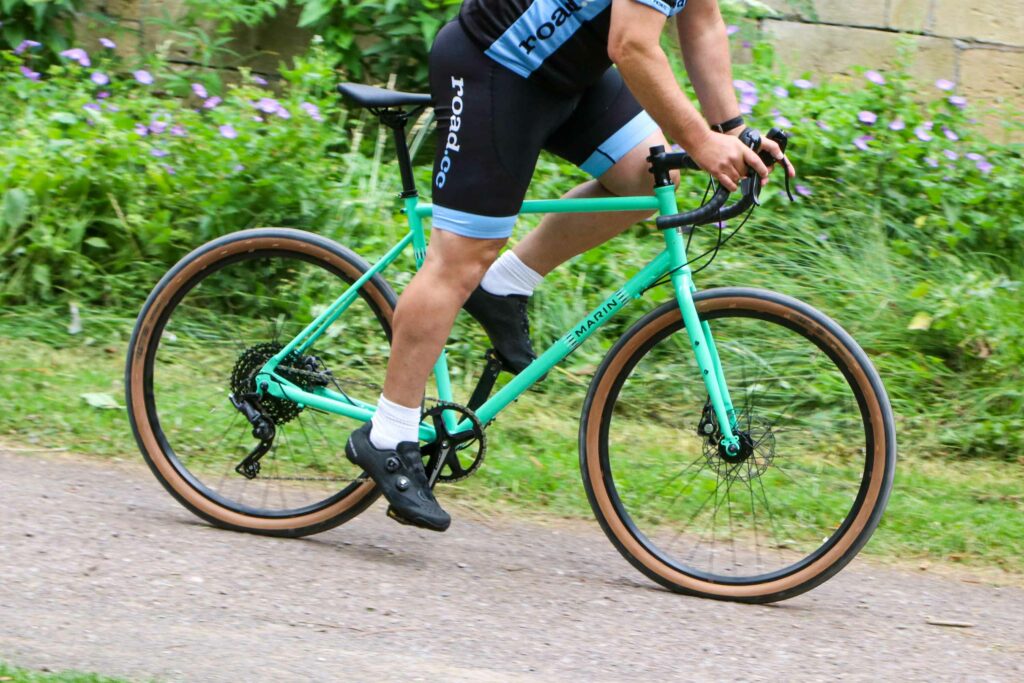
Gravel bikes are specifically designed to withstand the challenges of off-road riding, which means they’re built to be more resilient than traditional road bikes and the components are made with an emphasis on robustness and durability.
Gravel bike frames are designed to withstand vibrations and impacts from varied terrain encountered in gravel riding. Usually, a gravel bike will have a bit more frame material to ward off any lively rocks and particularly bumpy terrain.
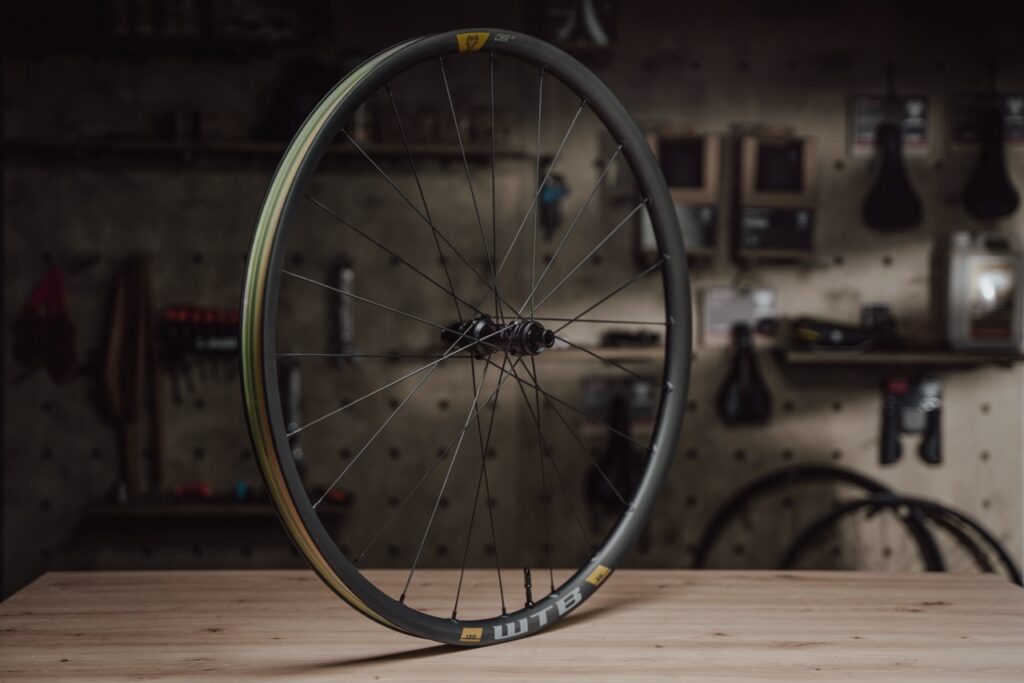
Wheelsets often have sturdier rims and additional spoke counts to their equivalent road wheels to better cope with uneven road surfaces. This not only helps improve handling and stability on rough terrain but also ensures the wheels last longer, even when used on challenging surfaces.
5. Speed

When Jamie tested a gravel bike against a road bike, he was pleasantly surprised by how close the speeds were. Gravel bikes don’t have to be slow and speed is somewhat determined by tyres and gearing, both of which can be relatively easily and affordably changed.
With fast rolling tyres and a gear range similar to a road bike, you can achieve comparable speeds on tarmac. While stock gravel setups may prioritise versatility, you have the flexibility to switch between tubeless and clincher tyres, slick or knobbly treads, and a variety of drivetrain options, including 1x, 2x, or even 3x setups across 11-speed, 12-speed, and even 13-speed systems.
6. Comfort
> Why wider tyres on road bikes are here to stay
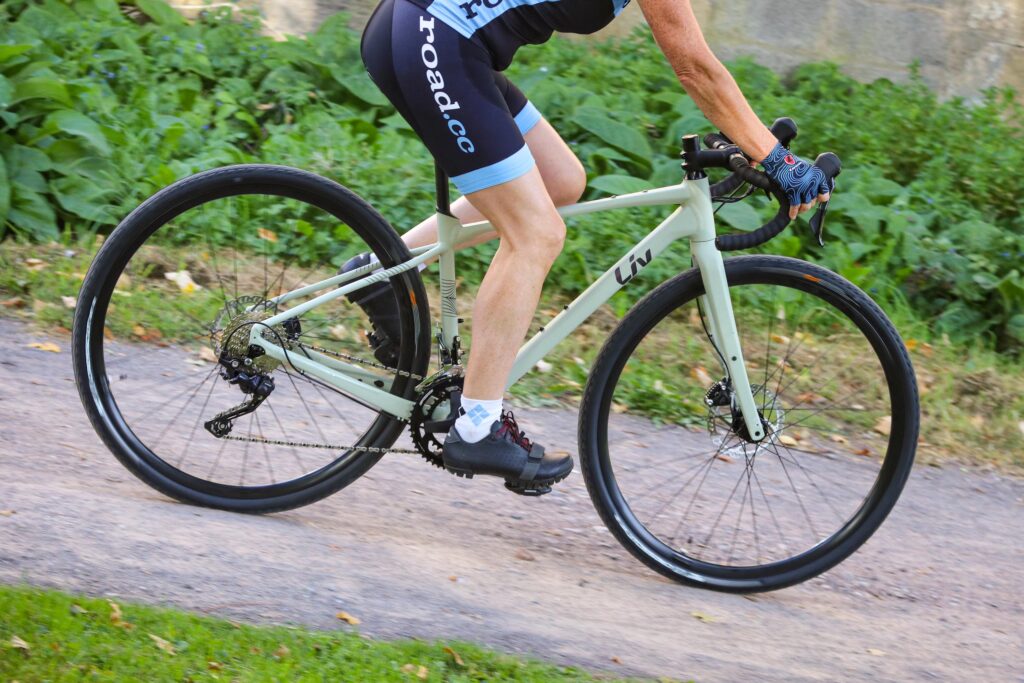
Gravel bikes typically feature a more relaxed and stable geometry than road bikes, making them comfortable for longer rides.
They also accommodate wider tyres, which also enhances comfort, and to support these wider tyres, the seat stays and wheelbase have to get bigger. This can make a bike feel less lively and agile which may not be ideal for professional riders but it can be beneficial for less experienced riders by offering greater stability and control, especially on twisty descents.
7. More space at home!
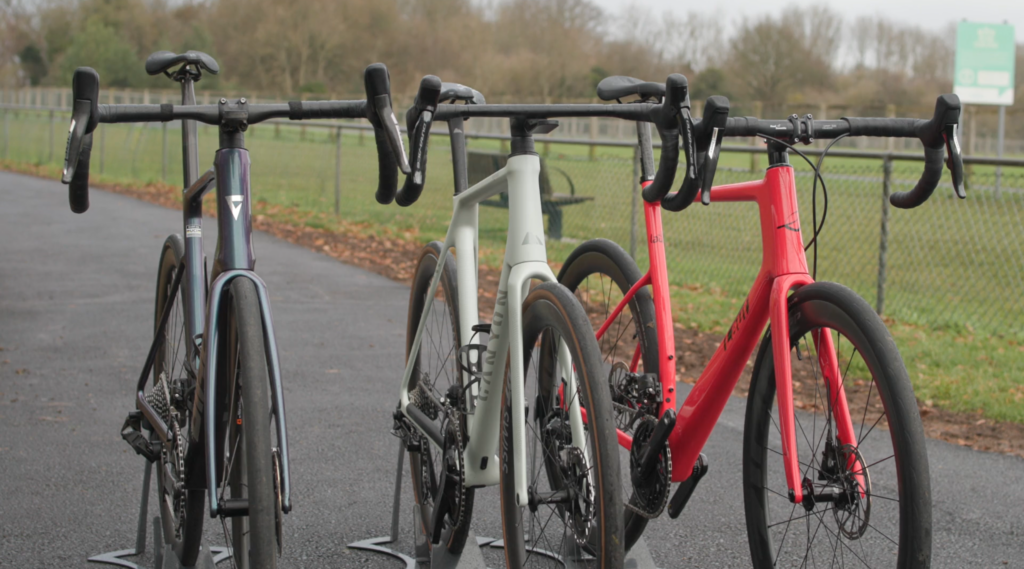
Opting for a gravel bike as your one and only bike could mean saying goodbye to multiple other bikes, freeing up valuable space in your home, garage, or shed. Whether you’re looking to simplify your setup or just make room for other things, a gravel bike can give you the versatility you need to tackle a variety of riding, particularly if you opt for two sets of wheels.
Cons
1. Weight
Gravel bikes tend to be heavier than road bikes when comparing similar materials, specs and price ranges. This added weight comes from components designed to be robust and durable as they need to survive the demands of off-road riding.
While this extra strength ensures longevity, it does result in a slight weight penalty compared to road-specific components. However, for most riders on an average ride, this difference is unlikely to be a deal-breaker.
2. Larger gaps between the gears
> Do wide ratio cassettes for lower gears have any place on performance road bikes?
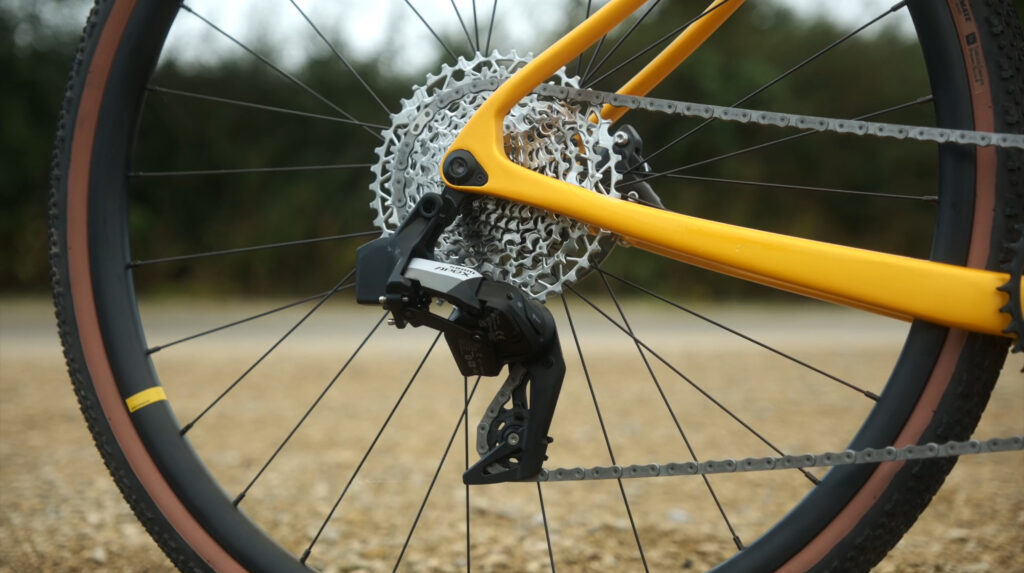
Gravel bikes typically have larger gaps between gears making the jumps bigger compared to road bikes as they are designed to be used for a wide range of terrains. This can make it harder to find the right gear while maintaining a steady cadence.
Gravel bike gearing is also typically lower to handle off-road climbs, which may make it harder to maintain high speeds particularly on descents. As mentioned above, it is possible to switch up the gearing on your gravel bike to make it more suited to your riding styles.
3. Cost considerations
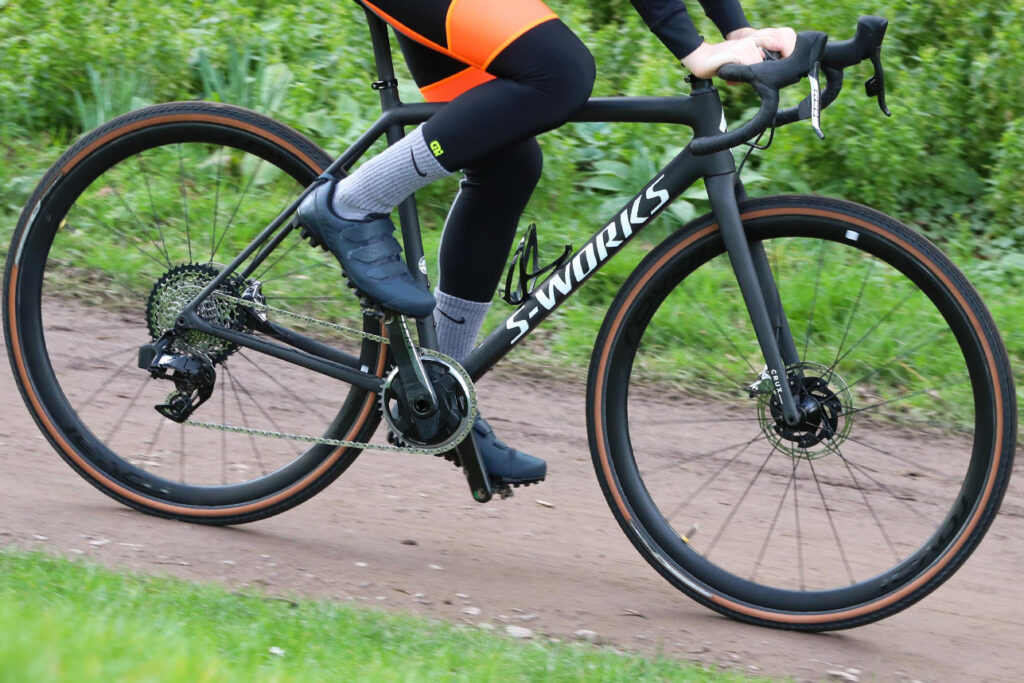
Gravel bikes tend to be pricier than budget road bikes, and like all bikes, high-end models can come with a premium price tag.
However, while the initial investment may be high, a gravel bike has the potential to replace multiple bikes in your garage, serving as a do-it-all option for road cycling, commuting, bike packing, and trail riding. In the long run, this could lead to savings on maintenance, storage space, and the cost of upgrading multiple bikes over time.
4. Not fully specialised for road or MTB riding
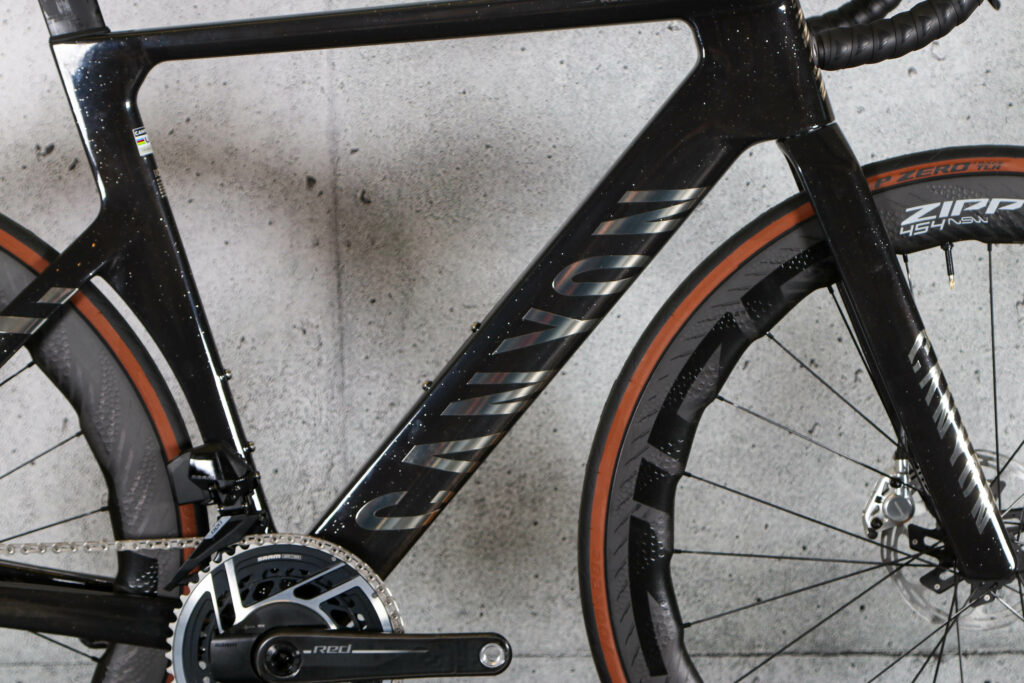
While gravel bikes can do a bit of everything, they won’t always match what a road bike is capable of on the road or what a mountain bike can do off-road.
They can tackle a mix of surfaces but if you frequently ride either smooth tarmac or technical single track, you may find a road or mountain bike could better suit your needs offering more specific performance.
5. An all-road bike may be more suitable
All-road bikes are designed to bridge the gap between road and gravel bikes and while the line between them is still a bit blurry, all-road bikes may be more suitable as your one and only bike.
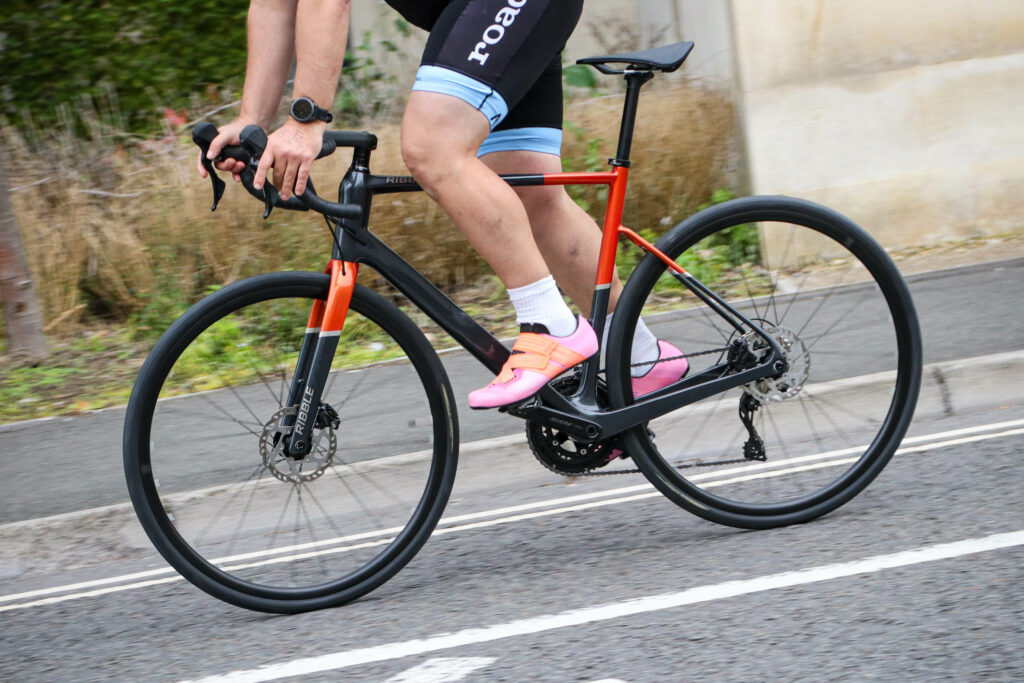
The primary consideration between a gravel or all-road bike is where you want to ride the bike. If gravel riding is limited near you or you prefer riding in comfort on the road, taking in the occasional canal towpath, then an all-road bike may be more suitable.
All-road bikes can handle some light gravel duties, and a gravel bike is still capable of being ridden on the road, but the gravel bike will be able to handle more off-road terrain, while the all-road bike will eat up miles with more efficiency.
To conclude
Choosing a gravel bike as your one and only bike comes with a range of advantages, including versatility, comfort, and the potential for customisation. Gravel bikes can handle a variety of terrains, from smooth tarmac to rough trails, making them an ideal option for those who want to explore diverse riding experiences. The ability to switch tyres, add accessories, and use the bike for multiple purposes from commuting to bikepacking adds to their appeal.
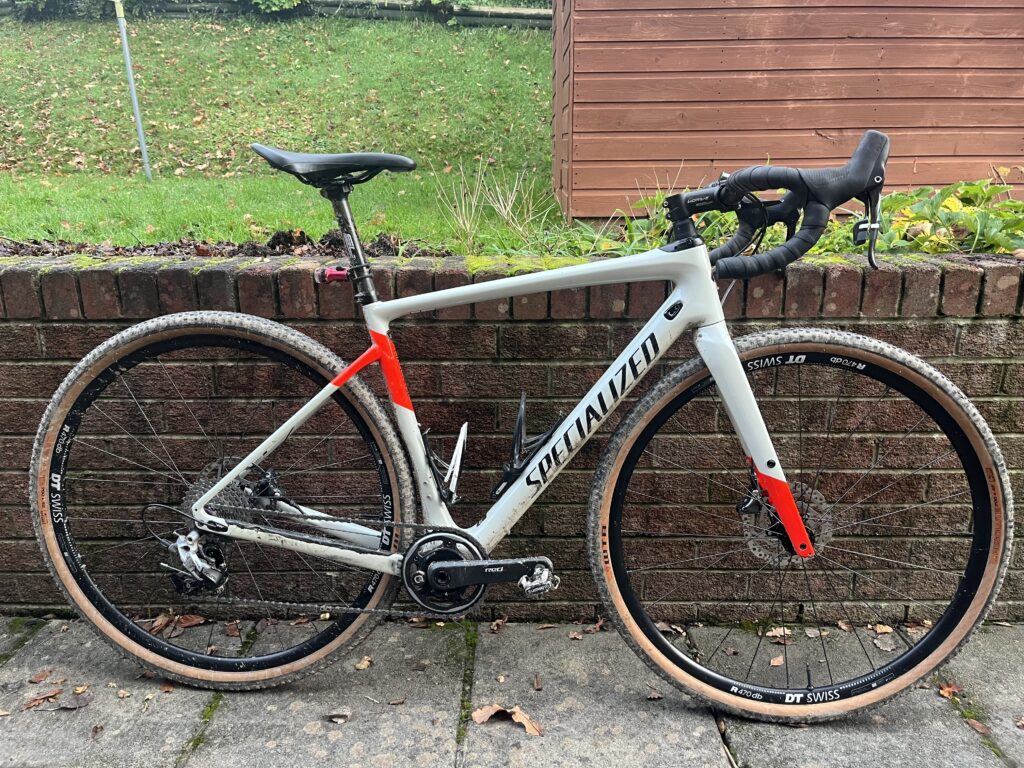
I’ve personally been using a gravel bike as my one bike to do it all this winter with some slick tyres on, and despite sticking to a 1x set-up, I haven’t ran out of gears on the club run.
However, there are some trade-offs. Gravel bikes can be heavier than road bikes, and the gearing may not be as optimal for high-speed road riding. Additionally, while gravel bikes excel at versatility, they aren’t always specialised enough for riders seeking peak performance in either road or mountain biking.
Would you consider using a gravel bike as your one and only bike? Let us know in the comments section below.











81 thoughts on “Why a gravel bike could be the only bike you need — the pros and cons of using a gravel bike as your only bike”
I bought a gravel bike in the
I bought a gravel bike in the autumn and have used it exclusively since, until a few weeks ago when it needed some repair work and I had to wait a week to take it into the shop, so I used by road bike instead. Since then I’ve been using both alternatively and enjoying the slightly faster speeds I can get on the road bike.
In theory yes, a gravel bike as my only bike would be workable… as long as I have a spare.
Rather than a cross between a
Rather than a cross between a road bike and an MTB I’d take a cross between a tourer and an MTB, and ditch the drops (I just prefer sitting up more).
I’m not in a hurry and tend to take luggage with me, so something like a Shand Tam (and with the hub gear and belt drive, rack and mudguards).
pjclinch wrote:
Isn’t that essentially the good old ‘hybrid’?
The_Ewan wrote:
Isn’t that essentially the good old ‘hybrid’?— pjclinch
Funny you should say that, my brother picked up a cheap used mid-90s Specialized Rockhopper (MTB in that era) last year, and it’s essentially a flat bar gravel bike, or hybrid in modern terms.
Arguably… I’d say a hybrid
Arguably… I’d say a hybrid was a “roadified” 80s/90s MTB, a tourer does luggage and long distance comfort better, and an off-road tourer has clearances for bigger tyres.
But also arguably we’re in semantics territory here!
quote]
Cited as a reason to have just a gravel bike, precisely the reason I have a “gravel” (Specialized Tricross, the gravel bike before gravel bikes were a thing) and a road bike, I want to wake up Sunday morning and go where the mood takes me right away, selecting the right bike for the job. I don’t want to waste valuable riding time swapping out tyres.
Unfortunately you can’t
Unfortunately you can’t really have just one bike for everything in London (or many places in the UK) because of theft.
If you want an errands and general use bike that you can lock up for a couple of hours and not constantly stress about whether it will still be there when your film/workout/party finishes, then you have to also have a cheap beater as well as your fancy (half decent?) gravel bike.
This.
This.
I’ve got a second hand folding bike that I upgraded with reasonable quality gears that I use for trips to the shops. It doesn’t look like much, but rides very nicely.
Quote:
I had three different cyclocross bikes before the marketing departments at various bicycle companies came up with the “gravel” category. All of them could take bigger tyres than 33mm, which didn’t become the UCI limit until 2010, I think. All had mudguard bosses and I used all them for touring, commuting and winter club rides, as well as ‘cross racing.
To be fair to the marketers :
To be fair to the marketers : ) .. “gravel” as a term came from the races in the USA that were set up by the riders who did this stuff, the bike brand marketing depts just picked up the name for bikes made for a growing trend.
The first bike of this type I was involved with designing and riding was in the autumn and winter 2008-2009 (Genesis Croix de Fer), a steel framed CX bike with disc brakes, used for winter riding that looked more like a mix of ‘Cross without the carries and a hillier Paris-Roubaix than any US gravel race terrain.
It is a silly waste of time
It is a silly waste of time to make these generalizations at the same one is trying to apply specific category labels to bicycles — especially when considering “All-road” cycles as yet another category.
First of all, for about the first 150 years of cycling, all bicycles were road bikes, and they were all gravel bikes, and they were all all-road bikes. The notion of asking “Can I use this bicycle for X?” is only a few years old, in comparison, and even today is limited to usage in just a handful of countries — and the answer depends on the rider, not the bike.
Second, none of these generalizations and labels can be reliably applied. For example, a bike I own has; drop bars, 40mm tires front and back, disc brakes, 22 speeds, and is sufficiently overbuilt at 9.5kg that I expect it to outlive me by many decades. Like almost all bikes, it can be setup with an aggressive rider position, or not. What is it? It’s actually a cyclocross bike, and a “Race” model at that — a Cube Cross Race Pro.
Or another of my bikes — again (flared) drops, room for 33s, rim brakes, elegant steel frame and fork, 22 speeds, bags front and rear, and 8.7 kg. It’s actually a gravel bike, built from a 39 year-old Miyata road frame with a custom set of wheels, and modern Shimano and Easton components.
Both get ridden everywhere except deep snow or sand, and including downtown, and singletracks. I have bikepacking setups for both.
I also have 3 nominal “road bikes” with 26 to 28 mm tires that see gravel and dirt on most rides — many pleasant routes around here are best connected by gravel sections through various parks, and frankly, many of the “roads” are closer to gravel anyway.
Without the accompanying marketing material handy, it’s usually difficult to even tell what category a bicycle is supposed to occupy. Just build or buy whatever strikes your fancy and ride it ’til something else does.
dh700 wrote:
The safety bicycle hasn’t even been around for 150 years yet, and having been around for the last fifty-six years of cycling there have always been road bikes, cyclocross bikes, TT bikes, track bikes, touring bikes, shopper bikes, Dutch bikes and since the 1980s mountain bikes, to name but a few.
Ignoring ordinaries,
Ignoring ordinaries, recumbants, cargo, etc.. Does it not come down, principally, to the handlebars? On a diamond (or step through) frame; drop bars define your first five categories, with their more agresive geometry; straight bars (wide, narrow & curved) your shopper or town bike, with medium geometry; dutch bikes at the extreme end of the curved bar, relaxed geometry spectrum. Mountain bikes being derived from the medium geometry straight bar bike, now with added bounce & sometime dodgey looking frames.
From a functional point of view, the first group were about speed. The second about utility; the third everyday usage; and the mountain bike simply for leisure.
The names originally attempted to define variation within the basic types. These days marketing plays the biggest part in the growth of name calling.
+1
+1
Bar shape, tyres and geometry – imo everything else on a bike is just a functional benefit not the design fundamentals (sorry SRAM & Shimano)
Indeed – and in fact the late
Indeed – and in fact the
lateearly 1800s on saw a great diversity of designs – well, there were probably several “radiations” (a bit like the start of the Paleozoic Era for multicellular animal life).It’s true that some (all?) of the terms are marketing-focussed, and the basic bike looks rather samey now. At least outside of utility bikes, adapted cycles, cargo carriers, recumbents…
But MTB here, or BMX, or trials… or just a roadie showing off? 1885 in the US apparently.
Rendel Harris wrote:
The bicycle was invented in 1817 — 208 years ago.
MacMillian built his version in 1839, which is largely similar to those we ride today. https://onlinebicyclemuseum.co.uk/1839-macmillan-bicycle-replica/
And, to the point, very few if any riders obsessed about whether or not their rides comported with the suggestions of marketers — until extremely recently, and in just a few countries.
dh700 wrote:
From your own link, “there is no conclusive proof that it ever existed”. Bicycle historians are generally agreed that this machine did not exist and was subsequently “recreated” using later developments.
Rendel Harris wrote:
Argue with your BBC.
https://www.bbc.co.uk/ahistoryoftheworld/objects/vtsj5jCyQc2KPjBnJ6g0iw
Not only that, but the BBC believes that MacMillian’s design was appropriated by others in the 1840s:
https://lpha.org.uk/2024/07/29/gavin-dalzell-1811-1863/ is interesting as well. And https://collections.glasgowmuseums.com/mwebcgi/mweb?request=record;id=29426;type=101
That’s an awful lot of smoke for what you claim is a fairy tale.
dh700 wrote:
The bicycle was invented in 1817 — 208 years ago.— Rendel Harris
You seem to have misunderstood the term “safety bicycle” which is the first bicycle that can be said to be similar to modern bicycles.
Rendel Harris wrote:
No, you have added the word “safety” where none existed, in order to fabricate a pointless argument.
Pick whatever date you prefer for the invention of the bicycle, and my point remains completely correct, and you are simply wasting everyone’s time with attempted pedantry.
dh700 wrote:
Bore off.
dh700 wrote:
This whole discussion is essentially pointless and a waste of time – your comments as much as anyone else’s. And there’s nothing wrong with that. There is, however, with getting snippy and unpleasant about it.
mdavidford wrote:
I have a definition of a “comment forum” that I saw on a vellum manuscript somewhere that shows that from the very beginning that was *exactly* the purpose of such modern latrine-wall-scribing. You should cease writing such nonsense unless you wish to embarrass yourself further.
mdavidford wrote:
I observed that the distinctions which occupy this article do not, in fact, exist. In other words, that this article is and encourages sturm und drang over nothing at all.
If you’re unable to understand that, you can just say so, and maybe it can be explained to you in simpler terms.
And yes, Harris did thoroughly waste everyone’s time, as usual, by attempting to invent a couple straw men, and then compounding that by making factual errors, to boot — in other words, adding less than nothing to the conversation.
dh700 wrote:
first cast out the beam out of thine own eye
mdavidford wrote:
Okay, so what precisely are you unable to understand, or are claiming is incorrect? Rather than hiding behind a poorly-written Biblical verse, why don’t you actually contribute to the topic at-hand — if you can.
dh700 wrote:
What he wrote is a direct word for word quote from the King James Bible, one of the very greatest achievements of written English in the history of the language, and yet again you’ve made a bit of a twat of yourself.
Rendel Harris wrote:
Yes, I am aware — and it is poorly-written, since the “out” is redundant.
The King James Bible is a triumph of marketing, not language. If it were a triumph of the latter, it would not contain a thousand internal contradictions, and would not have spawned more hate and violence than any other man-made object.
dh700 wrote:
You obviously don’t understand the distinction between the language and the message; the message can be debated ad infinitum and its positive and negative effect on the world likewise. As an atheist I tend to agree that its influence has been malign, however you clearly don’t understand the language and indeed I rather doubt you have ever studied it. Harold Bloom, possibly the most important and influential and certainly the most famous academic literary critic of the last fifty years, described the KJV as “the sublime summit of literature in English” and “rivalled only by Shakespeare”.
Rendel Harris wrote:
I understand that distinction just fine — if the language was sublime, people would understand its message. They profoundly do not, of which most of human history since that book’s publication illustrates beyond a shadow of a doubt.
The Bible is wildly-popular propaganda whose message is not agreed-on by virtually any two people who are familiar with it. That is a profound failure of its mission. Its popularity is solely due to the fact that for much of its history, it was the only book many people had access to — and that people have been murdered by the millions for criticizing it.
One wonders if you really
One wonders if you really are this obtuse or simply being vexatious, like the naughty child at the back of the class who can only get the attention they so desperately crave by misbehaving. The odds are very much on the latter but just in case the former is true, let me briefly explain: yes, the message of Christianity and the Bible has been misinterpreted, manipulated and misrepresented to create untold suffering and misery as has every other religious text from time immemorial. However, that does not mean that works of art inspired by the religion and its text are also valueless: Michelangelo’s Pieta, Mozart’s Mass in C minor, St Paul’s Cathedral and the language of the King James Version are all great works of art despite their provenance and inspiration. I suggest you read some of the KJV and try to understand the greatness of its language rather than dribbling out cliched high school debating society points about your views on religion in general that have nothing to do with the artistic merit of the language.
Agree – while in some senses
Agree – while in some senses a laufmaschine or dandy horse is a bicycle I’d say functionally it’s more of a scooter.
A “bike ride” with no pedals (or brakes other than your feet, come to that) is missing rather a lot! Although as a “balance bike” can help train *that* element of riding for kids.
Various definitions for various purposes of course. (Including those who just want to bang their chests on the net).
Actually everyone is wrong,
Actually everyone is wrong, it was the 16th century as shown in the glass at Stoke Poges church *. Plus horns predate bells as a way of alerting pedestrians, and aero cycling clothing post-dates the habit of simply shaving (almost) everywhere and going nude.
Or – taking a more general definition of “cycling” – does it originate with Stephan Farffler in the 1650s … (continues for 94 posts).
https://en.m.wikipedia.org/wiki/Stephan_Farffler
* Estimated – plus we’re taking the original, not the copy which was installed far later.
I get where you’re heading
I get where you’re heading but you can ride any bike anywhere. The difference is geometry, touring bikes are often longer, more relaxed in geometry.
Dutch/traditional bikes are entirely different in approach the bottom bracket is forward of the saddle, you can’t ride them fast. There’s a distinct difference between being all “rough stuff fellowship” with your lovely steel audax machine with some hike a bike action vs taking your dream carbon, tight clearance fast road bike across the same terrain.
Yeah – I wouldn’t want to
Yeah – it’s clearly possible but I wouldn’t want to take the Raleigh Chopper challenge… And some folks do audaxes on fixed gear bikes also (same as they rode on the first TdF).
Mpcleathero wrote:
“Geometry” barely matters, and not within the realm of adjacent categories which were the subject here. Your typical seat post has around 8 inches of vertical adjustability, saddles have a couple inches of horizontal adjustability and offset seatposts add more, and myriad stems, spacers, and bars exist such that almost any riding position can be configured on any bike in this ballpark. Geometry only affects how “cool” your bike looks, because a stack of stem spacers or a big riser handlebar look ugly to most.
I have setup a 59 and 51 centimeter frame from the same manufacturer with exactly the same riding position, and without even using any wacky parts — because the effective difference was only 25mm of reach, which is way less than inherent adjustability. Rode Imperial centuries on both of them.
I might beg to differ — I can’t ride a bike like that fast, but some people can. https://www.trainerroad.com/forum/t/the-legend-of-shirtless-keith/11024
Again, “I don’t want to” and “I can’t” are different from “It can’t be done”.
Also, that “tight clearance” road bike is likely running tires that are slower than the wider ones which don’t fit — as we, and even World Tour racers, are slowly learning.
A bit pedantic maybe but the
A bit pedantic maybe but the ‘birth’ of the gravel movement was in the USA ~2006 (DK200 race). In the UK there were UK brands offering ‘non-race CX’ bikes that counted as gravel models then and by 2013 there were quite a few, even mainstream bike shop Evans had a gravel bike designed and described as such in it’s own brand of bikes in 2012.
Over here, Sam at Singular was doing the whole ‘drop bars off road’ thing before most of us, a more MTB-y side of gravel maybe but look where gravel is now – 2″ tyres and flare bars can be standard spec for gravel racers in the US.
In terms of racing possibly
In terms of racing possibly but Jobst Brandt was shredding drop bar gnar from the 70s and resisting the march of the mountain bike from Ritchey and Fisher. Refusing to ever throw his leg over a mountain bike.
The origins of gravel extend further back than that in Japan, Ritchey and others were sourcing off road 650 tyres from Japan and some Scandinavian countries.
Yes definitely – If we’re
Yes definitely – If we’re going past recent history of the ‘gravel’ name or movement then Jobst Brandt was a leader in ‘drop bars off-road’ attitudes, the RSF before him and the 650B randonneurs and all-roaders before them. The first drop bar bikes outside of a velodrome were ‘gravel bikes’ in a way as dh700 says, since there were no tarmac roads in the early 1900s.
Like most things that evolve creatvely there’s a long line to trace, and change usually happens slowly then very quickly.
A lot of Alpine passes weren
A lot of Alpine passes weren’t tarmaced till into the 70s, so the Tour de France was at least partly a gravel race till then. There was a lot of gravel till at least the 50s, judging by photos and film, and even by Merckx’ time in the 70s, they’re still going up gravel sometimes in the photos.
I come very much from a cycle
I come very much from a cycle-touring perspective. Look under ‘Touring’ on many retail websites now and you only get gravel bikes, which to me are not touring bikes! Handlebars too low, gears too high, no mudguards and no pannier rack… never mind the ‘gravel’ premium price.
I’m sad to see the gradual disappearance of traditional steel-frame tourers, because to me they’re exactly the do-it-all bikes proposed in the article. I’ve taken mine on long offroad camping trips as well as going to Tesco on them (they can take a LOT of shopping).
I’ve tried out the odd gravel bike and wouldn’t mind one as an n+1, but I think I’d only end up using it for the occasional part-offroad day ride.
Uhm, you be you, man. Kinna
Uhm, you be you, man. Kinna rude finding out most people aint seein’ it the same; but hey, least wise you have the memories.
This is the Black Mountain
This is the Black Mountain Cycles Road+ that I used for LEJoG last year. It’s arguably a gravel bike, but did great as a touring bike. I could have used slightly lower gearing on a handfull of hills. It has 46/30 in front, and an 11-34 cassette. I have a 26T ring to install next time I do a tour with steep hills.
It’s about 5 lb lighter than the steel Jamis touring bike it replaced.
With the 26T, it will have go from a low of 23.6 gear inches, to 20.5, which is only 7% higher than the Jamis had with its 24/32/42 touring triple.
Completely unrelated to the
Completely unrelated to the bike itself, but I just wanted to say well done for taking a photo with the valves at 12 o clock, chain in biggie-smalls and level cranks. These things matter.
mark1a wrote:
Thanks!
Now, about the stickers on the rims… I built the front wheel, the rear I bought from a wheel builder. Which is right? Should it bother me?
The stickers on the other side of each rim are clocked 90°, so if I’d noticed I could have built the front to match.
andystow wrote:
I did notice the rim decals, but I knew you built the rim yourself after LeJoG so fair play to you sir and extra props for that. Not worth it until it needs doing again but worth considering if/when you do the other one.
DanaColby85 wrote:
Well, maybe so, but I bought a ti gravel bike 2 years ago as a winter road bike, spring/autumn gravel bike and tourer. I’ve used it for all 3 purposes and it’s admirably robust. It is however a bit heavier than my “summer” aero bike that I like to go out with local club. I think having one heavier stronger bike is really useful, for me, anyway.
But you have a fair point. And all these categories are constantly being reinvented and churned by a slightly desperate cycling industry who want to sell us even more expensive bling
DanaColby85 wrote:
It’s going to be a long, long time before the world starts running out of steel-framed bikes of any description. I pick up one or two a year for cheap, and rebuild them into like-new, for friends, neighbors, etc — and sometimes they turn out sufficiently-nice that I have to keep it. Have a Bianchi frame that I rescued from a basement where it lived for a few decades, in primer right now waiting for me to paint and build it when I receive a shipment of ‘Round Tuits. Also have a city-style bike from a defunct maker that I sandblasted, sprayed with nice automotive paint, and built last fall, that just needs a rack and maybe basket installed before being re-homed in the rapidly approaching Spring.
Lots of small builders are still knocking out steel frames of all descriptions, too. As long as people are interested to take care of them, and ride them, they’ll be around.
I have a Ragley Trig, which
I have a Ragley Trig, which is steel, has masses of clearance plus everything needed for racks, mudguards. I have it set up with a 2×10 Campag groupset (I use the routing they intend for a dropper seatpost for the front mech), could easily take a triple if needed. I use it as a commuter (25 miles each way, about 1 mile unpaved) and as my winter road bike. currently running 38mm tubeless, but at higher pressures than “gravel” people would suggest as it felt draggy. I take the view that “all-road” and “bikepacking” are just the new marketing BS for tourers, they are still out there if you can get through the hyperbole.
“A big positive of gravel
“A big positive of gravel bikes is that the possibilities to customise them are endless”.
Perhaps a bit disingenuous to illustrate that with a bike from Victoire, which is a fully custom framebuilder who will make what you want, gravel bike or not! They make some lovely stuff mind – https://www.victoire-cycles.com/en/all-the-bikes
I’m mid-west American. This
I’m mid-west American. This sentence made me want to scratch my brain: “I haven’t ran out of gears on the club run.” Not to be funny, but do all you all not find that weird?
Daniel Elvebak wrote:
It’s poor English in English English as well, it should be “I haven’t run out of gears”. It’s confusing the present perfect (something that started in the past and is still ongoing, i.e. I have still not run out of gears) with the past tense (something that has happened, i.e. I ran out of gears).
It’s incorrect in classic
It’s incorrect in classic formal English, but a perfectly acceptable construction in many forms of spoken English (increasingly so, to the point where it may eventually supplant the ‘run’ version, even formally). Depending on whether road.cc’s house style* is intentionally more conversational or not, that may or may not make it appropriate.
[*if such a thing exists…]
Succinct! Thank you.
Succinct! Thank you.
Agreed, poor form really from
Agreed, poor form really from one who earns their corn from the publication of written output. What price an editor?
Was it the phrasing or was he
Was it the phrasing or was he meaning that a 1×11 bike didnt run out of gears in a club run. My gravel bike wouldn’t have the gears for a road club run
I believe you meant to say ‘.
I believe you meant to say ‘…bike didn’t ran out of gears…’
Hi from Peoria!
Hi from Peoria!
Back at ya from Kiester! (MN)
Back at ya from Kiester! (a real place)
What I want to know is, is it
What I want to know: is it “all you all”, “all y’all”, just “y’all” in every case or … “y’alls”?
“youse”
“youse”
“Yow” in the Birmingham IIRC?
“Yow” in Birmingham IIRC?
Irish (northern) ☝️
Irish (northern) ☝️
Depends on what you et for
Depends on what you et for breakfast.
Is this Gravel CC?
Is this Gravel CC?
Thought not.
Why would I want a gravel bike to ride on the road?
What a load of nonsense.
Surreyrider wrote:
Have you seen the roads these days?
Yes the gravel paths are in a
Yes the gravel paths are in a better state than most roads!
Tl;dr. Yes. Its a super
Tl;dr. Yes. Its a super versatile machine (espec in Scotland) although I’m not giving up my roadies anytime.
Only need to look to the
Only need to look to the Vielo range of 1x road or gravel bikes as your one stop solution – being specifically designed as 1x only, all the benefits, non of the cons (exception the gap between gears). I ride a R+1 with up to 32’s, a 48t chainring and 44/10 cassette and it flies!
A gentleman does not ride a
A gentleman does not ride a 1x. For instance, can you imagine James Bond, Christopher Lee’s Dracula or Raffles the “gentleman thief” riding a 1x? Of course not: the very idea is absurd.
slappop wrote:
Raffles, in fact, when he returned to England in disguise and lived at Ham Common, regularly riding the gravel trails in Richmond Park, rode, so his chronicler Bunny tells us, a Beeston Humber, so he not only used a single front chainring but was also riding a singlespeed.
I afraid you’re wrong, old
I afraid you’re wrong, old chap. The standard cycling industry definition of a ‘1x’ requires that the chainset be a derailleur. But if you can find a reference to anyone calling a single speed a ‘1x’ prior to SRAM’s introduction of the XX1 groupset, you win the internet.
slappop wrote:
If you’re going to be pernickety, probably best to get your front and rear derailleurs the right way round.
This is the Second time this
This is the Second time this article passes i believe..
However yes, i could do with the one bike for all concept.
I use a cyclocross bike (stevens ) for everything picking up the kids, commuting road and off-road.
But on the sunday morning group rides ,i use my ceepo mamba-r .
The group i’m in is all about speed, bikes are 2x s-works sl8’s 2× canyon airroad, a supersix evo and a pinarello f12..
I’d struggle on my cross bike handling and drag are just not up to spec for flatout grouprides..
Cheers all !
One bike? That’s a good one.
One bike? That’s a good one.
I built a gravel bike last
I built a gravel bike last summer – a Ridley Kanzo Fast with Campag Ekar – and have used it through the winter with mudguards for club runs and the Festive 500 and so on.
The pluses: You can absolutely bomb down bits of NCNs surfaced in what looks like railway ballast that were a real struggle on a road bike in the past. The groupset is fabulous. The frame is very compliant and smooths out the road, almost too smooth. The steering feels sharpish and the wheelbase is not so long as to feel ponderous.
The minuses: Putting together a fully integrated bike (no visible cables) nearly brought me to tears! It’s not lightweight (9kg). It felt a bit slow with 38mm Vittoria Terreno Zero gravel tyres, so I put 34mm Vittoria N.Ext slicks on it. Now it feels more like an all-road bike, but the slicks don’t quite have enough grip for the bridleways I like to include in my rides. The Terreno Zeros were perfect for that, but felt slow on tarmac.
The jury is out on: It’s no faster than my road bike on smoother gravel paths like Marriot’s Way.
Question: Does anyone make a low rolling resistance tubed gravel tyre with a slick centre tread? That would be ideal.
matthewn5 wrote:
The Michelin Power Gravel Adventure might fit your requirements, or the Vittoria Terreno Zero (“tubeless ready” but no reason you couldn’t run it with a tube).
Thanks @Rendel, I’ll look
Thanks @Rendel, I’ll look into them – they compare well with the Terreno Zeros that I already tried:
https://www.bicyclerollingresistance.com/cx-gravel-reviews/compare/michelin-power-gravel-40-vs-vittoria-terreno-zero
matthewn5 wrote:
the terreno zero do feel a bit sluggish if the pressure isnt spot-on .. otoh the grip level and puncture resistance are pretty good. and the hex-scale tread looks cool.
someone made a tyre with an inverted tread design, that might work better for you.
matthewn5 wrote:
The Hutchinson Caracal Race TLR is the tire that you are looking for — least rolling resistance available in a knobby tire.
https://www.bicyclerollingresistance.com/cx-gravel-reviews/hutchinson-caracal-race
If you can’t fit those, Panaracer Cedric Gracias ( aka CG CX ) are brilliant, despite being fully-knobby and an older design.
In addition to my steel road
In addition to my steel road bike, I got a titanium gravel bike built last year; really fancied a ‘signature bike’ and the bike mechanic I use was up for it (discussion on the subject had been going on for some time). My vision was more all-road but he pushed me more down the gravel route, but not too far; 1×11 Shimano GRX, tubeless (Maxxis Ramblers; 45mm front/40mm back) and I use SKS Speedrocker mudguards which come off v quick as necessary. It does give me more route options and I gave it a good workout in Tuscany going from single-track, gravel to nice smooth Italian tarmac. I’ve also done some overnight touring (staying in B&Bs) so loaded it up with a bit of luggage. No faster than my road bike but I could have a 2nd set of wheels with road tyres. I’m not a club rider but if I had a carbon super bike then that would still be way faster than the gravel bike. Not sure I’d want to rag it on the commute, especially through the winter, as I have a old hybrid with a rack; have to travel with a laptop and I’m not a fan of heavy rucksacks (over an hour commute). Have rigged the road bike with a detachable rack so it can do some of the summer commutes. For the budget/storage space concious, with 2 sets of wheels, it’s definitely an option but with some compromises. Steel road bike is still great on a purely tarmac ride and trusty old commuter can happily sit locked up at the station, doesn’t mind filthy winter conditions and the bike scrum of getting it on/off trains. The commuter is a USA built Cannondale that I’ve had for 25 years (a good few upgrades/changes); not sure I could sell it and watch someone else ride away on it!