



Here’s one way to improve your sprint…
We’re sticking with Canada on the site this morning for some more un-bear-ably tense footage, this time involving a hungry grizzly and a rather startled cyclist… (you can blame Dan for that tortured pun.)

> “Pretty crazy” moment grizzly bear charges just past cyclist
But remember, as Richmond police will tell you, Cyclist/Bear safety is a two-way street…
‘Visma-Lease a Bike? I wonder where they got that idea from?’
Visma-Lease a Bike. Wonder where they got the inspiration…. pic.twitter.com/k4rOa8PnhW
— Bolletjestrui (@Bolletjestrui) October 16, 2023
Ah, it’s all starting to make sense now…
> Catchy… Jumbo-Visma set to become Visma-Lease a Bike in 2024
Does this mean we can expect more bike swap chaos and shenanigans at next year’s Tour, as part of some elaborate sponsor plug? Pog certainly hopes so, anyway…
Cyclists who run: From Pidcock and MVDP to Yates, Ovett, and, naturally, Chris Froome
Tom Dumoulin’s foray into post-retirement half-marathons and Yves Lampaert’s cross-country brand of ‘relaxation’ has got us thinking about other pro cyclists fond of donning their running shoes during the off-season.
Last November, Mathieu van der Poel stormed to the win at his first cyclocross race of the season in Hulst, before casually slipping on his trainers for a 7km ‘tempo celebration run’, which he completed in just under 27 minutes. So much for a casual warm down…
However, that post-race jog wasn’t quite as ‘quick’ as MVDP’s ‘cross rival Tom Pidcock, who famously wound up the entire running community by uploading a post claiming to have run a 13:26 5km, just five seconds slower than the British record.
The greatest running achievement by a pro cyclist of all time, or a just a simple case of a dodgy GPS? I’ll let you decide…
But while cyclocrossers tend to incorporate running into their training – those bikes aren’t going to shoulder themselves – even some of the peloton’s road-only contingent have displayed some serious running chops during the colder months.
A week before Dumoulin almost stole the win at his hometown 10k with a blistering time of 32:38 in November 2021, Adam Yates clocked a sub-three-hour effort at the Barcelona Marathon straight “off the beach”. Alright Yatesy, no showing off now.

Even cycling’s most romantic (now-retired) icon Thibaut Pinot is occasionally fond of leaving the bike aside for a nice early morning run in the Seychelles:

Maybe there were some goats around?
Meanwhile, any running-cycling crossover can’t be complete without the inclusion of former road racer-turned-gravel pro Freddy Ovett, the son of Olympic-winning middle distance runner Steve, and friend of marathon icon Eliud Kipchoge (who also, it turns out, likes to go for a spin on his bike).
In 2021, Ovett proved he inherited some of his father’s running legs too, clocking an impressive 2:48.55 at the Los Angeles Marathon (sorry, Adam…).
Of course, it would be remiss of us if we neglected to mention the single greatest cyclist running moment of all time.
Cue the Benny Hill theme…
“I’ll not be able to walk for two weeks”: Tom Dumoulin finishes Amsterdam half-marathon in rapid 1:10.04
Well, we always knew he was good against the clock, but 2017 Giro d’Italia winner Tom Dumoulin proved at the weekend that he can also put in a pretty rapid time when the TT bike’s locked away in the shed.
Highlighting that retirement doesn’t necessarily have to mean relaxing on the beach or gorging takeaways, the 32-year-old Dutchman took part in Sunday’s Amsterdam half-marathon, finishing it in an impressive 1:10.04.
Dumoulin’s pretty rapid run won’t come as a surprise to avid readers of the live blog – back in late 2021, the three-time Tour de France stage winner finished second at the Groene Loper Run in his hometown of Maastricht, covering the 10km in a blistering time of 32:38, just 17 seconds behind the winner.
Describing his first half marathon as a “really cool experience”, Tom said that was initially “aimed for a time below 1.15, but I found a nice group going slightly faster.”
Simples, really.
“Now I think I’ll not be able to walk for two weeks though,” he concluded, proving that he may well be human after all.
Agora foi @yveslampaert correndo 5km para 19:36” no cross country
Bom também pic.twitter.com/fGC2weISMZ
— O País Do Ciclismo (@opaisdociclismo) October 16, 2023
Dumoulin wasn’t the only Tour de France stage winner swapping his cleats for some trainers at the weekend – Soudal Quick-Step’s Yves Lampaert also participated in a local cross-country race in Belgium, covering a grassy and muddy 5km in 19.36.
Whatever happened to cyclists chilling in the off-season?
The uh-oh, autumn’s here edition of Five Cool Things!
Alright, hands up – who else read that headline to the tune of the 1994 hit by Shampoo? Just me? Okay…
Anyway, the temperatures are dropped, the streets are tinged with orange, and the nights are drawing in – so we’ve collated five cool things that we’re reviewing on road.cc to help you enjoy your autumn riding:

85 percent of respondents reject Road Safety GB’s “dangerous” mandatory helmet poll
Remember Road Safety GB’s mandatory helmet poll from last week’s blog, the one that saw cyclists accuse the organisation of framing the question in a “dangerous” manner, of ignoring the “real” sources of danger for vulnerable road users, and of “non-evidence-based victim blaming”?
Well, the results are in…

> Road safety group runs mandatory cycling helmets poll… 85% reject proposal
Britain’s bike theft problem, in cartoon form
— Modern Toss (@ModernToss) October 17, 2023
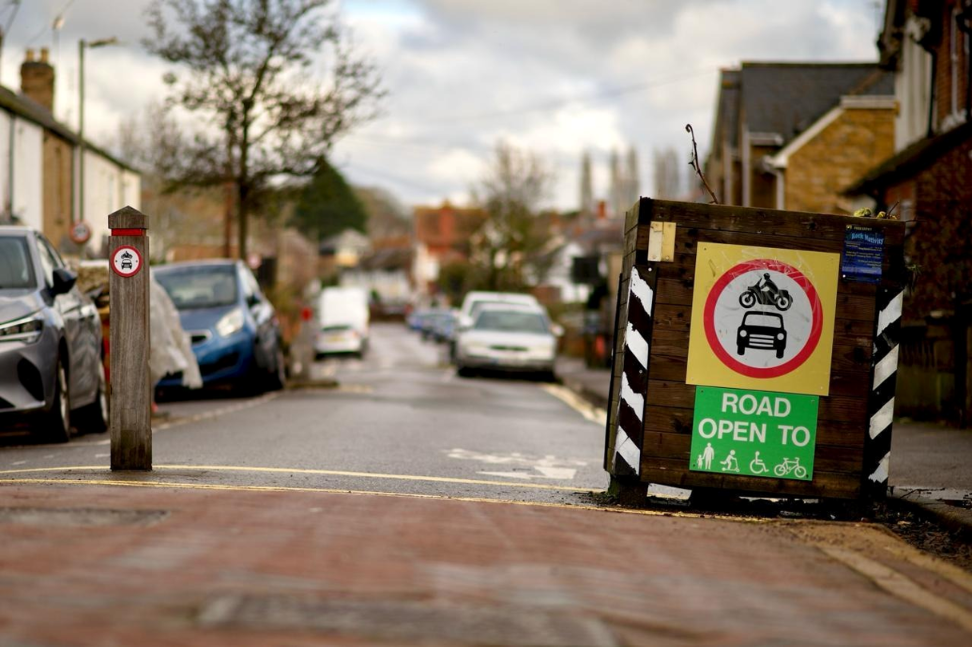
Removing barriers on cycle routes will not lead to an increase in anti-social behaviour – in fact, quite the opposite, say Sustrans
“Removing barriers will lead to an increase of illegal use and antisocial behaviour.” 💬
This is one of the most common concerns we get when removing restrictive barriers on the National Cycle Network. But did you know removing barriers can actually have the opposite effect? 👇🧵 pic.twitter.com/OcFM6ffDuA— Sustrans (@Sustrans) October 17, 2023
With the inclusivity, or otherwise, of entrances to cycling and walking routes in the news lately – especially after a Worcester cyclist branded the gates on one of the city’s shared-use paths “an utter shambles and not at all inclusive” – active travel charity Sustrans today challenged the frequently cited myth that “removing barriers will lead to an increase of illegal use and anti-social behaviour”.
While Sustrans says that claim “is one of the most common concerns we get when removing restrictive barriers on the National Cycle Network”, the organisation instead noted on a social media thread that taking away these non-inclusive obstructions can “actually have the opposite effect”:
In our experience, restrictive barriers often stop people with wheelchairs, adapted cycles, prams, and trailers from using the path, but don’t actually prevent those with motorbikes or mopeds from illegally accessing it.
Motorbikes can often be wheeled under, around, or lifted above barriers and if people with motorbikes are really determined to get on the path they will just find an access point further up.
So, barriers aren’t effective, but how does making access easier for everyone help?
Removing barriers means that more people can use routes, making them busier, which can in turn make illegal use and antisocial behaviour less likely.
In a trial in London, barrier removal led to a 20 percent increase in path users and a reduction in anti-social behaviour.
This creates a positive feedback loop: people are more likely to use safe paths, so as a route gains a reputation for being safe, the number of people using the route goes up, making illegal use and antisocial behaviour less likely.
It’s a win-win.
Cofidis rider Wesley Kreder retires from pro cycling after suffering heart attack
Cofidis pro Wesley Kreder has confirmed that he is retiring from cycling at the age of 32 after suffering a heart attack at the end of August.
The 32-year-old Dutchman, who joined the French team from Intermarché-Wanty this year, experienced myocarditis, an inflammation of the heart muscle, on the night of 28 August. His wife and in-law provided first aid before taking him to a hospital in Eindhoven, where he remained under observation for several days.
In a statement released last month, Kreder said that was “so happy to be alive”.
And now, after delaying a decision on his future until he was fully recovered, the 32-year-old – whose career-best results include stage wins at the ZLM Tour and Tour de Vendée – confirmed this week that he was leaving the sport.
“After the heart attack I had, I told myself that I could come back to the high level and race. But my doctor assured me that the best and wisest solution was to stop,” he said in a statement released by Cofidis.
“I know the sacrifices and the level of fitness necessary to perform at the highest level and it is not compatible with what I had.
“The decision was not easy to make but when I look at my children, my family, I know that I did what had to be done. I had a good career, I want to remember the positive. I will now spend time with my children and my wife, enjoying the joys of life as a family. I want to wait a bit before looking for a job.
“I hope that through my story, people will say that the best lesson is that life is too short not to love it. And I will try to benefit from it too.”
A valuable domestique, Kreder turned professional with Vacansoleil in 2013, before spending six years, over two stints, at Intermarché-Wanty, who he rejoined in 2017 after a two-year spell with Roompot Oranje.
He made his grand tour debut at the 2021 Giro d’Italia with Intermarché, and also rode the Vuelta later that year. After joining Cofidis at the start of 2022, Kreder returned to the Giro and became a key part of the French team’s classics squad.
Tom Pidcock says he’s “not ready” to focus on the Tour de France – despite “pressure” from Ineos Grenadiers
One of the many factors that have made Tom Pidcock such a firm fan favourite in recent years, along with his demon-like descending abilities, is his multi-disciplinary approach and inherent love of racing, regardless of the terrain.
Whether it’s the spring classics, the grand tours, cyclocross, or mountain biking, Pidcock just loves to race his bike, all year round.
While the 24-year-old belongs to a generation of multi-discipliners who have eschewed the specialism of by-gone eras, Pidcock’s Ineos Grenadiers team – a squad whose reputation was built on a laser-like focus on success at the Tour de France, and barely anywhere else – appears to still have one foot in the past.
At least that’s according to Pidcock himself, who told the latest episode of the Red Bull Just Ride podcast at a mountain bike World Cup event in Mont-Sainte-Anne that his varied approach to racing is what makes him the all-round, exciting rider he is – despite coming under pressure from his own Ineos team to turn all his attention towards three weeks in July.

[Thomas Maheux, SWpix.com]
“Maybe I need to specialise in one discipline if I want to win the Tour, but I know that you’ll get the best out of me when I’m happy and when I’m enjoying it. Which is why I love other disciplines,” the Strade Bianche winner and world mountain bike cross-country champion said.
“Of course I want to win the Tour de France one day but the patience and preparation is massive.
“There is the element [of pressure from the team] and I knew that when I committed long term to the team. I also want it, but in my own way. I want to achieve all the things I believe I can achieve.
“Right now, I’m not ready to win the Tour de France next year yet. There has to be more steps where I achieve things in different disciplines and achieving them makes me a better rider.”
Hmm… Meetings at the Ineos winter camp could be interesting this year.
Although, with Dave Brailsford set for a role at Sir Jim’s not-really-a-revolution at Manchester United, Ineos may well have to adapt to a whole new multi-disciplinary approach…
Don’t quit your day job: Valtteri Bottas and Tiffany Cromwell promote gravel race with Oscar-worthy video… featuring the F1 star in a budgie smugglers
I really don’t know what to say… Enjoy your Tuesday evening, folks!
Richmond Police respond to “extremely disheartening” backlash to ‘victim blaming’ road safety video, and say many cyclist and pedestrian collisions are “entirely preventable”
Following the massive backlash that greeted their questionable (to put it charitably) video on pedestrian road safety, which to many appeared to draw a false equivalence between distracted driving and using a pedestrian crossing, Richmond RCMP have now issued a statement concerning the “extremely disheartening” online response, claiming that the campaign was “not about X being more right than Y”.
“Every year we put out a media release on pedestrian safety, roughly at this time of year. We offer tips for sharing the road for both the pedestrian/cyclist and the motorist, Cpl. Dennis Hwang, Richmond’s comms officer, said in a statement.

“This year is the first year we decided to make a video. The video was conceived in-house and a student with a gift for film graciously donated his time and his skillset. The people in the video were volunteers.
“This was a positive experience for us, but the response to it has been extremely disheartening. The purpose of the video is to reduce harm, save lives, and create awareness. Full stop. Nothing more and certainly, nothing less.
“The video is not about X being more than right than Y. That is not its purpose.
“We have investigated many, many pedestrian and cyclist collisions throughout the years. They can be gruesome. They can take their toll mentally on everyone involved. Many of them are entirely preventable.”
“Perhaps the worst road safety advert I’ve ever seen”: Cyclists criticise ‘victim-blaming’ road safety advert that equates texting and driving with using a pedestrian crossing while wearing earphones
Do you ever wonder to yourself, in a quiet hour, what the Canadian Mounties mean when they say that “pedestrian safety is a two-way street”?
Well, according to a road safety video released by the Richmond branch of Canada’s national police service and swiftly gaining online notoriety, that “two-way street” means equating a motorist checking his phone for an extended period of time, completely oblivious to what’s going on ahead of him on the road, with… wait for it – someone using a light-controlled pedestrian crossing.
Pedestrian safety is a two-way street. What pedestrians and drivers can do to make our roadways safer https://t.co/ifQhF3eMqU pic.twitter.com/UsdvxrM0aE
— Richmond RCMP (@RichmondRCMP) October 13, 2023
But, but, but, she had her earphones in and was wearing black clothes, of course, making her – the clip appears to imply – equally culpable had our texting and driving friend struck her as she minded her own business and, you know, neglected to break any laws.
Needless to say, the Mounties’ maple-flavoured slice of victim blaming has been roundly condemned on the ol’ interweb.
> Reaction as Transport for London pauses See their Side ad campaign following backlash
“Perhaps the worst road safety advert I’ve ever seen and by god I’ve seen some shit,” psychologist (all the psychologists on the live blog today) and road safety expert Dr Ian Walker wrote bluntly.
“Only one person is breaking the law in this video,” Stormont Cyclist added.
“Films like this give the green light for lawyers to proclaim ‘but she was wearing headphones and not paying attention’,” argued Eric, while Jorge said “it’s insane it got greenlighted”.
“Next from the safety experts: ‘Why deaf residents should not be allowed outside’”, wrote infrastructure campaigner Andy Boenau.
And, naturally, cycling’s phone-driving expert Cycling Mikey weighed in with: “Your focus is wrong and ill-guided. You need to police drivers if you want road safety.”
While another social media user summed the whole thing up: “Canada, what happened?”
What do you reckon, has Richmond’s ‘texting and driving = wearing earphones’ video finally topped Transport for London’s ill-fated ‘See their Side’ advert on the list of terribly advised road safety campaigns?
“You can practically run faster than drive at 20mph – you see push bikes go past you!” Welsh residents complain about “absolutely ridiculous” 20mph speed limit – though others say they “feel safer”
It’s been a full month since the widespread implementation of 20mph speed limits across Wales (I know, where has that month gone), and despite initial analysis showing that Welsh drivers have “changed their behaviour” accordingly by dropping their speeds in built-up areas, it seems that the decision is still dividing people across the country.
Record numbers – over 460,000 in fact – have signed an online petition calling for the law to be reversed, while a recent trip to Wales by the BBC has highlighted the disparity between those who feel the move has boosted road safety and those angry at the increased journey times.
“It’s absolutely ridiculous,” Tonypandy resident Julian told the Beeb. “I find it terrible and it’s not easy sticking to 20. If someone is doing 20, you have a proper tailback.
“You can practically run faster than drive at 20mph – you see push bikes go past you!”
Ah, I think Julian may have been car sharing with our friend from last week’s blog, who posted a video complaining about not being able to overtake a group of cyclists riding at 20mph… in one of the new 20mph zones.
Driver can’t deal with the fact that these cyclists are going as fast as the speed limit #MGIF pic.twitter.com/od4rYHGsoZ
— PedalPerspective (@Pedalperspectiv) October 8, 2023
And according to his logic, the next generation of Geraint Thomases will soon be filling up the pro ranks, if everyone is just casually riding their bikes at over 20mph around Wales. Maybe he’s just always bumping into Josh Tarling?
To be fair, Julian isn’t alone.
“By schools and hospitals, it’s a good idea,” says Joanna. “But if you’re driving at 20mph on a normal road, it’s causing mayhem.
“I don’t drive actually but my husband thinks it’s awful. Congestion has got worse. I don’t think there’s many people for it around here and the buses are late too as they’re going 20mph as well.”
Others, meanwhile, complained about increased delivery times for their businesses, while some said the speed limit changes are making them focus too much on their car’s speedometer and not on the road in front of them.
Yes, really.
While Rob said: “”If there’s nothing signposted anywhere, you’re finding now people are doing 20mph in a 40 because they’re not sure, to be on the safe side.”
However, others – who are more aware of their surroundings, by the sounds of things – are much more supportive of the change.
“If it’s going to save people’s lives, I agree with it. Especially in built-up areas around schools,” said grandmother Susan.
“I feel safer crossing the road,” added Christine. “If they brought this law in a long time, this generation of drivers would be used to it and for those driving a long time, it’s a lot to get used to. It’s got its pros and cons.”
“The benefits of cycling over driving are more profound and sustainable than previously thought”: New study concludes that riding a bike, rather than driving a car, is positively associated with “orientation towards the common good”
Here at road.cc, we’ve always known that riding a bike can lead to great environmental, health, safety, social, and political benefits – and now a group of academics have helpfully confirmed our long-held suspicions.
A new study titled ‘Orientation towards the common good in cities: The role of individual urban mobility behaviour’, undertaken by psychology researchers at the University of Hagen in Germany and published in the Journal of Environmental Psychology, examined the relationships between mobility behaviour – in other words, what method of transport you use – and political participation, social participation in organisations, neighbourhood solidarity, and neighbourly helpfulness, four facets of what the authors describe as “orientation towards the common good”.
According to the study, “a pronounced focus on the common good” is considered an essential component of social cohesion and is associated with the wellbeing of residents across diverse communities and multiple social levels.

However, the researchers point out that little has been previously known about the conditions or factors that promote the common good, or how citizens themselves can create it.
Likewise, while cycling is associated with many positive psychological variables, little is known about how it affects the common good.
> Researcher recommends cycling to work to try and match Amazon tribe’s unparalleled heart health
By analysing surveys between 2014 and 2019 of a representative sample of the German population, the researchers found that, in urban environments, “cycling rather than driving was positively associated with orientation towards the common good in all models” and that riding a bike “was the only variable that was a significant positive predictor for all four facets of orientation towards the common good after controlling for possibly confounding variables (home ownership, personal income, education, sex).”
They argue that while the interactions motorists and car passengers have with their direct environments are “significantly reduced”, cyclists on the other hand “directly experience the breadth of social diversity and cultural heterogeneity that make up urban life and cannot escape these impressions due to sensory density”.
This direct experience of the environment around them, the authors say, “leads to a stronger emotional bond between people and their neighbourhood” and therefore can lead to them participating in civic activities and politics.
In other words, riding a bike – and the interactions and emotional connection you have with the people, communities, societies, and things around you while cycling – can make you a more responsible, engaged citizen and neighbour.
The “relative isolation” of driving, meanwhile, can “reinforce individualistic behaviours and cause drivers to neglect collective actions”.
Thus, the authors concluded that mobility behaviour is indeed “associated with the orientation towards the common good”, findings which they say are “significant for policy and planning because the benefits of cycling over driving are more profound and sustainable than previously thought”.
Quick, someone get Rishi on the phone…










69 thoughts on “Cycling, rather than driving, linked to pursuing “common good” and neighbourliness, study finds; “Push bikes go past you” on 20mph roads, say Welsh residents; Cyclists blast “victim-blaming worst road safety ad ever”; Running pros + more on the live blog”
“Quick, someone get Rishi on
“Quick, someone get Rishi on the phone…”.
What fer, like? Pishi will only invent more “policies” to see-orf the cyclist whilst promoting car loonery, as the common good is (from Toryspiv perspective) a very bad thing indeed. Folk might begin to notice exploitation, polluting profiteers and spiv-spoilers of every ilk & tittle busy degrading and damaging them and theirs to make more money to salt away tax-free in the foreign places!
Shirly by now The Thatcher Thing’s great insight (or was it just a-one o’ her queer dreams, due to only 3 hours sleep each night and too many sherries) that there is no such thing as society should have got a firmer hold on the minds of serfs everywhere by now?
I’m surprised that Pishi hasn’t yet made a new law reinstating fox hunting, only with cyclists instead of foxes and SUVs instead of hosses. What’s that – he already has?!
I would tend to agree with
I would tend to agree with the police on this one. People nowadays can’t help themselves when anything isn’t “right” by their own ridiculous standards. Yes, most road safety relating to pedestrians and cyclists could, should and would be solved by drivers being better…but they are not. At the moment. So in light of that its not a bad idea (I dare say a good idea) to try and come at the issue from a pragmatic angle and work on the assumption that saving lives is the main thing. I’m not entirely convinced that education is the issue with drivers either. They know what they should be doing, they just don’t care and the justice system backs them up on this with joke sentences.
I have a zebra crossing a few hundred metres from my house where I very regularly have people blow through it at over the speed limit despite there being a relatively sharp corner 50m or so before it. If I just walked out onto it I would have had a number of hairy moments or been hit.
As a cyclist there are a lot of things I shouldn’t have to worry about but I do and I try to educate anyone else I know about the dangers when its relevant. Recently I had to talk to a friend about cycling further into the road and giving parked cars a wider birth. Another thing that we shouldn’t have to do but do because you can be right and you can be dead. The two aren’t mutally exclusive.
But of course the message
But of course the message here is effectively “drivers are shit, do lots of illegal dangerous things that we can’t/won’t stop so you better just assume that every drive has their head up their arse and going to kill you”.
Is that really the standard that the police should be setting for road safety. Its defeatest and assumes that drivers can never the persuaded not to drive in a way that kills people. If that’s the case then the simplest solution to preventing those accidents is to simply ban all cars.
I must admit that when I
I must admit that when I leave the house, whether I am walking, cycling or driving, I do work on the assumption that other drivers are out to kill me, but the police should be focussing on the drivers, not the potential victims of their ignorance/ arrogance/ incompetence *
*(delete as appropriate)
SimoninSpalding wrote:
When I was learning to drive, I was told “treat everyone else on the road like they are homicidal maniacs” That piece of advice has stuck with me. Plan for the worst, hope for the best.
mctrials23 wrote:
You are correct, but the point is that the authorities should not be simply accepting and perpetuating that, they should be actively trying to do something about it.
The focus of their campaigns should not be based on the principle that vulnerable roads users need to keep ourselves safe, so that they don’t have to bother.
I agree with you, this ad
I agree with you, this ad would be beneficial to teens lost in their phones and music.
But the video ad would be more complete if there was a policeman with hands up in frustration and a message saying, “The police hasn’t got the capability, funds or will to tackle all illegal driving behaviors, and the Government hasn’t the will to restrict the use of fast cars and design safe roads so please be alert if you want to live with all your limbs”
mctrials23 wrote:
I don’t agree with your logic there. If the police and road safety people are unable to successfully work with licensed drivers to get them to drive safely (or at least stop staring at their phones), then why are they suddenly able to influence all pedestrians (including children and teens) to stop using their phones when walking? Also, it’s questionable whether someone using their phone whilst using a pedestrian crossing is actually even a problem.
I suspect the road safety people and police are so car-brained that they wouldn’t even think of a public safety film that got drivers to pay more attention whilst driving. Their first and only reaction is to victim blame instead.
New Police safety campaign:
New Police safety campaign:
“Pedestrians: don’t wear headphones as muggers operate in this area.
oh and muggers, please don’t mug people.”
HoldingOn wrote:
Or:
“Pedestrians please pay extra attention when around drivers so that they don’t have to bother”
“Shopkeepers: please don’t
“Shopkeepers: please don’t let people into your shops, they might steal stuff.
oh and thieves, please don’t steal stuff.”
Agree with this as immediate
Agree with this as immediate tactics. But for strategy, it’s not just “right or dead”. Fortunately – sometimes – change happens.
Some places have more dangerous driving. The proximate cause is “because people”. Could be malevolence, incompetence / DGAF or just sporadic mistakes (because humans) but people in cars pose an elevated danger to others.
How do people change? Copying others (cultural change), because they are motivated to (e.g. a high rate of enforcement means people realise they need to obey the rules) and because they’re guided to by e.g. the vehicles and the road designs.
None of these things is easy to fix. Cultural change is very tricky to direct – it may go “the wrong way”, and it can be slow. Enforcement can be extremely expensive to do thoroughly enough to change behaviour. Although possibly tech can help here (e.g. cameras, chips in cars etc.)? Changing the infra is certainly difficult (everyone complains), expensive and slow.
For me the most effective way (longer term) would seem to be sorting the infra to remove drivers from everyone else wherever there are lots of ’em and or where going fast. (There are lots of other things we can do also e.g. having the street designs guide speeds, or preventing overtaking full stop so people don’t mess that up.) That’s because it’s been tested.
The other solutions appear to offer cheaper / quicker fixes but I don’t think that ends up being true. We can and should do better with policing (e.g. replace all the ones on road duties in Lancs!) However I’m not aware of any great examples of this working better than it does already here. Well, outside of North Korea, China, Saudi Arabia etc. and I’m not sure about the last two either! People want police to concentrate on lots of different things, and also many folks don’t want too many police, just in case.
I just watched the Richmond
I just watched the Richmond video. Am I right that the woman had pressed the beg button and then had big flashing orange lights which gave her priority as she crossed on a marked crosswalk? But she was unaware of the approaching SUV because she had headphones in/on?
How is that equivalent to the SUV driver not looking where he was going because he was checking his phone?
I agree with much of the
I agree with much of the sentiment, and when I’m riding I’m usually lit up like a Christmas tree and wearing a hi-vis top and (only because it’s a legal requirement here, in truth) cycling helmet. Always have, to try to maximise the odds of getting home in one piece.
However the problem with this style of safety add is that it reinforces in drivers the view that even though they are ( barring freak circumstances) the only ones with a significant probability of causing a KSI statistic, they can only be at most 50% at fault, because the cyclist/pedestrian/wheel chair user/infant in pushchair etc. etc. really should have been paying more attention to the risks posed by the speeding 3.5T dual-cab ute (to use a typical Australian example) while going about their normal, everyday, business.
Clearly the safest solution is for everyone not driving something weighing at least 3.5T to simply stay at home (while hoping a passing airliner doesn’t fall on the house).
I don’t have a problem with
I don’t have a problem with this advert. I don’t consider it vicitim blaming, it does alert people to the risks of chosen behaviours. As my father used to say to me, “it is no good having right on your side if you are dead”.
Legin wrote:
And that justifies victim-blaming adverts by law enforcement agencies exactly how?
marmotte27 wrote:
It’s a thinly veiled threat.
hawkinspeter wrote:
Justice & Truth, you say..
So POTUS-45 is dead.
That’s an attractive proposition for democrats everywhere.
lonpfrb wrote:
Martin Luther King, Jr.
A man dies when he refuses to stand up for that which is right. A man dies when he refuses to stand up for justice. A man dies when he refuses to take a stand for that which is true.
— lonpfrb Justice & Truth, you say..
So POTUS-45 is dead.
That’s an attractive proposition for democrats everywhere.— hawkinspeter
We seem to have a cabinet of the walking dead ourselves
hawkinspeter wrote:
I think you’ll find that they take helicopters or large black limos as, being mostly drunk from both the House of Commons bar and on power-without-principle, they can’t manage walking without tripping, falling or grasping at the private parts of passers-by ” just to stop myself toppling over, melud”.
Cugel wrote:
I thought they only held parties when they’d passed laws against “ordinary” people from seeing each other or dying relatives. I mean what’s the point of them partying if they can’t laugh at the idiots that voted for them?
New study concludes that
New study concludes that riding a bike, rather than driving a car, is positively associated with “orientation towards the common good”
Which explains why there are so few tory cyclists.
The “relative isolation” of driving, meanwhile, can “reinforce individualistic behaviours and cause drivers to neglect collective actions”.
And that explains why so many tories drive everywhere: unless there’s a helicopter to hand.
Slightly off topic, but isn’t “orientation towards the common good” the best description of woke? Which must be why so many rabid right-wingers consider woke to be an insult.
eburtthebike wrote:
Couldn’t have put it better myself.
I’d often considered what the
I’d often considered what the definition of woke to be, given it is used arbitrarily (or as an insult) by those who are against whatever they feel is woke (usually backwards minded/right wing people who don’t like progressive change).
My long-winded wording could be something like “policy or personal belief in something that makes life/things better for people/society especially those who are marginalised”.
mitsky wrote:
I’d go along with something more like “recognising that society has built-in prejudices against people of certain ethnicities or economic status”.
Woke: A word used by those
Woke: A word used by those too lazy/stupid/prejudiced to put forward a coherent argument.
eburtthebike wrote:
No
I see there is an article on
I see there is an article on the BBC News front page today about “Push bikes” and 20mph limits:
https://www.bbc.co.uk/news/uk-wales-67064306
Rather than reward the click bait headline I haven’t read the article, but BBC Wales do seem a bit obsessed with the new speed limit.
SimoninSpalding wrote:
The BBC has been institutionally anti-cycling for a long time. Anything they can post that puts cycling as a negative is on-brand for them and they’d never push anything that might be slightly anti-driver such as suggesting that maybe some people could be cycling instead of driving if it’s so much quicker.
Most of the BBC reporters
Most of the BBC reporters refuse to write anything other than “vehicle hit y (person/building/other vehicle)”.
I’ve called them out on it on their social media (without being abusive/trolling) by pointing out that they wouldn’t write anything like “bike hit person” but rather report it as “CYCLIST hit…” which is discriminatory.
I’ve also pointed them in the direction of http://rc-rg.com
They have banned me on many of their platforms.
I just thought today that if I was cycling/driving and involved in a collision that was my fault (by carelessness/or in the extreme rare chance of mechanical failure, not intent) I would say
“I crashed into… (when I was driving/cycling)… “.
I wouldn’t say “My bike/car hit…”.
mitsky wrote:
Exactly.
They take pains to be “impartial” when they talk to a scientific expert – usually by bringing in some mouth-breathing conspiracy idiot to provide balance. However they don’t even bother with impartiality when it comes to motor vehicles or royalty – they just simp all over them.
That must be why they employ
That must be why they employ Jeremy Vine. Trying to bring cycling down covertly.
Smoggysteve wrote:
Does he feature a lot of cycling in his shows?
Feel free to also enjoy on
Feel free to also enjoy on “Drivers and their problems” also as that seemed to fit quite a few of the responses.
Of course I defer to the posters with local knowledge on the 20mph limit thread, with the proviso that:
a) it’s a change. People take time to adapt (we notice new things).
b) … and the whole system will take time to reach equilibrium (e.g. traffic evaporation) and
c) Yes – it’s an imperfect measure – but I hope this is a part of ongoing changes to rebalance our road systems. Otherwise it’s a bit like saying “well I put a letterbox in my door, but still haven’t got many letters? It’s not working, I’ll just board it up again.”
So e.g. having got 20mph defaults if there are places where few comply they’ll review that (it might be enforcement, or this is genuinely a safe and appropriate place for cars to be going faster?). Where there is rat-running perhaps they’ll consider LTNs – which may have a bit more support after the fact!
Having given the article a
Having given the article a gander, it’s baffling to understand the headline when nowhere in the article is such a manouveur mentioned.
More click-bait bullshit?
“By schools and hospitals, it
“By schools and hospitals, it’s a good idea,” said Joanna Davies, who lives locally and was out shopping with friend Stephanie.
Motorist Clive Rees said he was finding going at 20mph on some roads a “struggle” but added: “Around schools and in certain areas that weren’t before, it needs to be 20mph.”
Don’t pedestrians and cyclists exist anywhere but near schools and hospitals? Bizarre. Or have they been fooled by the latest tory/motorhead propaganda “We’re not against 20mph zones, in the right place.” i.e. only hospitals and schools.
Surely if 20mph is normalised
Surely if 20mph is normalised, they will not struggle driving at it? And if it is such a struggle to drive at 20mph, why is it easier outside of schools and hospitals? And do they then complain why the road is 20mph during school holidays when in theory, there is no need for it to be that speed.
My favourite quote in the
My favourite quote in the article:
“But if you’re driving at 20mph on a normal road, it’s causing mayhem. I don’t drive actually but my husband thinks it’s awful.”
Drivers think that all this
Drivers think that all this is about them.
David9694 wrote:
This is it.
I have said to my Mum several times “This isn’t for your benefit” but it still hasn’t quite sunk in yet.
I was in Bangor again at the weekend. Nearly all drivers behaving well, which makes cycling around there feel safer than it used to.
On getting back to Shrewsbury on Sunday evening I immediately felt more vulnerable with so many drivers in a hurry, accelerating hard from traffic lights and charging around doing 35-40 mph in the town centre.
The article start with a
The article start with a quote: “You can run practically faster than drive at 20mph…” I’d like to see all those drivers who complain about the speed limit actually get out of their cars and try just that.
Nice to have a study
Nice to have a study confirming that cycling = common good. Maybe the fact that the bleeding obvious needs studies explains why over sixty years after climate change was definitely proven, whe have yet to do fuck all?
marmotte27 wrote:
However, cycling goes much further than simply the common good. Cycling is clearly a much better solution for most people for most journeys due to the health and well-being benefits that aren’t usually factored into people’s journeys. Just simple enlightened self-interest determines that cycling is a better choice for individuals and meanwhile cars tend to introduce a lot of negatives whilst also needing to be subsidised and to have facilities designed around them to the detriment of other transport modes.
I’d say that’s the CV very
I’d say that’s the very definition of common good.
When was the last time you
When was the last time you saw a driver enjoying their journey, and smiling because of it?
In a car ad?
In a car ad?
ktache wrote:
I do, a lot of the time, when I drive!
Top down, and I’m not trying to drive in cities.
For those who find it
For those who find it difficult to drive at 20mph, I suggest take driving lessons and the test again. Learning to control your speed is probably one of the most basic and important driving skills.
460,000 signatures on the
460,000 signatures on the Welsh 20mph limit, but how many of them are actually from Welsh residents?
(I red somewhere that almost all were from outside Wales.)
“If someone is doing 20, you have a proper tailback.”
And in rush hour standstill traffic, if someone (ie everyone) is doing 0mph you have a REAL tailback.
How many people have actually worked out that they don’t usually hit 30mph for more than a few seconds of their journey without having to slow down for many hazzards, turns, etc?
If only there was a way to see the negligible difference that this new limit will have.
Oh wait. They already worked it out.
Maybe the data/survey info can be published to help?
For those who have trouble sticking to the 20mph limit without constantly looking at the speedometer, do they have the same problem sticking to higher limits on empty roads?
What about sticking to the 70mph limit on motorways, or 40/50mph on dual carriageways?
We’ve been doing that for years without this issue.
Sure it may be a bit tricky at first, but we will soon get used to it.
“If someone is obeying the
“If someone is obeying the law you have a bunch of other people who are forced to obey the law as well.” Is a weird argument for changing the law to suit the law breakers…
Sicking to 70mph on motorways
Sicking to 70mph on motorways or 40/50mph on duals “for years”.
Sorry, that’s a big LOL from me.
Whenever someone complains
Whenever someone complains that they can’t drive at 20mph and aren’t able to concentrate on the road, thank them for evidencing the need for geo-restricted speed limiters on all motor vehicles and the need for reguler re-testing.
Yes, I never get this whinge:
Yes, I never get this whinge: ‘ . . . . while some said the speed limit changes are making them focus too much on their car’s speedometer and not on the road in front of them ‘
why is it more difficult to focus on 20mph than 30 mph? Ok, perhaps it may take getting accustomed to it but unless you are completely dense, it shouldn’t take longer than a day or two.
BIRMINGHAMisaDUMP wrote:
How many drivers does it take to change the speed limit? CHANGE?!
Exactly as you say. But just goes to show that driving (like every habitual activity) is a largely unconscious activity:
– we just follow what other drivers are doing far more than we think
– we learn what kind of areas mean what kind of speed (“feels like this should be a 30…”)
– we learn what and where the speed limits are on our normal routes.
– we do all this “by feel” eg. we also aren’t looking at the speedo much, we just know the gear / pedal / sound and vibration feedback we get at a certain speed.
So that all changes and has to be consciously dealt with (and now others are also behaving differently because they’re having to do the same).
chrisonatrike wrote:
why is it more difficult to focus on 20mph than 30 mph?— chrisonatrike How many drivers does it take to change the speed limit? CHANGE?! Exactly as you say. But just goes to show that driving (like every habitual activity) is a largely unconscious activity: – we just follow what other drivers are doing far more than we think – we learn what kind of areas mean what kind of speed (“feels like this should be a 30…”) – we learn what and where the speed limits are on our normal routes. – we do all this “by feel” eg. we also aren’t looking at the speedo much, we just know the gear / pedal / sound and vibration feedback we get at a certain speed. So that all changes and has to be consciously dealt with (and now others are also behaving differently because they’re having to do the same).— BIRMINGHAMisaDUMP
Somewhere in there are some good points. 🙂
It’s noticeable here in West Wales, where traffic is very light indeed, that drivers are generally considerate in the “good manners” way but absolutely hopeless at assessing risks that are not everyday but which do occur and, when they do, have drastic consequences.
For example, tailgating is commonplace, with little caravanserais of two or three vehicles going along the otherwise empty-for-miles roads with their bumpers about 10 yards apart, at all speeds. Nor can they overtake without it taking all day. They also go around blind bends far too fast, as, “There was nothing in the way yesterday or for the 100 yesterdays before it”. One the day there is and …. PRANG!
Most also seem to think that the speed limit signs are an instruction to go at that speed, or even a bit faster if there was never anyone coming out of one of the numerous gates and driveways for the 100 days before. One day a tractor or a granny going to the shop lurches out and …. PRANG!
**********
Personally I’m bordering on paranoid when driving. The reason for this is that, having a vivid imagination, I can easily envisage a situation where being inattentive and making stupid assumptions via wishful thunks about risks never happening to me personally, I run over someone and kill/maim them. I’d feel very bad indeed about doing such a thing, for them but also myself. It would ruin both our lives henceforth albeit in different ways.
So, no inattentive driving! I’m looking ahead, paying attention to speed and aware of all sorts of potential risks, at all times – a bit like riding a bike. 🙂 Even so, what about the risks I’m not clever enough to anticipate? No matter the details of any ensuing PRANG! I would still feel guilt and remorse of the kind that does for peace of mind, forever.
But many are adept at shrugging off responsibilities of every kind. It can never be their fault so it must be someone else’s. Memories of events are easily altered if you procalim alternatives often enough, to yourself first then to others. (Lies you believe yourself are generally told more convincingly to others than are the lies you don’t believe yourself).
Summarised:
Summarised:
Practice makes… habit.
But also: we probably massively overestimate what we consciously control. Even when we’re paying attention to things.
Hence the importance of practice, to attain suitable habits.
After that – how much responsibility you take is probably also a (very old) habit. Maybe learned before you really remember!
I’m still waiting on the world to adopt my idea of fag-packet warnings affixed to the binnacle of all motor vehicles – “Driving always involves the risk of serious injury or death – to yourself and others”. Or “How would your loved ones feel if you crashed?” or maybe “Think! Do you need to drive this trip?”
Agree with on this one.
Agree with on this one.
Except that a tractor or a granny is there every day, at least somewhere in the country.
For Wales, people killing themselves with their vehicles seems to be a real problem – whether it was those five drunk, drugged up people who took their VW SUV so far off the road the police couldn’t find it, or the two teenage tearaways on their Surron that their idiot parents had let them loose on in Ely, Cardiff.
mattw wrote:
One day whilst wandering about the local Welsh town, waiting for the return of a local craftsperson, the ladywife happened to come across a large graveyard containing (to her) many interesting gravestones and the like. She enjoys a good read of the often strange things written on them.
A very large section of the graveyard was devoted to those who died young, generally in their late teens and early twenties. Further investigation via a quiz of some locals nearby revealed that these were mostly due to car crash.
There does seem to be the same syndrome at work. Many young West Welsh drivers one meets seem oblivious of the risks because they rarely encounter one due to very low traffic levels and the generally open roads …. until the day they do. The inclination of the young to roar about testing their limits is what gets them in to those situations. They had no opportunities to learn via a few near-misses …. but then encounter a risk where a near-miss is not one of the options.
Even hardcore Diesel-deviants
Even hardcore Diesel-deviants, Petrosexuals and Assault and Battery powered vehicle drivers have to finally accept that it is time for Carmaggedon to come to an end.
The introduction of 20mph speed limits in Wales is a forward thinking road safety initiative and a great step forward in road safety for a nation.
The bogus petition that can be signed multiple times by the same person will not derail the project in any way shape or form and people will get used to it the same way they did when the seat belt and drink driving laws were introduced,
Those complaining in Wales
Those complaining in Wales can come over here to Switzerland where there are numerous 30 zones (p.s. Just don’t tell ’em its kmph!) and it’s just fine. Pretty sure too that cruise control, speed limiting etc has become more and more common in the Automobile industry so it is, for many, very easy to control speed…
Ah, but what the complainers
Ah, but what the complainers will tell you is that they too have had 20 zones around e.g. schools for years, and they don’t mind that – what they object to is it being rolled out as a default.
What they object to is being
What they object to is being forced to comply to them, most 20 zones outside schools,much like the parking restrictions, are roundly ignored and never enforced.
There’s something else
There’s something else official completely ignored here in Lancashire: Quiet Lanes, designated by pretty signs, out on the back roads. Audi/ BMW/ white van/ Yummy Mummy SUVs/ tractors/ pickups etc. all tear round them like the Nurburgring
I agree. Having lived in
I agree. Having lived in Switzerland the speed limits are widely adhered to. Hell, where I lived a weekday was like a very quiet Sunday in the UK.
Road safety a better take
Road safety a better take
If you can run at 20mph
If you can run at 20mph (never mind faster, as the quote suggests) then that’s a 100 metres time of just over 11 seconds.
Maybe somebody needs to initiate a training programme, to develop this potential talent..
This is Wales we are talking
This is Wales we are talking about. So it has to involve rugby or sheep.
Rug y requires a turn of
Rugby requires a turn of speed (as does the other activity, I hear)
But, Colin Jackson may disagree with you.
Or singing.
Or singing.