



“People don’t drive short journeys because they like sitting in traffic”: Fuel price crisis could be UK’s Dutch cycling moment, reckons Chris Boardman
Julia Hartley-Brewer may not be aware, but the Netherlands hasn’t always been a two-wheeled utopia for cyclists. In fact, before the 1970s, the roads of Amsterdam were clogged with cars, fumes, and dangerous driving.
But the oil embargo crisis of 1973 and its resultant seismic effect on petrol prices, combined with an alarming rise in the number of child fatalities on the roads, forced the Dutch government into action.
Cycling was encouraged, swathes of world-leading bike lanes were installed, and even ‘car free Sundays’ were enforced for a while, paving the way for the Netherlands we’re all jealous of today.
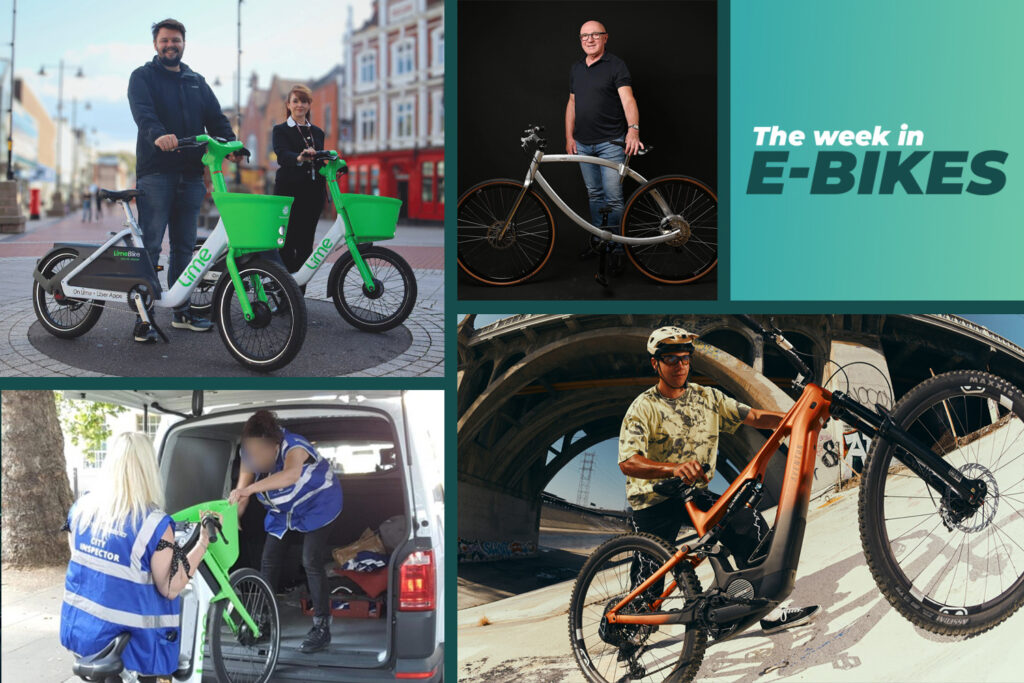
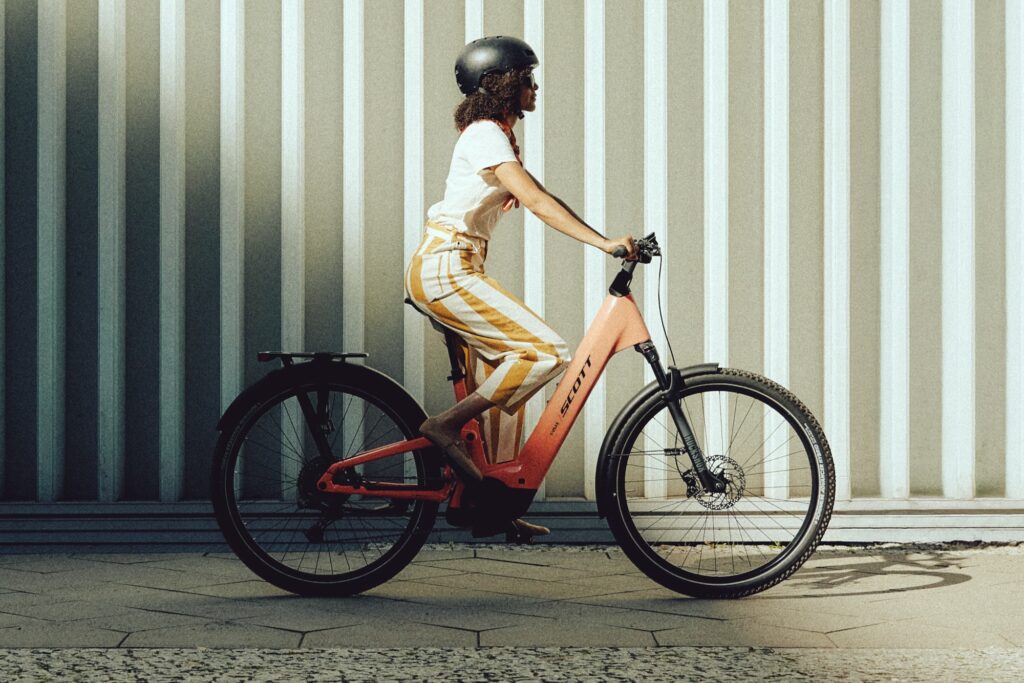
> Are rising fuel prices driving more people to e-bikes?
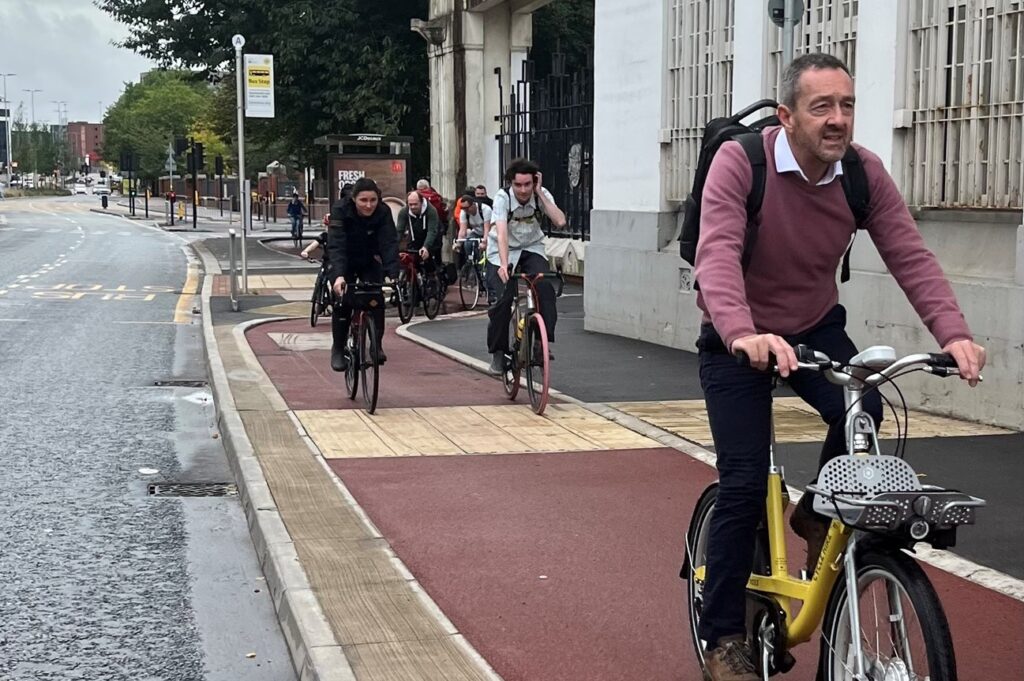
However, according to Chris Boardman, the fuel price crisis of the 2020s represents the perfect opportunity for the UK to follow in the wheel tracks of the Dutch government 50 years on.
Appearing on BBC Radio 5 Live Breakfast yesterday, England’s Active Travel Commissioner said: “You need moments in life where there’s a reason to try something different and the high fuel costs at the moment are exactly that.”
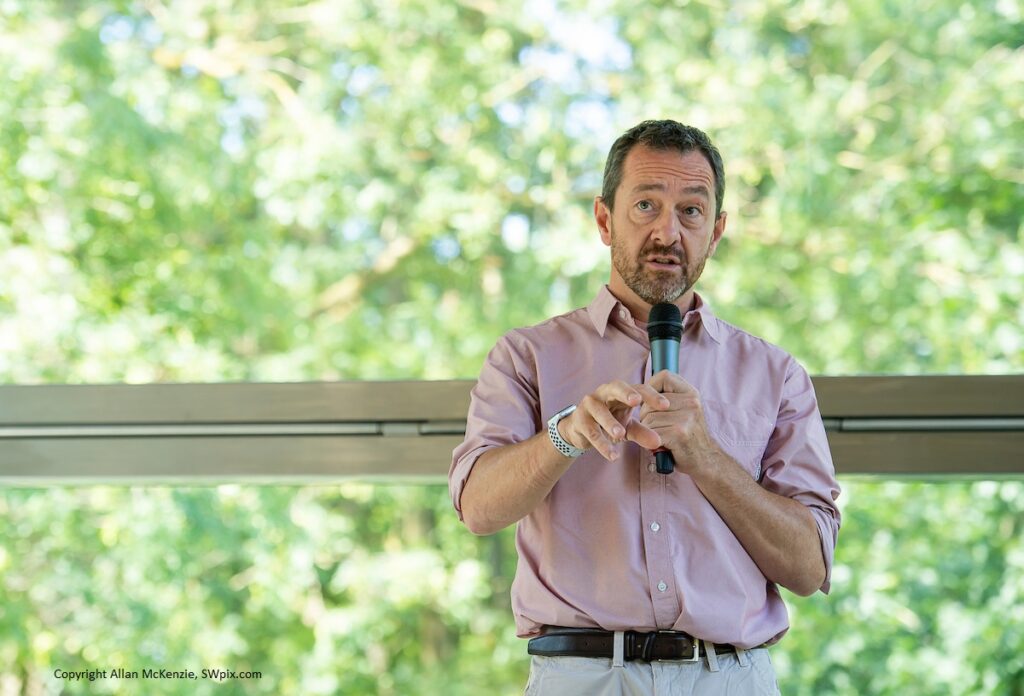
With the average price of unleaded petrol riding to 158.52p a litre, Boardman noted that ditching the car and riding a bike for short journeys could help save families “thousands of pounds a year”.
“When I took the role as Transport Commissioner for Greater Manchester [in 2021], there were 250 million car journeys a year in the region of less than one kilometre,” the former Olympic champion and Tour de France stage winner said.
“People don’t do that because they like sitting in traffic, they do it because they don’t feel like they have a viable alternative.
“I think we have the same opportunity here as the Dutch had. The cost of fuel now has showed us just how vulnerable we are to changes in the world’s oil prices and how over-dependent we’ve become on one mode.”
In April, we reported that the rise in fuel costs sparked by the war in Iran has already led more UK drivers to walk or ride their bikes. Almost three in 10 drivers said they are cycling or walking as an affordable alternative to driving, according to a YouGov survey commissioned by Cycling UK.
A further 15 per cent said that they are actively considering this option. The survey of more than 2,000 adults across the UK also found that over a quarter (27 per cent) of drivers are reducing how often they go out. If prices remain high, another 19 per cent said they are currently considering cutting back on journeys.
However, Cycling UK responded to the survey by warning that without providing affordable transport alternatives, as pioneered by the Dutch in the 1970s, the shift away from driving could leave many, particularly women, increasingly isolated.
Tadej and Jonas, be afraid, be very afraid… Paul Seixas sets new Tourmalet KOM as teenage phenom ramps up his training ahead of debut Tour de France
In the wake of another imperious spring campaign for Tadej Pogačar, and following Jonas Vingegaard’s demolition job at the Giro d’Italia, it’s fair to say the narrative heading into next month’s Tour de France will revolve around the two greatest stage racers of the 2020s.
After all, this is arguably the first time since 2022 that Pogačar and Vingegaard will head into the Tour on an equal footing (the Dane’s Giro fatigue notwithstanding), their build-ups so far uninterrupted by injury or illness.
Which means we could be in for a potentially tight, thrilling, and era-defining showdown in the Alps between grand tour racing’s ‘big two’ in July. Now, there’s a tantalising prospect.
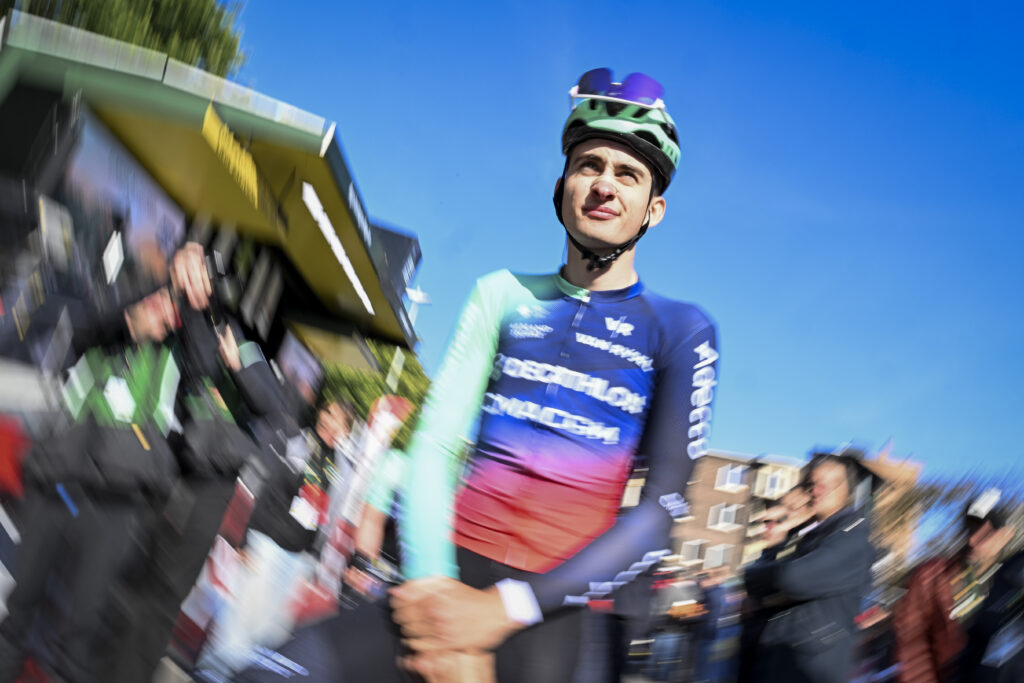
Of course, not all the focus will be on Jonas and Tadej’s fourth Tour rematch. Because this year, there’s a third man involved. Paul Seixas will take to the start line in Barcelona in just under five weeks’ time with the weight of an expectant French nation and 41 years of hurt on his back.
Not that it seems to be bothering the 19-year-old phenom all that much. Seixas is halfway through arguably the greatest season any teenager has ever strung together, including wins at the Tour of the Basque Country and Flèche Wallonne, and two strong second places behind Pogačar at Strade Bianche and Liège-Bastogne-Liège.
At the weekend, he heads to the Tour Auvergne-Rhône-Alpes (that’s the Dauphiné to you and I), the scene of his breakthrough GC top ten in the pro ranks last year, as he sharpens his form before the Tour.
View this post on Instagram
First up, however, was a block of altitude training and some all-important stage recons with his Decathlon teammates. Yesterday, Seixas was busy scouting the route of stage six of this year’s Tour, the only real Pyrenean epic of the 2026 edition (thanks to its Barcelona start), which will feature the iconic double act of the Col d’Aspin and the Col du Tourmalet, before a draggy finish at Gavarnie-Gèdre.
And he wasn’t having a jolly, either. On a Strava segment covering part of the wilder Luz-Saint-Sauveur side of the Tourmalet (the side to be tackled this year by the peloton), Seixas smashed the KOM, riding the 10.1km, 6.9 per cent average segment in a time of 25:25, 35 seconds faster than previous KOM holder Lenny Martinez.
It should be noted, of course, that the climb to Super Barreges doesn’t cover the entire 18km of the legendary Tourmalet. Nevertheless, the 19-year-old did bag a further four uphill KOMs during his 90km ride in the Pyrenees. July’s going to be fun, isn’t it?
“These are the bikes we always ride. We have never experienced anything like this before”: SD Worx considering legal action against UCI over Lorena Wiebes’ controversial Giro disqualification for underweight bike
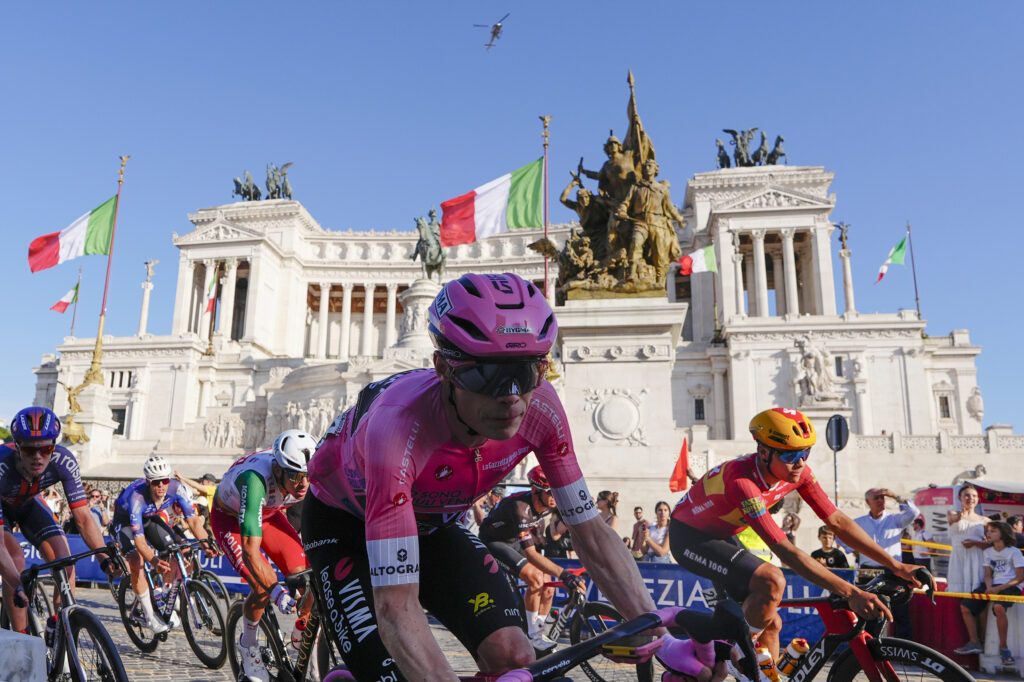
The men’s Giro d’Italia ended yesterday in Rome, so I suppose I should provide a quick recap of the weekend’s racing: Jonas Vingegaard won on a summit finish (again), Jonathan Milan finally bagged his first stage of the race in the Eternal City, there was a bit of a half-hearted battle for the podium, and Vingegaard completed the grand tour triple, blah, blah, blah…
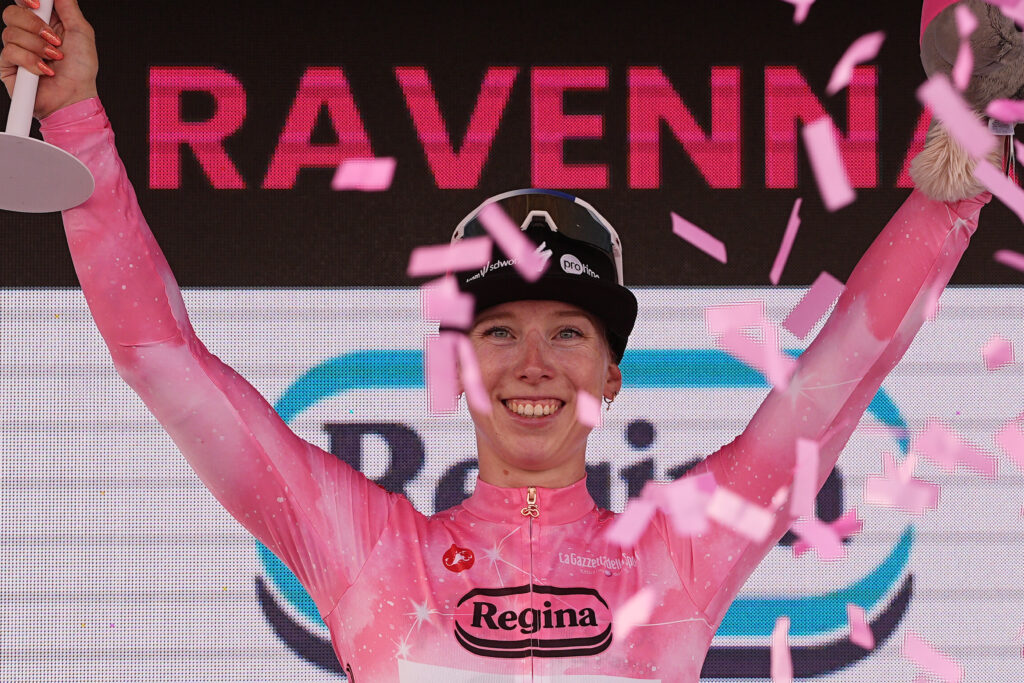
Setting the boring men’s Giro aside (they’re calling the 2026 edition the Arsenal of grand tours, I hear) the real drama of the weekend took place over 200 miles north of Rome in Ravenna, where Lorena Wiebes won the opening sprint of the women’s Giro on Saturday, taking the pink jersey in the process… only to be disqualified later that evening for racing on an underweight bike.
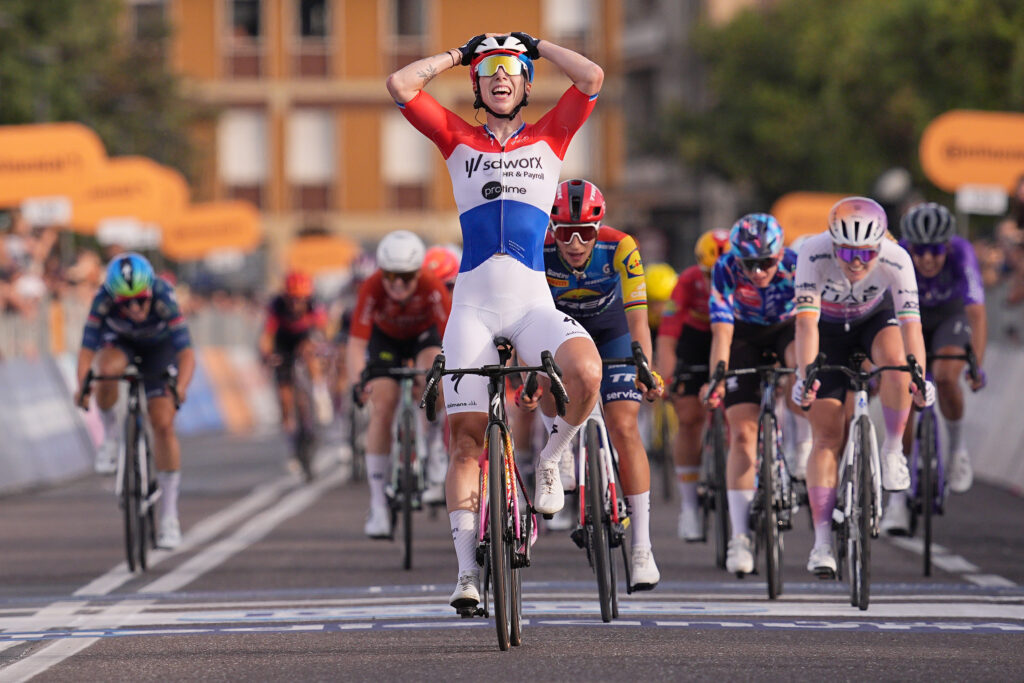
According to the race jury, the Dutch champion completed the stage on a bike “non-conforming to minimum weight requirements”, Wiebes’ SD Worx-Protime team later confirming that the commissaires found her bike to weigh 6.78kg – 20g under the UCI’s 6.8kg minimum weight rule.
That miniscule miscalculation (the reasons for which we’re currently working on, so keep an eye out later) resulted in Wiebes being thrown off the race and her stage win belatedly awarded to Elisa Balsamo, who narrowly pipped Lara Gillespie to second place (and followed that up by properly winning in pink yesterday).
After the news broke, sending shockwaves through the Giro, SD Worx fired back almost immediately, arguing that there are some “serious questions” to be asked of the UCI’s bike-weighing procedures at the Giro and the discrepancies in the jury’s scales.
“Team SD Worx-Protime is astonished by the decision of the UCI commissaires’ panel that Lorena Wiebes’ bicycle did not comply with the minimum weight limit after the first stage of the Giro d’Italia Women, in accordance with UCI Article 2.12.007–2.2,” the team said in a statement on Saturday evening.
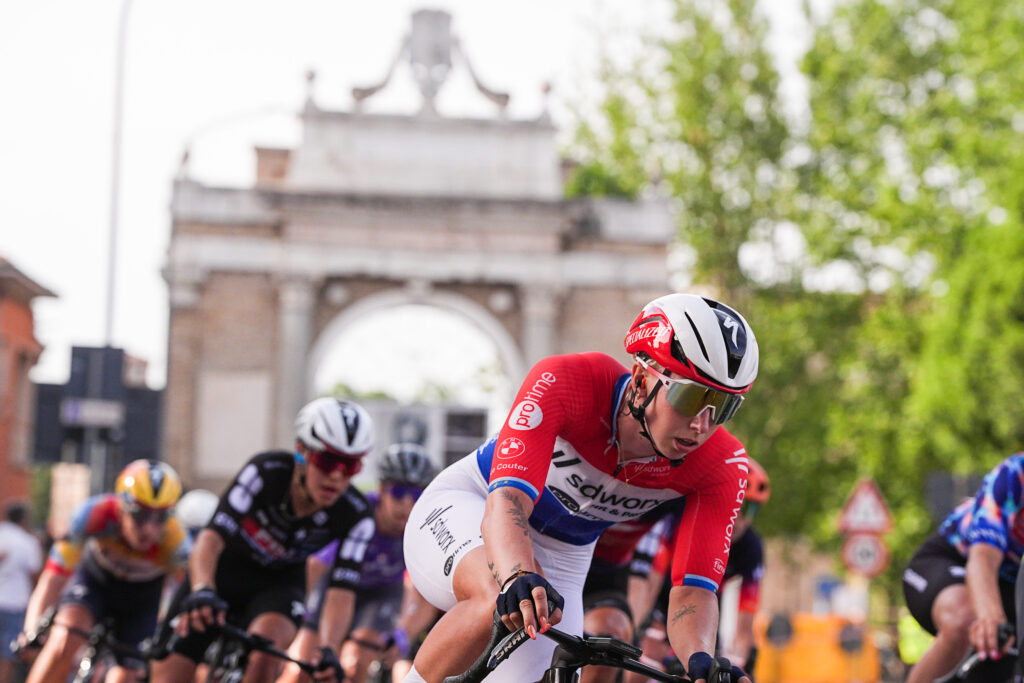
“According to the jury, the bicycle weighed 6.78 kilograms and therefore did not meet the UCI’s minimum weight requirement of 6.8 kilograms.
“The team has serious questions about the bicycle-weighting procedures at the Giro d’Italia Women. For example, there was a weight difference of more than 50 grams between the first and second weighing of Wiebes’ bicycle after the finish of the stage in Ravenna.”
The team continued: “Wiebes has ridden this bicycle on multiple occasions this season, always with the same setup. She achieved numerous victories on this bike. Moreover, earlier this year, the bicycle was weighed by UCI officials after several races in which Wiebes won sprint finishes convincingly.
“On each occasion, the bicycle’s weight was found to be comfortably above the 6.8-kilogram limit. The team therefore does not understand how the very same bicycle could now suddenly be measured below the minimum weight requirement.
“Team SD Worx-Protime believes that Wiebes’ disqualification is an exceptionally severe sanction. In a flat sprint stage, unlike a mountain stage, a small reduction in weight provides virtually no advantage. This is certainly true for a rider like Wiebes, who won the sprint in Ravenna by three bicycle lengths.
“Team SD Worx-Protime, a leading team in the women’s peloton for the past fifteen years, has no explanation for why Wiebes’ bicycle was found to be under the minimum weight on this occasion.”
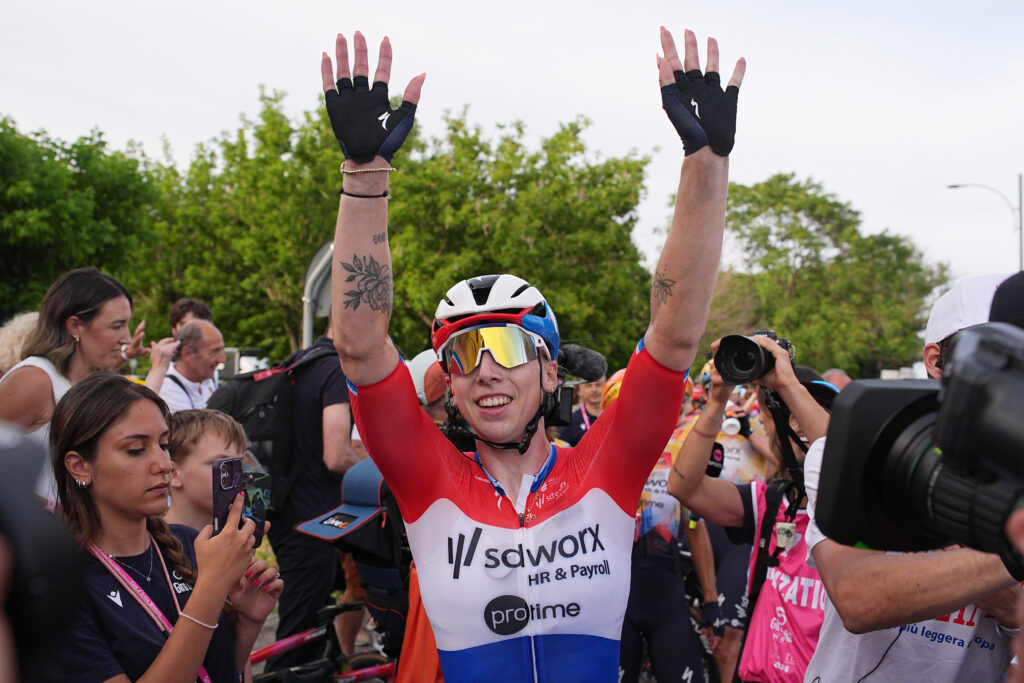
Speaking to NOS, team manager Erwin Janssen indicated that SD Worx will challenge a decision that has completely changed their approach to one of cycling’s biggest races, while claiming that the squad carried out its own assessment of Wiebes’ bike and found it to be over the 6.8kg limit.
“It will be difficult, but we cannot just let this go,” Janssen told NOS. “It is ridiculous that Lorena has been taken out of the race. This causes us so much damage. We were aiming for three or four stage wins.
“It is sad. These are the bikes we always ride. We have never experienced anything like this before. “The first measurement was 70 grams under the limit. If that weighing equipment has been taken up to altitude, it has to be recalibrated.
“We heard that did not happen. When we weighed the bike ourselves after the finish, indoors, without wind, and with our own equipment, it was above 6.83 kilograms. How is that possible?”
He continued: “We will do everything we can, including legally. But they are unyielding. It will be their no against our yes. They will receive a letter. We will hold them liable for the damage suffered.”
View this post on Instagram
Last night, Specialized, who supply SD Worx’s bikes, got involved in the dispute, writing on Instagram that “we stand with Lorena”.
“20 grams didn’t win that sprint. Lorena did,” the bike brand posted. “We’re proud to stand with Lorena Wiebes and SD Worx-Protime. The win we witnessed remains beyond measure.”
I have a feeling this one is going to rumble on and on…
Was Lorena Wiebes disqualified from the Giro d’Italia because of a switch to a 1x chainring setup? No, actually…
As promised earlier, we decided to delve deeper into the mystery surrounding Lorena Wiebes’ controversial bike weight disqualification at the Giro.
And, despite what some journalistic and social media sleuths may be claiming, we reckon it’s got nothing to do with her 1x spring setup:

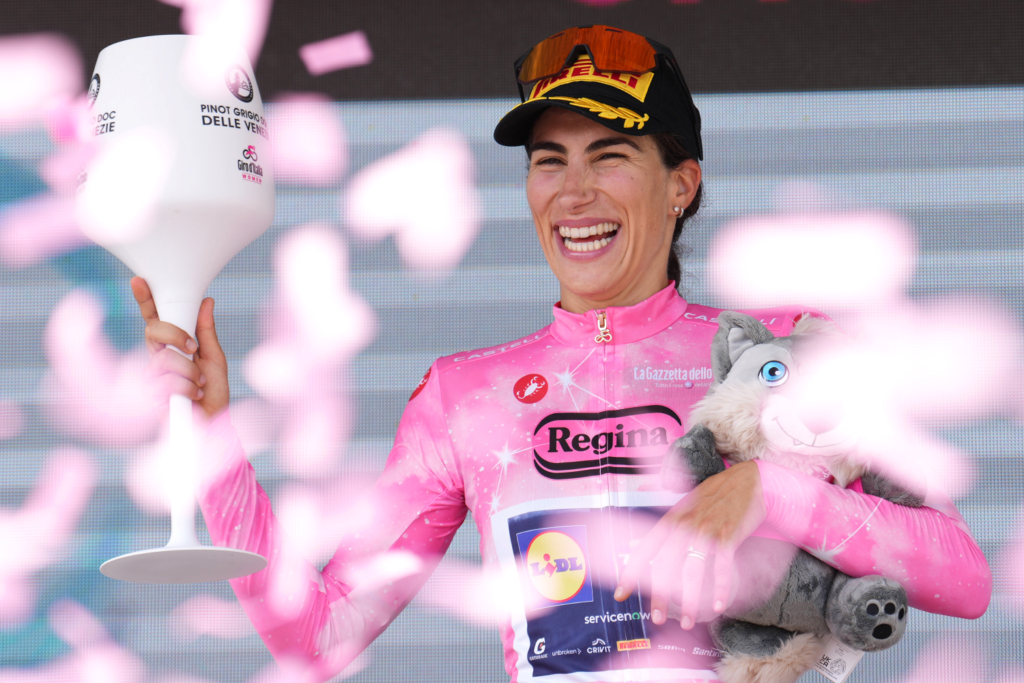
Elisa Balsamo withstands wave of GC attacks to power to sprint hat-trick at Giro d’Italia Women
I told you there’d be attacks at the Giro today.
And the GC leaders didn’t disappoint, blowing the race apart on the key climb to Montenars. On that steep 3km ramp Anna van der Breggen, maybe attempting to exact some revenge on the race following the disqualification of her teammate Lorena Wiebes, did what she does best – set a leg-sapping, bunch-reducing tempo on the front.
With the lead group reduced to around a dozen, Demi Vollering launched her first attack of this year’s Giro over the top of the climb, bringing Van der Breggen, Elisa Longo Borghini, and Marlen Reusser with her.
However, an unsurprising lack of cohesion on the descent – where SD Worx’s Mikayla Harvey crashed hard into a barrier – ensured that the race slowly coalesced on the 20km run-in to Buja. Pink jersey Elisa Balsamo was one of those to make it back to the front, the Italian ready to exploit a big opportunity to take a third straight win, with most of her sprint rivals jettisoned.
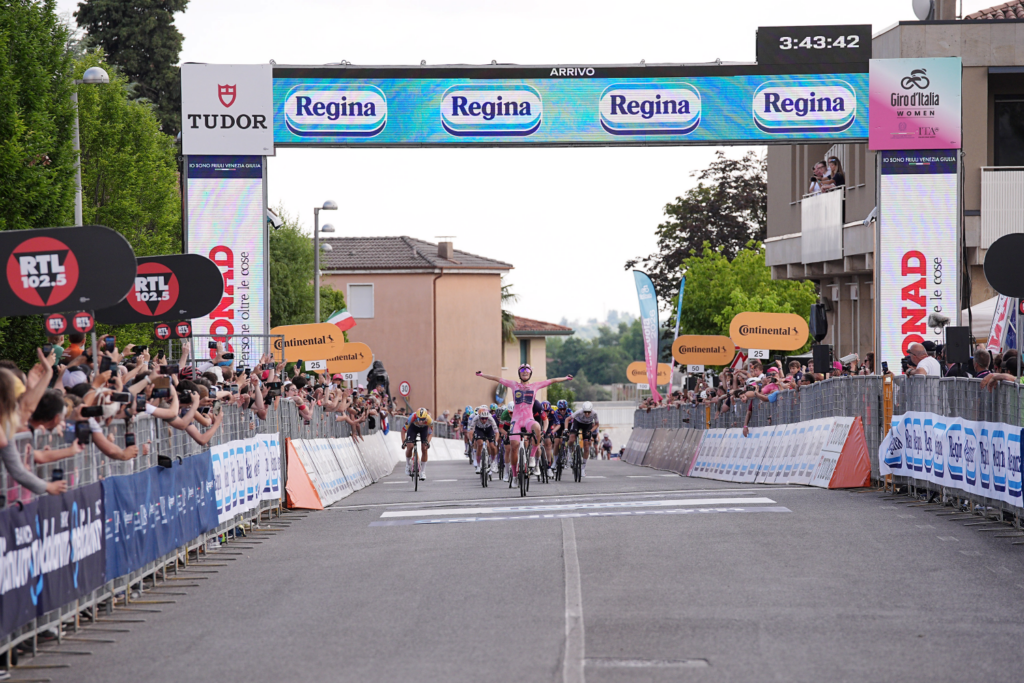
Amid the confusion, Picnic PostNL’s former British champion Pfeiffer Georgi attacked with 13km to go, but was chased down by her compatriot Lauren Dickson. Another solo raid from Uno-X’s Sigrid Haugset proved more successful, the Norwegian holding off the bunch until 400m to go, as the road reared upwards to the line.
Human Powered Health’s Lily Williams was first to launch her sprint on that kicker, but the American was no match for Balsamo, who powered clear to secure a brilliant hat-trick of stage wins at her home grand tour.
The first win may have proved controversial – the two since have been slices of pure Balsamo brilliance. And with a horrifying 12km uphill time trial, and the proper start of the GC battle, to come tomorrow, you can be sure the former world champion will enjoy what will almost certainly be her last day in pink.
“The first Giro champion with hairy legs”: Jonas Vingegaard makes history in Rome… and I’m not talking about the grand tour triple
So, it turns out Lorena Wiebes’ bike weight disqualification wasn’t the only major controversy at the Giro over the weekend.
That’s because Jonas Vingegaard made history in Rome yesterday evening – not by becoming the first rider of his generation to complete the grand tour treble (take that, Tadej!), but by doing so with a small amount of barely visible hair on his legs:
— Velon CC (@VelonCC) May 31, 2026
Well, I suppose he was allowed to get away with some barely visible hair on his upper lip for a few weeks at this year’s Giro, what’s the harm in a few leg hairs?
While I, for one, appreciate Vingegaard’s lack of commitment to cycling fashion and diehard commitment to laziness, I can already hear the siren of the ‘cycling rules’ police in the distance as they hurtle towards Denmark, silly outdated internet guide clutched to their chests.
SD Worx have also reportedly rocked up at UCI HQ with a brand-new defence based on this latest scrap of evidence: ‘You booted Lorena off the race over 20g, but you let Jonas get away with that?’ Full proof argument, I reckon.
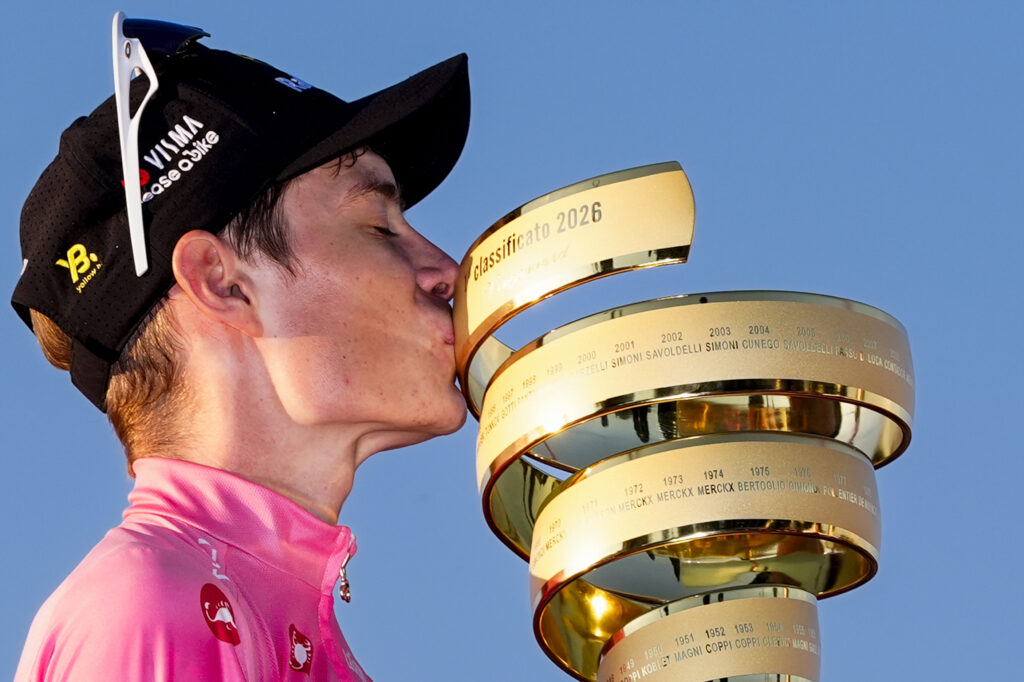
“If I stopped tomorrow, my career would be complete”: Jonas Vingegaard savours Giro d’Italia triumph… while keeping one eye on the Tour de France
Right, we’ve heard about his hairy legs, but how does Jonas Vingegaard feel after completing the career grand tour triple of Giro, Tour, and Vuelta with a devastatingly dominant display on the roads of Italy?
Pretty happy, I guess.
“To win all three is something really special for me,” the Dane, who’s won four grand tours in under four years now, his only barren season coming after his shocking crash at the Tour of the Basque Country, said after yesterday’s stage in Rome.
“It’s hard to find words, and it’s really special to have my family with me at the finish, to hug them. They’ve always supported me. To win this many races, I’ve never dreamt of it and having them next to me is something very special. I could never have done it without them.”
Asked what it feels to complete the three-week set, winning five stages along the way, Vingegaard said: “It’s way more than a dream coming true. In some kind of way I feel like, not that it is the case, but if I would stop tomorrow, my career would be complete. Of course, I still have a lot of goals, but I also want to enjoy this at the moment.
“I think in top sports, there is always some kind of doubt in yourself. That’s how it is in top sports. But with the shape I’ve had here, I gained lots of confidence, and I feel like I’ve gained shape in this race as well.”
That sounds fairly ominous. Especially when you take into account the manner in which Vingegaard approached this Giro, a ruthless destruction of his competition that belied the fact it was also extremely controlled and conservative, one eye on building form ahead of the really big one in July.

So, what’s the plan for the next month ahead of his much-anticipated showdown with Tadej Pogačar at the Tour de France?
“I’ll stay in Rome for a few days with my family, and we’ll enjoy a bit of time together,” Vingegaard said. “Then I’ll go back to Denmark to begin my preparation for the Tour de France. And then the Tour de France will come around quickly.”
Too right it will, Jonas. Which reminds me, I have a few hotels to book…
It’s time for the most important cycling question of the year…
Free the hairs!
Well that’s fairly (or should I say hairly?) unanimous…

Callum’s Medium-Length Mild Take: Vingegaard’s Giro canter proves he’s the second-best cyclist in the world
Callum, you may remember, is currently waging war against the proliferation of snappy, brazenly controversial internet hot takes by offering his own informed, genteel alternative: medium-length cycling mild takes.
And believe me, this one’s so mild it’s practically a roast dinner left on the porch overnight…

> Vingegaard’s Giro canter proves he’s the second-best cyclist in the world
“Here’s how you close a cycle lane for roadworks”
Blimey, miracles do actually exist…
Here’s how you close a cycle lane for roadworks. Close a lane for cars to create a temporary cycle pane, install ramps so people on bikes can exit and re-enter the cycleway.
📍 Upper Thames Street, London
— Hackney Cyclist (@hackneycyclist.bsky.social) May 31, 2026 at 2:57 PM
Jhonatan Narváez abandoned Giro after crashing into the back of a team bus while “distracted by his bike computer” after a stage, UAE Team Emirates confirms
Talk about bad luck. Jhonatan Narváez was one of the stars of this year’s Giro, winning three stages and proving the only real challenger to Paul Magnier in the points classification.
So, it was quite the surprise to see the Ecuadorian struggling so early on Friday’s mammoth mountain stage to Piani di Pezzè, before abandoning the race just two days from Rome.
However, over the weekend, Narváez’s UAE Team Emirates squad confirmed that his unexpected late withdrawal wasn’t down to simple third week fatigue, or even illness – instead, it was all the result of a close encounter with a bus following the previous day’s stage, as Narváez was making his way back to his own team bus.
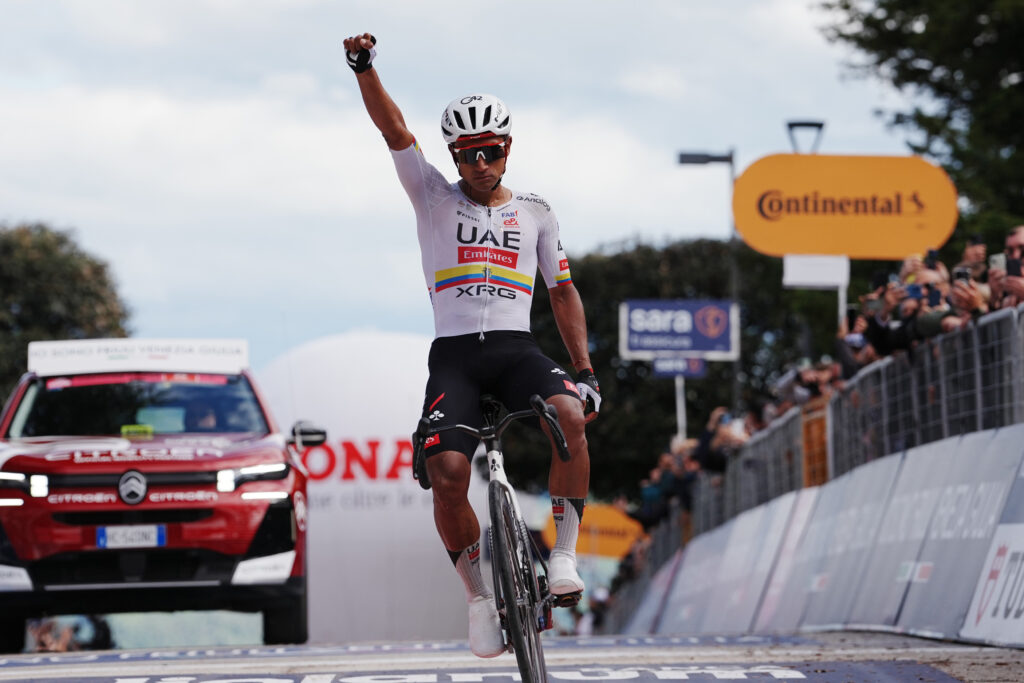
“Jhonatan was a bit distracted and was looking at his bike computer while returning to the buses,” Manuele Mori told BS Bicisport. “A bus in front of him braked, he didn’t notice, and there was an impact.”
Mori explained that, initially at least, it appeared that Narváez has escaped any serious repercussions following the crash, just “classic whiplash” and some stiffness in his back and neck. However, things soon started to unravel shortly after the start of Friday’s huge stage in the Dolomites.
“Friday, he suffered from the start,” Mori said. “I think also because of the heat and the effort, and he started bleeding from the nose. He had dizzy spells, probably also a bit of fear, and together with the race doctors we decided to stop him.
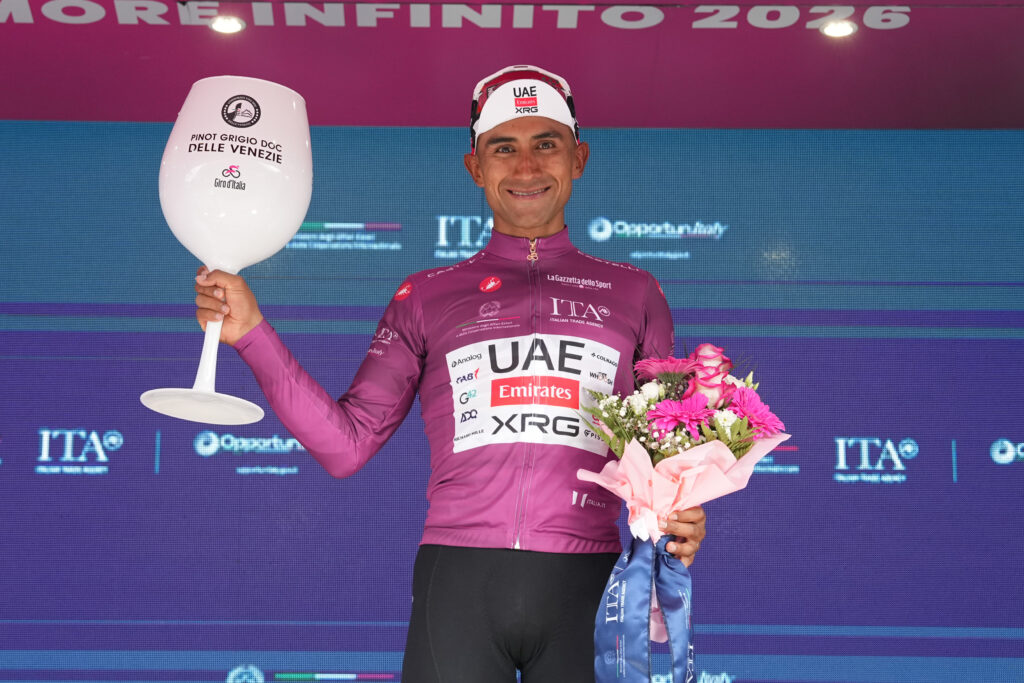
“Before the start everything seemed fine, apart from some stiffness. But during the race he felt unwell, so we made the decision to withdraw him, also as a precaution.
“He was very disappointed and upset, because he really cared. He fought every day to bring home the ciclamino jersey. We were all very disappointed, but health is more important.”
Hands up, would you rather have Unbound mud or some classic UK gravel nettles?
View this post on Instagram
Ouch, ouch, ouch… Get that man some dock leaves!
Giro d’Italia Women stage three: Can the sprinters hold on for another bunch kick in today’s punchy finale?
We’re three days into this year’s Giro d’Italia Women and the sprint supremacy that has characterised the race so far could be set to topple this afternoon – if the attackers can make life hard enough for the bunch during what should be a difficult, punchy finale in the north-east corner of Italy.
After a flat start along the Adriatic coast in Bibione, things should start to spice up in the final 60km as the Giro peloton hits its first prolonged spell of uphill road at this year’s race.
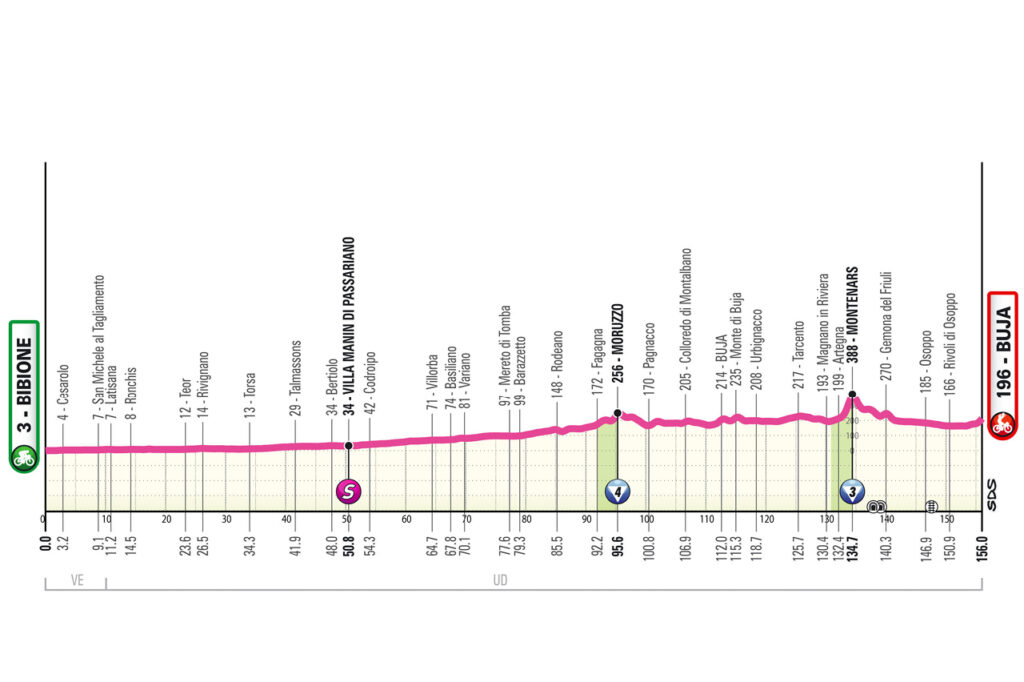
An introductory cat 4 climb with 54km to go sets the scene for the Montenars, a 3.3km-long, cat 3 test featuring some pretty strong gradients towards the top, which comes under 17km from the finish.
So, if any punchy riders want to upset the sprint apple cart and put the likes of Balsamo and Gillespie under pressure, here’s your chance. Don’t say I didn’t warn you.
“Not an event or a photoshoot; just the school run in London”
London’s cycling and walking commissioner Will Norman here, getting out in front of the conspiracy theorists with this post praising the bike-based school run in the capital this morning:
I spotted five family bikes at a single junction this morning. Not an event or a photoshoot; just the school run in London🚲
Over 250,000 cars do the morning school run in LDN – our bike lanes & school streets are enabling families to choose better options. 🚲🚶♀️🛴👨🦽🤸♀️
— Will Norman (@willnorman.co.uk) June 1, 2026 at 9:39 AM
How will you know when cycling to work and school has been normalised in British society? When we don’t have to claim people riding cargo bikes with their kids is part of a photoshoot, I suppose.
Although, as ‘Cycleway, my arse!’ pointed out in response to Norman’s post, more families would surely be encouraged to cycle if they didn’t have to turn a corner straight into the path of an oncoming lorry…
Very brave of them, considering the lack of proper cycle lanes in that area. Just out of shot, people cycling have to contend with this! Sending them into oncoming traffic – the likes of which you’ve captured in your photo. Far from ideal Will.
— Cycleway, my arse! (@issaddlethereis.bsky.social) June 1, 2026 at 9:50 AM
Administrators appointed at major cycling distributor Saddleback
More bad news from the cycling industry over the weekend, after it was confirmed that Saddleback Cycling, one of the UK’s leading bike/component/accessories distributors, has entered administration:
> Administrators appointed at major cycling distributor Saddleback
And in case you missed them, here are a few other stories from the weekend:







40 thoughts on ““People don’t drive short journeys because they like sitting in traffic”: Fuel price crisis could be UK’s Dutch cycling moment, reckons Chris Boardman; Wiebes’ bike weight controversy rumbles on; Bus crash behind Narváez Giro DNF + more on the live blog”
‘People don’t do that because they like sitting in traffic, they do it because they don’t feel like they have a viable alternative.’
Going to disagree with Chris here. Many people do it because they’re extremely lazy.
@BroomBroomBroom
I think there’s that, and the fact that society in general has had Active Travel programmed out of it – ‘I get from one place to another by car, and only car, no matter the distance’. To do anything else just does not compute.
My other half takes the bus to work in the next town over – about 6-7 miles away, and then walks the rest of the way to the office. She has colleagues who live half of her walking distance, and still they take the car.
How do we break that programming? It has to be a very enticing carrot, as when we use a stick, it’s just another ‘War on Motorists’.
It’s even worse than people being lazy, it’s just become normalised. I live in a small East Sussex town a whopping half-mile from the station and town centre. In the 30 years I’ve lived here there are neighbours I’ve never seen walk to catch a train or buy a bag of shopping. I have neighbours who’ll drive to a pilates class, the pool or for an evening of ‘tap’. I’d argue that they’re not lazy it’s that ‘car-first-and-always’ has become utterly normalised and habitual. I sincerely hope that the present ‘crisis’ creates an opportunity for active travel but fear it’s one that will be hijacked by the electric car lobby. They’re just remodeling the problem rather than providing a solution. Here endeth the rant!
@BroomBroomBroom
Agreed, many people are never going to use an ‘active travel’ method, but if there was a reliable, efficient public transport option that was cheaper than driving then you might get them to use that.
@Sedis Unfortunately it is difficult to make public transport appear cheaper than the car because substantial parts of the cost of running a car are up front costs rather than per journey costs. Depreciation, excise duty, servicing, MOT and insurance are mostly per year. The only per journey cost is fuel and that has effectivley been subsidised to the hilt (duty frozen AGAIN and buying cheap fuel from Russia).
@Bungle_52 Its very simple to make public transport appear cheaper than car use, just make it free at point of use. I know that simple is not the same as easy but we do it for the NHS.
@Backladder One of my hobby horses for decades! It’s estimated that to make all public transport free in London would cost about £1000 per household on council tax, which is obviously a lot, but the average London commuter spends around £2000 a year on fares. With a little judicious extra taxation elsewhere (slight raise in business rates for high-end businesses, increase in congestion charge/parking fees etc) the per-household tax costs could be reduced and it could be a massive financial benefit to most, especially the poorest, and of course the clean air and safer streets benefits would massively enhance quality of life as well as reduce the burden on the NHS. If Belgrade can do it…
@Rendel Harris Sounds like a bargain at £20/week for all the free public transport you need, especially somewhere like London where there is a proper network.
@Bungle_52 @Sedis Unfortunately it is difficult to make public transport appear cheaper than the car.
It can be done though. As part of a family effort to get my elderly Mother to stop driving (for safety reasons). I did a cost comparison of running her small car v Edinburgh’s good public transport (free pass admittedly) & occasional taxi based on her low annual milage. Even as a cycling/public transport advocate I was shocked by how expensive total cost per trip for her car use was.
I’m pleased to say she listened to reason and we didn’t need to mention her driving, phew!
@BroomBroomBroom I’d have to agree with this comment. The fact that 60% of car journeys are under 5 miles clearly shows this.
Do these people not have feet? There really is no excuse for taking a car journey of less than a kilometre unless you have a disability that makes it imperative or are carrying the traditional fridge full of granny’s medicines. At the average walking pace a kilometre takes 12 minutes, discount the time spent looking for car keys (this is a variable that increases with age), walking to the car, finding a parking space when you reach your destination and so on and it saves a handful of minutes at best assuming a traffic-free day. I know St.Christopher has to be diplomatic in order to win people over but I suspect deep down he knows the obvious which is that it’s not people using their cars because they don’t feel they have a viable alternative, it’s because they’re very lazy.
Depends what you mean by ‘viable’, I suppose. Often it is possible to walk those journeys; it’s just deeply unpleasant to, because of the way we’ve designed our urban environments to be ‘car-first’.
I have a neighbour, lovely guy who regular cycles for exercise/mental health etc, but drives the 1-2 mile distance to the local supermarket for a single bag of shopping…
As has been said, using the car has been so normalised that even active types don’t see the problem.
Yes… but also just saying “lazy” doesn’t move us on. And isn’t “not making effort you don’t need to” sensible? Plus people do clearly make efforts in some parts of their lives (albeit we’re all less active on average).
In the same way labelling people “greedy” because they get fat in an obesogenic environment is a mental shortcut (laziness!) but perhaps not helpful to change things.
Per the talks I mentioned elsewhere from Ian Walker I think it’s more useful to think about the environment / what all the others are doing.
If you’ve got that car on finance (and because the cost of travel *after* all the fixed costs is quite low) why would you pay to take a bus – or even spend your time (money) walking.
I could walk everywhere (distances of a couple of miles), but I am lazy and cycle instead. In fact it’s more that the bike is right there, and it’s a pattern (for me) and saves time, and fairly few people walk *everywhere* (and I don’t know any currently…)
Shurely you wouldn’t be calling ebike users lazy, or gear or freewheel users …
@Rendel Harris I think Chris would be shocked about just how lazy some people have become.
The other problem here is that there is very little political will for change.
When I was working full time, I would often drive to get a newspaper on a Saturday or Sunday. The shop is just over half a mile away. The round trip would take 5 – 10 mins. Probably in the middle somewhere.
The round trip when walking is around 25 mins.
I drove to in order to save time, as there was usually a lot to get done in a weekend, what with cycling, cleaning bikes etc.
Since retiring, there is usually less time pressure and walking for errands is a pleasure, as well as exercise.
@Mr Blackbird I admit, I sometimes drive 2.8 miles each way to my judo class. I’ve usually already done my 18 mile work round trip that day by bike, and it’s just a little tight sometimes to get home, fix and eat dinner, and get to the dojo by 7 PM. I probably cycle it 60% of the time, maybe less in winter when I’m even slower.
I don’t plan to drive very often once I retire this year or next.
@andystow Good luck with your retirement. I certainly drive a lot less and another benefit is being able to “live in the moment” more. Walks to the paper shop, mowing the lawn etc can be appreciated, rather than being considered as hurdles to be cleared as quickly as possible, so you can move onto the next one.
@andystow good luck with retirement! Perhaps you’ll even get time for some more European cycling?
@andystow Good luck and much happy cycling. Remember…
Thanks all. I plan to do some more UK cycling for sure, and Europe is a possibility. I’ll be doing some long trips with my wife instead of flying over for just a few weeks. She’s not up for hundreds of miles of cycling, but very interested in a UK coast to coast walk. I’d like to do a RideLondon if it comes back.
Looking at the Eurovelo routes as another possibility. I’d like to visit at least Munich, Vienna, and Prague.
The UCI’s weight limit is stated as 6.8kg. That is two significant figures. If they wanted to disqualify a rider for a 6.78kg bike the should have said the weight limit was 6.80kg to three significant figures. Because 6.78kg is 6.8kg. As is 6.7500001kg.
They do, in the clarification notes to the regulations: “The minimum weight of the bicycle (in working order) is 6.800 kg.”
If there’s any hint of a hole in one of her tyres, she could have lost more than 20g of sealant. Maybe that’s why the UCI weight measures were more than 50g out.
That is fascinating that they say 6.800. So then they actually hope to measure to the gram. But to be sure of the true value of the fourth figure, the 0.001kg, the scale would need to display a fifth ie 0.0001kg accuracy. Or 1/10th gram. I don’t think that there are scales that can measure large objects to 1/10th gram or even 10 gram accuracy outdoors in the wind. You’d need to calibrate between each measurement, have no wind and make sure the bike is completely stationary. So I call BS on their four significant figures.
Oh yeah another thought as the UCI has once again annoyed me Can their scales actually measure 20g? If I get my kitchen scales I can keep putting coffee beans on top while the display shows “0g” it continues to display 0g before suddenly there are 5g of beans, so I know my scale is accurate to plus or minus 10g or there abouts. Good enough for cooking but not good enough for The Royal Mint, cocaine dealers or the UCI. Attach a brass 20g weight to the UCI scale does it even register that there is something there?
Ha, there’s a whole thread on this (weighing coffee, not not Lorena Wiebes’ bike) in the forum – “coffee and metrology”.
@Aluminium can ±0.1 g is easily possible spending under 10k $/£/€ for the scale and a tent to keep the wind off. Two more decimals is doable, but a lot more expensive and fragile.
For consistency, the $1000 scales would have to be in use at every UCI event. Here is the scale they use. Clearly is not accurate to the gram as the 0.00 display indicates. Actually written on it is the tolerance of 20g !!! (Or coffee beans it would fail to detect). Therefore they can only state that her bike weighed 6.8kg.
1000005866
@Aluminium can oh wow, that thing is a joke!
If I were on the team, I’d be asking for the calibration certificate already.
Only they don’t, the lorry is held at the lights as the cyclists are green-lit to turn into a one-way street which is two-way for bicycles as works brilliantly in Paris. I know that little cut through and it’s great and very safe, the only problem in the Streetview picture shown above is the illegally parked vans blocking the cycle lane so they need dealing with but no turning into oncoming traffic required unless you ignore the lights.
Definitely “long-form” but there are an excellent couple of recent-ish talks * with Prof. Ian Walker (researcher who did much of the work establishing the study of “motornormativity”) which probe exactly what motivates people to make the transport choices they do.
“It’s complicated” (it includes international finance and banking products!) – but if we want to make changes to the status quo I think it pays to understand more deeply.
* Will post links but see the Low Traffic Future podcast: “The Cultural Blindspots in Transport” and Streets For All podcast: “Ian Walker lunchtime chat on Motornormativity”
Low Traffic Future podcast: “The Cultural Blindspots in Transport”:
Streets For All podcast: “Ian Walker lunchtime chat on Motornormativity”
“Full proof argument, I reckon.” @admin – Do your “journalists” actually know how to write English correctly?
@Chris RideFar Don’t be a fool!
@Surreyrider I think you mean “don’t be a full!”
Donut beerful
“there were 250 million car journeys a year in the region of less than one kilometre,”
How is it even posssible to drive less than a Km?
Parking it at the end of the journey and then when you get back would probably take longer than to walk a km
“How is it even posssible to drive less than a Km?”
I know! And before electric vehicles with their fast acceleration people with cheaper cars would be struggling to get above the minimum speed limit!
I’ve always said that only sky high petrol prices or a prolonged shortage of petrol will get lazy UK motorists out of their cars, so this could be our 1973 moment and we need to seize this opportunity. UK & regional governments need to invest in public transport and cycle routes and pass legislation to enforce minimum standards for these measures, especially as we now have a number of Reform-anti cyclist councils.