


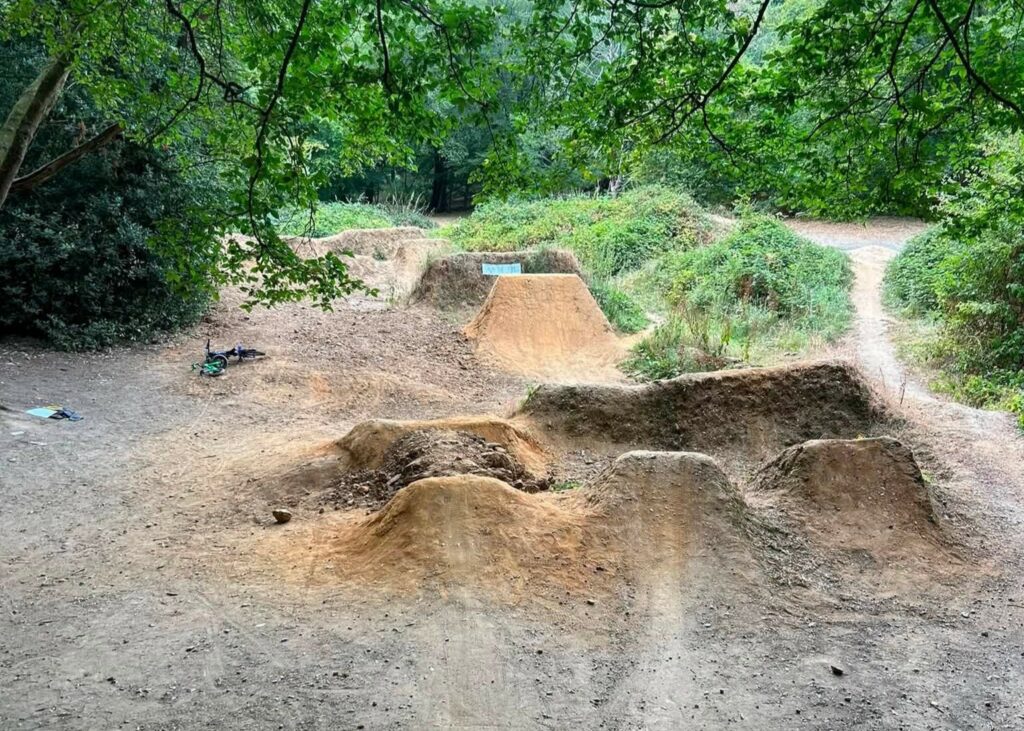

A group of young cyclists faced down a bulldozer while staging a protest against plans to bulldoze a series of dirt ramps in a bike park deemed “unsafe” by Forestry England.
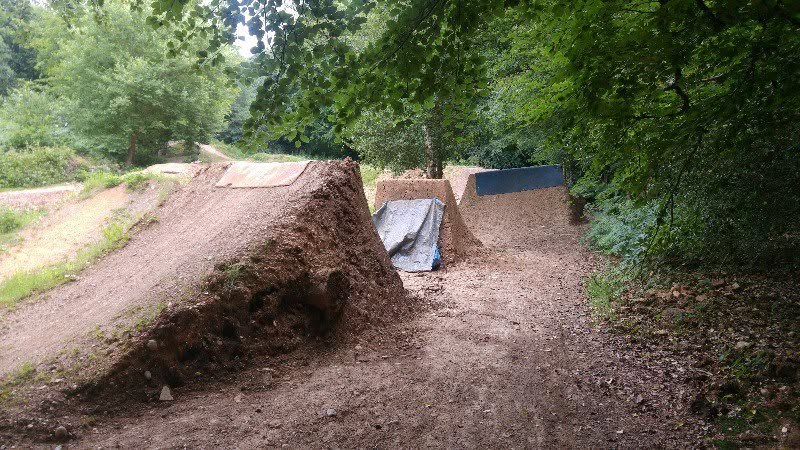
The bike park, located in Hodgemoor Woods, near Beaconsfield in Buckinghamshire, has been a fixture of the woods for over two decades but was closed last year amid fears that its decaying jumps could lead to a rider being seriously injured. However, due to the area not being fenced off, local cyclists have continued to use the park.
Last week, work was scheduled to begin on “reducing and reprofiling” the jumps, when contractors were met by a group of youngsters who attempted to stop them digging up the ramps, claiming that no explanation had been given for the park’s closure.
“Unfortunately, the bike park at Hodgemoor Woods is closed,” Forestry England, which manages the woods, said in a statement, which was posted near the site ahead of the planned removal and reprofiling works.
“The structures on site are unsafe to use, and continuing to ride them creates a risk of serious injury. Visitors may notice works taking place within the bike park at Hodgemoor Woods.
“Following the closure of the facility, the remaining bike jump features are being reduced and reprofiled as part of ongoing site safety and management works. Although the area has been signed as closed, the features continue to attract use, and these works are being undertaken to reduce the risk of injury and ensure the site remains safe for all visitors.
“The works will focus on reshaping existing earth structures within the current footprint of the bike area. No material is being removed from site and the surrounding woodland will remain unaffected.”
According to Forestry England, despite “extensive signage and communications about the closure” there continued to be what it called “increasing levels of unauthorised use, with members of the public accessing the site and exposing themselves to significant risk”.
The decision to bring the diggers in, the government agency says, was made “to help prevent further access and reduce the likelihood of serious injury”.
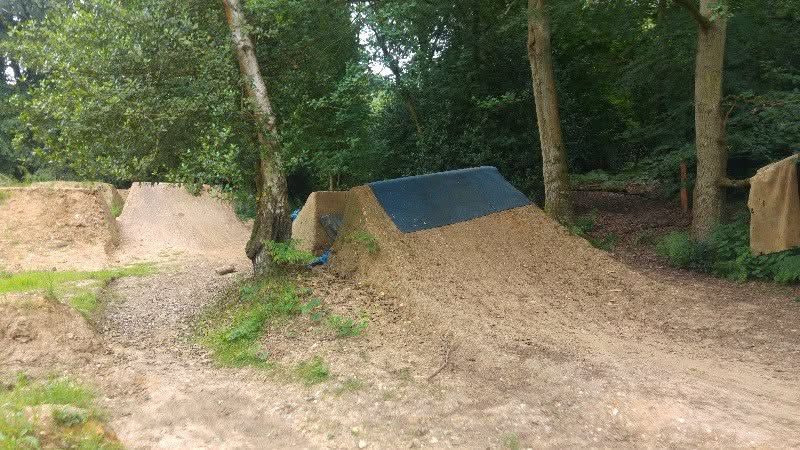
However, on Friday a group of young riders, aged between 12 and 14, stood on top of one of the ramps to prevent it being bulldozed.
Speaking to the BBC, one of the young cyclists said: “My friends, we kind of just sat on top of that landing and we got them to stop.”
“We came down because we knew about the bulldozing and we wanted to protest to save our really nice space, where we come every day,” 14-year-old Walter said.
“I feel strongly about the bike park and think it’s wrong destroying such a strong social community for me and my friends.
“I come here every day knowing I’m going to have a great time with my mates and enjoy the outdoors. It beats sitting on a computer all day.”
“It means the world to me because it’s where I learned to ride and made all my friends, and made a good community. And it’s just a very special place to come,” added 12-year-old Flynn.
“It’s really upsetting seeing the jumps being destroyed where we learnt to ride. With my autism and ADHD, it is an amazing spot to decompress, relax and do the thing I love most with my friends.”
Ellie Good, a mother of one of the young cyclists and who has campaigned to keep the park open, said that while she understands the risks of riding on the ramps, she “would rather my son broke his leg than had a broken brain” from staring at screens all day.
Nevertheless, Forestry England said that due to the jumps’ age and condition, “repair was not a practical option”, with further work required to make the site safe. The agency added that the young cyclists could instead avail of the wood’s bridleways and horse trails.
“We want people to enjoy cycling safely in the forests we care for, while also protecting this special woodland and its wildlife,” a spokesperson said.
“Cyclists are welcome to use the bridleways and permissive horse trails at Hodgemoor Woods and we hope to share more about our plans later this year.”
Forestry England added that it is “currently considering a range of options for the area and how cycling opportunities at Hodgemoor may be provided in the future”.
“While no decisions have yet been made and we are unable to provide timescales at this stage, we remain committed to exploring practical and sustainable opportunities for cycling within the woodland,” it said.
Despite the youngsters’ protest, earlier this week one local posted an image of the park with most of the ramps removed, and those remaining drastically reduced.
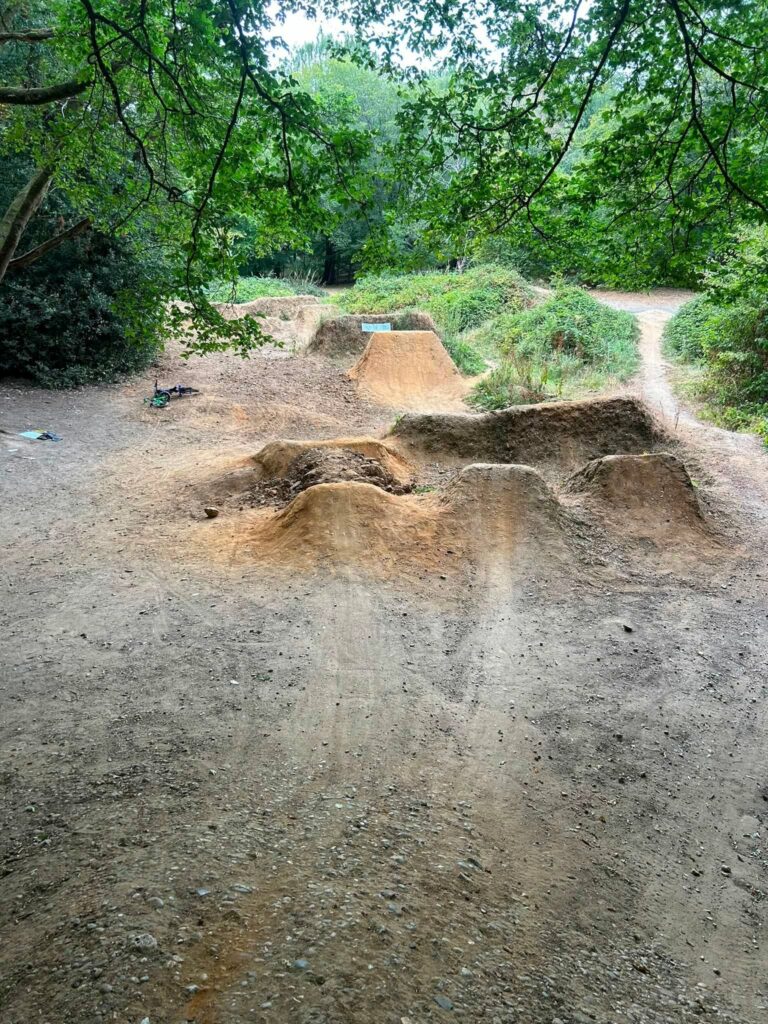
According to local Conservative councillor Carl Jackson, Forestry England remains receptive to the idea of opening the park, though the agency says a decision will not be made until next spring at the earliest.
“At this stage, we are considering a range of options for how the bike park could be reinstated in the future,” a spokesperson said.
“This is a complex process that requires careful consideration of land management objectives, public access requirements, funding opportunities and the provision of a safe and sustainable cycling facility.
“Whilst we remain committed to exploring future opportunities for the site, we need to assess the available options and determine what is viable. As a result, we are not currently able to commit to a definitive timetable for a decision. However, we hope to be in a position to provide a further update on next steps by March 2027.”
Of course, this isn’t the first time a group of young cyclists have come into conflict with the authorities over some mountain bike jumps.
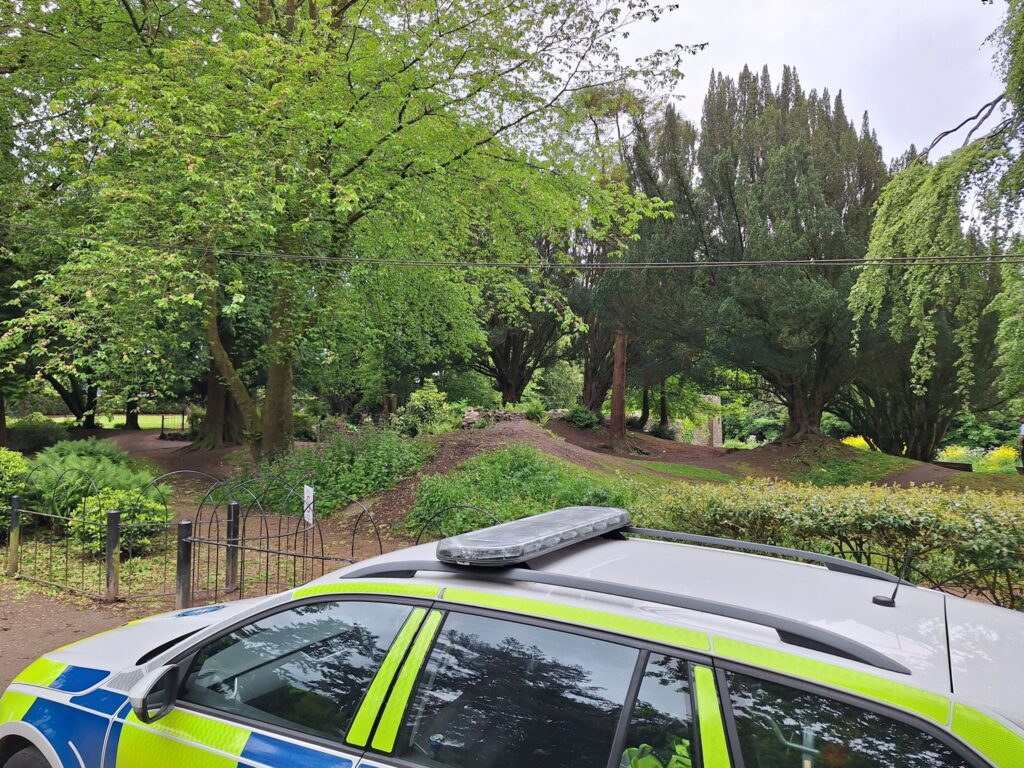
In May, police in Antrim urged local parents to be “aware of what your children are up to”, after officers confronted a number of abusive “male youths on bicycles wearing dark clothing”, who they claimed caused damage to the town’s castle gardens by digging their own DIY bike ramp.
However, the police’s statement was roundly criticised by locals, who pointed out that the gardens used to be home to makeshift BMX tracks and that the youngster’s actions were indicative of the need for safe cycling facilities in the Northern Irish town.
In March, Twyford Parish Council in Berkshire was also told to give young cyclists a “place to ride” after a social media post accusing a group of children of causing “criminal damage” by building a DIY bike ramp in a park provoked another furious online backlash among locals.

Last June, a group of conservation volunteers in Sheffield were accused of leaving a wooded area “in a mess” after a popular children’s mountain bike trail was dug up and destroyed in what locals described as a “malicious and vindictive” act targeting young cyclists.
However, a local councillor who took part in the “unsanctioned” track’s destruction insisted that the work was necessary to repair the damage allegedly caused by the trail, while arguing that it will “remove the danger speeding cyclists pose to other woods users”.
The previous month, we reported that police in Shropshire were criticised by local cyclists for taping off a grass area in the grounds of a village hall, which has reportedly been used by schoolchildren on mountain bikes as a ramp, sparking concerns about potential collisions with passing motorists.

And in July 2024, a group of young cyclists in Lancashire were also criticised by conservationists for allegedly causing “serious” damage to a nature reserve by digging up parts of the earth to create mountain bike jumps.
According to the Wildlife Trust, a section of wildflower meadow at Cross Hill Quarry, a former quarry site and green space located just outside Clitheroe, was dug up to create a number of small jumps, an act the Trust claimed was “unlawful”.
That criticism came around the same time children in South Wales were threatened by residents and stopped from entering a woodland which they had cleared of litter to use as a cycle track, which the local housing association claimed was anti-social behaviour that was causing “severe damage” to the area.
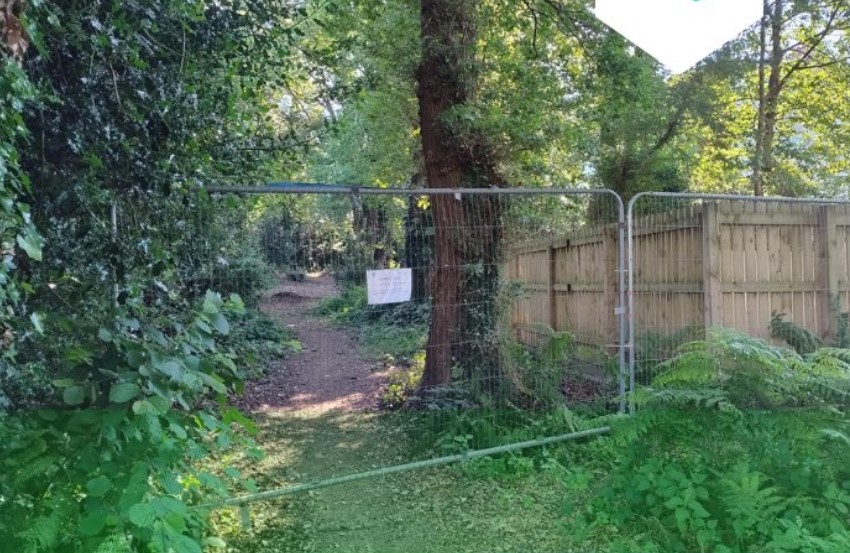
Throughout June, the group of local kids, all around primary school age, spent their weekends clearing rubbish from Garw Wood, which runs between houses in Croesyceiliog, a suburb of Cwmbran, to create a makeshift bike park.
However, at the end of the month, the Bron Afon community housing association fenced off the entrances to the ancient woodland, a decision it claimed was due to “anti-social behaviour in the area which has caused damage” – but which local parents have claimed was due to pressure from residents who had threatened and swore at the children.












13 thoughts on ““I would rather my son broke his leg than had a broken brain staring at screens”: Young cyclists stage protest to stop diggers removing bike park jumps deemed “unsafe””
I mean, bike jumps are fundamentally not safe. Riding on the roads is not entirely safe. Sitting at home eating junk food and watching screens 24/7 is not particularly good for you. Sometimes you have to accept risk. I would wager that the vast majority of the NHS budget is spent treating people with lifestyle related illnesses vs acute injuries like you would get from cocking up a dirt jump.
@mctrials23 With a failed jump, you can sue whoever owns the field, who has the broken fence that “allowed” you in, the bike manufacture, the helmet maker, the knee pad maker, …… and the list goes on! But who can you sue if you sit around eating junk all day?
@Geoff H And how often does this work is this purely scaremongering and often repeated rubbish. People don’t sue the car manufacturer when they crash their car and the brakes didn’t prevent the accident, the tyres didn’t grip well enough, the windscreen wasn’t tinted enough, someone put a speed bump in the road etc.
This just sounds like rubbish that people use to justify stopping kids doing something fun that has some risk to it.
They do occasionally (albeit this example is US): https://www.reuters.com/business/autos-transportation/ferrari-is-sued-by-us-drivers-over-brake-defect-2024-03-19/
[Edit – here’s a UK example: https://www.independent.co.uk/news/uk/home-news/robert-ebert-ferrari-hong-kong-b3010456.html ]
For the most part, though, such claims aren’t likely to get very far because they’d be met with evidence of the extensive safety testing and certification that the car went through before being sold.
Equally, if a landowner could demonstrate that they’d taken all proportionate measures to ensure no-one came to harm they’d be fairly immune – but just saying “oh I’m sure it’ll be fine” doesn’t really qualify.
In this case they’ve decided that the proportionate action is to reduce the ramps until they can be more stably reinstated.
One can see Forestry England’s point of view in this case; if they are correct and the ramps have become unstable or otherwise unsafe and they are aware of this then they are wide open to liability claims if someone gets injured by an on-site defect if they leave the facility open for public use. Some of the other instances of ramps being removed revisited above are clearly petty and unnecessary but if their story is true this one seems justified. The fact that they are saying bikes are welcome in all other parts of the site speaks against this being a general don’t want bikes here policy.
Indeed – “attractive nuisance” and all that.
Don’t Forestry England operate some woods though? If I’m not mistaken they’re somewhat hazardous environments, with trees that can fall on people, never mind stacked harvested logs. (TBF they do put signs up telling people to stay clear of those / not climb them).
I get your point, but Forestry England aren’t allowing cyclists on all other parts of the site, as you say. They are allowing cyclists on bridleways and permissive horse routes – what they are legally obliged to do, ie the bare minimum.
Forestry England sites near me also allow the bare minimum for cyclists. It is a shame that the kids can’t just muck around in parts of their land – it’s publicly owned (failed plan a few years back to privatise the Forestry Commission). When I was younger I enjoyed playing around on my bike all over their forests.
£billions spent on highways used by dangerous drivers, segregating communities, and generating huge amounts of pollution including carbon black, with a proven link to dementia. Key inactivity directly linked to obesogenic society.
Exercise in a forest – just no. Stale dinosaurs in board rooms who enjoy their big executive cars just hate people on bikes, exercising, having fun. Will never facilitate this.
Orwell was wrong. The current dystopia is far worse.
@polainm Yeah…except that’s nonsense in this case. The Forestry Commission have pulled the pin on a small jumps area because the jumps have become unstable and dangerous. They’re looking into ways they can safely reinstate the facility. In the meantime, cyclists are welcome to use all the other trails in the forest.
Tip: the bit below the headline is called “the article”. If you read “the article” instead of just the headline you may find nuances that could stop you going straight to foolishness.
Unfortunately, in this wildly litigious society, I have to side with the Forest Service. In the end, it’s not the most culpable that are found the most responsible, but the deepest pockets.
Has anyone ridden any of the Forestry England dirt courses? Some of them are pretty hairy and could definitely be deemed dangerous. Dalby forest has seen a fair few of my friends injured on some of the more gnarly downhills. These are the routes they are saying the youngsters are allowed on, rather than a well designed pump track with ramps, which would be an excellent introduction to the more challenging routes throughout the forest. Their proposal of a redesign will no doubt turn out to be a sanitised version of what they are removing. As an oldster, child of the 70’s I don’t remember any serious injuries from all the ‘dangerous’ stuff we did.
@Andrewbanshee Just on a point of order, what’s shown in the pictures is very much not a pump track but a set of jumps, some, prior to reduction, of a quite impressive size; a pump track is a circuit of gentle rollers that can be ridden by using a pumping motion of the rider’s body rather than pedalling.
One would imagine that the legal concerns of FE don’t relate to the difficulty/danger of courses or jumps but their liability. If they provide a difficult course and a rider crashes on it because of excess speed or lack of ability, that’s the rider’s problem, but if someone pulls off a jump but is injured because the landing ramp collapses, they can be sued for not providing and maintaining a safe facility.
I too am a child of the ’70s but my recollections are somewhat different, I seem to remember that it was a rare class that didn’t have at least one kid with a limb in plaster! Didn’t seem to do us much harm, I agree, but we did get quite a lot of injuries.
Hi I wasn’t implying the ramps were equivalent to a pump track. I was saying many forestry trails are pretty hairy rather than a well designed pump track. The ramps are definitely not suitable and need replacing, but they are replacing with a new design. I suspect much more tame.