


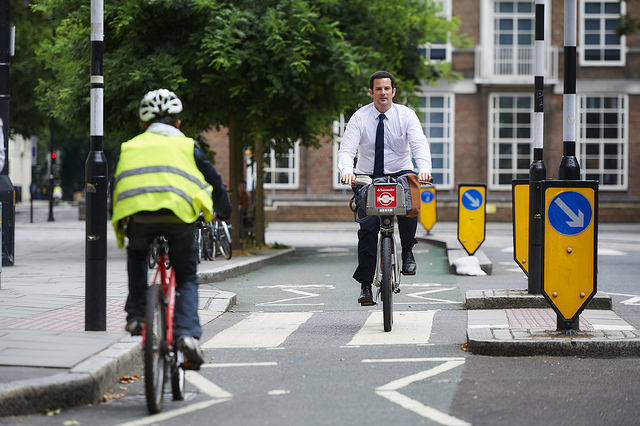

Rising fuel costs due to the war in Iran have led more UK drivers to walk or cycle, but Cycling UK warns that without affordable options, the shift could leave many, particularly women, increasingly isolated.
Almost three in 10 drivers say they are cycling or walking as an affordable alternative to driving, according to a YouGov survey commissioned by Cycling UK. A further 15% say that they are actively considering this option.
A survey of more than 2,000 adults across the UK also found that over a quarter (27%) of drivers are reducing how often they go out.
If prices remain high, another 19% said they are currently considering cutting back on journeys.
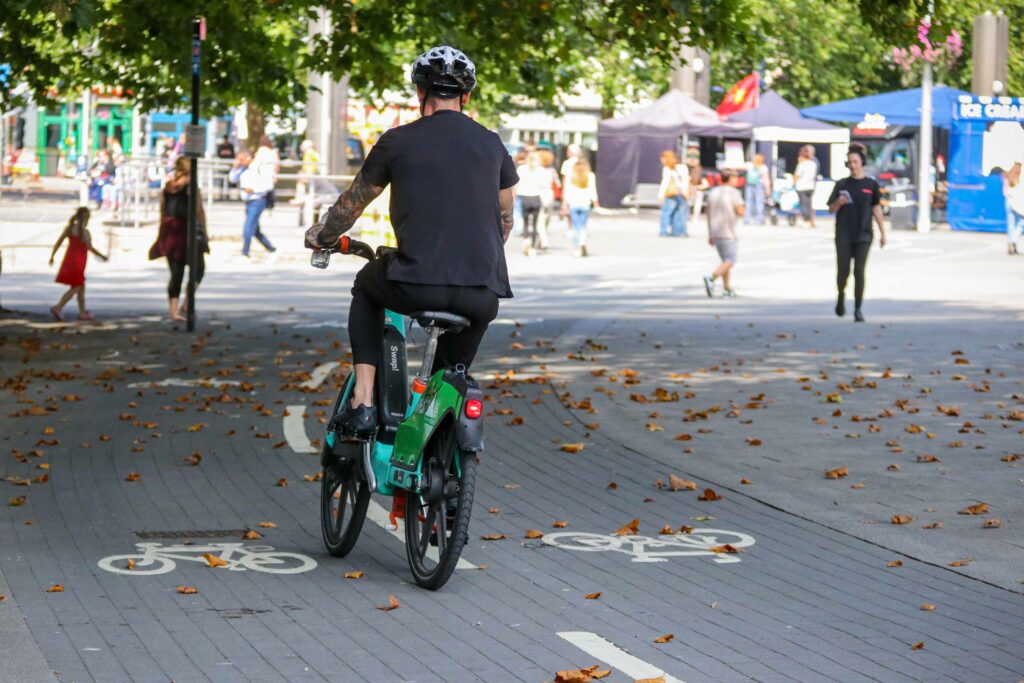
The research suggests the impact is falling unevenly. Women are more likely than men to reduce their journeys, with 29% saying they have cut back compared to 25% of men.
Women are also more likely to report being prevented from making everyday trips. The survey found that 15% of women had missed visits to family or friends due to costs, compared to 13% of men.
Similarly, 15% of women said they had been unable to travel to leisure activities (versus 10% of men), while 13% had missed trips to the countryside or other green spaces, compared with 10% of men.
However, men are almost twice as likely to say they had bought a bicycle in response to higher fuel prices, with 13% of men saying they had done so compared to 7% of women.
Cycling UK is warning of “increased isolation and social exclusion” if the UK and devolved governments do not take action to provide more affordable transport options.
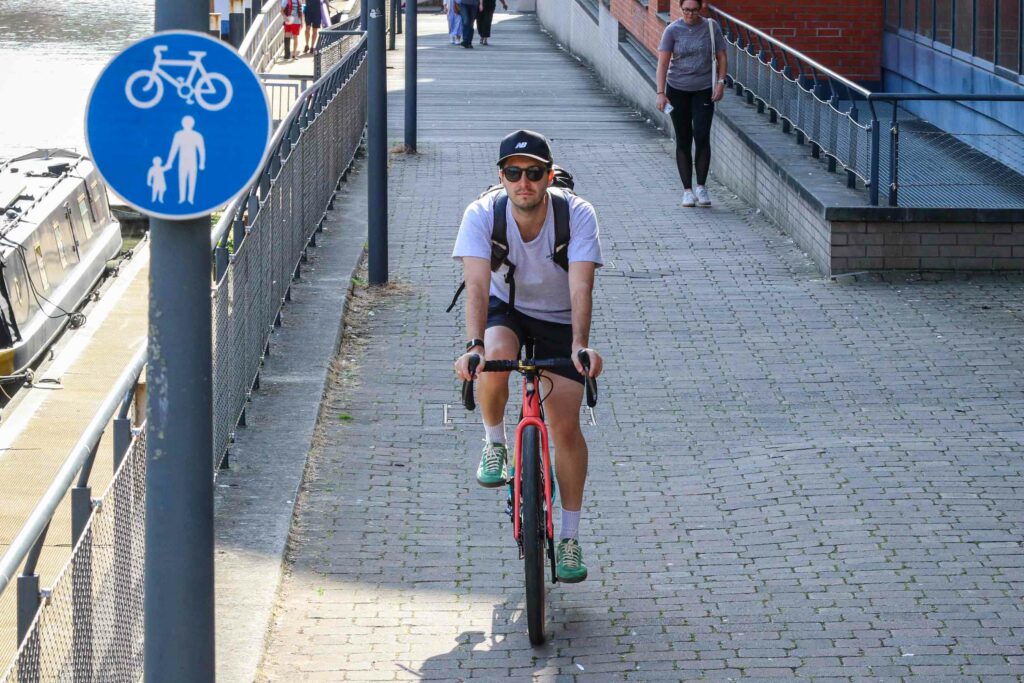
The charity is calling for an urgent package of measures to make it easier for people to cycle and walk more. These include financial support to give people access to bikes and electric bikes, as well as steps to make local roads safer and tax incentives.
> Are rising fuel prices driving more people to e-bikes?
Sarah Mitchell, the Chief Executive of Cycling UK, said: “People need to travel and they need to be able to do this affordably. That includes alternatives to driving, particularly for those who simply won’t be able to keep up with rising costs.
“It protects people who would otherwise be exposed to rising fuel costs when a crisis like this hits, and allows people to continue making their everyday journeys.

“With so many people turning to cycling and walking instead of driving, we urgently need a package of measures to make cycling feel like a safe and viable option for local journeys.
“As well as saving money when prices are rising, more people cycling and walking means fewer people using limited fuel reserves, which is good news for everyone.”
People who drive are also relying more on public transport to save money. The survey found that 23% of respondents say that they are using buses and trains to replace car journeys. A further 13% are also considering doing this.














17 thoughts on “More people are walking and cycling as fuel costs rise, but women risk greater social exclusion without affordable alternatives”
Don’t spend the money buying / subsiding bikes before there are networks of “subjectively/socially safe” routes. Which need to be convenient and maybe even attractive.
That takes a lot more money and time than bike handouts! … But maybe not as much as some would have us believe (especially those who claim it’s unworkable because they think it requires a cycle path along every single road in the land).
Alas it seems at national level we’re more likely to go in the opposite direction, exactly as money gets tighter and circumstances show we need more transport resilience. The “right wing” populists seem pretty committed to “more road more car”. That seems it’ll pull both the Conservatives and Labour in that direction (at least in their promises).
If driving is so price-sensitive, it raises the question why many politicians argue for very cheap electric motoring.
I’ve lived a whopping half a mile from the centre of a small East Sussex town for the past 30 years yet, I have neighbours who I’ve never seen walk down the hill to either get a bag of shopping or catch a train. The truth of it is that people are hard wired to be lazy so, it’s going take more than a long period of high cost fuel to break motornormativity’s back. Put simply, car journeys have to be made the most difficult option for short journeys. If society simply relies on tightening ‘personal finance’ people will simply go electric leaving all the congestion and associated infrastructure costs in place.
Wholeheartedly agree!
Amen! The surprising truth about “encouraging active travel” is that it *can* be done. The hard truth: it can’t be done without making driving less attractive – and not just more expensive.
Not making driving “impossible” – but absolutely less convenient.
Took me a long time to see that’s how it has been made to work in eg. NL. It’s not just “make lovely cycle infra” but “actively discourage car use”. They remove parking. They block motor traffic from driving *through* residential areas (LTNs), they slow it down (usually 30kmh or less) in urban areas, and they block direct routes across towns (divert motor traffic out to a ring road).
I live a mile from a supermarket. I often happen to be cycling there at the same time as a neighbour is driving there. We leave our street at the same time and usually arrive at the supermarket at the same time (although I’m often a smidge quicker).
Has seeing me completing that journey on the bicycle in the same time encouraged any of them to start cycling there?
Of course not! They probably think I’m crazy to cycle there when you can get there in the same time (or just slightly later) in the car!
I agree with this. UK is one of the world’s laziest societies. The fact that so many expect Deliveroo riders to cycle in all weathers just to bring them coffee says it all. Skyrocketing obesity rates also illustrate our laziness.
The Netherlands is the only country in the EU forecast to reverse its obesity rate by 2030 because of the way it’s worked active travel into people’s everyday routine. It’s forecast to be 8.5% Ireland’s rate is forecast to be 50% (source WHO) Don’t know about the UK, but I can’t see it being much better.
Hopefully the current fuel price crisis will force more people to walk/cycle.
UK is one of the world’s laziest societies
No, no, no! You’re not allowed to say this now! Obesity has been certified as an illness, and nothing to do with eating a lot, driving everywhere and taking no significant exercise (which doesn’t include ‘I walk miles every day just getting up off the sofa and going around the bungalow’)
Makes me think of the portraits of the captains of the Axiom star ship in WALL-E as they get more and more lazy.
Hopefully the current fuel price crisis will force more people to walk/cycle
No sign of anything like that up here in North Lancashire, the Offending Drivers’ Paradise. There’s no reduction in traffic, nobody considering ‘not driving’, no increase in cars with more than 1 occupant, no bearded BMW and Audi drivers not flooring it in a rage at anybody obstructing their speeding and definitely virtually no cyclists. Still hordes driving to the village hall car park with their dogs for the entirely non-exercise stroll round the perimeter of the field etc. etc
No sign of anything like that up here in North Lancashire, the Offending Drivers’ Paradise
Still no sign. Drivers still drive, until there’s no fuel available. The government is still encouraging everybody to drive and fly as if there’s no tomorrow- they’ll keep driving until the Warming water level is above the axles, and ‘Rufford Ford’ shows that many of them keep driving even then. Fuel hasn’t gone up anything like as much as it should have done, given the state of affairs in the Gulf. Has the government released all the national stocks in order to placate the Dimwit Hordes?
I do have some sympathy with the reluctance to propagate a ‘save fuel’ national message, as the aforementioned DWs would then consume more guzzler fuel driving around to collect as much as they can in containers, bringing forward the onset of the queues.
I used to live about 200 metres from a local shop. Walking to it one day (the distance was too short to bother getting the bike out of the garage) I saw two of my neighbours leave their house and get into a car to DRIVE the 150 metres to this shop. No words…
I’ve always said that compulsion would be the only way to get drivers out of their cars. This survey seems to confirm that. Whilst womens’ safe participation is an issue which must be tackled it is, nevertheless good to know that so many drivers are willing to turn to active travel and public transport.
It’s clear that neither side in the war are willing to budge, so it’s likely that many more will make the same choice.
This is the best chance to get a first class UK wide cycling infrastructure. Let’s not waste it.
Women generally have a lower risk tolerance than men so if we want more women to cycle we need to sort out drivers behaviour and infrastructure.
My partner won’t cycle on the roads. She likes MTB but she refuses to cycle around cars and I don’t blame her. We were on our way home the other day on a 60mph road and I had to nearly emergency stop to avoid a car coming the other direction. They were overtaking a cyclist and decided a blind corner would be the best time. She was shocked. I told her that I get that sort of overtake a dozen times every time I go out. People just rolling the dice.
If I didn’t go from 60 to under 20 very quickly we would have crashed. The other person didn’t slow down at all. Seeing that sort of thing would put her off going out on her bike the first time she cycled on the road.
I remember much the same thing happening during the fuel strikes in (I think) 2001. Lots of people dug their bikes out of the garage and started cycling to work or to the shops and I remember thinking how great it was that they’d discovered the joys of cycling. Sadly, once the petrol came back on tap the bikes disappeared back into the sheds, never to be seen again.
Meanwhile, UK healthy life expectancy is going down because of decreasing physical activity, the government Road Safety and Active Travel Strategies are not going to be implemented for fear of offending the anti-cyclist hyper-junk press, there will continue to be only joke sentences for people who KSI cyclists and I think it’s very likely the government will pander to the motor vehicle lobby by reversing the petrol price increase due later in the year.
https://www.bbc.co.uk/news/articles/c20q07w3gl9o
https://assets.publishing.service.gov.uk/media/695e2cff8832ab3a48513809/road-safety-strategy.pdf
I think it’s very likely the government will pander to the motor vehicle lobby by reversing the petrol price increase due later in the year
Does anybody know if they’ve already done this?