



Tom Pidcock has criticised the UCI’s recent attempts to overhaul equipment standards, reduce speeds, and increase safety in the professional peloton, branding the decision to introduce a gear restriction trial and a new minimum handlebar width as a “smokescreen” hiding “more important issues”.
Pidcock, who is set to make his return to road racing on Thursday at the Arctic Race of Norway after a successful summer on his mountain bike, also argued that restricting gear choice, and therefore limiting top speeds, would “only make everything more dangerous” by bunching the peloton together on descents.
After a 2024 season marred by high-profile crashes, injuries, and tragedy, rider safety has been at the top of the pro cycling agenda this year. The build-up to the Tour de France was marked by the UCI’s plans to introduce a raft of equipment changes, ostensibly to deal with the “safety implications” of the increasing speed of professional races.
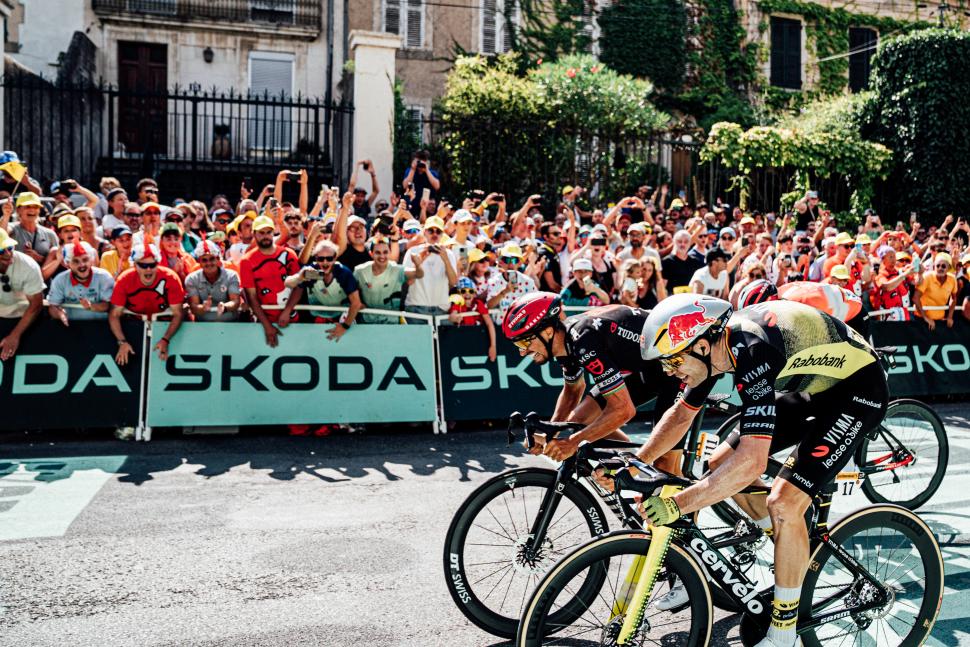
The new rules – most of which are set to come into effect from next January – will see time trial helmets banned in road races, a maximum rim height set, a new fork width limit introduced, and, most controversially, the implementation of a new minimum handlebar width of 400mm.
Meanwhile, the governing body also announced that it will trial a new maximum gearing rule at the Tour of Guangxi in China in October, in another attempt to limit top speeds in the peloton.
This junior-style gear restriction, suggested by Wout van Aert earlier this year, will cap riders at a 54×11 gear ratio on 700c wheels, potentially hitting SRAM-sponsored teams hardest, as their 10-tooth cog setup will exceed the new limit.
> UCI to trial maximum gearing rule — but will it really make racing safer?
These proposed rules, however, have been heavily criticised across the cycling world. For instance, riders, fans, bike fitters, teams, and brands have all questioned the governing body’s plans to implement a minimum width for all riders’ handlebars of 40cm, regardless of rider height or gender.

According to the critics, this change will disproportionately impact smaller riders and the women’s peloton, many of whom use bars narrower than 40cm, not for aerodynamic gains, but simply to ride a bike set-up that fits properly, with SD Worx’s European champion Lorena Wiebes arguing that the UCI is “not really thinking about our safety”.
And at the start of the Tour de France in Lille, former Hour Record holder and Red Bull-Bora-Hansgrohe’s head of engineering Dan Bigham claimed that restricting gears will have no impact on speeds during races and argued the new rules were a distraction from the real changes that could be made to improve safety in pro cycling.
That argument appears to be one shared by Tom Pidcock, the double Olympic mountain bike champion telling Marca ahead of the start of the Arctic Race of Norway that there is too much focus on rider speeds, and not on the other issues that have a greater impact on race safety.

“Limiting gears will only make everything more dangerous. If we’re all going at the same top speed, we’ll be closer together, and on descents, that means we’ll take up more of the road,” the Q36.5 Pro Cycling leader, regarded as one of the best descenders in the peloton, told the Spanish newspaper.
“The debate about handlebar width also seems like a smokescreen to me. We need to talk about the important issues.”
Pidcock also joked that if the UCI was really serious about slowing down the peloton, they should limit the amount of food riders can eat during races, Henri Desgrange-style.
“I told my brother that if we continue like this, they should limit carbs for everyone and put us in ketosis – then the races would be slower,” he said.
“We’re cyclists… people should focus on other things.”
The tendency for cycling’s stakeholders to place the onus for safety on the riders themselves, as noted by Pidcock, has been echoed by the British star’s colleagues in the peloton in recent weeks.
During the Tour de France, Israel-Premier Tech’s Michael Woods criticised race organisers ASO’s pre-race safety presentation, which he claimed appeared to lay most of the blame for crashes on the riders, telling them that they “must also take greater measures to reduce risks, and if they don’t, they may have to be forced to wear protective equipment in the future”.
In a lengthy blog post, former Tour stage winner Woods also devised his own four-point plan to make cycling safer, including scrapping the relegation system, which he said increases stress, and reducing the size of the peloton, noting that the smaller bunch featured in the Olympics road race made it the safest event of last season.
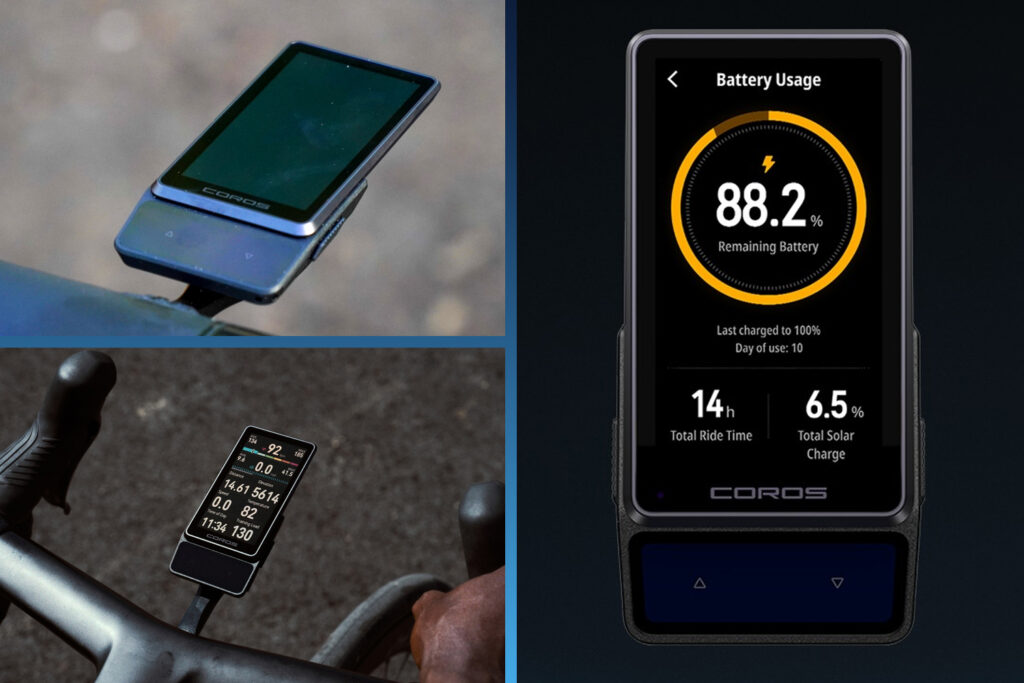
Nevertheless, the 38-year-old also argued that speeds could be lowered by restricting bike and equipment design, and that steps should be taken to “reduce distractions”, such as the use of race radios and the modern trend of riders constantly looking at information on their bike computers.
Away from the sport’s ongoing safety debates, Pidcock told Marca that he is confident heading into his second grand tour of the season, the Vuelta a España, where he will once again lead Q36.5.
The 26-year-old joined the second-tier Swiss team at the start of this season after four years with the Ineos Grenadiers, and got off to a spectacular start, winning two stages and the overall at the AlUla Tour and a stage of the Ruta del Sol.
He then finished second to a rampant Tadej Pogačar at Strade Bianche, before securing three top tens at the Ardennes Classics, including third at Flèche Wallonne, again behind Pogačar.

However, his debut Giro d’Italia was largely underwhelming, finishing 16th overall after losing time in the Alps, with third on stage five to Matera his best result.
But after a successful, unbeaten July on the mountain bike, which included a European title in Portugal, Pidcock is optimistic he can impress over the three weeks in Spain.
“I can make a lot of progress at La Vuelta; I feel refreshed,” he told Marca. “If I can improve a little and regain the feeling I had at the start of the season, that would be excellent.”






16 thoughts on ““We’re cyclists. People should focus on other things”: Tom Pidcock argues restricting gears will make cycling more dangerous and brands UCI safety changes a “smokescreen””
My impression is that MTB is
My impression is that MTB is less competitive/lower level than the road racing World Tour.
It’s not less competitive.
It’s not less competitive. Define lower level; cycle racing off-road isn’t just about w/kg, performance, etc there is a skill element you don’t get in road racing.
World Tour pros are possibly better pure athletes, but not better cyclists. Look when MvdP turned up, and promptly crashed twice in one lap…….
Velophaart_95 wrote:
He hardly just ‘turned up’ – he’d been competing in MTB events for a good few years before that.
mdavidford wrote:
MvdP grew up riding in muddy fields and woodland tracks before that.
Velophaart_95 wrote:
Bad example, MVDP is probably the best bike handler (maybe best equal with Pidcock and Van Aert) in the pro peleton, you don’t win seven CX world titles if you can’t handle a bike. He’s also been Dutch national and European XC MTB champion and won three rounds of the MTB XC world cup, all of those wins coming years before the race to which you’re referring, he didn’t just “turn up” without experience and crash. There may be road racers who would struggle in an MTB race but MVDP most emphatically isn’t one of them.
Rendel Harris wrote:
Though the fact those in the pro-peleton with the CX/MTB backgrounds are the arguably the best bike handlers does support the overall point.
I am thoroughly unconvinced
I am thoroughly unconvinced by restricting gears. Surely this will lead to the peloton spinning away like crazed fixie riders. Frantically spinning at 140rpm is not going to aide bike handling.
A Tour de France on fixed
A Tour de France on fixed gears…. That would be *great*! 🙂
Also, a no-carbs Tour de France is something I’d pay to watch. Teams would be falling apart from cranky riders having arguments. There’d be full on fights in the peloton before the 2nd week. It’d be the best sports-based soap opera ever!
Paul J wrote:
That all feels like going back to the Tour’s roots.
Steve K wrote:
Indeed. I have a folder of old cycling photos for use as backgrounds, and there’s a few from the fixed gear days. When men were men, and knees were disposable!
If fixed-gears were good enough for Garin, they should be good enough for the peloton today!
Paul J wrote:
Just getting off to switch your wheel round to the climbing gear at the bottom of each climb 🙂
Paul J wrote:
Assassin!
Ryan Mallon wrote:
Those using the 10-tooth smallest sprocket will need to reduce their large chainrings to 48 teeth to get under the same development (unless they can convince SRAM to manufacture a 49t chainring?), or alternatively change their cassette. If they’re swapping chainrings they’ll need to lower their front derailleurs and shorten their chains as well. Standard stuff for a pro-tech. Wouldn’t seem to be a big problem for a sponsored team with direct access to factory parts.
Also not sure what difference it will make to race safety.
Also, don’t know why road.cc
Also, don’t know why road.cc keeps pushing this as some kind of major obstacle for SRAM’s 10T 1-by. As if SRAM can’t make a 49T chainring.
Or alternatively a cassette
Or alternatively a cassette that only goes to 11.
Tannus, it is the answer…
Tannus, it is the answer…