



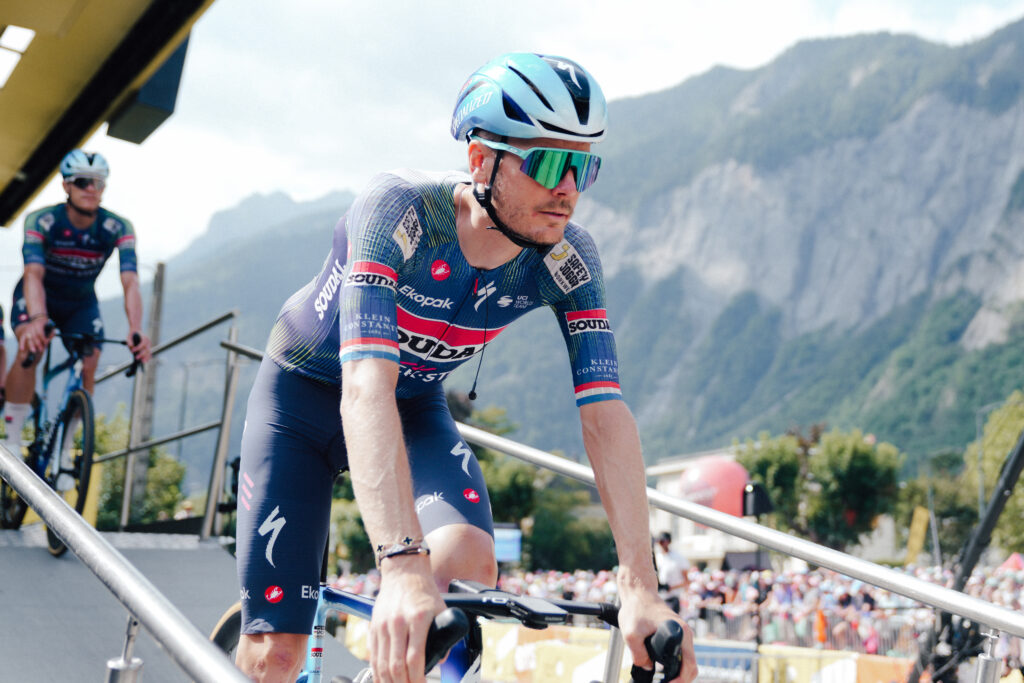
The professional peloton’s current fixation with wearing extremely aero, time trial-style helmets in road races – looking at you, EF Education-EasyPost – could soon be under threat, after the UCI announced this week that it is planning to introduce a distinction between helmet standards used in cycling’s different events.
The new helmet rules come as part of a sweeping overhaul of the governing body’s technical regulations, featuring stricter equipment standards for handlebar width, fork width, and maximum rim height.
Buried in the middle of a mammoth statement released by the UCI on Thursday evening – which also focused on the WorldTour calendar for the next three seasons, the future of the much-discussed One Cycling project, and technological fraud – the changes were approved by the governing body’s management committee this week in Arzon, France, and designed ostensibly to deal with the “safety implications” of the increasing speed of professional races.
The issue of safety in the peloton has dominated debate in pro cycling circles over the past year, in the wake of a 2024 road season marred by horrendous high-speed crashes at Dwars door Vlaanderen and the Itzulia Basque Country a week later, and the tragic deaths of Swiss junior rider Muriel Furrer and Norwegian pro André Drege during races.
Last November, Tour de France director Christian Prudhomme argued that devastating mass crashes like the one at last year’s Tour of the Basque Country – which brought down Remco Evenepoel and Primož Roglič, and left UAE Team Emirates climber Jay Vine and two-time Tour winner Jonas Vingegaard with serious injuries – are caused by riders “going too fast”.
Groupama-FDJ manager Marc Madiot, meanwhile, pointed to Formula 1 as an example to follow in response to Prudhomme’s remarks, arguing that slowing down the increasingly aero and fast bike tech used at the highest level is key to creating a safer environment for pros who “don’t want to understand” the inherent risks they face during races.

In January, the UCI announced that it was considering introducing a range of “equipment-related solutions”, including the use of rider airbags, gear restrictions to reduce top speeds, and clamping down on narrow handlebars, in a bid to “enhance safety” during races.
And while junior gears and airbags still appear to be in the review pile, this week’s announcement will see a swathe of changes made to the rules surrounding the design of bikes and equipment.
At this week’s meeting in Arzon, the UCI’s management committee approved a number of proposals put forward by its Equipment and New Technologies Commission and based on recommendations made by SafeR, the governing body’s organisation set up to assess safety in the peloton.
“The increasing speed of races and the safety implications of developments in equipment are one of SafeR’s main areas of focus,” the UCI said.
“This has been the subject of detailed consultations with teams, organisers, and riders, including the distribution of questionnaires to all professional riders and teams.”
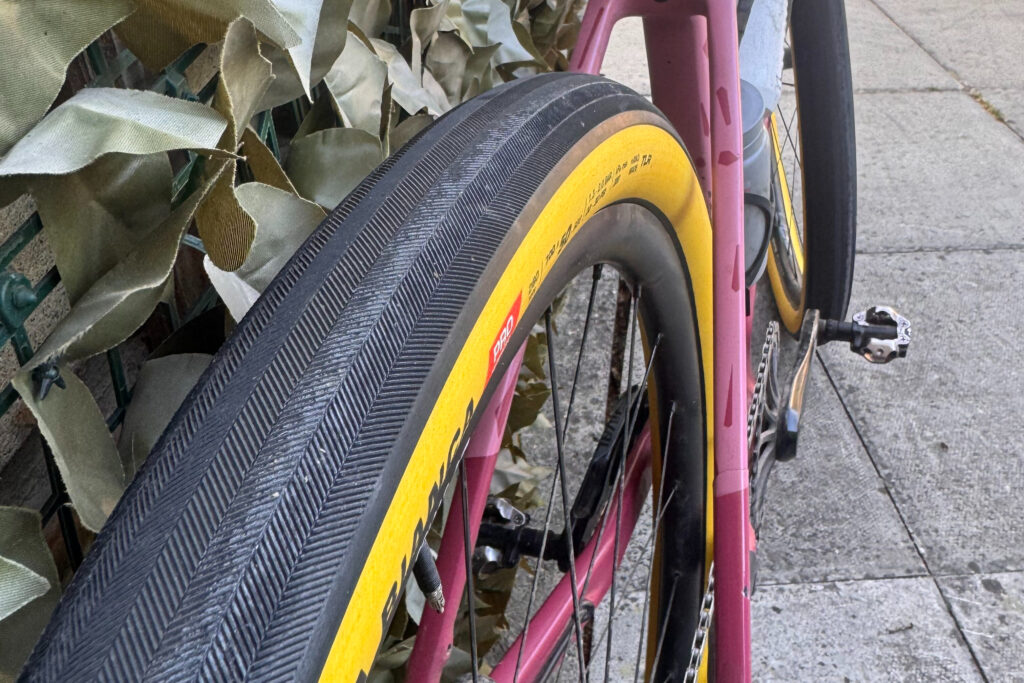
As part of these changes, the maximum height for wheel rims used in mass start road events will be limited to 65mm from the start of 2026.

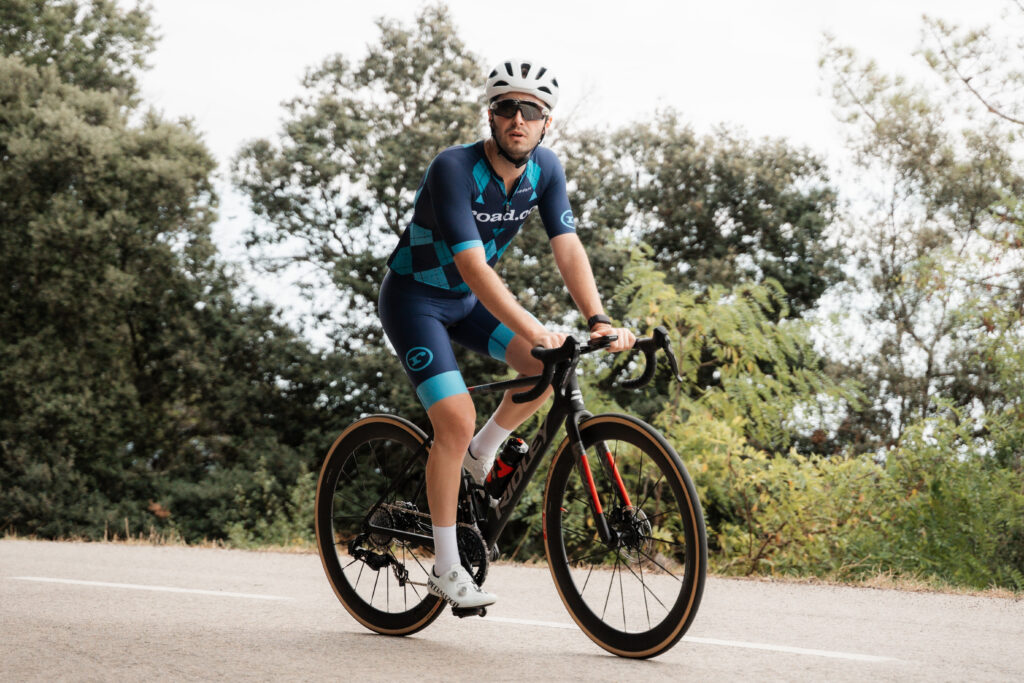
On the same date, the minimum overall width of handlebars (outside to outside) for mass start road and cyclocross events will be set at 400mm, with a max inner width of 320mm between brake levers, a change that has sparked concerns within the women’s peloton, where many smaller riders use narrower bars.
Meanwhile, track bikes for mass start events will be limited to a handlebar width of 350mm from 1 January 2027.
A new fork width limit has also been introduced, with road bikes to be restricted to a maximum internal fork width of 115 mm at the front and 145 mm at the rear from 2026, with the same cap applying to track bikes from 2027.
While these restrictions could spell the end for Team GB’s Hope Lotus track bike, which is wider than 145mm at the rear stays, it is unclear whether they will affect any road bikes currently in production – including the new groundbreaking track-inspired Factor, first unveiled at the Critérium du Dauphiné this week, the ultra-wide forks of which may already fall foul of the new regulations, though we are currently unable to confirm whether this would be the case.

When it comes to helmets, the UCI management committee approved the introduction of a distinction between helmets used in time trials (either on the road or on the track) and those used in normal road races. These new specifications for helmets will be clarified with effect from 1 January next year.
The growing use of increasingly aero helmets in road races has been much-discussed in recent weeks, particularly following Kasper Asgreen and Casper van Auden’s stage wins at the Giro d’Italia last month, both achieved while wearing time trial-style helmets.

Those victories even prompted Decathlon-AG2R sports director, and former Team Sky road captain, Luke Rowe to call on the UCI to ban the use of time trial helmets in road races during a recent edition of Geraint Thomas’ Watts Occurring podcast – a call the UCI has, surprisingly by its standards, swiftly heeded with this week’s announcement.
“The UCI Equipment Unit, in consultation with the Equipment and New Technologies Commission, will continue to work in detail on the subject of helmets, both in terms of approval procedures and specifications for the coming seasons,” the governing body said.

The UCI’s sports department has also been granted a mandate to introduce a helmet approval protocol, which will come into effect from 2027 “at the earliest”.
Elsewhere, the UCI announced that it has approved the races which will be included in the men’s and women’s WorldTour calendars for the 2026, 2027, and 2028 seasons. And while the calendar remains largely unchanged – except for the introduction of the women’s Dwars door Vlaanderen – the move has also seen the decisive rejection by the UCI of the hotly-debated One Cycling project.
Led by Visma-Lease a Bike manager Richard Plugge and attracting the support of both Flanders Classics and – crucially – the cash-splurging Saudi Arabian SURJ Sports Investment fund, One Cycling aims to rebuild cycling’s business model by bringing in external investors and overhauling how revenue is distributed in the sport, meaning teams could see more of cycling’s money.

However, the UCI’s decision – which it damningly claims is due to One Cycling’s lack of “sporting coherence” as well its incompatibility with the governing body’s rules – will prove a huge blow to the project, kicking it down the road for another three years at least.
“While welcoming the fact that road cycling is attracting new investors, the UCI Management Committee nevertheless unanimously decided, following the PCC’s [Professional Cycling Council] vote in this direction, not to respond to the request, as it stands, to include the OneCycling project in the UCI Women’s WorldTour and UCI WorldTour calendars,” the governing body said.
“The project, which had been developed by certain teams and organisers, in collaboration with a sports investment fund, was deemed incompatible with the governance and regulatory framework of the UCI as well as lacking sporting coherence.
“However, the UCI wishes, as do all cycling’s stakeholders, to continue discussions with the representatives of this project in order to collaborate on the internationalisation of the UCI Women’s WorldTour and UCI WorldTour calendars and the economic development of our sport.”
Finally, on the subject of technological fraud, the UCI said it has approved the modification of several provisions in its regulations in order to “further strengthen the fight” against motor doping.
“The objective is to encompass all actions that have the purpose of contributing to technological fraud, including any form of assistance or attempt to deceive or avoid technological fraud testing, wherever such actions may take place (not only at a competition venue),” it said.
“Modifications were also made to the procedural rules of the UCI Disciplinary Commission to ensure that it is provided with adequate investigation powers to address cases of technological fraud, which cannot be conducted in the same manner as other disciplinary matters due to their fraudulent nature.”
















32 thoughts on “Is this the end for TT-style helmets in road races? UCI announces new limits on handlebar width, rim height, and fork width, and promises helmet review in equipment safety overhaul”
So if Im reading this
So if Im reading this correctly One Cycling threatened the UCI monopoly and got blocked?
Any chance of a rival “tour” ala Liv golf? Take the UCI down a peg or 2?
Not so much threatening the
Not so much threatening the UCI’s ‘monopoly’, as I understand it – more threatening ASO’s dominance in the race organisation space, as well as entrenching the power of some of the better resourced teams. The UCI is just the battleground for those various powerbrokers.
Secret_squirrel wrote:
Motorsports governing body had a similar monopoly until the European Court demanded they gave up the commercial rights to ‘their’ series…….
So, since then F1, WRC, WEC, etc are run by Promoters, who decide the calendar, sell TV rights, etc
Governing bodies govern, and ensure rules are followed, and that is all they’re meant to do. Everything else is left to the experts…..
UCI really need to put the World Tour out to tender, to be run properly, and professionally by one company/ Promoter – not the amateur way its currently run.
Their MTB & CX World Cups are both run this way, by a Promoter who runs, decides everything; not the UCI.
Velophaart_95 wrote:
And look what’s happened to F1, the classic circuits with the exception of Monoco have all but dissapeared. Are you willing to lose L-B-L, Ronde Flanderen, MSR, Lombardy to satisfy promotors who goal is to maximise their income rather than protect the sport?
rct wrote:
Well the Ronde is organised by Flanders Classics, who were one of the backers of the plan – presumably they didn’t think it was a threat to its existence.
rct wrote:
I’m not sure F1 is a good example here. Most of the “classic” circuits are still on the calendar (albeit many have had layout changes for safety reasons), what seems to have happened since the multiple changes in ownership of FOM is that the calendar has gone from typically 16 races to 24.
Venues that I’d include as classic and on the 25 calendar are:
Silverstone
Melbourne
Imola
Barcelona
Monza
Montreal
Hungaroring
Monaco
Österreichring
Spa-Francorchamps
Zandvoort
São Paolo
Mexico
The only two significant omissions I can see are France (Magny Cours or Paul Ricard) and Germany (Hockemheim or Nürburgring) and that’s really down to a lack of commercial interest in those countries to fund a race, I’m sure they’ll be back at some point.
Back to cycling, no I’d not want to lose Flanders, etc but I’d happily see 50% more WT level events.
Secret_squirrel wrote:
We already have enough sportswashing in cycling, we do not need another.
Although the article says the
Although the article says the new Factor bike shoudnt be effected, the ‘shoulder’ of the fork is extremely wide even if it tapers nearer the hub. If other teams raise a protest they may need to clarify the rules a bit more.
From what I’m reading, the
From what I’m reading, the reaction to these changes from people who actually race is extremely negative. The handlebar thing is infuriating as lots of people, amateurs as well as pros, have switched to narrow bars. Big investments are being required to be thrown away.
The UCI argument about speed is nonsense. These changes at best will reduce speed by, what, 1%? Descents will be taken as fast as ever. If race speed were two thirds of what it is now, that might make a difference (if the public wanted to watch slow racing) but these changes will only p!ss people off without increasing safety.
It really shouldnt effect
It really shouldnt effect many, For the Pro riders, there teams can just source wider bars from their sponsors, for amateurs it makes zero difference, The UCI dont sanction amateur racing and what you put on your bike is your concern. If people are so quick to blindly follow what a governing body says about what pro racing does then I cant have much sympathy. If there is a sudden wave of narrow bars hitting ebay, then more fool them. Anyone with any sense would just keep them and be grateful they get an advantage that pros dont when chasing stava segements
Smoggysteve wrote:
in UK, maybe, but other countries do follow UCI regs for amateur racing, USA for one example.
Id still say, you dont race
Id still say, you dont race what you cant replace and if you need to worry about such potential rule changes then thats the nature of the sport. But there will be the ones who dont race who blindly follow what pro riders do and its absurd.
This. It absolutely will
This. It absolutely will change a lot. Norway follows the UCI rules, even in non UCI regional events, though they can be a bit lenient in those races, but national level is very much affected. It’s a very bad rule.
BC tend to follow UCI rules ,
BC tend to follow UCI rules , so will probably affect UK as well.
Yes, sponsored riders don’t
Yes, sponsored riders don’t need to spend on new bars, but the manufacturer invests a lot of resources into making legal bars and that has to be thrown out. 14 of the 18 riders in the visma women team habe to change bars. They have very optimized positions and that can sacrifice a lot of comfort, especially for tiny riders.
Though as you mention women’s
Though as you mention women’s events, it speaks volumes that the UCI will go to more trouble differentiating between road and time trial before genders
They should stick them all on
They should stick them all on Tannus tyres. No chance of a puncture even on the gnarliest cobbles, and I’m sure it will knock a few kph of top speeds, in fact all speeds. Problem solved, I thank you!…
Miller wrote:
I’m struggling to cry any real tears over people who bought their ‘direct from China’ 36mm bars and have the STIs pointing in at a steep angle. They look shit and don’t handle too well either. The people who buy that kit aren’t struggling to pay for it, they’ll be splashing big on the next hyped up ‘marginal gain’ next week.
While I agree that wider handlebars etc aren’t going to slow things down much they also won’t be an issue once everone has calmed down from all the faux outrage.
Pro riders don’t pay for their equipment, they ride what they’re given. Professional sport is a marketing exercise, that’s why the participants are plastered with brand names (as are many other things that get on TV, the merchandise, ad breaks etc) and use Dura-Ace, SRAM Red and unreleased products for us to buy at inflated prices.
I don’t like TT-style helmets so I am glad that they won’t worn in road races. A limit on rim depth seems a good idea too. I’m struggling to get too bothered about women having to use the same handlebar width as men. They use the same wheels and tyres (despite 700c making it difficult for shorter women to fit their bike properly), the same frames, the same helmets, nutrition… Has anyone actually demonstrated how they are disadvantaged by all having to race with 40cm handlebars? Or is it just noise?
But as has already been said, these changes won’t really significantly reduce the speed of pro racing. They won’t prevent a touch of wheels in a peloton, making a wrong decision or losing concentration, descending or sprinting at high speed. They won’t prevent road furniture, wet or greasy roads, stupid attention-seeking spectators or race vehicles interfering with the riders.
The only real solution is for every race to be a time trial into a headwind on Dutch bikes.
Simon E wrote:
While I agree about narrow bars, I have to say that inward pointing levers have been a revelation to me: bought my Roubaix Pro via an interim owner from a gold medallist Paralympian and it came to me with the levers set up like that. Having broken both wrists more than once (motorcycle crashes and rugby) not having all stresses going straight through my hands and up my wrists has been so much more comfortable. The aero effect means nothing to me but for comfort I’d really recommend giving it a try!
I wouldn’t mind TT helmets
I wouldn’t mind TT helmets being banned for aesthetic reasons but as far as I understand it they save about one second per kilometre at 45 km/h, so significantly less than 1 km/h speed difference between the aero helmet and a normal one. Eliminating that extra fraction of speed won’t prevent any incidents. The primary cause of incidents, as far as I can see as a devoted TV spectator, is poor course design with far too many pinch points in crucial places, resulting in insane scrambles as the action heats up as riders try to force their way through the peloton to make sure their leader is placed near the head. The UCI should be thinking about the suitability of the towns they choose for stage finishes and not accepting applications from those who can’t provide a safe run-in, but of course that might have a negative effect on their coffers so let’s all focus on helmets instead…
Robbie McEwen put forward an idea during the Giro stage that was suspended but where the riders were still allowed to go for a finish: designate flat stages as sprint stages and take all GC timings from 10 km out and then let the sprinters and their teams fight it out for the glory of the stage win. That way you wouldn’t have GC teams who don’t have a sprinter cluttering up the pointy end of the race desperate to get their rider safely inside the 3 km cut off with no time gaps, more space for those who do want to contest the sprint, less likelihood of crashes. Quite a radical idea but it seemed to me to have considerable merit.
Narrow bars have been around
Narrow bars have been around for yrs, the big prob is style of eating, what they’re eating, how they’re eating, the equipment is more effective and efficient, bikes now are soo stiff every watt of energy is not wasted! The bars make sense, so do forks width, gears – that’s an interesting one, will they cap at 53t chainrings? with a 12 on the back (SRAM will need a redesign)… Tech will always improve over time, who’d want mech gears after going elec. not many…this is about taking the radical away from the pro tour, tho if they banned discs + tubeless, that’d be INTERESTING 😁
leedorney wrote:
There’s so little speed difference between tubeless and tubed with latex inners that it wouldn’t make any safety improvement and you would be throwing away the advantages of better grip and handling and reduced rider fatigue that you get from tubeless, so can’t really see the point of that. Discs perhaps more arguable but I wouldn’t like to be defending a lawsuit brought by a rider who hit a dog/stray fan/tree branch in the wet that they could have avoided with the extra power of discs.
“better grip and handling and
“better grip and handling and reduced rider fatigue that you get from tubeless” you got any of that cool aid left or did you down the whole bottle?
check12 wrote:
The bulk of tyre R&D is focussed on tubeless, the best new tyres are tubeless, the bulk of the pro peloton is on tubeless, but if that offends you, yeah, just carry on denying it.
check12 wrote:
Have you ever actually ridden a road bike? I started riding them in 1986 with 23 mm tyres at 110 psi and I can absolutely confirm that wider tyres at lower pressure are faster and handle better and are more comfortable. But don’t take my word for it, have a think, if capable, about why World Tour riders are riding tubeless and wider if they’re worse? Not one rider would say you know what, I can ride better handling and more comfortable tyres than the other guys, I’ll do that?
It’s spelled Kool-Aid by the way, if you’re going to be a dick at least do it correctly.
Not sure if it is pedantry or
Not sure if it is pedantry or I if have spent too much time on the subject, but:
Although it’s now generally accepted that the phrase is “Drinking the Kool-Aid”, the Jonestown Massacre may not have been fuelled exclusively by Kool-Aid, but a cheaper product called Flavor Aid. In the films from the time and documentaries about Jim Jones and Jonestown, both products were there. Kraft Foods have stated that it was not Kool-Aid used in the massacre, but that could be a desire to protect their brand rather than based on any evidence.
Witness and investigator accounts on occasion refer to “cool aid”. Cool aid might be considered a generic term from that time for any flavoured drinks made from packets of powder.
I think I have spent too much time on this and I am a pedant.
Apologies.
No need for apologies, love a
No need for apologies, love a bit of pedantry! But to finesse what you said, although the phrase “drinking the Kool-Aid” has now become, as you say quite probably inaccurately, associated with the Jonestown massacre that was not the origin of it. It comes from Tom Wolfe’s (excellent, in my opinion) The Electric Kool-Aid Acid Test (1968, a decade before Jonestown), which describes the activities of Ken Kesey and the Merry Pranksters who held notorious events fuelled by LSD-laced Kool-Aid. Even before Jonestown the phrase had become associated with the inadvisability of just accepting what you were given without questioning the content; it has been proposed that one of the reasons Kool-Aid came to be erroneously associated with Jonestown was because of this connotation.
front and rear car doors
front and rear car doors should hinge at the b and c pillars respectively.
makes it easier to get in and out in a cramped parking place and much safer against dooring incidents.
cars may get marginally heavier as a result to maintain side impact safety.
And if ever a person stepping out of a car has their door hit by a passing vehicle, it would surely crush their leg….
so improve that safety I suggest placing the door handle directly adjacent to the b pillar and c pillar respectively. So that it’s ergonomically easier to use ones opposite hand (forcing the dutch reach.
could also put a damper on the car door to limit how quickly a person is able to open it…honestly this is overdue technology.
Several times my kids have flung open the door when they shouldn’t have …
I’m not sure it’s within the
I’m not sure it’s within the UCI’s purview to legislate on that, though…
They should have just 1
They should have just 1 standard for all road racing equipment – applying to both bunch and TT races. And that standard should seek to minimise, if not eliminate, the aero arms race.
But if that were the case,
But if that were the case, there would be no shop window for them to sell you a nice new lighter, more aero, shiner bike. It’s how they make their money. Innovation is only there to sell more bikes to customers.
I always thought the Visma
I always thought the Visma Giro TT Helmet looked like the head of a giant Penis! – truly ridiculous.