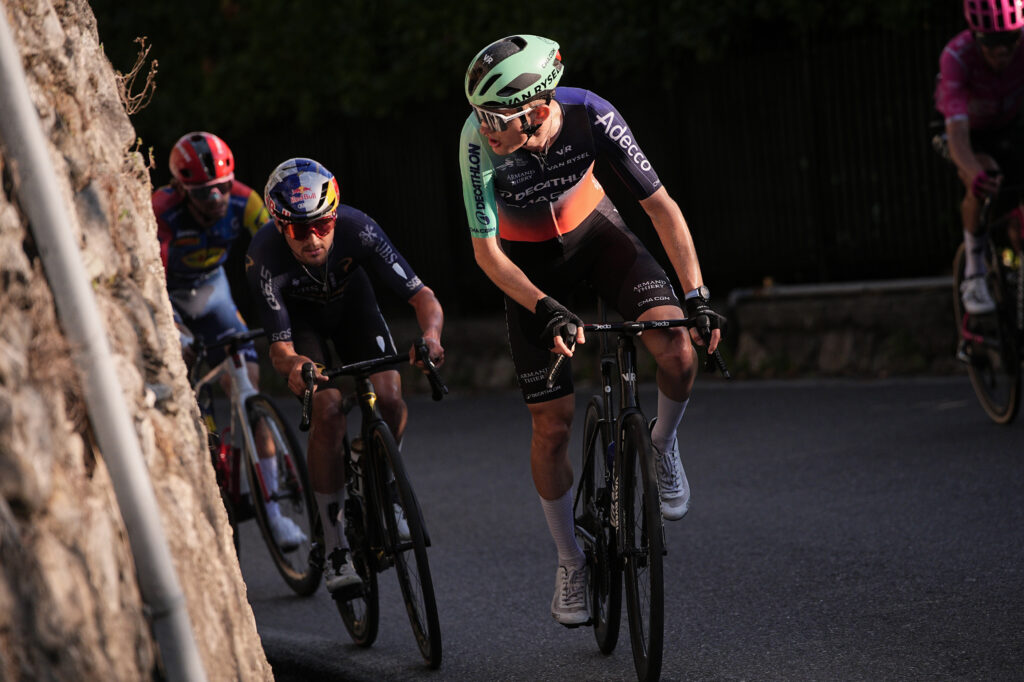

It may have been grey and drizzly in Bergamo on Saturday morning, but one hitherto ever-present cloud was not, for once, hanging over the Il Lombardia peloton. As the riders lined up on the Viale Roma, standing together in protest at the safety failures which have permeated their autumn campaign, one figure was noticeably missing.
For almost the entire 2020s, Tadej Pogačar has loomed large over Il Lombardia, winning the Race of the Falling Leaves a record five consecutive times between 2021 and 2025, making the hills of Lombardy his own personal fiefdom.
He’s ruled over them in typically tyrannical, oppressive fashion, too. In 2025, Pogačar’s winning margin over second-place finisher Remco Evenepoel was 1.48. The year before, that gap (again over Evenepoel) was a staggering 3.16. Everyone else was over four minutes down.
Let’s face it, when Pogačar turns up at the start line in Lombardy, the classic most suited to his admittedly diverse strengths, everyone else appears resigned to racing for second. Which is what made the build-up to this year’s final monument so intriguing.
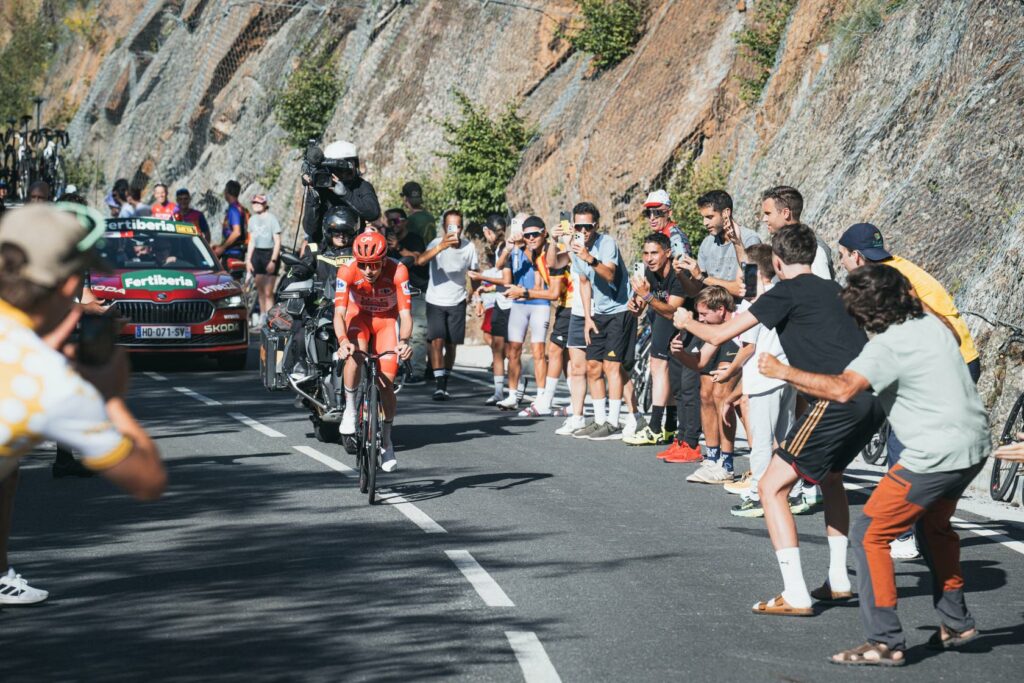
The UAE Team Emirates leader’s season-ending crash at the Vuelta created a vast Pogi-shaped hole in the autumn calendar, one in which outsiders and underdogs could, at last, seize the initiative.
That was certainly the case at the world championships, where Pogačar’s own trade teammate Brandon McNulty took advantage of the newfound tactical conundrum (and freedom) thrown up by the Slovenian’s absence – and the numerical superiority of his US squad in the finale – to pick his moment and solo to a career-defining rainbow jersey.
Pogačar’s dominance and relentless, aggressive style have reshaped how bike races are tackled tactically in the 2020s. He attacks from afar, blows the race apart, and leaves scraps for his rivals. It’s far from subtle, but it is brutally effective. If you’re not one of the modern wattage aristocracy, cycling has essentially become a case of race hard from the gun, hang on until you can’t, and then hope for the best.
The five-time Tour de France winner is not the only member of the men’s peloton who races this way, of course. Evenepoel and Mathieu van der Poel were also notable early adopters of the Slovenian’s Mutually Assured Destruction brand of racing. Pogačar is just the best at it, the one with the greatest nuclear arsenal.
It doesn’t always work. For a while, Milan-Sanremo – the most nuanced, unpredictable, untameable of all the classics – looked like it was going to prove the Slovenian’s Achilles’ Heel. And then, after years of trying, he finally bludgeoned his way to victory there in March. Paris-Roubaix continues to evade him, but you get the feeling that, with a little more experience, a Pogačar victory in Hell (where brute strength is key) is a matter of when, not if.
In any case, the almost simplistic tactical approach that’s dominated racing in the 2020s (can we even really call deciding to attack on a whim 80km from the finish ‘tactics’?) means the strongest rider tends to win the biggest, toughest races, like Il Lombardia. And these days, the strongest rider is almost always Pogačar.
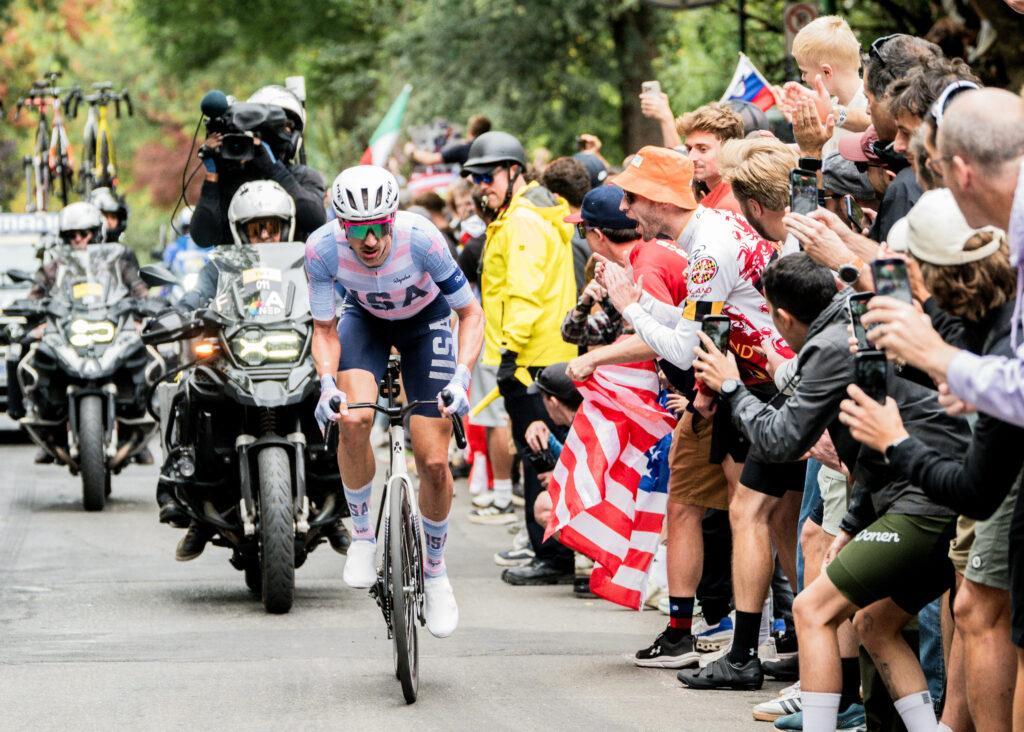
The Pogi-less Montreal worlds, on the other hand, was essentially a throwback to more egalitarian times: an open affair with nuanced, complicated tactics and an array of viable contenders, won by a plucky – and smart – underdog, aided by the anchor-like, morale-sapping qualities of his teammates.
I’ll leave the debate about whether it was more exciting for another day, but for once, it seemed, we had a major race in the 2020s where the head mattered just as much as the legs.
The Giro dell’Emilia, and the other Italian one-dayers, were the same. So too was Lombardy. Until Paul Seixas performed his best Tadej impression and simply burned everyone off his wheel, that is.
Before that almost certainly era-dawning moment on Civiglio, however, the outcome of the season’s final monument was still very much up in the air. There have been only a handful of times in recent years when that’s been the case with Pogačar on the start line.
But did the absence of one of cycling’s greatest ever riders really change how his rivals approached each race? Were they capable of adapting their tactics, so fixated in normal circumstances on one rider, to the wide-open strategic vista unfolding before them? Ben Healy reckons so.
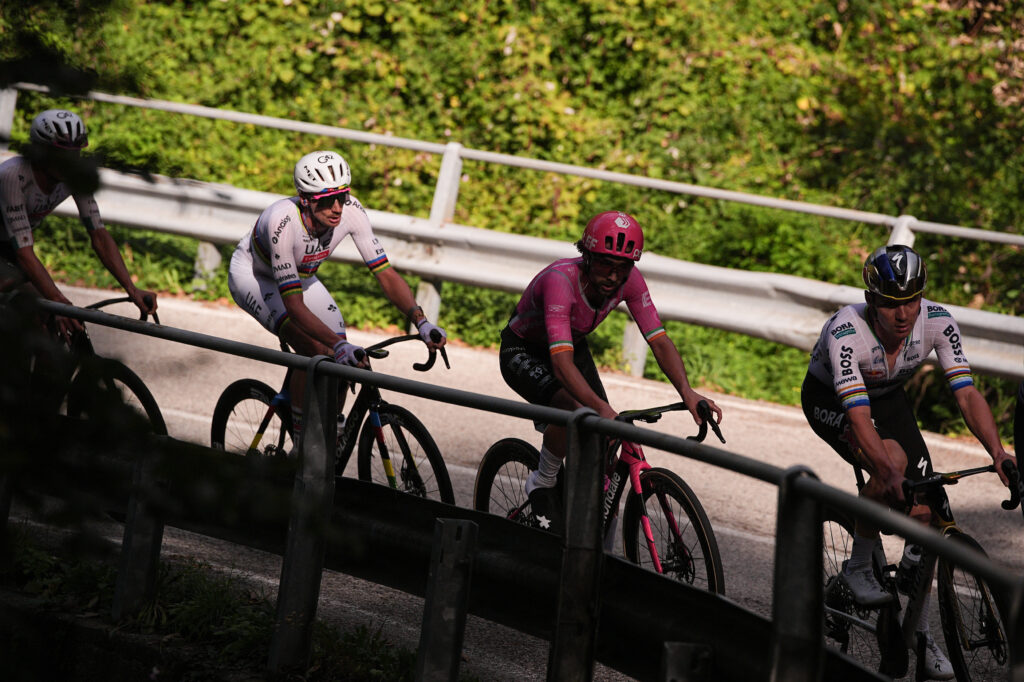
“It changes things one hundred percent,” he told me in Bergamo, when I asked how the five-time Tour de France winner’s absence has impacted the racing style of the peloton this autumn.
Healy is an interesting case. Stylistically, he’s very much of the modern 2020s ‘head down, ride hard’ mould. His style is far from subtle. He gets to the front, attacks, gets caught, then attacks again. But you also get the impression he was one of the riders best placed to capitalise on a Pogačar-less tactical environment.
Certainly, EF Education First’s Irish leader was an ever-present during this open autumn season, constantly at the pointy end of affairs in both Canada and Italy. However, despite a series of aggressive rides, he was forced to settle for 10th in the worlds, sixth at Emilia, and 12th at Lombardy. Nevertheless, Healy was adamant that the lack of an overwhelming favourite worked in his favour.
“Everyone’s racing with the belief that they are going to win, and that motivates a lot of guys. It makes the races unpredictable and you can get an unpredictable winner,” he said.
“And what I learned at the worlds is that in the right situation I can win a race like this, and that keeps you motivated.”
While Healy relished the prospect of some Pogi-less racing, it’s hard not to conclude that the shifting tactical landscape worked against him. At the world championships, the Irishman was inarguably one of the strongest in the field, as was Tom Pidcock, who appeared to have career-best legs in Montreal.
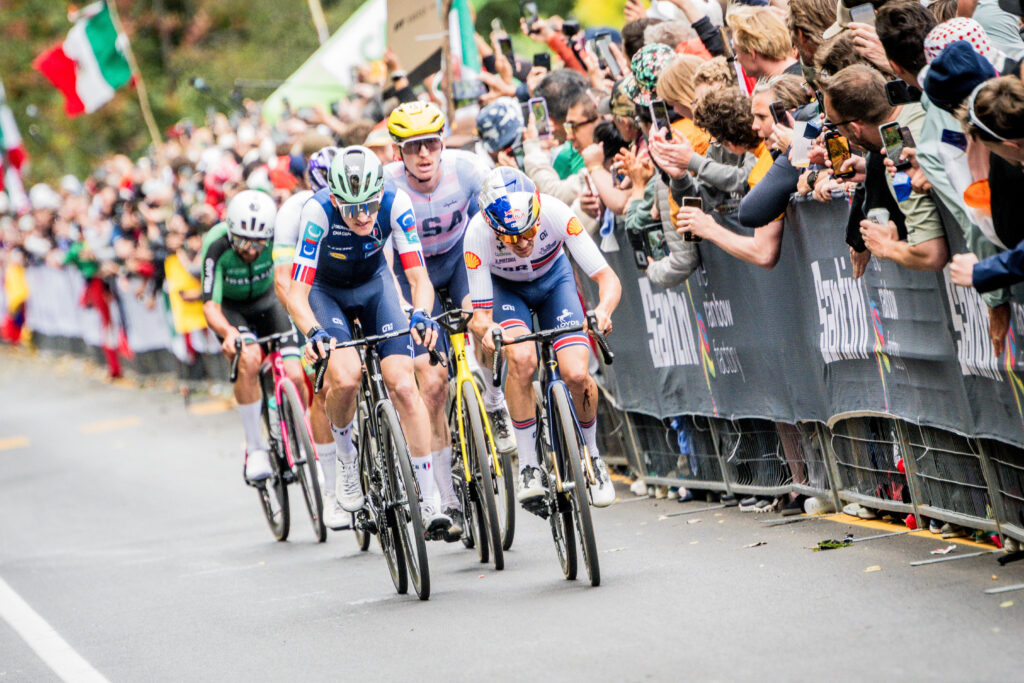
But both riders were caught in no man’s land, victims of the United States’ tactical masterclass and the stalemate which ensued among those chasing McNulty.
The same thing happened the following Saturday at the Giro dell’Emilia, where Pidcock was forced to settle for second, and Healy sixth, as Visma-Lease a Bike took control and Matteo Jorgenson once again turned provider for the unfancied Davide Piganzoli.
Pidcock and Healy weren’t, of course, the only riders unable to solve the Pogi-less tactical conundrum of the past few weeks. When you’ve spent the bulk of your career racing a certain way, it’s hard to adapt within the space of a month. The US and Visma managed it and reaped the rewards.
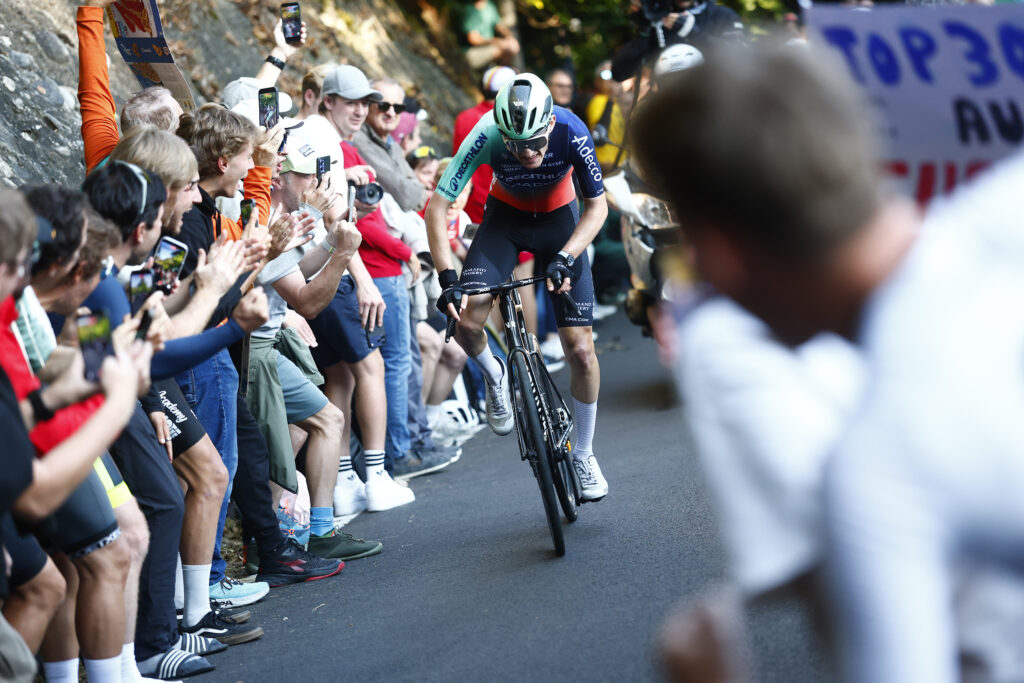
However, Il Lombardia brought a swift, cruel end to this brief utopia. The emergence of Paul Seixas as a monument winner, rather than heralding a new era, a challenge to the legs-first tactical hegemony of the first half of the 2020s, will instead simply cement it.
The French superstar has joined the Pogačar Club. Expect the long-range attacking arms race to ramp up another gear next season.