

New research conducted at Imperial College London has found that, on average, foldable helmets offer less protection against serious head injuries than their conventional counterparts, despite one collapsible helmet model placing second in the study’s safety rankings.
The researchers’ headline assertion that non-foldable helmets are generally safer, however, has drawn criticism from a leading folding helmet manufacturer, Newlane’s founder Dominic Cotton, who says the claim is “misleading” and argues that a helmet’s protective qualities derive from its design and technology, not whether it folds or not.
The popularity of folding or collapsible helmets, which can be significantly reduced in volume to fit in bags, has increased notably in recent years, aided by the growing use of bike share schemes in cities.
Funded by the Road Safety Trust, Imperial College London’s new study is the first to compare the protection offered by foldable and conventional bike helmets in the event of a crash.
Researchers from the university’s Dyson School of Design Engineering tested 30 commercially available helmets, including 24 conventional models and all six foldable models currently available in the UK, by simulating the most common head impacts that cyclists experience during a crash.
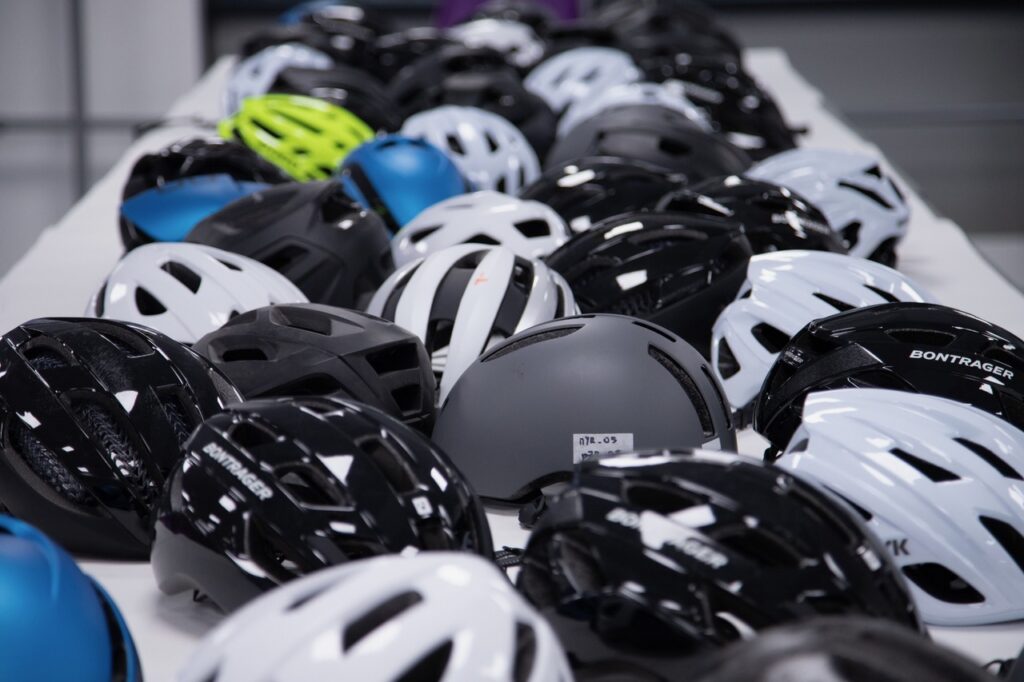
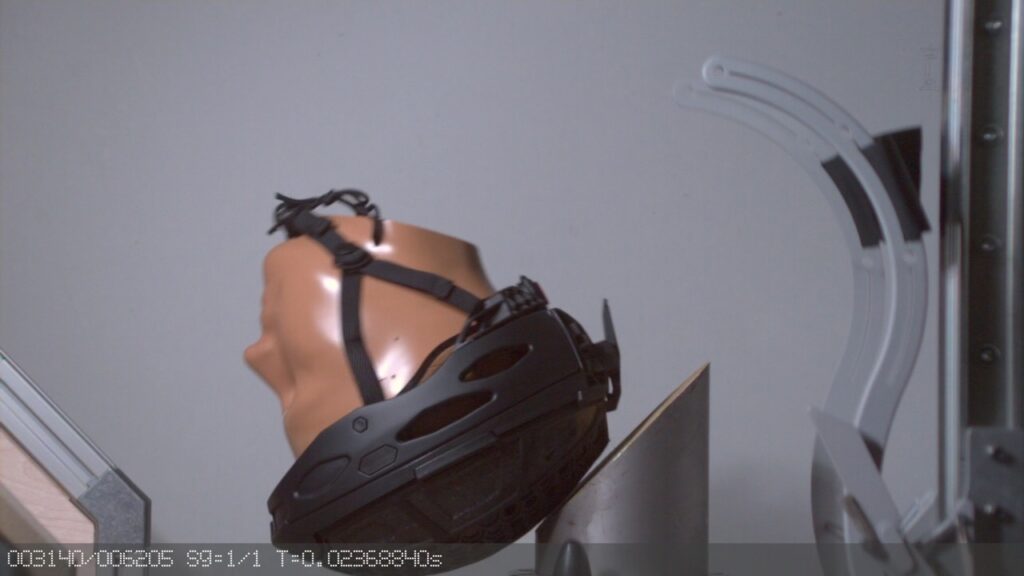
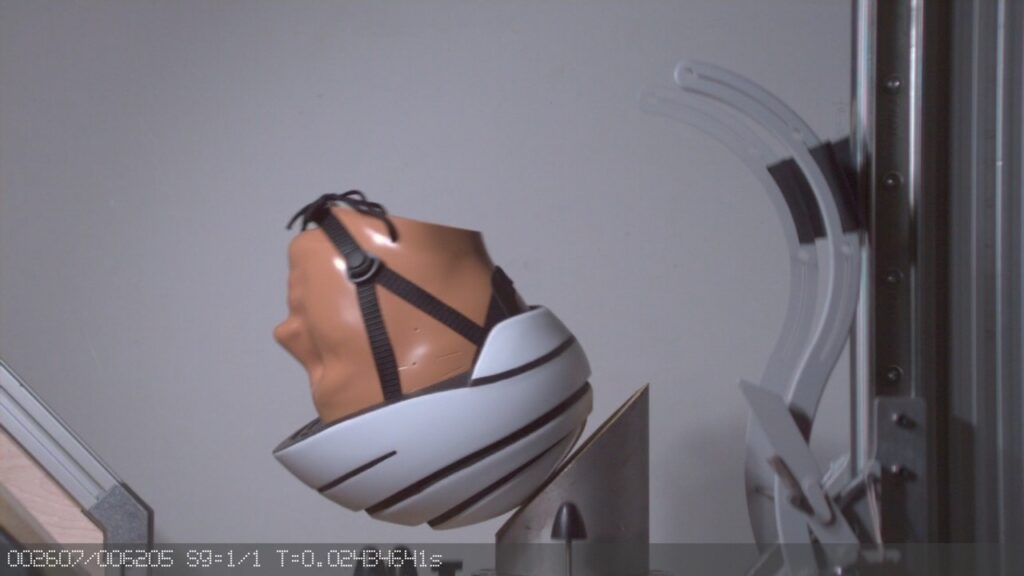
All helmets involved in the study meet the minimum regulatory standards for safety, enabling them to be sold in the UK and Europe. While these tests focus on vertical drops, in most cycling crashes head impacts occur at an angle, causing the head to rotate sharply.
Therefore, the researchers tested helmets at four impact locations, measuring both linear and rotational head motion, in a bid to “better reflect real-world crash conditions”. Each impact was repeated three times with a new helmet sample to account for manufacturing and testing variability.
The tests found, according to Imperial’s researchers, that foldable helmets “showed a higher linear injury risk” than conventional models, with the average predicted risk for collapsible helmets 24 per cent, compared to 20 per cent in non-foldable lids.
This four per cent difference, the researchers say, could “translate into a substantial number of additional serious head injuries overall”. On the other hand, the tests found no difference between the models when it came to protection against brain injuries caused by head rotation.
Nevertheless, the researchers noted that the greater weight of foldable helmets and their limited use of in-helmet safety technology to reduce head rotation contributed to their lower safety scores. On average, the foldable helmets tested were 57 per cent heavier (an average of 461g versus 294g), with risk increased by 0.2 per cent for every additional 10g.
> All you need to know about MIPS
Meanwhile, only one of the six foldable helmets tested featured rotational protection technologies such as Mips (Multi-directional Impact Protection System), compared with 12 of the 24 conventional helmets.
The Mips technology can reduce harmful rotational motion that might otherwise be transferred to the user’s head in a crash.
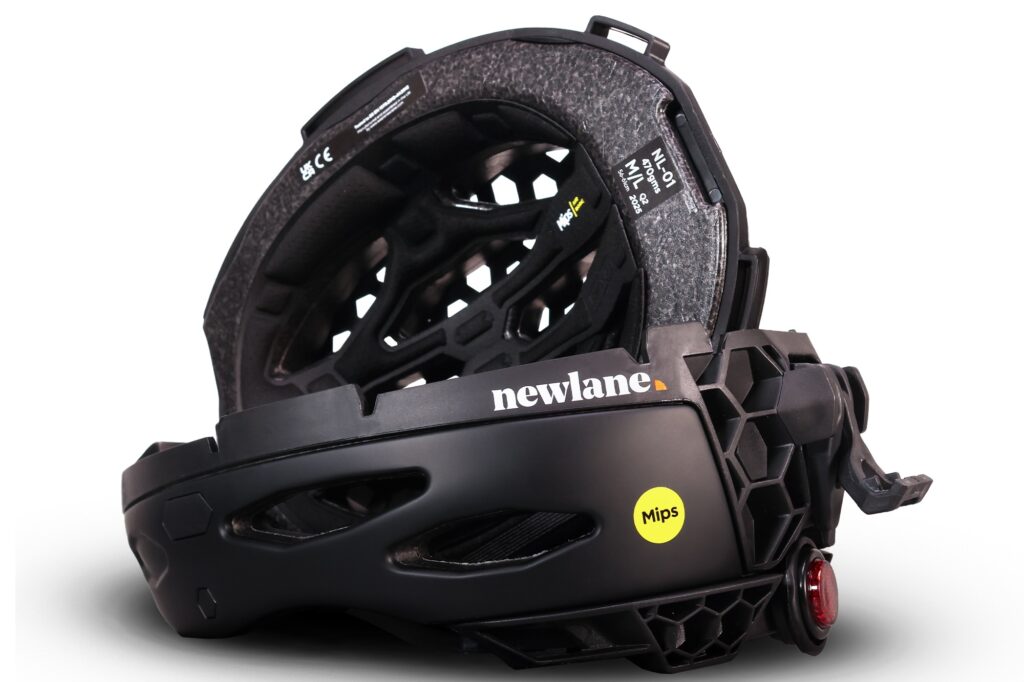
The one foldable helmet that did feature Mips, from Newlane, was ranked second for safety among the 30 helmets, “effectively matching or superseding most conventional designs”, the researchers said. The Newlane model that does not feature Mips, however, was ranked 26th, while the other four non-Mips-foldable helmets tested were all in the bottom half.
Therefore, this “performance gap” when it comes to safety, the researchers noted, was “not inherent to collapsible helmet designs”.
“The overall results suggest that collapsible helmets can be an excellent solution to make helmet use more accessible for cyclists, and producing lighter weight alternatives with added rotational protection technologies can substantially improve helmets’ safety outcomes,” they said.
“We want to make head protection easy”
However, according to Newlane’s co-founder Dominic Cotton, the study’s headline claim that foldable helmets aren’t on average as safe as conventional ones gives the wrong overall impression of Imperial’s findings.
“The claim that collapsible helmets provide less protection is misleading because it’s about which collapsible helmet you’re talking about. It’s about the design and technology,” Cotton told road.cc.
Last year, Newlane introduced its first Mips-equipped helmet, which can fold down to 81mm, around half the height of a normal helmet, while meeting EN 1078 safety regulations, the European standard for helmet construction.
The Mips Air Node safety system replaced the bespoke foams found in the original Newlane helmet, while also featuring a low friction layer inside the helmet. This is designed to allow a movement of 10-15 mm in all directions if an oblique impact occurs during a crash, helping redirect rotational motion away from the head with the aim of reducing the risk of brain injury.
> Newlane releases ‘world’s first’ folding helmet with Mips protection system
“We have made a helmet which is designed in a way that allows it to integrate Mips,” Cotton continues. “The sort of rotational support that Mips gives provides additional protection, so I don’t think it’s about whether it’s foldable or not. It’s about whether it has rotational capabilities. That’s the point.
“We have got a very good design, which we’re very proud of. And we’ve gone beyond that and put Mips into it because we think it’s important. And this data confirms that is true.”
Pointing out that nine of the top ten safest helmets tested in the study featured Mips, Cotton criticised Imperial’s decision to promote its academics’ research by focusing on the perceived drawbacks of foldable helmets, claiming it could put doubts into the minds of potential customers and perhaps even make them reconsider purchasing a helmet in the first place.

“What we have sought to do is make head protection easy. For example, full face helmets will reduce your chances of injury, but you don’t want to wear a full face helmet if you’re riding to work,” he told road.cc.
“And I think the headline that says: ‘collapsible helmets are bad’, I would dispute that. And these results, if you look at them in detail anyway, agree with me.
“It’s about the design, and the design isn’t just about its foldability. It’s about how they consider what happens in real world situations.”
Cotton continued: “When Bromptons and folding bikes came onto the market, people will have inevitably gone, ‘what if it folds as I’m riding it?’ And clearly that’s been disproven repeatedly.
“And, just like Brompton, foldable helmets have proven to be really safe. But getting the idea out there that a helmet can be compact and still do its job has been a challenge. We went through a myriad testing to get the EN 1078 and that was much more challenging than what Imperial has done, because they target every single element of the helmet.”
Returning to the study’s attention-grabbing conclusion, the Newlane co-founder said: “I understand how these things work, but to say that this study says foldable helmets are not a good thing, well, first, it doesn’t say that. Five of the six foldable helmets came towards the bottom of the test pack, but one of them came second.
“And, as is said throughout all the information that Imperial have put out there, if you are removing the barrier to wearing a helmet by making it more convenient to carry and therefore people wear helmets, that is the much bigger point to make, in my view.
“We built a folding helmet so people had no excuse for not having one. We then went one step further and put Mips into it because we thought that was important and it turns out that we were right.
“So I can’t answer for the other folding helmets other than to say that they do a good job of enabling people to consider having a helmet with them and therefore wearing one.”
“Any helmet is safer than no helmet”
Despite his misgivings about the study’s “misleading” promotional angle, Cotton’s arguments were, in fact, largely supported by the researchers themselves, especially when it comes to accessibility for people cycling in cities and using hire bikes.
“Collapsible helmets are a great solution to overcome inconvenience; one of the most reported reasons people in urban areas don’t wear helmets when they want to ride a bicycle,” lead author Dr William Dawber, from Imperial’s Dyson School of Design Engineering, said in a statement today.
“Until now, there has been no way for the wearer to judge how well the different designs protect them against severe head injuries, which is the entire point of wearing a helmet. I am delighted that we can share the findings of our research so people can choose a helmet that fits with their budget and lifestyle.”
“Any helmet is safer than no helmet and innovative designs that appeal to more people are to be applauded,” added Mazdak Ghajari, professor of Brain Biomechanics at Imperial.
“Underpinning HIPER is our aim to help manufacturers improve the safety of their products and for retailers to use our new clearer ratings in informing customers to make the right choices. We couldn’t do that without the collective years of engineering knowledge and research and connections with brain scientists we have at Imperial.”
> Why is Dan Walker’s claim that a bike helmet saved his life so controversial?
As noted by Ghajari, the study will help inform the HEAD Lab’s Helmet Impact Protection Effectiveness Rating (HIPER) system. Established with funding from the Road Safety Trust, the HIPER system aims to provide consumers with safety data on different helmet models to make informed purchasing decisions, and manufacturers with insights to how they can improve future helmet designs.
“We are pleased to see the HIPER rating system for cycle helmets continue to grow and evolve,” Ruth Purdie OBE, Chief Executive of the Road Safety Trust, said.
“Backed by world-class research, it is addressing important and timely issues such as foldable helmets, whose growing popularity makes clear, independent evidence about their safety performance for consumers and manufacturers increasingly vital.”