


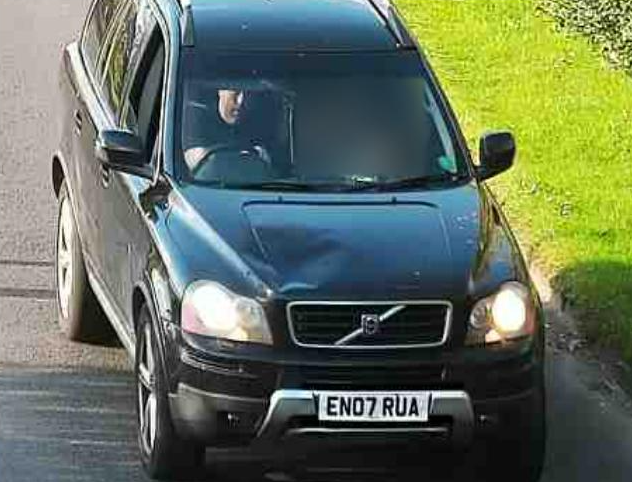

The motorist who struck a cyclist while speeding, trapping him under his car before dragging him along the road for over a mile and then leaving him for dead, has been handed a life sentence and will be banned from driving for life.
Simon Richardson will spend at least the next 25 years in prison for killing Michael Mullins, a headteacher at Stretford grammar school, who was cycling through Warburton, Greater Manchester on 20 April 2026 before he was murdered.
Mullins, a 56-year-old father-of-two, was struck by Richardson when the motorist, who had been driving erratically and at speed prior to the collision, drove through a ‘give way’ sign at a junction on Paddock Lane, shortly after boasting to his passenger that he was a “professional driver”.
The cyclist landed on the bonnet of Richardson’s Volvo XC90 before falling under the car, where his foot became entangled into the 4×4’s suspension. Despite being aware that Mullins, who was still alive at the time, was trapped under his vehicle, the 35-year-old motorist continued to drive on.
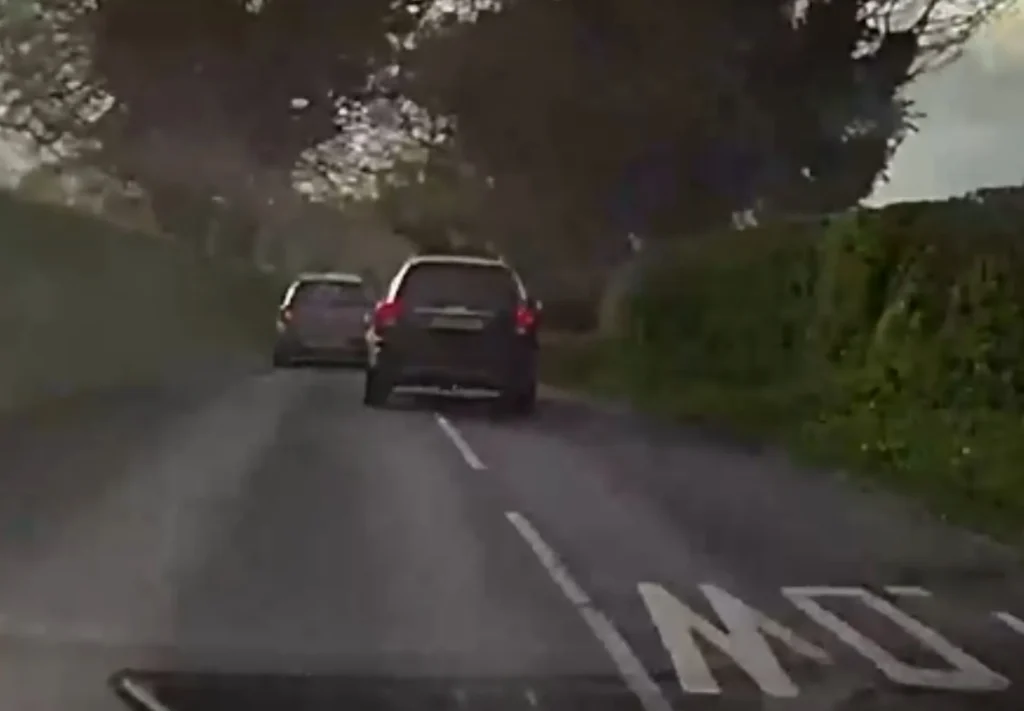
On Monday, Manchester Minshull Street Crown Court heard that Richardson, who could hear moaning from under the car, was speeding as he dragged the cyclist along the road for four and a half minutes, with one witness noting that he was travelling so fast it looked like the car was “on two wheels”.
Richardson then stopped in a secluded rural lane in Wet Gate Lane, Lymm, 1.3 miles away from the scene of the crash. There, he twice exited his car and attempted to pull Mullins out from under the car.
After failing to do so, he returned to the car, veering sharply from side to side and mounting a grass verge, at which point Mr Mullins was finally dislodged. Richardson then reversed over the stricken cyclist, causing “crushing” chest injuries, before fleeing the scene.
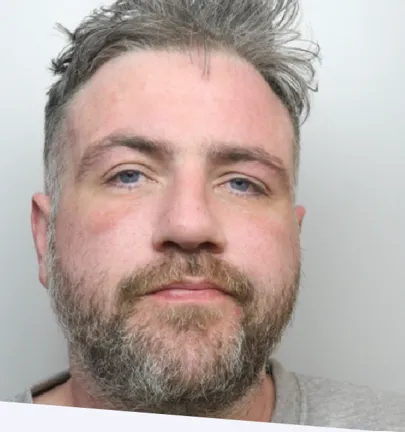
According to the prosecution during last week’s trial, the majority of Mullins’ injuries were caused by “dragging and crushing”, rather than the initial impact of the crash itself.
Mr Mullins was found when a motorcyclist followed a trail of blood stretching from Paddock Lane to the farm track where he was left, the rider discovering the cyclist barely breathing on the grass verge. Emergency services were called, but Mullins died at the scene from his injuries.
Richardson was arrested the following day, after a police chase that took place when he tried to evade officers, first in a van, driving at 50mph in a residential 30mph zone, and then on foot.
The 35-year-old denied murder, claiming that he did not realise Mullins was underneath the vehicle and that he did not attempt to get out of the car to free him. He was found guilty of murder and dangerous driving on Friday.
The court heard on Monday that Richardson had 28 previous convictions, including several driving offences. He was recently sentenced to a two-year community order for assaulting and harassing an emergency worker, the Warrington Guardian reports.
Between 2011 and 2023, he was arrested for careless driving and failing to stop or report a road traffic incident (when he lost control of his vehicle and fled the scene), twice for driving with excess alcohol and driving whilst disqualified (again fleeing the scene on foot), dangerous driving, and driving without a licence or insurance.
On one occasion, in 2014, he attempted to drive away from police at speed before crashing into a vehicle and fleeing on foot. He is also currently on bail for affray, actual bodily harm, and possession of cocaine following a December 2024 arrest.
Addressing Richardson in court today, Judge Mrs Justice Brunner KC said: “On October 30, you were convicted of the murder of Michael Mullins. You took away a life, and in doing so you caused devastation to a family and a community.
“Mr Mullins was described as a strong Cumbrian man who was proud of his roots. He was a family man who would show up for everything despite his busy professional life. He provided inspiration and leadership to so many.”
She continued: “You have never given an account. The jury was sure you knew Michael Mullins was underneath your car when you dragged him to his death.”
The judge noted that, prior to the fatal crash, Richardson was driving in a manner that put “others at risk” and was asked to slow down by his passenger, his cousin Gabrielle Debotte. The court was told that Richardson simply responded by smirking and saying: “I’m a professional driver”.
“You were speeding and not paying any attention to the road,” the judge said. “Mr Mullins crossed the mouth of the junction just before you came flying out of it.”
Mr Mullins survived the crash, but his foot became entangled in the suspension around the car’s left-hand wheel. Despite his cousin telling him to stop, Richardson continued to drive at speed.
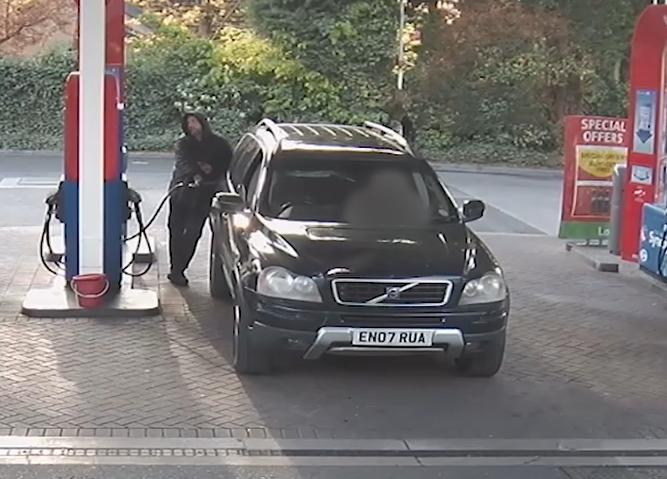
“You were thinking only of yourself as you sped away,” she said. “There may have been a short time where you thought Mr Mullins was left on the road, but that was not for long.
“There is no doubt that you knew he was under the car. There was a moaning noise coming from under the car. You heard it, and you said he’s under the car.
“Although you now knew you were dragging a man along the road, you did not stop. Not only did you not stop, you drove at speed.”
After stopping and getting out his vehicle, Richardson, according to the judge, “would have seen a bloodied and severely injured man”.
“Instead of trying to help him, you crouched down and tried to pull him out from under the car,” she said.
“You got back into the car and moved the steering wheel before trying for a second time to pull him out. You set off again, still trying to release Mr Mullins, veering from left to right. You mounted a grass bank to try and release him.
“You reversed off the bank and in doing so you ran over his torso. You left Mr Mullins lying on a grass verge on a secluded country lane with no one else around.”
The court heard that following the fatal crash, Richardson was “drinking and playing music” and “laughing and joking” in Debotte’s home as his cousin was in a “terrible state” upstairs.
“You and your friend talked to her about what to say and not to say and how to act,” the judge said. “You scared her. Over the course of the evening, your friend made Gabrielle Debotte write a note on her phone with a false account that she had not seen you on the day of the collision at all. You did not dictate the note, but you were there and going along with it.”
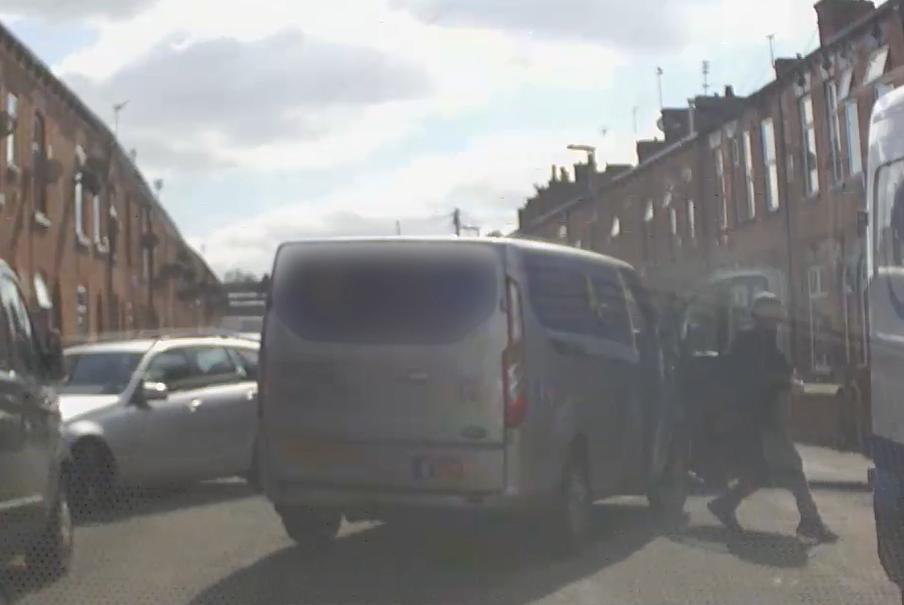
Ms Debotte confided in her colleagues at work the following day, leading to a police chase which saw Richardson speed at 50mph through a populated 30mph area.
“You have an appalling driving record, as this court has heard,” the judge continued. “You have previously tried to drive off to escape detection, including leaving the scene after careless driving. You have previous convictions for violence, including assaulting an emergency worker.”
Defending Richardson, Jaime Hamilton argued that the absence of premeditation was a mitigating factor in the case, claiming that the vehicle “was not intended to be a weapon”.
Mr Hamilton also told the court that Richardson accepts his actions led to Mr Mullins’ death and expresses remorse.
However, Justice Brunner rejected this expression of remorse, and while accepting that the murder was not premeditated argued that “this carries little weight”.
“You heard him moaning for many minutes. I am sure that you knew he was alive and you thought he was conscious,” she said.
“You knew that you were dragging a man that you knew was conscious against an abrasive road surface for four and a half minutes. You ignored your cousin’s pleas to stop.
“Even after seeing the state he was in, you carried on driving and trying to dislodge him. The footage of the car on Wet Gate Lane swerving from side to side, mounting the verge, and reversing is distressing to watch. It shows a disregard for human life.
“He could not have been more vulnerable. You did that because you decided escaping from the scene of an accident was more important than human life.
“I’m satisfied that you must have known death was a virtual certainty. I reject the submission you are remorseful. You are a man who has had his own self-interest at heart.”
Justice Brunner sentenced Richardson to life imprisonment with a minimum term of 25 years. A concurrent sentence of 18 months was added for the dangerous driving charge.
He was also disqualified from driving for life, a relative rarity in the UK, where just two motorists of the 202 convicted of causing death by dangerous driving were handed lifetime driving bans between June 2023 and June 2024.
In 2020, just nine lifetime driving bans in total were issued in the UK, while 12 and five were handed out in 2019 and 2018, respectively.

Speaking in court today, Mr Mullins’ daughter Maisie said she was “angry that I have to tell you of my dad in the past tense”
“I am angry that his death did not have to happen,” she said. “My dad did not have to be abandoned, he did not have to be dragged for miles.
“My dad Michael was so many things; he loved music, and he was learning to play the guitar. He loved to pick us up from the airport after a holiday to be the first to hear about it and growing up would always offer to pick me and my friends up from concerts to make sure we got home.
“He was the hardest-working person I have ever and will ever know. I feel broken but I know there will be nothing to ever fully fix me. Some days grief swallows me so much it’s hard to believe the last six months are real.
“Dad helped so many children in that school. He had at least nine years before retirement age. That is nine cohorts that have been deprived of him.
“He should have been there at Christmas; he should have been there to walk me down the aisle. I wish for this void in my stomach to be filled. I feel envy for those around me who can still call their dad and hear his voice.
“I worry about the impact of all this on my daughter. He could have seen her graduate and perhaps even marry.
“There will never be justice for what happened to Dad. I am here today to tell you that my dad was and always will be our everything.”










53 thoughts on “Killer driver handed lifetime driving ban and minimum jail term of 25 years for murdering cyclist after dragging him under car for almost five minutes”
Condolences to Mr Mullins’ family.
Reading through this article it is beginning to sound like there were opportunities to take Mr Richardson off the road sooner; so many lenient sentences for repeated instances of substandard driving and lawbreaking.
The sentences were likely within the rules; perhaps the rules need to change.
From https://www.warringtonguardian.co.uk/news/26690352.driver-sentenced-murder-michael-mullins/
“Richardson has a significant history of driving offences, the court has heard.
In April 2011, he was arrested for careless driving and failing to stop or report an accident.
He lost control of a vehicle and fled the scene.
In July 2012, driving with excess alcohol and driving while disqualified, he once again fled the scene on foot.
May 2013: driving while disqualified and without insurance.
He gave officers a false name and date of birth; he was suspected of driving with excess alcohol.
November 2014: driving with excess alcohol, dangerous driving, failing to stop and no insurance.
He tried to drive away from police and fled at speed before crashing into a vehicle and fleeing on foot.
He was found to be over the limit.
In February 2023, he was convicted of driving without a licence and no insurance.
He was stopped, checked, and gave false details to the officer.
He remains on bail for affray, ABH, and possession of cocaine in December 2024, and that case is currently listed for trial.”
Will there be a review of why he was allowed to remain outside of prison, thus him believing his behaviours were not serious enough to stop now ending up with him killing someone?
At what point in a case like this where someone has a list of previous driving offences does the law say “enough is enough, licence revoked, full stop, do anything again end up behind bars for a long time”…?
Each instance of his previous dangerous driving would have been a straight fail on a driving test.
Yet he was allowed to continue without any significant punishment or deterrent to future offending.
If the law had done something more then this murder could have been avoided.
But cyclists.
@mitsky I wonder if there are grounds for the victims family to take legal action against the justice system for its failure to protect the wider society against a clearly dangerous individual.
How he got bail in December 2024 with his previous record is unfathomable. How that case, as serious as it was, involving an individual with such a terrible track record, could be left untried for such a long time is unforgivable.
Appreciating that courts are backlogged, but when prioritising cases for trial, surely the risk posed by the defendant, their track record etc. is taken into account? Assuming so, just how bad are the wrong ‘uns whose cases were put first?
@Jimmy Ray Will Unfortunately affray and ABH both have a presumption in favour of bail under the Bail Act 1976 whereby defendants will usually be bailed unless they are a proven flight risk or are likely to attempt to interfere with witnesses or the accuser. Additionally bail is almost always granted if it is regarded by the presiding authority as being likely that the defendant will not receive a custodial sentence at trial. So it’s hard to say without knowing the exact details of the affray and ABH charges he was facing, if they were relatively minor, e.g. pushing and shoving someone in a pub argument, it’s likely that he would not get immediate custody, most likely a suspended sentence, so that may be the reason for his being bailed. I think, although I’m not sure, his previous driving record wouldn’t be a factor that would be considered when looking at bail for non-driving offences.
This case has me seriously thinking about whether I should be riding on the road at all. There are safer ways to travel and to keep fit, and I have two small children at home who need me.
@BroomBroomBroom
I cycle commuted for 30 years, with a number of close passes and a few crashes that gave me pause to consider the risks of cycling on public roads, but what made me give up was a diagnosis of osteoporosis because cycling was my exercise activity and because cycling is not weight bearing exercise, it leads to bone loss; I now mix walking and jogging to commute and have introduced a program of weight-lifting to try and reverse the osteoporosis.
@grOg Cycling does not “lead to bone loss”, lack of any other type of weight-bearing exercise in conjunction leads to bone loss. Blaming cycling for osteoporosis is like blaming sausages for getting scurvy, it wasn’t the sausages that gave you scurvy but the fact that you didn’t eat any vegetables with them. If you drive everywhere instead of walking and spend all your time at home sitting in front of the TV that will significantly contribute to osteoporosis, does that mean that driving and watching TV leads to osteoporosis as well?
@Rendel Harris – you eat vegetables with sausages? Pull the other one!
This kind of vegetable: https://www.warwicksbutchers.com/products/vegetable-roll
@jaymack Potatoes are vegetables, chips are made of potatoes, QED.
@jaymack tomato sauce?
Heartbreaking for Michael Mullins’ family. Deepest condolences to them.
This tragedy was so avoidable and this case, its outcome and its impacts should be a huge wake up call to the CPS and the wider justice system, including Police. Society cannot keep excusing drivers, through the normalising of dangerous behaviour, for law breaking and the justice system must lead the way. Society must accept that law breaking is wrong, no matter where it takes place. I am under no illusion as the cultural and societal leap is a big one however the situation of excusing law breakers cannot continue.
LIFE DRIVING BANS NOW & get rid of the points system.
Banging him up for 25 years is a sledgehammer to crack a nut. Time and time again we get this situation where someone dies because a dangerous driver wasn’t permanently removed from the road.
Implement an instaban for anything which would usually get 3 points and enforce it with a suspended sentence. First breach leads to 3 months jail time. Next 12 months. Next 4 years, and so on. Ankle monitor them to help enforce it. Can be a Cat C/Open prison or some form of home curfew.
Driving is a privilege not a right. They should be rightly mindful of the risk of an offence and if it puts them off driving then so be it. I drove like an absolute &(^()^T&_ as a teenager and I guarantee I wouldn’t have behaved that way if there was a risk of jail time and a criminal record.
@kil0ran as I understand it he drove while banned for a number of the previous offences. While I don’t disagree that there was lots of evidence that he would continue to drive dangerously, and should not have been allowed behind the wheel even before this horrific incident, I think it is naive to think a lifetime driving ban would have kept him off the road.
@Sniffer great comment, I reckon five years (no parole) in prison for driving while banned will keep them off the road when convicted.
@Sniffer This is why I would like to see every driving licence having a readable chip that showed the driver status and making it impossible to get fuel from a petrol station without presenting it at the pump as proof of validity. Of course there would be ways around it, getting mates to fill up the car etc, but with an estimated 650,000 unlicensed or licence suspended drivers in the UK restricting the fuel supply could do a lot to hamper them. The same chip could carry proof of insurance and MOT for the car, again, no proof, no fuel. Cut offenders off at source.
@Rendel Harris It should be simpler. In this case, and other cases where individuals drive while banned, there will be many people who know there is a banned driver behind the wheel and turned a blind eye.
If we could find a way to make it culturally unacceptable the cases would drop. The change it attitudes around drink driving made a huge difference and it wasn’t just the punishment.
Unfortunately, we see the media run campaigns on the ‘war on motorists’ rather than try and change societal attitudes.
The sequestration of vehicles as a punishment I think is an opportunity. Car removal, for many motoring offences and if you let a banned driver drive your vehicle I would include vehicles from employers and associates of a banned driver.
@Sniffer the police seem pretty keen on seizing and crushing illegal ebikes and scooters so I’m sure they’d be happy to do it to motor vehicles.
Yeah, who am I kidding?
@Rendel Harris Of course it wouldn’t work; the sort of person that would be banned would have plenty of mates that would fill jerry cans for him so he could fuel his car at home.
@grOg So if nothing else it would make it much more awkward and time consuming for the banned driver and probably more expensive as one can’t imagine his “plenty of mates” being prepared to make constant trips to the garage for him without recompense. He wouldn’t be able to refill on the move therefore his ability to travel distances would be severely limited. Most petrol stations have a limit on the amount of petrol that can be purchased in jerry cans, further constraining his activities, and this could be lowered. Just as it’s an offence knowingly to lend your car to someone who is banned it could be made an offence to procure petrol for a banned driver. So there’s no “of course it wouldn’t work” about it, with your attitude we shouldn’t have any ban on selling alcohol, cigarettes or knives to children because if they are determined enough they will be able to obtain them anyway. Of course if someone is absolutely set on disobeying the law it’s almost impossible to stop them but the more awkward you make it for them the less likely they are to try.
@grOg Or just know how to obtain borrowed/stolen driving license cards.
Many years ago, when bank card theft was a cause celebre, a banking official was asked on UK TV if photo cards would help. He thought not, because scrutiny of photographs at tills is tricky.
@slc Stolen licences would be cancelled and replaced just as you do with stolen bankcards. We have a wealth of means of identification that could be employed, e.g. fingerprint recognition. Of course it wouldn’t be foolproof but the more awkward and complex you make it for banned drivers to obtain the means of driving the less likely they are to bother.
@grOg That’s not why it wouldn’t work. It wouldn’t work because it would involve government agencies and a big tech/data sharing project. It would be bound to go tits up within a couple of weeks.
@mdavidford “the contract was awarded to Capita, with Fujitsu to deliver the IT”… 😬
@kil0ran Don’t you mean “Driving is a privilege not a right”?
@davids oh yeah. It’s been a long day already here. I’ll see if I can edit, thanks
@kil0ran One of his many convictions is for driving while disqualified. As long as this guy is out of prison he’s a danger to the general public. There needs to mandatory jail sentences of multiple years for people who offend while on probation/ license for other offences. It’s not even about punishment for the offender it’s just to protect the public from these guys who can’t/ wont modify there behavior to fit into society
@kil0ran I’m sorry, but clearly you haven’t read everything about this case.
The bloke easily needed jailing for 25 years. It was indisputable intentional brutal murder (Followed by significant threats against the cousin in the car who was the main witness for prosecution).
That doesn’t stop the separate discussion on WTF he still had access to a car (or van) given his driving record (fixing this might have removed the ability to commit said murder, but he was a violent thug regardless).
I would argue that we need to allow for banning owning/keeping a car; Banned and ‘inherit’ one = required to turn it over immediately (say within 72 hours) to appropriate authority (solicitor, Office of Public Guardian, Car Auction?)
Keeper/owner then has significant legal risk of getting banned if they let a banned individual use the car. Also need significant modernisation of transfer of ownership – insist it is done digitally (if you can’t do it online, you HAVE to do it at a DVLA office or post office) at the time, with the checks done as part of it. Don’t do the change of ownership; then you retain owner/keeper liabilities in full.
Obviously the law is not worried about the standard of driving by individuals with prior convictions. All accidents including eg: a touch of a bumper should be reported to the police and an interview with a traffic cop before driving away from the scene. Driving away from the scene of an accident after being involved should instantly receive a lifetime ban (no matter how long you have to wait for a a traffic cop to come). Liberalism in driving must not be tolerated.
@rbrtribble All accidents including eg: a touch of a bumper should be reported to the police and an interview with a traffic cop before driving away from the scene
What sort of dream world is this?! None of these fanciful wishes will happen in the car-crazed ‘we’ll give you a subsidy so you can drive and park everywhere with no thought to sensible fuel-conserving driving’ UK. Sadly, the succession of dreadful Tory nonentity transport ministers has been followed by a succession of equally dreadful Labour ones, all desperate to avoid being accused of the ‘war on the motorist’. Lilian Greenwood was charged with implementing the January 26 Government Road Safety Strategy until she was moved to be replaced by another deadbeat intent on doing nothing for fear of upsetting drivers. Labour could fight the established police strategy of ignoring and actively opposing any legislation to the benefit of cyclists, but they won’t. The police are intent on protecting motorists from VED evasion, MOT offences, mobile phone offences, white line offences and most importantly cyclist-close-passing offences. I ask yet again for the evidence of effective police action against this latter offence (not the joke advice letter or joke driving course), but this evidence never appears. The obvious conclusion is that this police action does not exist.
@wtjs “Nothing changes if we don’t want it to. I love you”, (oops a quote from GEN V). I didn’t need to put that last bit in, but hey you write so passionately and so long and obviously have an emotional attraction to cycling. “If you don’t have a dream, how you gonna make a dream come true”
Whilst extreme cases shouldn’t make law, this case does demonstrate that the justice system is failing to protect innocent road users.
If people continually break the law, then either the crimes aren’t being detected or the punishments are not severe enough. In the case of road law, it’s both, and the chances of being caught driving dangerously are miniscule, and even if caught, the offender will at most be banned, which they can and do, ignore.
So how to get dangerous drivers to reform or make sure they don’t drive?
1. Police on bikes. Just look at how many criminals cycling mikey has had convicted. A real police constable could do so much more.
2. When caught, immediate impounding of vehicle, rapid review by a judge, so the punishment immediately follows the crime.
3. No points on licence, no hardship pleading, just removal of licence. Three months for a first offence, then rapidly escalating to lifetime ban for the fourth.
4. Anyone caught driving whilst banned gets an immediate three month prison sentence, second offence a year, third ten years.
I’m sure there are plenty of other good ways of making our roads safer by removing the incompetent and dangerous drivers, but it’s a start.
@eburtthebike Most of the people cycling mikey confronts with his vigilante behaviour are using their phone while stationary in traffic; while illegal, conflating those offences with the murderous actions of this deviant person is patently ridiculous.
@grOg this one’s an outlier for several reasons.
But if you look at his previous criminal career (folks have dug that up now) in part it’s motornormativity writ large (the other themes being drugs and alcohol, plus some violent behaviour IIRC).
… and “motornormativity” – and the sliding scale of acceptance of “it’s not really crime … everyone does it” certainly does help explain eg. endemic illegal phone use while driving (yeah, of course people only do that when they’re stationary…) and the lack of interest in sanctioning it.
And why we read many stories about… er … “vigilantes” harassing people for “minor” or “purely technical offenses”.
@chrisonabike it’s not just motoring offences. One of our local “celebrities” has a string of convictions for violence/robbery/poaching/driving offences from age 13. He’s late ’30s now and has only just reached Crown Court level for what the CPS claims is a deliberate vehicular attack on a cyclist. Fortunately the cyclist survived but has been left with life-altering injuries. There’s a complete failure by magistrates to deal with persistent offending like this not least because of safety fears due to links to organized crime gangs and the travelling community.
@grOg I suppose this idiotic trope about “vigilantes” ought to be confronted whenever it arises: a vigilante is someone who acts outside the law in trying to prevent crime and/or to punish it. Legitimately recording criminal behaviour and then passing said recording on to the appropriate authorities for action is not vigilantism.
“Over the course of the evening, your friend made Gabrielle Debotte write a note on her phone with a false account that she had not seen you on the day of the collision at all.”
I sincerely hope that friend is in police custody awaiting trial for aiding and abetting and perverting the course of justice. And I hope he gets the same judge.
@eburtthebike The friend is his cousin. The next morning she broke down in work and got her manager to call the police apparently. Though, when she went to the police, she would only read a prepared statement – so it seems she had time to make a pit-stop at a solicitors on the way to the police station. She was initially arrested, but then police changed her status from suspect to witness. She testified against Richardson at the trial.
@Paul J The friend is his cousin…
No he isn’t. Not much else is said about the ‘friend’ which leads me to suspect proceedings against the friend along ‘aiding and abetting’ lines. From the little we know, there certainly should be.
@Paul J not so – his friend (not named in the reports) helped pressure his cousin (Gabrielle Debotte) to keep quiet – thankfully she didn’t. Not clear whether the friend was also in the car at the time or came round to the house later:
“You were drinking and playing music; Gabrielle Debotte upstairs in a terrible state could hear you laughing and joking.
“You and your friend talked to her about what to say and not to say and how to act.
“You scared her.
“Over the course of the evening, your friend made Gabrielle Debotte write a note on her phone with a false account that she had not seen you on the day of the collision at all.
@Paul J Also she pleaded with him at the time to stop the car, multiple times. She was apparently in absolute shock after the incident and felt threatened to write the note. We need to bear in mind what she had just witnessed Richardson do. He’s undoubtedly a very violent man.
There is a straight forward way to begin to address bad drivers. Professionals such as Doctors, Lawyers etc. have to undertake a certain amount of annual post-qualification training. Driving should be the same; X-hours of driving training every so many years. Not completed the hours? Provisional license ’till you’ve passed a driving test.
It would keep driving schools in business and wouldn’t just improve standards it would be a constant reminder to those who sit both on juries and in judgment what good driving looks like.
@jaymack seconded. Of course currently the issue isn’t keeping driving schools and/or examiners in business, it’s that there seems to be a chronic shortage of the latter
So this sensible idea is likely to be decried as uninformed “pie in the sky” even more than others pertaining to improving road safety. 😬
(And of course “but we already passed our tests, we pay for insurance etc so this amounts to another attempt to batter honest drivers with legislation and expenses…”)
@jaymack Agreed. We test vehicles every year at a cost of (from memory) £65 so let’s bring in a 3-year or 5-year re-test window for the drivers. Similar cost averaged out. Theory refresher (the vast majority of drivers haven’t passed a theory test on the current version of the HC) followed by a soft retest with the option of the examiner recommending remedial action such as awareness courses.
@kil0ran We test vehicles every year at a cost of (from memory) £65 so let’s bring in a 3-year or 5-year re-test window for the drivers…
Not in Lancashire we don’t- MOT and VED are optional in the land of Bent Coppers. This isn’t from 7.8.26, when I last filmed WU67 BLF, but from the J France Facebook pages. So if the police arrange to not enforce MOT, what do you think they’ll do about this projected tidal wave of non-retested drivers? The police are actively working against road safety- and against cyclists.
One of the most shocking cases to read about. The individual responsible is clearly a psycho and will never follow any of the rules.
The last few paragraphs about sentencing should be a wake up call for society; “he was also disqualified from driving for life, a relative rarity in the UK, where just TWO motorists of the 202 convicted of causing death by dangerous driving were handed lifetime driving bans between June 2023 and June 2024.”
There are 4000 drivers in the UK with more than 12 points on their licence who haven’t been banned. I believe two of these are over one hundred points.
@Daveyraveygravey
Would be interesting to find out which insurer is covering a driver with 100 points (or even the ones with 12+).
And how long it takes to fill in the renewal form with details of each conviction?
Not to mention who could afford a theoretically astronomical policy….
In theory it should be cheaper for them to hire a chauffeur.
@mitsky afaik most 100 point cases are dodgy businesses where the keeper regularly gets 3-6 points for failure to identify because they make no effort to know who is driving pool cars.
And either don’t actually drive (hence not worrying) or are on company policy that covers anyone…
I suspect the solution to this would involve seizing vehicles when they ‘don’t know who was driving’…
@qwerty360 Thanks for this info. I’ve had two failure to identify in my reporting “career”. One got away with it completely as it was a hire car through two different companies and they ran out of time to prosecute and one got points and a fine. The latter was NMOTD 946. I won’t put a link in or you may never see this comment.
If I’ve had two it must be quite common occurrence. Yet another loophole condoned by the legal system for the well off and unscrupulous.
@Daveyraveygravey one of the first life driving bans was issued to the driver responsible for killing time trialling legend (in these parts at least) Derek Witt in 2008. I must dig out the offender’s name and see what he’s been up to since he got out. Life ban somewhat pointless as he wasn’t licensed anyway
https://www.cyclingweekly.com/news/latest-news/derek-witt-killed-in-car-collision-93197
@kil0ran
Agreed very pointless to say “You’re now banned from driving.”.
I’ve often asked:
How can someone be told they are “banned” from doing something (ie driving which requires a licence) when they weren’t qualified (passed a test and obtained a licence)…?
The individual will themselves know that they shouldn’t have been driving as they didn’t have a licence so a ban is not worth the paper it is written on, as shown by how many continue to illegally drive afterwards anyway.
@mitsky in theory there’s a purpose, being it should mean steps to doing something about this can be skipped if they do this again or penalties could be higher etc.
Since in practice nothing of consequence happens however (and certainly not like them immediately being banged up / car crushed etc – plus of course there might be a long period before anything might happen under the current system) it’s simply “don’t do it again, or we’ll tell you not to do it again, again”…