




Last week I wrote about a scumbag in the US who deliberately drove into a group of cyclists then argued that he shouldn’t be punished for it, and how sections of the media across the pond seem to share the same beliefs.
Fast forward a week, and in the UK most of us have probably read about the horrific details surrounding the murder of Michael Mullins, the much-loved headteacher who was cycling home from Stretford Grammar School when he was struck by Simon Richardson.
35-year-old Richardson – who had 28 previous convictions including a string of serious driving offences – ran Mullins over, then dragged him for over a mile whilst he was trapped under the vehicle. Yesterday Richardson was handed an (exceedingly rare) lifetime driving ban and a minimum jail term of 25 years after being found guilty of murder last week.
In 20 years of cycling journalism, it is undoubtedly the worst case I have seen about violence against cyclists. There have been many people who have killed cyclists with their cars in the UK, with around 100 cyclists killed by drivers each year over the last two decades. This one, however, hit differently for me: more callous, more barbaric, and more sadistic than anything that has come before.
I think it has come across in the coverage of this incident. I haven’t seen anybody trying to use this as a kick-off for another ‘should cyclists be licensed’ or ‘drivers vs cyclists’ section of a drab morning TV slot, where they wheel out ‘Mr Loophole’ to spray his shit-eating grin about as he laments the plague that is cycling, while Timmy Mallet sits on the other sofa like a polka dot voodoo doll chosen to silently take the flagellation on behalf of all cyclists. Instead, broadcasters and journalists seem to have understood that the man killed was a human after all, and his death is so obviously horrific that you can’t simply label him a ‘cyclist’ and be done with it.
It’s not just in the direct coverage either. Having scanned a lot of social media posts about this crime from places where you might expect to find a lot of anti-cycling sentiment, out of thousands of comments I didn’t come across a single one that could be perceived as classically ‘anti-cyclist’. Nobody mentioned jumping red lights or cycling on pavements, or that wearing Lycra makes you a target. That’s pretty much unheard of.
If you want to see just how much this has impacted parts of society that have traditionally pushed the anti-cyclist agenda, look no further than The Spectator. It is far from the worst offender on this, but has stoked a lot of anti-cyclist hatred with stories such as ‘The ceaseless self-pity of cyclists’ and ‘Beware the Lycra louts’.
The Spectator’s last two cycling-related stories, both published this week, were titled ‘The war on cyclists is costing lives’ and ‘It’s time to stop demonising cyclists’ – the latter a comment piece by none other than Chris Boardman.
I even looked at The Telegraph’s coverage, a publication I think may have done more than any other to spread hatred against cyclists in recent years. In its comments section underneath the coverage of this awful story, not once does anyone try to claim it was the cyclist’s fault, mention red lights, or any other of those tired boring tropes. In fact, a large number of people seem to be talking about this case in the same way they talk about the worst crimes in history, extolling the death penalty and how we shouldn’t have to pay for Simon Richardson to be incarcerated.
So, are we actually at a turning point? Will this have a material impact on how people perceive cyclists? Some in The Telegraph comments section, who I seem to remember calling for extreme punishments to be doled out to cyclists in the past, seem to have had some kind of conversion: “After previously reading about Mr Mullins appalling death I cannot get behind the wheel of my car without thinking about him”, one wrote.
“I’m also now more than ever [aware] of how vulnerable cyclists are. How that murderer can live with himself I will never know.”
Maybe the public outcry over this case will make people understand that when we are cycling on the road, we have no idea who is in the car behind us. At any time, if somebody wanted to, they could just run us down in exactly the same way. Even if 99.9% of the population would not do it, we have seen time and time again that it still happens, even when people don’t have the intention to kill.
Sometimes I think cycling on the roads today is the equivalent of walking around a town where every person who walks past you is holding a gun with their finger on the trigger. Most wouldn’t dream of shooting you and are careful not to; others will be careless, and their gun will go off and come close to hitting you; some will be careless and shoot you by mistake; then every once in a while, somebody will point their gun directly at you and deliberately fire. As you walk past these people, you have no idea who has which intention, but you do know each has the capability to shoot you in the head if they want to.
A big issue is that we have irresponsible people in the media who care more about engagement and othering a group than the lives of cyclists, and think nothing of spreading hatred against us. It means that when we complain about close passes, people just see us whining. When a cyclist is killed, people find a way to blame the cyclist. When people take actions to decrease the chances of cyclists being killed, they are criticised for political gain.
It takes somebody actually going through with what cyclist-hating fantasists in The Telegraph comments section have been suggesting for those very people to open their eyes, and understand how callous and dehumanising their language is. In reality, the murder of Michael Mullins is the end result.
Perhaps after this horrific incident, we might finally see the tide turning against the dehumanisation of cyclists. I won’t hold my breath though.



25 thoughts on “It took one of the most barbaric crimes in living memory to stop the online vitriol against cyclists”
What a sad last sentence, that unfortunately, most of us on here agree with.
Good article. I won’t hold my breath. I wonder how many of us have to be murdered like this for the empathy to become permanent?
If the human life lost had been a black teenager nipping around on a bike or scooter, rather than a middle aged male school teacher cycling home, I do think the comments on the Telegraph, Mail etc websites would have been different.
I’m not sure if I agree with this article or not. Good news if there had been an absence of anti cyclist reader comments. However, todays Times reported the case with sentencing on page 13.
It was not mentioned on yesterday’s BBC 6.00 pm News or this morning’s BBC breakfast news, joint hosted by John (“And what do you say to motorists who think there are too many cyclists on the road?”) Kay.
My guess, regarding the different media/public response to this case, is that KSIs by drivers are usually accidental even if the driving itself that led to a collision was well below acceptable/safe standards.
Thus the general (non-cycling) public might think that they themselves may have driven like that (or know that they usually do) and putting themselves in the shoes of the dangerous driver in question will empathise with them rather than the victim.
In this case, the reporting has detailed the full terrible actions of the murderer which most people won’t be able to relate to.
@mitsky KSIs are not “usually accidental”; they are preventable. Even the Government’s Road Safety Strategy says that – Vision Zero.
@Peterjbdk Even the Government’s Road Safety Strategy says that – Vision Zero…
The January 2026 Road Safety Strategy says lots of things- almost none of the important ones are even taken seriously by the government itself, which is why they’re ‘consulting’ on them for long enough that the document is sunk without trace in a sea of digital dust. The police will sabotage anything they don’t like, which includes anything to the benefit of cycling and cyclists- how much more evident that they won’t lift a finger can it be when Essex and Kent police collude to refuse to even look at close-passing videos when there has been no collision NO MATTER HOW CLOSE. This is ‘get yourself KSI’d and we’ll see what we can do’: Vision Zero?! Sod That for a Lark is the police vision.
Pretty much the whole ‘strategy’ is complete fiction, with no expectation that anything will change if drivers wouldn’t like it. As for the ‘consultations’ on whether driving without MOT or insurance, or with illegal/ fake plates are genuinely a bad thing deserving more than joke punishment…?! Lancashire Police were informed regularly, with photos, for over a year that HN21 VXB was without MOT or VED. I’ve put many of the photos on here. The police refused to respond after PC Mike Duff of Garstang Neighbourhood Policing Team told me back in January 26 not to tell him about such ‘alleged offences’ because he didn’t have time to look into them. It was only when I sent the Bent Coppers this without comment, taken at the driver’s house, that they got worried and suddenly something changed:
I fear this appalling case won’t shift the dial an inch in terms of empathy towards cyclists or better driving around them. People are appalled, and rightly so, at the murder element of the case, i.e. the fact that the perpetrator drove for so long with the victim trapped under his car, even after he had got out and seen that he was still there. If the incident had stopped at the original point, i.e. when Mr Mullins was hit by Richardson speeding through the junction, it probably wouldn’t have been reported anywhere apart from a few local news outlets and maybe on road.cc. People then would doubtless have come out with the usual garbage about it was probably the cyclist’s fault and if it wasn’t so many cyclists break the law all the time how can they complain? The next cyclist to be killed by a driver who just wasn’t concentrating or didn’t look properly or was only driving a little over the sensible speed for the conditions, without the murder element, will bring the same filth out again, I’m certain.
@Rendel Harris yup, unfortunately this is far too easily ignored because it’s so abnormal (eg. murder charge due to very strong evidence of deliberate killing) and “you can’t stop murders”.
Indeed it will likely reinforce people’s current positions / beliefs that eg.:
– Road crime is being tackled effectively and indeed “real criminals” who drive are severely penalised by the legal system (“see – they got him, bang to rights, and threw the book at him”).
– Their own (better or worse) driving is of a relatively high standard and certainly doesn’t merit the attentions of the law (“look at what the *real* criminals do”).
@Rendel Harris Of course it won’t. The only reason there isn’t the usual anti cycling raving is because of just how shocking and callous this person was. The sort of person who shocks society with their violence and disregard for their fellow man that is so alien to them that it disgusts them.
This won’t move 99% of people opinion a centimetre. Its so far removed from the norm that it won’t even be associated with the usual “motorists vs cyclist”. People are usually on the side of the motorist because they can empathise or sympathise. In this case there is none of that so it won’t register in their view of cyclists.
I think the headline should be something like ‘should’ , because the final sentence is unfortunately spot on. I’ll give it a few hours before I read irrational hatred of cyclists (or anything else for that matter which can be singled out) 🙁
I posed the question on Reddit regarding life driving bans and got a surprising level of agreements (and most disagreements were around practicality rather than opposition to the concept).
It seems to me that each driving ban should have a suspended sentence component meaning that drivers caught ignoring the ban risk some form of incarceration. Get rid of the points system and go straight to bans on a sliding scale. Something along the lines of;
1st offence – 3 month driving ban – ankle monitor curfew for breach
2nd offence – 1 year driving ban – open prison (Cat D) for the remaining length on the ban for breach
3rd offence – 5 year driving ban – incarceration in a Cat C prison for breach
4th offence – 10 year driving ban – incarceration in a Cat B prison for breach
5th offence – Life ban – incarceration for life if breached.
An offence is anything which would get points under the old system.
Any conviction for careless driving is treated as a 1 year ban
Any conviction for dangerous driving is a life ban
In all cases vehicles used to commit the offence are seized for the duration of the ban regardless of ownership by the offender. For longer bans the vehicle is disposed of at auction and the proceeds are plowed into local road safety campaigns
Sound extreme? I’d draw your attention to the regulations regarding firearms certificates. Drivers kill far more people each year than people committing firearms offences (whether the weapons are legally held or otherwise)
This awful case is the nastiest end of the wedge started in ‘jest’ by the likes of Matthew Parris. I wonder whether he’s proud of the part he’s played in normalising violence against the vulnerable?
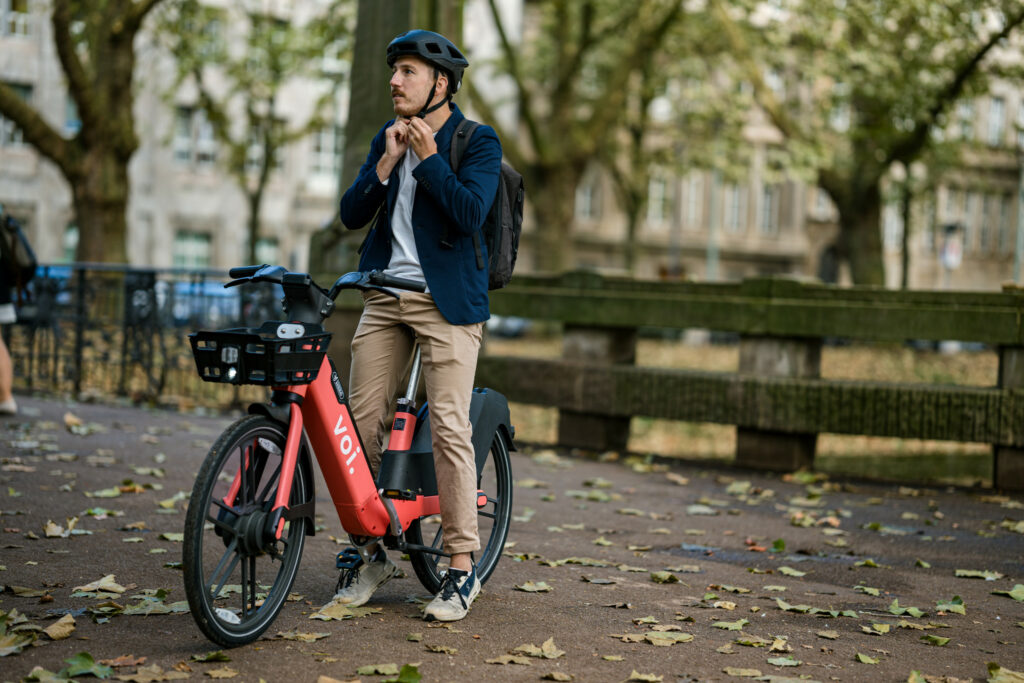
I think one of the biggest factors in increased sympathy for cyclists is the fact that so many people increasingly Lime and other hire e-bikes. It’s an easy and attractive gateway into cycling that suddenly puts non-cyclists in the shoes of cyclists, and naturally makes them understand their perspective.
@EastLondonCyclingNut I’m going for ‘very suspicious’ on this one- Trollfinder General
Is this the increased sympathy where the driver attacks the cyclist causing serious injuries and is rewarded with the joke non-custodial sentence; or where the driver murders the cyclist in the most horrible manner and the Shyster Defence Barrister offers the mitigation that ‘he didn’t intend to do it and expresses remorse’?
@EastLondonCyclingNut I wouldn’t be keen to find non-cyclists in my shoes – there wouldn’t be room, even though they’re fairly “walking-friendly” SPD ones.
Not sure if public hire bikes change much. But I do think ultimately things only change when there’s a significant fraction of the population with “skin in the game” – either because they cycle regularly themselves or more likely because they know their friends and *children* / other relatives do…
This is a shocking case and should raise the question could this driver have been stopped earlier? So many convictions, why was he still behind the wheel?
The sentence does fit the crime in this case, but had the driver stopped after the initial collision, would they have even been jailed?
I can’t help thinking about the BBC program “The Crash Detectives”, where about 14 mins into “Season 5 Episode 3: Fair to all parties” the police embark on what seems an exercise to exonerate the driver, with some ridiculous reasoning such as “the victim’s reflective jacket is so bright it makes their front light difficult to see”, conflicted by “ah, but the victim’s reflective jacket might not have been as bright, so probably harder to see for the driver”. In that case the driver faced “no further action”.
The gulf in outcomes is extreme where deaths on our roads are concerned.
Maybe people do not have the capacity to look out for everyone on the roads because there are so many users squeezed onto small roads in the uk. Brains are not 100% functional, as we know they lapse.
Maybe we should have a country wide chat regarding vehicle usage.
Maybe radios, satnavs, fones should be removed from cars, or restricted to passenger use.
Maybe we have to accommodate homo sapiens are a murderous bunch, so when someone’s mown down it can be forgotten easily, after the ‘ohmygod’ ten minutes.
Segregated cycle lanes, or a complete ban on the motor vehicle, lol.
Essentially the human race is speeding up and the average cyclist cannot keep up. In the midst of these problems as we are, I personally have to not care about my well being if I wish to continue using bikes. This is a strange and interesting dilemma, yet it sits in harmony with the current zeitgeists twisting as they are.
@mark1212123
Well, yes, in that there are more people now than say 1990, and (I think) more of them drive…
…but also it just so happens that some road users are more equal than others, allotted a couple of living-rooms’ worth of space. Plus as private motor vehicles get bigger and people are not all piling in one mini anymore they’re getting even more space.
And also those “small roads” were often “streets” not long back. We’ve kept the “through-access” available even though they weren’t designed for it and they can’t easily be expanded for that.
And/or the “smallness” of the road is because there are actually three or four lanes of motor vehicles – one or two are all the parked cars we can’t “see” when we think “narrow street”…
@mark1212123
Or even “what are our transport needs, what do we think we’ll need in the future, what other important properties may impact that” etc.
The latter might be not paying millions to keep repairing public infra, resilience (eg. less reliance on products from “difficult” regions, less impermeable surfaces which cause rapid run-off), local “places” and businesses, public safety, health…
And on that perhaps encouraging people (and especially children) to get out more for both physical and mental health, which would suggest we need places where people find it feels safe and pleasant for young and old to be moving outside, where you can hear others speak, where you’re not breathing in particulates or stopping and waiting for a minute every time you go to the other side of the street…
Motor vehicles are space inefficient and also take over spaces – hence the urban “geometry problem”.
FWIW while it’s hard to imagine in the UK that conversation has happened elsewhere. In places like eg. Amsterdam (“Amsterdam makes space” – a plan removing thousands of on-street parking spaces and narrowing roads – which people have voted for!), Utrecht (removing the inner ring road etc), perhaps Paris…
@chrisonabike Great points from both of you.
I’ll imagine a conversation with one of the many drivers at my delivery depot.
“Err, Brian mate….can you spend 2 minutes considering the possibility that you might drive less and err…get your lazy arse into some permanent exercise, like feeling better and stuff…some planetary atmosphere might need your help? Oh, you’ll have to dispense with thinking your small thing is a massive thing while cycling to work in the winter?’
‘WTF you on about?’
Most people know some of the debate. They deploy selective listening and irrationality, if the primary concern is convenience or money, or ideology, or whatever’s floating their boat presently, whilst ironically harking for the past. I am currently in mock mode. It gets past the junk.
Sometimes in the canteen I shout, “Cyclists are the best….” they love hearing the sentence it informs them they are in love with dissonace.
@mark1212123 “you’ll have to dispense with thinking your small thing is a massive thing while cycling to work in the winter?’”
I find things tend naturally to shrink in the cold…
Having “the big debate” with any given person is almost always pointless. We’ve all got our to-do list for that day/week/year that we’re struggling to get through, using the familiar transport tools we spent time and money to acquire.
And if we could really introspect we might find out that a shocking amount of life is delegated to autopilots or essentially reacting to external prompts.
But – *given* that someone is at a point to actually discuss (rare!) – I think the Chris-Boardman-style works eg. “are you happy with (the congestion / your kids not being able to get themselves to school / all the cars parked all over your road and the pavement / hearing that the local authority can’t afford to fix stuff)?”
And “if you are, fine – your area, you own the consequences, good or bad (but … it likely won’t get better). If you’re not, tell us about one of those pain points and let’s work together to explore some solutions”.
(And no, those aren’t going to be a personal bypass which takes you in your car past all the other traffic and yet doesn’t cause your nice street to become a motorway. Because everyone else wants that *their* way not yours and anyway we can’t afford it).
@chrisonabike “Having “the big debate” with any given person is almost always pointless. ” Life is meaningless Chris which is why pointlessness is sometimes a valuable option.
You know how as a society we pay workers to do things that makes our lives easier, maybe we could reimburse motornormatives £20ph to become aware of the dangers and problems they pose? This sadly will require some real men as protection. Many vehicle users can be violent and devious.
When petrol was around 60p per litre I pressed a car user into stating what his limit was for a litre was, “£5” he said in 1998ish. His answer will be around £30 pounds today.
@mark1212123 “You know how as a society we pay workers to do things that makes our lives easier, maybe we could reimburse motornormatives £20ph to become aware of the dangers and problems they pose?”
Well currently all taxpayers are effectively paying motorists *not* to be aware, as although I believe the motoring-specific taxes cover “the road budget” (or did several years ago when I looked) they don’t cover the “externalities of motoring” eg. the “off-budget costs” *.
Like other “costs” eg. schools, keeping older people alive, art etc. we could say “we’re all happy to pay, because we just love mass motoring for convenience, even though it’s the source of many complaints and some deaths”.
We implicitly do, and we’re often prepared for a few *others* to be KSI for “progress”, so I’m not sure that the public would reject that if it was spelled out in that way.
OTOH once people have had the chance to experience a different way (at least in urban areas) the results (from many places now) consistently show they don’t want to go back to “traffic in towns” even if that means less motor convenience!
* Not counted by design I think, although some say it’s because they’re too hard to quantify or “nebulous”. Plenty of studies have tried though, and suggested that overall motoring is a net cost to everyone.
Unfortunately, I think it’s the graphic nature of victims death, being dragged along under a car, a motorcyclist following the meat crayon smear, the victim still being alive and a life sentence that have brought a moments respite to the anti cycling brigade. Give them a week to forget and they’ll be back at it.