
Campaigners in Bath say they are seeking a judicial review into the legality of a controversial new cycle lane through the city’s Royal Victoria Park, after questioning whether the local council has “acted lawfully, followed the correct procedures, and properly considered its responsibilities” towards the historic park.
The council, however, has defended the under-fire scheme, claiming that local cycling groups have “voiced their support” for it, despite some cyclists previously questioning the need for a new cycle lane around a traffic-free park they already ride through.
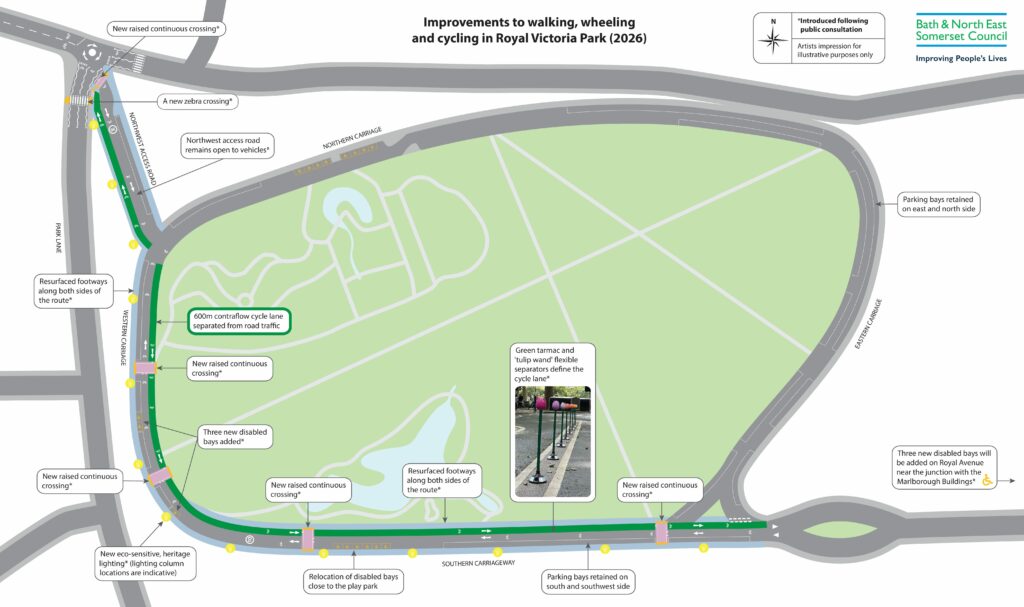
At the start of October, Bath and North East Somerset Council announced that work would soon begin on a new contraflow cycle lane, along with resurfacing works and the installation of new crossing points, in Royal Victoria Park.
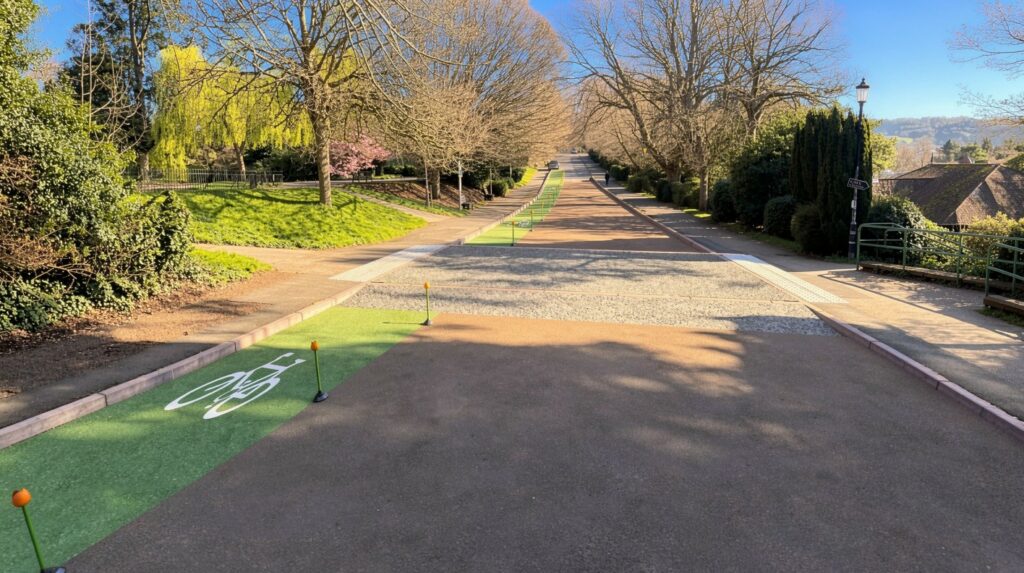
Royal Victoria Park is one of the city’s largest public green spaces and includes a clockwise-looping, one-way ring road. The £2.35m project forms part of the Bath Walking, Wheeling, and Cycling Links programme, which aims to better connect the surrounding area to the city centre’s infrastructure, with the new cycle route connecting to the Upper Weston suburbs to the city.
The proposed cycle lane, the council says, will run through Royal Victoria Park alongside the ring road on its western and southern side, with cyclists travelling in the opposite direction to motor traffic on the road. Heading out of the city, cyclists will be expected to follow the single-lane road, which features multiple traffic-calming chicanes and a 10mph speed limit.
The council’s initial proposals were criticised by residents and the local Green Party, who argued the “isolated and unlit” nature of Royal Victoria Park made it unsafe for women and children to cycle in the dark.
As we reported earlier this year, following a public consultation, the local authority submitted revised proposals, which added pedestrian crossings, pledged to resurface the footpaths on both sides of the road, and introduced tulip-shaped wand kerbs separating the contraflow cycle lane from traffic (the previous designs only featured a painted cycle lane).
The council also said “eco-sensitive heritage lighting” would be installed at regular intervals along the cycle lane.
According to the council, the scheme will address concerns about cyclists riding “dangerously” on the pre-existing shared pedestrian and cycle path, which cuts diagonally across the park, making it “safer and more welcoming for everyone”.
However, the project has been widely criticised by locals, including cyclists who regularly use the park. 84 per cent of the 864 respondents to the council’s public consultation voiced their opposition, with the most common reason being that cyclists can already ride through the park.
Last week, work on the cycle lane was suspended shortly after it had started, after the council admitted it had failed to respond to a formal objection lodged by active travel group Walk Ride Bath.
In its objection, Walk Ride Bath argued that proposed additional lighting did not “satisfactorily mitigate” personal security issues associated with the proposed route travelling through a quiet park with “limited direct overlooking” and “constrained natural surveillance”.
When the group submitted a Freedom of Information request in October asking for the council’s response to its objection, the local authority said that “it was brought to the attention of officers that your objection document was not taken into consideration due to a technical and administrative oversight and therefore was not placed before the decision maker. We apologise for this oversight.”
Following the council’s admission, Walk Ride Bath stated they will continue to investigate how their original objection was missed, and how the decision was made to pledge £2.35 million of funding towards a cycle lane proposal that had not been fully evaluated by the authorities.
And now, a group of campaigners led by Honorary Alderman David Dixon have announced that they are seeking a judicial review into the council’s decision-making process.
Over 4,000 people have signed a petition urging the council to pause the scheme indefinitely and reconsider its cost, design, and impact on the park. According to Dixon, the council has failed to provide substantive answers to questions concerning the project’s legality.
“With works continuing, we are now taking steps towards seeking a judicial review of the council’s decisions and the legal basis for the scheme,” Dixon told the Bath Echo.
“This isn’t a step we take lightly, but we believe the council must be able to demonstrate that it has acted lawfully, followed the correct procedures and properly considered its responsibilities towards this historic public park.”
Dixon says the group isn’t against cycling or sensible improvements, but instead wants decisions that are “lawful, proportionate, environmentally responsible, and properly considered”.
However, the council has since responded by issuing a statement asserting that the new cycle lane has the support of local cyclists, despite active travel groups repeatedly raising concerns about the scheme.
“Cyclists have voiced their support for improvements in Royal Victoria Park as work continues on a major programme to make the park safer, more accessible and easier to use throughout the year,” the council said in a statement.
“Bath and North East Somerset Council’s wider programme of improvements includes upgraded lighting, improved pavements, new pedestrian crossings and measures to support walking, wheeling and cycling through the park.
“Work on the lighting, pedestrian routes and crossings is currently under way, while the cycle lane element of the scheme remains paused pending a review of the Traffic Regulation Order process.
“Improvements to lighting and footways are being delivered through separate approvals and will continue as planned. The scheme forms part of the council’s wider Walking, Wheeling and Cycling Links programme.”
The statement also claimed that “local cycling representatives have spoken out in support of the project and challenged suggestions that cyclists are opposed to the scheme”.
The council then quoted both Pete Dyson, the city’s bicycle mayor and Bath Cycling Club chair Peter Brookes, who both said they support the scheme.
“Removing the cycle lane element would be a missed opportunity to give new cyclists a safe place to learn, gain confidence and ride into the city,” their joint statement said. “It’s a tragedy for people to misrepresent the efforts of the council.”