


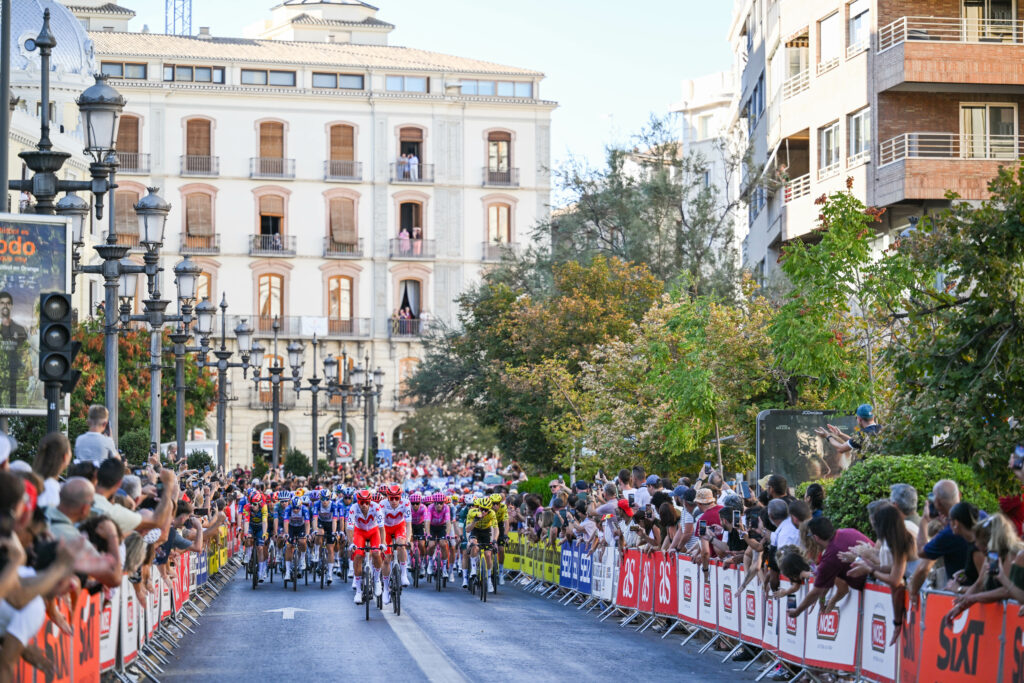

"Riders can't unite on actual safety issues"
Stop all the clocks, cut off the live tracker, prevent the rabid ‘cyclismo’ tweeters from sharing their juicy opinions.
Grand Tour season is over, for both the men and the women and, in an unexpected turn of events it’s the men’s season that has given us the most diverse set of jersey winners.
📊👕12 jersey winners of the 2026 GrandTours:
🏆GC
🇮🇹🩷🇩🇰Vingegaard
🇫🇷💛🇸🇮Pogačar
🇪🇸❤️🇪🇸Mas💨Points
🇮🇹🟣🇫🇷Magnier
🇫🇷🟢🇩🇰Pedersen
🇪🇸🟢🇧🇪van Aert⛰️KOM
🇮🇹🔵🇮🇹Ciccone
🇫🇷🔴🇪🇨Carapaz
🇪🇸🔵🇨🇴Buitrago👶Youth
🇮🇹⚪️🇵🇹Eulálio
🇫🇷⚪️🇲🇽del Toro
🇪🇸⚪️🇬🇧Onley— Cycling Statistics 📊 (@StatsOnCycling) September 13, 2026
We also have only one rider who appeared on the podium of two Grand Tours this year, and it’s neither Jonas Vingegaard nor Tadej Pogacar, but Felix Gall. The Austrian putting together comfortably the best season of his career to date.
There aren’t the words here to aptly describe Saturday’s insane mountain stage, not least because there also weren’t the images on the television telling us what was going on, with there seemingly only being enough TV motorbikes to cover two groups on the road.
In short, the first GC attacks began with 100km remaining, the leaders were repeatedly isolated and Sepp Kuss attempted to do a Simon Yates and catapult himself up the GC whilst the favourites behind looked at one another. It worked, moving up from 11th to 5th overall, whilst Primoz Roglic repeatedly set-up attacks only to lack the punch, before Felix Gall on the final climb managed to distance both him and even Enric Mas, though not by enough to reclaim his second place overall. Oscar Onley meanwhile suffered a difficult day and dropped to sixth overall, though he held on to his white jersey of best young rider. Oh, and Mikel Landa won! A beautiful, rather emotional sight…
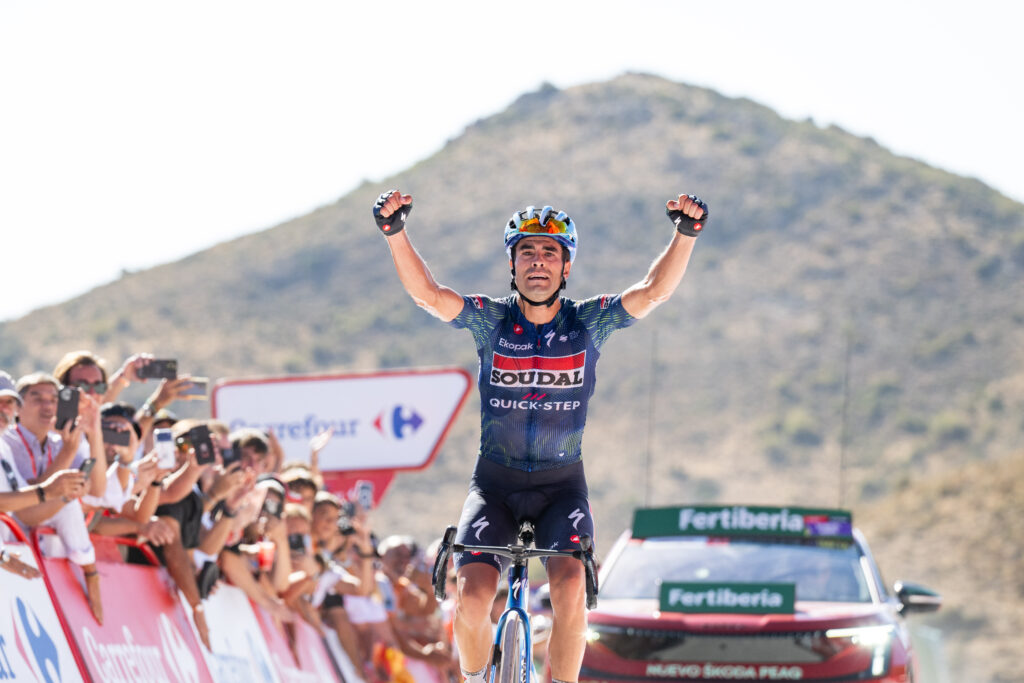
Then came yesterday’s stage, a Montmartre-esque final day in Granada comprising a slow ride from the suburbs before laps of a circuit with a climb up towards the Alhambra Palace. It was intended to be a firecracker involving all the main protagonists, only we then received the news that the times would be taken before the finish and that none of the race’s bigwigs needed to contest the stage.
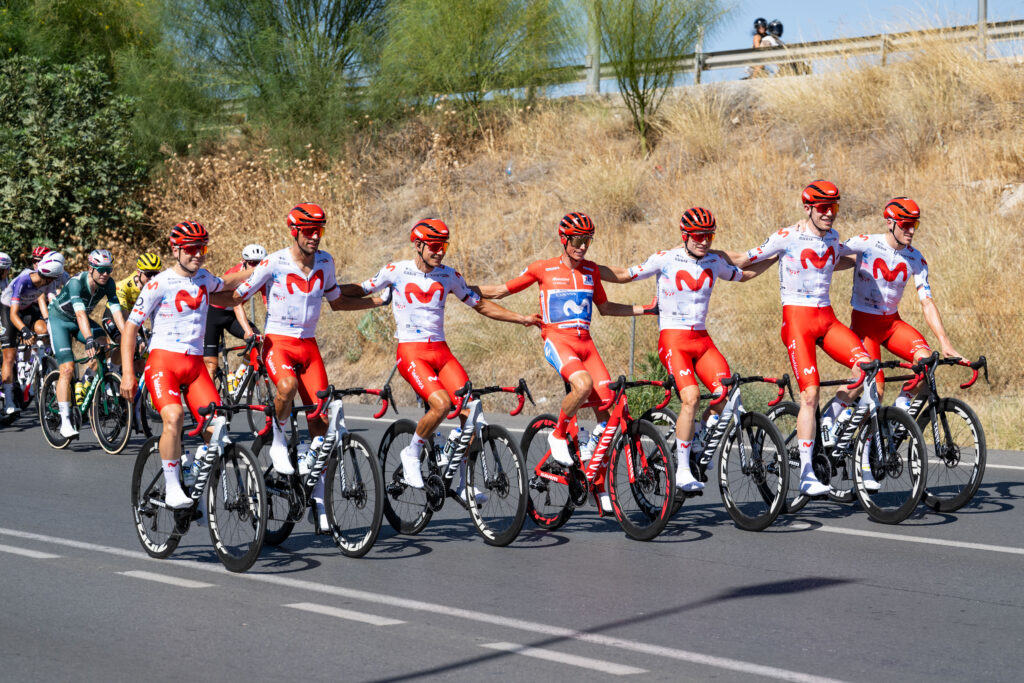
The end result was a peloton of the favourites led round rather sedately by Movistar, whilst around 30 riders broke free to contest the stage that was won, impressively, by Tobias Halland Johannessen.
It’s becoming a trend in cycling for riders to demand neutralisations in any city centre circuit. We saw the same thing when the Giro d’Italia visited Milan in May, and we’ve now seen it two years in a row in Paris, even though the weather this year was dry.
From the sofa yesterday, it was hard to know what could justify the neutralisation. The streets were a little narrow, but road furniture was well sign-posted, the descent of the climb was long but on a wide, looping road. The weather was clear, warm, but not scorching hot.
This has all prompted much discussion as to the future of final stages, and also the use of ‘safety’ as an argument for when a peloton doesn’t want to race, and would maybe rather spend longer doing this sort of thing…
YouTuber Benji Naesen wrote the longest critique of the neutralisation:
“I’m extremely frustrated and demotivated that riders can’t unite on actual safety issues that matter but regularly use their leverage with organisers and the UCI on symbolic GC neutralisations that don’t move the needle.
“Riders are wearing helmets that only have to adhere to the most basic safety specifications.
“Unlike other sports, there’s no comprehensive health screening and prevention policy related to RED-S. Stakeholders (UCI and teams) quarreled for 2 years over data ownership of GPS tracking, indirectly stalling the implementation of these safety devices.
WorldTour races still include downhill lead-ins to mass sprint finishes despite Lappartient saying that shouldn’t be happening, multiple years ago.
“Money that was meant to be used for rider safety, was used by the UCI to fight a court case against SRAM, and the CPA seemingly decided that without internal vote on whether the riders are OK with that money being spent there.
“Extreme Weather Protocol for extreme heat is a well-designed system, but wasn’t applied on Sierra de la Pandera when the red temperature band was hit. Those are some of the many issues where riders need a united stance, and stand up for their safety, but they don’t.”
well, as far as last stages go, that could’ve been an email. either gc neutralise all final stages of grand tours going forward or don’t (aside from things like extreme weather) but let’s not randomly bring it up the day before for a circuit that really didn’t seem that bad
It will remain baffling to fans that these things are being discussed the day before the stage. If a moratorium on GC-relevant final stages in Grand Tours is the sport’s desire, put it in the UCI regulations. Or, organisers, make every last stage a TT.
— Daniel Friebe (@friebos) September 12, 2026
Food for thought. For what it’s worth, I understand the argument people make that neutralising GC can improve the viewing quality of stages. But I think they’re wrong. The people who want to make a race of it can still make a race of it, but the idea that riders have a right to opt out of keeping up with everyone else is a bit nuts, particularly on a course that didn’t seem dangerous. Otherwise, where will it all end?
They should take times with 3 laps to go in the Mens World Championships Road Race.
— Donal (@Spelt_D_o_n_a_l) September 13, 2026
Why don't cyclists use the bike lane?
The ever reliable Facebook group of the same name has delivered another excellent submission, this time from Suffolk…

As has been correctly observed by many commenters on the photo, the solid white lines indicate no parking is allowed. but, it’s yet another photo to file into the folder of reasons why paint isn’t enough!
"More care and patience"
One interesting sidenote to this important article is that it’s striking the number of people that refer to the hit-and-run collision as an ‘accident’, even a ‘tragic accident’. It’s one bit of the framing of these collisions that make them seem unavoidable, which partly undercuts the impact of campaigns like this, regardless of the intent.
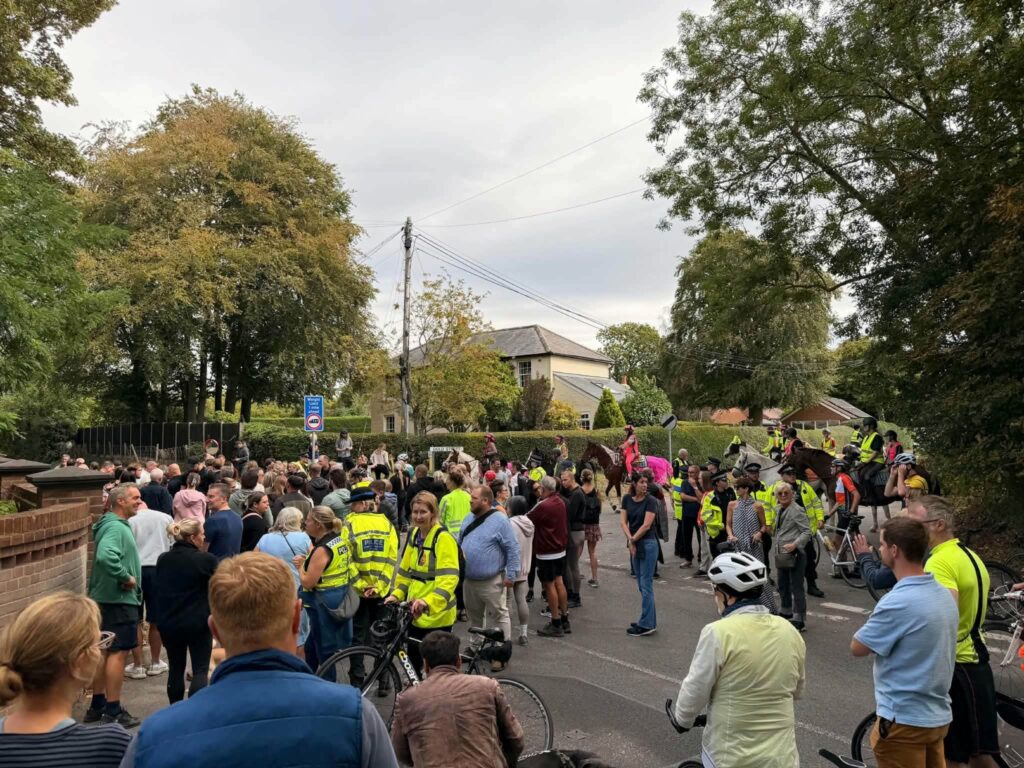
It’s language that police forces have done well to tone down in recent years, although other sections of the media and clearly in people’s minds there’s still a little way to go…
Commuting tips!

Outstanding merch
You’re a fool if you think I’m going to move on to bike lanes or e-bikes later today without a post on Primoz Roglic. Nearly 37, hit by a car a month ago, he’s just finished runner-up in a Grand Tour, but the defining moment for me came on stage 9, after losing time to Enric Mas… swipe to see the wise words in video form.
View this post on Instagram
Considering L’Equipe’s chief cycling correspondent many years ago wrote the Slovenian had the charisma of a fridge, seeing him blossom into this near-lackadaisical personality has been a joy and pleasingly, the team have also taken this spirit to heart. And to cotton…
View this post on Instagram
Is there a better life mantra you could have on your back? I think not…
Weekend racing round-up
As well as the top racers in Spain wrapping up three weeks of racing, many of the world’s best were in action across the pond in Montreal, racing a very useful race in prepartion for the Worlds there in two weeks. In fact, the GP Montreal even changed its route this year to mimic the worlds and attract a stellar start-list. Suffice to say it worked.
View this post on Instagram
Third and fourth in this year’s Tour de France broke free of a group including Remco Evenepoel and Tom Pidcock to contest the win, where the bull prevailed…
View this post on Instagram
Meanwhile in Italy, on the same day Mikel Landa won in Spain, compatriot Ion Izagirre triumphed in the Memorial Marco Pantani. There’s life in the old dogs yet…
View this post on Instagram
When Benji Naesen mentioned earlier about downhill sprint finishes, I suspect he was referring to the GP de Fourmies in France, which yet again saw crashes in the finale. Arvid De Kleijn came through to take the win there…
View this post on Instagram
In the women’s peloton, we have a British winner to celebrate as Lauren Dickson took her first pro victory on the final stage of the Faun Tour, won by Juliette Berthet.
View this post on Instagram
Elsewhere, Dominika Wlodarczyk returned to racing after the Tour de France to win the Stuttgart Grand Prix, whilst in the sprinting world, it’s the same as it ever was for Lorena Wiebes…
View this post on Instagram
Yikes!
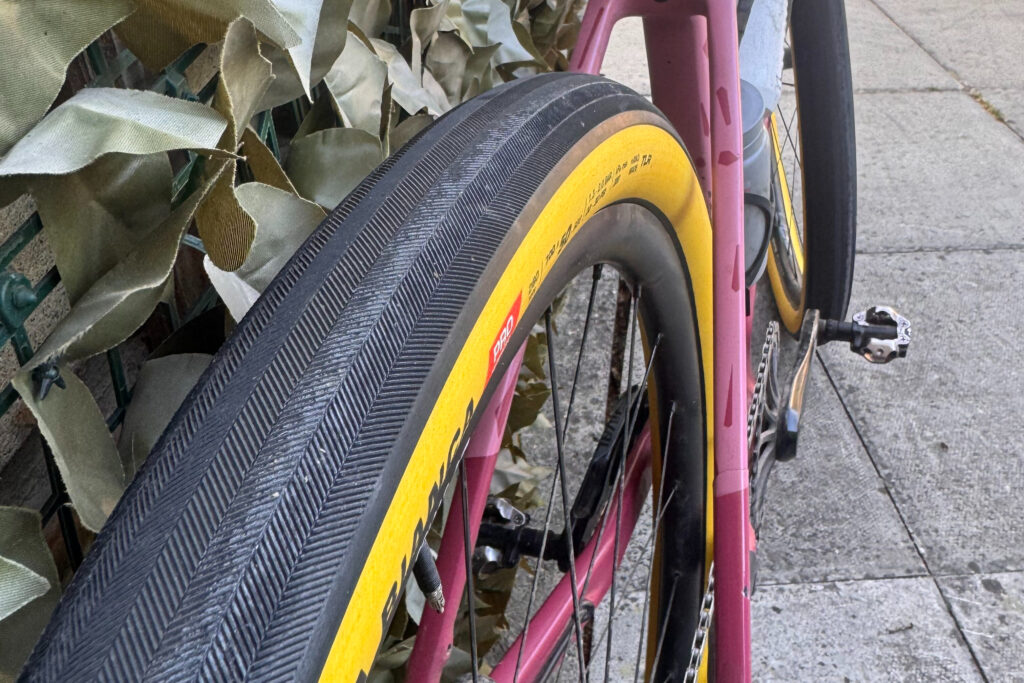
Can I keep riding with this tire? Else what should I do?
by
u/dosoe in
Justridingalong
I’m gonna say no.
Farewell Jan-Willem
View this post on Instagram
For all the words said and written about Jan-Willem van Schip in the last year or so, it’s this rather pensive pose that symbolises the Dutch track-star turned road menace’s look ahead to a chapter beyond racing. Much to the relief of UCI commissaires.
I say menace, it depends how you look at these things. There are some similarities between Van Schip’s interpretation of UCI bike regulations and the pioneering aerodynamic positions adopted by Graeme Obree.
A quick look at our archive finds we first mentioned him back in 2021 when a race commissaire allowed him to race with his modified handlebars before the UCI intervened from afar and disqualified him from the Baloise Belgium Tour.
This would be a recurring theme. Most notably last year, he was disqualified from the Tour of Holland for using an upside down seat post, although the strangely long, narrow, aero-bar-esque handlebars coupled with his helmet and mad glasses certainly added to the aesthetic and lore that surrounded him.
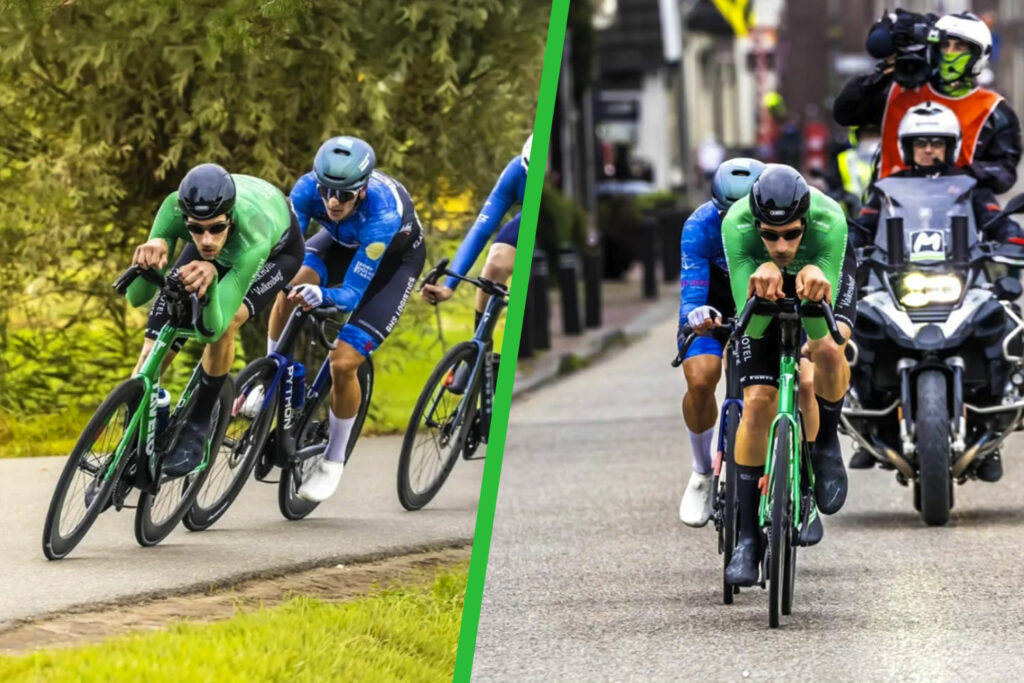
After that incident prompted a lot of head-scratching, the disqualifications began piling up, once in May for some ‘puppy paws’, then again the following month for stuffing a bottle down his jersey front.
Incidentally, I ended up doing a deep dive on that last disqualification and concluded that the commissaires were unaware of the rules they were enforcing, with Van Schip attempting to make the most of regulations before a ban on bottle-stuffing came in the following month. Cheeky? Perhaps. But not illegal.
His retirement at the Six Day race in Rotterdam in December brings an end to this rule-bending and closes a chapter on some old-school innovation that the bosses didn’t like. It means the 32-year-old ends his career in the discipline where he became a two-time world champion.
It’s also the discipline where he headbutted riders in the Olympic Madison final and was subsequently disqualified from world championships for swearing at race officials. Swings and roundabouts, but I suspect the overwhelming feeling among race organisers will be one of relief.
Old inner tubes are useful!
View this post on Instagram











8 thoughts on ““Extremely frustrating”: Vuelta peloton criticised for neutralising final day circuit that “didn’t seem that bad”; UCI ‘toothcomber’ Jan-Willem Van Schip calls it quits + more on the live blog”
It’s a shame that the final day neutralisation has distracted from the fact that this was one of the best GTs in quite a while, with all the jerseys in play right up to the penultimate day. It’s certainly ridiculous to leave the decision on neutralisation until the evening before the stage but more generally, why not? It’s only really a variation on the sprint safety zone, after all, and the final stages have effectively been neutralised (when they are not time trials) for a long time with the GC teams staying in touch until the safety zone and then letting the sprinters go. It was a great finish despite, or maybe because of, the neutralisation and it was rather nice for the winner’s team to be able to ride in behind the peloton so that all the fans got a good look at them and could show their appreciation of the winner. If we want the excitement of narrow climbing finishes on the last day (as opposed to the, frankly, tedium of watching the peleton power up and down the Champs eight times) then it makes sense to arrange matters so that those who want the stage win can give us some thrilling racing without being encumbered by all the GC teams being forced to crowd the front. Everyone saying “God almighty, it’s disgusting they’ve just decided not to race” is ignoring the fact that there are many times in a GT when the majority of teams will decide not to race, when they let a breakaway go, when the sprint teams are given free rein et cetera. The only thing I would disagree with was the removal of the final points at the finish, if the green jersey had still been in play that would have been unfair on the second placed rider. However, apart from tweaking that I thought it worked well and quite possibly gave us a more exciting finish than we would’ve had without the neutralisation.
@Rendel Harris
I think it says a lot about the previous two days that not many guys chose to race for the sake of racing.
If the win is prestigious (like Paris) and/or the previous stages haven’t been so brutal then more teams and riders will choose to race.
It’s a shame because Paris the last couple of years has been great and I can see what they were thinking! Few minor tweaks and I think it works.
I’m also from a generation where an organiser could just say “the course is safe, if you want your prize money, race. No tears” and it would have happened unless Hinault didn’t fancy it. Which he would’ve.
I could also see a situation where a GC contender wants to work for one of their team-mates who has worked for them for three weeks so a GC cordially agreed truce wouldn’t be possible, but how big would the time gaps be, anyway?
@panda I don’t think there would be a problem with maintaining a GC truce, because it only has to be maintained until the times are taken. In the case of Paris, everyone could ride in fairly easy, couple of parade laps up and down the Champs, times taken, and then if after that Pogacar wants to tow Del Toro round three laps of Montmartre, or indeed go for the stage himself, no worries.
I too am of the generation when the organisers held that sort of sway, nothing like as important now when 90% plus of the top riders’ salaries come from the team rather than prize money, indeed I believe it’s customary for the winner nowadays to give their prize money away to the rest of the team. This is, I believe, a good thing; although rider power can sometimes appear a bit excessive in its demands (the main reason for asking for neutralisation yesterday, as explained by the rider representative, seemed to be “we’re all knackered”, which was pretty ridiculous) at least organisers can no longer dictate that they must go on in dangerous circumstances. As they were saying on commentary yesterday, what they need to do is for the rider representatives and the organisers to get together as soon as, or even before, the route is announced and iron out any problems then instead of waiting until the eve of the stage or even, as in stage of the Giro this year, to complain about the parcours while it is in progress.
Although van Schip has been a victim of the UCI’s pettiness and retrospective application of the rules, I think this is a step towards Making Cycling Aesthetically Pleasing Again.
Really, pro-cycling isn’t about winning races, it’s about looking fantastic. I only hope that the World Champs are won by cyclists who have a commitment to plastering rainbow bands on absolutely every bit of their kit.
If the riders want a parade lap, then let the organisers set an officially neutralised parade lap.
If some of the riders just don’t want to race, then that’s between them. They don’t get to badger the organisers to neutralise the end of the race. And anyway, if they take final GC times at X km to go, that just sets the race to end at X km to go. If a GC rider really wanted to, they could try attack before then (course, it would lack the course feature advantageous for getting away that the riders wanted excluded.. but still).
The riders trying to bring in safety, when conditions were fine and the circuit was also fine, is just going to undermine their voice in the future when they try bring up safety the next time. Stupid.
@Paul J More information has come out today which indicates that the riders did not believe that the conditions were fine, apparently a lot of the roads were extremely slippery (this seems to have been a problem throughout the race, presumably due to dust caused by the excessive heat) and so the many hairpins had become hazardous. Secondly the riders felt that the nature of the circuit made it impossible for any riders suffering a crash or mechanical to get back on as the peloton would be so strung out and it would take so long for assistance to reach anyone in need. Decathlon rider Sander de Pestel told journalists that in his opinion a GC rider wouldn’t be able to get back on even if they had an incident at 40 km to go. Take that with a pinch of salt or not as you wish but those two sound like quite legitimate reasons for the riders to be concerned.
@Rendel Harris Interesting thanks.
We do have to go back to the fundamental issue here. It is a _race_. And the GC is meant to reflect who is the best rider overall, over a range of conditions, over the 3 weeks. And part of that is using their judgement to navigate the course.
I mean, riding in a big, tight, bunch on a straight road is dangerous too. See Pogacar. Should _all_ of the Grand Tours be neutralised, bar the uphill sections and TTs? Where are we going with this?
I definitely agree with the many comments – ranging from commentators on TV, to road.cc journalists, to comments here and elsewhere – that this question needs to be addressed more formally within the rules of the UCI. Or else this fester and get ever more ridiculous.
I like the chain stay protector.