
It is “rare” for pedestrians and cyclists to interact at ‘floating’ bus stops, a new Transport for London report – which characterised the infrastructure as “very low risk” – has found.
The report, one of three published by TfL last week, noted that while floating bus stops (otherwise known as bus stop bypasses) may deter some older and disabled people from using public transport, this number was “not statistically significant”.
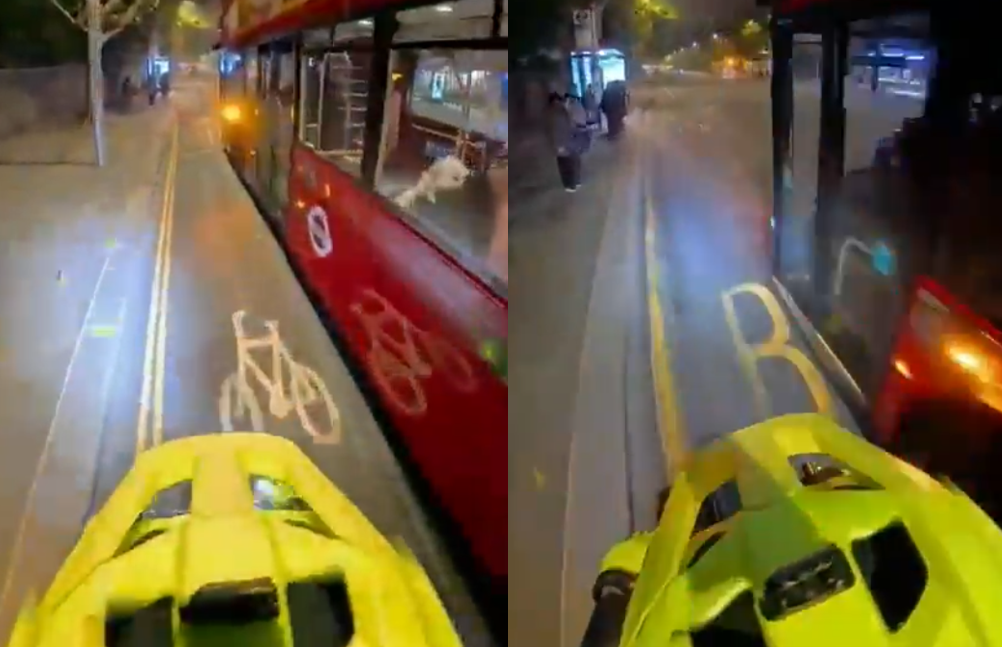
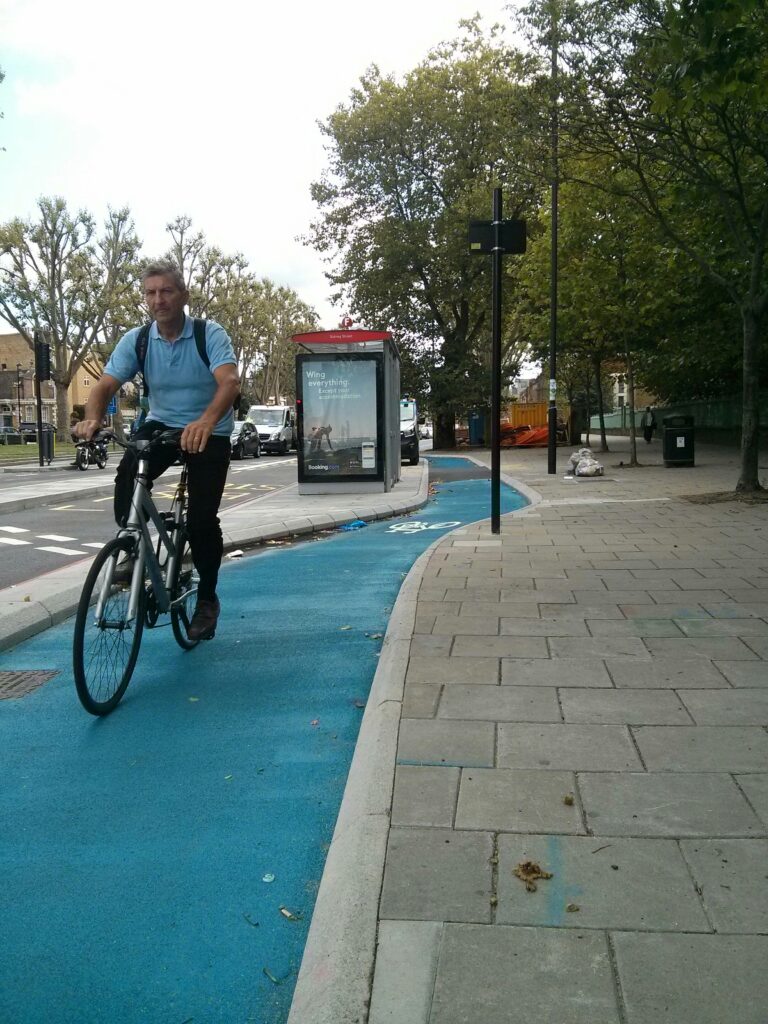
Bus stop bypasses, a bike lane design which sees passengers walk cross cycling infrastructure to access bus stops from the pavement, enabling cyclists to avoid riding in traffic to avoid a stationary bus, have been used widely across Europe and some UK cities due to the challenge of building effective protected cycle lanes on bus routes when road space is limited.
However, they have also attracted widespread criticism, notably from blindness campaigners and charities who say the design puts blind people in danger and can be intimidating, especially at busy times.
Earlier this month, the London Assembly voted to call for the installation of floating bus stops in the capital to be paused.
Passed by 17 votes to three, the motion asked London mayor Sadiq Khan to instruct Transport for London to halt the construction of any kind of bus stop bypass, after TfL had already paused designs that require bus passengers to step directly into a cycle lane.
According to Reform UK Assembly Member Keith Prince, who proposed the motion, “the growing number of collisions and near misses cannot be ignored”.
“Every Londoner should be able to get on and off a bus without fearing for their safety. Yet floating bus stops are putting pedestrians at risk, particularly blind, partially sighted, elderly and disabled Londoners,” he said.
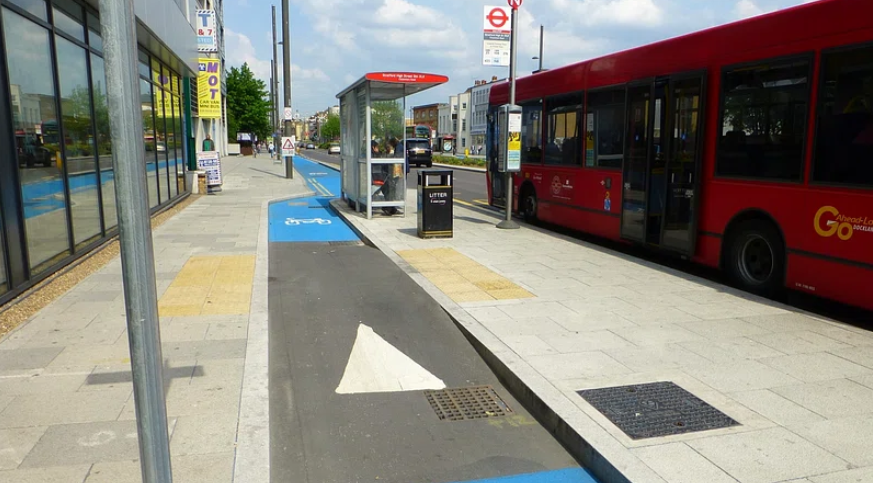
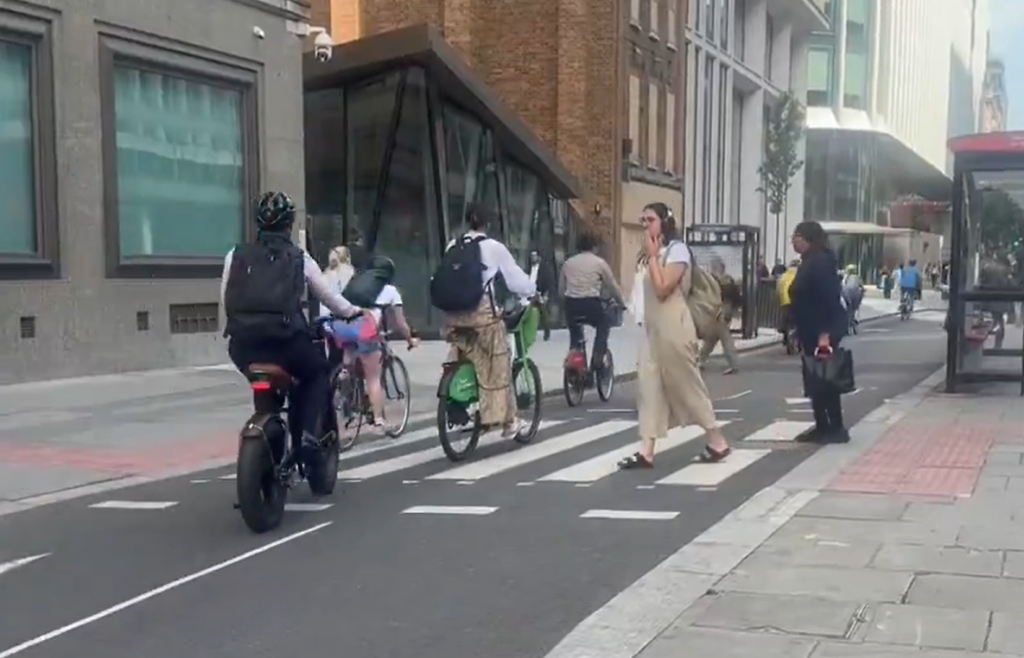
However, Transport for London’s new report has found that, in the three-year period from 2020 to 2022 analysed, there were only five collisions between pedestrians and cyclists at floating bus stops (representing under one per cent of all such collision), and one involving an e-scooter user.
By contrast, 11,400 pedestrians were injured by motorists in the same period.
The reports also compared data from March to August 2018 and March to August 2023, before and after the floating bus stops in question had been implemented, concluding that collisions or incidents between cyclists and pedestrians at the infrastructure are “rare”.
“Concerns have been raised by some older and disabled people, particularly blind and partially sighted people, about the accessibility and safety of bus stop bypasses,” TfL said in a statement.
However, the body said its new report shows that “the risk of pedestrians being injured at a bus stop bypass remains very low, with incidents at bus stop bypasses accounting for less than one per cent of pedestrian casualties involving cyclists during the three-year period from 2020”.
> Warning government considering ban on floating bus stops “could stop new protected cycle lanes”
As part of its report, TfL physically inspected the 192 floating bus stops currently in place in London, representing around one per cent of the nearly 20,000 bus stops across the capital.
Meanwhile, a second report assessed TfL’s road safety campaigns when it comes to floating bus stops, including on-board audio announcements telling passengers when they need to cross a cycle lane to access or leave a bus stop.
TfL said that it has updated its TfL Go app to alert passengers when a bus stop is located next to a cycle lane, in order to “increase pedestrian confidence”, while it is exploring new layouts for visually impaired passengers along with the use of AI cameras to allow users to “spot” when to cross the cycle lane.
The transport body has also commissioned an independent consultancy firm, Steer, to deliver a ‘design enhancement’ review, “exploring how bus stop bypasses could be improved through an inclusive design approach.”
“TfL has aligned its approach with the Government’s statutory guidance for all new schemes and is working with boroughs to address sites that do not currently meet these,” the statement said.
39 of the 60 bus stop bypasses earmarked for improvement have either already been upgraded or are scheduled for completed as part of wider road safety schemes.
The reports were welcomed by the London Cycling Campaign, who said in a statement posted on social media: “TfL has redone its homework on bus stop bypasses (the most common floating bus stop design) and found they’re basically safe and needed (again) and with no real impact on bus ridership.
“We’ll keep banging the drum for floating bus stops, because to put it simply, no floating bus stops, no safe and protected cycle network.”
However, TfL has been criticised by the National Federation of the Blind, who say the report undersells the dangers faced by pedestrians at floating bus stops, claiming that many incidents go unreported.
“What we have is people not telling the police or reporting if they’ve been hurt, because they don’t know who’s at fault,” the NFB’s Sarah Gayton told the BBC.
Erik Matthies, the Royal National Institute of Blind People’s policy lead for travel and transport, also noted that the group’s research suggests that 40 per cent of blind and partially sighted people avoid floating bus stops altogether.
“Low injury reports don’t tell the whole story – there is no safe and accessible way for people like me to cross the cycle lane to and from a bus stop, and [the] review from TfL does not address that,” he said.