


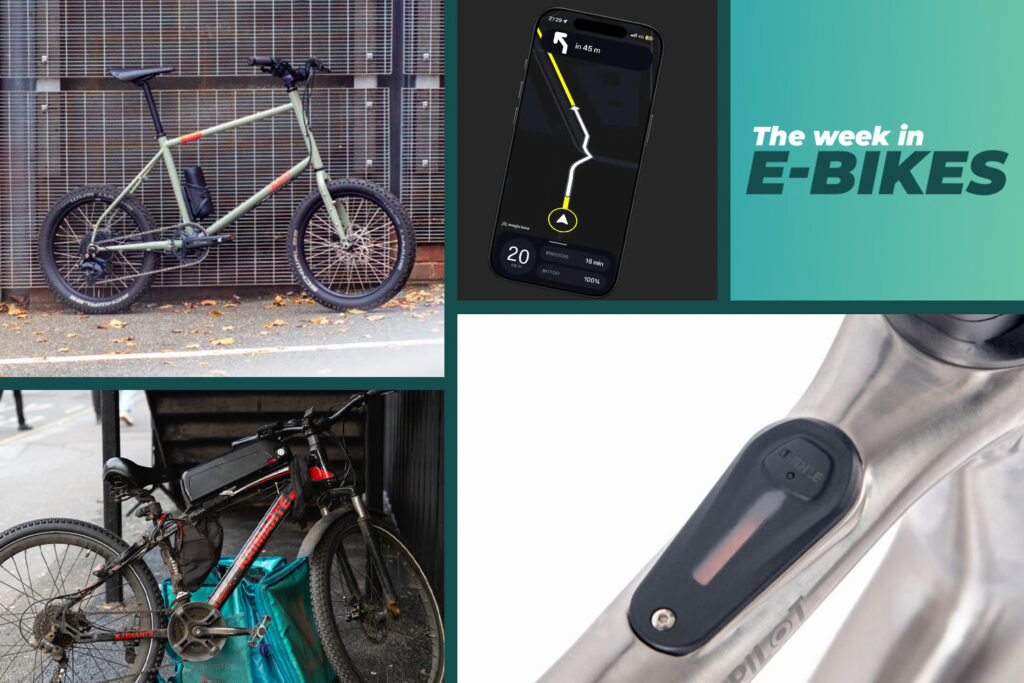

As the first chill of winter spreads across the UK, we invite you to warm yourself by the Week in E-bikes woodburner electric fire. This week, we’ve got Andy Burnham’s intentions to fight illegal e-bikes and conversion kits, UK bike stalwarts’ new electric models, plus a nice update for Vanmoof riders.
UK government could crack down on non-compliant bikes and high-powered conversion kits

Prime Minister Andy Burnham could introduce fresh legislation to clamp down on non-compliant e-bikes and high-powered DIY conversion kits, both of which are illegal to use on roads or paths, but are legal to buy due to the ‘private land’ loophole.
During Prime Minister’s Questions on Wednesday, Labour MP Martin Rhodes asked what the government was doing to tackle the issue.
“My constituents in Glasgow North regularly raise with me the issue of illegally modified e-bikes travelling at dangerous speeds on our roads and pavements”, said Rhodes. “Online marketplaces are selling unsafe e-bikes and conversion kits that take pedal cycles beyond the legal limits, leaving pedestrians, families, vulnerable people worried for their safety when they’re going about their daily lives. Can the Prime Minister set out what action the government is taking to hold online sellers and marketplaces to account for selling these products?”
“We are considering tougher regulations for the sale of noncompliant e-bikes and conversion kits across the UK”, Burnham said in response. “We will, of course, work with the Scottish Government to ensure it applies in Scotland, whatever we decide. I agree with my honourable friend: the safety risks posed by e-bikes that are running at excess speeds need to be stopped”.
The form a potential crackdown on illegal bikes and kits will take is yet to be confirmed. EU member states are facing pressure to make online sellers more accountable from the European Cycling Industries consortium, and it would make sense for the UK to piggyback any new rules that are enforced.
However, new legislation might take a little while in the UK — the Mayor of London recently urged the Department for Transport to speed up its implementation of micromobility scheme regulations.
Pashley powers up Skyline mini-velo
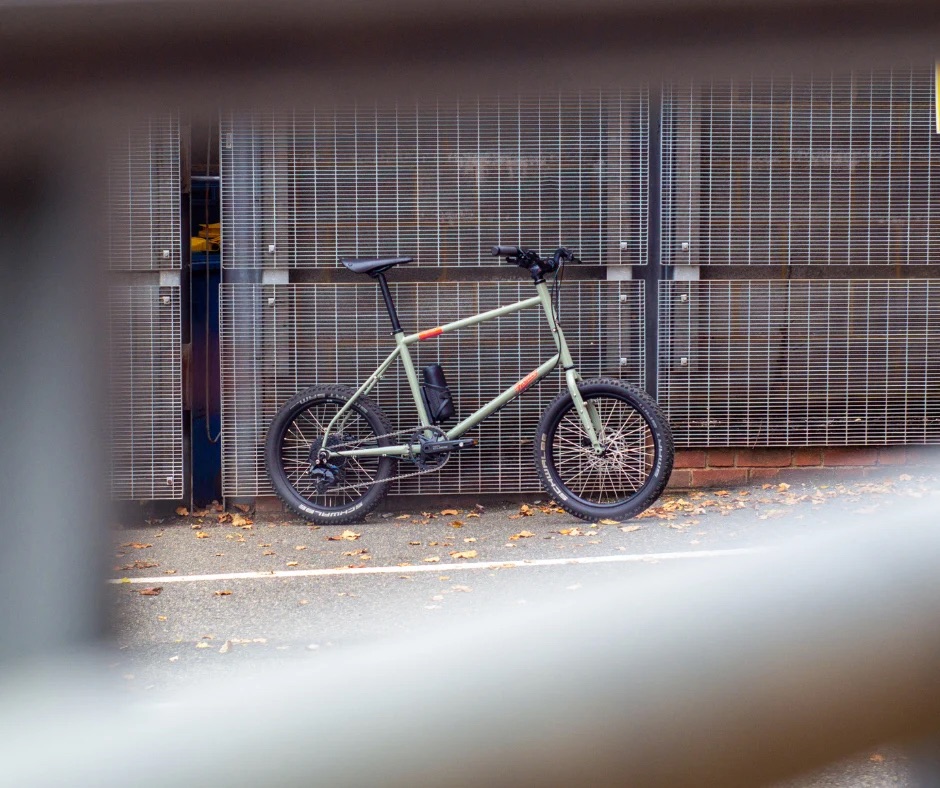
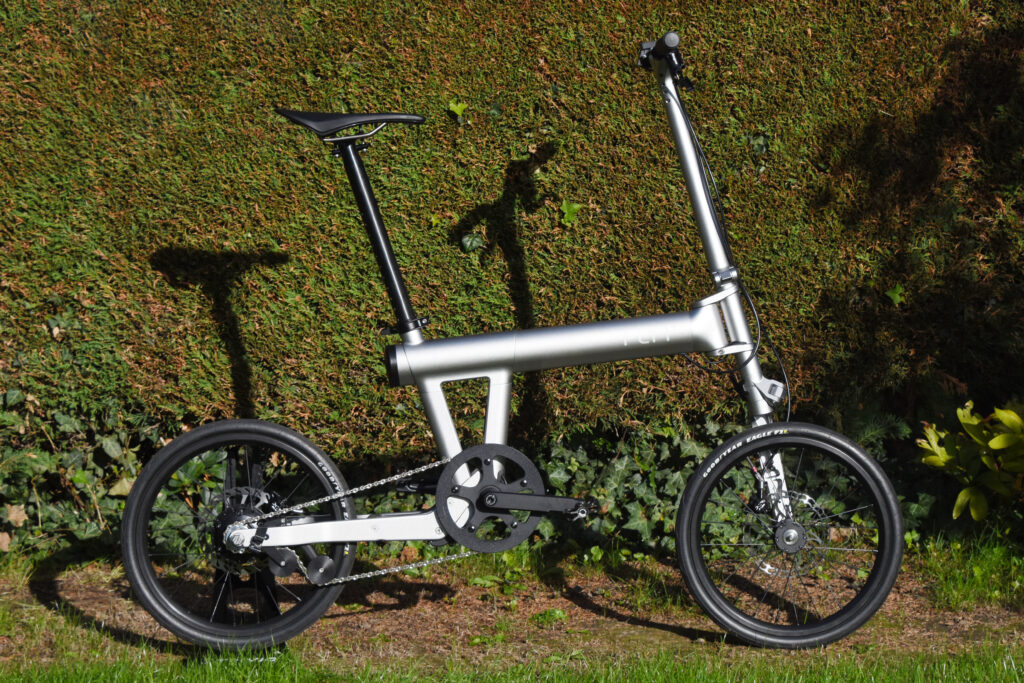
Pashley’s Skyline mini-velo is one of those adorable little bicycles that turns heads while being surprisingly versatile — I once saw an intrepid Audaxer tackling a 200 km Brevet Randonneur on one. Now, Pashley has introduced the Skyline E, an electric version of the bike.
“The Pashley Skyline E totally expands the possibilities and experience you get from a mini velo”, said Andy Smallwood, Pashley’s CEO. “Navigating the city, commuting to work, hitting trails or out for an adventure and sheer fun — this new e-model opens new horizons providing you the power to go far and beyond your everyday ride”.
The hand-built Reynolds steel frame is much the same as its non-electric counterpart, but the E edition slides a Mahle XS X30 drive system into its 20-inch rear wheel and pairs it with a bottle-cage battery that doubles as a USB-C power bank. Speaking of banks, the bike starts at £2,695 with a riser bar and knobbly tyres, and £2,999 for drop handlebars and smoother tyres. Both feature a Shimano CUES 10-speed drivetrain and hydraulic disc brakes, and they’re available in three colourways (Earl Grey, Bottle Green, and Mustard Yellow) and three sizes. Cute!
… and J. Laverack jumps on the electric bandwagon
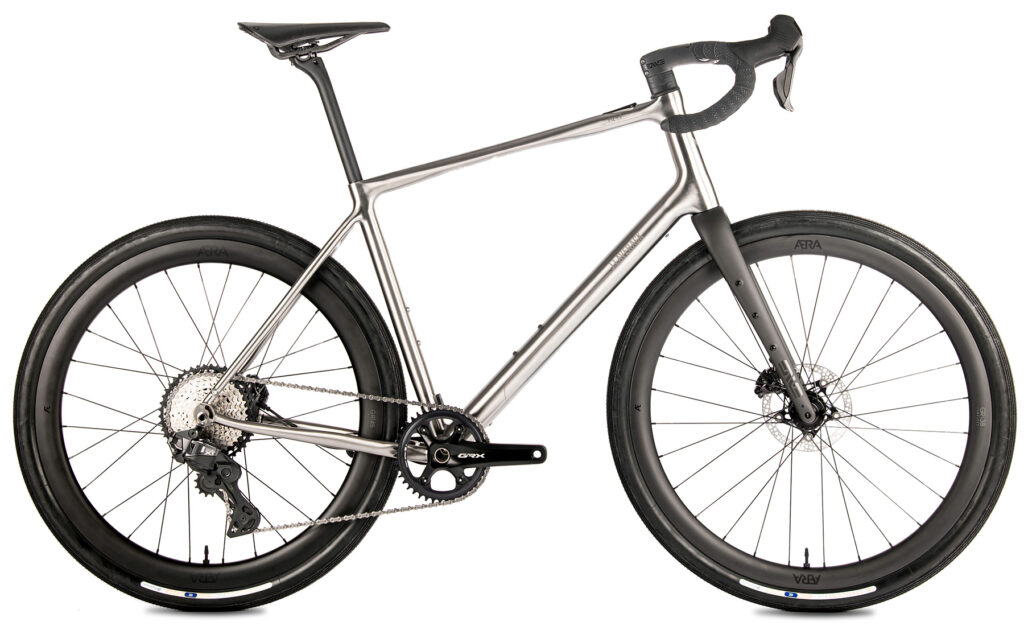
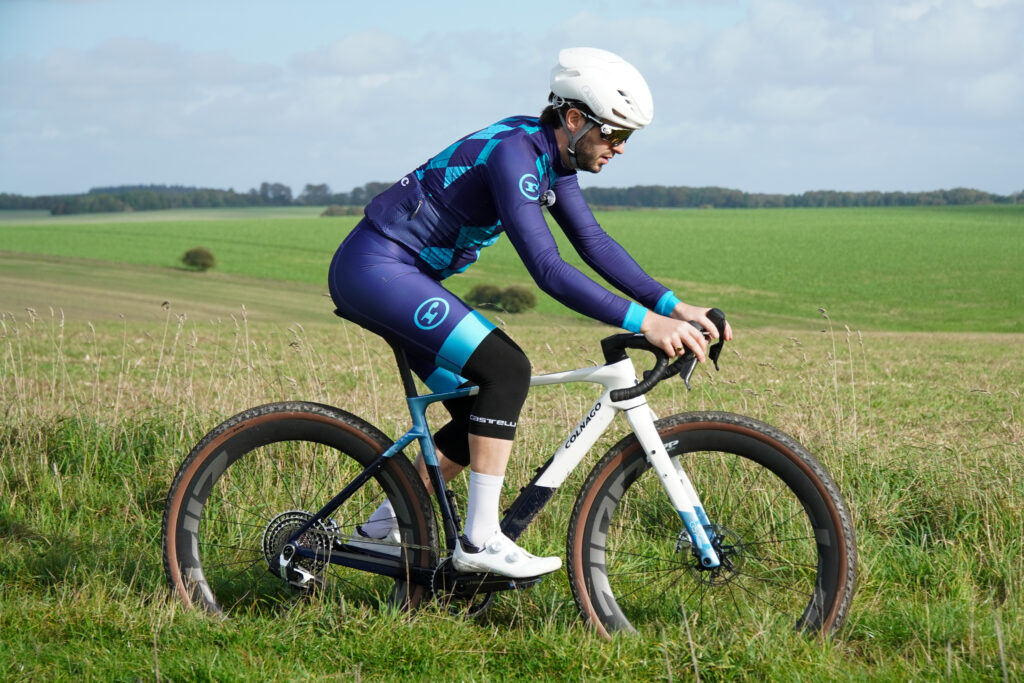
Hot on the heels of Litespeed last week, UK-based bicycle manufacturer J. Laverack has announced the electrification of its slick titanium models. Making use of the Mahle X20 system, the range can deliver a peak torque of 65Nm and peak power output of 275W, with a range of up to 200km plus an extra 55km with an optional range extender.
J. Laverack’s partially 3D-printed frames can be built to suit your physiology, and they come in MTB, all-road, gravel, road, and urban flavours. The bikes start at £7,495, and they’re limited to a run of just 22, so you’ll have to be quick. And rich.
Vanmoof adds free Rider Nav turn-by-turn routing to its app
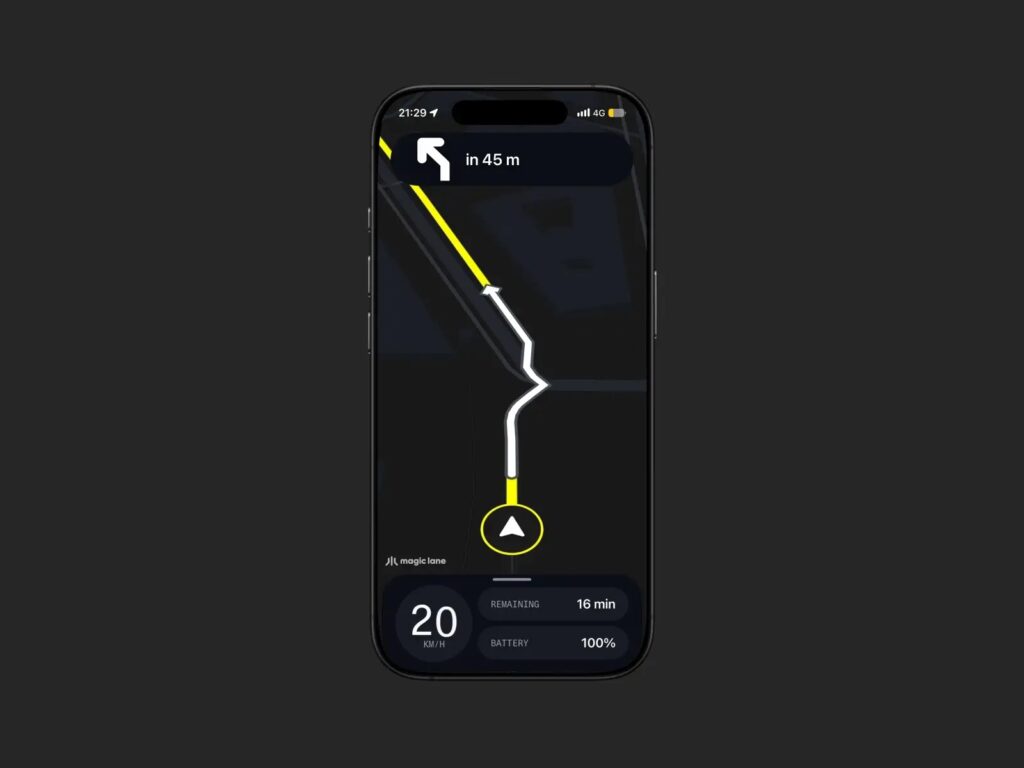
The seemingly immortal Vanmoof has given its users an early Christmas present in the form of its biggest-ever app update, with all-new in-app journey routing. Dubbed Rider Nav by the Netherlands-based e-bike company, the update gives Vanmoof users seamless turn-by-turn navigation directly in the app, with spoken and haptic turn alerts, plus battery percentage and range estimates alongside their ETA on-screen.
“We set out to create navigation that is completely in line with what riders expect of their bikes: functional, beautiful, intuitive and best-in-class”, said Eliott Wertheimer, Vanmoof’s CEO. “We spent a lot of time optimising our routing algorithm and map integration to create one of the best ebike-optimised navigation systems in the world. Our Rider Nav is an extension of our bikes; a joy to use, 100% rider-focused and a massive time saver. This has been in the works for a long time and it delights us to be able to offer this at no cost to all our riders”.
The app is available now for iOS and Android users and will work with all connected Vanmoof e-bikes.
Since this article was first published, the term ‘illegal e-bike’ has been removed as it falls foul of our style guide





12 thoughts on “Burnham promises ‘tougher regulations’ on “e-bikes that are running at excess speeds”; Pashley introduces adorable electrified mini-velo; J. Laverack goes electric plus more”
So for years now we have allowed imports of illegal e-bikes and conversion kits, we have spent huge amounts of money on the police to remove them from our streets, and now at last we propose to do something about it. What a stupid country we are. Government ??
@Circles you could say the same about so many things; we used to permit smoking on busses and in offices, we used to permit the use of small children to clean chimneys and operate dangerous machinery, we used to permit 14 year olds to drive 125cc motorbikes. Sometimes legislation takes time to catch up with technology and attitudes.
@Rome73 The examples you give relate to issues which came up long after those were found to be bad ideas or dangerous. We knew long ago of the problems with illegal e-bikes, the reason for the EAPC regs in the first place.
@Rome73 He couldn’t say the same about those things as they were all legal at the time they were taking place. These electric motorbikes are already illegal to ride in public space.
@Circles Like @Rome73 said, legislation takes time.
One reason is that you need to make sure that it is thorough and well thought out, and enforceable.
The other reason is simply that democracy works that way. Rules and regulations usually only come in play *after* something has proven to be problematic. It’s not because no one sees those problems coming, but because politicians know damn well that if they try to regulate something *before* it becomes a problem, they will make themselves/their party very unpopular.
People will say “You’re not allowed to do anything anymore these days!!1!”. It’s only when the problems get to a level that no one can deny them, that legislation will be well enough supported politically.
Yet again idiots are talking about illegal e-bikes.
E-bike is a legally undefined term, that in popular usage can mean any thing from an electric motorbike to an electrically assisted pedal cycle (EAPC).
Electric motorbikes are not illegal; their use may be if they are used without registration, tax, insurance, a licence & helmet, on a public road. They can be legally used on private land, with the landowners permission, when SORNed.
NB. An EAPC that does not conform to the EAPC regulations 1983 . . . etc., is treated as a motorbike by the law. An EAPC that does conform is treated as a pedal cycle by the law.
There is existing legislation that covers motorbikes used illegally on a public road. The police need to understand this & the EAPC legislation (the police have erroneously seized EAPCs being used legally, recently) and they need to enforce it.
The thought of politicians & the DoJ successfuly defining “high powered conversion kits” & their constituent parts is laughable, notwithstanding the fact that their use on private land is quite legal.
@ChrisA Its almost impossible to police them and its almost impossible to stop the import of them. As you say, firstly they are fundamentally legal. Secondly, plenty of completely legal kids/setups can be made illegal with simple modifications. There are some things you simply can’t legislate your way around without doing what is all to easy to do and penalise the law abiding public and doing little to deter the people happy to break the law.
It would be akin to deciding that the solution to knife crime is to ban knives.
@mctrials23 Er . . . they have. At least so far as zombie knives and machetes etc. are concerned! 😉
But there are already rules, that have remained unchanged for decades that cover the use of normal knives in public places (under 3″, other with justification etc.).
Unfortunately, as you say, there seem to be more people who are willing to ignore the rules, these days.
What is required is for the police to enforce the rules (I might have said this before lol)
I think that the politicians are part of the problem; their inexperience and the consequent ever increasing complexity of our legislation means that the police are themselves are often falling foul of the rules. A fact that the legal profession is ever willing to use to line its pockets by exploiting the confusion.
(Edit – I see ChrisA got there first!)
@mctrials23 Well … actually there are (and for some time have been) rules around the *sale* of knives, despite knives already being a ubiquitous thing.
There are plenty of things that society / government makes much less of an issue with regulation – even while knowing these will still be available and be misused to some extent. Most people do what most people do; and humans in general avoid activities when they’re made harder. So we can make use of the opposite of “nothing succeeds like success”. Of course such measures have to be aware of the “lure of the forbidden” but that may be a smaller effect.
How you perceive interventions like this seems to be very personality-dependent – and of course whether you approve of “regulation” generally. You might claim that restrictions are useless “because some people will always ignore / get around them”. Alternatively you might look at the effects (e.g. likely that there are far fewer problems / fewer people are doing something after it was made less attractive) and conclude this could be effective harm minimization.
@chrisonabike I’m not quite sure what you’re saying here if I’m honest. What are you suggesting the government do to stop the proliferation of illegal e-bikes considering their appeal to such a wide range of people.
@mctrials23 “… the proliferation of illegal e-bikes considering their appeal to such a wide range of people”
A wide range of people? Well – is that a fact? Is that meaning that “everyone has one” – I certainly do not see that. Do you mean “criminals and more law abiding types”? Or some other range?
On the numbers – although I see a lot of non-legal e-things out there, that is relative. Discounting the food delivery folks * I would say I see fewer of these about than (AFAICS) legal bicycles. And we all know that cycling is a fairly minor activity.
BUT “user-friendly” cheap e-things are still fairly recent.
* In that case there are several paths to regulation. Unfortunately the delivery food companies have got in early in the UK with their lobbying and legal work, and of course now there are complicating concerns around “illegal workers” and “racial profiling”…
@mctrials23 Since they are as legal as motorbikes – well, usually a bit less – perhaps as much “ceremony” could be applied to their sale? (Maybe age restrictions, telling shops that if they see people just ride off with them they should report it etc…)
As you note they’re illegal, what is to stop the police (who already do so in some cases) being reminded that they can / should confiscate these?
If you’re getting at “where do the resources come from” then I agree – both police and especially the likes of trading standards are under-resourced. That’s why I’m wondering about other “just make them less appealing” measures.