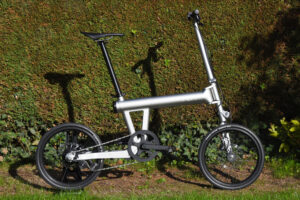
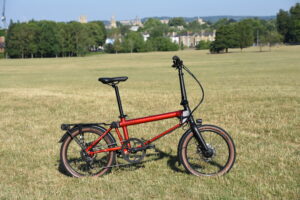
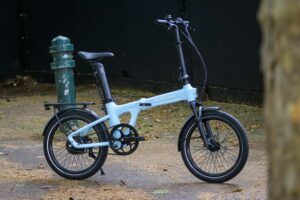
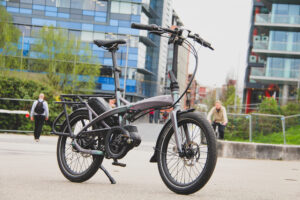
Up until now Brompton’s electric (and non-electric) folders have pretty much set the standard for bikes that fold quickly and easily into small, light, portable packages. But a new kid on the block, Cambridge-based Flit – a firm with engineering innovation at its heart – is looking to challenge that. Its lightest folding electric bike, the Flit M2i, weighs only 13.3kg and the firm is keen to highlight that at £2,999, it is 500g lighter than the Brompton Electric T Line and barely half the price.
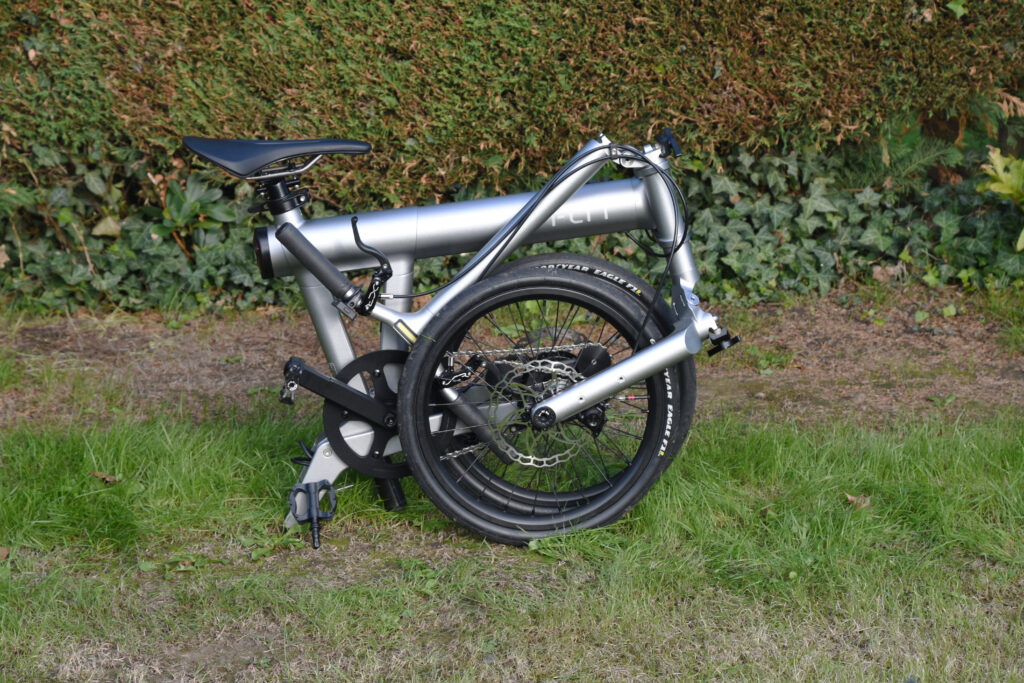
Like the £5,799 Electric T Line ‘base’ model, when folding the M2i down, the front and back ends tuck around a central mainframe. Both bikes have a single gear and a rear hub motor and use 16in wheels to make the fold as small as possible.
On closer inspection though, the M2i is strikingly different in a number of ways, so let’s delve into the detail.
M2i spec: Clever design, not exotic frame materials
How has Flit managed to make the M2i so light while mainly using the ubiquitous bike frame alloy, 6061 aluminium?
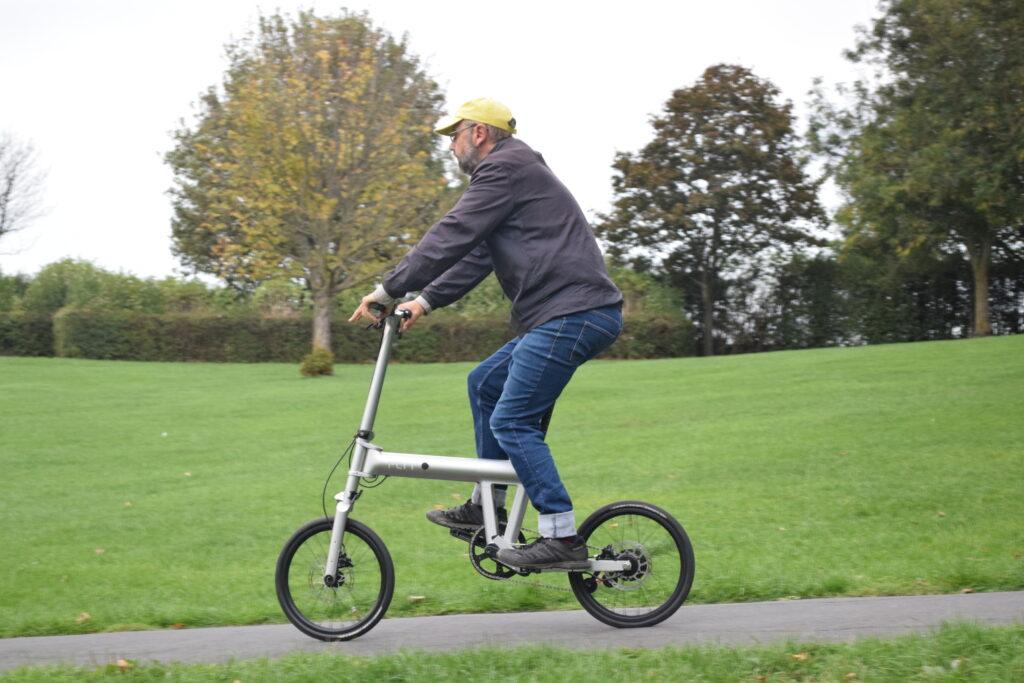
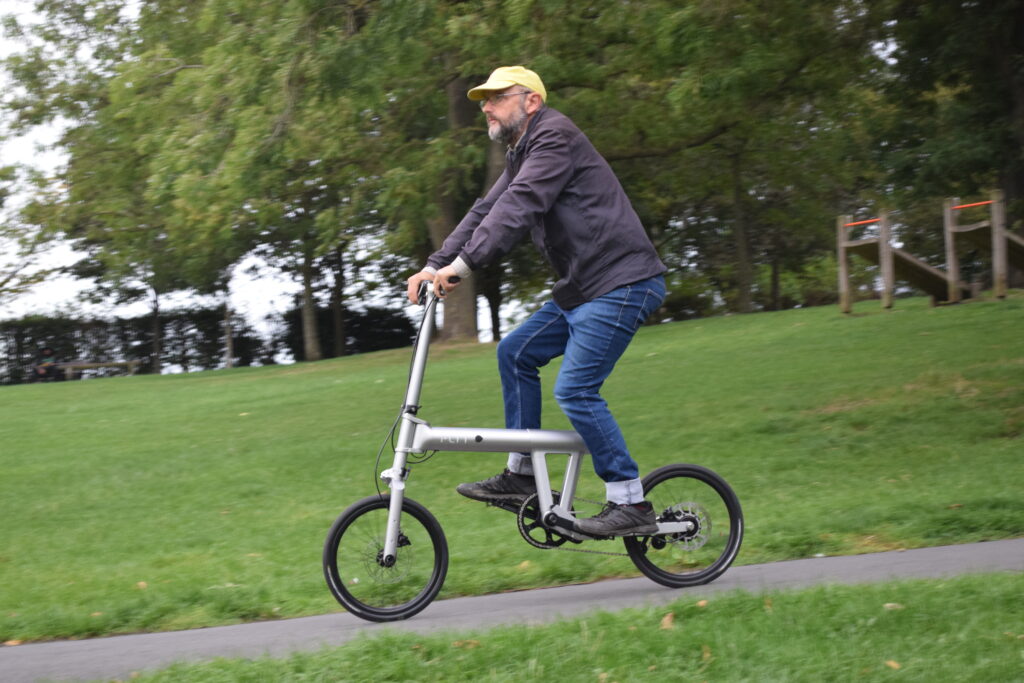
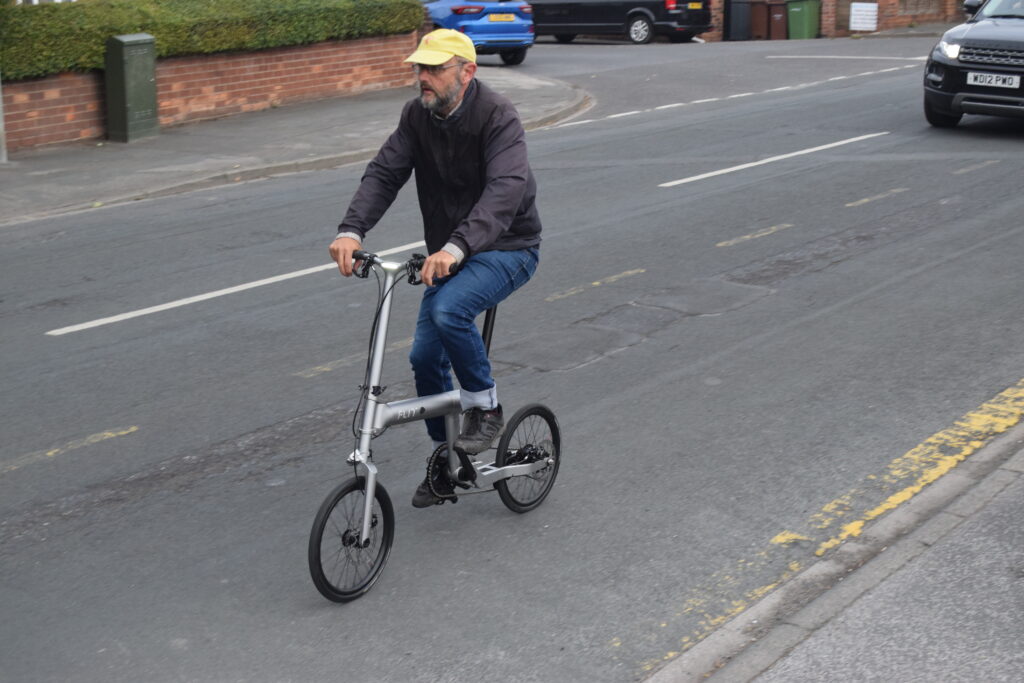
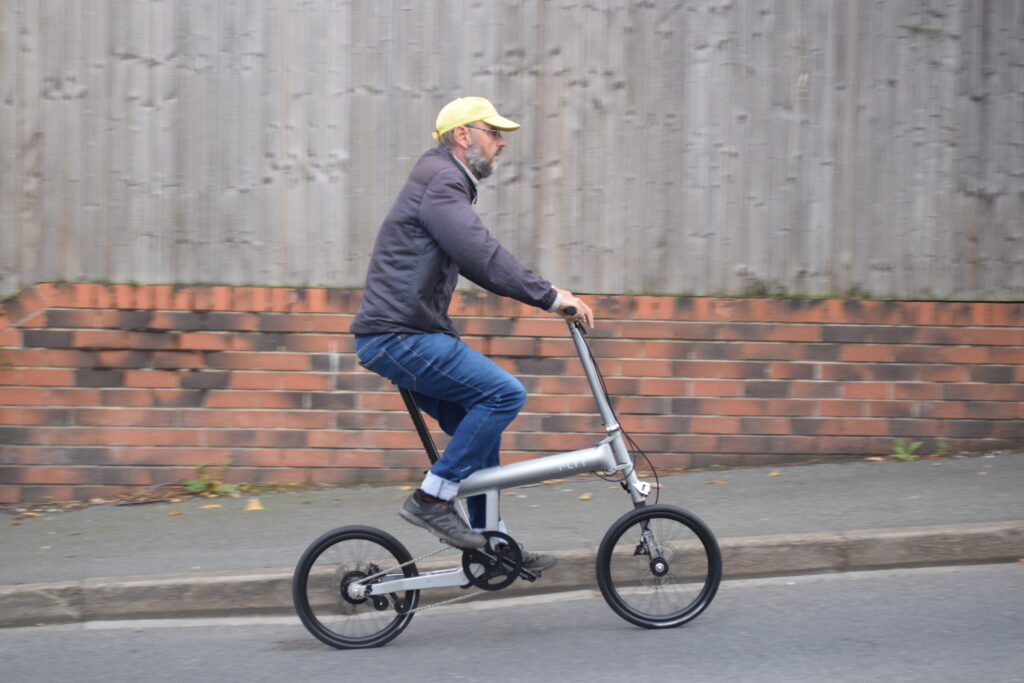
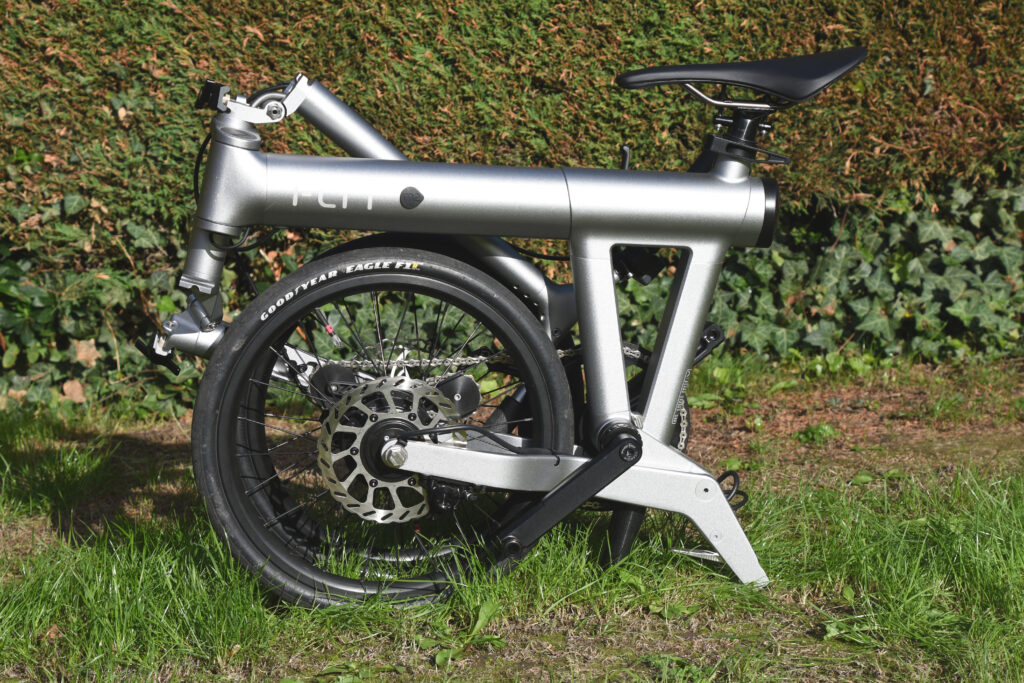
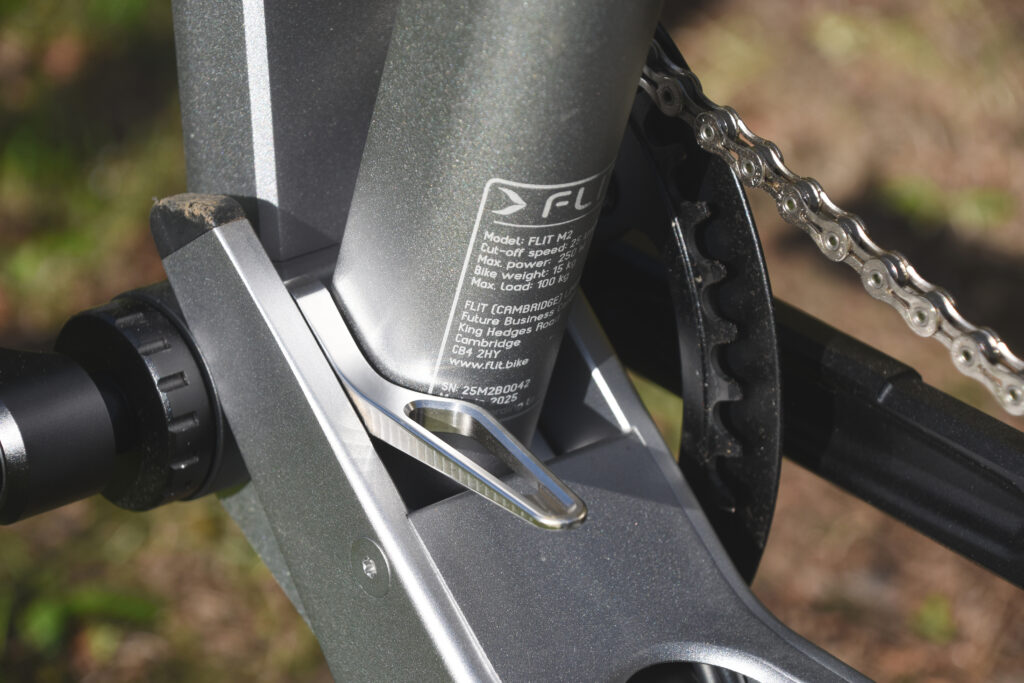
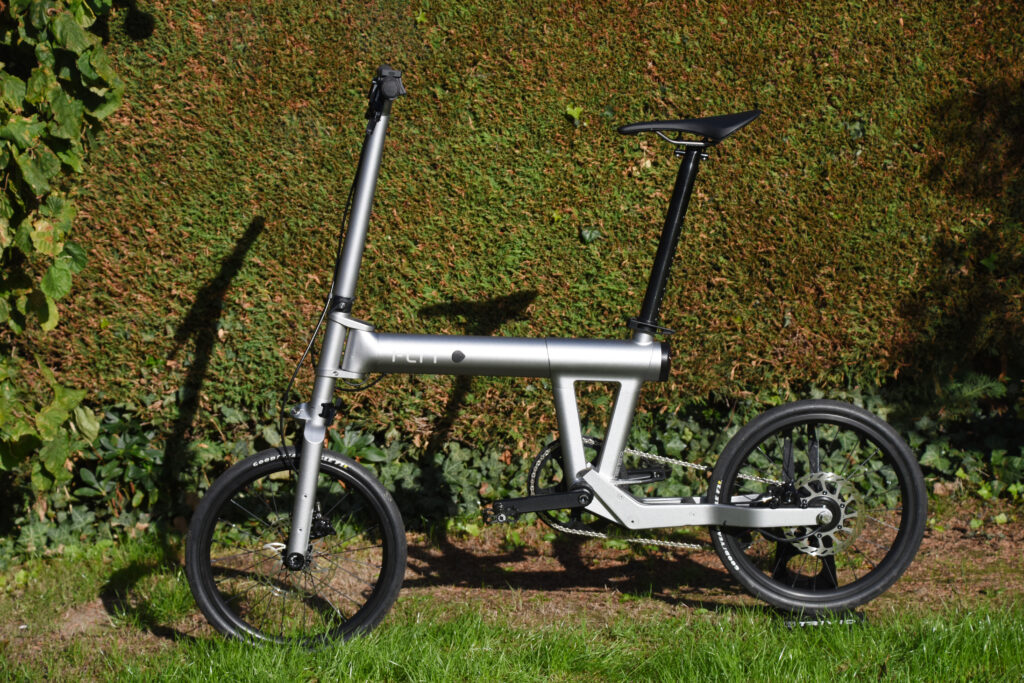
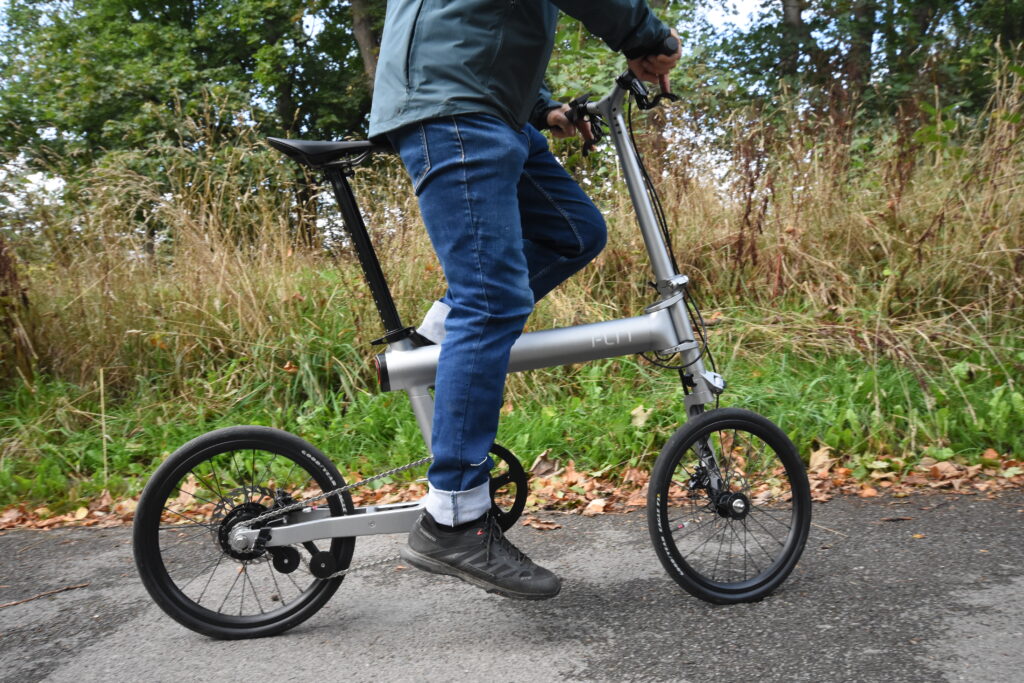
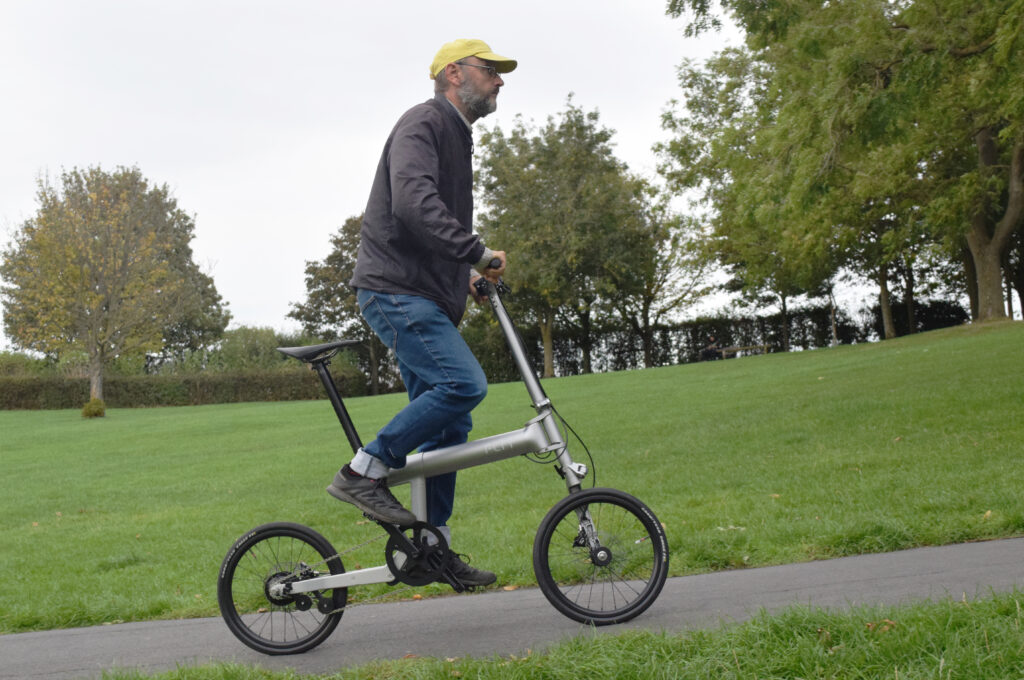
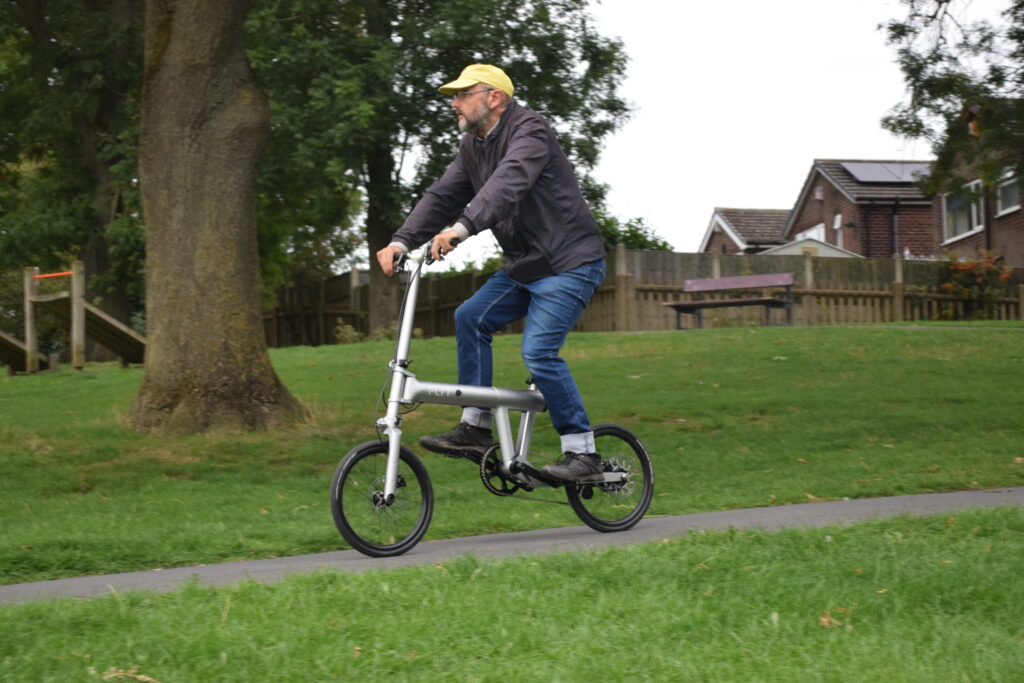
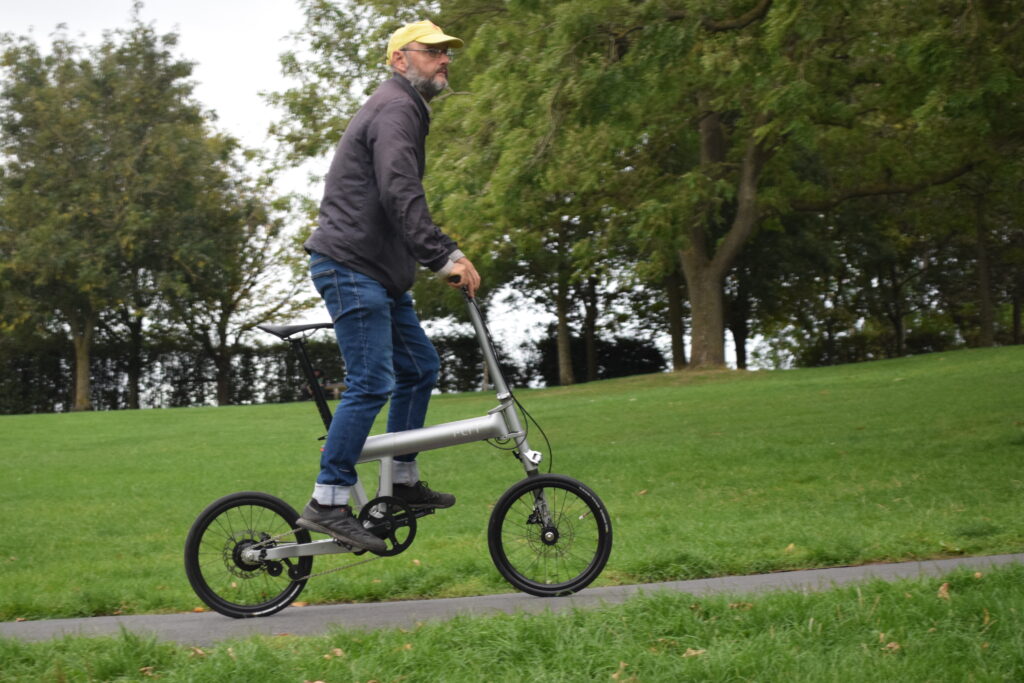
As one of the founders has previously worked as an automotive engineer, you can bet a fair amount of structural analysis and plenty of real world testing has gone into paring down the design to the minimum.
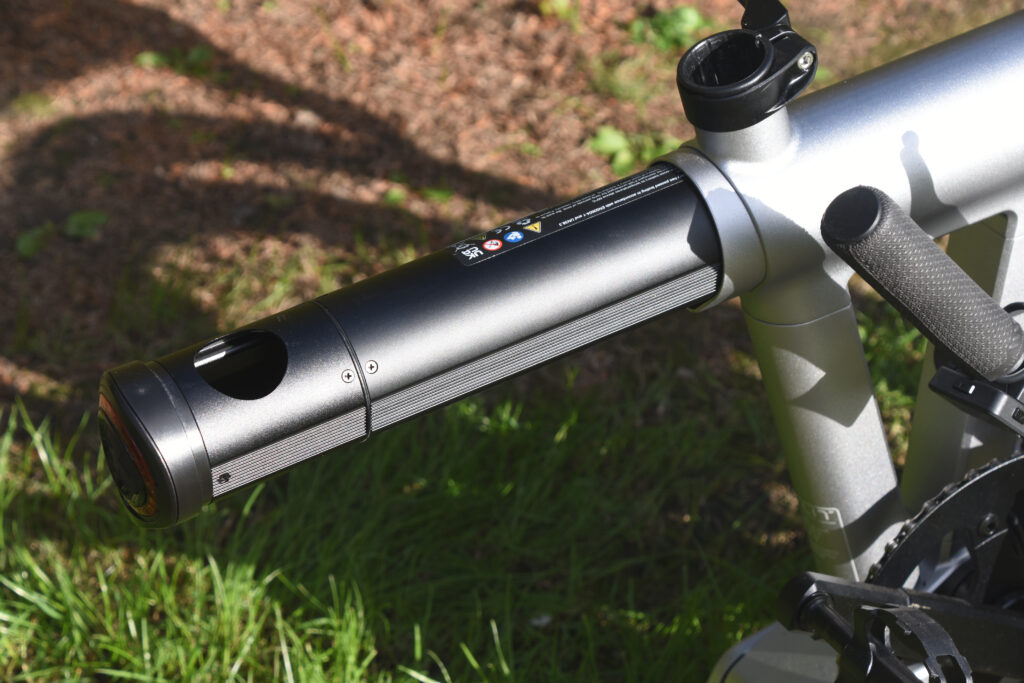
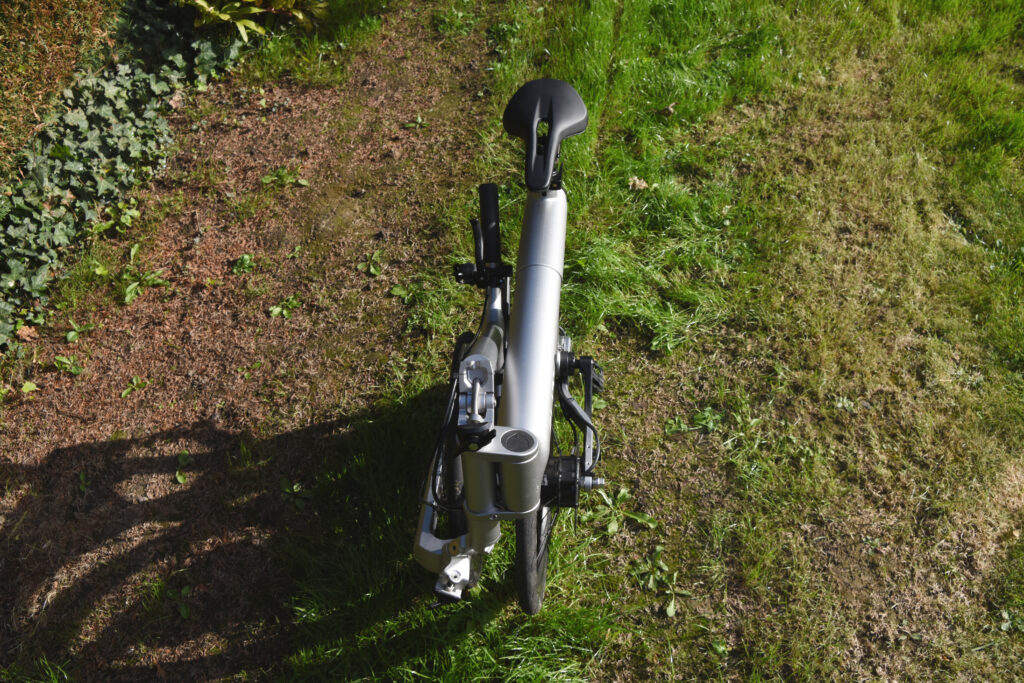
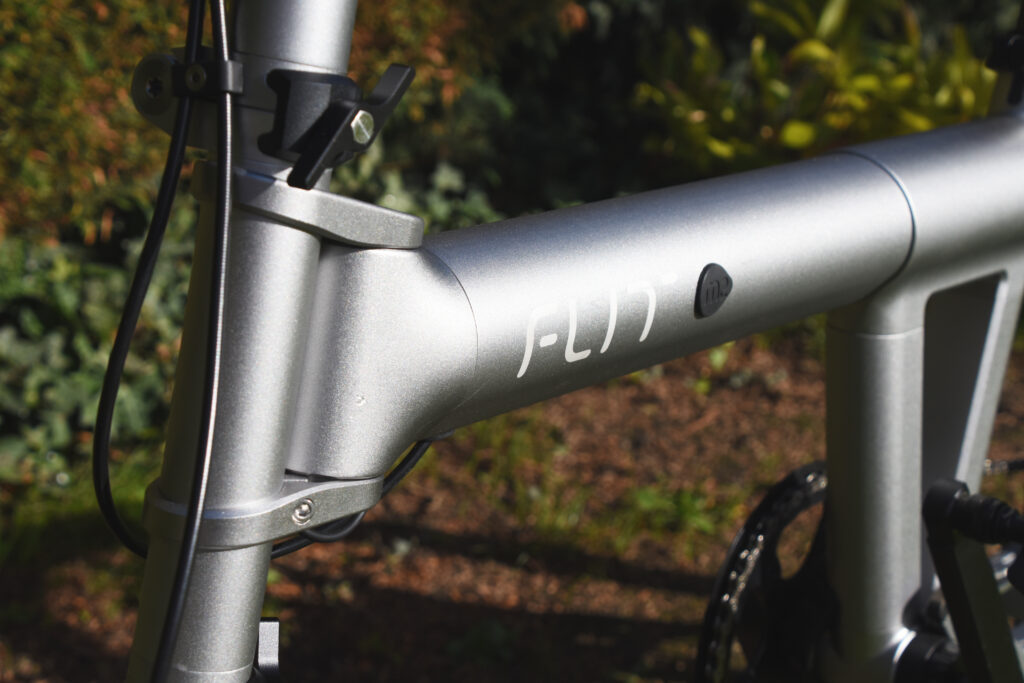
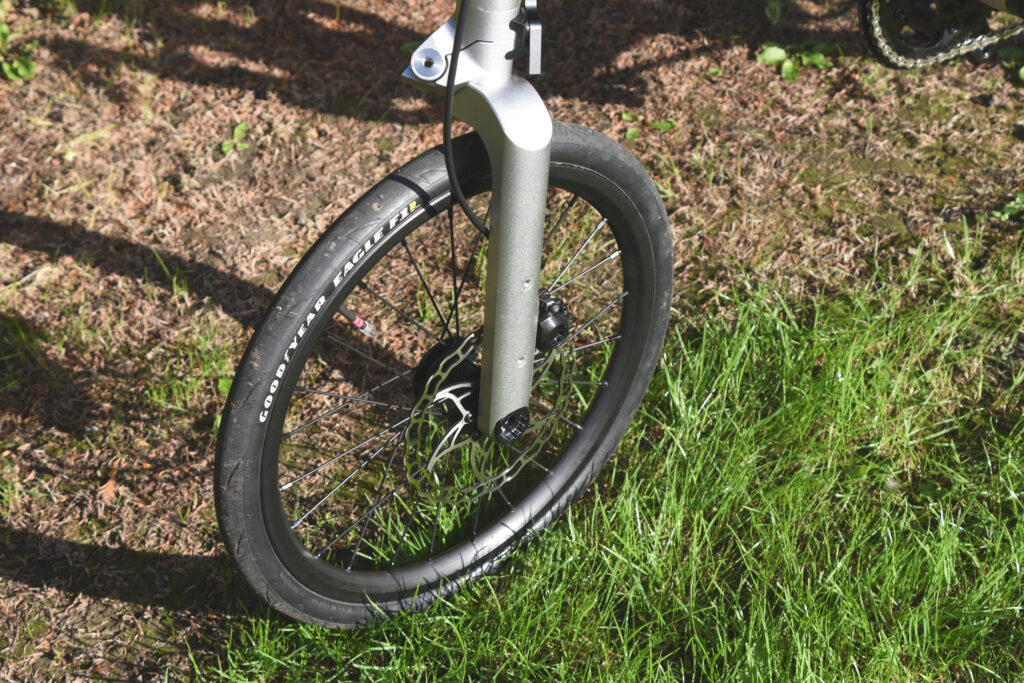
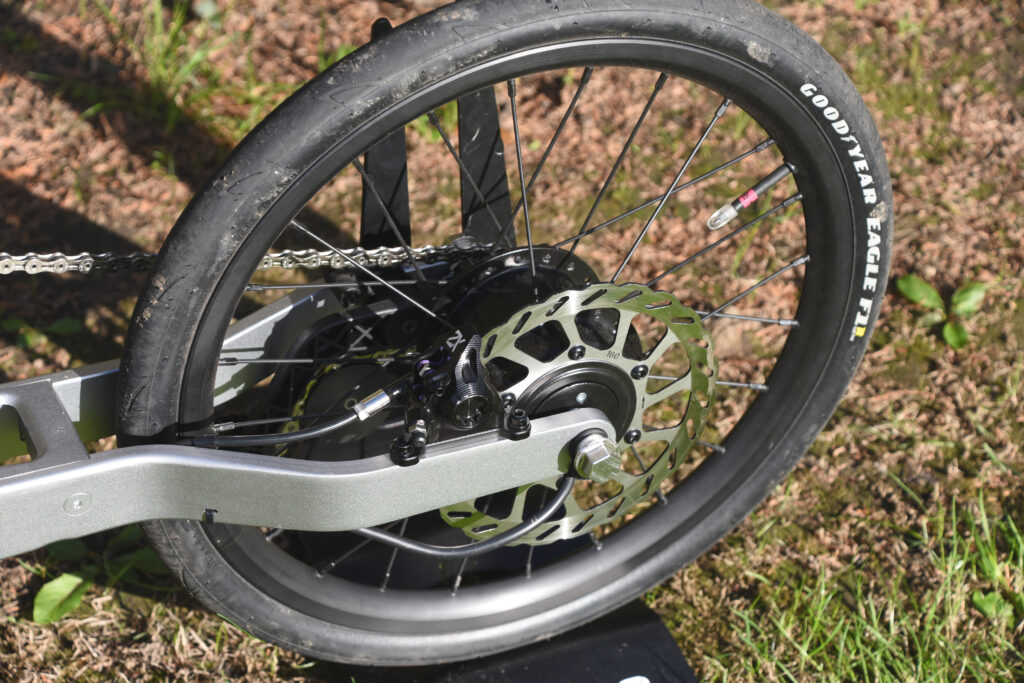
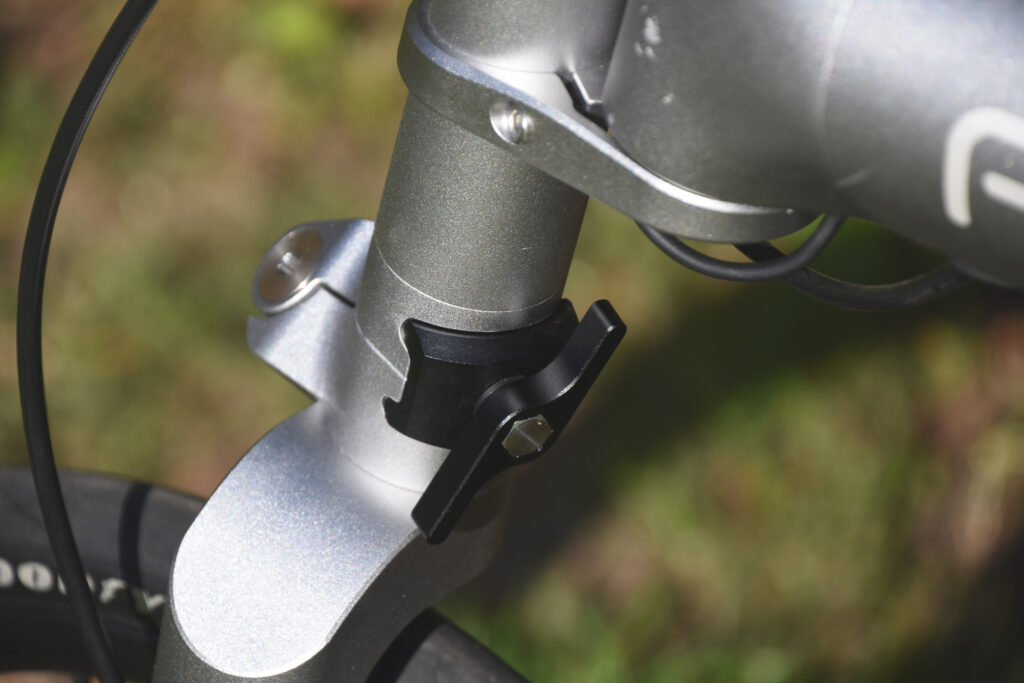
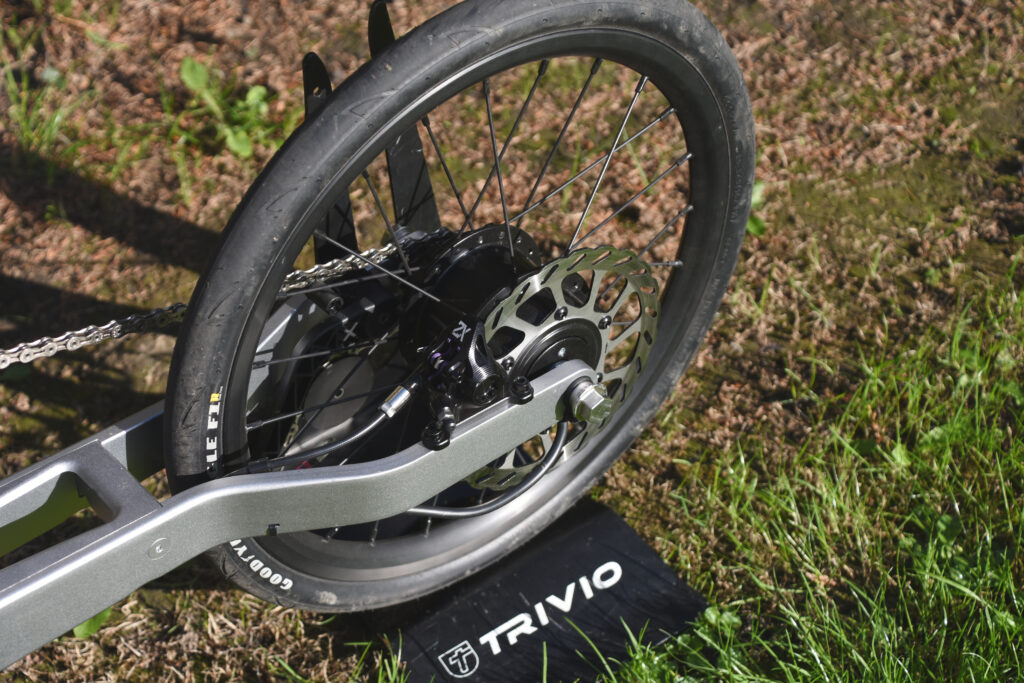
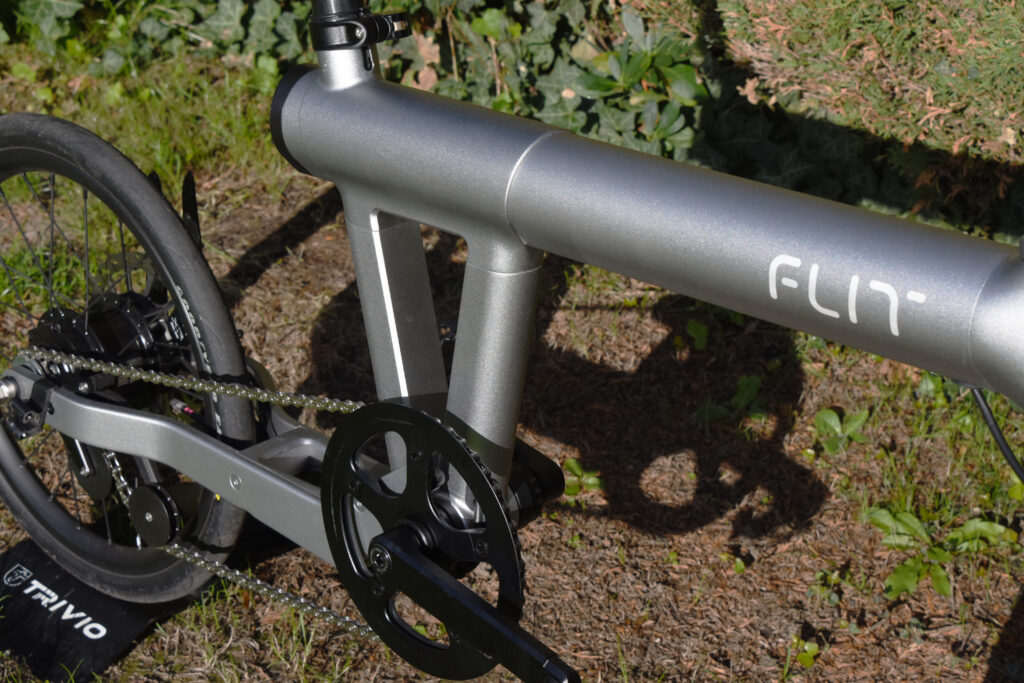
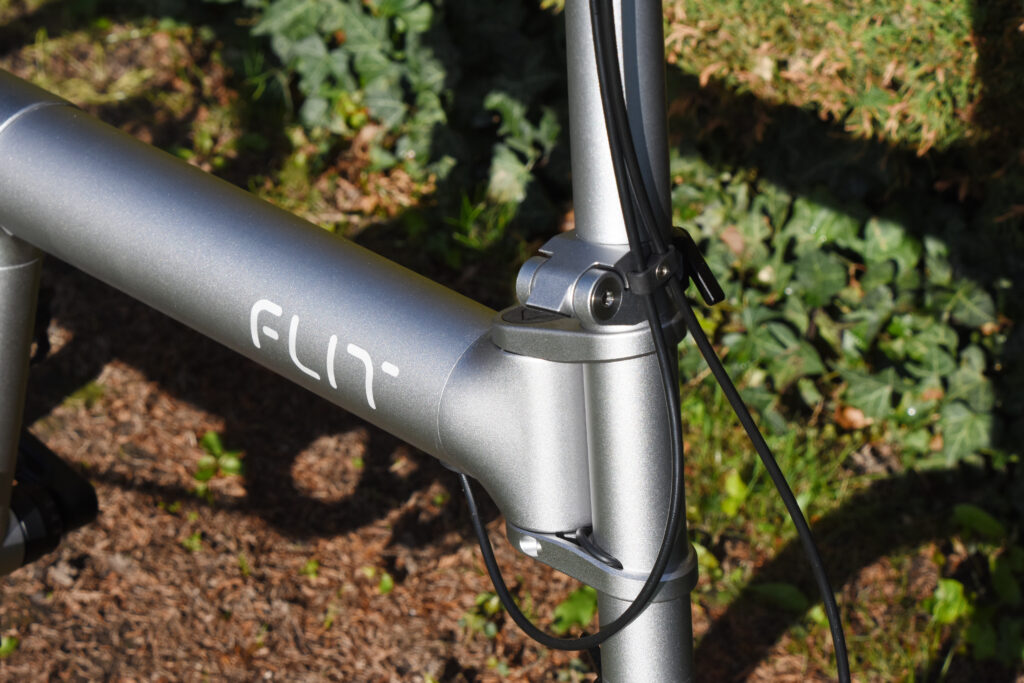
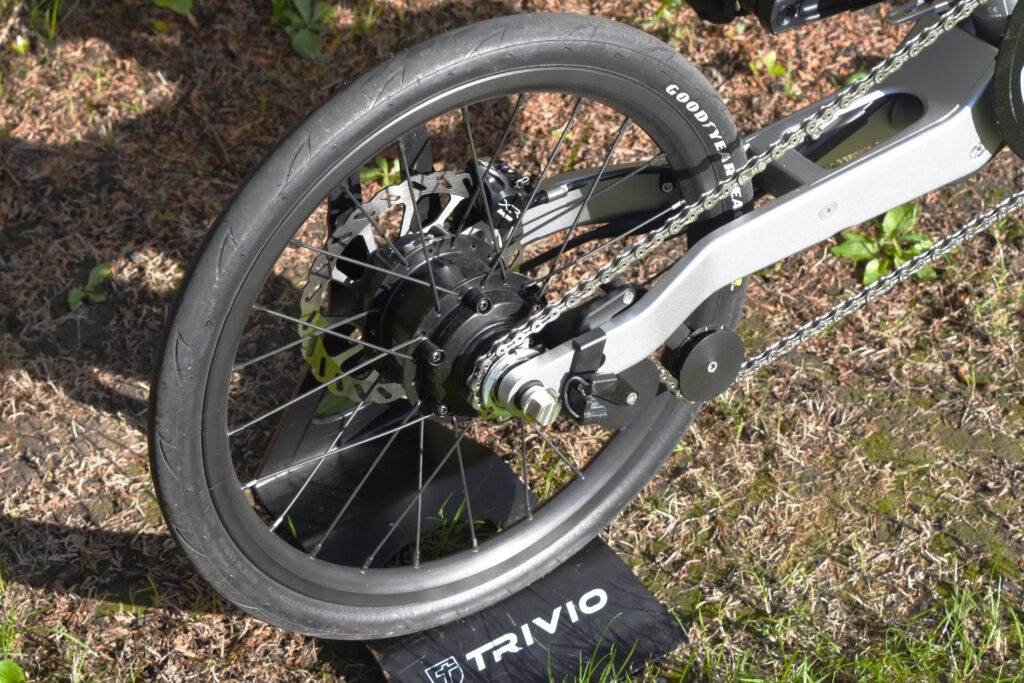
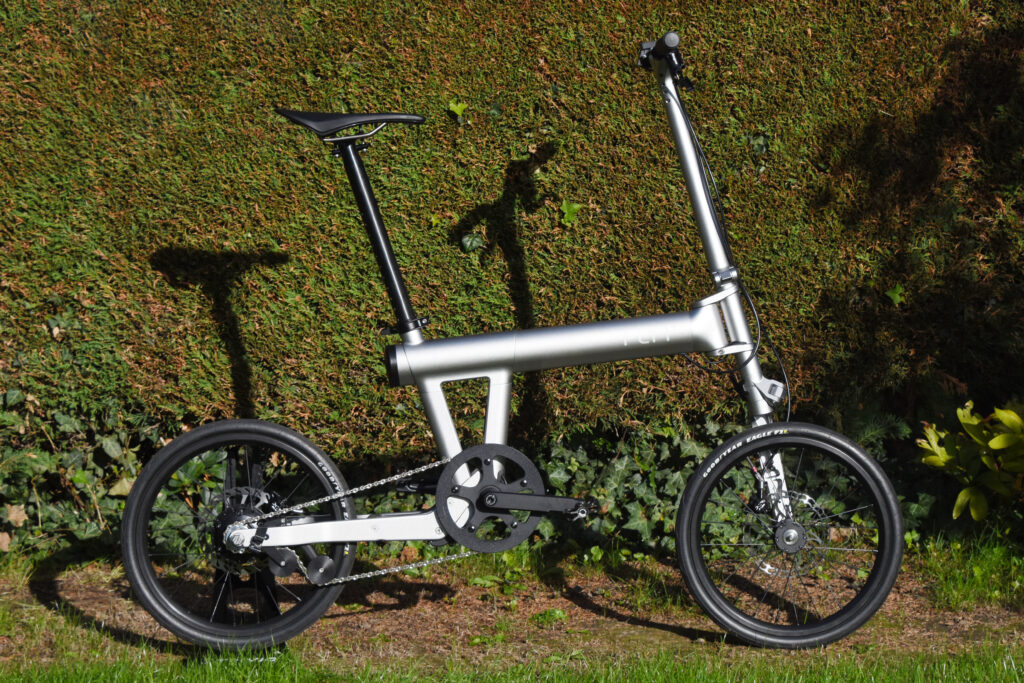
Frame members are kept to a minimum. A single oversize mainframe also houses the removable battery. This combines with a proprietary single-sided fork design and a rear fork that is made up of just two frame members, rather than the usual four. These connect the rear axle to a pivot point near the bottom bracket that allows them to fold.
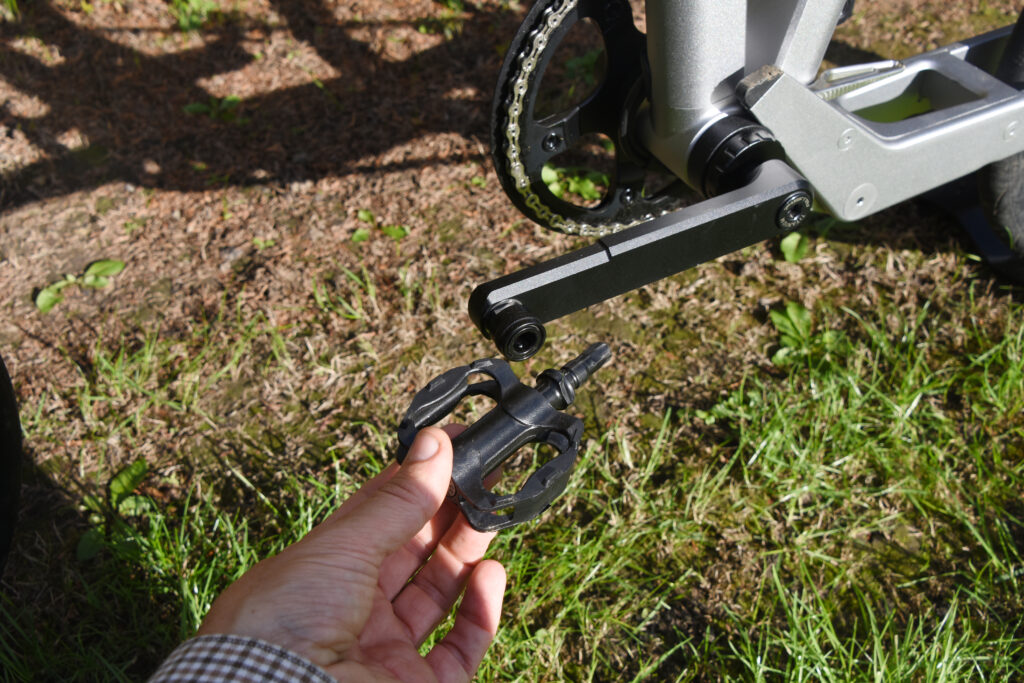
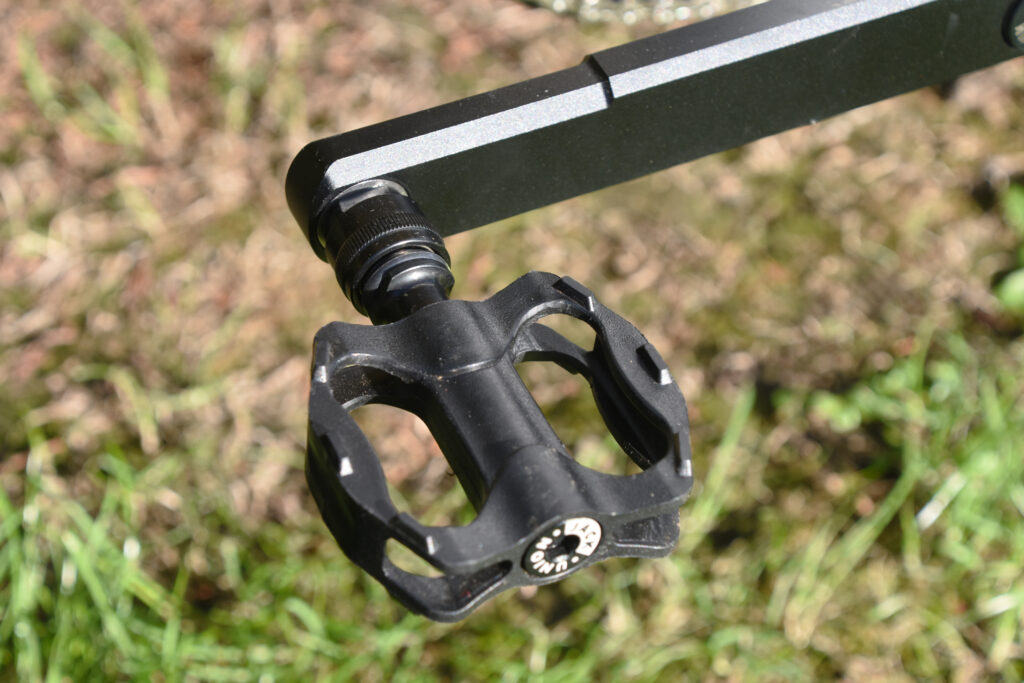
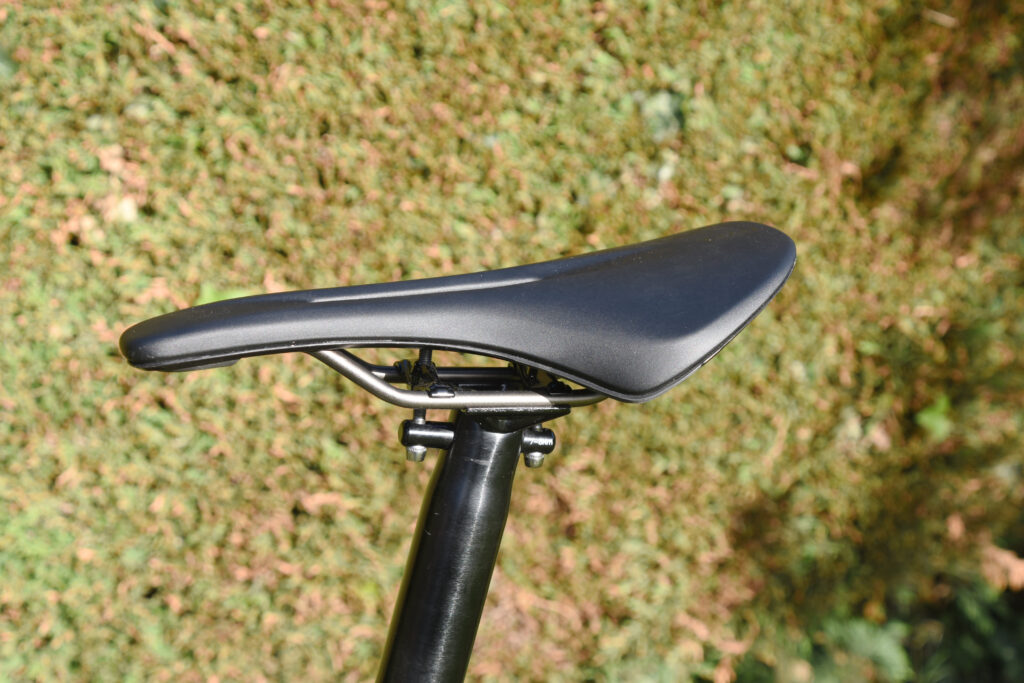
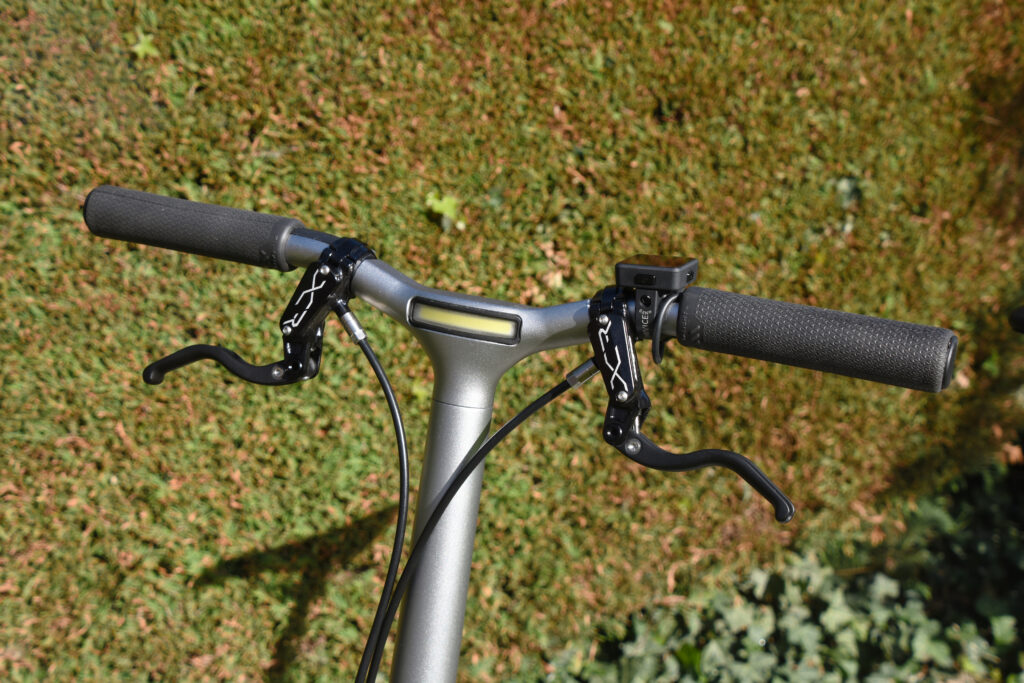
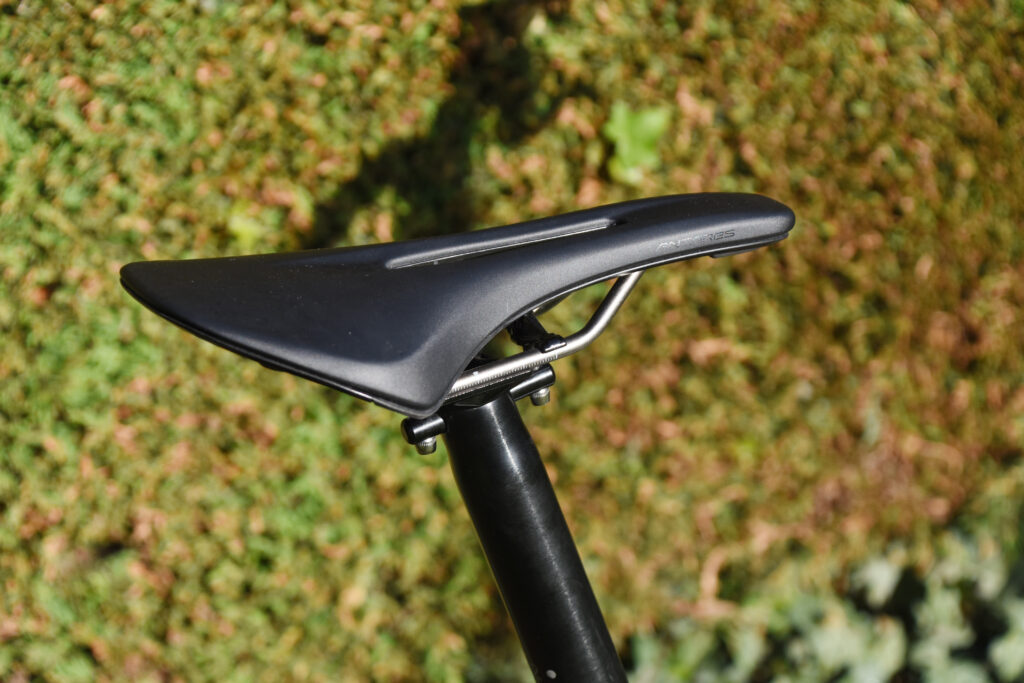
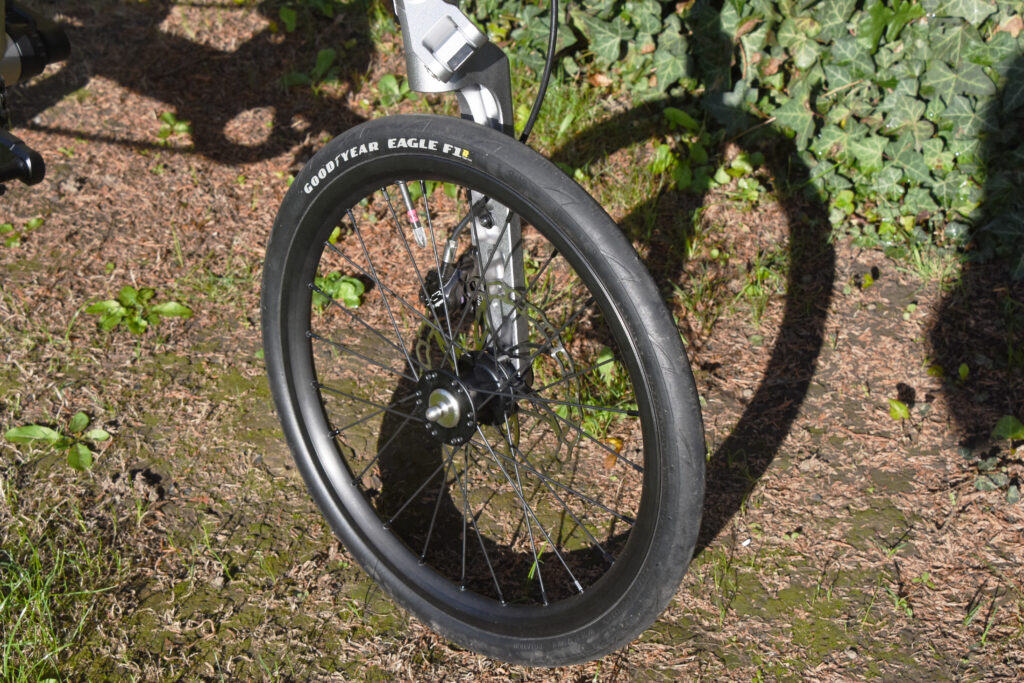
Components have also been carefully selected to shed as many grams as possible. The Goodyear Eagle F1 R tyres gained very strong reviews when launched in 2023 for the combination of weight, speed, comfort and robustness, whilst minimalist pedals, grips, saddle and a hollow pin chain ensure the M2i is an amazing 1.2kg lighter than base model, the M2. This is despite utilising the same frame, drive and lighting setup. It shows just how much weight it is possible to trim off the edges of some bikes without resorting to exotic frame materials and the like.
This clever design and spec is at the heart of Flit’s approach to things. It uses structural adhesive bonding instead of heavy welds or expensive titanium to join frame members together. It says this is lighter and cheaper and also avoids the possibility of frame distortion inherent in welding.
Moreover, as this process lends itself to small batch production – carried out at Flit’s Cambridge base – it has an element of supply chain resilience baked in. (After all, in today’s turbulent world, who knows that is around the corner?)
The drive system is courtesy of Mivice and since debuting in the UK courtesy of Tenways, this impressive tech has gone on to become a staple of affordable yet high performance e-bikes. Its small rear hub motors paired with torque-sensing tech are known for being efficient, quiet and packing a punch that belies their small dimensions.
Unlike Brompton, whose electric drive system is essentially an add-on to an original bike design conceived in the days when e-bikes were virtually unknown, the Flit is only available as an e-bike and has been designed as such.
The advantage with this is that everything is designed around the oversize mainframe that houses the battery (with the battery itself cleverly locked in place by the seatpost that runs through the end of the casing).
The fold, in similar fashion to the Brompton and its early competitor the Birdy, involves tucking the rear wheel under the mainframe and swinging the front wheel sideways and backwards before dropping the handlebar post and seatpost.
This results in a compact folded package of 79.7cm (L) x 60cm (H) x 30.5cm (W). This is not quite as small as the Brompton (approx 60cm x 60cm x 30cm) but it is much smaller and lighter than the vast majority of other folders. We’ll look at the fold in a bit more detail in the following section, but the key point is it’s a package that many will feel comfortable lifting on and off train luggage shelves on a daily basis.
Is one gear enough? There are so many single speeds around nowadays that the market would appear to say that – for many people – yes, it is. If you get the gearing ratio right on a single speed, the motor is in effect like having an extra gear, as it helps you get going from a standstill and will contribute extra power on hills. But more on the ins and outs of this aspect in the next section.
The front and rear hardwired lights are nicely integrated into the handlebar post and rear of the battery housing respectively and again show the value of building an e-bike from the ground up. My only quibble was the performance of the front light. It’s great as a ‘be seen’ light, but the internal reflectors directed much of the light forwards into the air and not down on the ground. If it could be refocused on the road ahead, it would be fine for surfaces with no street lighting, but as it stands it isn’t.
There are a couple of optional extras. One is a small kickstand – though note the design of the bike means it can stand up on flat, even surfaces anyway if you fold the rear forks under the mainframe, because doing so exposes two small, attached feet. Probably of more use to a greater number of people are the optional mudguards, though as I didn’t test these I can’t comment on their utility.
For me, the only obvious omission from the design was luggage carrying. There are no attachment points for front or rear bags, though Flit suggests several small capacity saddle/seatpost style bags. No doubt many users of such a light, fast bike will have minimal luggage too, but it would be nice if it were easier to load it up a little if needed. The bike has a rider and luggage limit of 100kg.
Flit M2i: Riding and folding
With its super rigid frame and thin high pressure tyres, the Flit M2i is a fast bike for sure. It hums along quickly on most terrain
The gearing ratio felt about right for my flat and moderately hilly testing ground and whilst – entirely predictably – I needed to put in more pedal effort than on the average crank drive, I was surprised at how capable the bike proved.
As expected, the rear hub motor is beautifully responsive. This, combined with the fact the small wheels require less torque, means the bike can conquer hills up to around 10% without too much difficulty.
It would probably struggle up much steeper slopes, but I managed occasional 15% gradients – though I gave myself and the electric assist system a pretty good workout.
The M2i really highlights the advantages of a super efficient bike with a low weight and, probably more importantly, very low rolling resistance. On the windless flat, it’s no sweat at all to bowl along without even switching the power on.
Hit anything approaching a downhill gradient and the bike fairly streaks away. Luckily the Hope hydraulic disc brakes are well modulated for close control and are superbly powerful. Road racers may take this kind of performance for granted, but as a utility and recreational rider this kind of performance was something of a revelation to me.
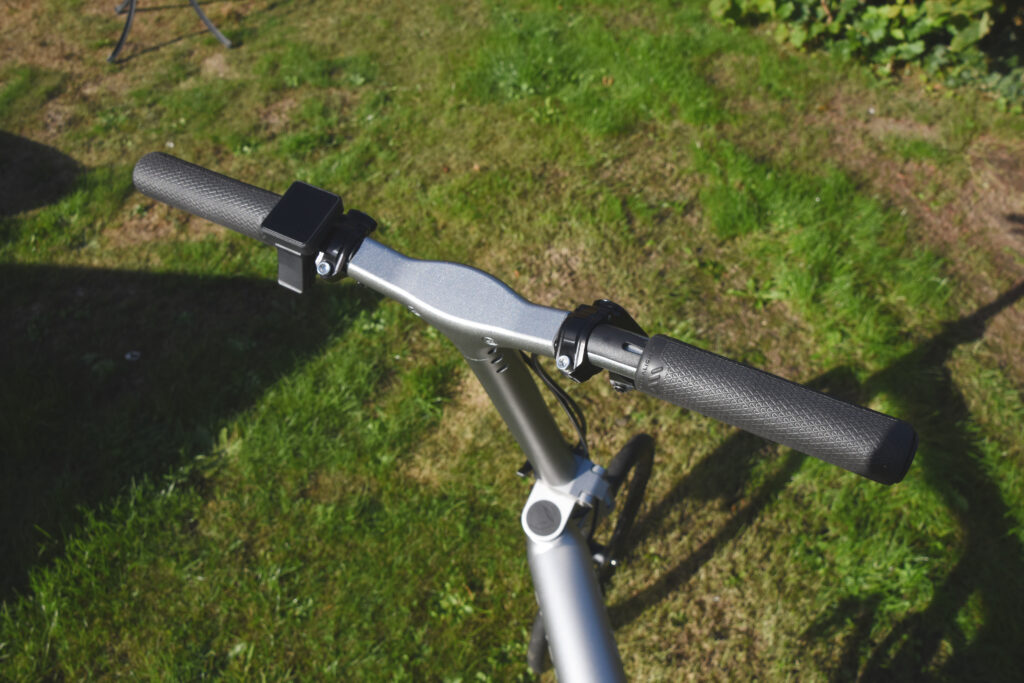
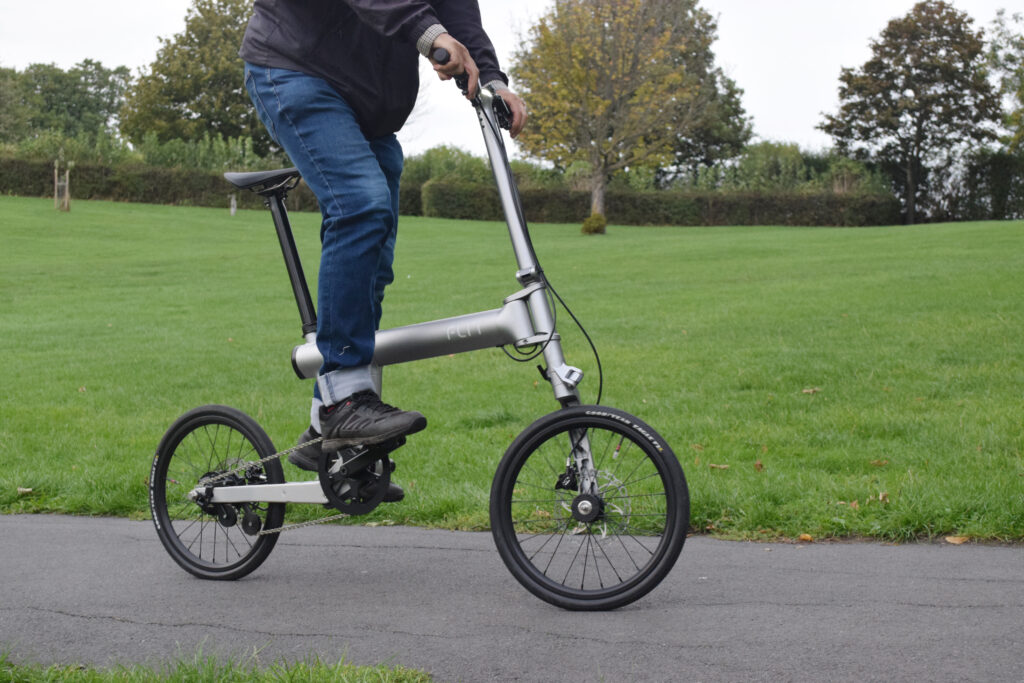
That’s not to say you need to ride the M2i hunched over and grimacing like a Tour de France Pro grinding up Mont Ventoux. I was surprised by how comfortable it is to ride. The riding position is reasonably upright due to the tall bars and the fact the seat to bars distance is fairly modest, so it all felt about right for me as a 5ft 8in leisure rider.
Huge potholes are the only thing to really beware of, but the smoother the road surface, the faster and more comfortable the ride was.
As you would expect from a super efficient bike, you can get some impressive range from the modestly sized 230Wh battery. For dawdling summer rides over easy terrain, you could certainly get well beyond the 30 mile ‘average’ range suggested by Flit – especially if you stick to the lower power levels. Over more extreme ground in winter, 20 miles may be nearer the mark.
It’s worth noting the gearing is customisable to some degree, according to the rider’s fitness and intended terrain. The bike ships with 12t-44t as standard, but 12t-48t is also available if you’d prefer a slightly higher gear. Both the rear sprocket and the front chainring are also standard parts and could therefore be swapped out for alternatives by a home mechanic familiar with such a task.
How does the Flit fold compare with other e-folders I’ve tried? For a quick, compact fold it’s certainly up there with the best. The frame and handlepost clamps take a little longer than the similar looking ones on a Brompton, for example, and a little care is needed to guide the front wheel round so the ball and catch type system locks in place. But if you perform the operation regularly, it should become second nature and the folded package is simply one of the easiest to handle there is.
If you’re still not convinced, but curious, then Flit can arrange test rides at its Cambridge HQ. If you do end up purchasing one, you’ll be in the unusual and enviable position of owning a class leading UK designed and made electric folder.
Flit M2i: Summary and competition
I’ve spent much of this review comparing the Flit M2i to the £5,799 Brompton Electric T Line, but there are of course other options.
The Ahooga E-Max Alfine is another tri-fold e-bike with a Mivice motor (in its case positioned in the front hub). Folded down, it’s a little larger at 72 x 73 x 37cm, and at 18.4kg it weighs more too – although that’s partly because unlike the Flit, it does have a rack. It might however be a better option if you require a little more off-road capability.
The Vello Via+ Urban is another intriguing rival that’s on the way and it looks like it’ll be a broadly similar price.
Flit also claims the M2i is, “the lightest fully folding premium ebike.”
The likes of Prodrive and Lemmo might dispute this, but the former costs £4,495 and has an inferior motor system (unlike the Flit, it is not designed from scratch as an e-bike, so effectively uses a kit – the Zehus rear motor and battery hub), whilst the latter has a tiny battery and doesn’t appear to be available in the UK at present.
Nevertheless, the M2i is truly groundbreaking in its combination of light weight; high quality, efficient motor assistance; small, portable fold; and sub £3,000 price tag.
> Best folding e-bikes – our favourites from those we’ve ridden (and folded and unfolded)
Test Report
What does the manufacturer say about this product?:
At 13.3kg, the £2,999 M2i is 500g lighter than the Brompton Electric T Line at nearly half the cost (£5,799). M2i is the lightest fully folding premium ebike.
Tell us some more about the technical aspects of this product:
Frame Material: Anodised 6061 aluminium with structural adhesive bonding
Motor: Mivice 250W rear hub motor, max. torque 35Nm
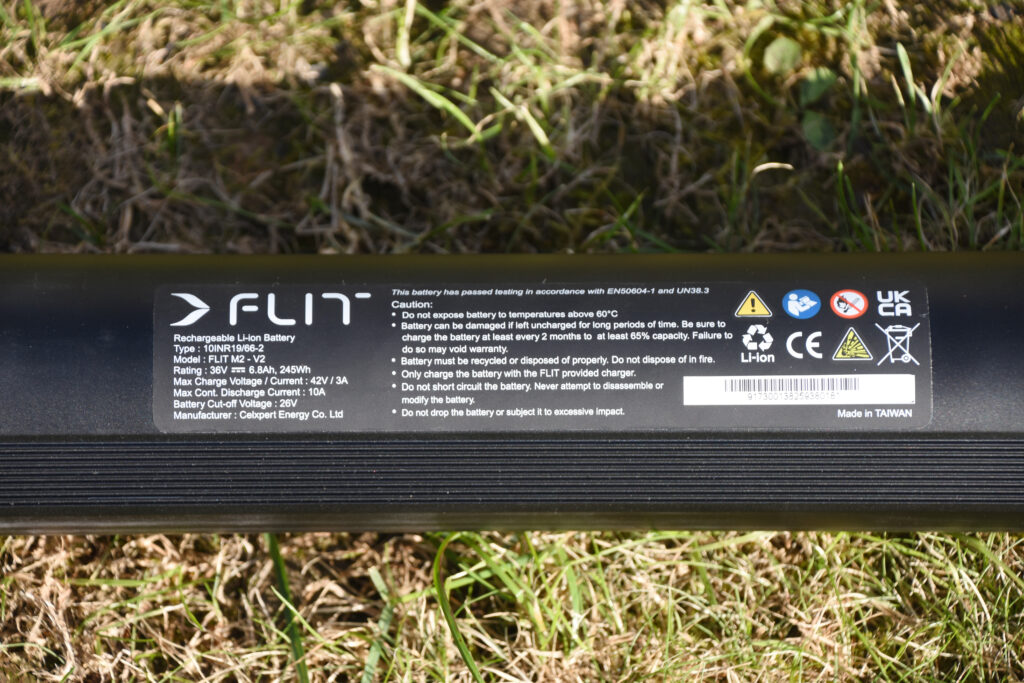
Battery: Frame removable, FLIT proprietary, lithium-ion 230 Wh, 36 V, 6.4 Ah, LG cells (CE)
Gearing: Single speed – 44T x 12T as standard, 48T x 12T optional
Brakes: Hydraulic Hope XCR Pro X2 Disc Brakes Front & Rear
Tyres: Goodyear Eagle F1 R, 16″ / 30-349 ETRTO
Saddle: Fizik Vento Antares R3 (standard saddle size, can be swapped by rider)
Lights: Integrated hardwired front and rear lights
Optional extras: Kickstand, mudguards (not tested)
Any further comments on quality?:
Innovative UK-based design and manufacture has produced a very high quality and unique e-bike
Any further comments on performance?:
Quick riding and quick folding performance makes the M2i the ideal train commuting e-bike
How does the price compare to that of similar products in the market, including ones recently tested?:
Excellent – see above
List the components used to build up the bike:
See above
Tell us what the bike is for and who it’s aimed at. What do the manufacturers say about it?:
This is a very lightweight e-bike that folds into a small light package making it ideal for train commuters or indeed for anyone who would value these attributes – e.g. those who have to lift the bike up a lot of steps or who have little storage space.
Where does this model sit in the range? Tell us briefly about the cheaper options and the more expensive options:
Flit has two models, the M2 and the one tested here, the M2i. The FLIT M2i is priced at £2,999, compared with £2,749 for a standard which is 1.2kg heavier. Flit says you get £875 of upgraded components compared to the M2 even though the M2i costs only £250 extra.
Tell us about the build quality and finish of the frame and fork:
Beautiful anodised finish to both the frame and the front single sided fork
Tell us about the materials used in the frame and fork:
Alu 6061 alloy with structural adhesive bonding, the latter for maximum strength and minimum weight compared to standard welding
Tell us about the geometry of the frame and fork:
A fairly upright riding position and quite a stable ride for a 16in-wheeled bike – though still fast due to the tyres and a very stiff frame
How was the bike in terms of height and reach? How did it compare to other bikes of the same stated size?:
About right for my 5ft 8in frame
Was the bike comfortable to ride? Tell us how you felt about the ride quality:
Yes as above – comfortable and stable in 16in wheel terms, though watch out for big potholes. Some road vibration on poor quality roads where the aggregate has worn through – common on bikes with high pressure tyres.
Did the bike feel stiff in the right places? Did any part of the bike feel too stiff or too flexible?:
Very stiff – a great quality to have for a fast riding folding e-bike
Was there any toe overlap with the front wheel? If so, was it a problem?:
No
How would you describe the steering? Was it lively, neutral or unresponsive?:
Lively
Tell us some more about the ride experience. How did the bike feel overall? Did it do particular things well or badly?:
A nice blend of lively manoeuvrability yet stable at speed in corners and on descents
Which components had the most effect (good or bad) on the bike’s performance? Would you recommend any changes?:
The stiff frame made for a fast ride whilst the compact and light folded package made it very portable.
What kind of motor is it? :
Rear hub motor.
What are the stated motor system specs? (Torque/power/maximum assistance speed):
250W rear hub motor, max. torque 35Nm
Tell us some more about the motor. How did it feel overall? Did it do particular things well or badly?:
For a very small light hub motor on a single speed, it gave good climbing performance with smooth, quiet torque sensing power application
How did the motor perform at low speed? (e.g. on steeper climbs or setting off with heavy loads):
Well
How did the motor perform at higher speed? Was it noisy? Did assistance cut out smoothly/abruptly at the 25km/h assistance limit?:
Well
What type of battery is it? Is the manufacturer named?:
FLIT proprietary
Where is the battery on the bike? Is it removable?:
In the main frame
What are the stated battery specs? (Capacity/voltage):
Frame removable, lithium-ion 230Wh, 36V, 6.4Ah, LG cells (CE)
Tell us about charging the battery. What’s the charger like? How long does it take?:
Around three hours from a 2A charger
Tell us about the assistance levels. How many are there? Are they all useful?:
Five levels, nicely graduated so all useful.
What do the manufacturers say about the range of the bike?:
31 miles (depending on assist level and terrain)
What was your experience of the operational range of the bike?:
30 miles seems a reasonable average – much more in ideal conditions where you can turn the power off and less in extremely hilly country when it’s cold and windy using the higher power levels
Any comments on drivetrain performance?:
Performs as expected
Any issues with drivetrain durability?:
No
Tell us some more about the drivetrain. Anything you particularly did or didn’t like? Any components which didn’t work well together?:
Single speed with lightweight chain so little to go wrong and no issues
Tell us some more about the wheels. Did they work well in the conditions you encountered?:
Yes – fast, strong and speedy
Tell us some more about the tyres. Did they work well in the conditions you encountered? Would you change the tyres? If so what for?:
Goodyear Eagle F1 R tyres worked well as around 60psi (though they will inflate much further) as that give a good balance of speed and comfort
Any comments on brake performance?:
Very strong performance and reasonable modulation
Any issues with brake durability?:
No
Tell us some more about the brakes. Did they work well in the conditions you encountered? Would you change anything? If so, why?:
All good
Any comments on controls performance?:
Buttons and display too small
Any issues with controls durability?:
No
Tell us some more about the controls. Any particularly good or bad components? How would the controls work for larger or smaller riders?:
As above
Anything else you want to say about the componentry? Comment on any other components (good or bad):
Display rather small and hard to read
Does the bike have a maximum luggage weight, or a maximum gross weight?:
Max rider and luggage weight 100kg
Anything else you want to say about the capacity of the bike?:
Minimal – but I suggest many buyers of this kind of bike won’t be looking for much carrying capacity
Did you enjoy using the product? Yes
Would you consider buying the product? Yes
Would you recommend the product to a friend? Yes
Use this box to explain your overall score
Innovative UK design has produced a unique design well suited to its intended purpose.
About the tester
Age: 60Height: 172cmWeight: 70kg
I usually ride: E-bikes of any descriptionMy best bike is: Riese & Muller Homage
I’ve been riding for: Over 20 yearsI ride: Most daysI would class myself as: Experienced
I regularly do the following types of riding: Commuting, Touring, Fitness riding