



The benefits of getting a bike fit are widely known these days, it’s a service that can transform your cycling experience and the way a bike feels and rides. Now we’ve got some scientific data to back it up, the University of Wisconsin–River Falls undertaking a study into Selle Italia’s idmatch bike-fitting system and finding potential for amateur riders to enjoy significant performance and comfort gains.
While the study specifically looked at the idmatch system, it seems likely at least some of the positive benefits noted would also apply, to varying degrees, to bike-fitting for amateur riders more generally. However, with that said, the numbers and findings in this study do specifically relate to the researchers’ work with the idmatch system, a biomechanical analysis platform developed by Selle Italia.
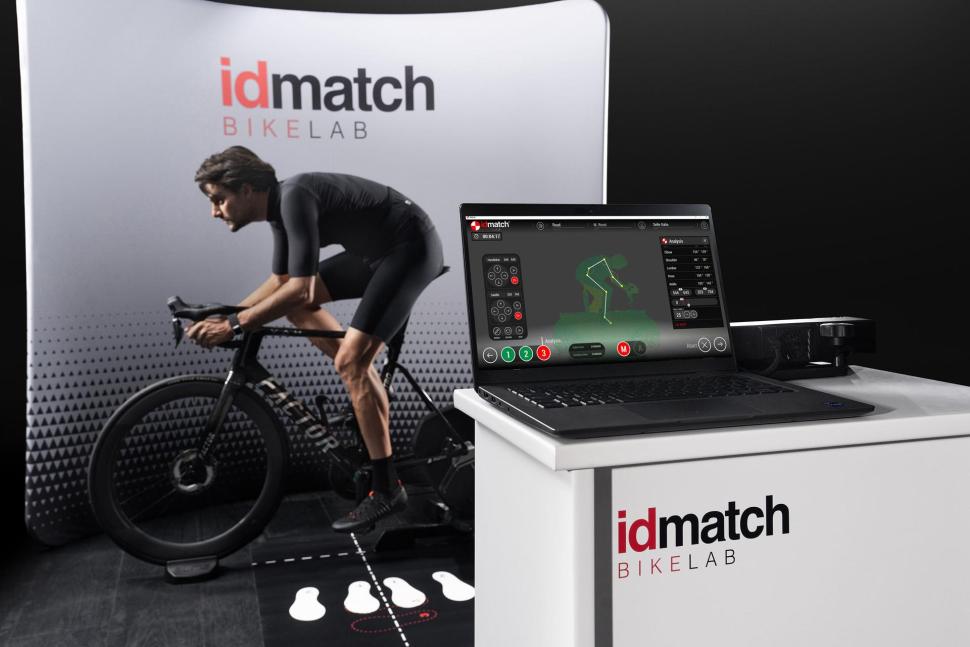
They published their findings in the International Journal of Exercise Science, with the study reporting potential gains for amateur riders in both peak and sustained power, as well as a reduction in fatigue and discomfort in the saddle.
During the research, 12 non-competitive cyclists (ten men and two women with an average age of 37) used their own bikes and undertook two tests before and after a full bike fit using the idmatch system. Selle Italia’s system, like many other bike fit tools, uses 3D motion capture and features cleat and saddle fitting as part of the bike-fit process.
Participants were tested on their six-second peak power, as well as an FTP (functional threshold power) test. Other parts of the study, such as comfort and reports of pain or fatigue, were monitored with the riders throughout.
The study found an increase of 81.5 ± 96.6 watts in peak power during the six-second test (effectively mirroring a sprint or very short max effort) and an increase of 9.7 ± 14.9 watts in average power during the FTP test.
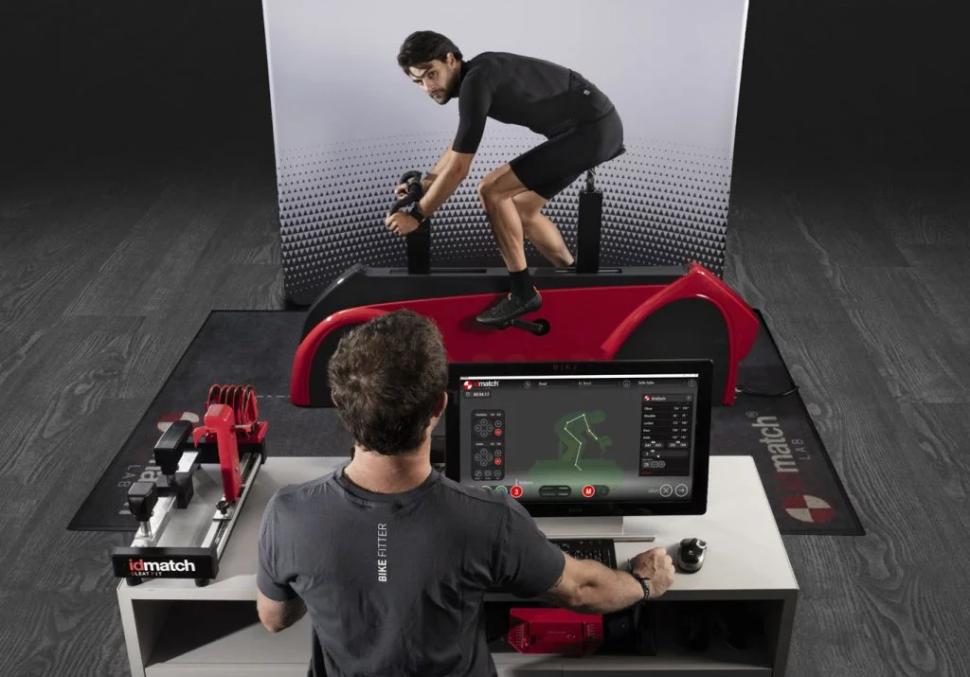
There was also “an increase in average pedal torque”, a reduced reported rate of perceived exertion, and “a significant reduction” in discomfort in the saddle and at all other contact points.
Unsurprisingly, Selle Italia and idmatch put the performance improvements down to several biomechanical adjustments produced by the system and suggest the gains were “strictly linked” to idmatch. Those adjustments were often increasing the distance between the saddle and handlebar, and moving the cleat position further forward.
These “showed the strongest correlations with gains in power and torque”. That suboptimal saddle to handlebar distance is something idmatch says its fitters see frequently and often “substantially lengthen”.
> 7 reasons why your bike doesn’t fit you, and the easiest ways to solve them
This, they say, is because people assume a more upright position will be more comfortable but “can in fact lead to overload and injury due to suboptimal weight distribution across the spine and upper body”.
The study found that reports of pain or discomfort dropped across nearly all monitored body areas (hands, wrists, back, pelvis, knee tendons with the hamstrings and feet).
Its authors concluded that perhaps the most interesting finding for amateur cyclists is “that an objective bike fitting can deliver immediate gains in both anaerobic performance and the ability to sustain prolonged effort, without increasing cardiometabolic demand”.
Naturally, idmatch believes its system, using 3D motion capture and “optimisation algorithms”, is superior to more subjective bike fitting services that do not take their digital first approach. However, the results of the study inspire confidence about bike-fitting effectiveness, not necessarily just for those undertaken through idmatch.
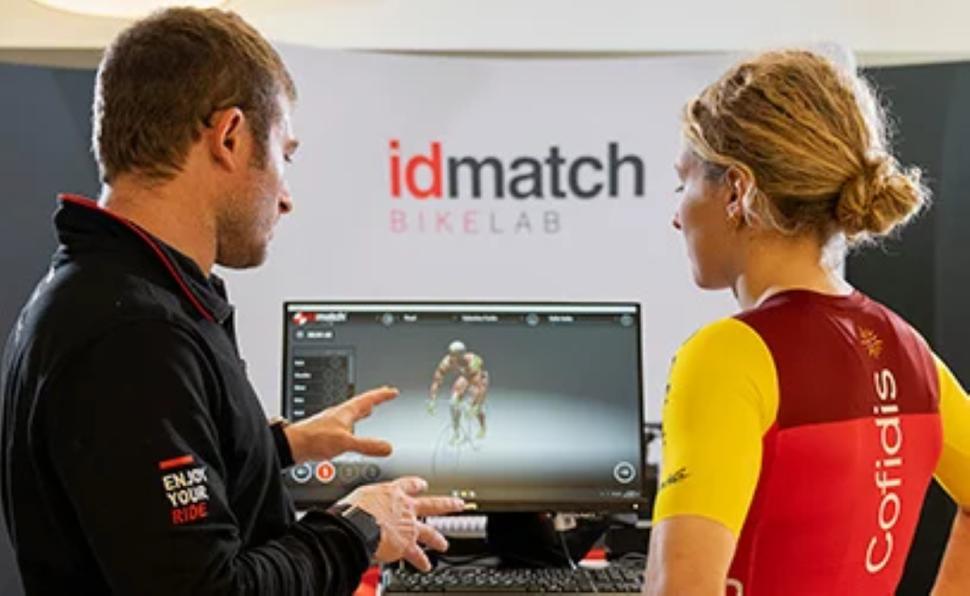
“This study clearly shows that correct positioning is not just a matter of comfort, but can translate into a measurable wattage gain,” Selle Italia’s idmatch project leader Matteo Paganelli said. “It is a result that reinforces the vision behind idmatch: using technology to put every cyclist in the best position to express their full potential.”
If we’re being honest the results of the study probably come as a surprise to few, bike-fitting a well-researched and uncontroversial practice. Back in 2021, a study in the BMJ found that bike fits saw overall discomfort, fatigue and pain in healthy mountain biker adults improve.
Likewise, a 2022 study in the National Library of Medicine concluded overall riding discomfort and pain were significantly decreased after a standardised kinematic bike fit session, even after 120 days post-intervention.







16 thoughts on “Will a bike fit make you faster in 2026? New study suggests amateur cyclists could unlock significant power gains”
In other bio-mechanical
In other bio-mechanical related news it has been revealed that the right size shoes significantly improve one’s bipedal movement experience. Although cynicism and snide comments aside rigorous evidence that a bike fit works can only be welcome
Performance gains should be
Performance gains should be taken with a pinch of salt because sample size was too small to be meaningful, at best we have a correlation.
For me, the biggest gain from a bike fit was a bike that felt ‘right’ from the start.
Performance gains should be
I’m not sure about that. Yes, it’s a small sample size, but you can still reach a conclusion based on it. There’ll be a margin of error of course, or rather the researchers will have rejected the null hypothesis that fitting does not change power output with a certain confidence level.
Determining causation or correlation would be done logically rather than on the basis of sample size. They’ve shown there is a correlation between the change in power output across the sample and determined that it has been caused by the fitting.
One slight problem is that
One slight problem is that all the tests were perfomed first on the old fit and then on the new one, so you’ve also got to consider that the people were just more comfortable pacing a 20 minute effort in lab conditions once famililar with the protocol..
I’m with you in principle,
I’m with you in principle, but I’d call the problem totally invalidating rather than slight!
The participants were unfamiliar with max efforts and structured training–you would absolutely expect them to be better at the test the second time around even if all other factors were held constant. Given the poor study design, there’s no way whatsoever to separate improvement due to familiarization* from improvement due to bike fit (if any).
*Not to mention: the first session was itself a (novel) training stimulus for these untrained participants. So you’d also expect to see those big, beautiful, beginner gains in the second session, even if all other factors were held constant. And, again, there’s no way to separate that from hypothetical improvements due to bike fit.
bensynnock wrote:
Of course they did; they wanted to get published. Give me any data set and 30 minutes, and I’ll reject the null hypothesis at p < .05.
Even a brief glance at the details of the study (sample size of 12, standard deviation greater than the mean, no controls, no blinding, no accounting for familiarization with the test, no pre-registration of analysis, etc., etc., etc.) reveals that no conclusions whatsoever–not even preliminary ones–should be drawn from this study. Indeed, it was only a pilot (read: exploratory/feasibility) study in the first place, though road.cc failed to report that crucial detail.
Bike fit needs to be right ,
Bike fit needs to be right , no doubt. However, we read about the marvels of bike fitting everywhere, but in the absence of recognised standards of training anyone can call themselves a bike fitter, so the term can be meaningless. Please don’t get me wrong, there are some brilliant practitioners out there, and some who mean well, but without known standards of proficiency and training,it’s all a bit of a minefield.
Would love to see on the same
Would love to see on the same day a road.cc person get 4 bikefits done and the results compared. #chooseyourreligion
It has been well documented
It has been well documented that a large percentage of riders are on ill fitting bikes. That could be saddles too high/low, too far forward/back. Wrong width bars, wrong length stem, and most crucially the wrong size frame altogether which result in compromises being made to just try and get comfortable.
I have always got a bike fit before buying a new bike. I’m probably luckier than most in that I can afford to buy a Frameset and build up my bike the way I want it so I can be sure I get everything I need to fit me. But bikes don’t generally come like that. Frame size calculators are pretty rubbish and overestimate more often than not. Every calculator I ever inputted my metrics into suggested a frame at least 1 size bigger than what I actually ride. If you buy a bike online you might very well get a totally unsuitable frame size. Some brands like Canyon don’t sell in shops so how are you every meant to know beforehand?
The biggest things that get rectified on bike fits are things you can’t see yourself. A proper fit will let the fitter study your pedalling motion, your weight distribution, asking lots of questions as they go. My fitter picked up things I wouldn’t notice myself like my right knee tracking out – remedied with cleat wedges and insoles. Checking my shoes were the right size. Is my saddle the right width? There are so many interlinked component parts if a fit that can all each effect one another .
It can be a very delicate process but when it’s done right you can unlock that greater power. Mostly because the more naturally comfortable you are the more relaxed you are. Sustaining power for longer periods is obviously going to be easier if you’re comfortable.
The problem is, the bike industry isn’t set up in tbe right way for most people. People very rarely get a fit then buy the bike. It’s usually the other way round. And as I said from the start, if it’s not the right size the fitter is not going to make you fit something that’s too big or too small or even just the wrong geometry for your body shape. It should be far easier for people to get a fit first. You wouldn’t grab a suit of the peg then ask a tailor to make it fit you. Similarly why would you do so with a bike?
Smoggysteve wrote:
The survey is a little out of date but TfL reckon it is 71%
If your current bike fit is
If your current bike fit is deficient and the new one is an improvement on this, then yes, obviously it will make you faster.
As will losing weight (if appropriate) and strengthening your core, leg and glute muscles.
I agree that bike fits can be
I agree that bike fits can be very beneficial for many, especially those who have not put much effort into understanding fit and adjusting their bike properly. I however also believe that there is a much wider range that an individual can be comfortable and effective within. The idea that every adjustment needs to be millimeter accurate for recreational cyclists is ridiculous to me. Yes, a bad position can be deteimental to performance and comfort but there can also be a range of positions that work very well. I would be surpised if different excellent bike fitters, or even the same fitter or fitting program would resilts in slightly different fits for tge same rider if do e on different days. I’d be more interested in a comprehensive study with more than 12 subjects and tests of many different fit setups. Binary tests of a small sample size can produce very unreliable results.
You can also bias your bike
You can also bias your bike fit towards being more aero, but this could be at the expense of power (and possibly comfort) and vica versa.
Clearly there is a speed optimum to be found.
I however also believe that
I however also believe that there is a much wider range that an individual can be comfortable and effective within
Yes – I find you get used to any bike which isn’t a really bad fit, so that any other bike feels odd at first. I agree that the interesting test is a bike fit on the same rider by different reputable fitters
Had a bike fit before buying
Had a bike fit before buying my current bike. Riding it for the first time was amazing, we just fitted together and the bike was supremely comfortable from the start.
Without the changes in FTP/peak power being percentages it’s hard to judge how transformational they are. Even better, given the small sample size, we could have been given the before/after for each participant.
Your mates can’t admire your
Your mates can’t admire your new bike fit at the coffee stop.