



Earlier this year, the UCI announced its somewhat controversial plans to introduce a raft of equipment changes designed to make professional cycling safer, including restricted gearing, wider handlebars, new rim height and fork width limits, and the banning of time trial helmets in road races.
And now, retired Dutch pros Tom Dumoulin and Stef Clement have thrown their own left-field ideas into the mix, with Dumoulin calling for the ‘normalisation’ of protective race clothing and Clement arguing that prospective pros should complete a proficiency test before entering the peloton.
“There is no proficiency test that you have to pass before you can become a professional cyclist,” Clement, who retired in 2018, told the Cycling Gala in Utrecht this week, during an appearance as an analyst on cycling talk show De Laatste Etappe (The Last Stage), Wielerflits reports.
“You demonstrate that you’ve got the skills to perform incredibly well on an ergometer, and then you’re let loose. That’s like being allowed to drive a tractor in Formula 1 with a driving licence, and then we just see how it goes.
“I’ve often heard that I couldn’t steer myself. And in hindsight, I think they were right. But of course, there are quite a lot of people like that in the peloton,” laughed Clement, who spent 13 years as a pro from 2006 to 2018, riding for LottoNL-Jumbo in its various guises, as well as IAM Cycling and Bouygues Telecom.

The show’s presenter then brought up, rather uncharitably, Jay Vine, the UAE Team Emirates climber who earned his spot as a pro through the Zwift Academy.
“Well, I think we could have prevented a lot of crashes,” Clement responded. “It would have been better for him if he had taken a little crash course.”
Meanwhile, Dumoulin, the winner of the 2017 Giro d’Italia, who was also part of the panel, argued that protective clothing, such as knee pads, should become a staple of every pro’s kit, pointing to the rule change mandating the use of helmets in races two decades ago as an example of changing norms and safety expectations.
> UCI considering use of “rider airbags” and gear restrictions to “enhance safety”
“Cycling is the only sport where you go downhill at 100 kilometres per hour without any protection,” the former Sunweb leader, who is currently building a healthy reputation as a runner, said.
“Do you think a motorcyclist enjoys wearing a full suit with knee pads and all that? No, of course not. But it’s mandatory.
“A full motorcycle suit might be going a bit too far in cycling, but surely we should be required to wear some kind of protection if everyone has it.
“At some point, you get used to it. These days, it’s normal to wear a helmet, while we used to think that was ridiculous. Let’s make it normal that we wear protective clothing.”
This isn’t the first time Dumoulin has called for a radical shake-up to cycling’s approach to kit and equipment.
Speaking to commentator José De Cauwer in April, the former time trial world champion said introducing back brake lights and padded kit for riders are “two super simple measures” that would make the sport safer.
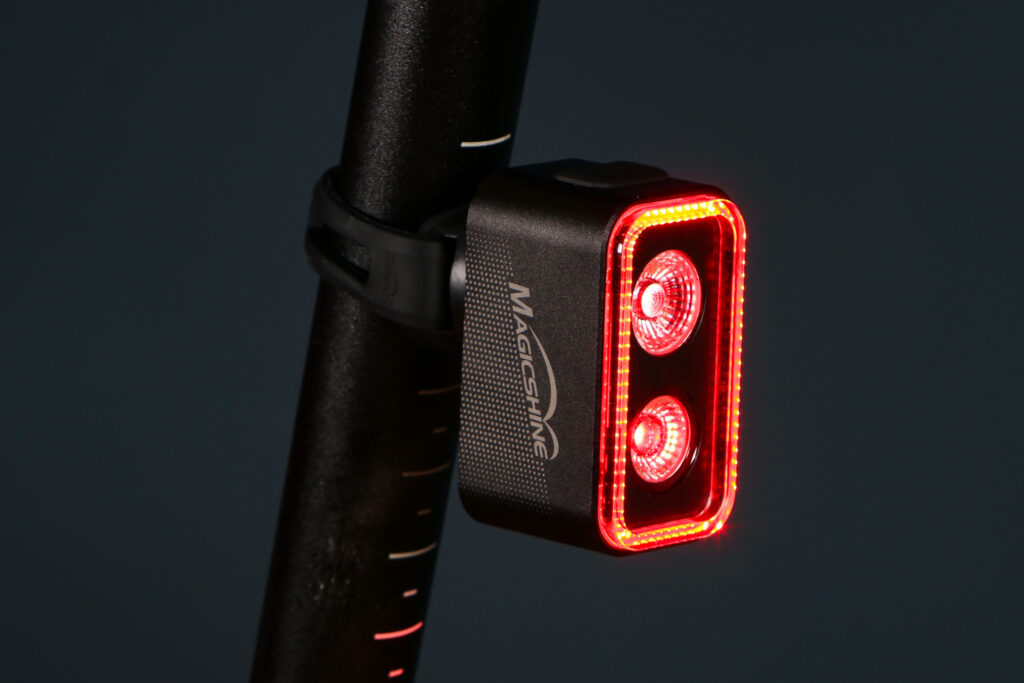
“One: why the f*** don’t we have traffic lights on our bikes yet?” the 35-year-old asked. “Just a small red light that lights up at the back when you hit your brakes. Mandatory in traffic, but not in the race. It would certainly make a difference.”
He continued: “Point two: protective clothing. Of course it sucks to ride with padding on your shoulders and hips, but surely the industry should be able to make something that is nice and comfortable enough?”
Reflecting more generally on the dangers of riding as a professional, Dumoulin told De Cauwer: “I noticed that last week when I rode an amateur gravel race in the United States. On the first descent I suddenly saw race numbers everywhere on the outside and underneath. Suddenly I got scared.
“I realised that as a rider I had taught myself to suppress that fear. As a rider you can go into a mode to block everything, but in an amateur race I didn’t want that at all. That’s how it really hit me now.”







17 thoughts on “Should all cyclists require a ‘bike handling licence’ to race? Retired pro calls for proficiency test and “crash course” to ride in peloton, as Tom Dumoulin says protective clothing should be “normalised””
When I see the kit completely
When I see the kit completely destroyed after a slide out, it makes me wonder why the manufacturers cannot make cycling kit which is light, breathable, stretchy and offers a very high abrasion protection. In the professional peloton I don’t think that cost would be ab issue, after all, if anyone comes off, the kit is shredded and only fit for the bin after. I am sure that the technology must exist and it would surely lesson the huge gravel rash seen so often?
No Reply wrote:
You answered your own question, but don’t seem to draw the obvious conclusion. Barring slide outs, most synthetic fibers are virtually eternal. Something has to keep the wheels of the business turning!
Kevlar would work. Kevlar
Kevlar would work. Kevlar side panels on the bibs might be able to save the legs a bit.
In motorcycling, you can get kevlar jeans. So you can look ‘cool’, but not get road rash if you spill.
Tom Dumoulin speaks common
Tom Dumoulin speaks common sense. Sadly, I imagine that the UCI won’t listen to his wise words.
While we’re at it we should
While we’re at it we should ban spectators from the roadside (especially those with grandparents) and pedestrian refuges within the last 3 km, slso rain, mud and diesel spills could be on the banned list. Anyone care to add to the list? Come to think of it why don’t we do the entire race on zwift and give people the option to be a virtual spectator standing at the roadside 😉
people felt the same way
people felt the same way about seat belts Times change the pro peloton gotten alot faster. Drag racing shorten the track, F1 changed the rules, even footballs has new helments. Your thinking is of oldendays ways. No one is saying full leather but maybe bib made out of kevlar or something that prevents less road scars.
Mybike wrote:
Road rash, although it can look horrendous, is not really a major problem for riders; it’s very rarely even serious enough for them to have to quit the race. Unless there was safety equipment available which is practical for riders to wear that could prevent broken bones – which there isn’t – then all talk of safety clothing is a red herring. The two biggest things organisers could do to improve rider safety, in my opinion, are to spend more money having traffic furniture removed near finishes and/or designing safer, wider, less twisting routes into finishes and imposing an F1-style safety car when conditions become too dangerous. I’d also like to see the sprint zone extended up to 10 km from the finish when appropriate so that it’s on good wide open roads so the GC teams can all bring their riders in safely without having to compete with the sprinters’ teams for narrow spaces in towns close to the finish.
Rendel Harris wrote:
I like this idea but it would have to be a safety bike as a car driver is to insulated from the conditions, maybe an ex pro on an EAPC instructed not to go outside the assistance speed and if the safety rider still crashes then race abandoned
I was thinking more like the
I was thinking more like the commissaire’s car in the neutral zone before the start: the front motorbikes could radio back as soon as conditions become too dangerous then all race vehicles reduce speed to whatever is thought appropriate, switching on warning lights at the back, and penalties for any riders overtaking until the lights are switched off.
That’s a silly idea. The
That’s a silly idea. The safety bike needs to be faster than an EAPC.
maybe one of the mopeds from Keirin might work.
Quote “Cycling is the only
Quote “Cycling is the only sport where you go downhill at 100 kilometres per hour without any protection,”
Downhill skiing springs to mind. Less abrasion, but still painful.
I would put Luge there too.
I would put Luge there too. Its probably one of the fastest sports what doesnt invole a mechanical propulsion of any kind. All you get for protection is a helmet and a condom to wear
Exposing my ignorance here
Exposing my ignorance here but I’d assumed that becoming a professional cyclist involved more than “you’ve got the skills to perform incredibly well on an ergometer, and then you’re let loose”.
Maybe naive in a world of esports or for people crossing over from eg track cycling, but I would have assumed that people would have some interest in your previous experience of cycling on roads?
But perhaps folks from eg. NL/Belgium can get to that level of ability having never encountered a hill? I have my doubts…
On Dumoulin’s call for
On Dumoulin’s call for protective gear – good for him acknowledging this seems to have been inspired by one of those “step out of the normal environment and suddenly see it” moments.
And obviously he’s actually doing the races and taking the risks, so up to him to call that. And it wouldn’t be the first time some sporting organisation has been found to have lagged behind on safety.
But … for the motorbike comparison I wonder what the cycling equivalent to bring the risk to an equivalent level would be? Is it the same (because cyclists do go high speeds)?
Or… given the very few deaths and low rate of serious injuries in pro cycling (outside of “hit by the driver of a truck / car while training”…) could it be that the current pro cycling gear actually offers as much or greater protection for cycling than the motorcycle equivalent for that activity?
I’ve no idea if it’s feasible
I’ve no idea if it’s feasible, but Kevlar patches could be put in the shorts and jerseys where the riders suffer the most common abrasions, the thighs and the shoulders.
kingleo wrote:
It already exists. Assos Mille GTO bib tights and most of Armaurto’s cycling clothing have this protection.
https://armaurto.com/
When I first started racing
When I first started racing while in the army, we would have to do a bike handling skills ‘try out’ to ensure people could ride in a group. You would get the riders who were constantly on their brakes or half wheeling, cutting people up / crossing their lines, the dangerous things that cause pile ups. unless you could show a level of cempetence you were not aloowed to compete.
Forget the Ultra elite racing of the world tour for a minute, there are plenty of levels of racing below that where people with a bike can just turn up and race. The multi cat races where you can have anyone from Cats 1 – 5 all on the same track, then you get the idiots who overestimate thair ability level and try to stick with faster Category riders.
You have no idea of their ability levels and you place a lot of trust in the people around you to not ride like a total reckless prick.