



The daughter of a cyclist killed in a crash with an 82-year-old motorist who didn’t meet the legal eyesight standard has renewed calls for making eye tests a mandatory requirement for drivers and replacing the current criteria, which she described as a “tick-box exercise”.
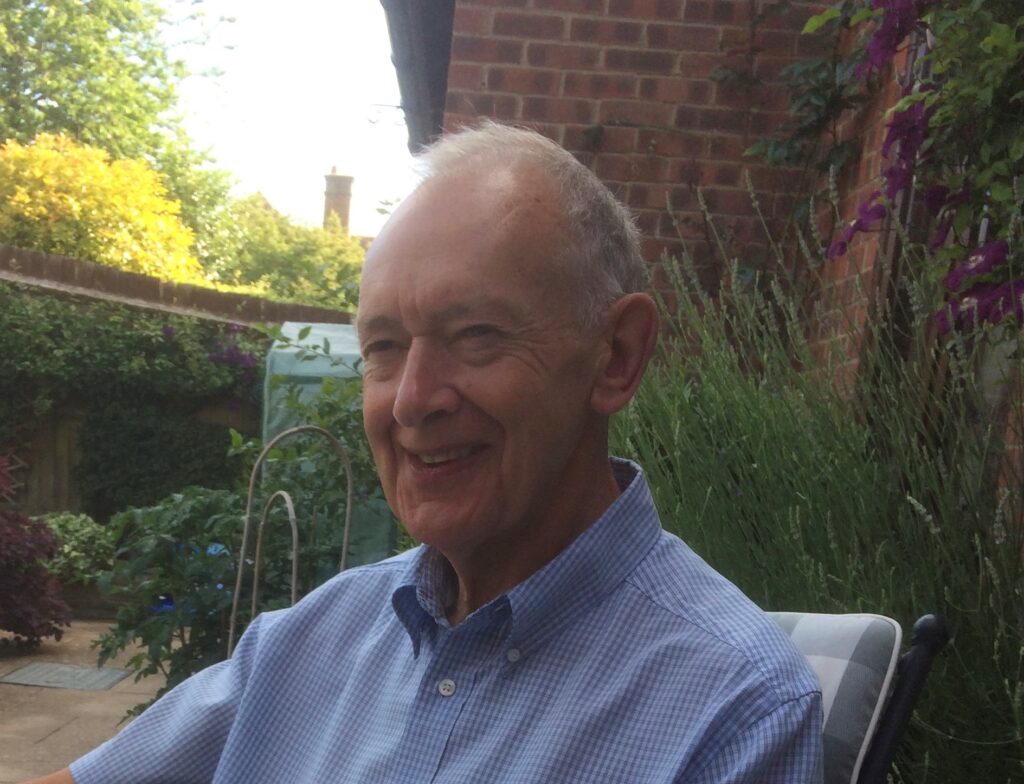
Jim Tassel, 70, was on one of his regular bike rides along the B3400, between Andover Down and Hurstbourne Priors on July 23 2021, when Peter Gardner drove into the back of him, catapulting him two metres into the air. Tassell was rushed to Southampton General Hospital by air ambulance but died five days later.
Gardner was subsequently sentenced to six months in prison for causing death by careless driving in September 2022, with the court hearing that he could only read a number plate at three metres as opposed to the regulated 20 metres.
The judge in his sentencing remarked: “It must have been obvious to you you were not seeing things as you should. You have brought devastation, misery and despair upon the Tassell family. I have heard from Jim’s widow and two children – who you have robbed of their husband and father – tearing a hole in their family.
“You, and you alone, have to live with that responsibility for the rest of your life. It seems to me that your recklessness and foolishness are quite obvious when you weren’t seeing properly.
“Nothing I can say can ever turn the clock back and bring Jim back to his family. It seems to me that your carelessness and lack of concern about your failing eyesight is something that has got to be punished. It seems to me that your conduct has got to be marked by a prison sentence and that an immediate sentence of imprisonment is appropriate.”
> Driver who killed cyclist could not read number plate three metres away
Mr Tassell’s daughter Emma Damen had previously urged that eye tests be compulsory for older drivers, but has now once again reiterated those calls so that no one else has to go through what she and her family did.
She said: “You’re literally playing with somebody’s life. If you know your eyesight is poor, go and get it checked, because if you don’t you could do to a family what’s happened to us.
“We’ve been devastated by what’s happened to us because somebody made that choice, to continue driving knowing that their eyesight was so poor.”
Currently, drivers are required to read a car number plate from 20m away, using glasses or contact lenses if necessary, during their practical driving test. However, this is only at the time of the first test, and once a driving licence has been issued, drivers are only required to fulfil a self-assessment.
This means that although drivers aged over 70 have to renew their licence once every three years, they don’t undergo any tests to certify that their eyesight meets the legal standard.
“So at the moment, it’s a tick box, you tick a box to say ‘I’m fit and healthy to drive’, and that’s it,” Emma added. “There’s no checking of that, it is a choice, and my dad paid the ultimate price for that choice.
“The thought of this happening to any other family just fills me with horror. My dad was a true true gentleman, a really nice guy. The ultimate family guy. He was the best dad.”
The Andover Advertiser reports that the Association of Optometrists is also advocating for tighter regulations, suggesting that drivers should be required to produce evidence to prove they meet the legal eyesight requirements when renewing their licence.
Chief executive Adam Sampson described the current eyesight standard as outdated and added that it was introduced in 1938 and has remained unchanged since. He said: “All you’ve got to do is to demonstrate you can see a number plate when you’re 17 or 18 and you qualify to drive.
“After that, you simply self-certify to the DVLA, all the way through, that you’ve still got the eyesight capable of seeing.
“We’re seeing more and more cases of particularly elderly people with poor eyesight fatally injuring pedestrians and other road users simply because they can’t see.
“So we’re calling for the law to be changed and requiring people to produce evidence, so when they say they can see, they actually can.”
A recent survey by the Association of Optometrists found that almost six in 10 optometrists have seen a patient in the last month who continues to get behind the wheel, despite their vision being below the legal standard.
A spokesperson for the Department for Transport told ITV News: “Every death on our roads is a tragedy, and our thoughts remain with the families of everyone who has lost a loved one in this way.
“The NHS recommends adults should have their eyes tested every two years, and while we do not have plans to change eyesight requirements for driving, we continue to explore ways to improve road safety.”
In June this year, an elderly driver whose eyesight was not good enough to be on the road was banned from driving for five years, ordered to pay £2,000 and sentenced to a suspended five-month prison sentence having pleaded guilty to causing the death by careless driving of a cyclist in Rotherham.
The cyclist had been socialising with fellow members of his cycling club at a local pub before leaving to ride home. James Wardle, aged 83, and his wife had been driving back from Rotherham Hospital in the same direction when the motorist struck the cyclist from behind having failed to spot him in the road.
When officers arrived, Wardle failed a roadside eyesight test and was unable to read a number plate at a distance of 20 metres. It was later discovered that he had degenerative eyesight problems that had played a part in the collision, a medical issue that was undiagnosed prior to Glyn Straw’s death.


















16 thoughts on ““You’re literally playing with somebody’s life”: Daughter of cyclist killed by “reckless and foolish” elderly motorist with poor eyesight renews calls for mandatory driver eye tests”
I cycle about 150 miles a
I cycle about 150 miles a week and in summer compete in time trials, some of which are on dual carriageways like the A11 and A428. I rely on all of the motorists who overtake me, being able to see properly. If I thought about it too hard, I probably wouldn’t cycle.
Regular eye testing for all motorists would improve the odds. That would just leave the worry of drivers’ lapses of concentration, drug taking, failure to pass a driving test!
The sad irony is the amount
The sad irony is the amount of anti-cycling drivers who constantly use cyclist visibility as an argument. How anyone not in hi vis, with 2000 lumen lights are somehow invisible. Yet never question their own vision as being a contibutary factor.
Drivers are pushing the
Drivers are pushing the accountablity for their eyesight onto others when the onus should clearly* be on the driver.
Most unfortunately even with bright flashing lights if the driver’s eyesight is bad enough they won’t be able to judge the distance and they’ll still rear end cyclists.
* or quite blurry in this case
Ah but as Mr Blackbird
Ah but as Mr Blackbird alludes to is it a) an organic visual problem, b) an attention problem or c) “training” e.g. “didn’t move head” AKA “they were in my blind spot” plus only looking for motor vehicles AKA “looked didn’t see”?
It seems we’re prepared to do a tiny bit of policing to address b) (busting the odd phone-using driver; presumably because this is easier for police?). On (a) we’re a bit nervous about addressing drivers’ health issues. Per previous debates here this seems to be for fear of perverse incentives where adding testing / encouraging doctors to report on people’s issues may end up leading to decreased health AND worse driving as people avoid their doctors and relevant tests.
It doesn’t seem like we’re doing anything about (c) – training people to observe more effectively or look out for things other than cars. Sure, there are occasional “look out for each other” / “share the road”-type awareness campaigns. But improving this probably requires extra initial driver training, followed by drivers getting regular practice. That would need far more people cycling and walking – so it’s another chicken and egg situation. And also better road and junction designs which cue drivers as to where to expect vulnerable road users crossing the path of vehicles. And then time…
Of course as a cyclist the difference between these would be academic when I have to take emergency avoiding action, or get hit.
Two campaigns for specific
Two campaigns for specific road safety changes, each led by a grieving relative. One gets the backing of national newspapers, is championed by mutliple MPs, and the support of both main parties, but would make no measurable difference to road injury and death statistics. The other gets coverage in the Andover Advertiser and on local ITV Meridian news, the backing of the Association of Optometrists, and is addressing a real and growing problem. But the latter would require people to put the safety of others before their own convenience as they get older. I wonder which will have more success?
“It seems to me that your
“It seems to me that your carelessness and lack of concern about your failing eyesight is something that has got to be punished. It seems to me that your conduct has got to be marked by a prison sentence and that an immediate sentence of imprisonment is appropriate.”
If only the same words were used each time a dangerous driver exhibits the same lack of concern shown by their low driving standards.
For the sake of being
For the sake of being contrary, I think the quality of someone’s vision is probably less important than whether they actually bother to look.
I have excellent short range vision, but I lose fine details at things more than 2m away and things begin to get a bit blurry. This is fine for cycling as if I need to read a road sign, I just have to get closer to it and I have no trouble seeing bikes/cars on the road as you don’t need to pick out fine details.
Now, there’s various different types of sight problems and I would imagine that the really problematic ones would show up in a person’s everyday driving. So, what we need is more police out on the roads and stopping anyone who appears to have difficulty staying in lane or any other driving anomaly. Ideally, they should be able to do a quick eye check (“read that number plate over there”) and temporarily ban any driver that fails until they can get a full and proper eye test and medical.
AIUI, the requirements are
AIUI, the requirements are broad – covering breadth of vision, as well as distance.
And there was an exercise looking at improving requirements in the last year or so, which identified a positive case for improvement. So this is one to mention in submission to the Mobility Justice enquiry being run by the Walking and Cycling APPG dur by December 16th.
https://appgcw.org/2024/11/12/active-travel-and-social-justice-inquiry/
Looks like you may get your
Looks like you may get your wish.
https://www.gloucestershirelive.co.uk/news/motoring/should-older-drivers-face-roadside-9789867
If I could wave a magic wand
If I could wave a magic wand it wouldn’t be for eye tests specifically, it would be for routine full retests.
A full, fresh, up to modern standards driving test every few years, first one of each cycle free of charge, but if you fail that one then your retest costs you.
The vast majority of drivers not only haven’t been tested recently, they’ve *never* passed a current test on the current rules.
Quote:
“The NHS recommends adults should have their eyes tested every two years, and while we do not have plans to change eyesight requirements for driving, we continue to explore ways to improve road safety.”
However it was only a cyclist that was killed. Any road user with any sense will be driving a 2 tonne box on the roads which would protect them from something like this so we are going to leave things as they are.
our thoughts remain with the
our thoughts remain with the families of everyone who has lost a loved one in this way
Dead giveaway for monumental insincerity and ‘who cares?’
This is one where
This is one where consultation was done (in iirc 2023) around changes, under the previous Government, demomstrating that they would be worthwhile in cost-benefit terms.
I think this could be done in the road safety review, perhaps starting with 80+ year olds where KSI rates start seriously increasing. It is logical alongside graduated driving licences for young people.
It’s one where MPs need to be lobbied, and should be included in the Road Safety Review setting the agenda for the years ahead.
AIUI, the requirements are broad – covering breadth of vision, as well as distance.
And there was an exercise looking at improving requirements in the last year or so, which identified a positive case for improvement. So this is one to mention in submission to the Mobility Justice enquiry being run by the Walking and Cycling APPG with submissions by December 16th, which will form an input into the road safety review.
PLEASE do what you have time to do on this.
Reminds me of one of those
Reminds me of one of those Police Camera Action type programs where an 18/19 yo driver was stopped and found to have a provisional licence and no insurance, he was arrested & his car impounded. Later on in the program an elderly man was seen weaving all over the road, when stopped, his licence had exoired several years before he had poor eyesight and his car hadn’t been MOT’d for several years and was uninsured. His defence was that it was his only means of transport to the shops.
One of the helpful police officers gave him a lift home whilst the other drove the mans unroadworthy car home for him and left without taking any action when he promised not to drive again.
Both drivers should have been treat the same but being old seems to be an excuse for not adhering to the law.
BTW I’m 67yo myself and am aware of the changes age can bring to one’s driving abilities so have altered my driving accordingly.
Road safety in the UK is a
Road safety in the UK is a sick joke, with the answer to all cyclists’ concerns being “wear hi-viz and a helmet, that’ll make you safe.” Nothing could be farther from the truth and they are just victim-blaming, criminal-excusing lies, by people who really know better but find it expedient to turn a blind eye and support drivers.
EDIT: no pun intended.
What the?
What the?
A recent survey by the Association of Optometrists found that almost six in 10 optometrists have seen a patient in the last month who continues to get behind the wheel, despite their vision being below the legal standard.
A Google search says there’s 17,000 optomitrists registered in the UK. By those numbers, if folks have an eye test every two years, thes a quarter of a million drivers unfit to drive just from eyesight considerations – and those are just the ones who say to their optician “I’m not going to listen to you, I’m going to drive anyway”. How many don’t say that to their optician and drive anyway?
Scary..