



Cycling must address its lack of diversity and break out from its “predominantly male, white, and often ‘cycling enthusiast’ niche”, if it wants to fully capitalise on active travel polices and investment, the Bicycle Association has warned.
To mark International Women’s Day, the Association, which represents the UK cycling industry, has today launched Diversity in Cycling, a project aimed at tackling the “diversity problem” which currently exists in the bike industry and cycling in general.
By aiming to unite and align the cycling industry behind a shared commitment to create a more equitable, inclusive sector which recruits more diversely and reaches out to new audiences, the Bicycle Association (BA) hopes the project will enable the industry to both better reflect society and to “exploit the potential that now exists for growth”.
> UK’s cycling market and infrastructure “being left behind” by Europe, experts warn
According to the BA’s report, published today, men currently occupy the vast majority of roles within the UK cycling industry. Men also make twice as many cycling trips as women, with 73 percent of women who live in cities never riding a bike (an issue highlighted in the recent Women’s Freedom Ride through London, organised by the London Cycling Campaign).
The report found that women hold just eight percent of cycle workshop roles, 19 percent of customer-facing roles, and 40 percent of the industry’s administrative roles – though only a small handful of those have progressed to senior leadership positions.
Over 90 percent of women face barriers to both entering and progressing within the sports industry, citing issues as discrimination, harassment, a lack of role models, difficulty finding a work-life balance, and a lack of training and targeted recruitment among the key “blockers” to progress.
Though no official data for the cycling industry exists at the moment, the report also noted that, anecdotally, Black, Asian, or people from ethnic minorities are underrepresented in the sector, as are individuals from low socio-economic backgrounds or with disabilities. There is also a lack of LGBTQ+ people joining or leading the UK bike industry, the report says.
That anecdotal evidence is backed up by the low participation levels in cycling for these groups. Only 14 percent of members of ethnic minority groups, 12 percent of people with disabilities, and 19 percent of LGBTQ+ people cycle regularly.
> UK bike sales fall to lowest level in 20 years
By encouraging and enabling these groups to cycle, and making the sector more reflective of society as a while, the Bicycle Association believes that the cycling industry can “unlock additional growth” and withstand the challenges currently facing the sector.
The BA’s Annual Market Data Report for 2022, published last month, reported that bike sales in the UK dropped to their lowest level in two decades last year – falling by 22 percent down to 1.8 million units and 27 per cent below pre-Covid levels.
The report’s author John Worthington said he expects the year ahead to be “turbulent” and “challenging” – a claim borne out by the struggles facing several cycling companies already in 2023, such as the women’s clothing brand VeloVixen.
However, it’s by growing these previously underrepresented audiences, the Bicycle Association argues, that the industry can move beyond its current post-boom stagnation.

> Stolen Goat’s parent company acquires VeloVixen and Wildcat
“There’s no doubt that cycling is beginning to be recognised by government as a crucial mode of transport, strategically important to deliver UK climate and public health goals, and a valuable tool for creating better places to live, work, and play,” says the BA’s executive director Steve Garidis.
“This brings with it welcome policy priority and increasing levels of public investment, to make cycling easier and safer, in turn attracting a wider audience for the kind of everyday cycling that might be undertaken by everybody, for leisure, exercise, health, social, travel to shops, work, or school.
“We can assume that as these policies and investments are delivered, cycling will grow. The potential is very significant.
“But to achieve this growth, cycling must also break out from its predominantly male, white, and often ‘cycling enthusiast’ niche. This group has arguably reached its natural limit.
“Certainly, UK bike sales over the last few decades have stayed at roughly the same size. Cycling has a diversity problem and to exploit the significant potential that now exists for growth, it must become much more diverse than it is today.”
He continued: “Here, the cycling industry has a role to play. Just as cycling has a lack of diversity, so too does the cycling industry. There are many reasons but the biggest may well be that it’s an industry full of cycling enthusiasts. Often a strength, but which here also means that an industry workforce of over 60,000 has roughly the same diversity as its enthusiast consumer base.
“Our workforce is the ‘frontline’ of cycling, the consumer face. We sell cycling to would-be cyclists on a daily basis. As an industry, one of the most important things we can do therefore is to take action so we better reflect our target market.
“Success will not only mean more people enjoying the fun and benefits of cycling, but will also mean growth in cycling sales, expansion and creation of cycling businesses, and more people in cycling jobs.”
To tackle this lack of diversity in the cycling sector and cycling overall, the BA has urged all bike businesses to sign a Diversity Pledge committing them to creating a “diverse, equitable, inclusive workplace culture”.
Brompton, Giant, Trek, Specialized, Raleigh, Schwalbe, and Halfords are among the companies that have already signed the pledge, while cycling bodies such as British Cycling, Sustrans, Cycling UK, and the Bikeability Trust have also backed the project’s aim.
The BA has also invited everyone working in the industry to take a perception survey (a collaboration between the Association, Cycling Industries Europe, and WORK180) into the experiences, wants, and needs of people around diversity, equity, and inclusion.
“The business case for diversity, equity and inclusion in the UK is ‘stronger than ever’, according to new research by McKinsey,” says the Bicycle Association’s Diversity, Equity, and Inclusion Lead, Sally Middlemiss.
“Diverse businesses are more profitable, they recruit the best talent, make better decisions, have more motivated employees, and have a superior understanding of customers’ needs.
“Initially, the Diversity in Cycling project will focus on collecting data and insights from both employers and underrepresented groups in our industry, to benchmark, measure progress, and capture case studies and role models.
“The project then aims to provide targeted support to employers, sharing best practice from within and outside cycling to help them implement their strategic commitments to diversity, equity, and inclusion, while building an inclusive professional network for women and other marginalised groups.”
Cycling UK’s chief executive Sarah Mitchell added: “In the UK, all segments of society are under-represented in cycling, but there is still a perception that cycling is predominantly an activity done for exercise by white men.
“That’s not a criticism of those who are riding, nor their reasons for doing so, but when cycling is dominated by one segment of society there is a risk that others may not feel that riding a bike is something they can and should be able to do.
“We need to question why that is and what can be done to correct this imbalance. The benefits of more people cycling will be a healthier, happier population with additional environmental and economic benefits. This is good news for all of us.
“The UK’s lack of significant change in the diversity in cycling is one of the barriers which holds us back from becoming a cycling nation. It is encouraging to see the cycle industry now looking at its responsibility to help make this change happen, as charities and NGOs cannot do it alone.”




41 thoughts on “‘The male, white, cycling enthusiast niche has reached its natural limit’: Cycling must address lack of diversity, says Bicycle Association”
I’d consider that the biggest
I’d consider that the biggest barrier to getting people to cycle is the fear of traffic on the roads. What’s needed are sane cycling infrastructure (i.e. not bits of magic paint separated by beg buttons) and effective road policing. Anything else is merely rearranging deckchairs on the Titanic.
Also to be considered is the level of aggression from motorists. I’d guess that a persecuted minority is not going to feel safe cycling when motorists can throw bottles etc with no repercussions.
Interesting article from
Interesting article from SeeSense here: https://seesense.cc/blogs/data-insights-blogs/women-cyclists-in-london-are-more-likely-to-choose-dedicated-cycle-routes-than-men showing that women are much more likely to choose protected infrastructure than men, even at the expense of having to take longer journeys, which bears out your assertion. It’s a bit of an old survey now but I don’t think there’s any reason to suppose things have changed: a Sustrans survey in 2013 found that when asked what was the biggest reason for not cycling 67% of women cited the lack of protected infra, more than twice the number that cited any other reason.
Rendel Harris wrote:
I think there are multiple factors at play… a few from my experience…
1) There are a proportion of motorists that are really shit anyway, but get triggered when they see they have just been overtaken by a woman. I suspect they get triggered by other factors that they see as ‘other’ as well. Death threats, rape threats and assault (i actually had my arse smacked out of a passenger window once) can be pretty off-putting.
2) as a woman I get a lot more ‘shocked’ commentary from associates amazed that I cycle round town and in London. They are less amazed by blokes doing it. Repeated peer pressure that what you’re doing is dangerous can get you down.
3) from my observations, women tend to cycle in the gutter more and then get close passed more. It’s not surprising, girls are socialised more to be polite and not take up space… makes for a shitty ride though and makes it more likely that you will seek segregated space.
Indeed. Not just fear of
Indeed. Not just fear of traffic, too, but also an increased general fear of safety (link provided below). I was complaining to my now wife years back about cyclists jumping red lights; especially by Turbo Island in Bristol (I expect you know it) and she told me that she never stops there if she can avoid it. I was surprised but she explained how intimidating and scary it can be stopping there.
On International Women’s Day, I can say with confidence that women deserve better.
Link: https://yougov.co.uk/topics/society/articles-reports/2022/03/08/how-often-do-british-women-feel-unsafe-doing-day-d
ShutTheFrontDawes wrote:
I tend to be wary stopping anywhere along Cheltenham Road when it’s night-time as there’s a lot of drunken people and you never know what they might do, but yes, Turbo Island and also Crack Alley are not known to be trustworthy places. When I go down there (southwards), I usually turn left into St Paul’s rather than head all the way to The Bearpit as it’s a more direct route to St George.
I’d quite understood the
I’d quite understood the issues at night time, but the issue does not go away during the day – something that as a man I benefited from having explained to me. Indeed women are considerably less safe than men during the day, and they know it. In my view is no surprise that women cycle less. I expect they do a great many things less than men do through fear of their safety.
ShutTheFrontDawes wrote:
Yeah, I don’t consider it to be a dangerous area during the day – shows how the white male viewpoint isn’t always the best one to be using.
It’s a series of feedback
It’s a series of feedback loops I guess – the first simply being “people do what others do”. Most people in the UK don’t cycle anyway. Most women don’t cycle.
In NL where lots do the routes feel safer, they attend to “social safety” also in route location and design details (avoid hiding places / dark tunnels and alleys). There’s a network so you can often re-route if there’s a problem. You can ride side-by-side with a friend and taking children on you bike or their own is fine. Cycle parking is provided in lots of locations – most destinations, not just at work and a station.
ShutTheFrontDawes wrote:
Exactly this. When I started cycling with the other half, it was shocking how much agression she received from motorists just by being there. Things that never happen when I’m out cycling. There seem to be some men with real anxieties about women doing anything or even being in public space at all.
But why does it matter if
But why does it matter if only one group of people want to cycle?
Because cycling, particularly
Because cycling, particularly utility cycling, is a good way to tackle lots of important problems (e.g. congestion, pollution, obesity, mental health, climate change, access to services, efficient land use) and if many groups are being deterred from doing this Good Thing then we should consider why and how those barriers might be reduced or removed.
Dnnnnnn wrote:
This. When we have more utility cycling by every facet of society we’ll all be safer.
DON’T FEED THE TROLL
DON’T FEED THE TROLL
the little onion wrote:
*TROLL(s)
?
Edit: it’s gone meta. Pretty obvious this was gonna trigger the fragile.
Busy types getting there fill
Busy types getting there fill here ATM. Pity the admins apparently delight in a “whack-a-mole” policy but with ample time between deploying the hammer, but “internet” I guess.
Where you have a culture of
Where you have a culture of cycling such as in Cambridge, there is little difference in the gender ratio of cyclists. Cargo bikes and dutch child carrying bikes are proliferating. The cycle racks throughout the city bulge with bikes of almost every description. Lycra is a fairly unusual sight and despite a relatively affluent population so are statement cars.
Robert Hardy wrote:
I’d say it is moving that way in London (though still some way to go).
Steve K wrote:
I’d agree. London is a really interesting case – infrastructure, safety, distance, housing (where do you keep your bike when you’re renting a small room?), modal options, gender, cultural and racial influences all at play.
British officials: We wonder
British officials: We wonder why there are so few women cycling.
Skydive trainer: I wonder why there are so few women jumping of a flying aluminium tube with wings, hoping that a piece of cloth that has to unfold correctly will save them from having an instant death.
Duch and Danes men: It is nice to cycle and see hot chicks on our perfect cycleways. Ok there are some grannies too, but nevermind our economies are too strong to worry about anything really.
Common sense: We men tend to do stupid things sometimes if we do expect a good reward. And many of us ride in such bad cycle infrastructure because we enjoy it or feeling that we will reverse climate change or minimize budget deficits, or get a KOM while commuting. Women are more sensible and will prioritize their safety.
The solution is simple but expensive, infrastructure that is safe for all and a peace treaty between motorists and cyclists.
Made me chuckle.
Made me chuckle.
Last para though, cycling infrastructure is far far less expensive per throughput than motoring infrastructure. And pushing back actively against motoring would be a total win-win-win situation for the public purse.
I really meant expensive as
I really meant expensive as an initial investment in cycling infrastructure as well as advertising campaigns and better policing that will improve motorists-cyclists-pedestrians relationship.
In the long run and given that it works, the economic benefits are too good to bypass. Better health for the ones cycling, better health for all due to improved air quality and noise mitigation, reduction in total travel time due to reduction in congestion, global warming slowdown thus less expensive climate disasters, less fuel imports and even more possible that I cannot think now.
But unfortunately most people see just the original bill.
I recommend we add an
I recommend we add an additional tax on wankpanzers to teach this to girls in school bike lessons.
Ryan wrote:
Given the overwhelming evidence that road danger is about attitude and attention, when will government connect the opportunity for active travel to the need to regulate mainstream media so reduce hate speech and provide an acceptably safe environment to all vulnerable road users?
I’m looking at you Department for Culture, Media and Sport, with Department for Transport.
If government wants to focus on this as a Diversity and Inclusion topic, so be it.
Everybody must be able to survive using a bicycle on the public highway.
Good call to fix all systemic
Good call to fix all systemic biases, because that’s what’s needed, no less, to let discriminated parts of society participate fully, be it in cycling or any other activity.
Women, children, old people, lower income demographics, people of diverse ethnic origin etc. are all kept back from participating fully in our capitalist patriarchal society.
The predominantly white male cycling population is a symptom, not the disease.
lot to unpack on this and Im
lot to unpack on this and Im not sure I can be bothered to go through it all
but note this report seeks to address the perceived imbalance WITHIN the cycling industry and cycling industry workplaces, its not about why women dont cycle in more numbers than men, so it wont alter the take up of women cycling on the roads one jot, because the fundamental main barrier facing women cycling is and always has been one of safety, not how many women are in industry leading positions at the company of the bike theyre riding, as funnily enough most of us dont enjoy facing 6 impossible ways to die before getting to our workplaces.
and we see countless times here and in the Netherlands, and saw during the lockdowns, remove that danger barrier, build the good infra, you actually create the diverse, inclusive, equitable world of cycling you want that caters for ALL. whilst we carry on treating it like a version of the Hunger Games, it wont matter at all how many companies sign up to a pledge, it will remain predominately testosterone fuelled.
I dont know if the report cites Velovixen or its just been linked, but we dont know why Velovixen ultimately folded there might be lots of reasons that have nothing to do with the turbulent market conditions or that people can only ride one bike at a time and no market ever sustains continual growth, clearly Stolen Goat believe theres still a market for that brand, who are crowdfunding at the moment as are many other cycling clothing brands (still surprised that hasnt covered yet especially as Paria met their target within a couple of days before it even went general access so clearly some of the market is still buoyant)
Simple examples: road bikes
Simple examples: road bikes being designed around 700c wheels when women often have smaller frames which are better suited to 650 wheels to avoid wheel strikes.
Liv are Giant’s women specific brand but not many others seem to have properly thought through designs considering women.
On the road, how often do you see mamils on light weight road bikes being trailed by t’other half on some mechanically inappropriate BSO? E-bikes have probably saved relationships!
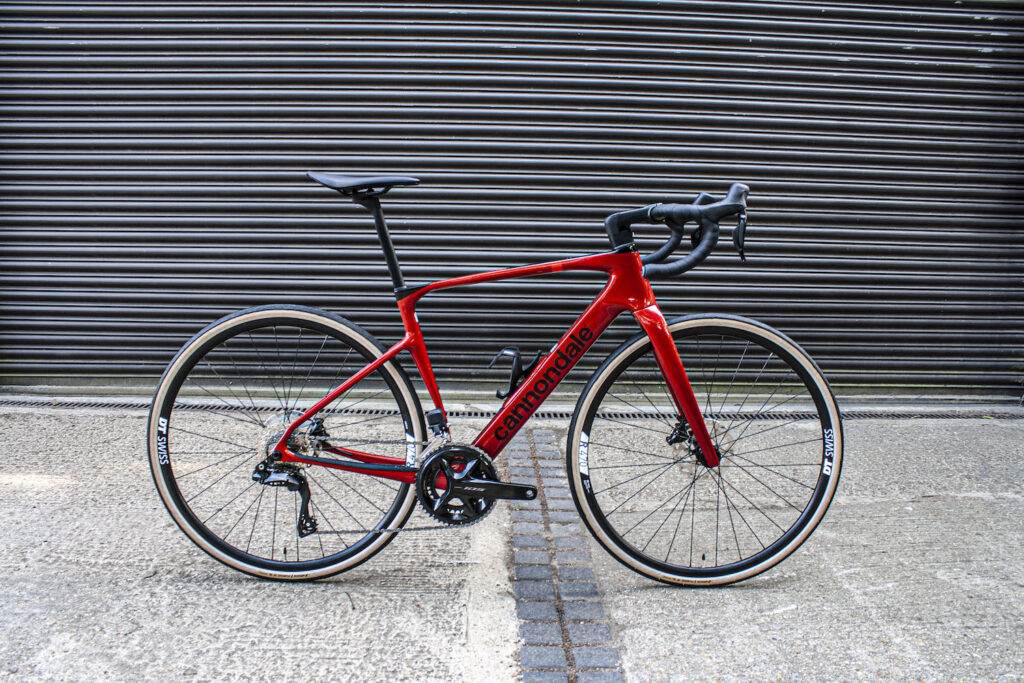
Cannondale women’s range is
Cannondale women’s range is meant to be good. Their smaller frames are 650b.
On the flip, you have brands
On the flip, you have brands such as Specialized who producer non-gender specific bikes. Women as well as men will custom fit their bikes to suit their fit and style and surely giving the customer this option regardless of gender, would make a better model.
In a past life I worked with
In a past life I worked with an ergonomist on a Windows app for body dimensions. What becomes clear is as soon as you try and combine more than a couple of different variables, sizing assumptions fall apart. Fitting a bike frame depends on leg length, arm length and body length as a minimum. When you combine those three factors, a bike that fits 95% of the appropriately sized arms, 95% legs and 95% body may only fit 90% of actual people as those arm, leg and body lengths are not entirely related. When you add sex into the mix, that number may drop considerably more as the the ratios of those parts change. You can then add in race, as different ethnicities have different proportions.
To a certain extent, it is why more recent cars often have highly complex seat adjustments, because when you consider the requirements of reaching the pedals, controls, having the steering wheel at the right postion, and supporting legs, and back and so on, they are necessary. A car with a slider for leg length and a seat back angle may only be able to accomodate 10% of the population when you work through the actual population considering all relevant dimensions. It is not a simple calculation and the app I developed used MonteCarlo modelling to come up with an approximation.
It is likely that even the stack and reach for a medium sized man may not be a good ratio for a similarly size ranged woman, so if a unisex frame is the starting point it is going to be either wrong for both men and women as a compromise or very wrong for one of them – if you try and adjust for reach through stem you are affecting handling, so if similarly sized women need 2cm less reach, you need to be designing a frame that accomodates that. Now the right design might be 1.5cm shorter frame and 0.5 less stem and an angle adjustment on the steerer tube to accomodate the correct position of wheel to steerer based on the weight distribution.
Anyway, a long waffle to point out that adjusting a bike for different sized people is not simply a matter of seat height, saddle position and changing a stem. It is why some people swear by the fit of one brand against another and, of course, why others disagree.
PS For fun, here is a link to the app I worked on. I haven’t been involved for a long time. https://www.openerg.com/psz/features.html
.
.
Very interesting post. Thanks.
.
IanMSpencer wrote:
In all honesty I have never seen this.
Careful what you wish for!!
Careful what you wish for!!
joe9090 wrote:
I wish for this
I’ve stopped reading and
I’ve stopped reading and commenting on Martin’s posts. It’s so liberating, I’d recommend it to anyone. It’s early days but I feel so much better already.
perce wrote:
I play chess on my kindle
I play chess on my kindle most nights. I don’t seem to be getting any better – sometimes I do ok, other times I make basic mistakes. I’d like to join a club really. Oh and I oiled my bike chain today ( just to keep things cycling related).
Mmmm. Chain oiling is rather
Mmmm. Chain oiling is rather arou…. sorry… therapeutic.
I couldn’t possibly comment.
I couldn’t possibly comment.
giff77 wrote:
Fiddling with a bike can be kind of therapeutic in a ‘mindful’ kind of way. Until something goes horribly wrong, at which point it becomes the most stressful thing EVER.
Oooh err, you should try
Oooh err, you should try adjusting and lubricating the chain on a Triumph Daytona then taking it for a test ride.. ?
Broken_Chain wrote:
Ah, that explains your posts this morning. You do know this site is cycling as in bicycles, not *motorcycles*?