



"The police don't know the Highway Code?": Police Scotland called out for "incorrect" and "contradictory" cycling advice
Anyone remember the days before social media? The days before weekly live blogs about police forces putting their foot in it. It’s Police Scotland today. Or should I say last week, but this one has only just come to our attention, the fallout and reaction still rolling on to last night, so technically this week I guess.
Much-criticised social media advice from public authority that should know better, reveal yourself…
(5) Cyclists: Must obey all traffic signs and lights (including stop lines)
At night must have white front and red rear lights
Advised to use cycle lanes to make their journey safer
Give extra space between larger vehicles to be seen
Never pass between the vehicle and kerb— Road Policing Scotland (@PSOSRoads) October 18, 2023
It’s the third and fifth points that are getting the most attention here (although it is also the prime time of year for telling vulnerable road users to ‘be seen’, rather than addressing the root cause of road danger, but that’s a matter for another day)…
The last suggestion is not correct. Perhaps worth checking with legal?
— PhoneKills (@phonekills) October 24, 2023
So should a cyclist use this cycle lane or not, in your view? pic.twitter.com/YHLKdaAkwy
— closepassescardiff (@closepassescdf) October 24, 2023
So, what does the Highway Code actually say?
Rule 61:
Cycle Routes and Other Facilities. Cycle lanes are marked by a white line (which may be broken) along the carriageway (see Rule 140). Use facilities such as cycle lanes and tracks, advanced stop lines and toucan crossings (see Rules 62 and 73) where they make your journey safer and easier. This will depend on your experience and skills and the situation at the time. While such facilities are provided for reasons of safety, cyclists may exercise their judgement and are not obliged to use them.
Rule 67:
When cycling on the road, only pass to the left of large vehicles when they are stationary or slow moving and you should proceed with caution as the driver may not be able to see you. Be particularly careful on the approach to junctions or where a large vehicle could change lanes to the left.
Hmmm if you were hoping for a testing game of spot the difference I think you might be a bit disappointed…
Cycle lane use is optional & there are lots of situations where you shouldn’t or cannot use them. We get enough “why aren’t you in the cycle lane” nonsense without @PSOSRoads adding to the problem.
— Merton Cycling Campaign (@CyclingMerton) October 24, 2023
"It is with a heavy heart that we inform the passing of Mark Groeneveld": 20-year-old pro cyclist dies after race
Mark Groeneveld, a 20-year-old pro cyclist from the Netherlands, died after the Hong Kong Cyclothon in the early hours of Monday, his team has announced. Groeneveld suffered a mechanical during the race, Noordhollands Dagblad reporting that he collapsed while out in public, Canadian XSpeed United saying the circumstances are “under investigation” but “preliminary information suggests it may have been due to a heart attack”.
“Mark was an incredible individual and a cherished member of our team. He had a remarkable spirit, always ready to lend a hand behind the scenes with his infectious smile and warm-hearted nature,” the team said in a tribute.
“His presence brightened our days, and he will be deeply missed by all who had the privilege to know him. Take care of yourselves and each other during this trying time. With heartfelt condolences, Mark will never be forgotten by us.”
Mathieu van der Poel? Tadej Pogačar? Questions asked as Vingegaard wins best male cyclist award for 2023
🇩🇰 Jonas Vingegaard wins the Men’s Vélo d’Or!👏
🇩🇰 Jonas Vingegaard (@JumboVismaRoad) remporte le Vélo d’Or Hommes ! 👏#velodor pic.twitter.com/GGR2NwRfWm
— L’ÉQUIPE (@lequipe) October 24, 2023
Jonas Vingegaard the best male cyclist of 2023? This one has caused a fair bit of discussion… the more fan-friendly achievements and riding style of Tadej Pogačar and Mathieu van der Poel beaten by the dominant, crushing efficiency of the Tour de France winner.
I’d say Van der Poel’s done more than enough in 2023 to earn the title: Milan–San Remo, Paris-Roubaix, World Championships, that’s a titanic hat-trick, although admittedly facilitated by ‘off’ periods like at the Tour de France where we barely saw the watt-smashing Dutchman away from Jasper Philipsen’s leadout.

[Alex Broadway/SWpix.com]
The case for Tadej Pogačar, the sheer weight of victories, 17 in all. Flanders, Amstel, Flèche Wallonne, Lombardia, two stages of the Tour, Paris-Nice, but he was of course beaten comprehensively by Vingegaard at the big one.

[LaPresse/RCS Sport]
In comparison, Vingegaard’s 2023 had more victories than I expected, 16, including the Tour de France, Dauphiné, Itzulia Basque, a Tour stage win, two Vuelta stages, and multiple more week-long stage race stage victories.

[ASO/ Pauline Ballet]
A few thoughts from fans on L’Équipe’s post…
“I like how everyone is saying Pogi because he won more one day races but when it came to racing Jonas straight up in by far the biggest season race over 21 straight stages he got destroyed by over seven minutes.”
“MvdP and Pogacar had better season.”

[Zac Williams/SWpix.com]
“The whole season should be taken into account, not just the Tour de France. But the fact that L’Équipe and the Tour are both French says it all.” (TOUR DE FRANCE IS FRENCH SHOCKER… who knew?)
“Everyone knows that Jonas could have won two Grand Tours if he wanted to — so well deserved — but MvdP is a strong contender.”
Get in the comments with your thoughts, I’m interested to see where you lot stand…
I might have to dust off the poll machine for this one…
POLL: Best male cyclist of 2023?
Any complaints at Sepp Kuss’ omission can be forwarded to the comments section…
Less controversial? Demi Vollering wins the Women's Vélo d'Or
🇳🇱 Demi Vollering wins the Women’s Vélo d’Or!👏
🇳🇱 @demivollering (@teamsdworx) remporte le Vélo d’Or Femmes ! 👏#velodor pic.twitter.com/IouRpQ2kjn
— L’ÉQUIPE (@lequipe) October 24, 2023
I think this one’s going to be a bit more straightforward…
Demi Vollering’s 2023 was about as good as it gets (some of these aside: From Coppi to Van Vleuten: Cycling’s greatest ever seasons). The SD Worx superstar won *deep breath* Strade Bianche, Dwars door Vlaanderen, Amstel, Flèche Wallonne, Liège–Bastogne–Liège, two Vuelta stages (and may well have ‘deserved’ to have won that overall), the Dutch national champs road race, Tour de France Femmes and Romandie. Solid…
Vollering’s teammate Lotte Kopecky’s season wasn’t bad either… Omloop Het Nieuwsblad, Flanders, two national championship titles, a Tour stage, six days in yellow, the green jersey, World Championships road race. Exceptional, but Vollering levels of exceptional?
It wouldn’t be a cyclist of the year discussion without Annemiek van Vleuten of course, just La Vuelta and the Giro (plus two stage wins) in her final year in the peloton.
Bike industry turmoil: Shimano says global cycling market remains "weak" as segment sales fall by a quarter – and worse to come?

Study: One quarter of crashes on US roads linked to phone misuse
[CC BY 2.0 by DPP Law/ Flickr]
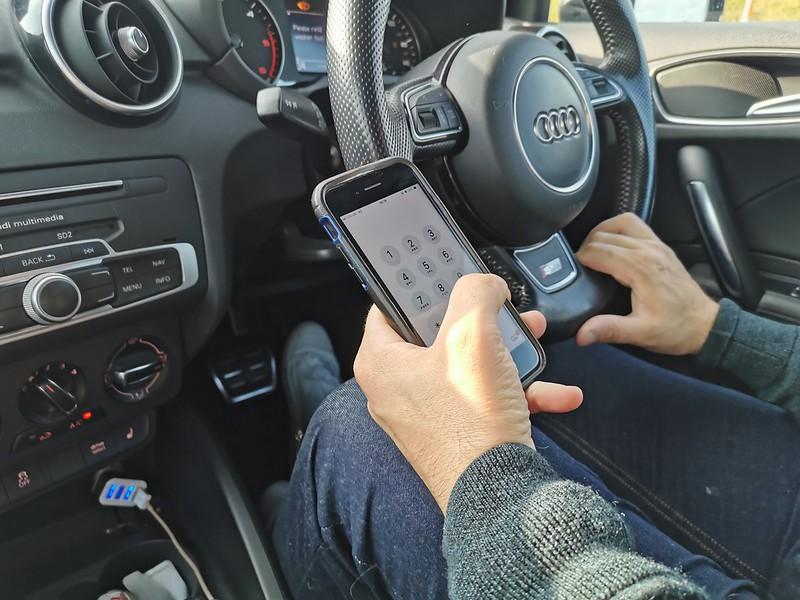
New analysis of mobile phone data, reported by Bicycle Network and undertaken by mobile phone and GPS monitoring company Zendrive, concluded that more than one quarter of crashes on US roads are linked to phone misuse. The website also reports that number has risen by nine per cent compared with the same period in the previous year.
“We examined the number of phone use occurrences per trip for both collision and non-collision trips. The data revealed that, on average, drivers engaged in phone use about six times during a collision trip,” Zendrive explained.
“Almost half of the drivers (45.8 per cent) involved in collisions used their phones at least once during their trip. Similarly, over 40 per cent of collision trips per month had rapid acceleration events, while all events – speeding, rapid acceleration, and phone use – are trending upwards month over month.
“These worsening behaviours are ultimately leading to more collisions, which further underscores the severity of the distracted driving epidemic.”
Between January and May 2022, 19.2 per cent of collisions involved mobile phone use by the driver in the 15-second window before the crash. This year, that figure had risen to 28.4 per cent.
“Education and advocacy campaigns should continue to highlight the importance of safe driving practices, encouraging drivers to put their phones away while on the road,” Zendrive said. “Additionally, tech companies and insurers can play a vital role in curbing distracted driving by implementing features that discourage phone usage while driving.”
Will you ride L'Etape in 2024?
It’s Tour de France route announcement day! Simon will have something up on that shortly, but as a teaser here’s L’Etape’s route for 2024…
You were impatiently waiting for it, here it is: the profile of #LEtapeduTour 2024! 🔥 The 32nd edition will take place on July 7th 2024 in the hinterland of Nice 🚵♂️
And we are already extremely excited to get there 🥰 pic.twitter.com/du7Ti95GaM— L’Étape du Tour de France (@letapedutour) October 25, 2023
Perhaps the biggest one-day sportive in the world, thousands of riders will take on this full stage of the Tour de France a few weeks before the pros. Stage 20 has been picked this year. Not the final stage before Paris because as we’ve all heard by now… the race isn’t finishing in the French capital because of the Olympics and will end in Nice (with a time trial) instead. This quadruple ascent monster will be the final mountain stage and has been picked for L’Etape.
But have they picked the wrong stage?
I wish the Etape could have used stage 19.
— Simon Warren (@100Climbs) October 25, 2023
‘What’s stage 19?’ I hear you cry… just the small matter of this…
Etape 19 / Stage 19 – #TDF2024
🚩 Embrun – @Isola2000_06 🏁 145 km🤩 The ultimate giant is back on the Tour: the Cime de la Bonette and its 𝟐.𝟖𝟎𝟐 m of altitude!
🤩 Le géant ultime fait son retour sur le Tour : la Cime de la Bonette et ses 𝟐.𝟖𝟎𝟐 m d’altitude ! pic.twitter.com/PqnLUjsnO2
— Tour de France™ (@LeTour) October 25, 2023
Registration opens next Tuesday (31 October) at 4pm.
"I'm not going to do it": Magistrate steps down... would rather quit than enforce 20mph speed limits

A magistrate in Wrexham has resigned, saying he feels “uneasy” about fining drivers and handing out penalty points for speeding offences in new 20mph zones.
The BBC reports former police officer and councillor Nick Colbourne quit after 18 years in the role, questioning the fairness of the speed limits, claiming that “if an idiot is going to drive through somewhere at 60mph, they’re going to do it whether the speed limit is 20 or 30”.
Apparently missing the fact that not all road incidents are caused by 60mph “idiots”, but also by people travelling at the speed limit who will abide with the new limits, Mr Colbourne said punishing motorists made him “uneasy”.
“If you get 12 points, you’re looking at a six-month ban under the totting up scheme,” he said. “We all accept 20mph outside schools, but I don’t think blanket coverage across Wales was the answer.”
The magistrate admitted that he had been considering stepping down, but 20mph speed limits were the final straw and that courts were sometimes facing 60-70 motoring cases a day.
Conservation group's fear plan to surface path for wheelchair access will create "hostile environment" and "encourage faster cyclists"
A conservation group dedicated to protecting and supporting The Parkland Walk, the longest linear nature reserve in London, four kilometres between Muswell Hill and Finsbury Park, has expressed concerns about a Haringey Council consultation about resurfacing the off-road route with a hard surface to improve accessibility.
The Friends of Parkland Walk group says the “overwhelming majority” do not want the path, the chair Cathy Meeus warning that “all it will do is encourage faster cyclists”, Ham & High reports.
“They’ll make it accessible for one small group of vulnerable people but make it a hostile environment for young people, old people who are less mobile, dog walkers, the visually impaired and deaf community,” she said.
“Will they honour the consultation and not make changes? We want the council to remember this is an official nature reserve, not a cycle route.”
The group’s website also warns that “a smooth path will facilitate high-speed cycling” that “could become considerably worse as e-bikes become more common”.
At the consultation stage the council said there had been “misinformation and scaremongering” around the project, stressing it is an “absolute fundamental” that the surfacing will not create a ‘cycle superhighway’.
However, the conservation group points to Sustrans’ involvement, as one of four organisations invited to help manage the project, as a further problem sparking cycle route fears.
In reply, the council said Sustrans is “suitably qualified” and that “the council will follow this project through to its conclusion, which will be to agree a suitable resurfacing material and identify accessibility improvements in line with the co-production process that we have started.”
“At this point, there is a blank canvas that will be developed, based on local community input and involvement,” the council stated.
The Italian Job? Turin to give Mark Cavendish the first of eight record-breaking chances at 2024 Tour de France (+ video of route)

BIG Zwift update! Watch our first ride on 19km of new roads in Watopia
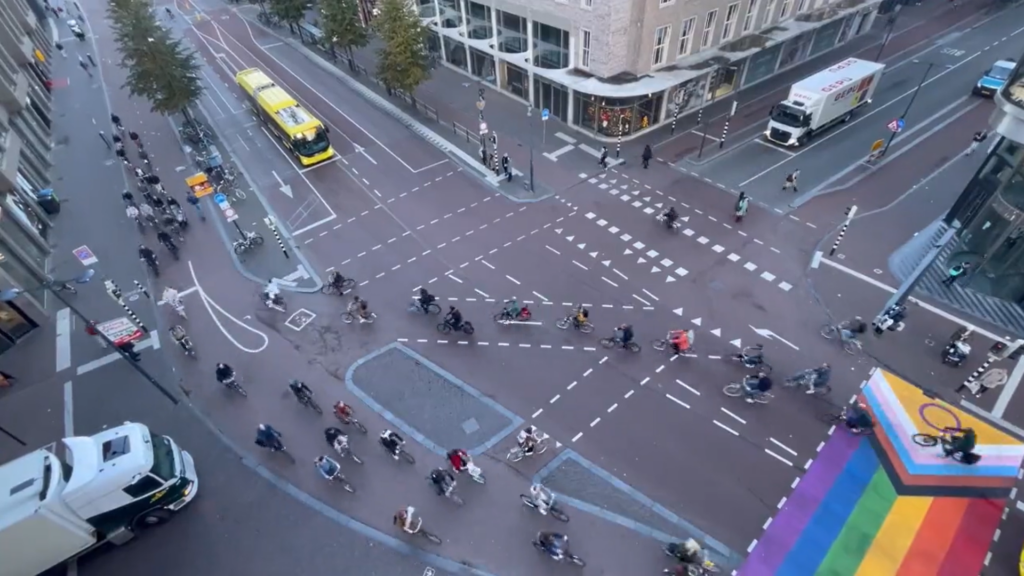
Video of "busiest cycle path in the Netherlands" goes viral, where "private cars are not allowed"... and there's "no congestion"
As the busiest cycle path in the Netherlands, Utrecht’s Vredenburg must be seen to be believed!
Private cars are not allowed.
📹Harri Vaarala pic.twitter.com/hVUsq4Fk39
— Dutch Cycling Embassy (@Cycling_Embassy) October 21, 2023
Would be fascinated to see some stats on cycle clothing, helmets etc… just people getting around town by a convenient mode of transport, no dramas…
We’re not too sure on the numbers behind if it is the Netherlands’ busiest cycle path, some think rivals in Amsterdam or Groningen might have something to say about that, but what we do know is this video has been viewed more than 100,000 times this week thanks to two posts by the Dutch Cycling Embassy (a great Twitter follow for admiring a country that does cycling properly) and city planner Brent Toderian.
It even prompted a close-up angle…
Indeed! From March this year. pic.twitter.com/2RjHYVR1ay
— TallBikeGuy (@theTallBikeGuy) October 21, 2023
And the 21-hour timelapse (if you’ve got plenty of viewing time on your hands)…
I filmed a 21 hour long timelapse of this junction earlier this year https://t.co/EwoSXzqeU0
— Hackney Cyclist (@Hackneycyclist) October 21, 2023
And as Debbie MacColl commented in reply, “Just imagine if all those people were in a car rather than a bike. It would be just like a UK city or town.”










83 thoughts on “Video of “busiest cycle path in the Netherlands” goes viral, where “private cars are not allowed”… and there’s “no congestion”; Police Scotland called out for “incorrect” cycling advice; Magistrate resigns over 20mph speed limits + more on the live blog”
I’m shocked, simply shocked ,
I’m shocked, simply shocked , to discover that the police don’t understand basic road laws or the Highway Code, as they apply to cyclists
Quote:
I am glad road.cc included that paragraph from the HWC. I remember reading it, but still have a little doubting voice when I pass between kerb and queue of vehicles.
Does it feel like Police Social Media is sometimes run like it is a punishment for an officer?
“Right Dave, you blasted your sirens at an 8 year old for not wearing a helmet, so you gotta handle X today”
My annoyance at this social
My annoyance at this social media stuff is not just the (incorrect and dangerous) signal it sends to drivers, but more importantly how it shows up police knowledge and action. The officer that posted this may be the one that attends to you once someone has driven into you as you cycle along. And they will find a way to explain why it is your fault, irrespective of circumstances or law.
With regards who posts this, I’m not sure who handles social media. I do know that often cycle camera video submissions are viewed not by specialist officers, but by ‘regular’ officers who are on desk duty that week, perhaps because of an injury sustained that week. So more like your regular neighbourhood cop than a traffic cop.
I’d like to think officers
I’d like to think officers aren’t routinely employed to post stuff on social media, and its just some back office staff working for the police pr team, doing that classic they think it sounds right, so it must be, that we get hit with by drivers daily.
Doesn’t mean the police aren’t as badly informed, see the recent WMP stop, just not sure we can blame them directly for the tweets.
The only one I have seen
The only one I have seen comment is surrey police where the sgt was a traffic cop and had to defend himself by stating he tweets in his on time.
I’ve seen individual coppers
I’ve seen individual coppers with twitter accounts, which as you say they do on their own time,that’s fair enough, and they rarely make a mistake like this on law or the HC, but the main police force accounts, got to be somekind of clerical staff, hasn’t it ?
Maybe not but it hardly
Maybe not but it hardly matters if they’re all as badly informed as each other.
TdF route reveal today…
TdF route reveal today…
The Ghostface Killah is the
The Ghostface Killah is the current best grand tour rider, I think it’s fair to say, but he doesn’t feature at all outside a few stage races unlike Pogi and MvdP so he’s not an all-rounder like they are.
With the unstoppable
With the unstoppable domestique team of the RZA, the GZA, Ol Dirty Bastard, Inspectah Deck and Method Man how could anyone come close to the performance of the Ghostface, no one could be iller.
I think the point is that in
I think the point is that in stage races, which are indeed his priority, he features very heavily in every single one.
Has anyone seen the Jeremy
Has anyone seen the Jeremy Vine video yet where Jason Donovan nearly gets taken out by a TfL bus?
Do we have to watch it and
Do we have to watch it and report back so you don’t have to watch the overlays ?
Awful driving.
At one point one of them says ‘great helmet’ but don’t say ‘you should wear it properly then’.
Hirsute wrote:
JV waves the bus driver past
JV waves the bus driver past and JD stops pedalling whilst pulling over to the kerb!
The bus driver should have ignored them both and just held back, but they didn’t really help the situation having a chummy chat in the middle of a junction.
Now there’s nothing wrong with having a chat with someone else on a bike. It’s actually one of the nice things about active travel, the sort of interactions with other people that would never happen when driving. Proper cycling infrastructure would make this a totally safe thing to do. It’s perhaps not the best idea on a dark, wet, congested road though.
brooksby wrote:
hawkinspeter wrote:
You may want one of those after stocking up here.
The lead in to the ASL is a
The lead in to the ASL is a bit of a tricky one as it is open to individual rider risk assessment.
A lot depends on the traffic in front of me –
1. if its mainly cars and if I can get ‘safely’ (as in intact, up-right and still alive) to the ASL.
2. if there are trucks, busses and very large panel vans (such as the hi-topped, long-wheelbased ones that are almost but not quite 7.5tonners (you know the ones)), that depends on what my spidey senses tell me.
For both 1 and 2 above, how long the light has been red for is a primary deciding factor in if I attempt to move up or not. If it’s just changed to red, then I’m likely to move up.
If I’m not sure, or its been red for a while, then I’m more likely to stay put.
For 2 above, if the light has just turned red, then I’ll move up on the off-side of the vehile, unless there is an empty lane to the nearside. I’ll move right up the ASL box and try to make eye contact with the driver so they know I am there. I might attempt to sign to the driver my intentions – especially if the lane is a combiend straigh-ahead/turn lane, so they have an idea of where I am going. This can have mixed reception, however, I get more thumbs up and smiles than shrugs of indifference and diliberate looks away (yes, I know they could be humouring me, but it shows that they have *seen* me).
At any time, I will not sit alongside a bus, truck or large panel van on the inside, and would pass them on the offside, rather than the nearside unless there is a clear empty lane on the nearside.
I worry about all this
I worry about all this coverage of heart attacks and deaths. Is it just better coverage, better screening, better health knowledge that is bringing this all to light, or are we seeing a greater frequency of occurence?
If so, then the question needs to be asked, why?
I’m sure the anti-vax / covid conspiracy crowd will have an opinion, and then there will also be the doping cynic with their view.
I however fear a far darker (in my opinion anyway) potential cause, and that being the developments in cycling training in the past decade.
Use of power meters and greater understanding of sport physiology means that training has never been so qualified, and as such has evolved significantly. So much so, that youngsters are now achieving as a teenager, what previously took years of professional experience / development to obtain.
And here’s the rub. With kids training more effectively than ever, those high responders (to training) are being identified earlier and earlier. The reason certain people respond more than others is primarily genetics, and sadly those genetic can include a tendency to overdevelop the heart muscle. This can lead to all sorts of trouble a little later down the line.
However, when young, a big, well developed heart is a very useful tool, so are rac teams, in their quest for the next Remco, inadvertently prioritising athletes with potentially disfunctional hearts?
I’m not anti-vax, but it is
I’m not anti-vax, but it is undoubtedly true – given numerous well-done analyses by experience and reputable researchers of large data-sets – that the 2 most widely administered covid vaccines can cause heart issues above background rates in under 40s. It is well established that these issues occur at the highest rates in young males – Moderna being the highest. It is also well established that young, healthy males were at no noticeable risk of covid.
It must be noted that these studies are based on observational data. Such data is, unfortunately, lower quality than RCT data. We do not have RCT data because these vaccines were fast-tracked through the regulatory processes and then most populations in western countries were heavily coerced into taking them. As a result, ability to do further RCTs in cohorts like, say, young people, is quite limited as nearly all the population has already had the medication.
I am not trying to cause an argument here. I’m just stating what I think are well established facts, or obvious consequences thereof in the case of the very last claim. If they sit uncomfortably with some readers, it is – I would say – because on reflection these were not good acts/policies to have carried out (wrt younger cohorts most obviously – even “back then”).
That this has given fuel to “anti-vaxxers” is the inevitable result. A number of eminent people warned about that risk before those policies were enacted, when the kites were being flown, and they were not heeded.
And yet you spout anti-vax
And yet you spout anti-vax tropes and dont provide any quantification of risks and highlight one (Vaccination risk) whilst downplaying another (Covid damage risk) without providing relative magnitudes between them.
You are an anti-vaxxer and I claim my £5.
In simple terms, fuck off.
In simple terms, fuck off.
Yah I’m strongly pro-vax but
Yah I’m strongly pro-vax but very suspicious and concerned (young asymptomatic male who experienced post-Moderna pericarditis) of the ones that haven’t gone through the proper process.
Vaccines are medicines, that need testing, not a Messiah to be blindly followed: it’s like we’ve already forgot the lessons of thalidomide.
Very disappointed in the comments that don’t realise the burden of proof lies on the pharmaceutical companies to prove their medicine works as intended, not on us to prove it doesn’t.
Car Delenda Est wrote:
The COVID vaccines were tested though – the speed of development made it seem like they were skipping safety procedures, but they instead skipped the waiting parts of getting the results and regulatory approval. The first vaccines were developed early in 2020 due to having the genetic makeup of SARS-CoV-2 and decades of previous research on coronaviruses. They also used the research into HIV vaccines so they could call upon a toolkit of safe weapons against various viruses – almost like assembling LEGO (probably a bit more complicated though).
We have learned lessons from Thalidomide and safety/testing protocols have been vastly improved since then. As I understand it, the big problem with Thalidomide was that they didn’t test it on pregnant animals before testing it on pregnant humans. When they did test it on pregnant rats and rabbits, they found foetus deformities.
Ultimately, as with a lot of health issues, it boils down to the statistics – are you more likely to encounter problems with catching COVID or encounter side effects of the vaccines. The rate of lingering side effects (i.e. not just a sore arm or feeling a bit tired for a week) for the vaccines have been very low, so there’s a very strong case for getting the protective effect as SARS-CoV-2 likes to go on an organ rampage and obviously can cause serious illness and death.
You’re right that the burden of proof of safety lies with the pharmaceutical companies and that’s exactly what happened.
The creators of South Park
The creators of South Park did an episode about distracted driving (phone use) in 2017…
And regarding the magistrate who quit for refusing to punish people who speed.
Good.
Maybe they can replace him with someone willing to do the job and make people’s lives safer by punishing dangerous drivers.
It’s the whole “road crime
It’s the whole “road crime isn’t real crime” argument.
the little onion wrote:
It’s a tough one. Is there any other category of law where the majority of people are willing to break it daily? The average person doesn’t just do “a little shoplifting” or “not many burglaries”, but almost all drivers speed. A significant portion go through amber lights when they could have safely stopped.
Speaking of speeding, is there any other category of law where the “limit” is seen as “don’t go much over”. If a fishing licence says “maximum five” of a certain species, and the fisherman gets checked, is “what, I only caught six, that’s hardly over at all!” a defence?
The real answer is to design roads where what feels like a safe speed to the driver is the speed you want. Then anyone speeding is seen by the vast majority as a miscreant deserving of actual punishment.
andystow wrote:
Alcohol and other drugs. Alcohol use by minors is illegal in some contexts, and alcohol purchase always, but both are common and tolerated. And it seems to depend on degree – so an example of “it was only breaking the law a little”. For other drugs people are prepared to take greater legal risks – however the law hasn’t changed despite a large minority breaking the law. But I suspect that’s because public opinion on that is more polarised.
I do think there is a popular idea of “if enough people disagree, it shouldn’t be law (or will be overturned soon enough)”.
If “everyone else does it” (and visibly so) plus when you do it nothing bad happens, then you continue. We’ve fixed it for driving (in large part through dedicated “driving infra”!) so that despite a high density of drivers and fast speeds people can continue to get away with breaking laws designed to protect without consequence. (Also with very little enforcement).
Driving is unique though for the potential consequences, the cost to society in general – and yet it being a commonplace activity hence carried out without much more thought than e.g. walking, cooking dinner etc.
True. And I’d be against the 20mph sign change if it were shown that it had *no* effect – which you might expect. However a) there is evidence shown that it does in fact bring speeds down and b) changing the car infra to make appropriate speeds self-reinforcing is the work of generations. And right now “we’re on the side of the (bad / unnecessary) driver”.
This is the best explination
This is the best explination I’ve seen.
Isn’t the crux of the matter,
Isn’t the crux of the matter, that this law is putting the prohibition onto the behaviour of those going much more sensible speeds and forcing the police to target them to the detriment of limits concentrating on those least likely to slow down when limits are lower and most likely to do harm?
You said this before but
You said this before but nowhere provided evidence that the police are “forced” to do anything. Quite frankly “sensible” is a pretty subjective descriptor also!
However, the conservation
However, the conservation group points to Sustrans’ involvement, as one of four organisations invited to help manage the project, as a further problem sparking cycle route fears.
They’ve obviously never tried to ride on a Sustrans route: difficult at a snail’s pace, let alone dangerously fast.
I think if I tried following
I think if I tried following a Sustrans route I’d get lost.
I’ll defend Sustrans as
I’ll defend Sustrans as making improvements very strategically, but limited by budget / capacity.
eg last year they removed or redesigned 377 access barriers (see the annual report) on their network, and they have been pruning poorer quality paths.
Remember other bodies own nearly all of it.
mattw wrote:
… but Sustrans signed it off, apparently to get their name on it / get money…
I think the correct conclusion is the Sustrans of say 10 years back was massively overfunded! However they do seem to have much improved their game on cycling (and accessibility) over the last x years. People also confuse them (perhaps their fault) with a “cycling organisation” – no, they’re deffo “active travel” but again improving on what they write about cycling at least.
I’m not anti-vax
I’m not anti-vax
Oh dear, the nutters are back again! Rather as we all know what ‘I’m a cyclist myself’ means, we know that ‘I’m not anti-vax’ means the exact opposite. It’s a little more difficult to spot them in the absence of the post count, but the tell-tale signs are there.
Re: the busiest junction
Re: the busiest junction footage.
Love the bit at the 26 second mark where someone just calmly walks through the middle of the junction with no fear. 😀
How many people would do the same if it was a normal junction anywhere else full of motor traffic…?
mitsky wrote:
That’ll teach me to refresh the page more often!
Yes – obviously agree
Yep. Something which many
Yep. Something which many people (especially in the UK) don’t know they don’t know is that not only are cycles not like cars, but pedestrians can interact with cyclists in a different way than they do with cars.
So by having actual cycle infra (where there are lots of cyclists) compared to a road the width of space that pedestrians need to traverse to is shorter. That, and the lower speeds, greater manoeuverability and possibilities for easier communication means that you don’t need traffic lights and formal pedestrian crossings in almost every case. (Probably this Utrecht street is one of the few in NL that might warrant a marked crossing).
We’ve probably got a few generations of finding our way there from where we are in the UK (if we actually go in this direction…) but here’s how it can work.
Note: I’m not saying that mixing pedestrians and cyclists on a shared use path is a good thing. It’s not, because they’re not convenient for anyone in most cases. Only suitable where there are very few of either mode. (Probably that’s why we like ’em in the UK – there’s no intent to increase the number cycling and pedestrians are a secondary concern to those in cars anyway…)
Shared routes can be fine; it
Shared routes can be fine; it depends entirely on the ped / cycle traffic mix and volume, and the specificiton of the path.
The issue is when a Council declared a narrow (eg 1-1.3m) footway to be “shared” because they do not want to do it professionally.
mattw wrote:
The issue is when a Council declared a narrow (eg 1-1.3m) footway to be “shared” because they do not want to do it professionally.— mattw
Hmm… well I obviously agree that local authorities in the UK reach for this to “magically” make cycling provision on the cheap without needing to build anything. And that actually sets back active travel.
“Yes” they can be OK technically – in that traffic mix and volume is indeed critical. Hence the usual Dutch solution to “routes for non-motorised traffic in the countryside” is effectively a shared-use path. However (this sounds irrelevant but I think it’s important) it’s not actually to build a “shared use path” or a “footway that cyclists can use”. It’s the opposite – build a cycle path only. It’s always legal for pedestrians to use cycle paths and cycle paths will likely end up being a bit wider than a normal footway. And the whole works because of very low volumes of both cyclists and pedestrians. And likely most often far fewer pedestrians than cyclists (e.g. between more widely-separated places).
And yes, I personally find some of the shared paths around Edinburgh still to be preferable over using the roads. However … that is very dependent on volume of pedestrians. They’re currently not very busy – there are plenty of quiet times. And I’ll very rarely go on ones that are favoured by people strolling e.g. the canal, the Water of Leith path. If I take the bike there it’s invariably for “leisure” and with no intent to go quickly. And even then I’d not bother during high tourist season, or if it’s a non-working day and nice weather etc. (Those two routes have other issues also e.g. they’re narrow – but widening them wouldn’t change things, because people walking spread out.)
However I’d say the general answer is “No, shared routes are not fine”. Stating that as an intent is setting up conflict between cyclists and pedestrians. If “active travel” becomes more popular then the degree of conflict only increases. It seems designing in conflict is a given in the UK.
In general pedestrians and cyclists have quite different requirements. A very small number of pedestrians can make using a shared use path inconvenient for cyclists. Naturally people tend to travel in social groups of two or more, and will spread out to fill the available space (here’s a minimal illustration of this). Start-stop cycling is very inefficient.
Equally it feels significantly less relaxing if you’re strolling but listening out for bells / looking behind you, or you suddenly realise someone is passing by you quickly. I don’t think having to listen for frequent ringing of bells is a good solution. If you watch footage from the Netherlands you’ll notice that despite bells being a legal requirement they are almost never used, even when passing pedestrians where the two modes interact.
Sustrans did a poll some time back clearly trying to assess “how many pedestrians are too many for comfort” on a cycle route, and I hope people indicated – as I did – “very few indeed”.
Interesting paper on the subject.
In our Council Area afaik
In our Council Area afaik they are nearly all shared footpaths (shared paths and cycle lanes being the two cheapest solutions from 1980-2020), which when newly built will be 2.5m wide usually.
They work well on out of town roads where there are few pedestrians, and in some places there are line-down-the-middle pavements where both halves are 2m+. These also generally work OK, but we do not have mass cycling – increasing slowly, however.
We do have off road cycle tracks, but these universally have anti-access barriers.
mattw wrote:
Yes – this is normally sadly how it is. I’m fortunate in repeatedly picking places with an inheritance of “capital” in the form of former railways lines which have been repurposed as shared paths. As you say, the width is crucial and – if you’re lucky – a former railway route may use more of the available space which can mean 4+ metres.
Given the small amount of use often these come out as some of the better travel spaces* in the UK (because completely separated from motor vehicles, green environment etc).
In Edinburgh we’re just starting to see things which look more like continental solutions in that we’ve built a cycle path along a main street, with a separate footway and where the cycle path is separate from the road. The latest ones (e.g. CCWEL) aren’t like previous (ignoring Leith Walk, never give a cycle route design to tram designers…) and aren’t just hopeless “looky-likey” cargo-cult quality. Albeit they still have issues – biggest is that almost without exception the UK hasn’t started to tackle junctions in a sensible way.
* OTOH part of the reason for low use is exactly their “green and shady” nature. I’ve heard quite a few folks say they’re not “socially safe” (either at night, or all the time) because they’re not overlooked by buildings / next to roads. There can sections which seem “long” between possible access points, particularly for pedestrians. Some are a favoured haunt of ne’er-do-well youth…
I’ve yet to ride on one I
I’ve yet to ride on one I considered fine for shared cycle use. I usually encounter zombie pedestrians and dog walkers on extender leads on them who show no conceptual understanding they might encounter a cyclist.
Let alone cyclists in the numbers on that video
Plenty of those around here.
Plenty of those around here. A blue sign and a bit of paint does not make a cycle path.
The Netherlands “busiest
The Netherlands “busiest cycle path”: what I really like about it, is all the pedestrians mingling with the cyclists. They are all happily sharing the space. It is an inspiring thing to watch.
As my other reply – the
As my other reply to mitsky – the important detail is pedestrians and cyclists are “happily sharing the space” only briefly (where they cross). That works because both have their own clearly marked dedicated spaces e.g. cyclepath and footway.
Pedestrians can relax on the footway as they don’t need to consider cyclists at all there. They won’t have people ringing their bells or weaving around and past them. When they want to cross the street they know where to expect cyclists (the cycle path). They also don’t need to look out for cyclists filtering either side of motor vehicles on the main carriageway.
In turn cyclists don’t need to keep slowing for groups of pedestrians (walking 2 abreast! or more!) or dogs etc. They only have to watch for crossing pedestrians – and those know to expect cyclists in a cycle path so are more likely to look! It doesn’t involve coming to a stop for people to cross either – just a small adjustment of your speed.
There’s an article and video on this very space from BicycleDutch here.
In fact – this place has so many cyclists that the city is looking at ways of improving other cycle access so less people are concentrated on one route.
I’m surprised by how little
I’m surprised by how little cycle traffic there is. The busiest cycle path here is Paris is far busier and bit of a nightmare to be honest. At rush hour you can expect to queue for 2 or 3 changes of lights to get through each junction and there is a constant risk of getting hit by a bicycle coming the other way on the bidirectional path. To be fair it was built just before COVID. They are planning on changing it, hopefully it will be a bit like the one in the video 🙂
I suspect that the NL example
I suspect that the NL example may have greater numbers but look “less busy” because the Dutch system is very efficient and (same as we expect from roads) runs everywhere. They also try to avoid traffic lights for cyclists or manage the timing of these so there are fewer bottlenecks or delays [1] [2] [3].
Interestingly Utrecht decided that there were too many people cycling on this route and are looking at ways of improving connections elsewhere to avoid funnelling so many people into this one space…
Dunno numbers for the Paris one – do you have any info on that? I know almost nothing about the detail of developments in Paris (NotJustBikes and a couple of other bloggers / articles) and while the overall numbers sound very impressive in the UK (15% of trips cycled, a couple of years back) it appears it’s definitely “early days” with the usual teething troubles (and here) of course.
PS There are some interesting
PS Often when there are issues it’s most effective to look at the “big picture” e.g. the whole network. There’s an article about Utrecht addressing long waits at a cycle crossing by altering the bus routes.
There are also some interesting more localised “hacks” that have been applied to places with high maximum flow of cyclists in NL. For speeding up crossing roads at signalised crossings two come to mind:
All-ways-green phase for cyclists (this is not really a hack, think it’s pretty well established / tested)
Utilising people’s natural “bunching” behaviour when waiting at crossing points (not sure there’s an “official” name for this – maybe “tapered crossing?”)
I think that is because Paris
I think that is because Paris is doing it all in a confused rush; London by comparison is far more strategic.
mattw wrote:
Perhaps it’s actually the opposite? Again I’m not hot on the details but it seems Paris is actually trying to make it happen at scale, and make it work by building *networks*. In London (possibly with the exception of the original superhypeway concept) I suspect it’s less a deliberate “strategic” slow pace but more the usual “we put one in here for a couple of miles, because we could”. Followed by an indefinite wait until someone has a bright idea about another scheme.
London has the issue of the different boroughs having more autonomy and is much bigger than Paris of course. And there are boroughs which appear to be taking this on themselves – Hackney?
Still – “What do we want? Gradual change. When do we want it? In due course…”
Yes.
Yes.
From accounts I have read from recent visitors to Paris, it is very very good … then you fall of the edge of the new cyclnig infra and it is like former Paris.
Perhaps that is an artefact of any transition process?
Today’s rage inducing
Today’s rage inducing incident – watching the driver of a Transporter van drive through a pedestrian crossing and down the road with no hands on the wheel, while recording herself and her young daughter having a sing and dance in the cab. She then drove at me when I
askedtold her to put the phone down.The whole of Wales knew about
The whole of Wales knew about the reduction in urban speed limits.
I don’t buy the whole “people drive at 60 regardless of whether it’s 20 or 30 limit”. That’s a minority of cases who would have been caught regardless of the reduction in the limit. Thise cases are a moot point to the argument.
All it proves is that there is a near universal contempt amongst drivers for 20mph speed limits as no matter where they are, or what they are for, they WILL be ignored. ESPECIALLY the small zones outside schools.
A lot of our built-up areas, especially inner cities, are not designed for high volumes of motor traffic, especially when you have cars getting ever bigger for no reason other than to build a safe crumple zone bigger than the passenger occupying space. There isn’t room for it. Especially when it’s in such close proximity to large volumes of pedestrians: School kids, office workers and the like.
The courts have to persist in cracking down because too many people are KSI on our roads, and a huge volume of them are caused by someone speeding. To not persist, is to permit the crime only to see more people become victims of it. It is already too easy to “get away with it”. And the penalties are not enough of a deterrent when people are caught, especially when they are significantly above the limit.
One of the reasons speed
One of the reasons speed radar has been so effective at reducing deaths on roads is because of this attitude. If a radar catches you at 35 in town you have a conviction. This bloke would have let you off.
It’s because all to often the
It’s because all to often the reasoning for dropping the speed limit is the behaviour of people already going above the speed limit or driving recklessly as a rationele for prohibiting the behaviour of those already going substantially below the current limits and forcing the police to target them.
According to a DfT study. (circular roads 1/80)
“It is a common but mistaken belief that drivers allow themselves a set margin over the prevailing speed limit, and that if a limit is raised by 10 mph, they will travel 10 mph faster. In fact, an increase in an unrealistic speed limit rarely brings an increase in traffic speeds. (“Unrealistic” is here used to mean “substantially below the 85 percentile speed”). It is much more likely that there will be no change, or even a fall. It seems that drivers relieved of the frustrations of too low a limit rarely abuse the higher one. Indeed it is not unusual for the accident rate to fall when a poorly-observed limit is raised.“
Quote:
Given how many motoring cases don’t appear to even make it to the courts, that factoid is TERRIFYING
brooksby wrote:
If they start punishing properly the 1 or 2 who derserve it that’ll probably fall to 6-7 motoring cases a day :-/
If they start punishing
If they start punishing properly the 1 or 2 who deserve it that’ll probably fall to 6-7 motoring cases a day
Unfortunately, such a dawning of consciousness is unavailable to those officers who have complied with the police employment requirements of: IQ 80 or less
Just seen that there’s been a
Just seen that there’s been a nasty pedestrian(s)/cyclist collision in Nailsea
https://www.bristolpost.co.uk/news/bristol-news/live-woman-collision-cyclist-suffers-8858328
I hope she pulls through.
hawkinspeter wrote:
The comments BTL on that are
appallingactually, are exactly what I’d expect from the Bristol Post crowd.However, I notice it’s unclear from the story whether the cyclist was (allegedly illegally) coming downhill on the (white-line divided between pedestrians and cyclists) cycle path, or whether the pedestrian was on the cycle path, or even whether this was a crossing-the-road incident.
Apparently the woman is in a medically induced coma, which isn’t good
https://www.thestar.co.uk
https://www.thestar.co.uk/news/cyclist-in-life-threatening-condition-after-crash-on-sheffield-road-which-remains-closed-rivelin-valley-road-4354779
3 weeks later, the victim has succumbed to his injuries, having never regained consciousness. He leaves a wife and 2 daughters.
The driver is under investigation
The Friends of Parkland Walk
The Friends of Parkland Walk are right.
It’s a beautiful path and it will lose it’s charm and nature character when they put a tarmac road there. not everything needs to be ‘improved’.
Friends of Parklands Walk
Friends of Parklands Walk appear to be a bit of a kneejerking hate-mob of cycle-obsessed bigoted monomaniacs. Is Vincent Stops involved?
Never mind the impact on disabled people, as long as we keep the cyclists out !!!
Having read the results of the consultation at the link below, no mention has been made of a tarmac surface in the proposals, yet a large number of responses seem to be obsessed with it.
As the analysis says:
Given that no mention of tarmac surafacing or cycling was made in the information shared with the community it is highly unusual to have 725 consultation responses raising concerns about encouragement of cyclists and e-bike users and equally unexpected to have a further 1033 respondents under the impression that the council is proposing meaures which will have a negative impact on biodiversity.
It would be funny if it wasn’t so pathetic.
https://www.parkland-walk.org.uk/wp-content/uploads/2023/10/Parkland-Walk-Data-Analysis-Final.pdf
And I haevn’t even mentioned their defamation of Sustrans, who create a “walking, wheeling and cycling network”, not just cycling. That’s a common conspiracy theory amongst anti-LTN types, for example.
Sustrans are doing fantastic work for accessibility.
mattw wrote:
Except when they allow A-frames on NCN paths…
Nick Colbourne wrote:
Honestly, this is becoming the “I’m not racist but” of the pro-speeding movement. If you agree with a 20mph limit outside schools then you are agreeing that there should be a 20mph limit where there are vulnerable people. There are vulnerable people everywhere in the urban environment, therefore you agree that all towns should have 20mph limits. Children, disabled people and the elderly (and cyclists!) don’t only congregate around schools, making it safe to drive at 30mph everywhere else.
Maybe the government needs to
Maybe the government needs to run some of those New Zealand anti-speeding adverts like
Or
(From Northern Ireland)
Amd remind people *why* the speed limit exists.
And don’t just put them on after the watershed either.. run them during the day, between the Sun Life insurance and the Gala Bingo adverts.
Precisely. From Welsh Gov
Precisely. From Welsh Gov FAQs:
Why can’t the 20mph limit be only used around schools?
Introducing a 20mph default speed limit will make children safer from the moment they leave home – regardless of where they are going, and keeps them safe – inside and outside of school hours.
A 20mph speed limit outside the school won’t protect children for the whole journey as they walk or cycle from home, it would only protect them near the school.
But it won’t just protect children. This change is designed to make streets safer for all of us.
Isn’t this similar logic to
Isn’t this similar logic to people saying, ‘Make the airplane out of the same material as the black box’?
ajuk.uk [at] gmail.com wrote:
No.
I like how some people will
I like how some people use the loaded term ‘pro speeding’ when, in fact, it’s dropping the speed limit that massively increases incidents of speeding and helps to make exceeding the speed limit much more normal and socially acceptable. Advocates of these schemes claim to want the opposite and are some of the most vocal in asserting that limits should just be respected and obeyed.
That’s exactly what happens when you use the 85th percentile speed to set limits. We’ve already seen non-compliance rates of over 99%. That’s what happens when posted limits don’t match the one implied by the design of the street. There’s probably a good reason for that and it’s not helpful to make hasty generalisations about people in cars as the answer.
It’s partly down to how our brains function, and driving is a system 1 activity. People will drive to the road regardless of what the limit is. It’s also the Pygmalion effect; if you set rules that show people contempt, they won’t respect them.
At that level, you have to drive dangerously if you don’t “speed” because you’re driving significantly slower than the mean flow of traffic, increasing accident risks. When you think of people speeding, it’s properly set limits that work to single these people out. When limits are set properly, the kind of people speeding will overwhelmingly also be the sort of drivers who run red lights, tailgate, close-pass cyclists, and generally are the most llikely to do harm and the police can just concentrate on them.
The New Zealand adverts show people obviously driving way too fast. You can’t really say that about people going under 25 mph on roads designed for 40 mph limits, presuming prevailing conditions allow for it.
There’s a good reason why speed limits haven’t always been set uniformly low, and you should look at traffic speeds in the context of setting speed limits. Exceptions to this need to be just that—exceptional.
I wonder where all these
I wonder where all these roads (clearly not *exceptional* ones – from what you’re saying) which perfectly and precisely signal “30mph” have been all my life?
Many if not most of our roads aren’t really “designed” for a speed. There are roads designed to accommodate high speeds, and there are motorways (which drivers regularly demonstrate aren’t *designed* for 70mph – they are just for very high speed long- distance travel).
Or could it be that 30mph is no more “natural” or logical than 20mph, it’s merely a default we settled on?
Yet again, that doesn’t invalidate the criticism about not designing roads which might invite higher speeds. There is indeed a better way, but:
a) the cheap hack 20mph change has been shown to work (to a useful degree) and
b) perhaps drivers need to adapt to the concept of obeying the law – until we get all the money and time to fix it so it’s easier for them again*? Especially laws which have important safety implications.
* The better road design way again is *for drivers* – it’s to guide them, to make their job more human-friendly. We have people driving faster than they can handle or is safe for the other people around because of our previous road designs. They invited drivers to have at it with wide roads and sweeping corners…
What you did there with point
The speed limit should be the speed most sensible drivers would not exceed in the absence of a speed limit. However as conditions vary there is also the need for reckless driving laws etc. You never could barrel down a tight residential street lined with parked cars on either side, run over a kid then claim in court “I wasn’t speeding”. The emphesis used to be much more on positive driver behaviour rather than drive-by-numbers.
What you did there with point B is use the hasty generalisation fallacy I already pointed out. If there’s 99% non-compliance is it a good idea to assume they’re all bad. Maybe it’s better to listen to an explination from a traffic engineer as to why that happens.
It’s probably better to assume they’re not all bad and you’ll sleep better at night.
Of course what you’re really
Are you not effectively saying we should just have another round of applying the percentile rule and generally increasing the speed limits? You don’t seem to be proposing some massive rebuilding programme…?
Unfortunately we already tried that… and people still keep edging the speeds up. (Partly another human “design feature”, the anchoring effect).
That also completely ignores a few reasons for having speed limits (lower ones in many places) like the effects on drivers (rate they crash into each other and buildings) and on everyone else (serious increase in danger to those outside vehicles, place becomes less pleasant because speeding vehicles and road noise, people are less keen to cycle or even cross the road…)
What you’re refering to is
What you’re refering to is called ‘speed creep’ and it’s not real.
I already posted this here but it’s worth reapting.
According to a DfT study. (circular roads 1/80)
“It is a common but mistaken belief that drivers allow themselves a set margin over the prevailing speed limit, and that if a limit is raised by 10 mph, they will travel 10 mph faster. In fact, an increase in an unrealistic speed limit rarely brings an increase in traffic speeds. (“Unrealistic” is here used to mean “substantially below the 85 percentile speed”). It is much more likely that there will be no change, or even a fall. It seems that drivers relieved of the frustrations of too low a limit rarely abuse the higher one. Indeed it is not unusual for the accident rate to fall when a poorly-observed limit is raised. This may mean that reduced frustration leads to changes in driving behaviour conducive to accident reduction
A before and after study carried out at 20 locations through Kent, where the limit had been raised from 30 mph to 40 mph, showed a fall in speed, or no change, in 80% of the measurements taken.”
This isn’t to say raising speed limits is always the safest thing to do, obviously not, this is refering to raising limits on higher standard roads where previously they had to be either 30 or derestricted. The introduction of 40 limits made no difference to speeds, the repeaters did more to warn pedestrains better of the road danger of those roads.
Having the correct speed limit is the safest thing to do and 20mph limits have been shown to be effective on roads that lend themselve naturally to lower speeds, Wales are not doing that and including much higher standard and arterial roads, it’s important on those types of roads that pedesrians have a realistic expectation of the road danger and the actual speed of traffic.
Well, I think a good way to
Well, I think a good way to evalute things is to see if/how they change things.
This being the real world things clearly vary. However:
Apparently after the change, speeds did indeed reduce in Wales (here’s a BBC article noting a very recent review). Sensibly it looks like there is a plan to actually keep a watch on this. FWIW here’s some initial research commissioned by the Senedd – this is more a “what we hope to look at” and looking at the general position).
After a wide rollout of this change in Edinburgh, speeds reduced. A follow up some years later found a significant decrease in collisions and casualties. (Now – to be fair in 3 years, other things may change – including a pandemic occurring…).
Most of what you’ve mentioned is covered here, I think:
https://www.20splenty.org/20_questions_about_20_s_plenty
Are you confusing “this isn’t perfect / the best way of doing things” with “actually doesn’t work”? I agree, there are better ways – but if it works, it works, no?
I don’t think chasing “compliance” as a goal (why?) trumps “reduction in danger”. Don’t forget that (by government stats – 2017 / 2022) while the majority of drivers break the law on 20mph roads the average is still less than 30mph (and indeed the speeds on 30mph roads).
Like I said, having the
Like I said, having the correct speed limit is the safest thing to do, and lowering limits can be effective on roads that naturally lend themselves to lower speeds.
Wales is including roads that don’t come close to that, and not only does that have the potential to undermine lower limits where they make more sense, but there are also other unintended consequences. For example, lowering speed limits on higher standard roads can lead to issues where Sat Nav systems no longer see main roads as faster routes, potentially sending more traffic along side streets. Also, having the speed limit set deliberately low with the expectation of non-compliance raises significant concerns about the long-term impact.
It can make it much harder for the police to single out those most likely to cause harm. Additionally, it’s important to consider the sources of the studies that have been linked. While some sources may have a bias, a more measured and nuanced approach, like the one presented in the Atkins study, is more balanced.
If the “correct” (according
If the “correct” (according to who?) speed is higher, how is that safer?
I agree that the effect of Sat Navs on driving traffic flow may be important – surely a separate issue however (or one that can be addressed separately as required)?
Why?
Well, I’m not familiar with that one so I better go look at some point. I do note the 20’s plenty folks clearly think it’s a bit of a “Thompson, Rivara & Thompson” type. They say: “It’s unconvincing. Case study samples were small (<20 casualties pa)[. Atkins did not consider other evidence where casualties HAVE reduced on 20mph roads and underplayed the significant benefits in Brighton where faster roads were included.”
… but of course they wouldn’t find it convincing given that they are pushing for this change!
Are you suggesting that the government’s own data is biased e.g. DfT Vehicle Speed Compliance Statistics – and if so how?
Why does it make it harder to
Why does it make it harder to single people out? Because higher standard roads included in 20 limits frequently have non-compliance figures over well over 90%, Pennywell Road in Bristol it was 97.5% and in Rogiet it was 99.4%, that’s not targeting anyone and an example of limits being brought into contempt when they should be being taken seriously. When limits are set at a level to which most people adhear to naturally, people exceeding the limits will overwhelmingly also be the sort most likely to do harm.
A couple of high-standard roads in Manchester even saw speeds increase after the limit was lowered, that’s the extent to which it’s the design of the road that dictates traffic speed. I’ve heard 20mph advocates in the past be critical of including high-standard roads as being unhelpful.
Again I think you have rather
Again I think you have rather different concerns than I do so we may be talking at cross purposes. TL/DR – I think reducing average speeds towards 20mph (seems a reasonable compromise for the UK ATM for areas with vulnerable road users) will improve safety. The evidence for a couple of places – including Wales – is that this has indeed happened. Thus “good enough” for me, for the moment. Just as before there’s nothing to stop local authorities applying to make adjustments either. It’s just that the default number (people tend to focus on numbers when one is given) has changed from 30 to 20.
“Not targetting anyone” – as we discussed before the police are empowered and capable of stopping motorist for careless / dangerous driving on plenty of other grounds than “they were hooning it, so a guaranteed wrong’un”. OTOH – if they are doing 30 in a 20 – why should they not stop people (or put up cameras etc.)?
With this idea of “limits being brought into contempt” – as we discussed before perhaps you’re more concerned about people suddenly calling bluff on rules in general? Obviously I can’t say that couldn’t happen – historically it has. However in some places people commonly break certain laws (or even the majority do) but that doesn’t mean that that law is therefore pointless, or unenforceable, or not respected across a wider area.
You may have questions as to whether it works in theory, or even whether it should work. And I don’t disagree that (given enough time and resources) a better way is to fix our roads to work via the better mechanism. As before that’s get road design to guide behaviour towards the desired speeds for a particular type of area (e.g. slower in areas with more people walking / cycling).
However …. in Edinburgh and in Wales overall it seems that it has worked in practice. “Worked” for me means it has brought the speed down closer to a reasonable compromise in places where there will be vulnerable road users around (“if you hit me at 20mph I’m more likely to survive” etc.). I’m happy to call that a positive outcome – for an imperfect intervention.
I guess I shouldn’t assume that anyone would consider that a safety measure, but perhaps I can assume many people would?
It’s interesting to see how
It’s interesting to see how people believe in setting very low speed limits despite high non-compliance figures because they believe it should work.
My perspective on this matter is rooted in the extensive data I’ve encountered over the years regarding the relationship between speeds and speed limits. I tend to separate the two.
Properly set speed limits are not meant to rely on enforcement the guidelines state they should “encourage self-compliance” and be “largely self-enforcing” and that’s what happens on many roads where limits align with the road design and that’s contrary to VERY popular opinion, people still assume that most people travel X over the limit. I’ve spoken to driving examiners and police officers who’ve been surprised when I’ve shown them these charts.
Well-designed roads naturally get drivers to follow the speed limit, and they’re not aggrieved or distracted by it.
While it has indeed brought down overall average speeds, it’s worth noting that they have crept up slightly from the initial decrease of 2.8 mph. It would likely be more effective had more high-standard roads been exempted. According to the Atkins report, the average long-term drop was only 1.4 mph, that’s for a 10 mph reduction in the expected speed for vulnerable road users. It’s crucial that people are aware of the actual danger on a road so they can exercise caution when crossing it.
I’ve seen a study that states roads are safer when limits are set slightly below engineering recommendations, however I’m still on the lookout for an academic study on setting speed limits that supports the idea of taking little or no account of existing traffic speeds when determining limits.
Re: Nick Colbourne. Good,
Re: Nick Colbourne. Good, fuck off, and find another job. The fewer bigoted wankers we have like you, the better the justice system will be.