


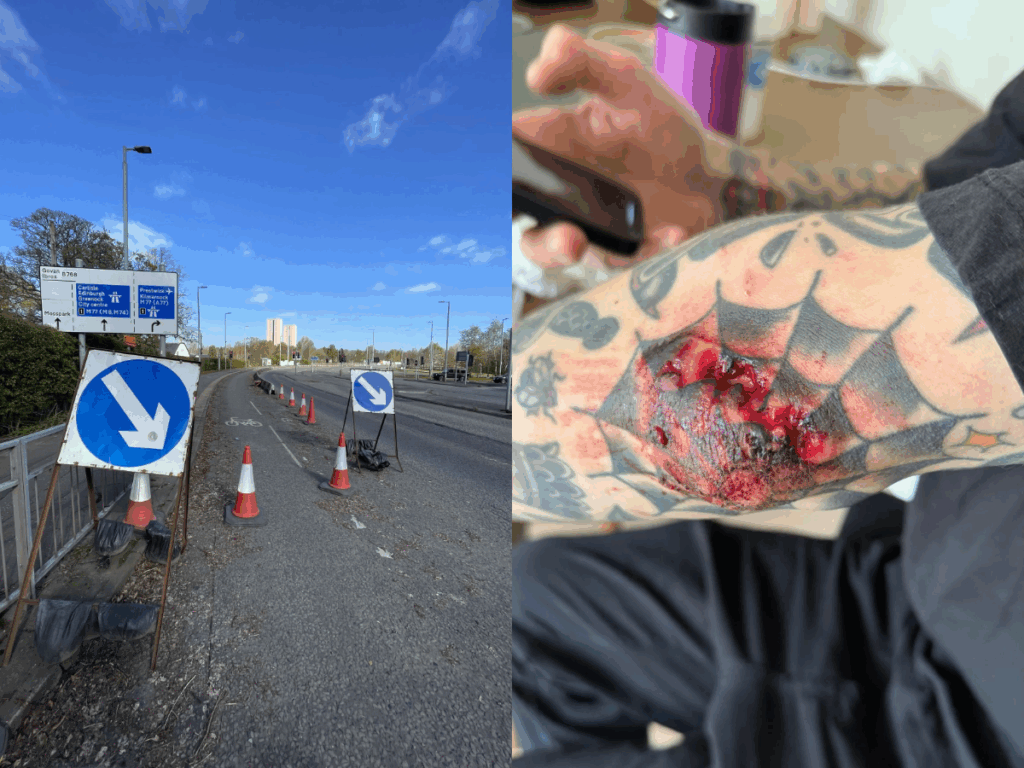

A cyclist injured in an “avoidable” incident on a Glasgow cycle lane — which was caused by the cycling infrastructure not being properly closed during roadworks and the rider hitting a rope that had been tied between two cones — has agreed a “fair” settlement with the council.
The cyclist’s lawyers at Cycle Law Scotland say the case raises wider questions about consistency, communication and care during periods of roadworks. The specialist cycling solicitors said that while the settlement was fair, it is “deeply troubling” that there are still “unanswered questions and a lack of responsibility from those in charge”.
“It should never fall on the shoulders of injured cyclists to chase down answers and accountability when public spaces fail them,” Cycle Law Scotland said.
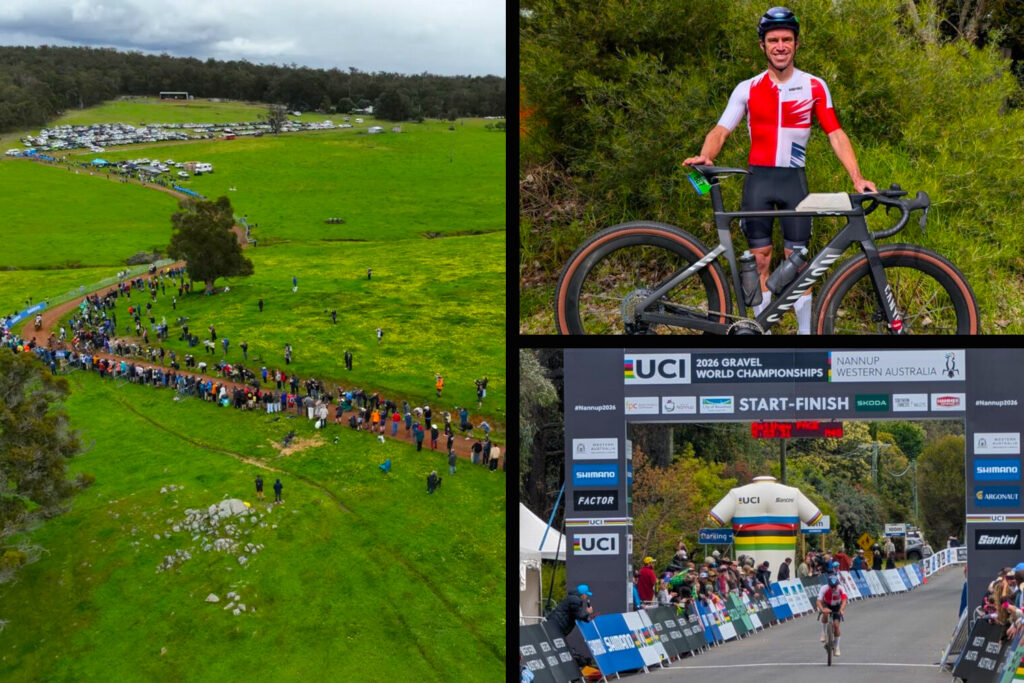
The case involved accomplished gravel racer Patrick Hughes — the winner of the 19-34 age group category at last year’s British Gravel Championships — so, as Cycle Law Scotland pointed out, it is fair to say “he’s pretty handy on a bike”.
Last April, he was riding along the Dumbreck Road cycle lane in Glasgow, the cycle lane having initially been installed during the Covid pandemic but since made permanent and featuring a cycling route segregated from traffic by cones and light barriers [pictured below].
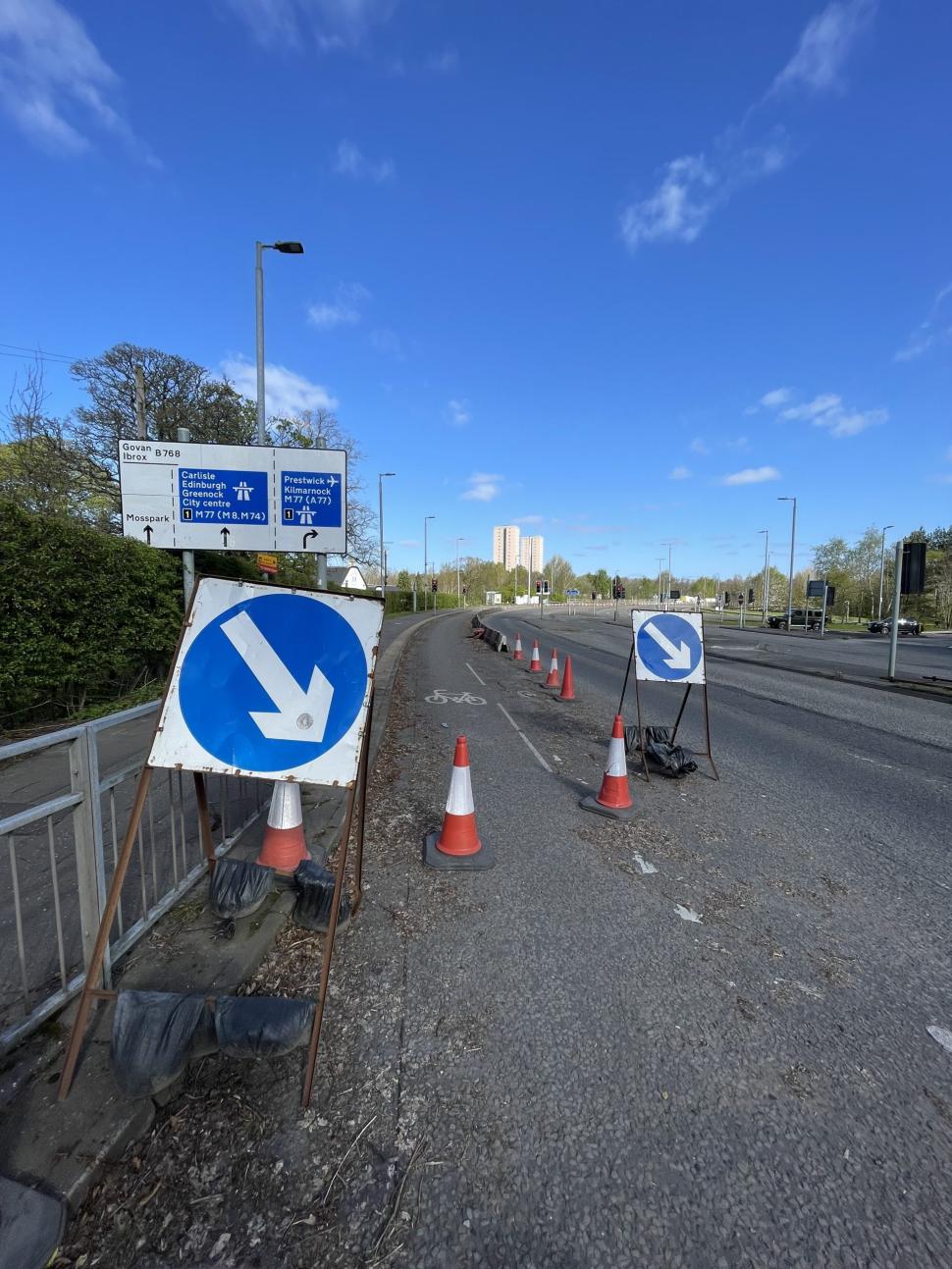
Mr Hughes was very familiar with the set-up, having cycled to his graphic designer job via the route for years, but on the morning of the incident was thrown from his bike at the end of the cycle lane, as he was about to cross the slip road at the lights.
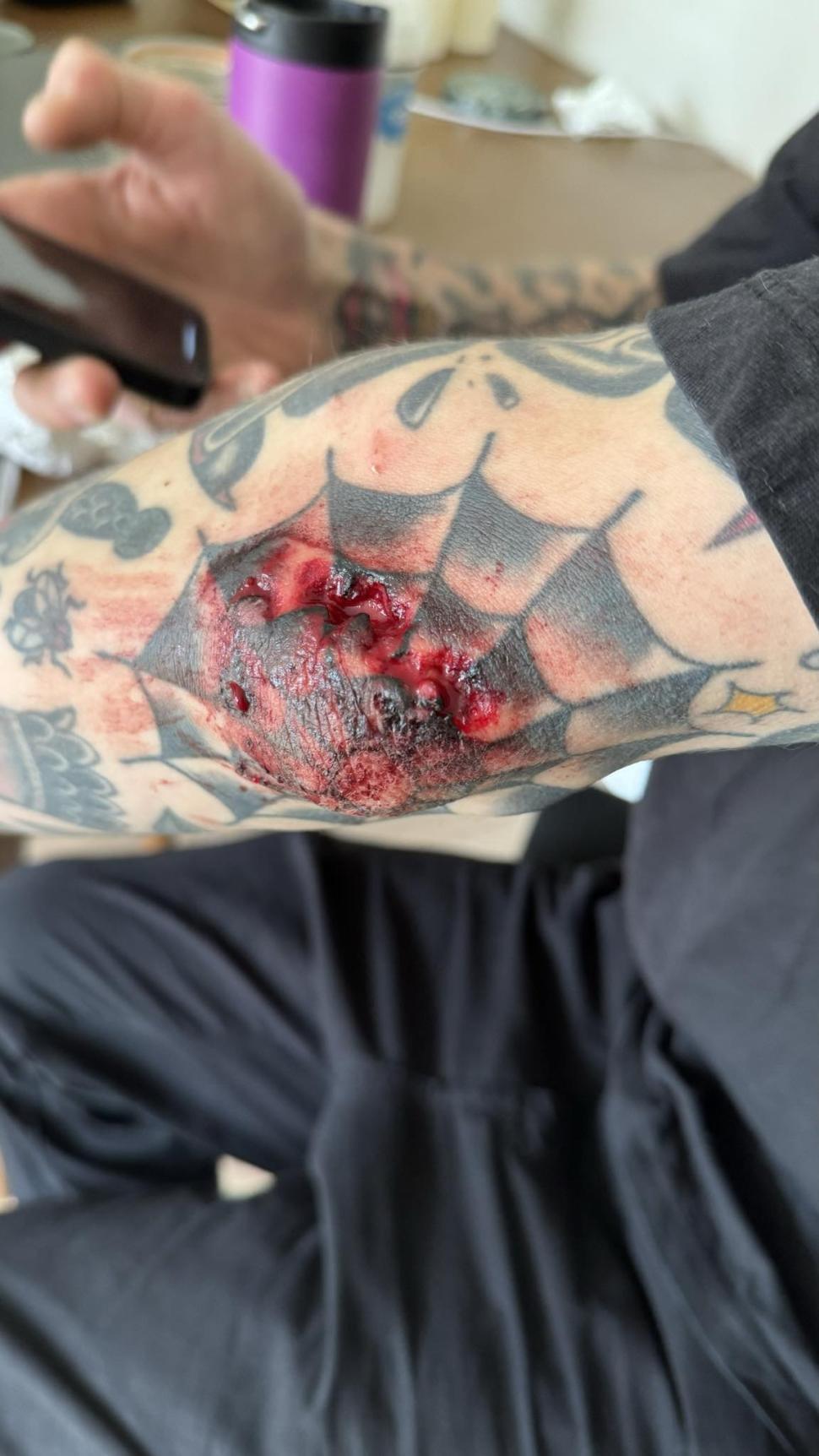
Having sustained a gash to his left elbow the rider realised his crash was caused by a rope that had been tied between two cones on either side of the cycle route. A workman saw the incident unfold and took the rope down, apparently while he “mumbled something about somebody else having set it up”.
Before Mr Hughes left the scene he took photos of the cycle lane as he was confident there had not been a warning that the route was closed due to roadworks.
The rider’s fiancée drove to the scene and took him to hospital, where a deep laceration to his elbow was stitched and he received treatment for other soft tissue injuries. He was off work for the rest of the week and his bike, helmet and kit were all damaged too. The crash and injuries also caused considerable stress and came just before the UCI World Gravel Championship qualifiers at The Gralloch, one of the UK’s biggest gravel events.
Mr Hughes contacted Cycle Law Scotland who took on the case, the rider suggesting there had been “a total disregard for cyclists by placing a rope across the end of a cycle path without any prior warnings”.
The law firm intimated the claim with Glasgow City Council as, while it was likely a sub-contractor was responsible for the rope, the council ultimately, as the local roads authority, has a non-delegable duty to maintain the roads in a safe condition for all road users.
Glasgow City Council initially denied liability on the basis that the cycle lane had been closed for some time, something Mr Hughes disputed as he had used it in the days prior to the crash and noticed nothing different about it until the morning of the incident.
It was pointed out that there were no signs or other measures in place and Glasgow City Council was “repeatedly” asked to confirm the measures it was referencing. Then, when the council’s sub-contractors were contacted for a copy of the works plan, it was discovered that the cones segregating the cycle lane from traffic had been mistakenly assumed to represent the lane closure.
“They had mistaken the ‘Spaces for People’ cycle lane bollards, as the lane closure itself, and that this had presumably been approved by the council, meaning essentially nothing had been done to close off the cycle lane at all,” Cycle Law Scotland explained.
The case went to the All Scotland Personal Injury Court — the council again claiming traffic control was clearly signposted, but without any specific information to evidence the claim — and ultimately, after negotiation, a “fair” settlement offer was made to Mr Hughes. However, Cycle Law Scotland noted, this all came “without any apology or explanation as to what had gone wrong”.
The law firm suggests the case highlights “a wider concern that many cyclists across Scotland share”, namely a lack of consistency, communication, and care when it comes to roadworks and temporary infrastructure.
“It should never fall on the shoulders of injured cyclists to chase down answers and accountability when public spaces fail them,” Cycle Law Scotland said. “The reality is that a simple warning sign or proper lane closure would have prevented this entirely avoidable incident. At Cycle Law Scotland, we are committed to standing up for cyclists who are let down by the very infrastructure meant to protect them.
“While we’re pleased that Patrick received fair compensation, the unanswered questions and lack of responsibility from those in charge is deeply troubling. If you’ve been injured while cycling due to poorly maintained or mismanaged infrastructure, you shouldn’t have to fight for answers alone.”


















4 thoughts on “Cyclist injured in crash caused by rope tied across cycle lane during roadworks secures settlement with council”
The other frustration is not
The other frustration is not only unclear guidance when cycling infrastructure is closed, but excessive signage for car based road closures/ road works being placed on cycling infrastructure and causing an unnecessary hazard.
IMHO it should be default
IMHO it should be default that signage is placed on the main carriageway.
Especially on approach to roadworks.
I have had someone who claimed to work on it claim that they can’t because of the hazard it presents to motorists. But IMHO the hazard it presents is WHY it should be in the main carriageway. Because that way idiots not paying attention hit cheap, easily repaired/replaced signs, rather than roadworkers…
Drivers crashing into them should be a feature not a bug…
I’m glad that the case was
I’m glad that the case was settled, but it should be in the public interest that whoever was responsible should fess up. The council needs to up its game on cyclists at road works, but so do lots of others.
I cycle this route regularly
I cycle this route regularly and while I appreciate the fact that it exists, its current implementation is a disgrace. The temporary plastic bollards are constantly being moved by any high wind and by vehicle collisions. There is a plan to make the lane permanent but it’s well over a year since a sketch plan was published with no firm TRO published. Attached is a picture of the wind-strewn bollards last month.