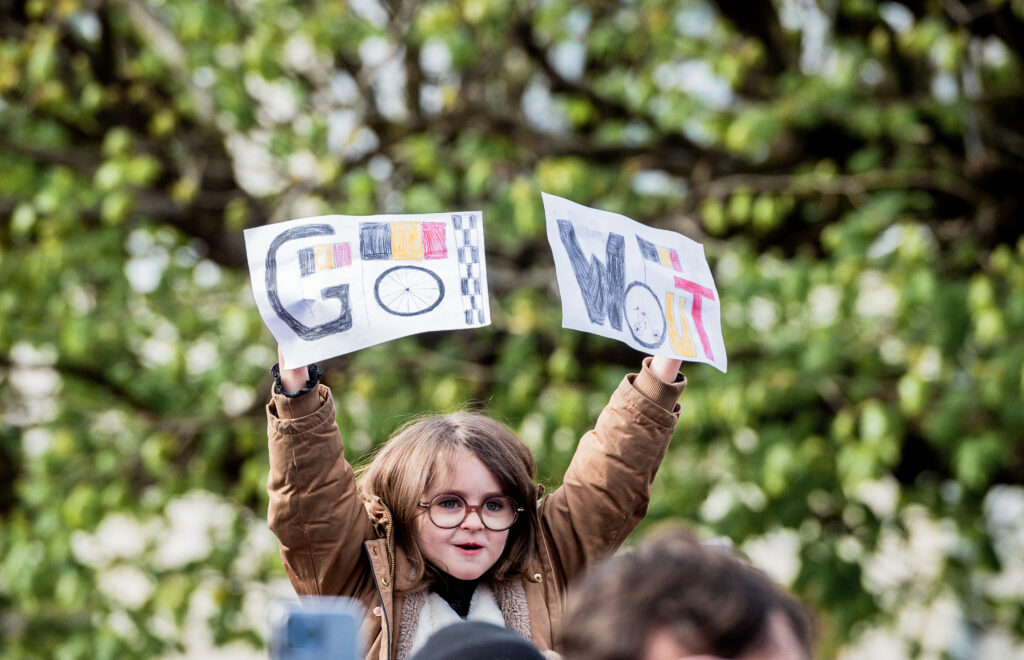

The announcers tasked with whipping the crowd in the Roubaix velodrome into a frenzy had a fairly easy job of it on Sunday. As the leading duo in the men’s race made their way north, the magnetic bond between them too strong to crack (despite Tadej Pogačar’s best efforts), the men with the microphones employed one simple but devastatingly effective tactic.
‘Who do you want to win? Wout van Aaaeeeeert?! Or Tadeeeeej Pogačar?’
Of course, that’s my truncated version of their cheerleading strategy. In reality, that particular query, repeated three times in the last 40km, took a lot longer and contained a lot more florid Frenchisms.
In any case, the answer from the masses gathered in the Vélodrome André-Pétrieux, many perched forlornly along its extremities, straining to catch a glimpse of the giant screens showing the action, was clear.
Van Aert was their man.
(That was the case even taking into account the clear advantage intriguingly afforded to Pogačar throughout this process by the organisers, the world champion’s name always getting second billing and therefore more likely to illicit a stronger response. But I digress.)
The trackside fans weren’t the only ones willing on the Belgian to finally break his cobbled monuments duck, after years of near misses, bad luck, and horrible injuries.
As it was all kicking off in the Arenberg Forest, Mathieu van der Poel’s chances of a historic fourth consecutive Paris-Roubaix triumph unravelling quicker than he could clip into Jasper Philipsen’s pedals, one press officer from a rival team leaned over to me and smiled: ‘Ah, it would be great if Wout wins, what a story.’
And so it proved, as the irresistible force of Pogi failed to budge Van Aert’s unmoveable object on the pavé, each call and response routine eliciting a crackle of nerves, anticipation, and hope from the crowd in the velodrome.
From my vantage point in the velodrome’s inner field, when Van Aert launched early on that fabled track, the roar was deafening, spine-tingling, unforgettable. A decade of cycling promise had finally been fulfilled, and one of the races of the century got its perfect ending – and its perfect winner.
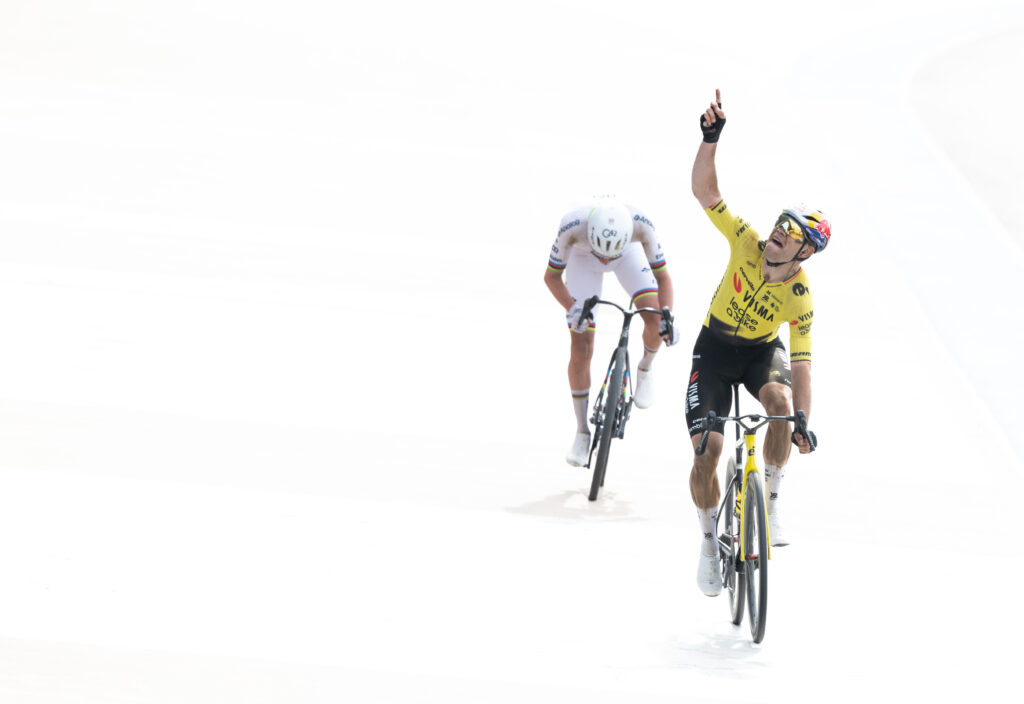
The finger pointing at the sky, in memory of his fallen mate Michael Goolaerts, the leap into the arms of team boss Richard Plugge, the emotional reunion with his wife and kids, the sheer relief: it was hard not to get carried away with the joy of Wout.
The atmosphere in the velodrome was electric, maybe the best I’ve ever witnessed at a sporting event (and I was there when Scott McTominay scored a 98th minute winner against Bournemouth at Old Trafford).
Has there been a more popular winner of a bike race in recent years? The wall of sound that reverberated around the concrete walls of the Roubaix velodrome – and a quick scroll through social media last night – would suggest not.
Ironically, for Visma the roles would be reversed an hour or so later, when the relatively unfancied Franzi Koch, much to the delight of the neutral observer, upset the buzzing yellow and black duo of Vos and Ferrand-Prévot to secure her own maiden, and very popular, Roubaix success.
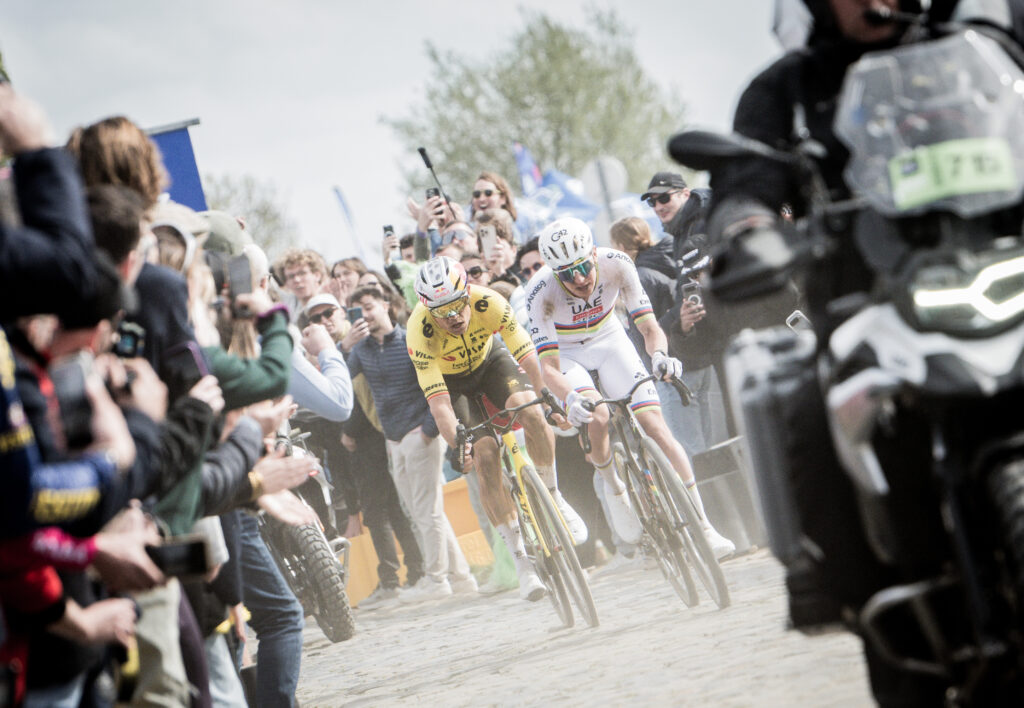
All this isn’t to suggest that Tadej Pogačar (or Marianne Vos, for that matter) would have been an unpopular winner on Sunday, however. Even to his fiercest critics, the Slovenian’s pursuit of sporting immortality – which this week just so happened to centre on his quest for all five monuments – ensures a tantalising sense of intrigue and history being made, even at his most ruthlessly dominant.
But Pogačar – a victim of almost slapstick misfortune earlier in the race – wasn’t dominant on Sunday, and perhaps he never will be at Roubaix. It’s the kind of race that won’t bend to anyone’s will, even when it’s one of the all-time greats doing the bending.
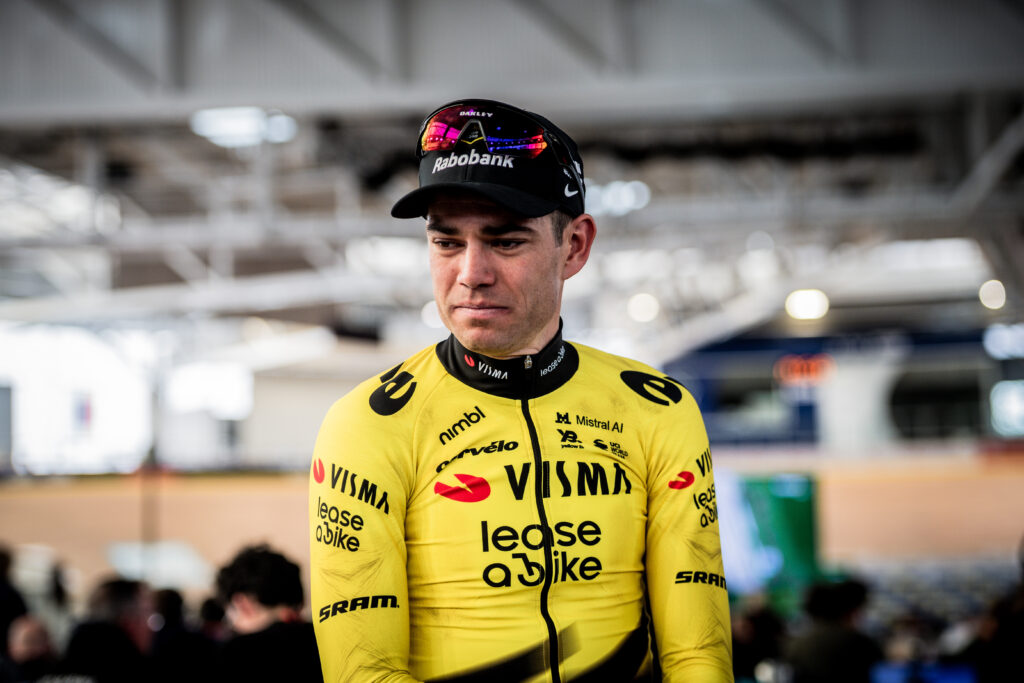
That realisation was evident on Pogačar’s face as he made his way past me to get ready for the podium presentation: his expression blank, dazed, almost stern, even with the mud washed off his cracked lips.
But ironically, a second consecutive Roubaix defeat – to the two greatest classics specialists of their generation – only serves to emphasise the scale of the world champion’s success. Just like Merckx needed De Vlaeminck in the classics, Tadej needs Wout and Mathieu, and he needs them to win. Sometimes.
Van der Poel and Van Aert’s own victories (and Jonas Vingegaard’s too, when we focus on the grand tours) only add to the Pogačar story. They highlight the strength of the opposition he faces, rivals that would dominate the one-day scene in almost any other era in the sport’s history.
The occasional defeat, like on Sunday, casts an even more impressive light on the fact that, most of the time, he beats them. And on their own terrain. Which is why Wout van Aert, a generational talent, had the cycling world almost fully behind him at the weekend, like he was some plucky long shot.
And it means we have another epic to look forward to next year.