



A Labour MP has asked the government to introduce stricter e-bike and e-scooter laws, arguing the current “situation is unsafe” and “battery safety, speeding and enforcement” needs to be addressed “before more people are hurt”.
There are multiple parts to Tom Hayes’ case, the MP for Bournemouth East taking his concerns to Parliament having been “told clearly” by constituents that tighter regulation of e-bikes and e-scooters is needed.
Some of Mr Hayes’ concerns mirror those shared by cyclists and the bike industry in recent times — such as the numerous cases of dangerous e-bike batteries causing fires, and the use of illegally-modified bikes and other high-power e-bikes which are not road legal.
However, in a wide-ranging appeal, the Labour MP also told the Bournemouth Echo he wants the introduction of rider licensing, mandated training, lower speed limits and penalties such as high fines and prosecutions for tampering with speed restrictions.
On the retail and manufacturing side of things, he suggested there is a need for enforcement of international standards at sale and import, restrictions on the sale to certified retailers, regulated battery disposal, compliance checks on users and retailers, and public safety campaigns.
Mr Hayes said: “Residents have told me clearly: this situation is unsafe. E-bikes and e-scooters are speeding through shared spaces and putting lives at risk. I’ve urged the government to act on battery safety, speeding and enforcement before more people are hurt.”
The comments come as the Home Office has confirmed that police will soon have stronger powers to seize and dispose of illegally used e-scooters under the proposed Crime & Policing Bill.
Some of Mr Hayes’ suggestions would no doubt receive support from the bike industry — numerous retailers and brands also calling for action on dangerous batteries and many riders, particularly in urban areas, reporting feeling unsafe with high-speed illegally modified bikes using cycle lanes and other infrastructure.
Last year, the CEO of folding bike manufacturer Brompton, also urged a crackdown on “poor quality” e-bike batteries before public perception “snowballs into a world of fear” around e-bikes in general.
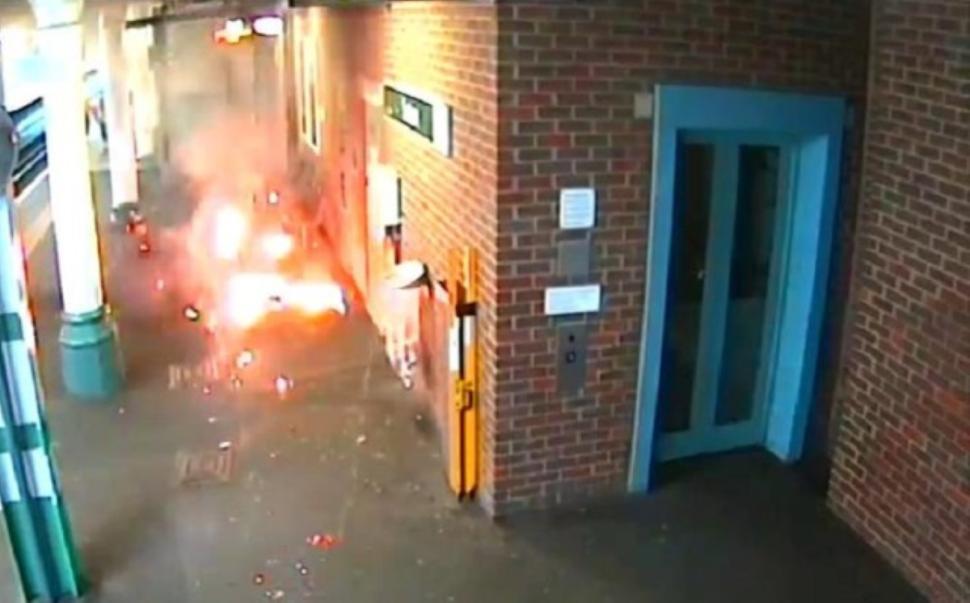
Will Butler-Adams warned that public perception is already sceptical of e-bikes due to “too many examples of e-bikes, e-scooters and light electric vehicles hurting people” and that this could “all snowball into a world of fear” which could “affect the whole momentum of light electric vehicle transport”.
The London Fire Brigade has also warned about the risks from dangerous batteries.
Likewise on Mr Hayes’ point about illegally-modified bikes and other high-power e-bikes which are not road legal, we have regularly reported fears from cyclists who feel unsafe, or have been involved in collisions, using cycling infrastructure alongside riders of bikes which are not legally pedal cycles.
Earlier in the spring a public plea was made to a Labour MP in Sheffield, Gill Furniss, a campaigner calling for the police and local authorities to crack down on the use of illegally modified electric bikes – which she says could lead to “someone being killed” as riders use cycling infrastructure at 30mph.
Unfortunately, often in the media, such bikes are still described as e-bikes, even when they do not comply with EAPC requirements for bikes to have pedals that can be used to propel it and a motor which does not exceed 250w and cuts out at 15.5mph.
Lancashire Road Police was recently praised by cyclists online for pointing out to followers that a 750W motor-powered two-wheeled vehicle with throttle up to 28mph is not an e-bike.
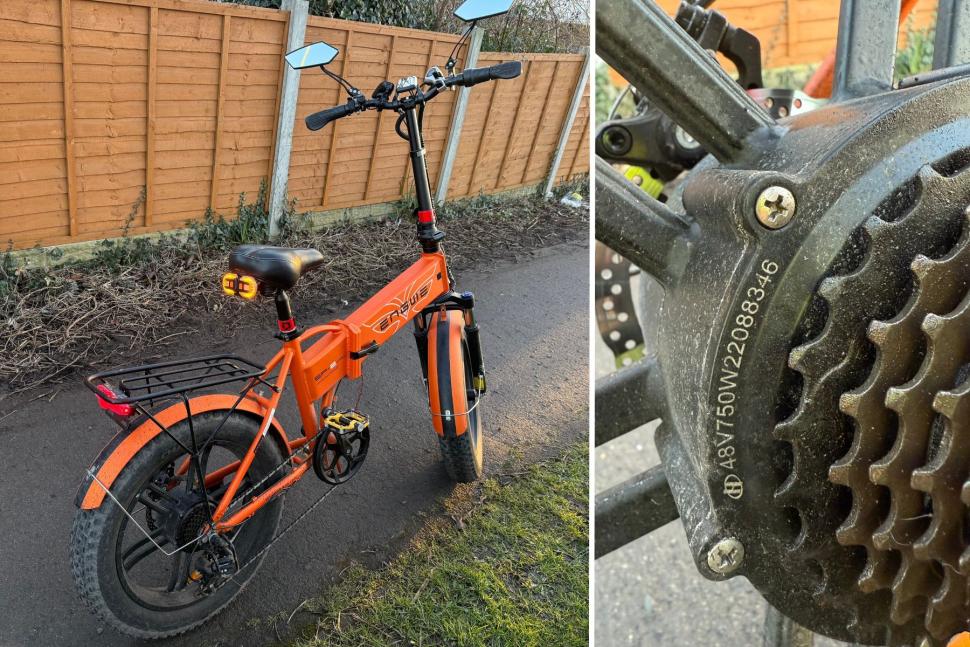
Sharing the photo above, the force wrote: “This is not an e-bike. This is a motor vehicle and must comply with RTA legislation. This particular vehicle has a 750W rear motor and can be independently powered by a twist throttle up to 28mph.”
Cyclists thanked the force for not falling into the trap of calling illegal models ‘e-bikes’ as is common across the media.
“We face enough hatred as it is,” one person said, while in response to the BBC’s much-criticised e-bike Panorama episode, one cycle shop owner compared the media discourse around e-bikes as like finding a wolf in sheep’s clothing and seeing it as a reason to attack sheep.
Labour MP Hayes’ calls for stricter restrictions on e-bikes come just weeks after the Department for Transport proposed new legislation which would see cyclists who cause death by dangerous cycling face life imprisonment.








28 thoughts on “Labour MP calls for tougher e-bike laws on “battery safety, speeding and enforcement””
The police already have the
The police already have the power to seize and destroy e-scooters and e-motorcycles – Hampshire police have been doing this for a while.
Yes I think we can file the
Yes I think we can file the “stronger powers” thing under the wants to be seen doing something banner
This being an MP looking for
This being an MP looking for a cheap headline (though I agree with about 2/3’s of it) it will no doubt be backed up by statistics from his constituency?
No? Quelle Surprise!
Ipswich Central community
Ipswich Central community police are running a whole week of engagement about e-bikes in the town, the majority of feedback they’re getting is of course nothing to do with ebikes, but e-motor bikes & e-scooters with the odd moan about uninsured cyclists too.
I actually think its too late to get a grip on the real issues with the whole illegal motors & dodgy batteries thing, that horse has bolted.
I disagree. I think it’s
I disagree. I think it’s about time there was a crackdown on illegal electric mopeds and motorbikes.
Not arguing against that, but
Not arguing against that, but what will it achieve ? there will be containers full of replacements flooding the country again before you can say Trumps tariffs.
stonojnr wrote:
That might be the case but if it is a “chronic disease” that doesn’t mean stopping treatment is the answer. Perhaps it’s just like other issues (e.g. crime in general) – we just have to keep combatting it?
It’s always possible for a government (or even society) to say “we’ve got too much of this”. And maybe even tackle the “sale” side?
Theyre already already banned
Theyre already already banned on public roads and paths,any enforcement clearly isnt working because youd need so many officers on every street corner of nearly every town, city, village in the UK to catch them all, and its going to be never ending,there will always be a back street lockup who can fix whatever restrictions on sales or access to the tech the government invents, because batteries, motors & electronics are multi purpose.
It’s abit like solving bike theft, the scale is too big because we ignored it for too long and now we’re stuck with it.
The yearly “let’s nick some
The yearly “let’s nick some illegal bikes” is just box ticking for the police.
stonojnr wrote:
Again – most bad things we probably don’t “solve” – but for a given amount of effort we may be able to keep this at certain level, or make it so that most people don’t bother.
BUT that only works if we (collectively – but eventually our lords and masters) decide to look at what is there and why, then take some (arbitrary to some extent) decision.
I would suggest that these are self-limiting to some extent in the UK as things stand, because there are few convenient places to ride. Footways have obstacles / kerbs. Most places lack cycle infra or it’s limited / unattractive. Roads? Most people simply don’t want to ride with motor traffic at speeds and levels we have currently (even if they didn’t have to work at it).
Which perhaps explains why will to care about this at all – one way or another – appears to be generally lacking currently. Presumably it’s about 90th on people’s priority lists (except for those whom it makes money for)?
stonojnr wrote:
Well … since there currently appears to be almost zero enforcement I’m not sure it’s quite fair to say “enforcement isn’t working”.
And there’s apparently no concern about companies setting up and creating the conditions that will drive their use (indeed they’ve defended some of their practices in the courts so will hardly be feeling any pressure).
And nobody in power apparently gives a toss about sale – not only “back street lockups” nor even internet vendors but major high street companies (hello Currys PC World) are happy to sell stuff which AFAICS don’t obviously state “don’t ride it on the road, or the footway, or… almost anywhere”. (I have only inspected these things in a couple of their stores, not tried to buy – it’s perfectly possible they’re all trained to quiz you about your planned use…)
So I think perhaps we could try … some enforcement first? (Of course, that would take some money and will…)
chrisonabike wrote:
That might be the case but if it is a “chronic disease” that doesn’t mean stopping treatment is the answer. Perhaps it’s just like other issues (e.g. crime in general) – we just have to keep combatting it?
It’s always possible for a government (or even society) to say “we’ve got too much of this”. And maybe even tackle the “sale” side?— stonojnr
I strongly disagree with tackling the “sale” side as there can be legitimate reasons for people to want to buy vehicles for off-road use (e.g. staff getting around large festivals/race-tracks/farms etc). The answer is simply better traffic law enforcement which would also tackle issues such as speeding, phone-use, careless driving etc. Let’s get more police (or even flying drones) to do random enforcements of various issues so that people never know if they’re going to be targetted (and vehicle seized, maybe).
“Tackling” the sale side
“Tackling” the sale side doesn’t have to mean banning it, though. It could be a registration system, for example.
hawkinspeter wrote:
Hmm… I’m sure we could come up with reasons for anything … I’ve a feeling we’ve already got vehicles that can do all that (probably mostly better) AND those can also legally be on the roads – if you plate them and wear a helmet and they’re type-classified. AND the police understand that and currently have some feeling they should do something if there aren’t plates.
(TBF I think you can get new electric motorbikes type-classified, insured and legal – but that mostly doesn’t happen and the sellers – AFAICS – not telling people they need to do that nor helping them do so.)
But OK, say we want them all electric, or easier access for untrained people (is this right?). (Ignoring the fact that the current market appears to be firmly in the “novelty” / “toy” / hide the fact I’ve got a motorbike / motor scooter for cheap and without any questions about licence / wearing a helmet).
Just make it harder to buy them then.
hawkinspeter wrote:
I agree that the belief in the chance of being caught is important and that is lacking now.
But … I get a bit twitchy about the idea that enforcement of use is a good way to fix things (especially after some time of there being none). Not sure how well that’s working on our roads *? Depending on level / how we enforce it can seem a bit like occasionally going to check the stable door after it’s been opened and there’s a path worn going through it, but not closing it any.
What’s the cost balance – how much extra benefit per extra thousand police? Not cheap – plus the more police the more bad police… I have a feeling it isn’t necessarily a linear graph either. Perhaps we have reached a point of diminishing returns? In general we might be getting most of the benefit from keeping the “honest folks” convinced to stay honest. Perhaps once we’ve done as much as we can there the rest are “gonna do it anway” and more costly to tackle?
Tech is also tricky – a bit like the police it may work for what we think is good, but it’s not limited to that. People might feel it’s pervasive state intrusion (and it might be!) – or in use for some policeman’s personal aims. (That will certainly be true if “police as they’ve been up to now” remains the case!)
* It might be that it’s great because without the little the police and courts seem to do now we might be more like the 70s with drinking and driving and who needs to pay attention and much higher casualty rates.
Maybe we should just start
Maybe we should just start with better enforcement before worrying about additional laws?
Steve K wrote:
Is major source of the “bigger picture, longer term” issues in life people “doing what they can“?
MPs – heck, even governments – struggle with actually making stuff happen. (The old tale about fighting to get hold of the “levers of power” and then the disappointment of pulling them and nothing much happening).
OTOH one thing they *can* do is make laws…
I agree. Daily, I cycle past
I agree. Daily, I cycle past the Greater Manchester Police Headquarters, which is next door to the North Manchester Division Police Station. Despite the presence of these two premises of law enforcement, I regularly see food courier types sail past both buildings at a fair rate of knots without a single rotation of their pedals.
Whilst in my own neighbourhood, I can guarantee seeing a local scally or two fully balaclavared up on their illegal e-motorbikes, looking for their next opportunity.
Personally, I’ve no objection to e-scooters as long as they’re ridden sensibly and on the road. “Official” e-scooters provided by our local councils are not ridden any safer than privately owned e-scooters; it just strikes me as a money-making scheme for those in the right club. My Mrs would love to own an e-scooter for the purpose of commuting to and from work, but legally she cannot.
No car has ever caught fire.
No car has ever caught fire. FACT.
No driver has ever put lives at risk. FACT.
I think you will find that
I think you will find that the rate of fires amongst especially the cheap home conversion end of the e-bike market is much higher than it is even for cheap twenty-second hand old bangers. And cars don’t tend to catch fire whilst charging in the communal stairwell of a block of flats or the hallway of an HMO.
Can’t argue with the point about drivers though.
You were/are in the fire
You were/are in the fire services I think, so have more direct experience !
But anything with a cheap charger or defective appliance can cause issues. That’s where enforcement needs to focus on ensuring that only electrical items that meet standards can be bought.
(and also ensuring pets don’t turn the hob on !)
Fully agree. If should
Fully agree. If should always have been illegal to sell an e-bike unless it met basic safety standards/legislation and was legal to use on UK roads as sold. Problem was we had a Govt at the time who were anti-legislation so that boat sailed. The way to go now is stronger enforcement for a sustained period to make it very clear to those who use these devices on public roads that if you continue to do so, you will get caught and it will hurt.
It was nothing to do with the
It was nothing to do with the government at the time it’s a long standing principle in UK law that you can purchase and even own certain items that using in a public place breaks the law.
For instance speed camera detectors, vanity number plates that don’t conform to standards, blue lights, blackout film, exhausts that break sound limits.
Next time you see a motorcyclist check if their helmet visor is clear or mirrored. It’s legal to buy the mirrored versions in the UK, it’s illegal to ride on UK roads with them.
Most people don’t charge
Most people don’t charge rando car batteries bought off fleaBay/metaMarketplace/… inside their house though.
Main issue with all of it is legislation allowing the sale (of relatively affordable, but potentially highly dangerous cars, e-bikes, e-scooters, batteries) from anyone to anyone else while under funding both usage and standards enforcement.
Simple answer, Police order
Simple answer, Police order food via Uber Eats, Deliveroo etc.
Rider arrives on illegal moped, arrest and prosecute for lack of insurance and MOT, confiscate and crush the bike. Rinse and repeat until the word spreads.
Shermo wrote:
Better answer – nobody order food via Uber Eats, Deliveroo etc. Doesn’t directly address people using machines where they’re not legal, but while we have these “black holes in the delivery business” (not interested in what riders do because “not employees”) we’ll not get on top of this.
Unfortunately that seems about as likely to happen as the government tackling the gig economy, or indeed them finally deciding where they stand on e-whatevers (other than EAPCs, which I’m fine with) and doing something about both the use and the supply…
Well I think what you suggest
Well I think what you suggest would be cruel to the poor delivery guys. They often don’t realise they are riding illegal scooters or e-bikes, and they are always on a virtually impossible timetable to deliver their goods. They are exploited enough by rich employers without becoming totally impoverished by a sudden loss of work. They may have kids, partners, dependents.
So let’s look at the source of the problem.
We must insist that Uber Eats and other delivery companies employ these delivery guys as contracted employees, provide them with great training and the legal e-bikes to do the work. Uber etc must provide storage, maintenance and upkeep of these e-bikes, free to the employees. Also they must provide great conditions of work, including union representation, access to free health care, etc.
Obviously the existing model is exploiting great and hard-working people, usually on far less than the minimum wage. At the moment most of them have to provide their own wheels, insurance, everything.
I once worked as a cycle courier in East London on an “acoustic” bike, and it was horrible.
So push the government to insist that the employers regulate their cycle couriers with kindness, proper work regulations and FREE safe and legal e-bikes.
https://bsky.app/profile/iwgbunion.bsky.social
And yet, if I choose to not
And yet, if I choose to not to cycling in a shared space due to my speed, I get chastised for it