


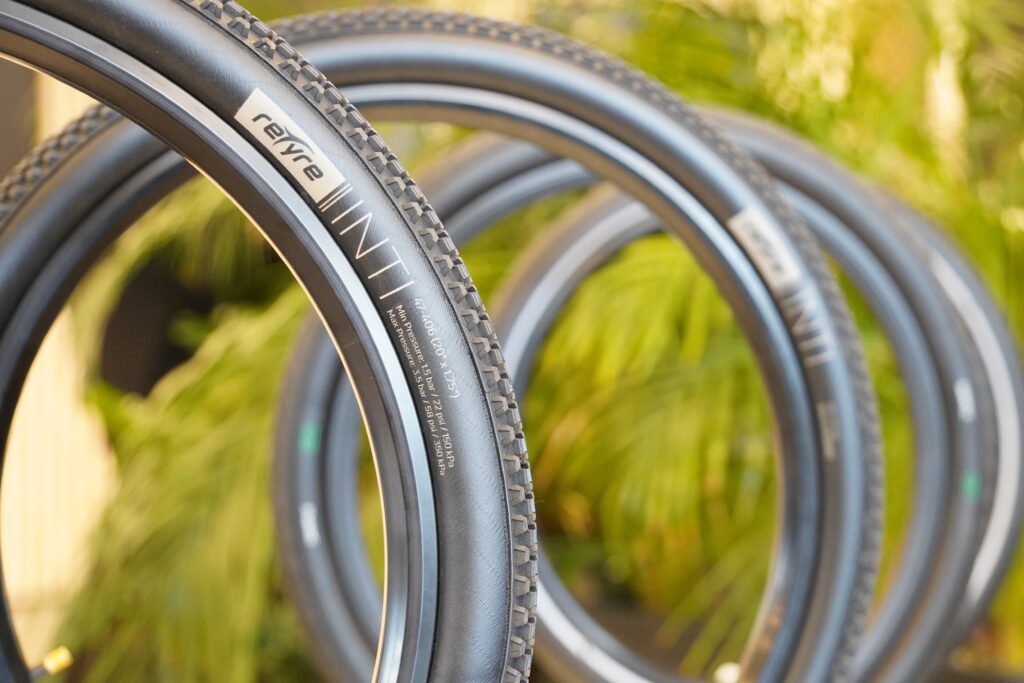

Norway’s reTyre has secured €7 million (£6.07 million) in new investment as it looks to scale up production of its low-carbon, fully recyclable bicycle tyres, and it has agreed a partnership with Italian brand Vittoria to bring new models to market. Investors claim this is: “A significant step toward reshaping the global bicycle tyre industry.”
Why? reTyre is pioneering a new type of tyre production using patented injection moulding tech, while most traditional pneumatic bike tyres are made using a process involving compression moulding and vulcanisation.
> Check out more traditional tyre production from when we visited Continental
reTyre says, “The process reduces CO2 emissions by 80%, allows for 100% recyclability, is dust-free and fully automated. This breakthrough enables decentralised, clean tyre production close to OEM [original equipment manufacturer] assembly lines— dramatically cutting transport emissions and costs.”
reTyre talks about “a technology that delivers a new level of performance while enabling true circularity and a sustainable solution in tyre manufacturing”.
In the past, reTyre has said that it is “revolutionising the tyre manufacturing industry by moving away from traditional, large-scale, centralised production in low-cost countries”.
It says, “By scaling down massive tyre manufacturing plants to compact, energy-efficient, and fully automated machines, reTyre is not only optimising production but also minimising environmental impact. Our commitment to sustainability is further demonstrated by our use of bio-based and reusable materials.”
The €7 million investment has come from various sources (led by Hatch Blue’s Blue Revolution Fund), including Fundracer, an investment fund founded by cycling industry experts like René Wiertz (former owner of 3T) and Gérard Vroomen (co-founder of Cervélo).
The plan is for the funding to enable reTyre to scale up production, deliver orders, and reach profitability. reTyre says it will install its first “fully automated production cell” in Norway, followed by a second facility in Asia this year.
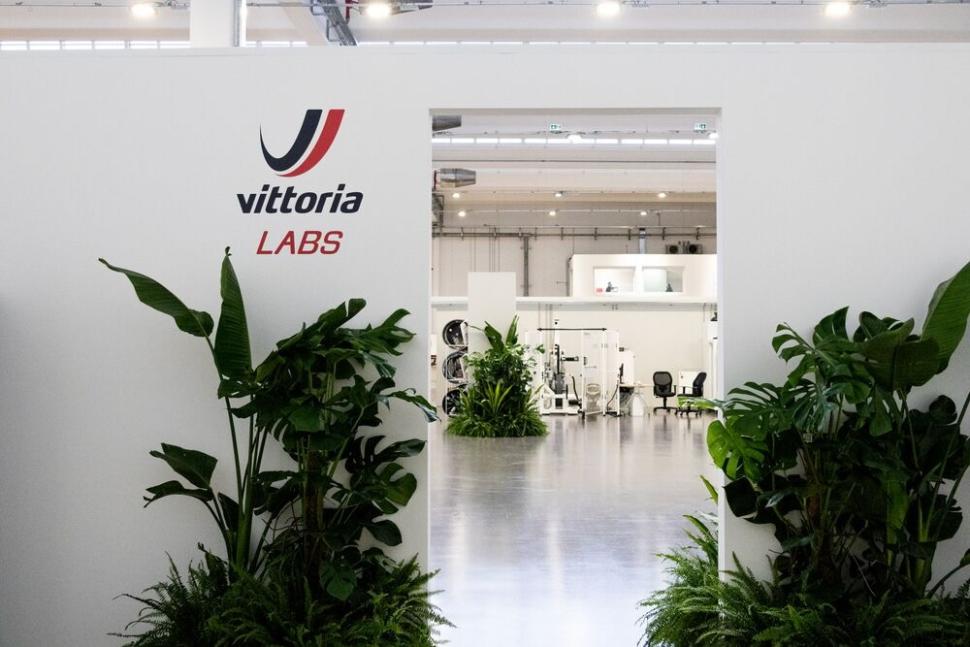
reTyre already supplies bike tyres and is preparing to enter what it calls the “performance utility tyre market” in partnership with Italy’s Vittoria. The two companies have signed an agreement to co-develop and bring to market a new generation of tyres based on reTyre’s injection-moulding technology.
Stijn Vriends, chairman and CEO of Vittoria, said, “We’ve followed reTyre for many years and are convinced that their unique production method can successfully be applied to utility bicycle tyres. Vittoria stands for performance and sustainability, and reTyre’s technology delivers both. We’re excited to collaborate and bring this next generation of sustainable performance tyres to market.”
Performance tyres?
René Wiertz, partner at Fundracer, clarifies, “What we mean by that is tyres designed for high-use, real-world applications where performance, durability and reliability genuinely matter.”
“In practice, this sits at the intersection of: urban and commuter bikes; e-bikes and heavier city platforms; fleet, subscription and premium utility use cases. This is not (yet, at least) for race tyres.”
reTyre and Vittoria say they’ll decide at a later date if the project can be extended to other disciplines. The agreement is in place and work is set to begin, but there are no details regarding a timeline yet.











5 thoughts on “reTyre lands €7m investment and partners with Vittoria on low-carbon, fully recyclable bike tyres”
Fully recyclable/recycled
Fully recyclable/recycled tyres would be great.
Depends on what they’re
Depends on what they’re getting recycled into imo. That new tarmac that incorporates recycled tyres has been getting some negative press lately for leeching forever chemicals/microplastics into the environment.
Quote:
Well that certainly sounds like a good thing for tyres.
Kudos to reTyre and Vittoria
Kudos to reTyre and Vittoria for trying to develop more sustainable alternatives to what’s currently out there. The industry needs to get better in this respect.
Whilst this is all a step in
Whilst this is all a step in the right direction, have they reduced/eliminated the use of plasticiser and stabilisers?
It’s the use of 6PPD which oxidises into 6PPD-Q which is somewhat toxic.