Shimano is one of the biggest players in the drivetrain space. It supplies drivetrains for all kinds of bikes at all kinds of price points, but with many ecosystems, things can get rather confusing. Here, we’ll explore each of Shimano’s mountain bike offerings and dissect what each will bring you should you consider making an upgrade. We’ll cover everything from CUES, through to the state-of-the-art XTR Di2 systems.
- SRAM MTB drivetrains 2025: SX to XX SL Transmission explained
- Bicycle chains explained – everything you need to know
- How to clean your bicycle chain
Shimano’s 2025 drivetrain lineup
Shimano CUES
CUES is where the Shimano party starts, and with it, the brand has aimed to create a mega versatile drivetrain that can be used across a range of bikes, whether that’s your daily commuter or a fully-fledged e-mountain bike. Although Shimano provides CUES drivetrains for drop bars, we’ll focus on the flat bar offering for now. As for that offering, Shimano says that it comes in nine, 10, and 11-speed variants. You’ll often see CUES on more budget bikes of all types.
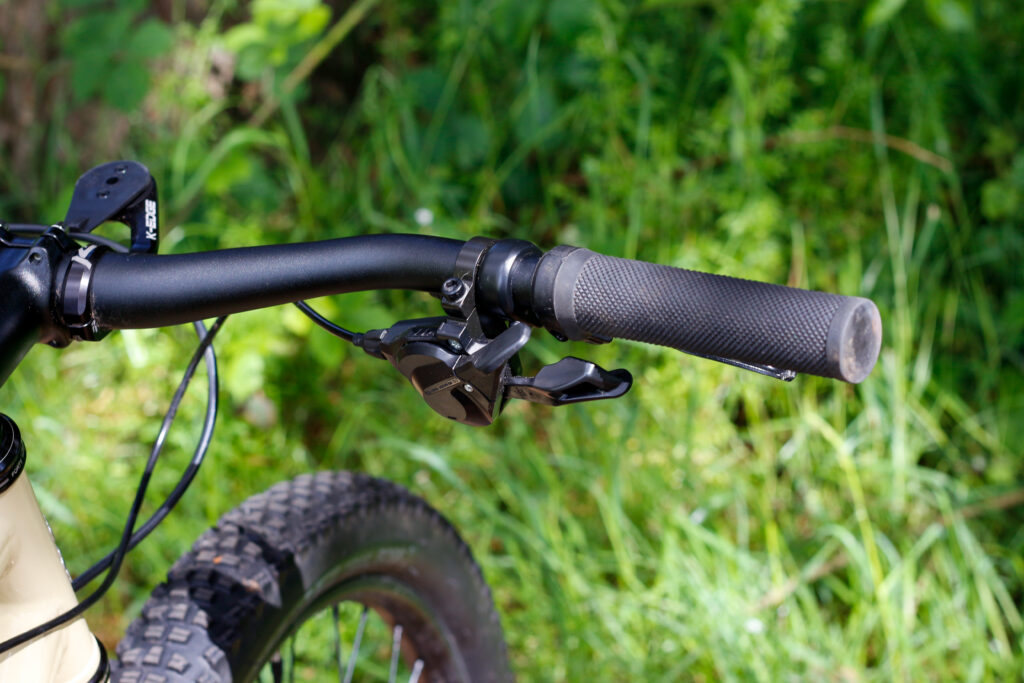
Shimano CUES is split into three ‘series’, so that’s U8000, U6000, and U400. The shifter comes in a large range of variants to suit 2×11, 2×9, 2×10, 1×9, 1×10, and 1×11 setups, all of which feature band-clamp mounts – not confusing I-SPEC stuff here.
With a selection of 2x options, there’s a range of front derailleurs and cranksets to suit, with the cranksets available in Hollowtech and two-piece constructions.
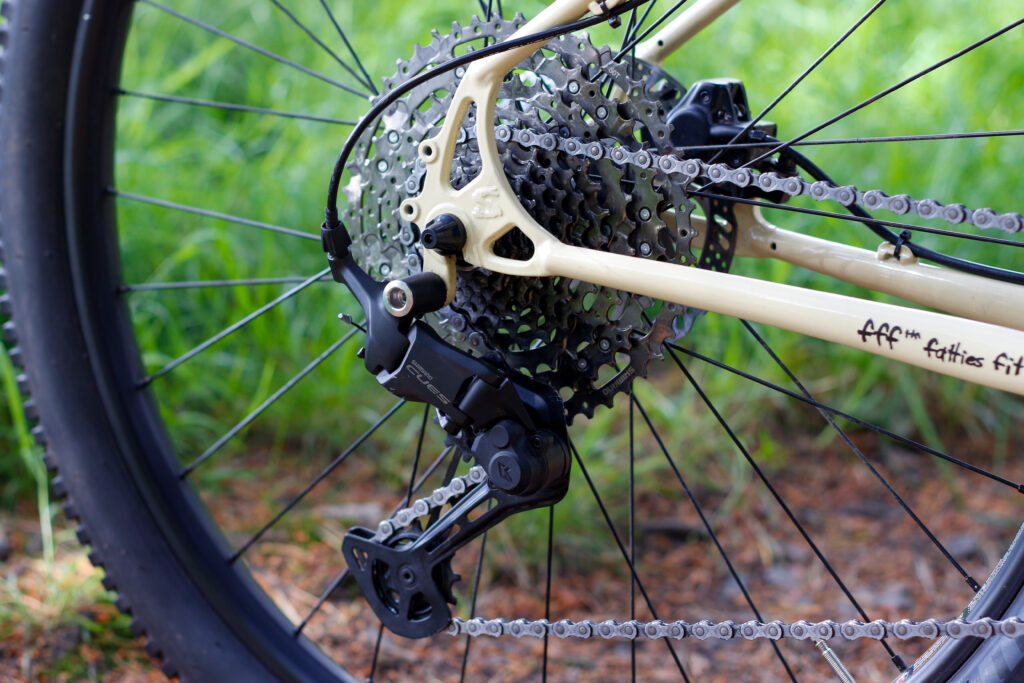
Where things get particularly specific is with the derailleur as it’ll need to match both the speeds of your shifter, and the size of the cassette you’re planning to run These come in 11, 10 and nine speed options but the U8000 comes in models to work with either the 11-45t cassette, or the 11-50t cassette. Of course, you’ll need to pick the correct chain for your chosen shifting setup, and Shimano has all bases covered here.
Shimano Deore
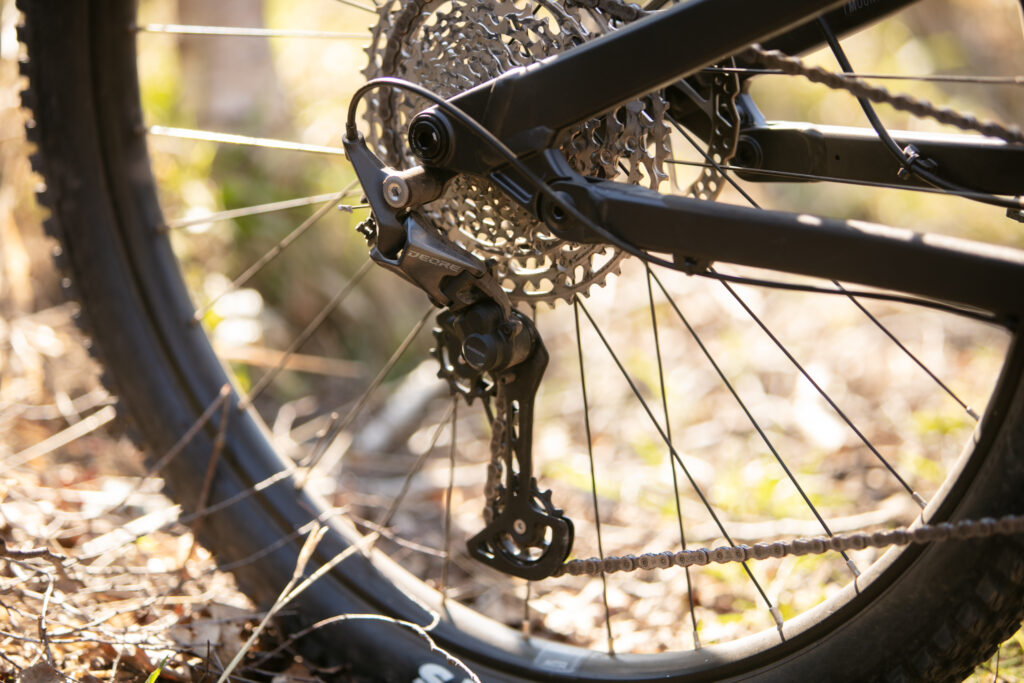
Deore is where the game steps up a bit, and gets mountain bike specific. This ecosystem is built up of M6100, M5100, and M4100 series kit.
It’s available in a similar range of speeds as CUES, so that’s 2×11, 2×10, as well as 1×12, 1×11, and 1×10 with cranksets to suit. As for the shifter, it’s available in band clamp and I-SPEC EV mounts. Deore shifters introduce Rapidfire Plus tech, which claims to bring ‘light and responsive’ shifting and a maximum of three up shifts per full lever throw. The I-SPEC EV mount then offers 14mm of adjustment.
As a drivetrain with front shifting options, there are front derailleurs with band-mount, direct-mount, and E-type mounts to work with 2×11 and 2×10 drivetrains.
The M6100 crank uses a direct mount chainring and comes with a 178mm Q-factor that is compatible with 148mm O.L.D frames. The M5100 cranksets come in 2×11 and 1×11 options, whereas M4100 is 2×10 only. M6100 is only compatible with 1×12 arrangements and 30.
Moving onto the derailleur and again, that comes in M6100, M5100, and M4100 variants, with M6100 getting Shimano’s Shadow RD+ tech for 12-speed shifting. This derailleur gets large 13t pulleys. The M5100 model is built for 10-speed drivetrains and gets Shadow+ tech, whereas the M4100 mech is for 2×11 and 2×10 setups.
As for the cassette, there are three in the range for 12, 11, and 10-speed setups. The 12-speed M6100 cassette provides 10-51t gears, fits a Microspline freehub, and gets the Hyperglide+ tooth profile, whereas the other two come in 11-46t and 11-42t options and fit HG freehubs.
Shimano Deore Di2
Shimano Deore Di2 is the brand’s most affordable wireless drivetrain for mountain bikes. It benefits from trickle-down tech first laid down by the flagship XTR Di2 drivetrain, but brings it down to a more accessible price. Dubbed M6100, there are three derailleurs available: one for 12-speed e-MTBs, one for 11-speed e-MTBs, and one 12-speed mech for regular mountain bikes.
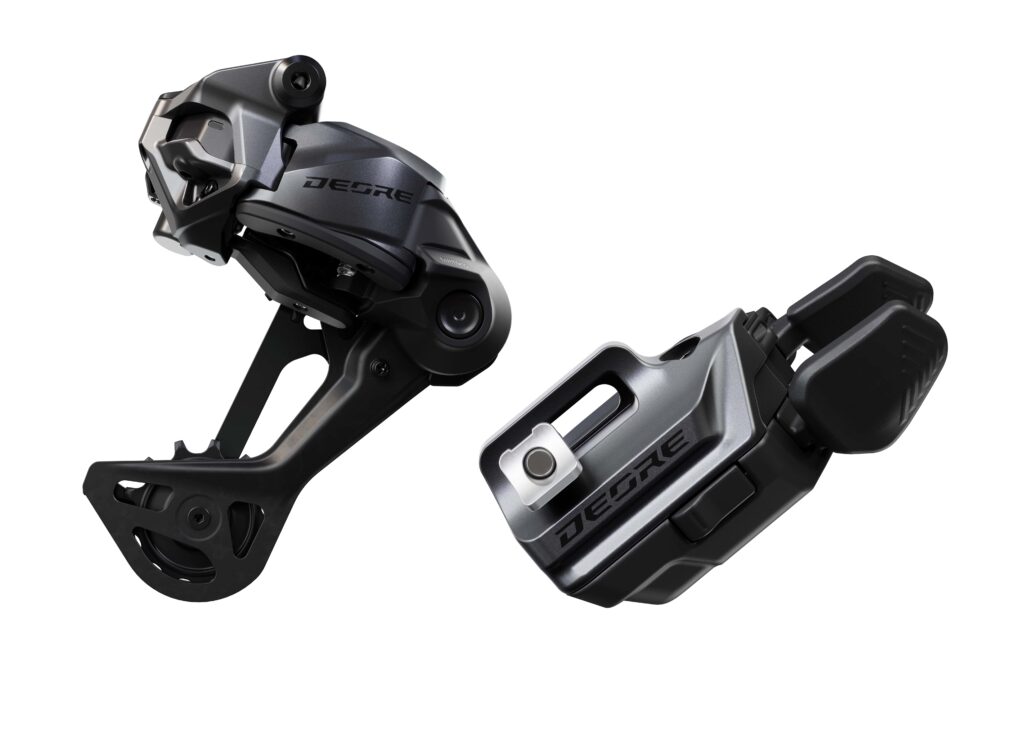
Both of the e-MTB derailleurs are built to be wired into an e-bike’s battery, so you’ll never need to worry about charging your mech, and both bring Shimano’s Auto Shift and Free Shift features to the mix. The non-e-MTB-going mech uses a removable battery that’s charged off of the bike.
All Deore Di2 derailleurs benefit the Shimano’s RD Protection Function, the Shadow ES chain stabilising tech, and covered pulleys.
Deore Di2 is to be paired with the wireless shifter, which is available with a band-clamp or I-SPEC EV mount. Its paddles aren’t adjustable, but it does provide multi-shift functions. There’s also a programmable third button.
These drivetrains are compatible with other cassettes and cranks in Shimano’s range.
Shimano Deore XT
For 2025, Shimano’s mid-range has received quite the shake-up. SLX is no more, and Deore XT is now wireless-only. It uses a similar design to the Deore Di2 kit but is a little more sophisticated, while benefitting from new tech across the board, including its own brakes, wheels, crank, and cassette. We’ll stick with the drivetrain details for now.
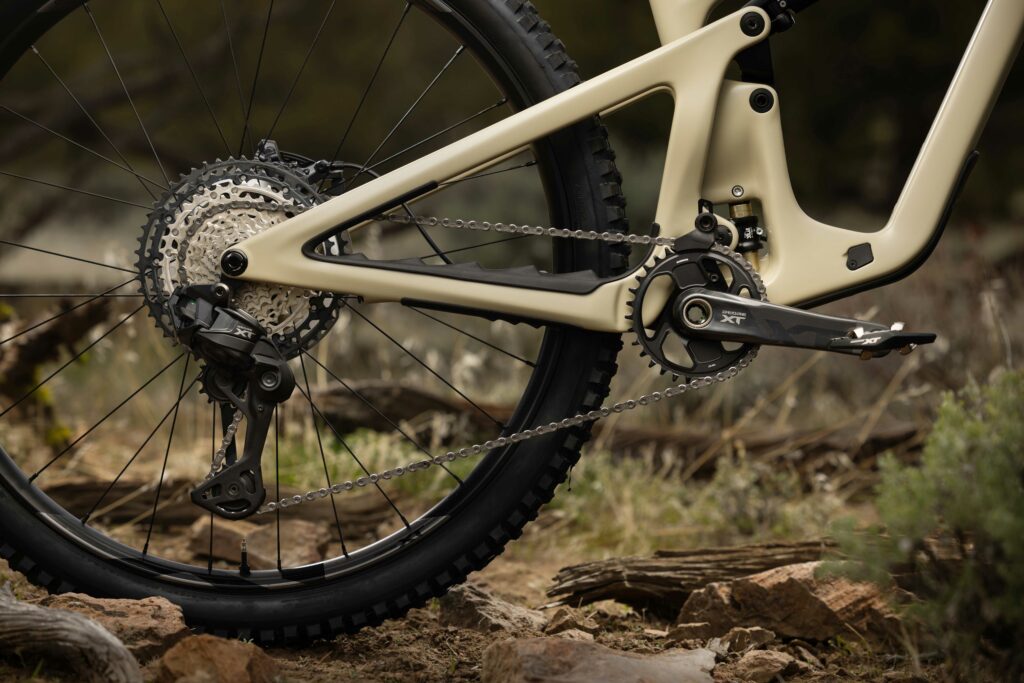
As with Deore Di2, Deore XT uses the Impact Recovery tech that allows the mech to return to its original position after it’s knocked. Its battery is nestled within the derailleur, and it employs covered, solid pulleys to keep debris from ruining the fun. There are then derailleur options to suit a 9-25t cassette, a 10-51t cassette, as well as an e-MTB version for 11 and 12-speed shifting. The e-MTB versions are wired into the bike’s battery.
The cassette options are kitted with Shimano’s Hyperglide+ technology and new tooth profiles that should improve shifting under load.
Deore XT uses a new Hollowtech II crankset that’s said to balance stiffness, strength, and weight. This is a forged, thus alloy, crank. The Deore XT shifter then provides a similar level of functionality to the Deore Di2 shifter, but its paddles are adjustable. This shifter is available in band-clamp or I-SPEC EV mounts.
Shimano Saint
Saint is Shimano’s long-standing downhill-focused drivetrain. Dubbed M820, Saint is a 10-speed setup that uses a super small cassette and cranks to suit 57.9mm and 50.4mm chain lines. Those cranks use Shimano’s Hollowtech II construction with a steel axle along with steel pedal inserts. It’s then compatible with 34, 36, and 38t chainrings.
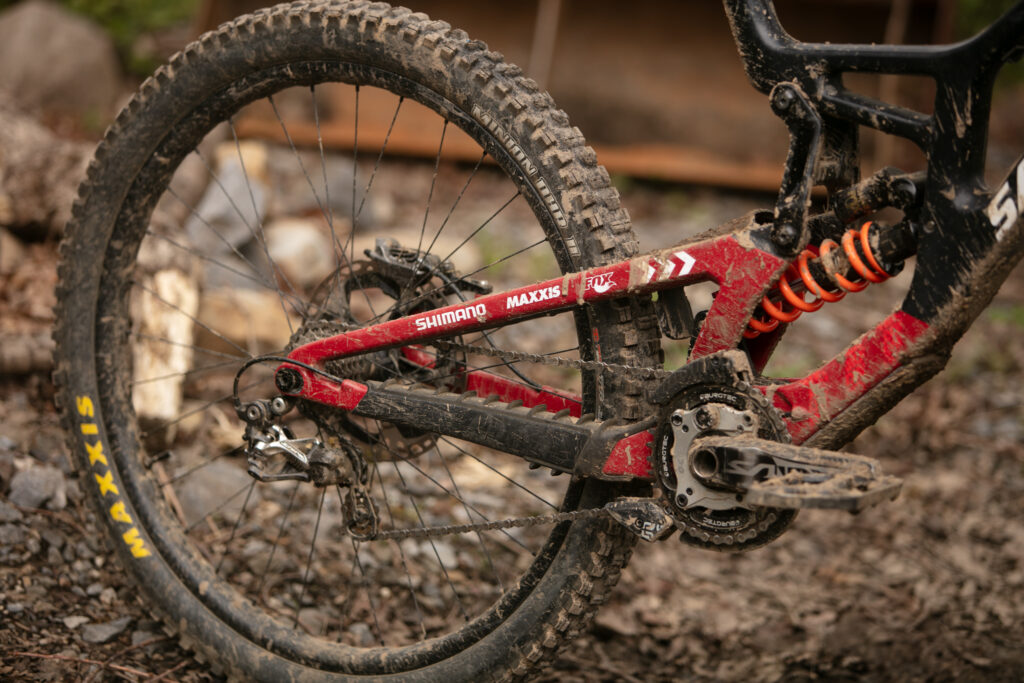
The derailleur uses a low-profile design to keep it well out of the way of trail obstacles and uses the brand’s Shadow RD+ Short cage to minimise chain slap.
As for the shifter, it’s available in I-SPEC B and band-clamp mounts. It uses long shifter levers and bearings for easy shifting.
Shimano XTR
Another sizey shakeup for Shimano from 2025 onwards is that XTR is also completely wireless, and is the first of the brand’s drivetrains to benefit from the cable-free tech. Like other Di2 options in Shimano’s range, the derailleur features an Impact Recovery system and Shadow ES. Derailleurs for regular mountain bikes have their batteries tucked into the derailleur’s body, and again, there are covered and solid pulleys.
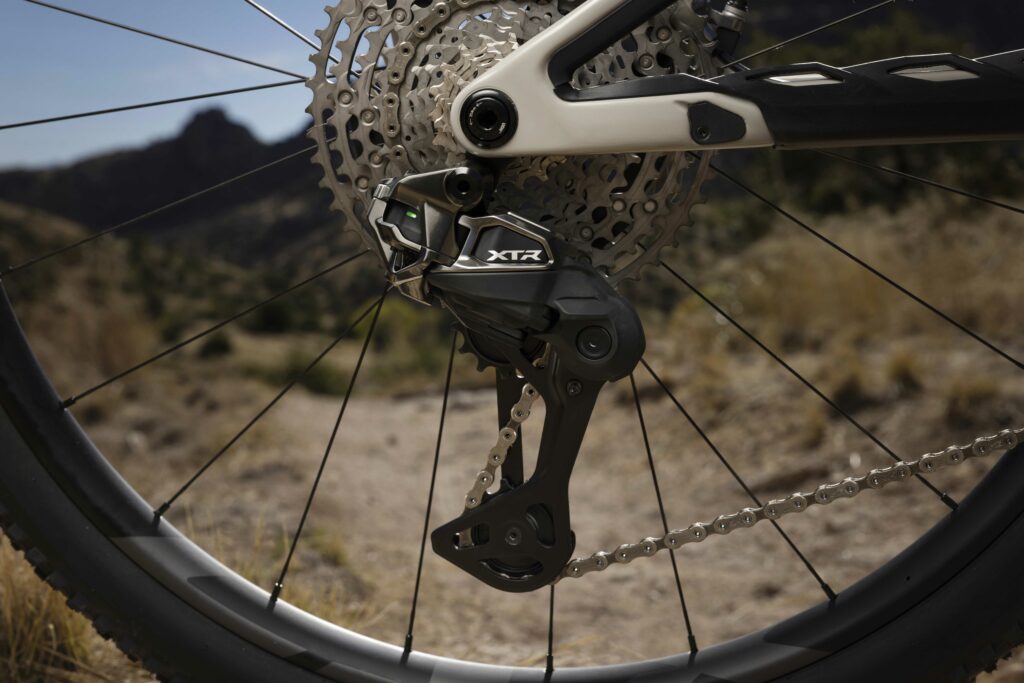
Like Deore XT, there are mechs to suit 9-45t and 10-51t cassettes, whereas the e-bike derailleurs come in 11-speed Linkglide and 12-speed Hyperglide+ options. Those are wired in, too.
The XTR cassette comes with refined cog tooth profiles for shifting under load, and there’s a Hollowtech II crank, which is a Hollow forged construction. Though differing from the rest of the range, the crank is available in Enduro and XC-specific builds, with the former getting a thicker spindle.
Moving onto the shifter, it gets adjustable paddles as well as a third button that’s programmable via Shimano’s app. It also gets a Single/Double Shift Mode Converter and is available in I-SPEC EV and band-clamp options.
Shimano jargon buster
What is Shimano I-SPEC?
You’ll see I-SPEC when shopping around for Shimano’s shifters. It’s the brand’s method of combining the brake lever’s clamp with a shifter mount that makes for a cleaner cockpit. It comes in a range of variations, including I-SPEC A, B II, and EV, but not every system is compatible with every brake, so be sure to check which one works with the kit you’ve got.
I-SPEC EV is the brand’s latest iteration that supports the brake’s reservoir against the handlebar, while allowing for a slide adjustment range of the shifter, as well as adjustment to its rotation angle.
What is Shimano Shadow?
Shadow refers to the clutch found on Shimano’s derailleurs. This clutch is designed to manage chain tension to a point, in a bid to avoid excessive chain slap while making for a quieter drivetrain. It also helps keep the chain on the chainring. Shadow clutches are often adjustable and serviceable, they can also be turned off for easy rear wheel removal.
Shadow RD+ is found on Shimano’s modern mechanical drivetrains, whereas Shadow ES has been introduced on its new wireless drivetrains. Shadow ES enables the derailleur to move under impact and return to its original position, saving a spendy component for use on another day.
What is Shimano Hollowtech?
Hollowtech is Shimano’s method of constructing crank arms. It’s designed to balance weight, stiffness, and durability by using a hollow crank arm. The brand’s most recent Hollowtech II design integrates the spindle, or axle, with the drive-side crank arm with the aim of further saving weight and increasing stiffness.
What is Shimano Di2?
If you see Di2 on a Shimano product, that means it’s electronic. That either means completely wireless, like on the brand’s recent Deore Di2, XT, and XTR setups, or the older Shimano setups that use wires and junction boxes to achieve electronic shifting.
What is Shimano Linkglide?
Linkglide is the term used to describe the tooth profile on Shimano’s cassettes. It was introduced to maintain durability on e-mountain bikes and on the brand’s latest drivetrains, to improve shifting under load. Linkglide replaces Shimano’s Hyperglide design.
The brand says that Linkglide moves a single link at a time from one cog to another, whereas previous designs moved the chain in one go.
You might also like:
- Fast shifting, increased durability and no wires: Shimano unveils first fully wireless drivetrain, Shimano XTR 12spd Di2
- You can now make your mechanical SRAM Eagle 70 or 90 drivetrain electric and wireless, as SRAM unveils GX AXS T-Type upgrade kit
- SRAM unveils next generation direct mount 1x drivetrains and brakes


-300x199.jpg "“He wants bikes in traffic lanes. Give him what he wants”: Cyclists urged to “slow every street down to bicycle speed” and ride in middle of lane amid premier’s war on cycle paths + more on the live blog")