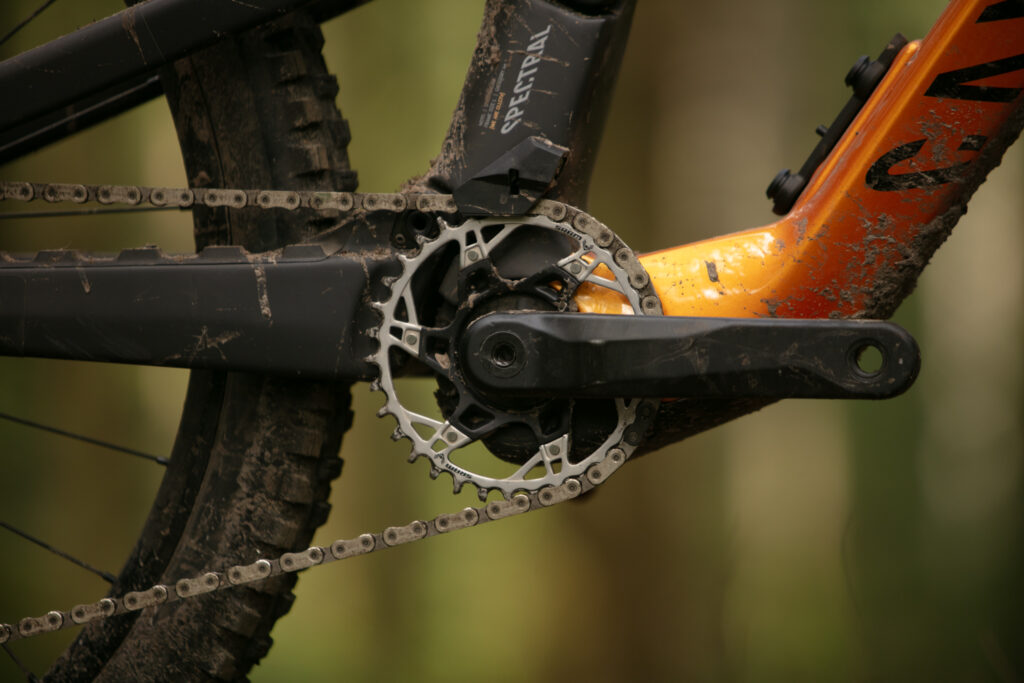

Your drivetrain is a consumable and eventually, it will need replacing due to excess wear. Depending on your drivetrain, it can get also get pretty spendy very quickly. However, keeping your drivertrain and chain clean will help it last for much longer than you actually think. It’s super easy, too, so there’s no reason why a quick chain clean shouldn’t be part of your regular maintenance regime. Here are four of the best methods for cleaning your chain.
- How to fix a chain on a bicycle
- Welcome to Home Mechanics’ Week – a DIY extravaganza
- Bicycle chain wear – why it matters and how to prevent it
Wipe your chain with a clean rag
Wiping down your chain with a clean rag shouldn’t be relied on as your go-to method of cleaning your chain because really, it doesn’t do a good job. That said, it is much better than nothing so it’s great if you find yourself in a bind. If anything, it should serve as your first port of call in the chain-cleaning process, as several crank spins through a rag will remove a significant amount of grime and grit from your bicycle chain.
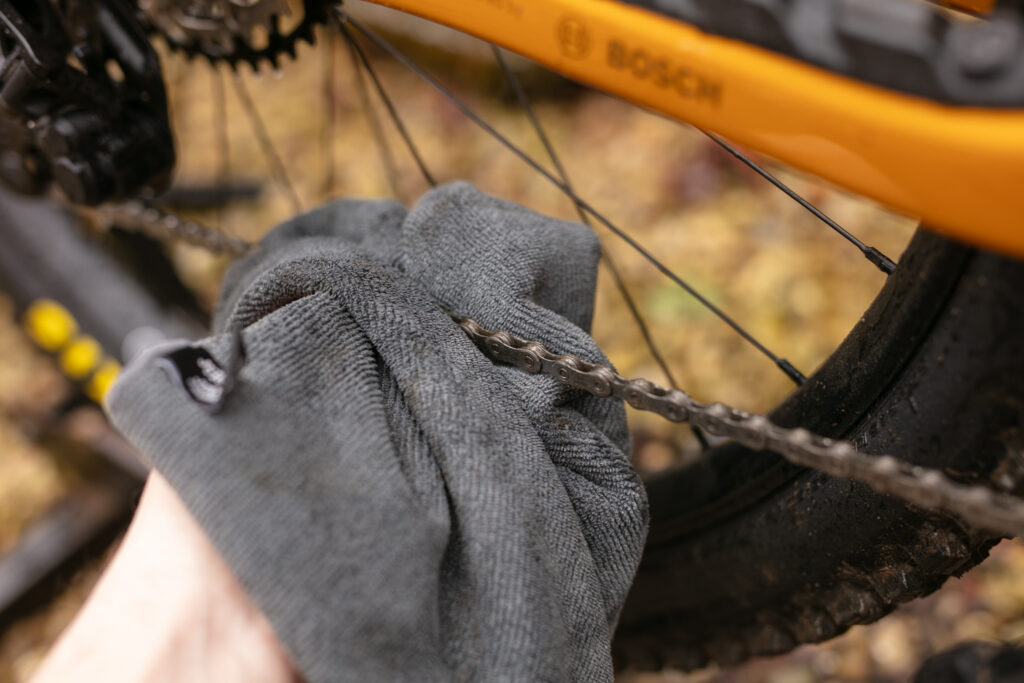
All you need to do is get your clean cloth, hold it around the chain, and backpedal the chain through the cloth. While you’re at it, remove any black gunk from the teeth of your chainring and cassette.
Use a chain-cleaning device and brush
Employing a chain-cleaning device is my personal go-to as it only adds a few minutes to a post-ride bike clean while providing very good results if you’re thorough enough.
Loads of brands offer chain-cleaning devices that hook over your chain and are filled with your chosen chain cleaner, whether that’s a soapy solution or a dedicated product. Once on, backpedal your drivetrain until you’re happy with the outcome.
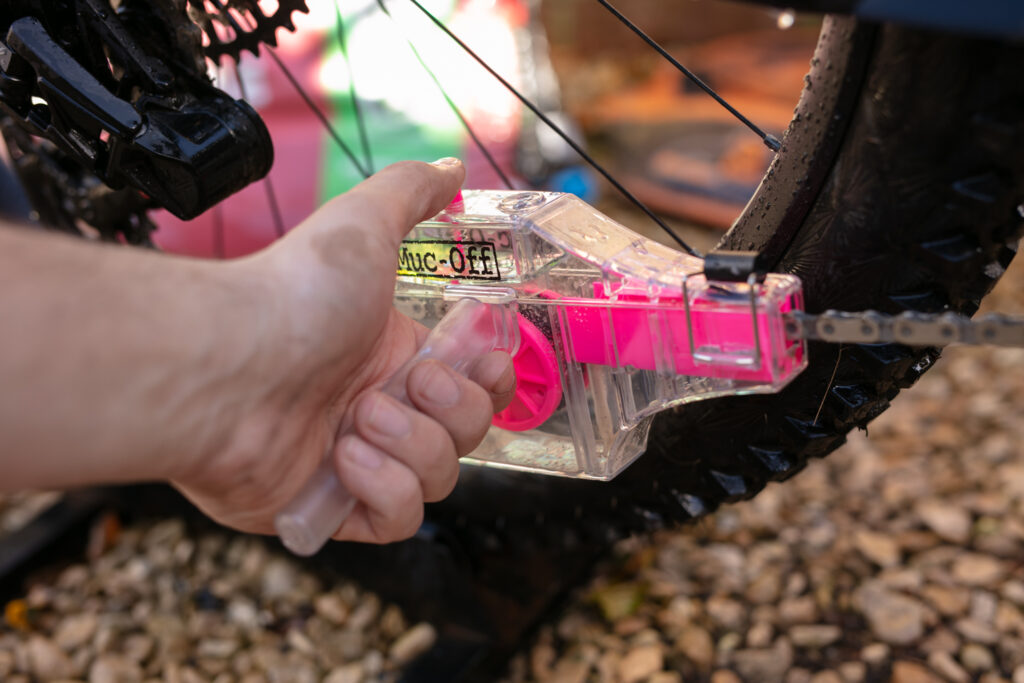
From here, I like to pour the used cleaner from the device and onto a cassette brush where I’ll give the cassette and chainring a good scrub. Then all it takes is a rinse and a wipe with a clean cloth to dry the chain. After, I’ll leave it to sit to dry out even more before applying lube.
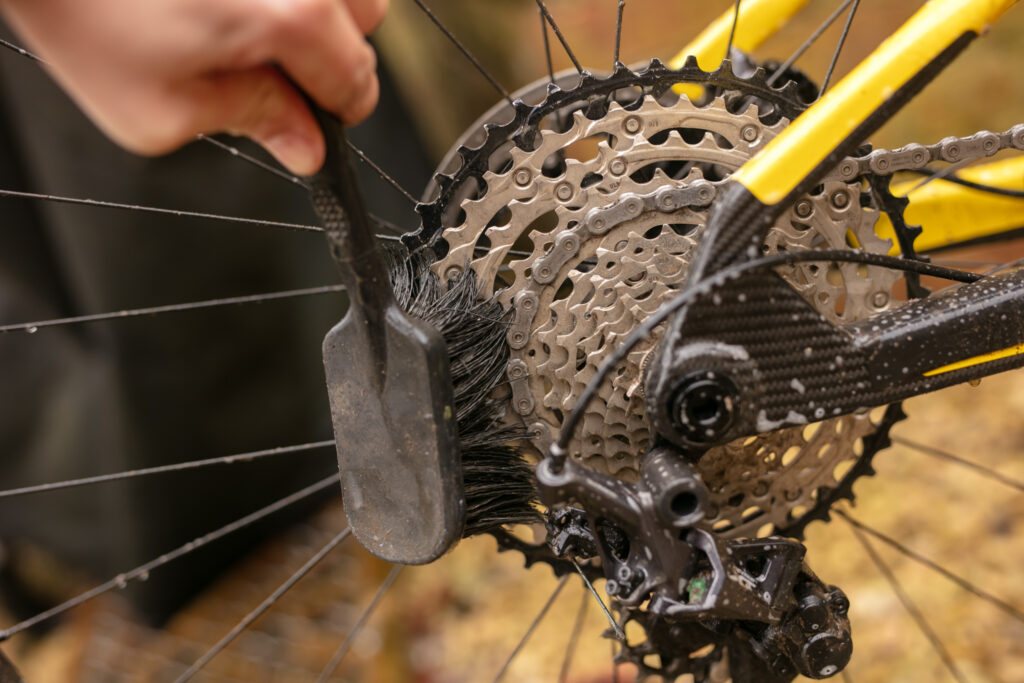
The reason why I prefer this method so much is that again, it doesn’t take too long and because it keeps my disc brakes safe from any overspray without having to use rotor covers. I also recommend doing this after wetting the bike during a full clean but before scrubbing the frame so any particles that do find their way onto the frame will be washed off as you go.
Opting for a spray
Many drivetrain cleaners come in aerosol-spray form and while these make incredibly light work of lifting grease from sprockets, they require extra steps for the best, and safest clean.
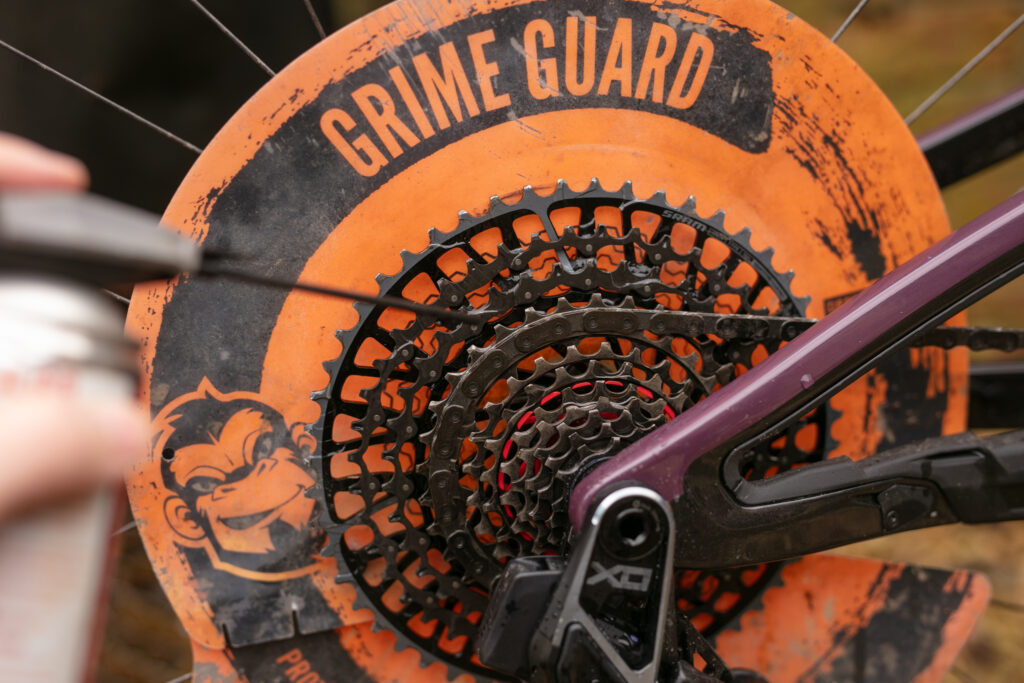
Although not all, several products like these contain mineral oil that acts as a water displacer, so covering and protecting your disc brake rotors or braking surfaces when using such cleaners is an absolute must. However, the best bit is that most grease will blast off of the drivetrain in front of your eyes, resulting in an easily attained and thoroughly cleaned chain and sprockets.
But after, go over these components with a rag to make doubly sure that all of the grit has been removed from your chain’s rollers. It’s also wise to rinse the components with clean water to wash away any excess oils left by the cleaner so that you’re presented with the best possible surfaces for your lubricant to stick onto.
A key downside that’s well worth considering is that aerosol degreasers use a lot of product, so you’ll find yourself burning through cans fairly quickly.
Foaming degreasers address both of these downsides but require more thorough agitation.
Your drivetrain could do with a bath, too
For the ultimate clean, placing your chain, cassette and chainring in a bath of degreaser is the best way to make sure that it’s rid of any contaminants. This is the most involved method, however, and requires you to remove your chain and/or drivetrain components from the bike.
Using an old ice cream tub or tupperware, fill it with enough degreaser to cover the parts and place your components in it. While you’re here, you might as well give the components a scrub to agitate any grease, which will free it from your sprockets. Leave it overnight for the degreaser to get to work.
In the morning or whenever you choose to come back to the drivetrain, give it another scrub and wipe it dry with a rag. Better still, hanging the kit out to dry in the sun will provide even better results.
Once reinstalled, all it needs is a lick of lubricant and you’re good to go. However, this method can be turned up a notch using an ultrasonic cleaner.
Lubricant is imperative
With a beautifully clean chain, you’ll need to lubricate it to keep the pins and rollers running as smoothly as possible. It’s a mighty simple task, too.
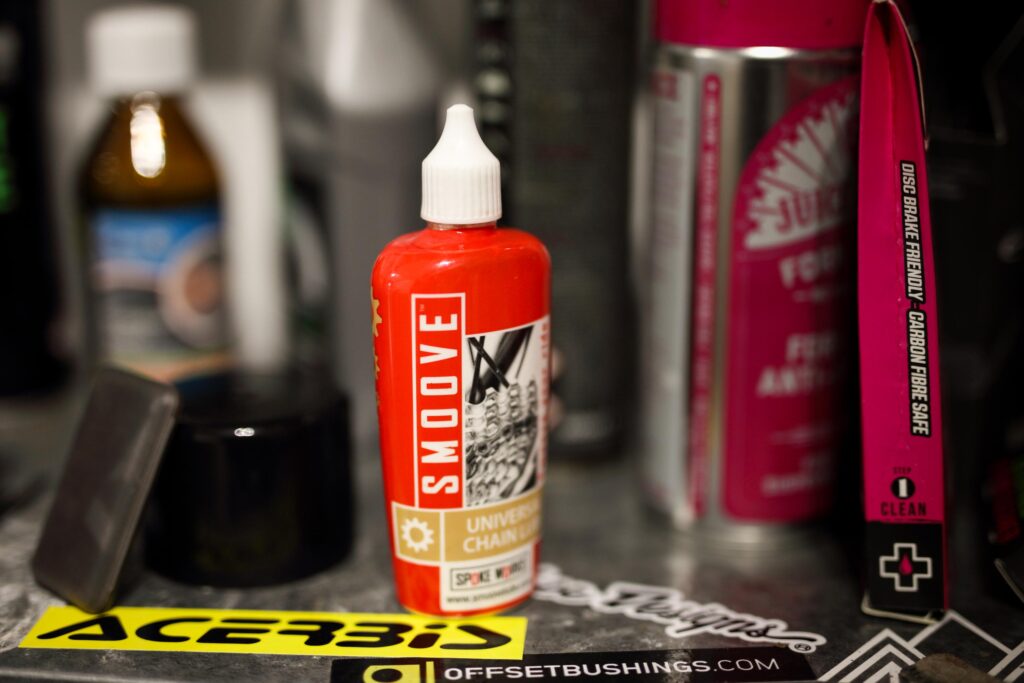
All you need to do is pick your favourite lube, or the most appropriate one for the conditions you ride in, and apply the lube to the upper side of the lower portion of the chain while back pedalling. Many brands suggest you apply a drop per roller but if you’re strapped for time, running a bead of lube as you backpedal will do the trick.
But double-check what your lubricant manufacturer states on the packaging as not every lubricant is the same. For example, lubes that use wax particles suspended in a fluid require more than one application onto a clean chain before riding.
Apply your chain lube well in advance of your ride to allow the lube to soak into the chain. However, if you find yourself in a pinch, and without a lubed chain before your ride, some lube is always better than none.
How often should I clean my MTB drivetrain?
As a rule of thumb, after every ride. The reason why we clean drivetrains is because lubricants attract dirt and form a paste that grinds away between a chain’s rollers, and the cassette teeth. Over the course of a ride, more dirt is attracted and the more abrasive the paste will get. Cleaning your drivetrain will rid it of excess abrasives and provide the best surface for the reapplication of lubricant, all while making the drivetrain perform as best it possibly can.
However, depending on the conditions, you can get away with leaving your drivetrain alone for a few rides. This is only when things are super dry, however, and you’re using the correct dry-weather chain lubricant.
What can I use to clean an MTB chain?
You’re in luck. There’s a raft of products on the market that’ll effectively lift muck from your drivetrain – but before forking out on specific products, you might already have something to use at home. Of course, there are cycling-specific chain cleaners from sprays to straight-up liquids that you apply onto your drivetrain.
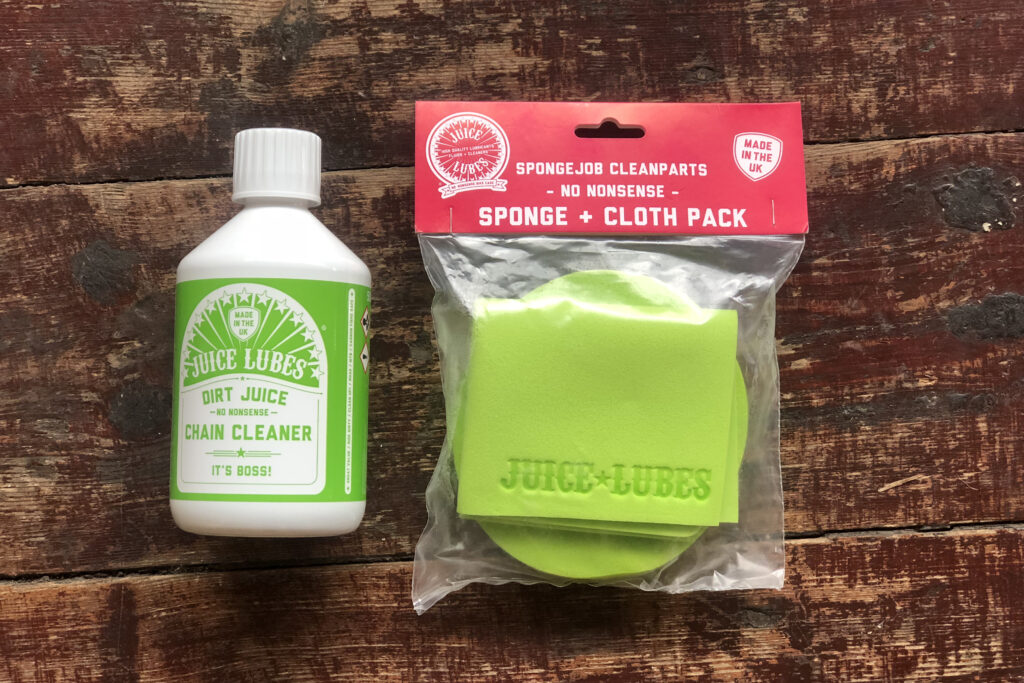
However, a solution of warm water and dish soap can do an equally effective job. WD40 and similar are also excellent cleaning solutions but such products shouldn’t be relied on as lubricants also. Old toothbrushes can also step in as makeshift chain brushes.
But if you’re in doubt, cycling-specific cleaners and products will provide the best results as they’re designed especially for the task at hand.
With so many ways of cleaning your drivetrain around, your roster of cleaning tools can get pretty vast but it’s always good to have a stiff-bristled brush on hand and a clean rag or two as a minimum. Now, let’s get onto those cleaning methods.