



The UCI has failed professional cycling “structurally and commercially” by prioritising “self-preservation over growth”, Rapha’s CEO Fran Millar has claimed.
Millar’s hard-hitting take on what she describes as the “ineffectual governance” of cycling’s governing body comes as Rapha reissues its ‘roadmap’, the clothing company’s “blueprint” for the future of the sport.
First published in 2019, the Rapha Roadmap – which among other things heralded the advent of EF Education-EasyPost’s ‘alternative calendar’ and the season-long Rapha Super-League in the UK – was released in its updated form on Thursday to coincide with the deadline for the UCI’s consultation on pro cycling’s future.
In February, the UCI launched its consultation inviting cycling’s key stakeholders, including groups representing teams, race organisers, national federations, and riders, to submit their views on “key topics” such as the sport’s economic model, the calendar, participation rules, fan engagement, safety, and the “credibility of sporting results”.
“Several reforms implemented in recent years have helped to promote the development of road cycling (internationalisation, new events, the growth of women’s cycling, etc.),” the UCI said at the time.
“The aim now is to continue this positive momentum collectively, in a spirit of dialogue and shared responsibility, under the auspices of the UCI.
“At the end of the consultation phase, the UCI will engage in in-depth discussions with the various stakeholders and partners concerned, with a view to developing a stronger, more attractive and sustainable model for men’s and women’s professional road cycling.”
However, in her foreword to the 2026 edition of the Rapha Roadmap, Millar – the former Ineos Grenadiers CEO who returned to cycling with Rapha in 2024 after a spell at clothing brand Belstaff – criticised the UCI’s attempts at reform over the years, claiming they have allowed the sport to “stagnate”.

“I have spent practically my entire adult life in professional cycling. I am someone who has watched, loved, argued with and advocated for this sport from almost every angle,” she wrote. “And over those decades, the view has been remarkably consistent – a sport that is beautiful and historically rich but one that has been failed structurally and commercially.
“What struck me most coming back to cycling after four years is not how much has changed, but how much hasn’t. When I left my role as CEO of the Ineos Grenadiers, the sport was debating reform. I returned to find the debate had gone backwards – and that is deeply depressing.”
Millar pointed out that the issues identified in Rapha’s original 2019 roadmap were still being highlighted by the UCI in February when the governing body launched its consultation, including “revenues that don’t reflect the sport’s popularity and a commercial model so dependent on external sponsorship that teams operate on the edge of financial viability”.
“But the sport also has an ineffectual governance system that often seems to prioritise self-preservation over growth,” she continues.
“The questions haven’t changed. But the answers haven’t been implemented. And the sport can no longer afford the delay. We are living through times of extreme and rapid societal and technological change.
“Sports that understood this early and built a content strategy, data infrastructure and interactive communities have grown. Sports that didn’t have watched their audiences age, fragment, and their commercial value stagnate.”
Millar argued that “growth and tradition are not enemies”, pointing to Formula One and Premier League football as sporting entities that modernised and succeeded without abandoning their heritage (some devout followers of those sports may disagree).
“The growth in the popularity of women’s professional sport has shown what is possible,” she continues. “The Women’s Super League, the NWSL, the Hundred, the F1 academy, and the Women’s Rugby World Cup are all examples of what can happen when the people running those sports stopped making excuses about audience size and started making the content that grows one.
“These sports didn’t wait for permission or for someone else to solve their issues. They built the case, proved the demand and now the money is following.
“We are reissuing the Rapha Roadmap because the UCI’s consultation represents another opportunity for action to change this sport. We don’t claim to have all the answers. What we have is an honest love for this sport and a genuine belief in its potential. And nearly two decades of experience watching it fail to realise that potential for entirely avoidable reasons.
“The time for endlessly debating and re-diagnosing the problem has passed. This consultation is an opportunity for action and change. I sincerely hope the UCI use it this time.”
Meanwhile, in an essay detailing their reasons for reissuing the roadmap, its authors, the Outer Line’s Steve Maxwell and Joe Harris, along with cyclist and writer Joe Laverick, criticised the “chorus of negativity” that has greeted previous attempts at reform.
“This kind of mutually destructive bickering over the size of their slice of the pie rather than building a larger and more profitable pie always sets the sport back further,” they said.
The new Rapha Roadmap, like the last one, is broken up into various key proposals, such as shortening and streamlining the racing calendar, transforming how teams are run and funded, tackling the sport’s reputation for viewers by making it “easier to follow”, and enhancing its coverage, including online.
The Roadmap also tackles cycling’s association with doping and scandal – and how to modernise its reputation for casual fans – while calling for revenue to be diversified and a stronger link to be created between the top of the sport and its grassroots.
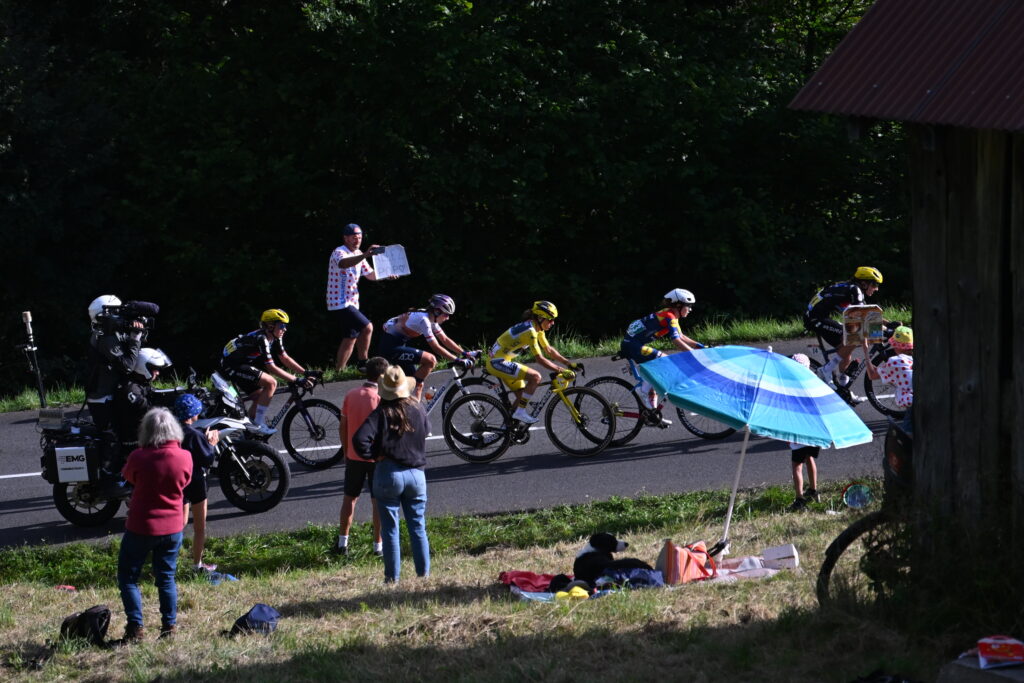
One proposal, highlighted by its authors, involves moving the Women’s WorldTour to a closed-league, franchise-based model.
“At the time of writing, there are 15 World Tour licenses available and only 14 World Tour teams,” they said. “This alone demonstrates that the sport is not big enough to contemplate a promotion-relegation system. A closed league would allow teams to hold licences that provide economic predictability and therefore long-term stability.
“It would also create the first step toward a wider league system, and hopefully, the eventual opportunity for revenue sharing. Once participation in the top tier of the sport is guaranteed, teams and sponsors can plan beyond currently short sponsorship cycles.”
The full version of the new Rapha Roadmap is available to download here.
road.cc has approached the UCI for comment.














13 thoughts on “Is the UCI prioritising “self-preservation over growth”? Rapha CEO hits out at “ineffectual” governing body as cycling clothing brand reissues ‘roadmap’ to reform”
If Rapha’s CEO was one of 3 people in a room and I was asked to decide which of them is most qualified to advice anybody on running a business, he would be my fourth choice.
Wow, a typo popped up in the most unfortunate of all places. It’s ‘she’, obviously.
Actually you were right first time . In English, he means a male person or a person of unknown sex. If you change he for she in your sentence you make it discriminatory by suggesting you would not choose a woman. Best to stick to traditional English rather than going down the woke rabbit hole.
Absolute nonsense of the first water I’m afraid. Tom is directly referring to the CEO of Rapha who is a woman and so referring to her by the correct pronoun for her gender would not suggest the slightest discrimination. In addition, if you didn’t know the gender of the person to whom you were referring, using “he” to describe them was horrifically outdated even when I took my English degree in 1991 and nobody uses it now unless they are actually deliberately trying to be aggravating. Using the non-gendered “they/their/them” for a person of unknown gender isn’t “woke”, it’s simple common sense for the avoidance of confusion. Well are you named Dodo, for your attitude and grammatical understanding are, thankfully, as extinct as one.
It’s more common to use “they” for when the gender is not known or relevant. Using “he” to refer to a woman is not in common usage and sounds odd.
The CEO of Rapha is pretty new in their role so hasn’t had a huge amount of time to turn the business around, but having said that I’m still not sure I agree.
If cycling teams are “relying on sponsorship” for existence, the alternative to that is revenue from elsewhere – which would be TV rights, ticket sales etc as in other sports.
Given road cycling is hard to ticket – as it’s on long public roads that basically means more of a paywall for watching this sport.
Sponsorship is absolutely the right way of funding cycling.
I don’t disagree that sponsorship should be a part of funding the teams but where do you think the TV rights money should go? Considering how much they are trying to charge us to watch our sport I think some of that money should go to the teams and the rest into developing the youth side of the sport and governing bodies should be relying on membership fees for funding.
“Formula.1 hasn’t abandoned its traditions”- really?? dull circuit in places people can’t afford tickets, gimmicks like sprint races, DRS and now an overtake button. Hmmm
Hey Rapha person, you have lost 200$million on a sinking ship. Please try not to blame others and put your own house in order. Perhaps I can assist.
Rapha roadmap.
1, Stop your endless sales- you promised this in 2024 and I just checked my inbox 13 sales in 25 months.
2, Ditch the MTB and street wear. Looks great to your designers. your designers and NOT your customers. Your customers are me, men and women in their 40s+
3, Get the quality back. Who ever was making your shorts in China in 2019. Give them a call, needed urgently.
You’d think someone who has been in professiinal cycling for so long would realise that the UCI has no power or influence. They could disappear and bike racing would just continue
Well, even the title says ‘Rapha CEO hits out at “ineffectual” governing body’, so I’m not sure I agree with your point.
Apart from issuing all pro racing licences, organising the schedule for all top-level racing, setting and enforcing the rules for all racing, running all disciplinary matters including anti-doping cases, running the World Tour, the ProSeries and the Continental Circuit and the World Championships in every aspect of cycling from road to track to off road…you can say you think they’re rubbish but to claim they lack power and influence in cycling is palpable nonsense.
Ineos are a shambles considering the amount they spend and rapha is a meme and loose loads of money year on year on year, I’ll pass thanks