


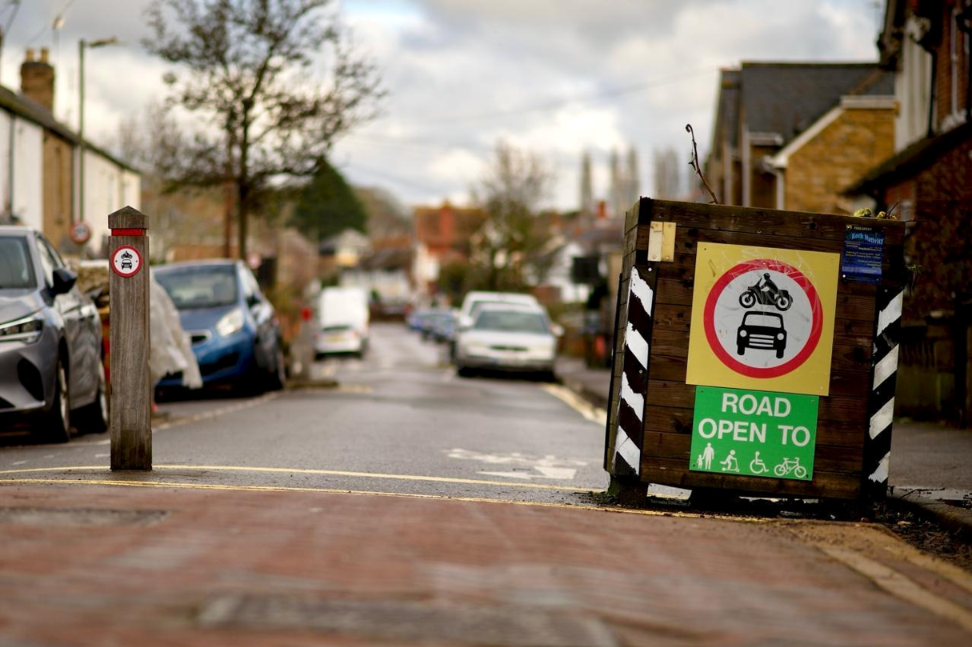

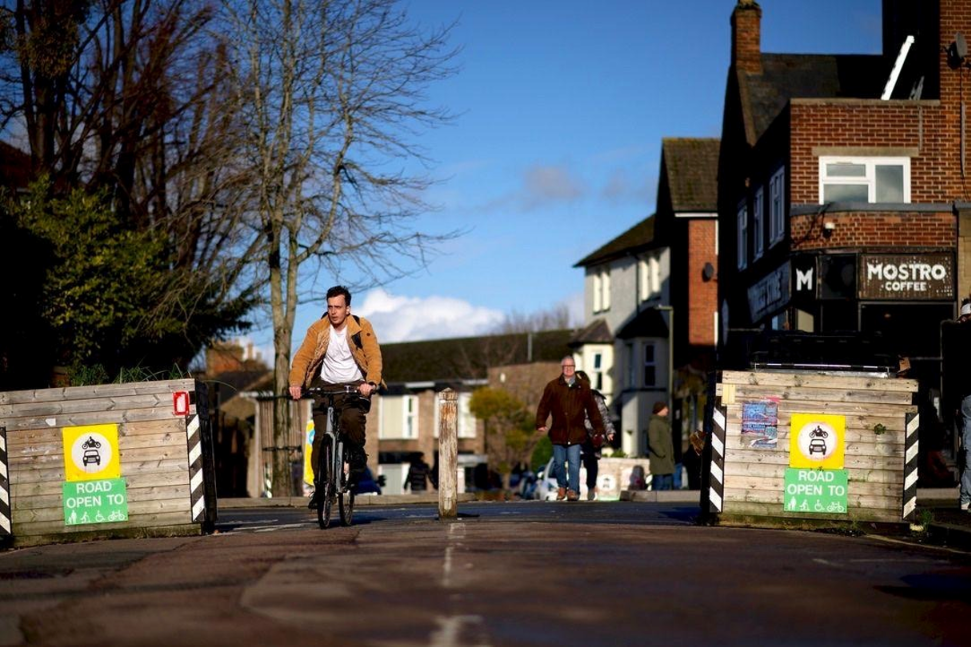
Two low traffic neighbourhoods (LTNs) in Oxford have been found to reduce road traffic casualties and air pollution levels whilst supporting local businesses, according to new research.
Low Traffic Neighbourhoods are residential streets where ordinary motor traffic is restricted by physical or signed restrictions, enabling local residents to use the roads without being subject to through traffic.
The Coalition for Healthy Streets and Active Travel (CoHSAT), a campaign group which collated and produced the data, examined the impact of the LTNs in Cowley and East Oxford since they were introduced five years ago. Examining police reports and Department for Transport data, they found the neighbourhoods had reduced “rat-running traffic turning in or out of the residential streets, benefitting all users of these roads”.
In the five years since the Cowley LTN was installed, average annual casualty numbers have dropped from 32 to 20 whilst in East Oxford, the figure has dropped from 37 to 29. The majority of collisions continue to occur on the boundary roads of the neighbourhoods rather than within the LTNs themselves.
CoHSAT has also pointed to sustained declining air pollution in the LTNs, though these shifts have also been seen across Oxford as a whole, with the council pointing towards progress in the rollout of electric buses and a temporary congestion charge. The city-wide decrease also counters a claim often made by opponents of LTNs and similar active travel policies that the infrastructure only moves pollution elsewhere.
This claim was a key argument made by the Mayor of Tower Hamlets Lutfur Rahman when removing three LTNs from the London borough in 2023. Following an extended legal battle, the Court of Appeal ruled that Rahman had acted unlawfully in failing to implement local plans and abide by Mayor of London Sadiq Khan’s policy of reducing car use in the capital.
As for support for local businesses, CoHSAT compared the number of empty shop fronts along Cowley Road, where the LTN intersects, with national high street trends.
They found that whilst the number of shops opening and closing fluctuates, 6.4 percent of shop units are empty, less than half the national average of 13.2 percent and lower than when the LTN was instituted. However, CoHSAT noted that research conducted in 2017 already found that three quarters of people surveyed already travelled on foot or by bike, suggesting the local LTN’s direct impact on the high street required further testing.
Despite campaigns in parts of the country aiming to remove LTNs, CoHSAT say the neighbourhoods in Oxford continue to retain the support of residents. One resident, identified as Jacqueline, said: “I can’t quite explain it, I always drove places before, but in time it
simply became easier and more pleasant to cycle.
“I now don’t drive inside the ring road. I bought a second-hand cargo bike, learned to click-and-collect the Big Shop with it, and now shop more locally in Magdalen and Cowley Roads. And my son can ride to school with me, safely.”
Read more:
> Councils lack resources to successfully deliver LTNs amid “culture wars”, study finds
> London low-traffic neighbourhoods cut deaths and serious injuries by a third, new study suggests












10 thoughts on “Low Traffic Neighbourhoods cut pollution, reduce road traffic casualties, and support local shops, new research claims”
No doubt incoming – something like:
Not *our* proposed local traffic neighbourhood, it doesn’t!
Works everywhere else but for some reason it would be utter idiocy to do it *here*, would never work because (unique local reasons) and besides not a single person wants it, they just want better roads…
Continuing with all the favourite arguments, most addressed above, up to and including “deep state conspiracy”.
@chrisonabike Here in Bristol the EBLN has created a ghetto, where wealthy pedestrians, bus passengers, and of course cyclists in tafetta gowns travel through only to mock the honest residents, who are forced to take great detours, queuing in traffic created by the council, to the shop next door.
That is why local Labour are so keen to repent of their decision to create it. Nothing to do with the greens having since won the EBLN wards to become the largest party on the council.
@slc I went to have a look last time I visited and I can only concur. It was a hellscape of parked cars * with the deadening silence of the ghost town only broken by the chirping of birds, chatter of people out in the streets, the occasional ringing of a bell and the wailing and gnashing of teeth from a couple of houses with all the “stop the ELBN” signs.
Doubtless the worst fears of the fire brigade and the disabled woman with that minibus have come true.
I can only assume the local Greens are running a “bulldoze an A-road through for social justice” campaign!
* Actually I did really notice those, packed together filling up most of the space, same as before I guess…
Once people have got used to living with less motor vehicle traffic (and maybe even fewer parked vehicles) … it’s always found they don’t want to go back. BUT how does the chicken/egg problem get solved?
Interesting line here:
“Change” is easiest when it’s really spelling out what’s already happening.
This made me think of Amsterdam and their recent trial of putting a modal filter on a fairly major road. Of course that was probably only possible because this is Amsterdam – where public transport is great and cycling is mainstream AND the city voted in favour of removing on-street parking spaces!
While the people on the road were really in favour, traffic went up on other streets (not by as much but still up). And those people were outraged, because they’d got used to low traffic, and didn’t want it back.
… so at the end of the trial they *partially* rolled this back (there may be some road narrowing instead – but the idea was “not ready yet”).
Is that convicted corrupt criminal Luftar Rahman?
@the little onion It hardly matters. Trump, Farage etc. show that where their anti-cyclist, anti-active travel, anti-LTN, anti-climate change, anti-immigrant, anti- traffic law, pro-drive and park everywhere at all times nutters are concerned, the criminality of their heroes is of no concern.
New research provides yet more evidence that water is wet.
A separate new study providing meta analysis of the prior water-is-wet studies indicates that a disturbingly large demographic is *still* surprised by the findings of the water-is-wet studies, and are suffering significant cognitive dissonance.
Great report, sorry, yet another great report, about LTNs which the MSM will instantly leap into action, pens poised, recorder buttons pressed, camera shutters primed, to ignore completely. It’s simply not controversial enough.
The lurid claims of the anti-LTN mob, of congestion, pollution, danger, plague and pestilence, will however, be front page news. The media in this country actively works against the best interests of the population, with a few notable exceptions: the ITV expose of Reform was good, very good.
@eburtthebike eburtthebike Don’t forget how much airtime and how many column inches are devoted to climate change denial, despite the overwhelming scientific evidence to the contrary.
@eburtthebike eburtthebike Don’t forget how much airtime and how many column inches are devoted to climate change denial, despite the overwhelming scientific evidence to the contrary.