

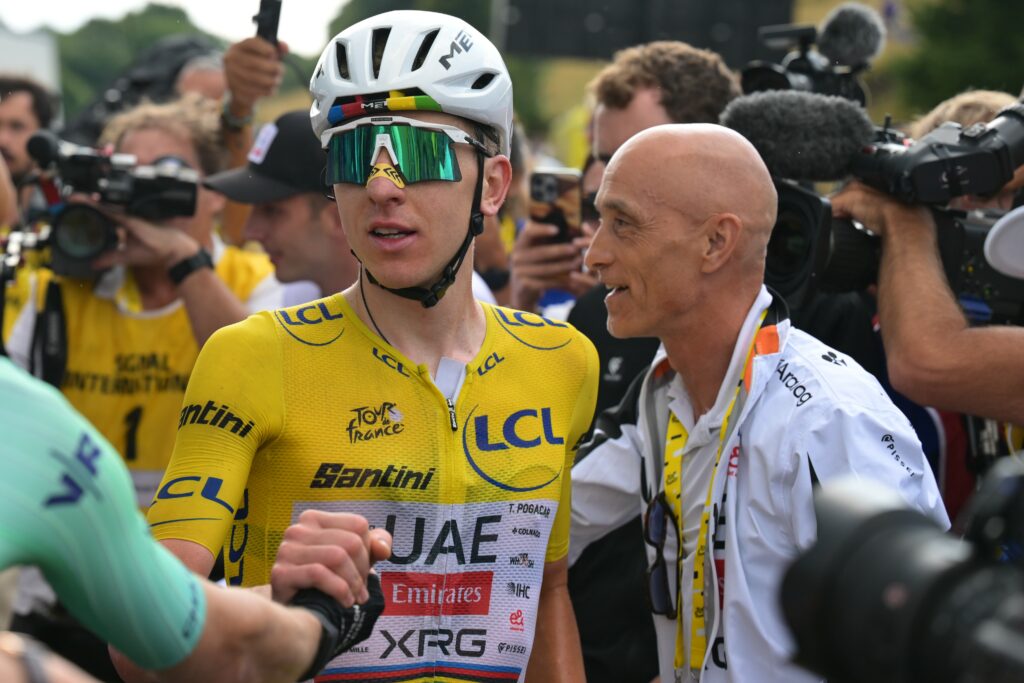

Tadej Pogačar may be used to generating headlines on the bike, but it’s his recent remarks about doping – and, he claims, its lack of prevalence within the modern peloton – which have dominated cycling’s off-season discourse in recent days.
Speaking to La Gazzetta dello Sport, the five-time Tour de France winner claimed that doping “doesn’t exist now for the majority of the peloton” and that it simply is “not worth it”, due to both the health risks associated with performance enhancing drugs and the financial and professional implications of being caught.
That particular sweeping claim has been questioned by Irish journalist and former pro Paul Kimmage, who suggested this week that Pogačar should look within his own team for a more nuanced appraisal of cycling’s decades-long battle with doping.
“Can I counter that by asking him who his team manager is and what his experiences are? Mauro Gianetti, what did he do? Has Gianetti come and spoke to him?” Kimmage asked when the Slovenian’s comments were raised during an interview with road.cc this week.
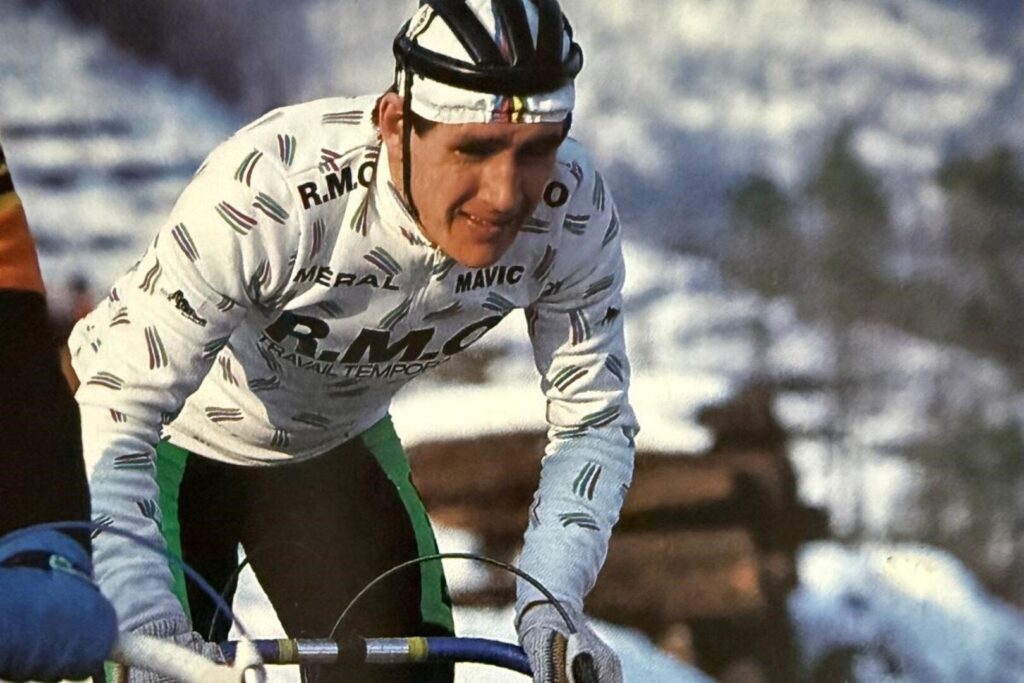
One of cycling’s most high-profile writers and anti-doping advocates, Kimmage raced as a professional for four years between 1986 and 1989, taking part in the Tour de France three times, before transitioning into sports journalism following the publication of his seminal autobiography, Rough Ride, which blew the whistle on professional cycling’s pervasive doping culture.
Kimmage, who now writes for the Irish Independent, was responding to Pogačar’s comments during a wide-ranging interview with the road.cc Podcast, which will be published in full in December and saw him reflect on his racing career, the fall-out from Rough Ride, his own relationship with the sport, and how it’s evolved over the years, and why he doesn’t “understand” modern cycling.
And when it comes to the modern peloton’s greatest rider, Pogačar, Kimmage believes that the Slovenian’s recent remarks in La Gazzetta appear to ignore cycling’s historic, deeply ingrained relationship with performance enhancing drugs.
“If he frames that answer he’s given there as, ‘I know from the experiences of my general manager Mauro Gianetti that doping was a really dangerous game, that people did this, and I’m not prepared to do it’. He could have framed it in that way and given it context,” the Irishman says.
“Not presenting it like, why would you ever do this? When that’s all that’s ever been done, going back to [Tom] Simpson and all that.”
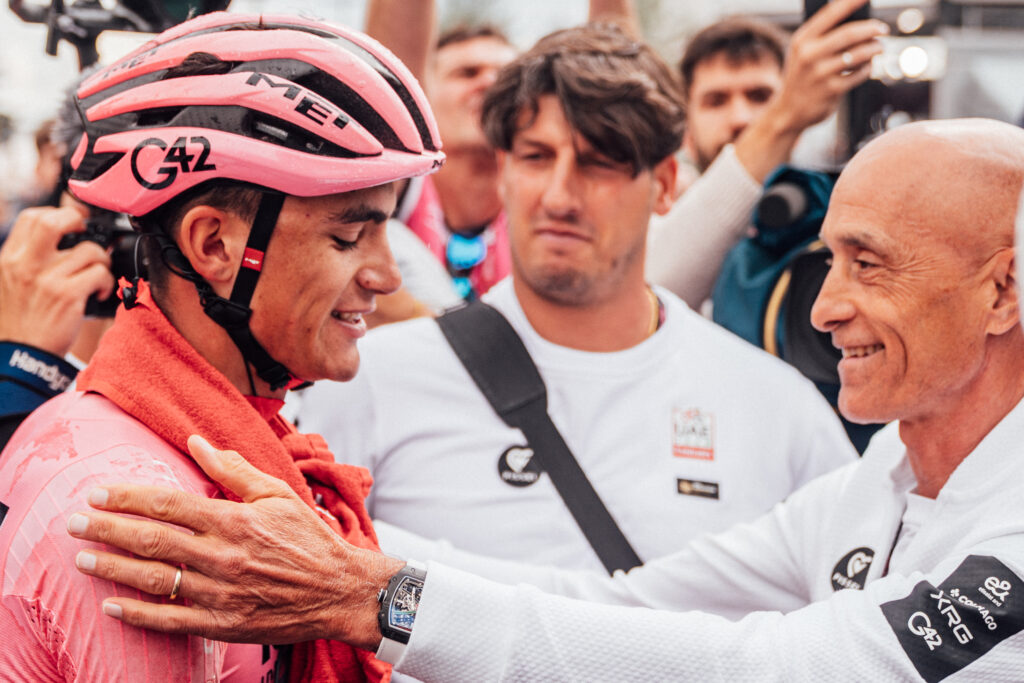
Kimmage’s focus on Pogačar’s UAE Team Emirates principal Gianetti is unsurprising, given his long history in the sport, though Gianetti has always denied personal involvement when it comes to doping, both as a rider and a team boss.
A professional during the EPO-charged 1990s, Gianetti won Liège-Bastogne-Liège and the Amstel Gold Race in 1995 while riding for Polti. In an interview with L’Équipe published during this year’s Tour de France, the 62-year-old insisted he never used the blood-boosting drug and refused to comment on his hospitalisation at the 1998 Tour de Romandie, describing it as a “personal matter”.
Gianetti also told L’Équipe he was a “victim” of his riders’ doping when he managed Saunier Duval, where Leonardo Piepoli, Riccardo Ricco, and Juan José Cobo were all caught up in doping scandals in the late 2000s.
“I made the mistake of taking them in my team. I should have reacted differently, been clearer with the press, explain that I was a victim,” he said.
“My concern was to save the jobs of 70 people. You never know what your children do in their rooms, and you certainly don’t know what the riders do at home.
“And before signing Ricco, I asked him to go to the UCI to be tested. The UCI then sent me a document stating that he did indeed have a naturally occurring haematocrit level above 50 per cent.
“I feel like a victim of this. I filed a complaint in Italy against the riders who had caused me to lose sponsors and damaged my reputation.”
Intriguingly, Ricco also found himself caught up in the controversy surrounding Pogačar’s comments, insinuating that the Slovenian was referring to him directly when he remarked that riders who are caught doping could “end up selling ice cream”.
The explosive Italian climber finished on the podium of the Giro d’Italia and won two stages of the Tour de France in 2008 for Gianetti’s Saunier Duval, before promptly testing positive for EPO variant CERA.
Ricco’s teammate Piepoli (now a coach at Movistar) also tested positive for CERA during the 2008 Tour after winning atop Hautacam in a Saunier Duval one-two with Cobo (who was later stripped of his 2011 Vuelta victory, which was retroactively awarded to Chris Froome).
In the Gazzetta interview, Pogačar noted that a positive test could spell the end for a rider’s ambitions to remain within the sport after they retire.
“Many want to stay in cycling even after their careers are over, as sports directors, coaches,” he said. “If you make a mistake, you risk ending up selling ice cream, or something like that. No, the vast majority of the group would never do that.”
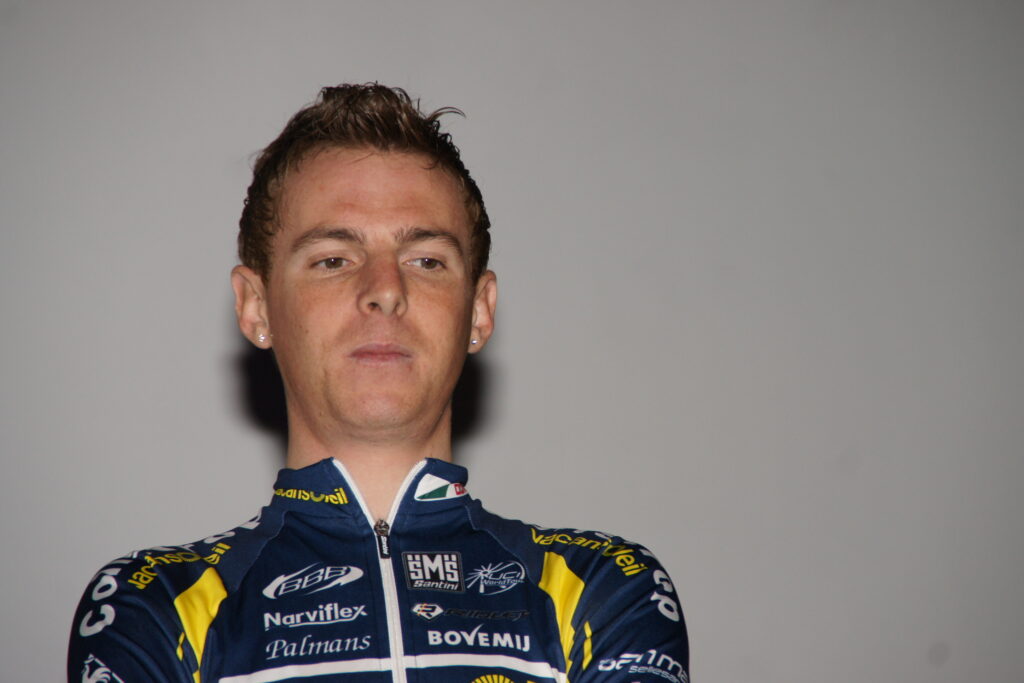
Ricco, who now works in the ice cream business after receiving a lifetime ban from the sport, took to Instagram to weigh in on what he believes was a pointed reference from the five-time Tour winner.
“I accept it, it’s really funny. I expected [this comparison] sooner or later. But I’ll tell you this: it won’t take long before you’re making ice cream with me,” Ricco wrote.
“So before you speak, you have to be 100 per cent sure, and I’ve seen plenty of people switch sides since then.”
Elsewhere in his doping discussion with La Gazzetta, sparked by the Italian publication’s query about the Tour’s controversial nighttime doping tests this year, Pogačar said: “Yes, you can be sure, doping doesn’t exist now for the majority of the peloton. You race with your heart and with the right mentality.
“We all know that prohibited, banned substances can damage your health. And, at the same time, cycling is a sport and no one wants to risk their life for it. Of course, there will always be someone who tries to take a shortcut… But in any case, I’ve met so many riders over the years, everyone loves cycling, the sport.
“They all dedicate 100 per cent of their lives to it, they commit to having a proper diet, to preparing well. The coaches are good, they focus on recovery, in short, they work so hard. And so they don’t want to risk losing all of this, it’s not worth it… In short, we riders live for the sport in the right way and there’s no desire to ruin ourselves.”
That emphasis on dedication and preparation, when it comes to both technology and nutrition, as a means of countering the benefits of doping favoured by previous generations was also echoed by UAE boss Gianetti at this year’s Tour, the fastest in the race’s history.
“Especially in the last four or five years, the bicycle and all the components of the bicycle have changed so much. If you take the bicycle of 15 years ago, and compare it to one five, six years ago, there was progression, but normal progression,” Gianetti told road.cc in the same week Pogačar obliterated Marco Pantani’s 31-year-old climbing record on Alpe d’Huez by over a minute.
> Is the Tour de France becoming too fast?
“But in the last five years, we have seen an immense increase in quality and the relationship between the tyres, the pressure of the tyres, the helmet, the position of the helmet, the fabric on the kit, the wheels, the frame.
“Nutrition has changed and the riders progress more because the system of training is better now, because in the past riders were not eating enough.
“And together with a new generation, the level is so high. If you look at the Tourmalet, at least 10 riders beat the best time of [Jonas] Vingegaard from two years ago, not 20.
“It’s complex. There’s more engineering, big investment from sponsors, and that helps to progress a lot, with aerodynamics, training systems, nutrition. The two main points for me are the material – the bicycle – and the nutrition.”

However, despite Gianetti’s assertion that cycling’s great technological and nutritional leaps in recent years help explain the ever-rising speeds on show, there’s one aspect of Tadej Pogačar’s dominance that continues to baffle an external observer like Kimmage – that he makes it all look so easy.
“I’m reluctant to talk about what’s happening now in pro cycling. There’s so much about it I don’t understand,” he told road.cc.
“I don’t understand Pogačar. I look at him in Liège-Bastogne-Liège and he’s riding up La Redoute sitting in the saddle, not even opening his mouth to breathe.
“Cycling was hard in my day when I raced. I think it’s still hard. I look at him and it’s not hard.”
The road.cc Podcast’s full interview with Paul Kimmage will be published in two parts next month, just in time for Christmas.