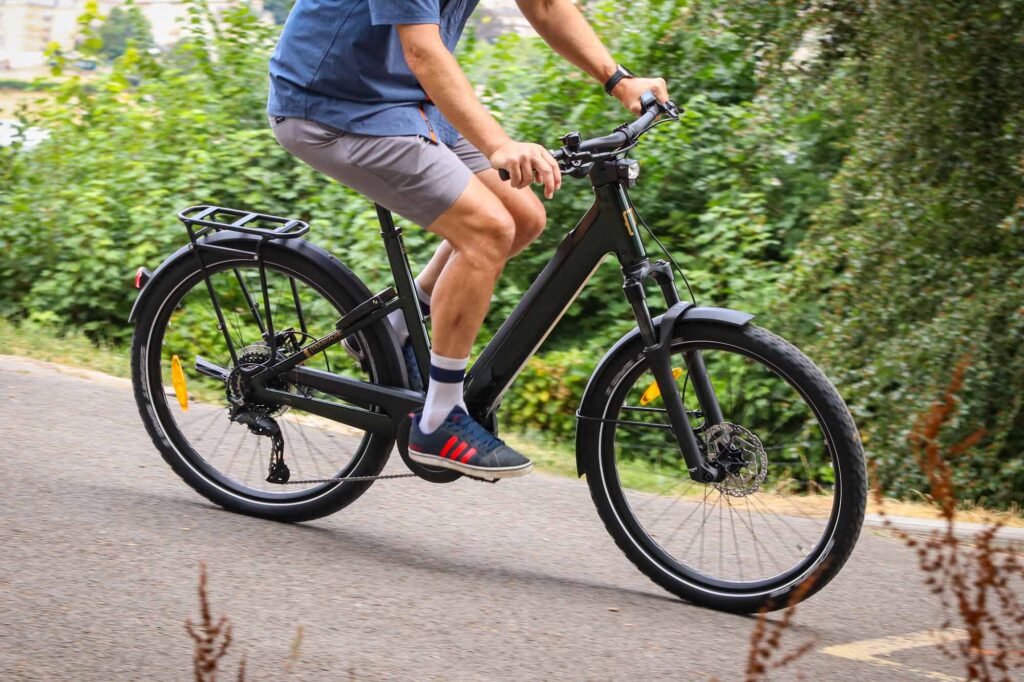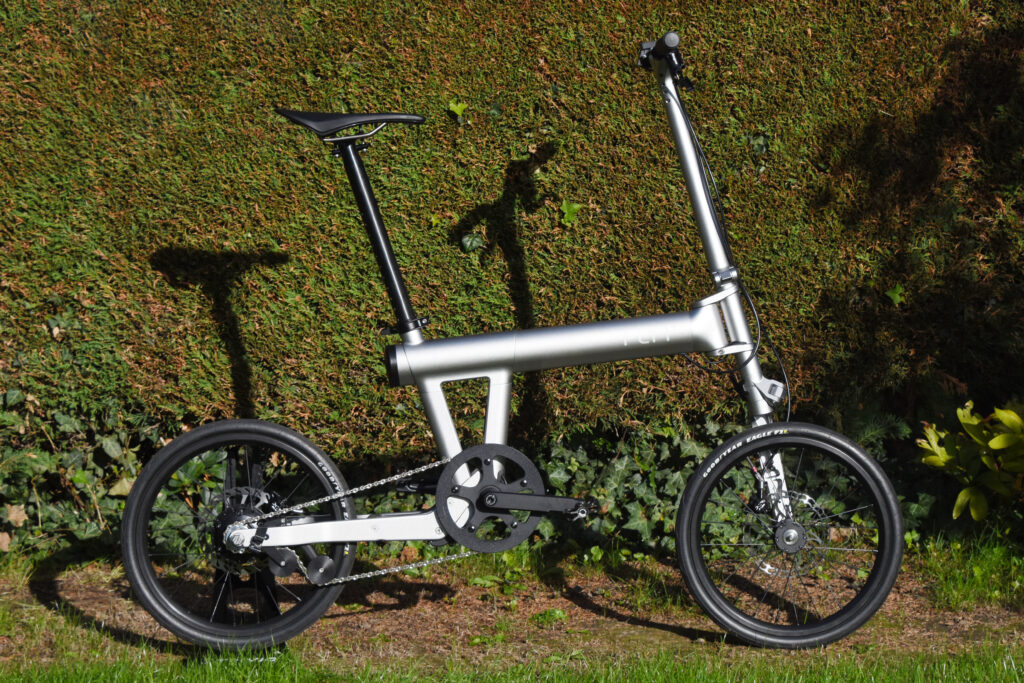



Just when you thought your bicycle was the last sanctuary free from AI, ADO has put an AI chip – as well as LiDAR environment scanning – on its latest folding e-bike.
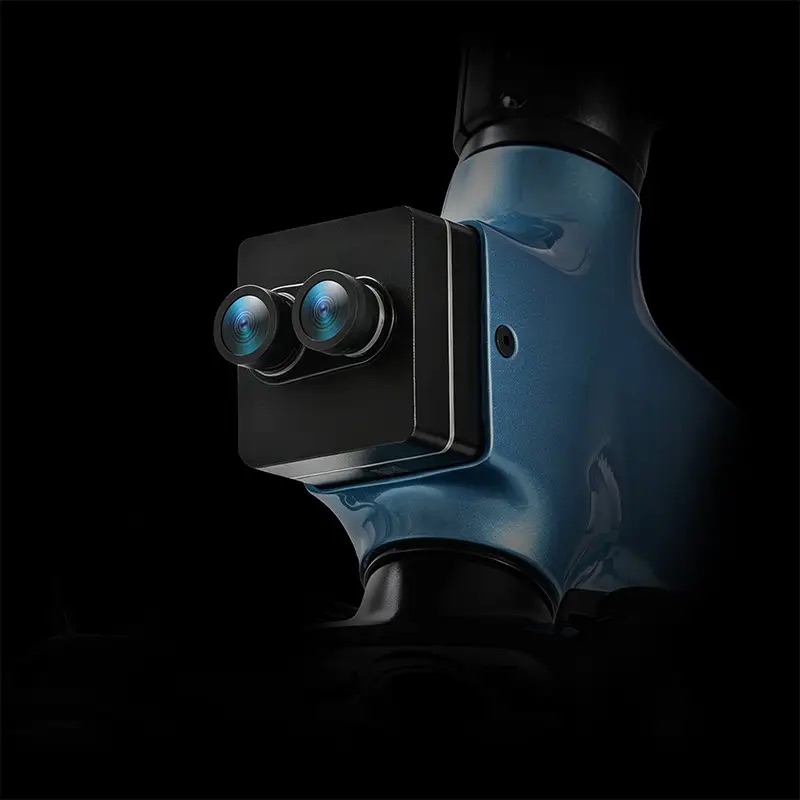
The ADO Air 20 LiDAR features a system the company dubs ADO Sense 3.0, comprising of a forward-facing environment-scanning LiDAR system coupled with a millimetre-wave rear radar, as well as more standard inertial measurement unit (IMU) and torque sensors.
These feeds flow into a central AI-powered system that processes data in real time and automatically adjusts the bike’s gearing based on the gradient. Nothing new there, but apparently, the AI smarts here learn the rider’s style and preferences and adapt over time, also making use of data collected (presumably anonymously) from other riders.
“Our long-term vision is to develop a more personalised intelligent system that can learn from individual riding patterns and respond more appropriately to different riders and riding situations”, Ado told us. “This technology is still under development, and we will continue to evolve it as part of our ongoing work on intelligent assistance.”
The most interesting part of the ADO Air 20 is the way it uses LiDAR. This technology started out as a way of creating detailed scans of environments, using laser pulses to generate point clouds that can be extrapolated into 3D models. Because LiDAR can work in complete darkness and map depth in a way conventional cameras can’t, it’s been implemented in automated vehicles: Waymo’s self-driving taxis make use of the tech to spookily cruise around city streets.
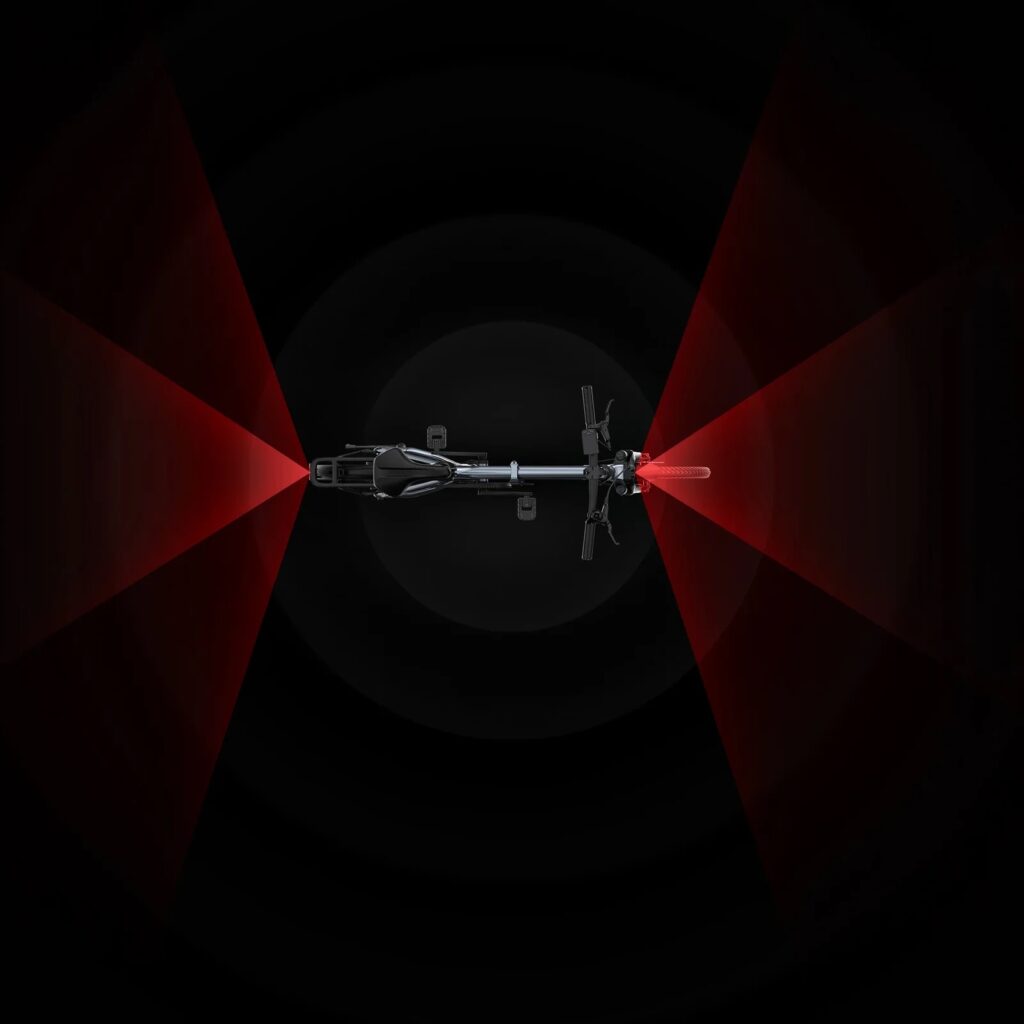
ADO’s Air 20 LiDAR is the first time we’ve seen the system deployed on a production bicycle. There is no self-driving feature here (as of yet); instead, the system is used for the safety of the rider, scanning up to 20 metres of road ahead for “obstacles and changes in the riding environment”.
“The bicycle itself can sense the environment ahead and use that information to inform its assistance decisions, rather than relying solely on the rider’s immediate pedalling input”, said Ado. “Our goal is to make everyday riding feel more natural, intuitive and less demanding. The future of e-bikes is not simply about more power, but about more intelligent assistance”.
There isn’t a great deal of information on how the system works for the rider, but images from ADO’s site point to a radar-style readout on the bike computer that pinpoints incoming traffic (including anything in potential blind spots) and lets riders know when a car might be crossing into their path.
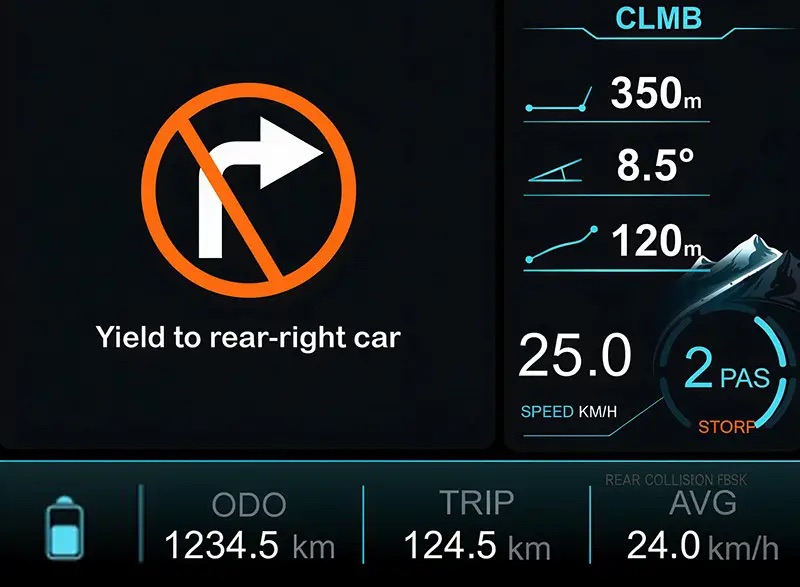
“[The system] is designed to support the rider, not replace their effort or take control of the bicycle”, said Ado. “Our philosophy has always been to keep the rider at the centre of the experience. The system provides alerts when relevant conditions are detected. We place great importance on making these alerts intuitive and unobtrusive. They are intended to inform the rider, not interfere with their decisions or dictate how they should ride”.
Why is LiDAR needed when you already have eyes and ears? ADO reckons the LiDAR system is better tuned to the environment and, for example, can spot an upcoming hill and adjust the assistance level accordingly.
“The value of LiDAR is not simply helping people see what is already in front of them”, said ADO. “It is enabling the bicycle itself to obtain environmental information and use it as part of its assistance decisions.”
Assistance on hills isn’t necessarily anything new, though — it’s already a feature on DJI Avinox motors, which just use inertial sensors to bump up the power on hills. However, ADO’s LiDAR system could pre-empt sudden steep inclines, such as car park ramps, and bump up the motor exactly when it’s needed.
The bigger issue here is whether ADO is leaning into the idea that urban roads are hostile environments that require car-style active safety tech, but the company reckons the new system will make riding safer and more fun.
“The next generation of e-bikes should not simply provide more power”, ADO said. “They should make better use of information about the rider and the riding environment to deliver more appropriate assistance. By understanding the rider’s input,
capabilities and surroundings, the system can provide more intelligent assistance and reduce the complexity of riding”.
LiDAR itself even has the unlikeliest of opponents: Elon Musk. While the Tesla CEO doesn’t have a great track record when it comes to the safety of cyclists, he hasn’t implemented LiDAR for self-driving in his electric vehicles, instead making use of more traditional cameras.
”The road system is designed for cameras (eyes) & neural nets (brains)”, Musk has said on X. “People don’t shoot lasers out of their eyes to drive”.
Could LiDAR systems become commonplace on e-bikes? Or will the Air 20 LiDAR be filed away with a growing number of gimmicky e-bikes? The answer depends on how well it’s implemented and how useful it turns out to be.
We’ll be looking to get our hands on one of these bikes for review, so look out for that soon…