



The European Union has been criticised for only measuring road safety for cyclists according to whether they wear a helmet or not.
The European Cycling Federation (ECF), an association representing national cycling associations and advocacy groups, says that a 2018 study into fatality rates among cyclists finds that helmet wearing rates “do not have a statistically significant relationship with cyclist fatality rates.
“The amount of cycling, and even more so, the amount of cycling infrastructure, have a much stronger, and statistically significant relationship with lower fatality rates.” The ECF adds that “A helmet wearing rate measures the last line of defence, not the safety of
the road or transport system for cyclists.”
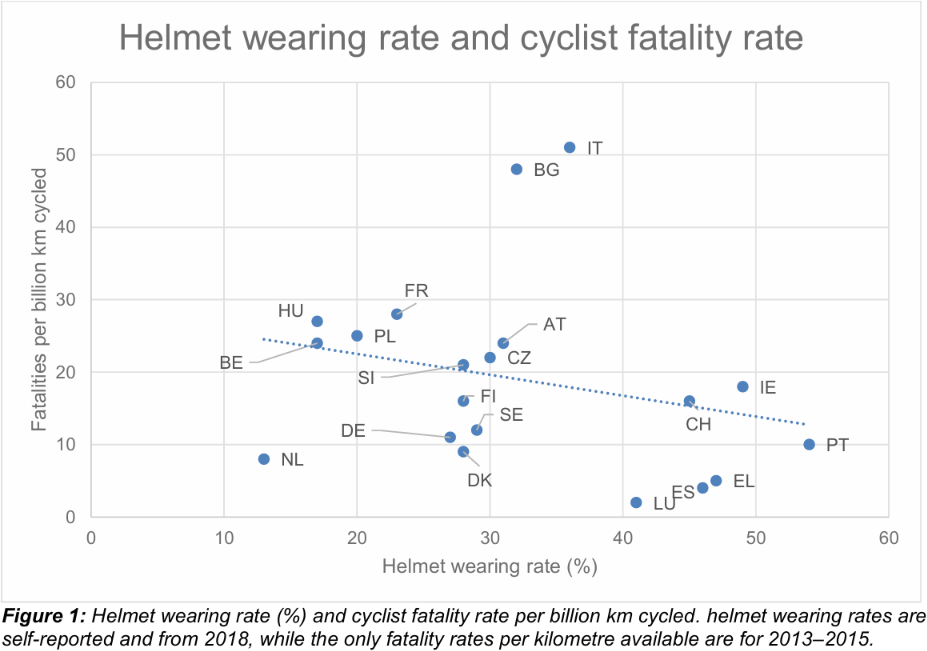
The EU first published its eight key performance indicators (KPIs) in 2019, with each measurement linked to either infrastructure safety, vehicle safety, safe road use and post‑crash care. The KPIs measured to gauge progress in road safety are:
- Speed – Percentage of vehicles travelling within the speed limit
- Safety belt – Percentage of vehicle occupants using the safety belt or child restraint system (correctly)
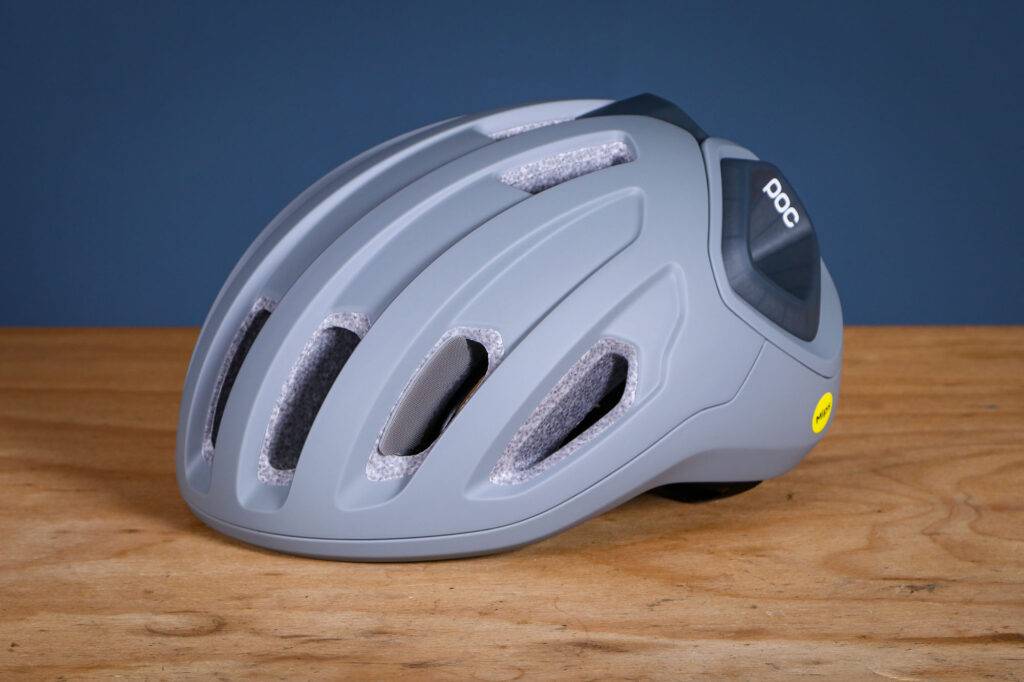
- Protective equipment – Percentage of riders of powered two wheelers and bicycles wearing a protective helmet
- Alcohol – Percentage of drivers driving within the legal limit for blood alcohol content (BAC)
- Distraction – Percentage of drivers NOT using a handheld mobile device
- Vehicle safety – Percentage of new passenger cars with a Euro NCAP safety rating equal or above a predefined threshold
- Infrastructure – Percentage of distance driven over roads with a safety rating above an agreed threshold
- Post-crash care – Time elapsed in minutes and seconds between the emergency call following a collision resulting in personal injury and the arrival at the scene of the collision of the emergency services
Other indicators considered for measurement, but not considered a KPI include drug-driving, 30kph (18mph) speed limits, and the prevalence of cyclists using lights when riding in the dark. When these indicators were established, the EU also set a policy goal of halving the number of road deaths and serious injuries between 2020 and 2030 and a target of ‘Vision Zero’ by 2050.

Whilst the ECF are supportive of certain policy measures, the federation warns in a new position paper that the use of a helmet wearing measurement could incentivise countries to impose a mandatory helmet law to improve a country’s safety ‘score’ without preventing crashes, improving the safety of other road users or encouraging cycling.
“A helmet wearing KPI gives Member States an incentive to choose an inefficient ‘easy fix’, rather than rewarding them for the more difficult but more effective work of providing safe infrastructure and lower speeds.”
In the latest EU report on its road safety KPIs, it concludes that whilst helmet use among cyclists has increased, the wearing of a helmet remains at “often alarmingly low” levels, “with cultural and behavioural resistance proving difficult to overcome.
“The results highlight the need to set targets for improving helmet use, especially among cyclists. It is recommended to stimulate helmet use in countries with low usage. Special attention should be given to risk locations such as urban roads where usage rates are lowest.”
The EU data found that helmet use, across 15 member states was markedly more common in rural areas than urban. Across 11 countries, helmet use was also weighted heavily towards children, with between 10 and 30 percent fewer of cyclists over 14 wearing a helmet compared to those under 14.
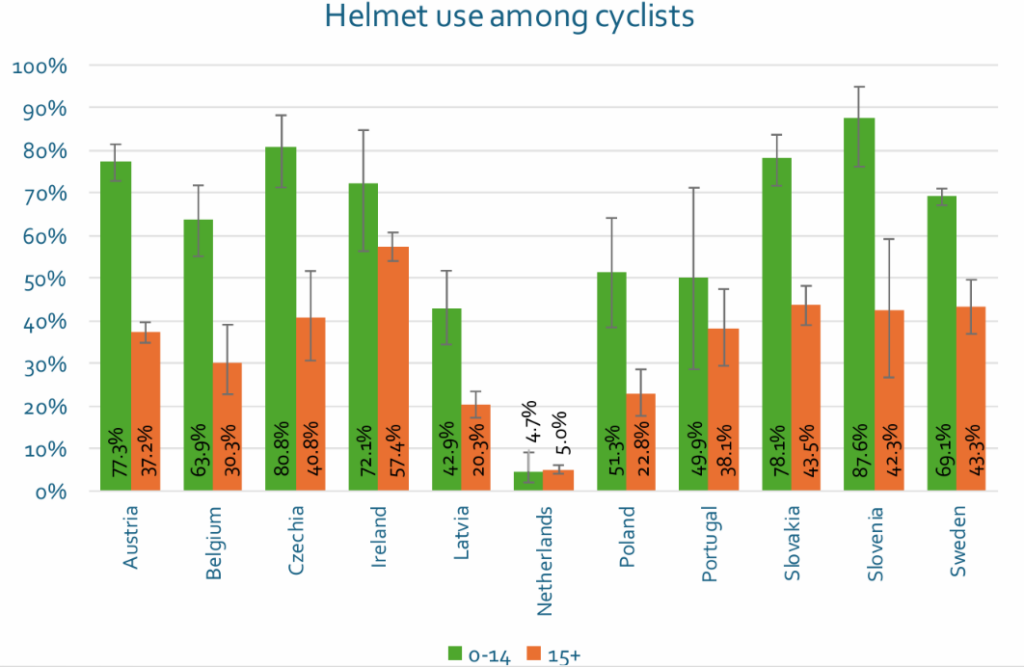
Only the Netherlands, which has a very low percentage of cyclists who wear a helmet, defied the trend.
Among the indicators that the ECF propose are measured by the EU use instead are the distance and duration of all road journeys, and measurements of what proportion of roads are deemed ‘safe’ for cycling. The federation say cycle safety could be measured and scored according to the installation of cycle lanes, physically separated cycle paths and lower speed limits.
Closer to home, the introduction of ‘default’ 20mph (32kph) speed limits on urban and residential roads in Wales has resulted in the total number of collisions and casualties, involving all road users, dropping by more than a third.
Wales’ transport minister said the figures “are a strong sign that things continue to move in the right direction” and that the 20mph limit “is helping to make our roads safer”.