


The number of cyclists killed on the UK’s roads has fallen by 11 per cent, though serious collisions involving cyclists are still on the rise, the Department for Transport’s latest road casualty statistics have shown.
On Thursday, the government released its latest estimate of road traffic casualties in Great Britain that were reported to the police in the year ending June 2026. According to these provisional figures, which are subject to change, there were 1,579 fatalities on British roads between June 2025 and June 2026, two more than during the same period of the previous year.
30,274 people were killed or seriously injured during that period, a two per cent increase on 2024/25, while there were 127,890 casualties of all severities.
Cyclists accounted for five per cent of all fatalities on the roads. 43 per cent of deaths were motorists, 24 per cent pedestrians, and 23 per cent motorcyclists.
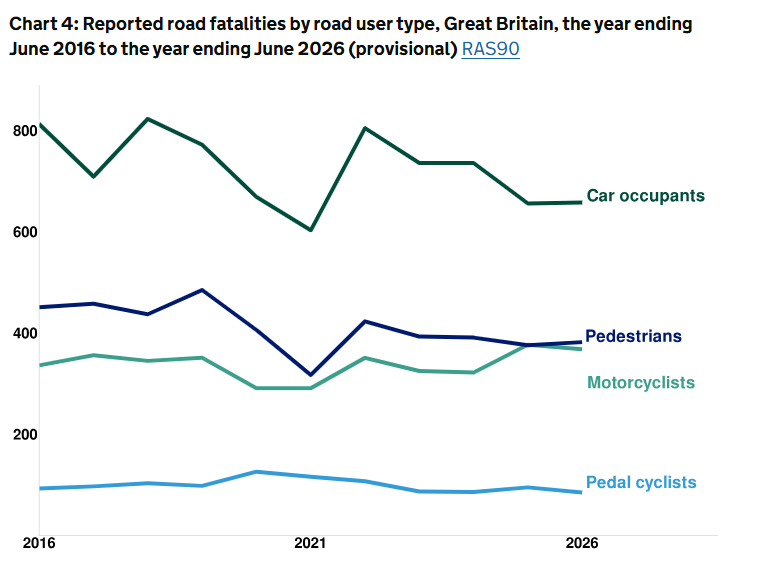
Overall, 85 cyclists were killed between June 2025 and June 2026, 11 per cent down on the previous year and a nine per cent decrease compared to the same period a decade ago.
If this downward trend continues until the end of 2026, it will mark the sixth calendar year in a row that cyclist deaths have fallen in Great Britain, as well as the sixth time, since records began in 1979, that the annual death toll has fallen below 100.
Pedestrian fatalities, however, rose by two per cent to 382, though this number is still 15 per cent lower than it was in 2015/16.
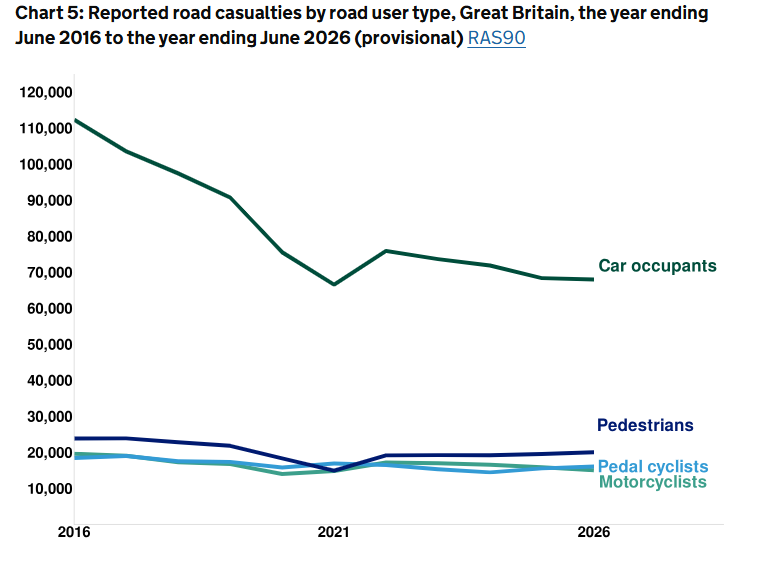
When it comes to overall casualties, 13 per cent were cyclists, 16 per cent were pedestrians, 12 per cent were motorcyclists, and 53 per cent were car occupants.
The number of cycling casualties has risen by three per cent to 16,100 (pedestrian casualties have also risen by three per cent), though this still represents a drop of 13 per cent compared to 2016.
As the Department for Transport notes, non-fatal casualties for cyclists are also amongst the most likely to be under-reported in road casualty data since cyclists have no obligation to inform the police of collisions.
The DfT also added that given year-to-year volatility in casualty numbers, it is too early to determine whether this rise in casualty numbers “represents a sustained upward trend or a short-term fluctuation”.
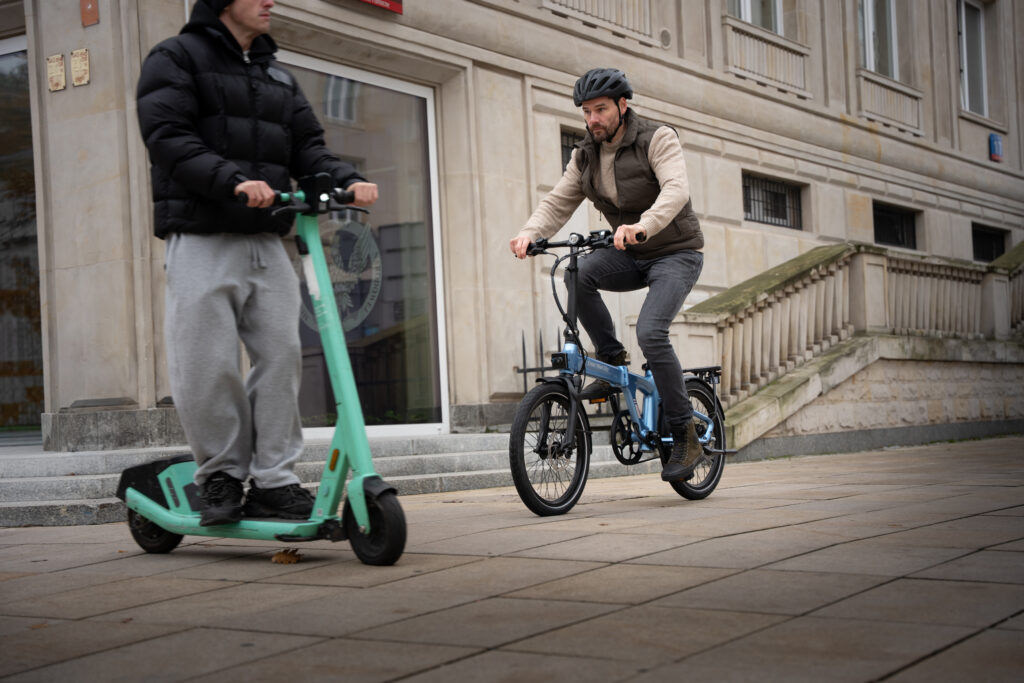
Meanwhile, the number of casualties involving ‘other vehicle occupants’ has risen by 11 per cent (and 128 per cent compared to 2016), largely due to the growth in e-scooter use, the DfT notes.
Overall, taking into account every road user type, 76 per cent of fatalities and 61 per cent of casualties of all severities in the year up to June 2026 were male.
Three per cent of fatalities and 11 per cent of casualties were aged 16 years old and under, while 22 per cent of fatalities and 28 per cent of casualties were in the 17 to 29 age range. Finally, 25 per cent of fatalities and eight per cent of casualties were aged 70 and over.