

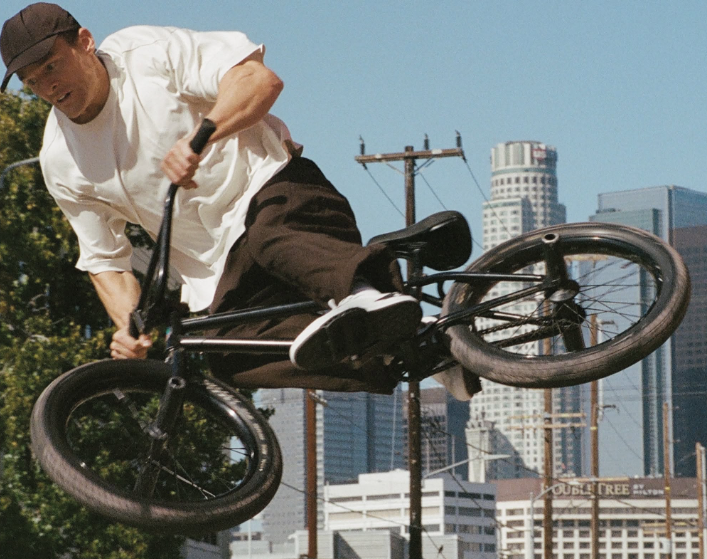

Longstanding BMX and mountain bike brand Haro Bikes has filed for bankruptcy, following a turbulent period for the US-based company marked by redundancies, legal troubles, and a short-lived, ill-fated foray into gravel and road bikes.
Founded in 1978 by Bob Haro, the company launched one of the first purpose-built freestyle BMX frames in the 1980s. After Haro sold his majority share in the company in the late 1980s, Haro then acquired the US distribution rights for Masi Bicycles, a Californian company specialising in road, track, and cyclocross bikes.
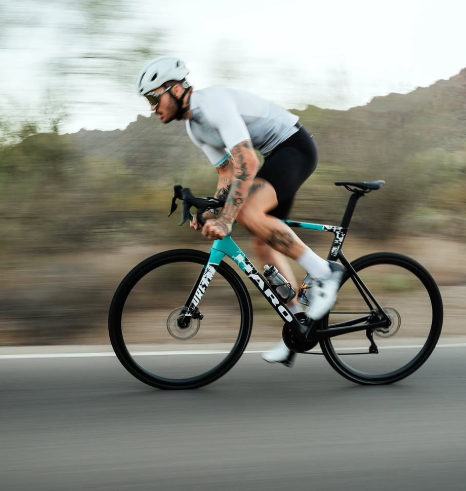
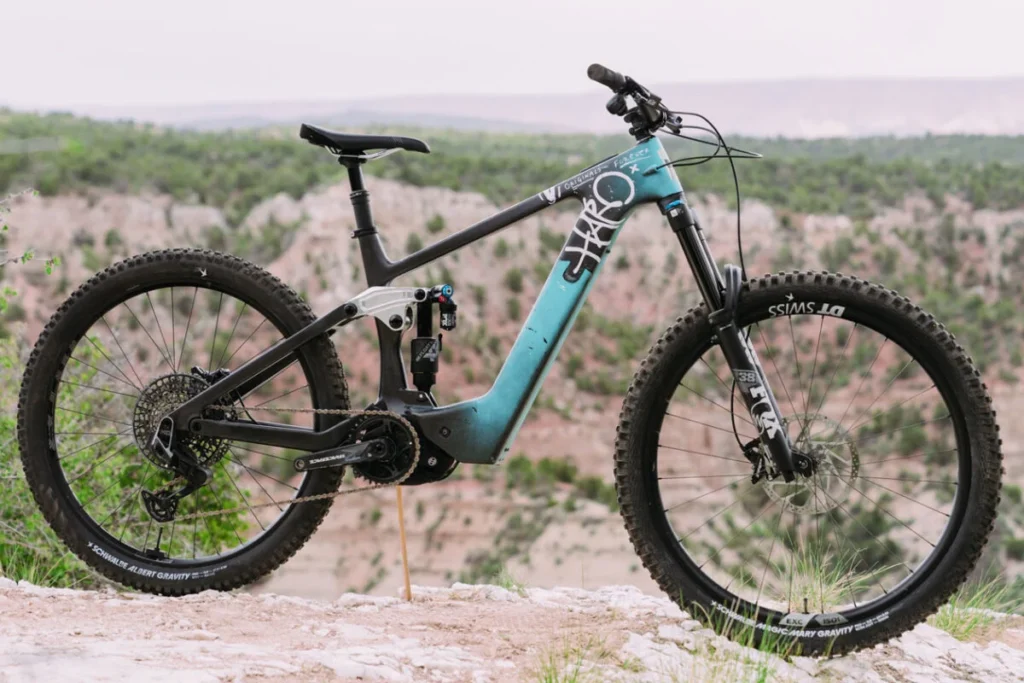
In 2024, Haro expanded into the drop-bar sector of the cycling market, producing its own high-performance road and gravel bikes, such as the Haro Rivette road bike, as well as e-bikes and city bikes.
“We want to be an action sports performance company. We’ll still be in BMX, but we’ll be expanding like crazy,” Haro’s commercial officer Lars Hjort said at the time.
However, with its road bike sector accounting for only 11 per cent of its revenue last year, that expansion proved short-lived, with Masi reinstated as the company’s brand for drop-bar bikes in 2025.
At the same time, Haro became embroiled in legal trouble with Kenstone, a major Taiwan-based bike assembler, who sued the brand in January 2024 for $2.86 million after alleging that they had not been paid for bikes and parts ordered from their factories between January 2020 and March 2023.
Complicating matters further, Haro’s largest shareholder is Jayu Yang, the daughter of Kenstone founder Jay Yang, while Kenstone still holds a minority share in the American company.
Haro then filed a countersuit in March 2024, alleging the brand was damaged to the tune of $5.3 million by Kenstone’s inability to deliver complete bikes. Speaking to BRAIN this week, Haro CEO Bjarke Rasmussen claimed that Kenstone had shipped parts, including batteries, instead of the complete e-bikes ordered by Haro.
“We were sitting on two pallets of batteries for almost a year, waiting for parts,” he said.
In October 2025, Haro then laid off a third of its US-based workforce, a result, the company said, of the uncertainty surrounding Donald Trump’s tariff policies and the wider economic headwinds facing the cycling industry.
> Major win for bike industry campaign as Trump administration confirms no new tariffs on bicycles
And this week, Haro filed for Chapter 11 bankruptcy in a San Diego court. According to the petition, as of Monday, Hato had liabilities of $31.4 million (around £24 million), while the company has already made a loss of $3.4 million in 2026.
Along with Kenstone, the company’s largest unsecured creditor is China’s Shenzhen Xidesheng Bicycle Co., better known as XDS, the parent company of bike brand X-Lab, who are owed $2.6 million.
BRAIN reports that the largest liabilities are almost $17 million in loans from related parties, while Haro’s assets total $5.19 million, including around $80,000 in cash, $1.5 million in property, plant, and equipment, $1.7 million accounts receivable, and $1.4 million in prepaid expenses.
“The company is using the process to resolve legacy liabilities and disputed claims in one orderly process while it continues to operate. Haro is selling and shipping bikes, supporting its dealers and riders, and paying its team and its suppliers for goods and services provided after the filing,” Haro said in a statement.
“The company has arranged debtor-in-possession financing to support operations during the case, subject to court approval.”
“Haro has been part of BMX and bike culture since 1978, and this step is about protecting that future,” Rasmussen added.
“For our dealers and riders nothing changes day to day. This process gives us the room to put past disputes behind us and focus on building great bikes.”
Speaking to BRAIN, Rasmussen said the company will continue to operate as normal into 2027, while the bankruptcy filing will not impact the Haro’s European operation, which is based in Germany.
“The Chapter 11 that we filed this morning is to protect us from a lot of claims that we dispute,” he said.