


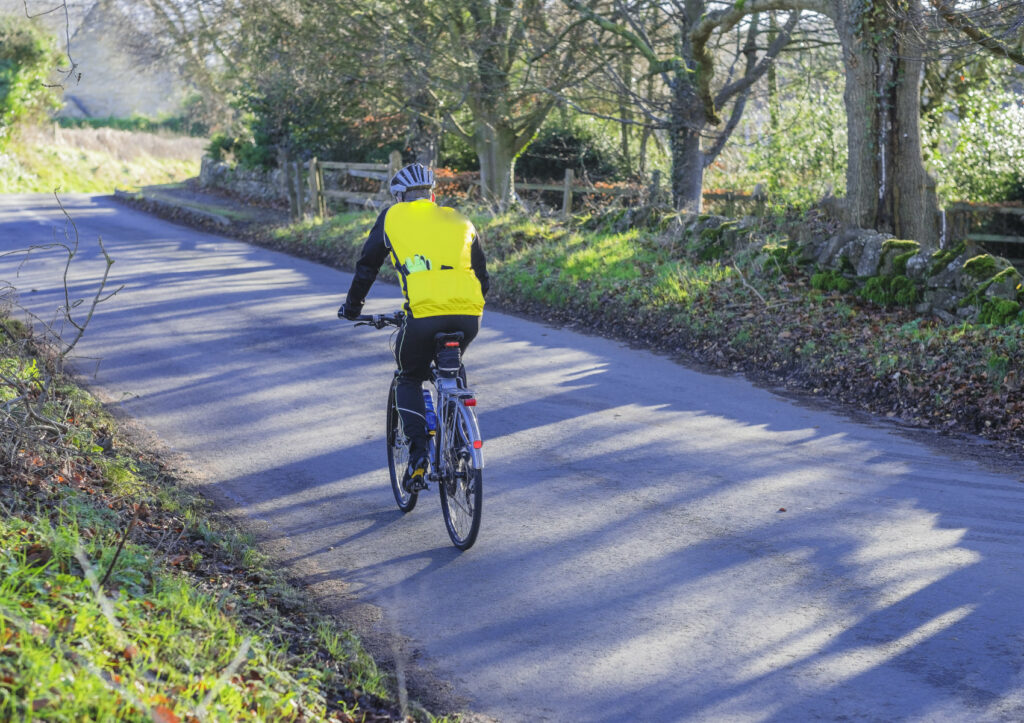

Plans to introduce car-free “quiet lanes” in Oxfordshire have been criticised by a county councillor who has accused the council of “weaponising” Department for Transport guidance.
Oxfordshire County Council announced the pilot scheme last month in an effort to make rural areas “calmer and safer” for non-motorists. The pilot scheme would be rolled out on 10 roads across the county in an effort to reduce the usage of these roads as cut-throughs. However, some drivers have criticised the proposals as giving cyclists “special treatment” and an effort to “push off” motorists from the road.
Department for Transport guidance describes “Quiet Lanes” as routes that can be “shared use by walkers, cyclists, horse riders and motor vehicles.” However, the council describe their pilot as an “enhancement” of government policy, “going beyond traditional signage-based lanes to achieve the safest outcomes.”
This includes full “motor traffic filtering” whereby through‑traffic is prohibited through physical infrastructure (such as gates or bollards) whilst access for residents, landowners, emergency services and essential vehicles is retained. The quiet lanes would also be maintained by signage, reduced speed limits and potentially CCTV cameras.
Part of the conditions of designating quiet lanes require suitable alternative routes being provided for drivers, meaning that the council don’t anticipate journey times for drivers being affected.
However, that hasn’t stopped some people complaining, as covered by Oxfordshire’s Local Democracy Reporter. Some residents have previously described the scheme as “cyclists getting special treatment”, whilst also tapping into recurring themes of road tax, potholes and insurance. Speaking in the council earlier this week, Cllr David Henwood said, “Quiet Lanes were created to preserve quiet roads, not to create them.
“Weaponising the designation as a vehicle for broader anti-car measures risks undermining both the spirit and the intent of the original legislation.”
However, analysis from Bluesky user The Ranty Highwayman found that the Council’s powers to introduce traffic filtering stemmed from the Road Traffic Regulation Act 1984, as well as separate laws governing Quiet Lanes passed in 2000. There is therefore no legal obstacle to the council introducing these measures, which another user said would counter the “99.999% of roads [that] have been weaponised BY drivers against anyone not in a car for decades.”
Defending the plan, Cabinet member for Transport and Liberal Democrat Cllr Gareth Epps said, “Preserving the character of the pilot lanes is at the heart of this programme – ensuring that country lanes are not undermined by inappropriate traffic.
“Ten lanes in the whole county is a drop in the ocean, and Oxfordshire residents who use cars will almost all be unaffected by this pilot.”
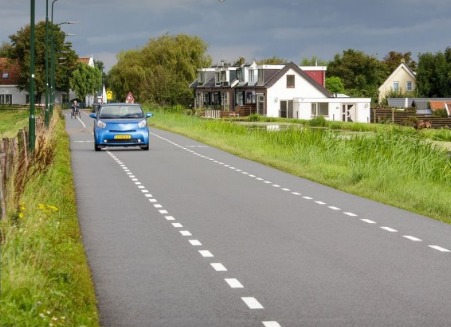
Oxfordshire is not the only place where Quiet Lanes are being rolled out in rural communities. County Monaghan in Ireland recently announced it would introduce a scheme as a more effective way to encourage active travel than investing in new cycle infrastructure.
The council’s Chief Executive Robert Burns wrote that “Innovation in rural mobility doesn’t always require major infrastructure projects. It can start simply with rethinking how existing road space is allocated and how road layouts can be designed to enhance safety for all users.
“The concept reflects approaches already used successfully in countries such as Denmark, where low-speed, shared rural roads help create safer environments for pedestrians, cyclists, local residents and farm traffic, while maintaining the character of the landscape.”
















21 thoughts on “Quiet Lanes being “weaponised” to introduce “anti-car measures”, opponents claim – but cyclists say roads have been weaponised by drivers for decades”
Quiet lanes are not being “weaponised”, they are a defensive measure against the 1.5t of steel and plastic being used as actual weapons.
The more the topic is considered, the more motornormative apologists sound like 2nd amendment gun nuts form the US.
Country lanes are already generally quiet. If they’re not, it because of over-development putting too much strain on the local roads. Putting ‘quiet lanes’ in for cyclists just exacerbates the problem.
I regularly used a lane near Corsham in Wilts, which then became dedicated to cyclists. I never had a problem sharing that lane with the occasional car. I also never saw any more cyclists using it after it was converted but it did make things more inconvenient for local people and put more pressure on the adjacent lanes. This also affected me as a cyclist as the dedicate lane didn’t always go where I wanted to. So on balance I would say I am against ‘quiet lanes’.
@ROOTminus1 be careful calling other people nuts; it makes you sound like one.
@Dodonline Interestingly, I’m in the same neck of the woods near Bristol, and here quiet lanes are used quite carefully to close rat-runs where major A-roads already exist to carry cars, but where the lanes would be far more dangerous if cars had full access. The lanes allow cyclists a relatively safe route into/out of major towns without having to play in traffic. I don’t have a problem with the ‘odd car’, but lots of the lanes around here are Google-maps default alternatives to the dual carriageways/A-roads actually built to carry cars, so I appreciate the council ‘encouraging’ drivers to use infrastructure suited to the volume of traffic involved.
@fwhite181 I agree driving near Bristol is not always ideal. The core problem, imho though, is over crowding of what used to be rural areas and with the infrastructure to match. Pushing people onto A roads would be fine if they weren’t already gridlocked. Nobody chooses a rat run if the main road is clear. Forcing them into a traffic jam just makes people even more determined to find backroads and drive more aggressively when they find them. Rather than spending money converting roads to cycle paths, they would be better off adding capacity to roads so that people don’t want to use the back route.
As there’s probably no budget for that, an alternative idea might be for councils to spend money improving bridleways and by-ways. This would not come at the expense of cars and add to the overall capacity of the network. I’ve cycled from Corsham to Bristol or Bath and it’s possible to do almost entirely off-road; it requires a Garmin and parts are challenging though. If such routes were better signposted and kept in better condition they would surely be better used.
@Dodonline I don’t have a good short term fix – especially for Bristol and nearby, which seems to have far more people driving than here Edinburgh. And where the less urban roads seem much less favourable to less sport-focussed cyclists, being often narrow, winding and with sharp changes in gradient!
The Bristol-Bath cycle path is good in many ways, but it lacks social safety (which is apparently an absolute barrier for some). Plus it suddenly diverts round the edge of Bristol when you get there rather than heading direct to the centre, the connecting “network” is “usable” but hardly straightforward and welcoming.
And it’s really easy just to get the train.
“Pushing people onto A roads would be fine if they weren’t already gridlocked…”
Thing is – “congestion” is just a propery of the system. It’s part of the feedback loop – reduce that and we find that encourages the growth of traffic until it hits that feedback again. (Enhanced by the space-inefficiency of motoring).
“they would be better off adding capacity to roads so that people don’t want to use the back route.”
I suspect that satnavs with awareness of current traffic conditions and dynamic routing will ensure there’s more likelihood of people “cutting through” – but the only way to stop that is to simply make those routes access-only for motor traffic.
Induced demand is a thing – the effects may not be instant but the experience across the world shows that “one more lane” doesn’t fix things.
Rather than spending money converting roads to cycle paths, they would be better off adding capacity to roads
We know a driving apologist troll when we see one
@Dodonline “better off adding capacity to roads” is a well-documented means to increase the volume of traffic overall. If they are built, people drive on them. Take a look at Los Angeles or the US highway system.
@Dodonline I have plenty of issues sharing lanes with cars. Not usually cars overtaking me, almost entirely cars coming towards me who don’t give a single shit about slowing down or giving me any space. I regularly have cars go past me at 40mph+ despite it not being remotely safe to do so and forcing me right into the gutter of the lane.
I don’t necessarily think the solution is “quiet lanes” but I do think the highway code needs updating to say that you must slow to under 20 when its unavoidable to pass a cyclist with 1.5m of space. Seems there is little when it comes to head on passes in the highway code. Certainly nothing that is enforced.
@mctrials23 I agree that’s a problem but one for the police, to remove stupid drivers from the road, not closing it for everybody. As road.cc regularly points out, alas, you almost never see a police car these days especially on country roads and even when you give them footage of dangerous driving they either do nothing or look for reasons to prosecute you.
@ROOTminus1 Indeed there are some striking parallels. (eg. the understandable but contradictory association with freedom / autonomy).
Probably will be more of this as US businessmen want to push their products here with US-style deregulation. And the ruling political class / state sees that as a strategic goal.
Plus our local imitators want to import the philosophy (of course in *no way* influenced by the generous and disinterested donations from the very well- resourced directors of those businesses!)
Our council, East Riding of Yorkshire, seem to think that by literally just putting signs up either end of a very busy cut through will turn it into a ‘quiet’ road. No traffic calming measures, no speed restrictions – keeping the speed limit at 40mph. The adjacent A-road, like clockwork, is backed up during peak commuting hours, the result being the quiet road being anything but.
Saying that, it’s same council that on a street where there are 2 schools on it, instead of having a blanket 20mph limit for the full street it has a section of around 100 metres between the schools that is 30mph limit.
“Part of the conditions of designating quiet lanes require suitable alternative routes being provided for drivers”
Would be nice if cyclists were afforded the same consideration when they “upgrade” a road to a dual carriageway or motorway.
More anti-cyclist rubbish. This will enable cyclists to find safer routes and avoid the car drivers who moan about them using busier roads.
Quite frankly, it would do the petrol head/anti-cyclist fraternity good to have to go without their cars for a while. They’d soon change their tune about cycling infrastructure. Hopefully this might be the case if the trouble in the Middle East goes on for much longer.
Hmm… few people might. For most i think it would not convince them it’s of any benefit to them. Overall I think it would just reinforce their existing beliefs.
For one many people (most?) wouldn’t find any near them. Less would find any infra going where they wanted to go. Even fewer infra of sufficient quality that would make them consider it a viable alternative.
It’s sometimes hard to appreciate things that are quietly helpful. Bit like plumbing and sewerage – most people are only conscious of it when it goes wrong!
@60somethingcyclist Car free Sundays is one way of allowing people to experience life with out motor traffic. From the articles linked to below it would appear they are a successful way to encourage people out of cars, once the initial backlash has been overcome.
https://www.newsworm.de/news/car-free-sundays-germany-history-1973-oil-crisis-current-debate
https://engx.theiet.org/b/blogs/posts/car-free-sunday-navigating-the-1973-oil-crisis
May be now would be a good time to give it a try as the initial trials were triggered by the 1973 oil crisis.
Think it’s purely about people in cars having to have it re-inforced to them to drop the attitude, impatience, offensive attitude + threatening behaviour..
First casualty already: https://www.bbc.co.uk/news/articles/cd95ezw4003o
[Particularly bitter about this one as it’s a regular running route for me.]
Made worse by the fact the road has recently been closed for services works for a few weeks, and that was brilliant while it lasted.