



Welcome to our monthly sentencing round-up, a regular compilation of sentencing stories from local publishers and police forces from around the UK, and sometimes internationally in particularly notable cases.
All sources are credited with a link, and where a case has been picked up nationally, we’ll always credit local publishers who have attended court.
Man who “thought it would be funny” to push cyclist off her bike and over seawall, causing serious injury, avoids jail
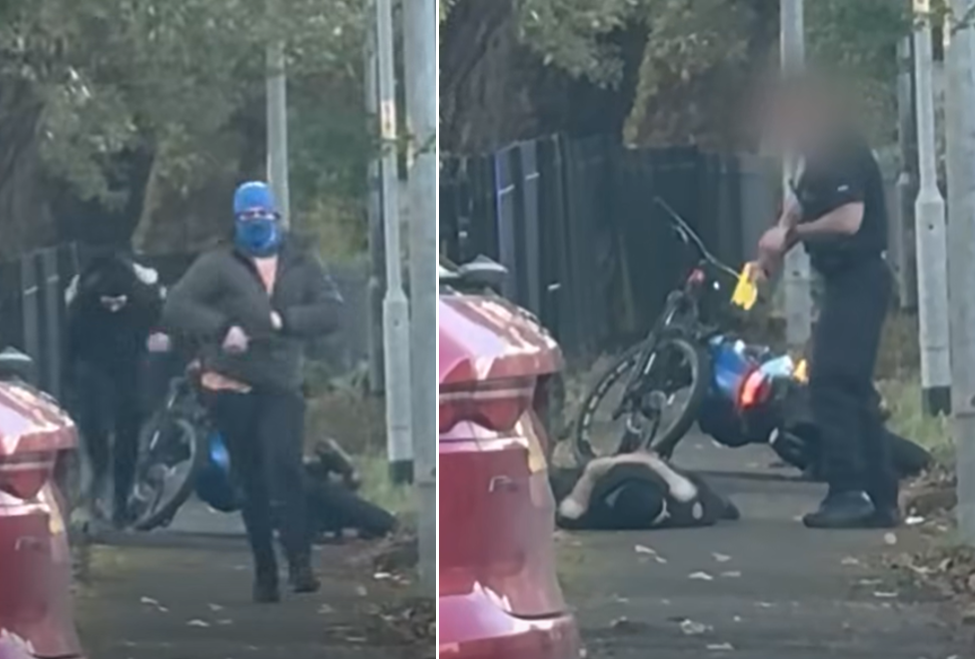
On the Isle of Wight, a man who pushed a woman over a seawall, unprovoked, has been sentenced for assault occasioning actual bodily harm, the Isle of Wight County Press report.
Daniel Dickons assaulted the cyclist, in her 60s, on Culver Parade, in Sandown, on 5th August last year. His push sent the cyclist falling 5-6ft down onto the beach below, with her bike landing on top of her. After the arrival of the air ambulance, she was taken to hospital. The fall left her with a sizable chin scar, neck injury, black eye and an exposed kneecap. Dickons was initially detained by a member of the public before police arrived to arrest him.
> Man arrested after female cyclist “forcibly” pushed off seawall, causing her to plunge several feet onto beach
He reportedly told his arresting officers, “I thought it would be funny, so I did it.”
Dickons who has six previous convictions dating back to 2008, was handed a 52-week jail term, suspended for 24 months, pending a six-month alcohol treatment and 35 rehabilitation days. He was also ordered to pay £1,000 compensation.
Defending, his lawyer told the court his client had made a full admission to police and expressed remorse immediately, adding Dickson had not offended in the 13 years prior to the assault.
Unqualified, uninsured, unfit drink and drug driver handed seven year sentence for death of cyclist
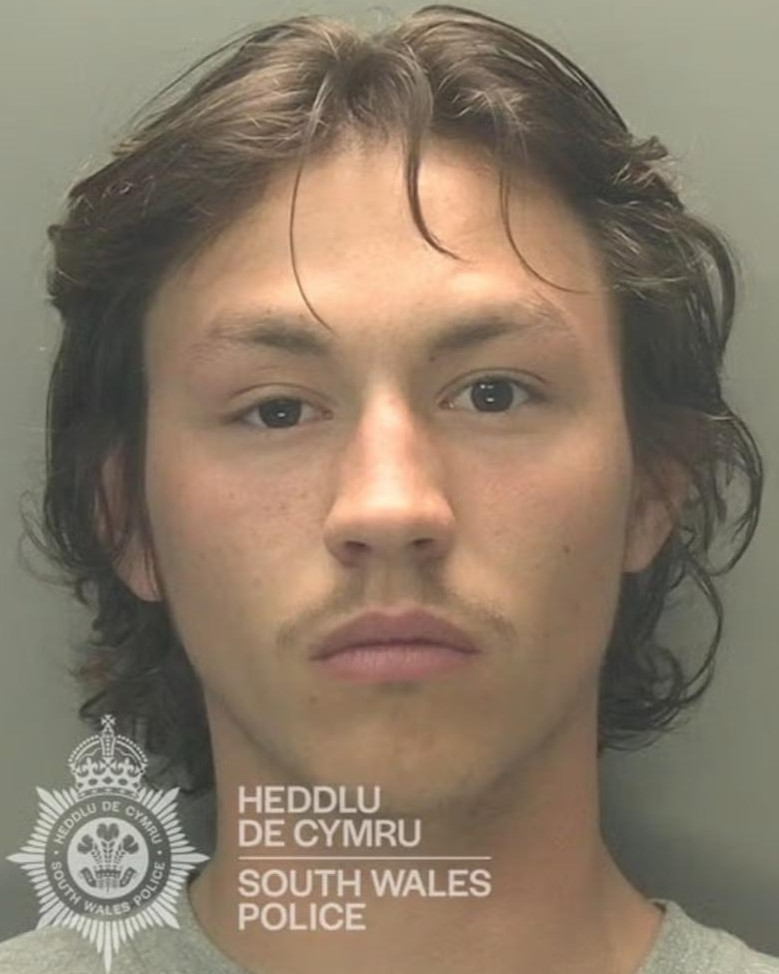
A 20-year-old driver who drove on the wrong side of the road and went “straight through” a cyclist, killing him, has been handed a seven year custodial sentence, as reported by BBC Wales, the Barry and District News, Wales Online and several other outlets.
Teddy Picton was found with alcohol and cocaine in his bloodstream on the morning of 17th May 2025 after hitting 72-year Brad Craven who was out riding with his brother in Grangetown, Cardiff. Picton was not qualified or insured to drive the car – which belonged to the woman in the passenger seat – but drove because she was “intoxicated.” The court also heard he was distracted by the passenger who attempted to kiss him and grab his leg.
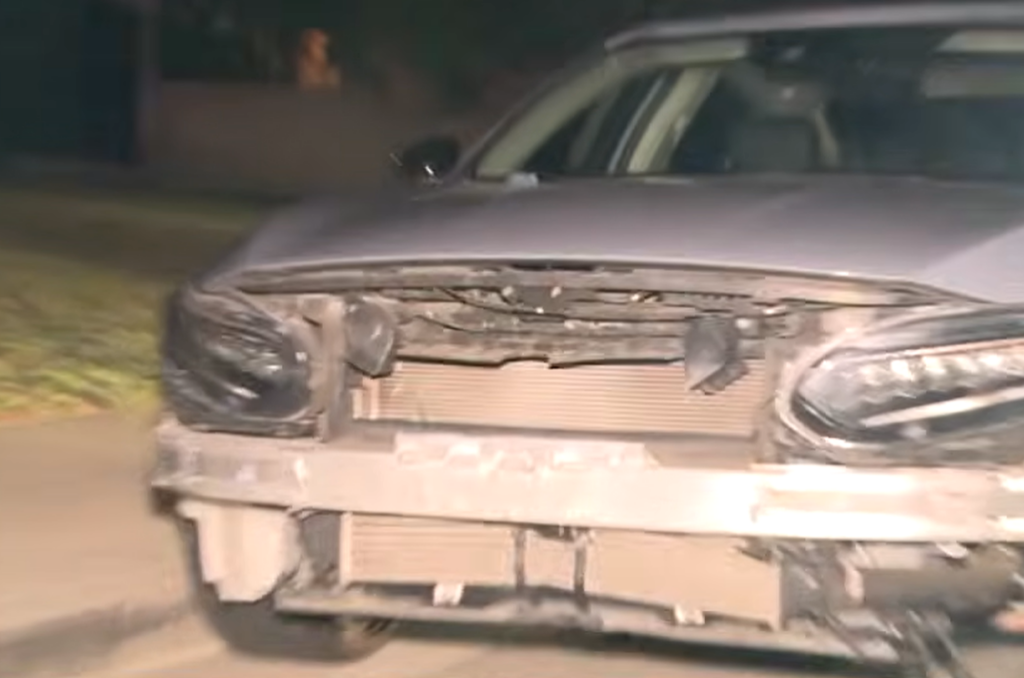
He subsequently drove on the wrong side of the road and struck Craven, a retired social worker, who was wearing a hi-vis jacket and riding close to the kerb. He fractured his skull and died five weeks later in hospital, having missed his wife’s funeral that he was in the midst of organising.
In a victim impact statement, Craven’s brother Phillip, who has also since died, wrote that he caught up with his brother to find him “gasping and choking on his own blood.”
“This was no accident, this young man chose to drive this car without a licence. He knew he had been drinking the night before and he had taken cocaine, and he still chose to drive. They stood and gawped at my brother while he lay dying.”
The sentencing came after Picton pleaded guilty to one count of causing death by dangerous driving. Due to his age, Picton will initially serve his sentence at a young offenders’ institution. He is currently due to be released on license after serving two-thirds of his sentence, though the judge noted that could be reduced due to impending law changes. He was also disqualified from driving for nine years and eight months.
10 years prison for driver who killed cyclist whilst attempting dangerous overtake
A driver who killed a cyclist on a rural road in Ilkley, Yorkshire has been jailed for 10 years. Adrian Stocks was training for a charity bike ride in April 2023 when 19-year-old Sohail Johangir struck him with his Audi Q2, the BBC and North Yorkshire Police report.
Stocks, who died at the scene, was followed by a white Skoda which slowed as he prepared to turn right to cross Denton Bridge in Ilkley. As he began his turn, Jahangir sped past the Skoda on the wrong side of the road and hit Stocks, who suffered fatal brain injuries.
Jahangir told police following Stocks’ death that he would never drive again. But in addition to pleading guilty to causing death by dangerous driving, he was also sentenced for dangerous driving and Class A drug dealing offences committed whilst on bail.
After he was spotted by police overtaking a queue of traffic waiting to turn into a junction in 2024, a police chase ensued when he refused to pull over. During the six-minute chase through Bradford city centre, police estimated he drove at speeds of more than 100mph and ran through at least three red lights, and head-on into oncoming traffic.
Jahangir’s lawyer told the court his client had committed an “avoidable mistake” and wished he could “turn back the clock”.
Detective Constable Richard Grey, from North Yorkshire Police’s Serious Collision Investigation Team, said: “This case highlights how utterly tragic these incidents are. I’ve come to learn over the time since this collision, what a well-respected and much-loved man Adrian Stocks was to all who knew him.

“Adrian set out that day to get some training for a charity event he was taking part in and was doing nothing wrong. He was riding along, using the road in a responsible and safe manner as was described by the witness who also did exactly the right thing by slowing and allowing him space to turn right.
“The one who did not do the right thing was Sohail Jahangir. His actions have caused this tragedy and from that day onward will have lasting effects on all who have been involved.”
Jahangir, now 23, was sentenced to seven years and seven months for causing Stocks’ death by dangerous driving, ten months for dangerous driving in relation to the car chase, and two years for dealing heroin and crack cocaine. He was also disqualified from driving for 15 years and two months and ordered to forfeit three vehicles. He will be required to take an extended driving test before he can regain his license.
“Too often, road traffic offences are treated as second-tier crimes, even when the consequences can be life-changing”
One common theme from almost all court cases we cover, whether mentioned by the prosecution, during sentencing remarks or victim impact statements is how life-changingly devastating for so many people one moment of inattention, distraction or dangerous driving can be. Campaigners and cyclists alike have regularly questioned sentencing severity for road offences, Cycling UK telling us that “too often, road traffic offences are treated as second-tier crimes”.

Sarah Whitebread, Head of Policy and Public Affairs at Cycling UK, said: “That mindset has contributed to dangerous and careless drivers reducing or even avoiding disqualification through claims of ‘exceptional hardship’. Speeding, driving while exhausted or passing dangerously close to someone aren’t harmless slip-ups, they are decisions that can leave families grieving.
“If someone drives dangerously and puts lives at risk, taking them off the road for a period is not excessive. It’s common sense. The courts’ first duty must be to protect the public and if the government is serious about meeting casualty reduction targets set out in the Road Safety Strategy, sentencing has to match the seriousness of the harm.”
Sentencing is a much-discussed topic on road.cc, particularly with regards to the punishments handed down to drivers who seriously injure or kill cyclists.
This series is a regular round-up of sentencing stories that helps us to collate information for our more in-depth coverage around sentencing, but we’re hoping it could also be of use to readers, academics, and those in the legal profession as a starting point for analysing the state of play when it comes to sentencing for driving and cycling offences.
Much like our Near Miss of the Day series, we’re not doing this for ‘clicks’ – but we make no secret of the fact that the article format is designed to get attention, and generate discussion. Though road.cc acknowledges there is a problem with inconsistent and lenient sentences for killer drivers, we’re intentionally steering clear of editorialising in our reporting here, which means we’re not just going to be selecting cases where we’ve decided in-house that the punishment didn’t fit the crime.
The aim is to provide a true picture of how people are sentenced for driving and cycling offences for further analysis. Are sentences wildly inconsistent depending on the judge? Are sentences becoming more lenient, or harsher over time? We can’t change the law, or a judge’s decision – but change starts with a discussion, and an acknowledgement the current system isn’t fit for purpose. This is why the maximum sentence for death by dangerous driving was increased to life imprisonment in 2022, and why the Highway Code was updated to include minimum passing distances for drivers around cyclists and the Hierarchy of Road users.















23 thoughts on “Man who found it “funny” to push woman off bike avoids jail; Unqualified, unfit driver on wrong side of road jailed for 7 years for killing cyclist; 10 years prison for driver who killed cyclist then drove in 100mph chase: road.cc sentencing round-up”
Thanks for keeping this going.
It is of course a deliberate feature that (allowing for following the guidelines) sentences should be specific to each case. And different charges are their own domains.
However I do wonder about the wisdom of the sentence for the mindless apparently-reformed criminal who assaulted the woman. It’s down to luck it didn’t end up with him facing a far more serious charge. Let’s hope that he engages with whatever rehabilitation is being suggested…
Anti social personality disorder, he is bound to do something that will cause harm and he will eventually go to prison, absolutely no doubt about it
Anti social personality disorder, he is bound to do something that will cause harm and he will eventually go to prison, absolutely no doubt about it.
How does the Welsh man (not youth) get to start his sentence in a young offenders institute when he was at least 18 when he committed the crime?
Also, being banned from driving when he isn’t qualified anyway isn’t exactly a hardship for him.
@kinderje Young Offenders’ Institutions in England and Wales are for 15-21 year olds (15-17s are kept strictly segregated from the older internees). He should be transferred to an adult prison when he turns 21.
On the face of it being banned from driving doesn’t seem much of a punishment when, as you say, he has no licence, but the length of the ban means that when he gets out of prison after four years and eight months he won’t be able to apply for a driving licence for another five years, so it’s something. Not enough, maybe, but something.
@kinderje It’s not a soft punishment at all. Young men transferred to adult prisons are frequently raped by older long-term prisoners. He will find adult prison a very frightening experience.
As someone who regularly rides along the seawall that the poor women was pushed off I can say she was lucky not to hit the concrete steps below, therefore the charge should have been attempted murder as that could have been the outcome
@nick.fever.iow Attempted murder would have to prove that the action was not only potentially fatal but that the intent was to kill, an impossibly high bar to reach and it was (almost certainly) not the perpetrator’s intention. He should have been punished much more severely but “that could have killed somebody” is not sufficient for attempted murder without proof of intent.
Why the F was Daniel Dickons given a suspended sentence given his history?
The act itself in this case could easily have been fatal so should have been treated as attempted murder.
And given his history, either the previous sentences were similar (suspended) or not enough as he clearly hasn’t changed his ways.
(Edit to add: if he finds this sort of thing funny, shirley it is an indicator that he might need a psych evaluation?)
“Jahangir told police following Stocks’ death that he would never drive again.”
Yeah. I bet he will stick to that.
Not.
Not offended for 13 years, my arse, not been caught doing it…
@ktache very likely, but for excellent reasons while we can speculate the courts shouldn’t.
In a better world we’d be aiming higher with rehabillitation. But “let’s spend lots more cash on people who’ve done bad things” is rarely a vote-winner.
@mitsky ““Jahangir told police following Stocks’ death that he would never drive again.”
Yeah. I bet he will stick to that.
Not.”
He didn’t, that’s why he was caught again.
CUK is right, and traffic offences are not viewed or sentenced properly, and it’s only when someone is seriously injured or killed that the sentence is appropriate. I’ve said it before and I’ll doubtless say it again, punishment for a first offence of dangerous/inconsiderate driving should be the immediate confiscation of the vehicle for a week: second offence a month, third offence permanent. This would of course be on top of any fines.
@mitsky
Clearly the correct response from the court to this should be wonderful, we can issue a long driving ban in addition to any other penalty as it won’t have any impact on your life.
@mitsky As noted above, doing something that could potentially have been fatal is not sufficient qualification for an attempted murder charge; the prosecution would have to prove that there was a definite intent to kill, not just that the act could have killed or that the perpetrator was indifferent to whether the victim was killed or not.
@Rendel Harris
The shove was deliberate.
It was over a wall with a drop.
The criminal could not have known for sure this would not have possibly ended with a fatality.
If he was to point a gun at someone and pull the trigger and hit their leg (by luck, not hitting a vital organ or killing them instantly) they cannot claim that “… it wasn’t attempted murder as I was aiming for your leg”…
Aiming a gun at someone and pulling the trigger should be considered attempted murder (I assume it is, always).
The details of this incident are similar in the action/circumstances.
@mitsky Respectfully, “not knowing for sure this would not possibly have ended in a fatality” and “making a deliberate attempt to kill” are nothing like the same thing in law. Otherwise we could have everyone who killed someone whilst speeding charged with murder as they could not have known for sure it was not going to kill someone (I’d be fine with that but the law isn’t). Similarly, anyone who’s ever thrown a punch cannot know for sure that their victim wouldn’t fall, bang their head and die, but not every punch is charged with attempted murder or attempted manslaughter.
Yes, people have shot others and not been charged with attempted murder, a prime example being “kneecappings” in Northern Ireland in which paramilitaries would shoot their victims through the knee or other peripheral joint as a punishment, these were generally charged as GBH as although death could have resulted as a result of trauma or bleeding the defence successfully argued that the death of the victim was not the defendant’s intended outcome.
For attempted murder the prosecution must prove beyond reasonable doubt that the defendant had a definite desire to cause the victim’s death; simply saying he should/must have known that death could result from his action is not sufficient. Absent of any supporting evidence, e.g. the defendant admitting they meant to kill or telling someone else that one day they would kill one of those cyclists on the sea wall, it would be impossible to make an attempted murder charge stick in this case.
@Rendel Harris
You’re speeding example would count if they were directly aiming at someone, like with a gun.
And your kneecap example is irrelevant as that is a direct aim at zero distance.
My point was as in general if the shooter stood a further distance away, they hit a non-vital body part (ie leg), say they were actually aiming for the leg and could prove they were had excellent aim after the incident (ie as an athlete shooter).
@mitsky Well I’ve explained it as best I can, sorry if my explanations are inadequate, IANAL, but it really is a simple fact that in English law attempted murder requires the Actus Reus, an act that could have resulted in the death of the victim, and the Mens Rea, the specific and provable intent of the perpetrator to murder the victim. Carrying out an act that could have killed the victim is not sufficient for attempted murder, it has to be proved that murder was definitely the intention. I can’t really think of any way to explain that more simply.
Nothing has changed. How to massively devalue human life; ride a bicycle, kill with a vehicle.
What is wrong with a lifetime ban?
This also proves yet again that ‘drivers have licence/insurance/VED’ diatribe for all those cyclists running red lights, is utter Murdoch brainwashing.
Thank-you.
I appreciate these reports.
For an indication of how we arrived at such driving behaviour – and the appeasement thereof – you just need to look at the Aug 4th edition of the Daily Mail (which I have to fetch for an elderly person who should know better) – the front page banner and full page story on page 11 defies belief, with respect to the entitlement and total lack of responsibility involved.
On second thoughts, don’t go looking for it, as it will just spoil your day.
@belugabob I did.
Lynda La Plante’s list of excuses for her 24 points is pathetic.
As is her engagement of the lawyer Mr Poophole.
@belugabob I read about it on the BBC website. For those who haven’t, it’s the writer Lynda la Plante who managed to rack up 24 points on her licence including five tickets for speeding on the same stretch of road in six months and so was banned for a fairly lenient six months. She asked for more leniency from the magistrates on the basis that she needed to drive her car to go and meet criminals to get material for her stories and that she wouldn’t be able to take her dog for a walk. She tried to claim that losing her car would mean the end of her writing career and having to have her dog rehomed. A Guardian feature in 2003 estimated that her personal fortune from her writings was in excess of £30 million, but obviously spending a few thousand pounds over six months on Ubers would be well beyond her means…