



A Freedom of Information (FOI) request suggests that while the number of reported offences on the popular Bristol and Bath Railway Path has risen markedly in recent years – including a violent attacked in August of this year being investigated as an attempted murder – none have resulted in charges since 2024. A police spokesperson said that “outcome figures should be viewed in context,” citing lack of witnesses and CCTV footage as common barriers to prosecution.
Crime and antisocial behaviour have long been seen as major issues on the 15-mile walking and cycling route to the extent that in 2024, South Gloucestershire Council launched a consultation on measures that would seek to make it “safer and more comfortable” for its users.
Cyclists had reported not feeling comfortable using the path at night, with one rider saying they favoured road routes on the basis that they felt, “safer between buses and cars”.
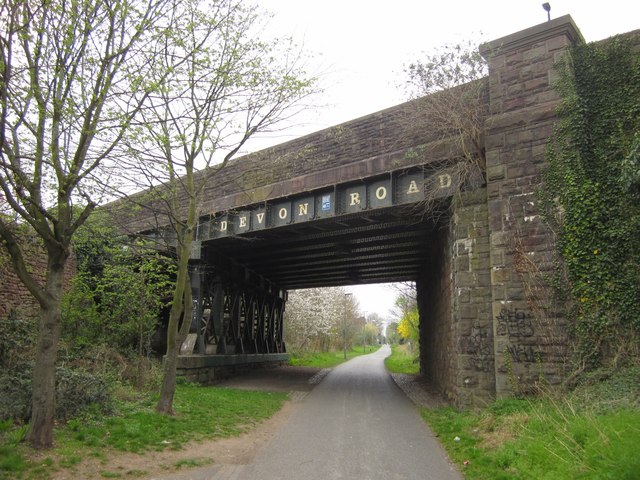
Responding to an FOI request submitted by the Bristol Post, Avon and Somerset Police said 32 offences were reported on the Bristol and Bath Railway Path last year after 35 in 2024. This compared to nine offences in 2023, eight in 2022 and 15 in 2021. Between January 1 and August 25 of this year, 16 offences were reported.
Though Avon and Somerset Police said those offences did occur on the Bristol and Bath Railway Path, it also admitted it does not actually have a category specifically to identify offences committed on the path, the force instead relying on searching terms such as ‘Bristol and Bath or ‘Bristol or Bath’ to come up with its figures – meaning its dataset likely does not tell the full story.
Yesterday, police appealed for witnesses after three unknown offenders attempted to rob a man on a mobility scooter near Warmley on Friday September 18. The force is particularly keen to speak to a cyclist who passed through, “who may have disturbed the offenders.”
Reported offences are also recorded by type. Between 2024 and August 2026, the most common was ‘violence against the person’ (33) followed by ‘robbery offences’ (18) and ‘public order offences’ (12).
“Deeply alarming”
In a joint statement in August, following two violent attacks in two days, two local councillors described the incidents as “deeply alarming,” and added, “What should be a safe route for people walking, cycling, commuting and enjoying the outdoors has instead become the scene of serious criminal incidents.”
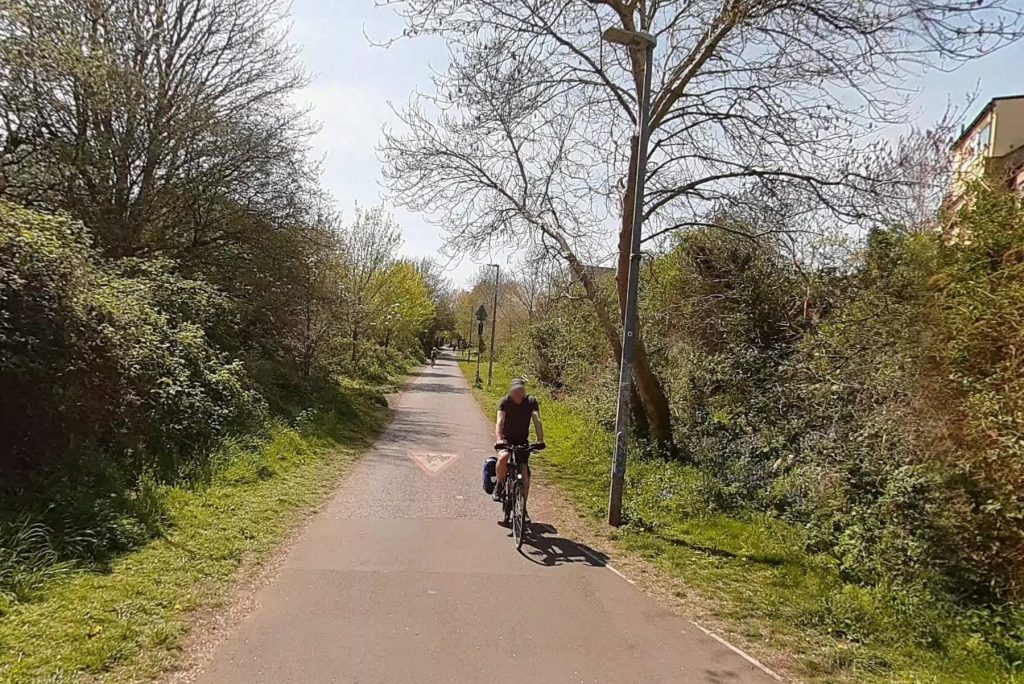
Commenting on the FOI data, Neighbourhood Inspector Barry Mabbett said: “While any report of crime is one too many, the overall numbers remain relatively low when considered across the entirety of the route.
“We continually review reports of crime and anti-social behaviour on the Bristol and Bath Railway Path and work with partners to ensure resources are deployed where they can have the greatest impact.
“We would encourage anyone who experiences crime or anti-social behaviour, or who has concerns about safety on the path, to report it to us.
“Our uniformed officers regularly carry out high visibility patrols along the railway path to provide reassurance and to deter criminality, and we will continue working alongside our partners to identify concerns and take appropriate action to keep the railway path a safe place for everyone to enjoy.”
Unidentified offenders
While arrests have been made and many offences remain under investigation, the FOI data suggests no charges have been brought since 2024.
A spokesperson for the force said: “Outcome figures should be viewed in context. Many offences reported on the railway path involve unidentified offenders and evidential opportunities can vary significantly depending on the circumstances of each case.
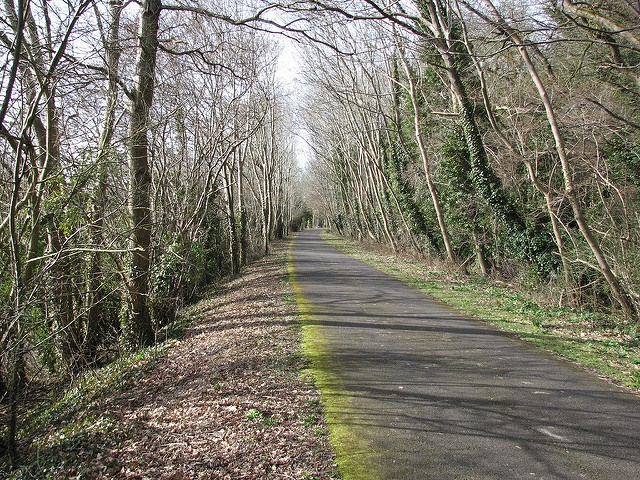
“Factors such as the availability of witnesses, CCTV footage, forensic opportunities, and victim support for a prosecution can all influence the outcome of an investigation.
“We remain committed to pursuing all reasonable lines of enquiry and bringing offenders to justice where the evidence supports doing so.”
Lights, cameras… action?
Following the outcome of last year’s consultation, South Gloucestershire Council is working to install 20 CCTV cameras along the railway path.
They will be situated between Teewell Hill in Staple Hill and Bitton Station. A spokesperson said the locations were, “carefully selected in response to reports of antisocial behaviour and criminal activity.”
In addition to this, over May and June of this year, solar lighting studs were trialled along a short stretch of the route after half of respondents to the previous consultation asked for lighting in addition to the original proposals.
The results of the trial will be considered before deciding whether the lighting will be installed along a stretch between Siston Hill Roundabout and Warmley Waiting Room.











15 thoughts on ““Deeply alarming”: Not one offence on Bristol and Bath Railway Path resulted in charges since 2024 despite rise in crime – but police argue total incidents “remain relatively low””
I’ve heard cyclists do disturb many people. Still, i hope they get the blighter.
Obviously police are going to go where the most crime is. Well, the most crime that’s currently (un)fashionable with their bosses.
Cold comfort to path users though – “the number of reports of people being mauled by tigers remain relatively low when considered across the entirety of the route…”
But … a good fraction of people are going to be traversing a chunk of the route Is imagine, not just crossing it.
And – it’s a *route*. (Even allowing for the fact it actually goes round Bristol, not straight in…). Certainly far more appealing that the traffic-heavy junction-rich steeply-inclined roads thereabouts. (Not a local but have visited the area a few times now).
Maybe that’s just underreporting because people don’t think it’ll be taken seriously, though.
“I reported a tiger mauling, and all they did was give me a crrr-ime number.”
@mdavidford but it was grrrievious bodily harm!
@chrisonabike tigers will be tigers. A leopard can’t change its spots.
@slc we say to the public: only a very few people have been mauled on this route, and not many more chased by tigers (losing their belongs in terrified flight).
It’s unfortunate, as is the fact that our trackers haven’t been able to identify any man-eaters. But we don’t have the resource to leave out goats as bait or hide in trees all night. Or ask the locals for info.
Regardless, people should use the path with confidence… (or should that be “if you go and use it it’s your look out”?)
Insightful phrasing there.
Spot on! Incentives matter and for most police forces the biggest incentive going is a low or falling crime rate. Hence stolen bikes are reported as lost or part of a civil dispute. Persevere though, complain, make a fuss, the incentive to shut you up may bring action (which might be as obnoxious as telling the local thieves to start stealing something else).
@Bill H I admire an optimist, but that doesn’t seem to apply in Scotland or Lancs (we’re told).
“Tough on crime reporting, tough on the causes of crime reporting”. If it’s enough of a PITA to report it – or people learn that does nothing – soon you don’t even need to fob off or otherwise ignore reports. That’s a win for your stats!
The police are quite correct to point out the context of the crime figures.
It is only reasonable for the public to expect that no crimes will be solved if the police can’t be bothered to implement counter measures such as CCTV and patrols.
But Police farces up and down the country are keen to crow about sending small armies to catch cyclists on ebikes doing 17mph which must therefore be an illegally modified bike or riding antisocially, then stealing those bikes and “crushing” them (or selling them to fund the Policemans Ball)
I suspect there are a LOT of paths with comparable risk factors re crime to the Bristol Bath railway path (BBRP).
CCTV is a cost/benefit trade off.
A comparable argument IMHO would be should we install CCTV on paths around Box Hill, or Leith hill in surrey; Or along various bits of canal towpath – clearly this isn’t practical compared to other methods.
Security comes from people passing through; There may be a valid argument that some of these paths should have occasional police patrols.
I suspect there are a lot of roads that aren’t actually any better overseen, so aren’t any safer re crime risks (note that drivers are actually really bad at discouraging crime – the evidence is they don’t notice crime on pavements etc because it doesn’t impact them, so passing motor traffic has no effect on crime rates);
The deterrent on roads is passing pedestrians and/or cyclists, which is the same deterrent as on the BBRP. But there are chunks just far enough out that at night they don’t have much traffic so crime isn’t deterred.
@qwerty360 depends – what are the numbers / what are the risks eg. do lots of people use the example canal path in the evenings / at night? How much of what kind of crime *has* occurred on that canal path?
Also: if we’re economising (always) – how much of a “key route” is the path vs. being more a “nice to have” (more recreational)? Dunno about Box Hill but I would suggest that canal paths tend to be in the latter category, especially for cyclists. But … they *might* be more of a route within urban locations I guess.
It’s a good point about the deterrent *perception* vs. measurable effect of passing traffic. But of course if people perceive something as unsafe most simply won’t use it, rightly or wrongly.
Hence a route that has minimal or no motor traffic might be a massive benefit to “ordinary people cycling” (or using their mobility scooter…). (If not just a narrow, possibly muddy, path along a canal side).
@qwerty360 also: how things seem to pan out as cycling becomes “mainstream transport” in countries * is that the cycling goes where the roads do (or did) – so it naturally is often by/through *places*. It likely feels the same as eg. going places you’d walk to.
Plus the best places are aware of “social safety” and engineer this in at all levels, from route choice to eg. lighting and underpass / bridge design details.
In developing countries (UK, hopefully…) infra is often repurposed railways / canals. So tends to be indirect, not necessarily overlooked by eg. houses. Indeed it may be out-of-the-way and in cuttings / surrounded by trees and “with no way out”. Alternatively it’s “quiet streets / rural roads” (same often applies) or otherwise put “where we can”.
* At “whole country” level I think we’re mostly still taking about NL. Not got much recent euro-cycling experience though. But certainly more cities and urban places across Europe are going that direction.
I’m on there 4-6 times a week (mainly commuting, so generally no later than 1900); mostly you see illegal/chipped ebikes and scooters going ‘like a bullet’ being ridden by people just like me. Haven’t come across the balaclava, wheely pulling electric bike types this year though. Mostly, you need to be vigilant for kamikaze squirrels, loafing cats and dogs off the lead.