


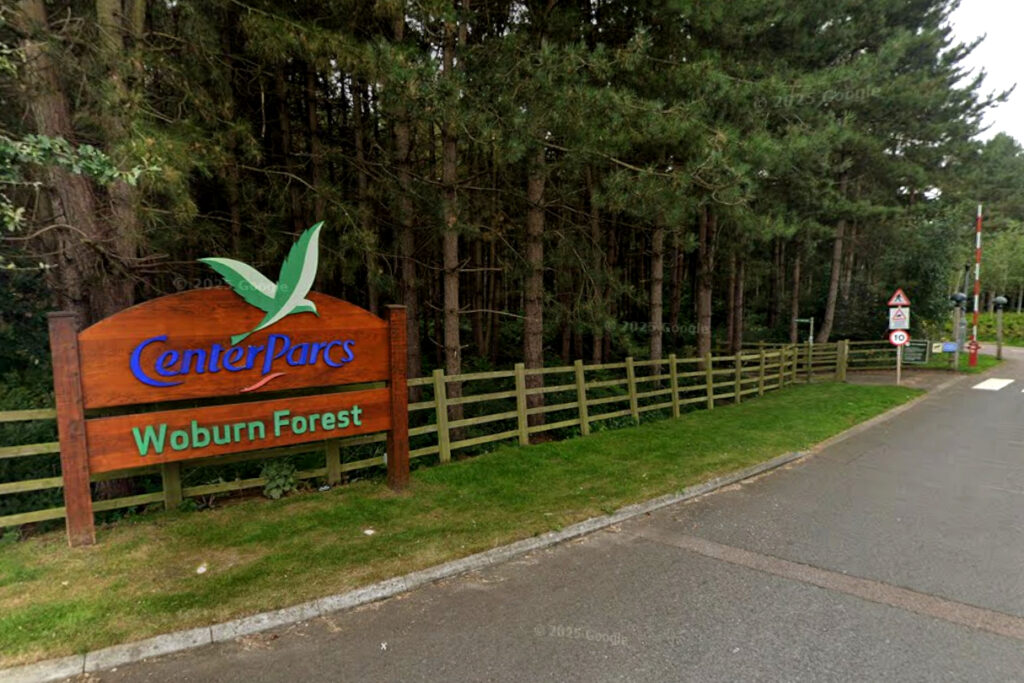

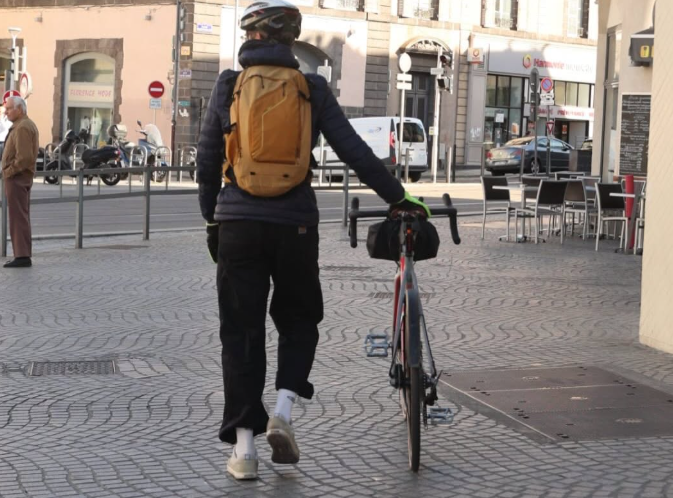
Center Parcs says it will do more to encourage employees to wear cycle helmets following an inquest into the death of one of its housekeeping supervisors after she was killed in a collision at its Woburn Forest resort in Bedfordshire in 2023.
The BBC reports that the colleague who hit Penny Bulpitt was cleared of causing death by careless driving earlier this year because of “insufficient evidence”.
Bulpitt was on a work bike with a trailer on a one-way road when she was hit from behind by a maintenance worker driving an electric buggy on September 22, 2023. The 67-year-old died in hospital a day later having suffered what was described as a “devastating” head injury.
Cycling and cycling safety are major aspects of the Center Parcs holiday experience. The company seeks to maintain what it terms “a car-light environment” at its various sites and says that, “cycling through our villages is a wonderful way to explore our glorious woodland and get to your next activity.”
The use of cycle helmets is encouraged but not mandatory, in line with the Highway Code. Center Parcs’ website says: “We strongly recommend wearing a helmet for your own safety. Helmets are included free of charge with every hire.”
> Road safety organisation accused of “victim-blaming” over cycling helmet campaign
The incident occurred on a Friday – one of two ‘changeover’ days per week at Center Parcs. On these days, a significant proportion of guests finish their holidays and leave their lodges which are then prepared for the next wave of guests. Bulpitt had been alongside a row of accommodation lodges where members of her housekeeping team were working.
At this point, John Davies rounded a corner on a converted golf buggy fitted with a speed limiter to keep it below the park’s 10mph limit.
“As I completed the left turn, I suddenly saw a woman on a bicycle in front of my buggy,” said Davies in a written statement to the court. “I was too close to her to have time to take evasive action, by braking or turning.”
Davies was charged with causing Bulpitt’s death by careless driving, but was cleared by a judge at Luton Crown Court in February following evidence from prosecution collision expert PC Warren Knight.
Knight acknowledged that he could not say that all careful and competent drivers would have seen Bulpitt in time to avoid a collision.
Among other things, he said that there was, “a reasonable possibility that Mr Davies saw Mrs Bullpitt but did not register that she was stationary until a collision was unavoidable.”
This week coroner Bina Patel recorded a narrative conclusion, adding that she would consider making recommendations at a later date aimed at preventing similar deaths.

Representing Center Parcs, barrister Laura Stephenson, said: “Steps have been taken by Center Parcs to ensure staff have the proper training and resources. Consideration on increasing the frequency of training to staff about helmet wear [is being given].”
Stephenson also said video training was being reviewed to ensure staff knew the importance of wearing a helmet and that the company was open to any other suggestions.
A Center Parcs spokesman commented: “We strongly recommend the use of helmets by both employees and guests. Helmets are readily available at all times, including dedicated helmets for employees if requested.”
In May 2022, a visitor to Center Parcs’ Longleat Forest site in Wiltshire died from a severe head injury suffered while riding without a helmet. An inquest the following year heard that 53-year-old Kieran Killeen-McGuirk had fallen from a rental bike while riding down a steep, wet hill after a meal and two drinks. The hill in question was labelled and signposted as a “no cycling hill” due to its steep gradient.
Killeen-McGuirk’s widow told the hearing they had been to Center Parcs on “numerous occasions” and “never, ever” been offered a helmet.
That site’s Village Director, Sarah Deverill, said that while it was strongly recommended that guests wear helmets, it was “not compulsory” as it is not a legal requirement in the Highway Code.
Deverill said that upon booking, guests are recommended to add helmets, with similar advisory information sent before arrival and “prominent” signage displayed in bike sheds and across the park where “buckets” of helmets were available. The coroner recorded a verdict of accidental death.



24 thoughts on “Center Parcs strengthens bike helmet advice after employee cleared of causing housekeeper’s death with electric buggy”
“I went round the corner too fast to be able to be able to take evasive action or stop in the event of another person or vehicle being on the road in front of me.” That appears to sum up the defendant’s own evidence; in what way does that not concur with the description of careless driving as being driving of a standard below that expected of a careful and competent driver?
The linked BBC report is a disgrace by the way, it describes the incident as “a freak accident”, barely addresses the driver’s behaviour or the fact that he was only acquitted due to insufficient evidence and devotes most of the report to the issue of helmet use.
@Rendel Harris yup classic example of the incompetence Paradox. Poor driver, they had no chance to “avoid an accident” after they failed to drive in the way they’re supposed to because that means this is very unlikely to happen. But…
Fortunately when driving we’ve all accepted that “accidents happen” and “careful and competent” basically means “wasn’t too drunk or high, or on their third time in court for driving without licence / while disqualified”. So “beyond reasonable doubt” has sprung to the rescue.
@chrisonabike And of course when it’s a cyclist who has supposedly contributed to their own demise by not wearing a helmet that adds an extra exculpatory factor. If he had come round the corner and hit and killed a toddler playing in the road in exactly the same position that Mrs Bulpitt was occupying, would he have been found not guilty?
This is pretty much the definition of motornormative. If you drive around a blind corner too fast to stop if there’s an obstacle, that’s reckless. Simple.
@Terry Hutt Except when it’s a cyclist that’s the obstacle.
@Terry Hutt they were on a vehicle that was limited to maximum speed of 10mph, it’s almost impossible that they were going “too fast to stop” – and indeed the defence doesn’t even appear to have tried to argue that.
Instead appear to have queried the possibility that he “didn’t realise in time that she was stationary”. Which is a pretty staggering claim. But the prosecution “expert witness” appears to have agreed this was a possibility. Which makes me wonder how many stationary cyclists this expert witness has actually seen. They are really quite difficult to mistake for moving cyclists.
Or how familiar he is with the vehicles moving at 10mph. That’s over 1/3 slower than the maximum legal ebike speed. To state the obvious, It’s really not very fast – and you would have to be very distracted indeed to be unable to stop in time
But there we go – Centreparcs is now on a mission to ensure that its staff are made safer, by … *checks notes* … encouraging staff on stationary bikes to always ensure they have a helmet on. Because that’s what will make the difference.
Wait.
I didn’t realise that the victim, Penny Bulpitt, was stationary at the time of the collision.
(Not that it makes any difference, even if she was moving the major responsibility to avoid a collision is usually on the road user behind.)
Quote
Among other things, he said that there was, “a reasonable possibility that Mr Davies saw Mrs Bullpitt but did not register that she was stationary until a collision was unavoidable.”
End quote
That line alone should be considered enough to charge the driver with careless, if not dangerous, driving.
This makes the result of the whole case and Centre Parcs actions and the reporting almost entirely focussing on helmet use absolutely ludicrous.
If the situation was the same but the victim was simply someone standing still, then this would have been a KSI leading to a 6 or 7 £ figure public/employee liability claim and also potentially involve the Health and Safety Executive.
But no, as it involves someone on a bike, it is basically the cyclist’s fault for not wearing a helmet.
I am usually angered by reports of dangerous drivers facing lenient or non-existent punishments but this is something else.
@mitsky “If the situation was the same but the victim was simply someone standing still, then this would have been a KSI leading to a 6 or 7 £ figure public/employee liability claim……”
No. They’d just recommend pedestrian helmets.
“I am usually angered by reports of dangerous drivers facing lenient or non-existent punishments but this is something else.”
You and me both. Just when you think motornomativity has reached its peak…..
To be fair, I suspect they would have a very hard time arguing more than minor contributory negligence re employer liability/car insurance liability (depending on if its a road or private property).
There are various rulings (e.g. Employers cannot require you wear a cycle helmet as PPE, but can require it as part of a uniform).
They can IIRC be partially negligent for not providing a helmet, but I suspect would have quite a hard time arguing that its significantly relevant to a driver hitting a stationary bike with trailer, given I can’t think of any pedestrian helmets designed to mitigate this risk and a pedestrian would IMHO be harder to see and at more risk. IMHO it could also be reasonable for someone to take off a helmet when stopping…
I expect it wouldn’t be that difficult to find a helmet manufacturers expert to go ‘helmets aren’t designed for motor vehicle collisions’, though 10mph limiter would put it into the range where they should at least do something…
@qwerty360 indeed but … I think the legal system has form on failing to understand things to do with cycle helmets (and cycling / road safety generally).
It’s always open to one side to call some trauma surgeon who will likely declare that they see lots of head injuries and of course that includes cyclists who were “saved” (or at least better protected) because they wore one. Or that all cyclists should because (etc). Why wouldn’t legal professionals (or jury / magistrates) believe the medical expert…?
To carry on my argument from yesterday. This is an incident between two employees on private land at their place of work. I’m not sure things like the RTA apply. I think the only potential charge would be manslaughter.
At my old company we had Forklift drivers that didn’t have a driving license. We had procedures, risk assessments, training etc to allow them operate the FL. There were rules they had to follow if they didn’t want to be on a disciplinary.
From the Centre Parcs statement I would suggest that their corrective action / risk assessment is to concentrate on training and whilst they are recommending use of helmet their own findings are not saying that this should be mandatory.
We of course do not know the outcome of the HSE report (ie were their procedures sufficient/were they fined) or what disciplinary action was taken against the employee.
As an aside I knew somebody that knocked over and injured a pedestrian in a supermarket carpark. I know his insurance company massively increased his premiums but I never heard that the police were involved at any stage.
As was pointed out in reply to my own erroneous comment yesterday re. mandating helmets, Center Parcs roads count as a ‘public place’, so road law (inc. RTA) does apply. If it didn’t, it’s highly unlikely a case would have come to court in the first place.
The police not being involved in the carpark case doesn’t mean that they *couldn’t* have been – it might just be that no-one bothered to report it to them.
@IanMK But Davies was charged with causing death by careless driving, which is an offence under the RTA, therefore the RTA must apply. You seem to have missed the fact that the employee went to trial.
@Rendel Harris Maybe. It meant that the police/CPS believed there was a reasonable chance of prosecution, which means they thought it probably qualified as a public place.
However, the RTA itself does not define a “public place”, and so it’s up to the courts. There have been numerous cases brought before the courts in which the court ruled the location was not a public place (I’ll post a link separately in case it gets lost in moderation). In all those cases, the police and CPS believed they had enough evidence to charge, but the court ruled it was not a public place. So they same could apply here. It’s unclear whether the court in this instance considered this question at all, or whether it would have only been considered if the other elements of the offence had been proven.
I don’t remember taking particular note of them last time I was at a Centre Parcs, but I’d be surprised if the “electric buggy” was licenced, insured etc. for use on public roads – so I would suggest the use of said electric buggy demonstrates that Centre Parcs do not consider their roads to be “public places”. I do remember there being barriers and quite strict security at the entrance, which would again shift the balance towards not fully “public”.
@Rendel Harris
Not much commentary, but lists places that have been ruled to be/not be public places: http://www.counsel.direct/news/2015/11/18/what-is-a-public-place-in-the-context-of-the-road-traffic-act
A bit more commentary: https://drugdrivingsolicitors.co.uk/what-is-a-road-or-public-place-under-road-traffic-legislation/
@IanMK It’s a common fallacy that driving laws don’t apply in car parks. They are accessible to the general public, and driving in them is subject to the same laws as anywhere else. If you want to neck a bottle of whisky from Tesco and do donuts in the car park, you can still be convicted of drink driving.
*Some* carparks are considered public places – depends on the carpark. And a ‘common sense’ understanding of ‘accessible to the general public’ may not accord with what’s a public place.
Your common or garden supermarket carpark will be, though.
“The BBC reports that the colleague who hit Penny Bulpitt was cleared of causing death by careless driving earlier this year because of “insufficient evidence”.”
Insufficient evidence? A dead body, isn’t that sufficient?
Instead of telling people to wear helmets, why isn’t Center Parcs installing video cams on all their vehicles, so that next time, there’ll be sufficient evidence.
From the BBC drivel
“Stephenson said Center Parcs was open to any other suggestions.”
but apparently they can’t think of any apart from cycle helmets. Words fail me.
@eburtthebike why isn’t Center Parcs installing video cams on all their vehicles, so that next time, there’ll be sufficient evidence?
Because, as has been stated several times above, cyclist deaths are not counted as ‘real deaths’, they are seen as ‘you’re bound to hit the odd one, can’t be helped’. Drivers can’t be expected to look at the road ahead all the time, they’re too busy with all the other tasks they have to do. We know that the penalty for killing the ‘old knacker’ (that means: like me) cyclist on the Skipton bypass recently will be a joke suspended sentence at worst.
@eburtthebike
full details of the judgement are online in a document called:
Ruling-on-submissions-of-no-case-R-v-Davies-for-publication
It doesn’t make for great reading. Something about inconsistencies in the expert witness evidence and police case, but also a very odd comment that no jury would likely have experience of driving at 9mph for periods of time, nor of driving a golf buggy, so would have to rely on the expert evidence. I am not convinced about this argument at all.
There is also the mention of an oncoming Biffa waste vehicle that distracted the golf buggy driver.
In my opinion, and this is conjecture, I think the golf buggy driver was distracted, waving at his mate in the bin wagon coming towards him, then turned left into the side road without properly looking where he was going – because this road he was turning into is one-way, so he wouldn’t expect anything to be coming out of it – nor did he expect a stationary cyclist just as he turned in. It was a turn he would have done many, many, times, being close to the main site depot.
I can imagine the way they drive these golf buggies (which are speed limited to 9mph) is foot to the floor all the time, driving on the limiter, to make as much progress as possible. But yeah, cycle helmets :/
There’s also a clue as to why the cyclist might have stopped here – a broken glass was found at the scene. Again, conjecture, but I suspect the cyclist noticed a glass on the ground and had stopped to pick it up.
The details of the reasons the judge gave for directing the jury that there was no case to answer are two links out from the BBC article. I tried to post the link yesterday but it’s still awaiting moderation.
First click on the second link in the BBC article of the 16th Feb labelled “Buggy driver cleared after judge heard from expert”, then click on the link lablelled “directed jurors to find him not guilty” which is near the top of the article.
A quick summary as far as I can tell: the police were not called straight away because staff didn’t think they needed to be involved. When the police finally arrived the two vehicles had been cleared from the scene and it was raining heavily thus a lot of evidence was lost. PC Knight took over the case from the acting PS who started the investigation. A reconstruction was arranged but the judge felt the the camera used to record this was placed incorrectly. Parts of PC Knight’s testimony were successfully challenged by the defence.
A sorry story from start to finish but not entirely the fault of the police.
@Bungle_52 Thanks for the extra information, I was wondering why the report made it sound as though the trial judge had found him not guilty. That sounds very dodgy on the part of Centre Parcs’ staff, someone was (as it transpired) fatally wounded and they thought there was no need to include the police on the emergency call and cleared away all the evidence? Shocking failure to follow proper procedure and highly suspicious to boot.
@Rendel Harris alas from the variety of opinions posted even here much may be explained by “cock-up” before invoking corporate conspiracy. That is: ignorance of risk – “it only does 9mph!” – and ignorance of the laws that applied here – “private land”. And perhaps immediate reflexive backside-covering?
Throw in police maybe not quite up to ideal standard and the law applying the highest possible evidential standards / reasonable doubt and here we are.
Doesn’t mean there wasn’t also some deliberate management deception (“let’s not have any more trouble / negative publicity”) of course. (And a H&S examination of them: what risk assessments existed around use of the vehicles, what training / monitoring / event recording and feedback was in place etc?)
All that and I’m not sure we even need to invoke motornormativity – which certainly applies in many cases.
RIP.
@chrisonabike “immediate reflexive backside-covering” – that’s what I meant rather than high level conspiracy, more “don’t let’s call the police, no need to make it worse than it is” and “no point leaving everything here for nosey parkers to start making a fuss.”