



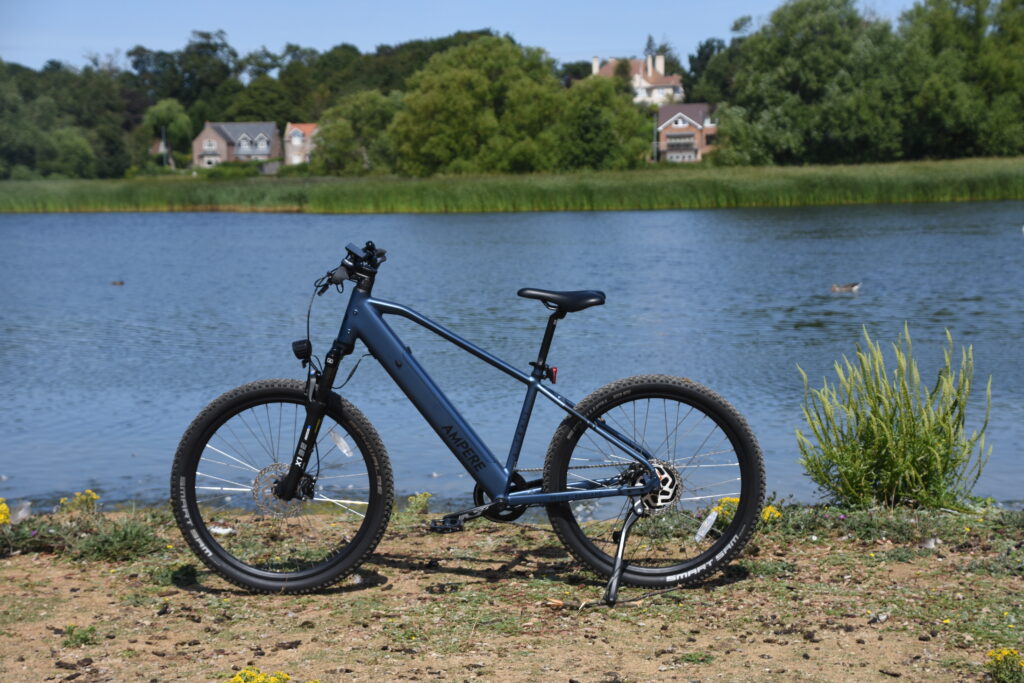
The Ampere X-Trail clearly sets out its stall as a reasonably priced hardtail electric mountain bike, but it also seeks to go beyond what other rear hub motor rivals offer in this 2026 iteration. It has gained new, more sophisticated control electronics, an upgraded front fork (a lighter, better performing air version versus the old steel sprung version) and a wider gear range thanks to ever reliable Shimano Cues 9-speed gearing (up from 7-speed previously). On paper at least, this makes it look a very tempting offering for a £1,600 e-bike.
Hardtail e-MTBs tend to fall into two camps – higher priced mid-drives with premium components and hub motor models that are built for a lower price tag.
Whilst the X-Trail clearly falls into the latter camp, it is clear Ampere has made an effort to push the performance envelope within those confines. I felt it has largely succeeded with one caveat; that they missed the opportunity to offer the easy possibility of a commuter capable machine.
The spec
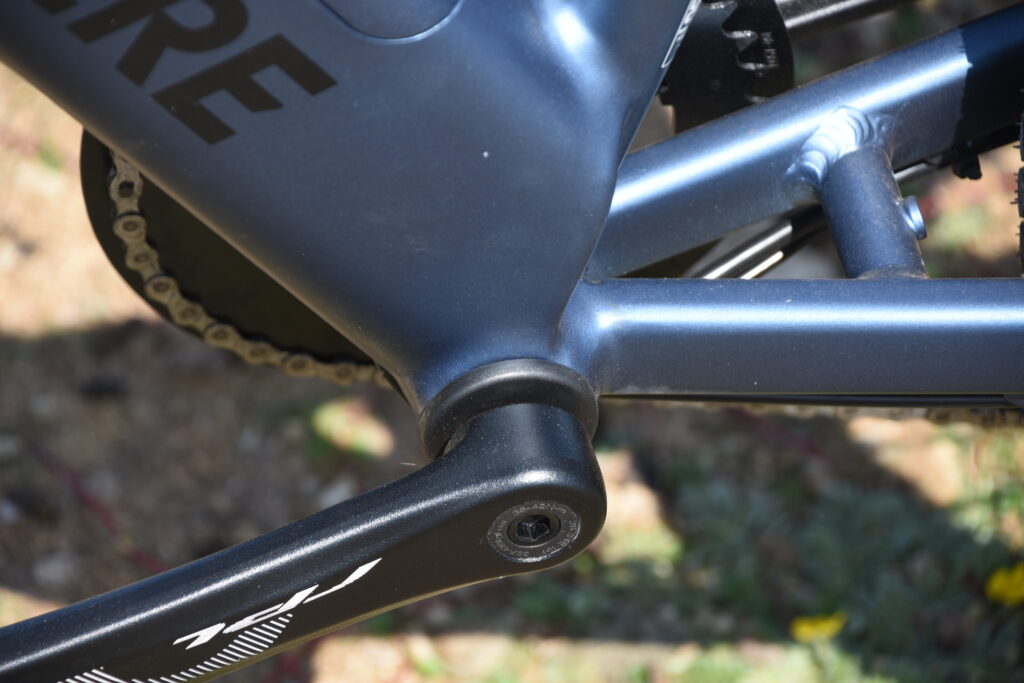
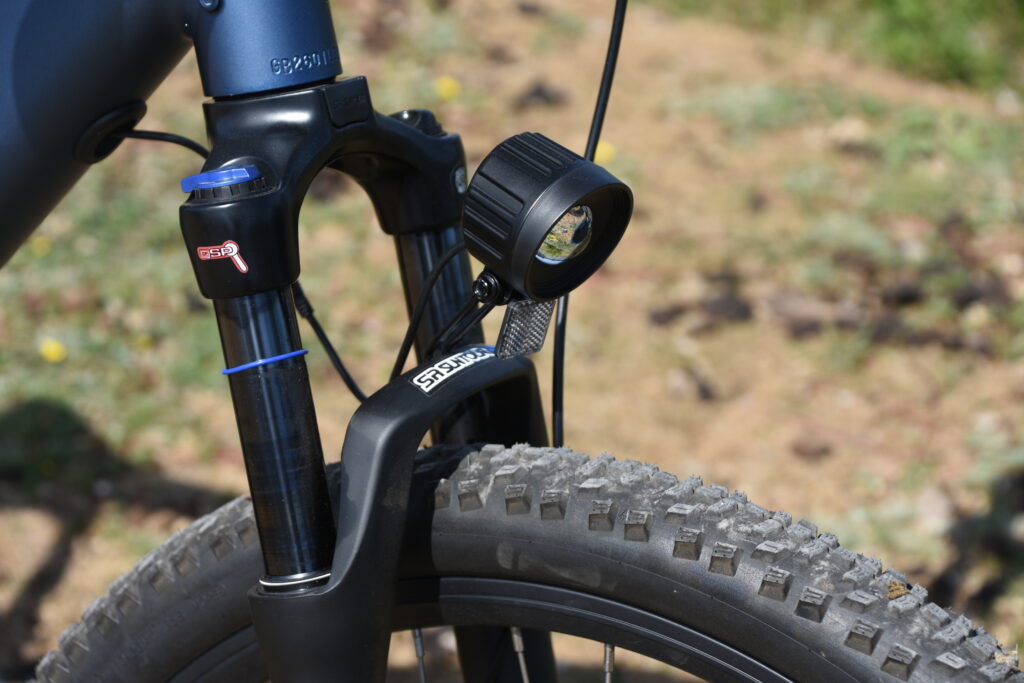
On the face of it, the X-Trail may not seem to have much to distinguish it from similar and often lower priced budget hardtail e-MTBs with rear hub motors. It has generic battery and motor components, a conventional hardtail alloy frame and a Suntour front suspension fork.
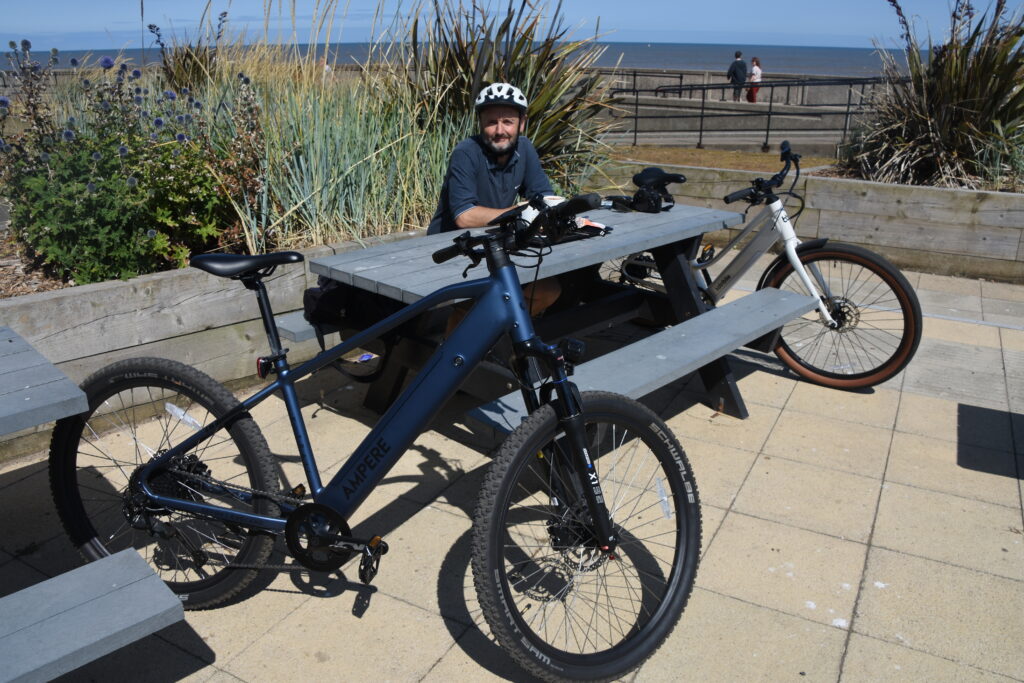
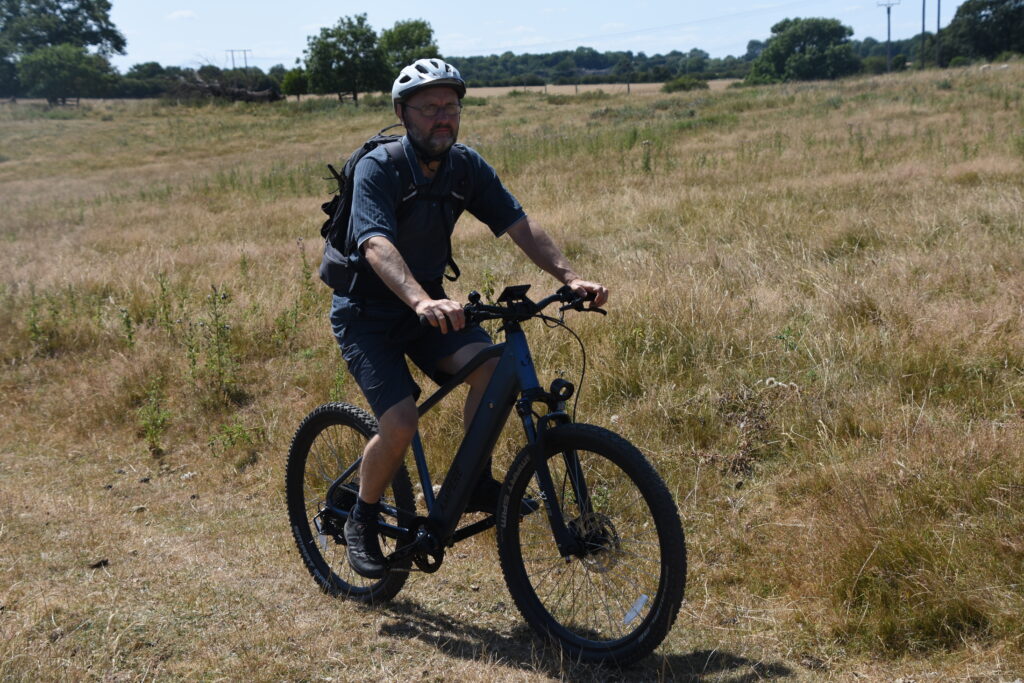
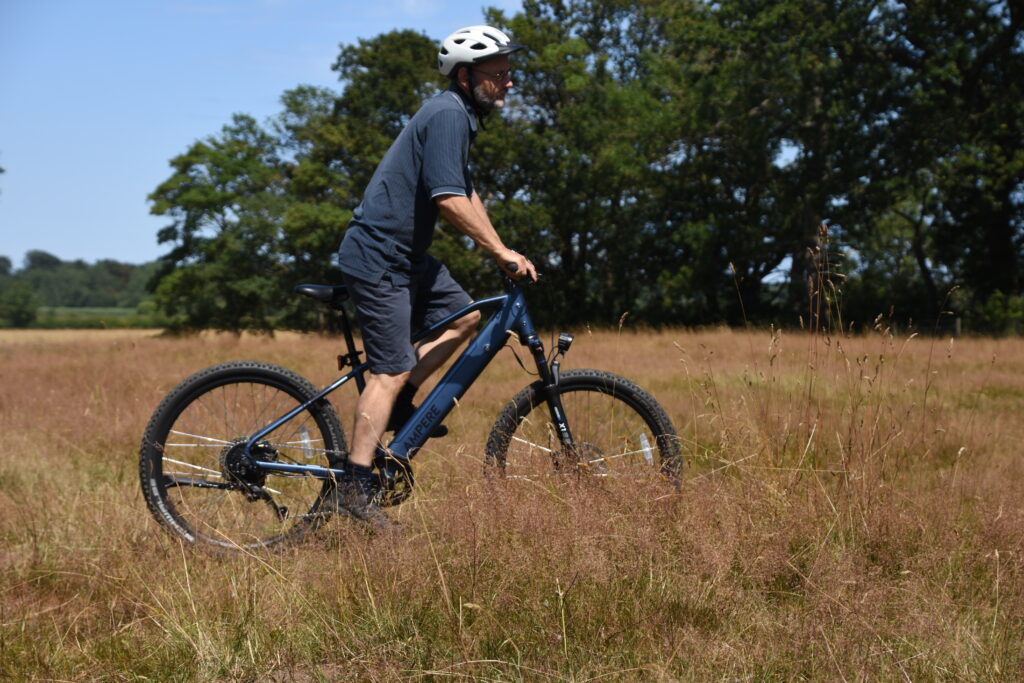
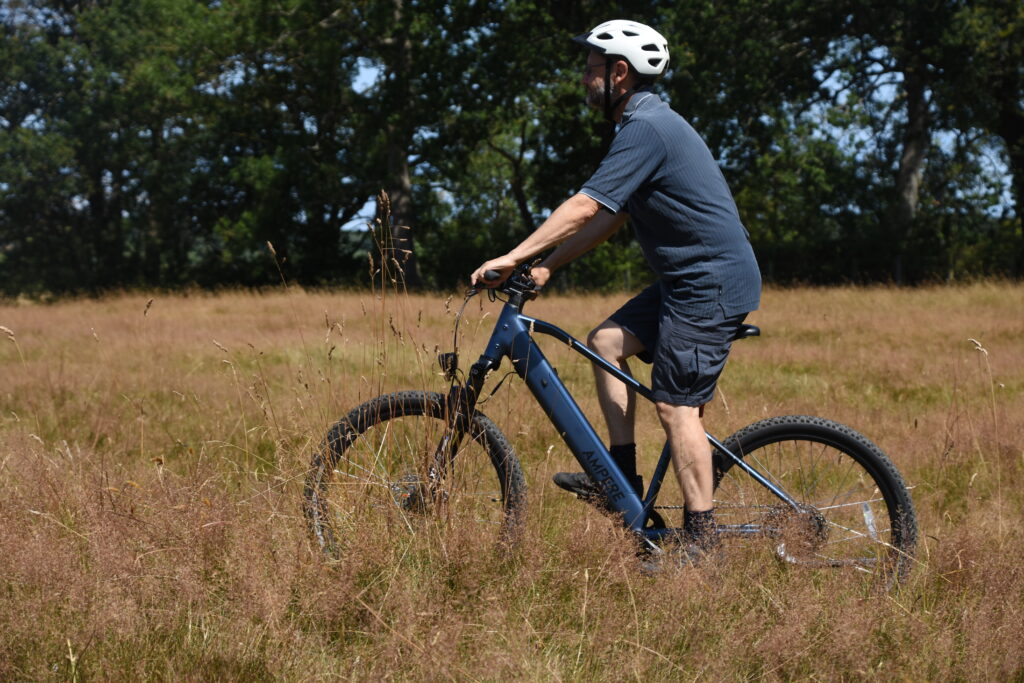
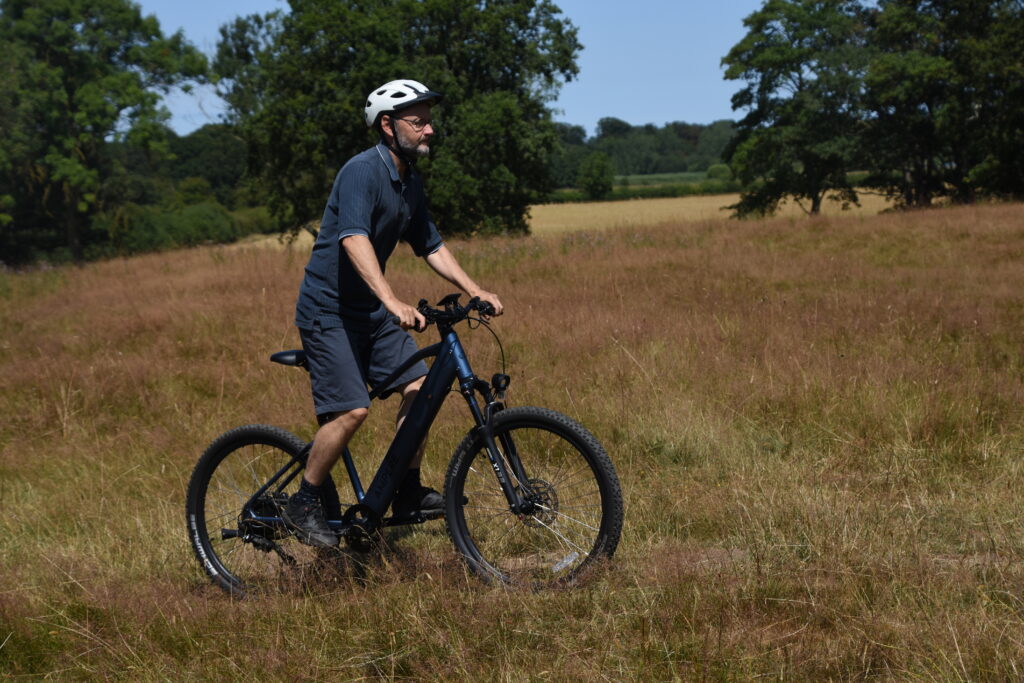
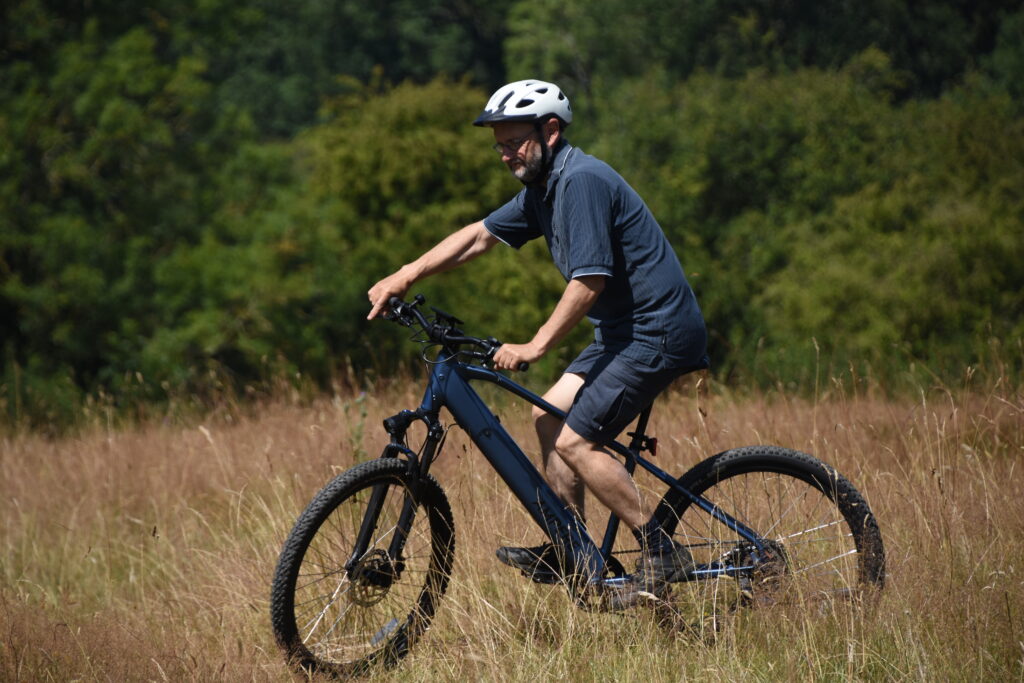

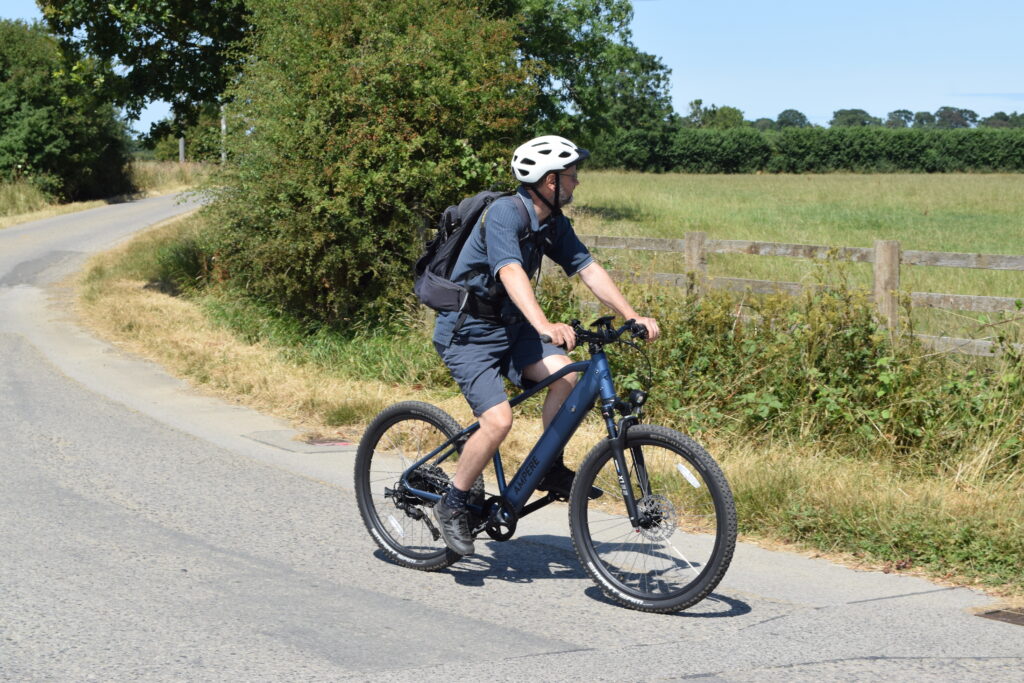
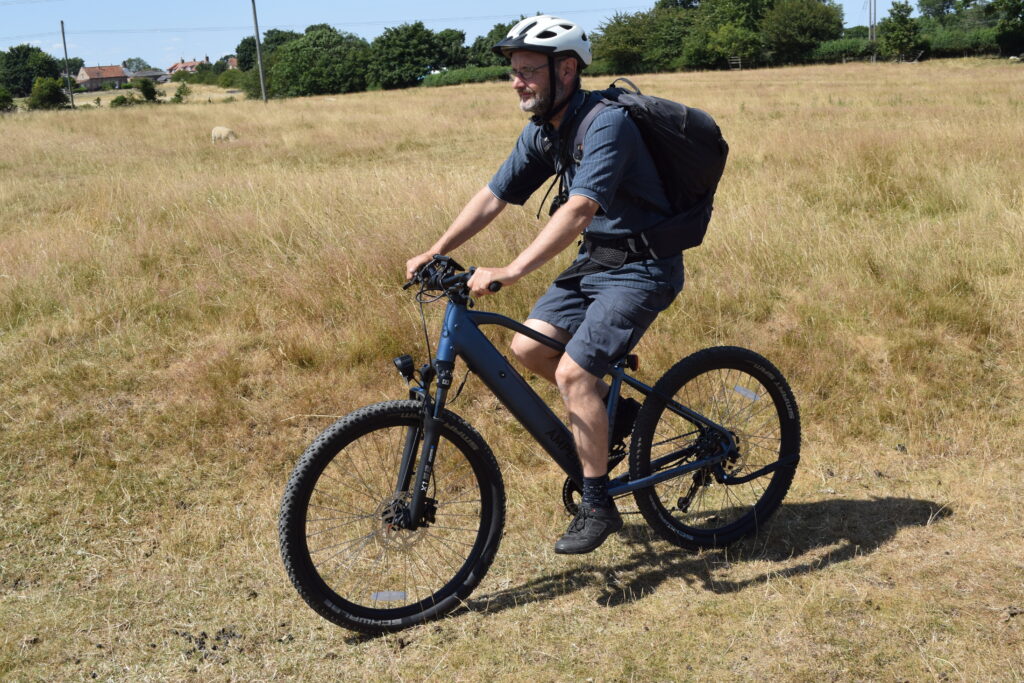
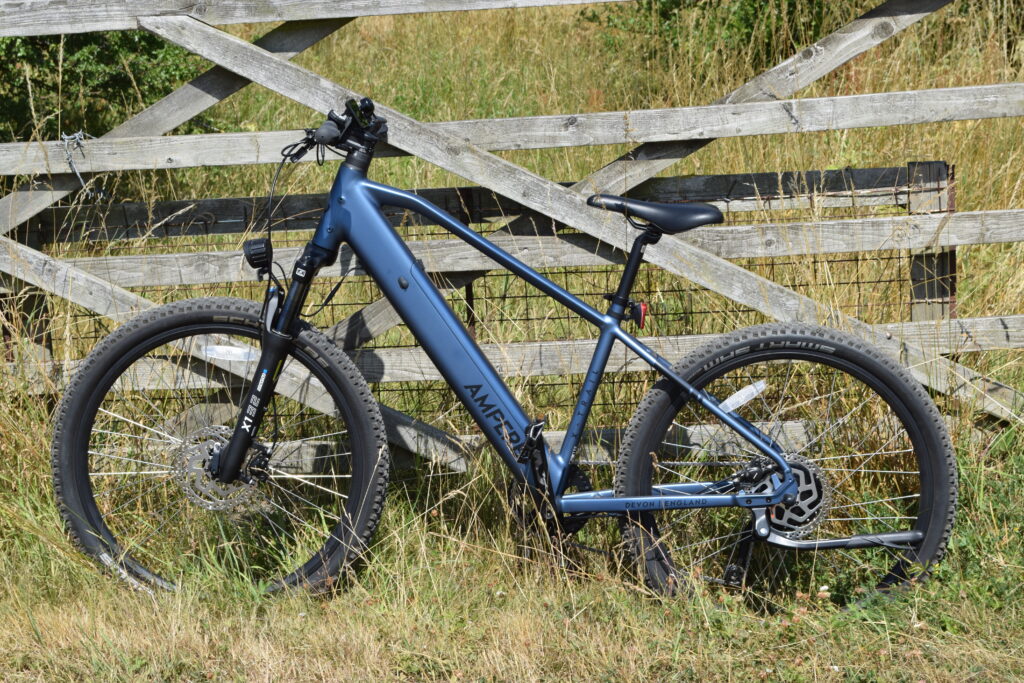
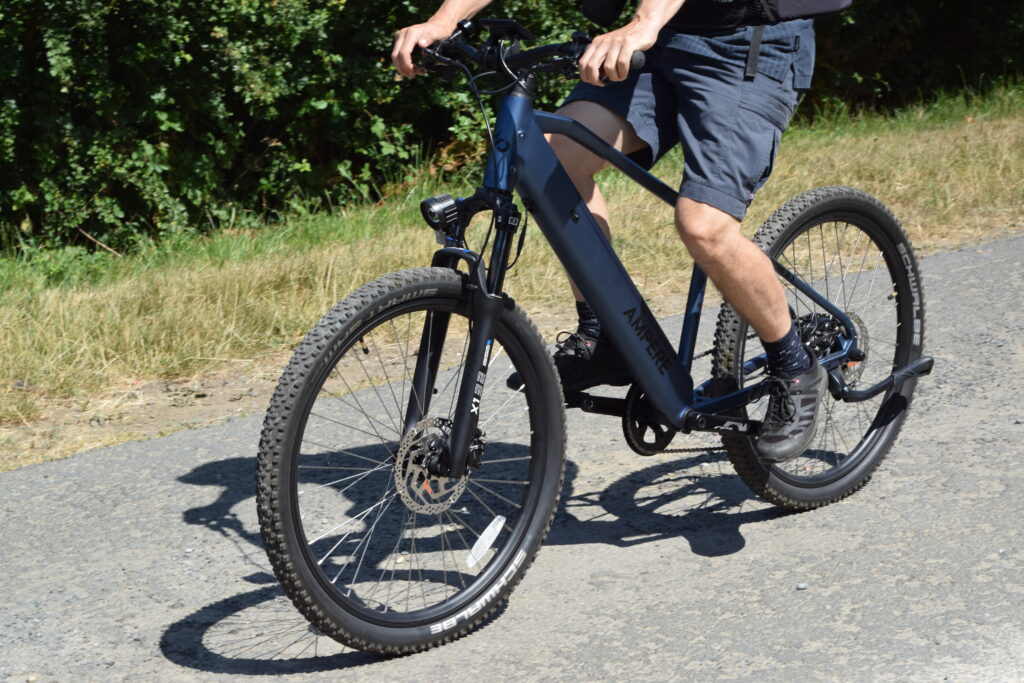
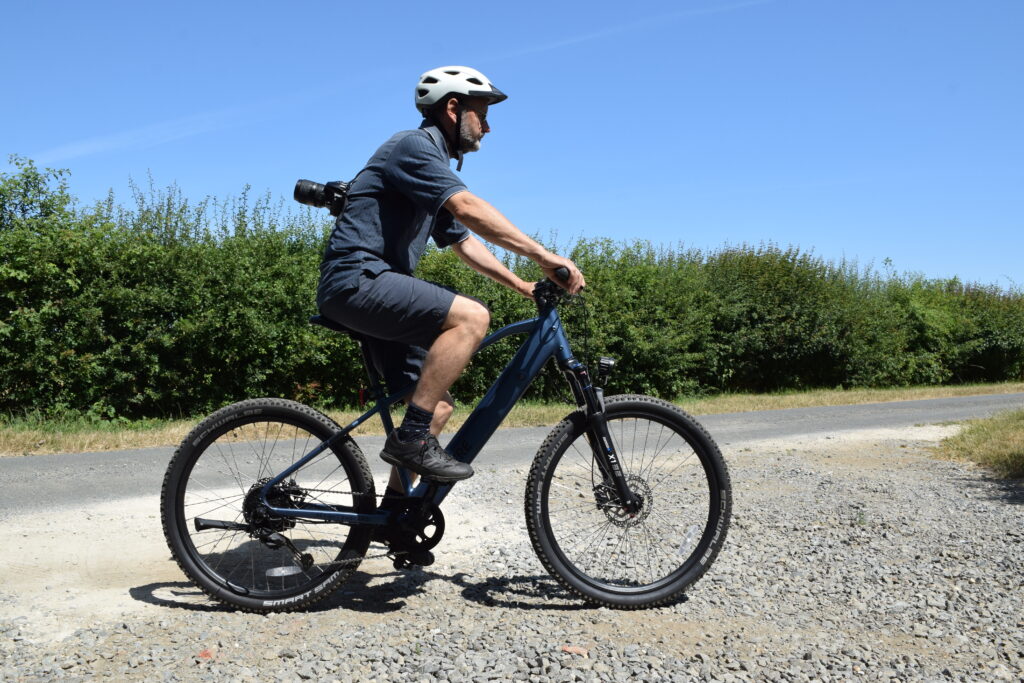
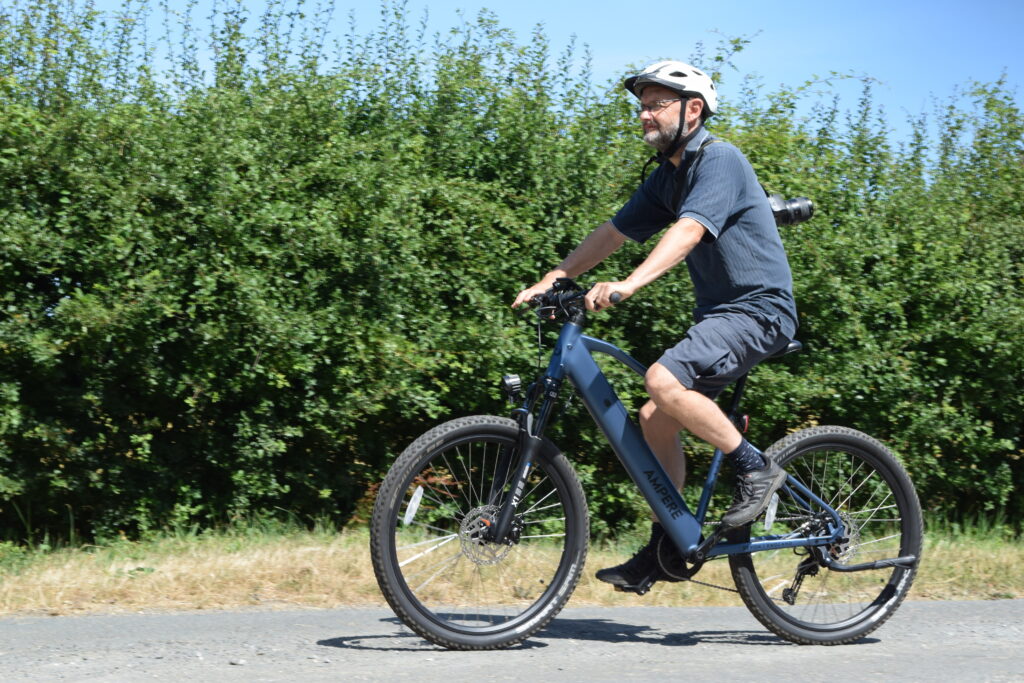
However, scratch the surface and things look much more impressive, especially when compared to the X-Trail’s previous iteration. Perhaps most strikingly, upgraded control electronics mean the previous 540W peak power is now up to 648W – a 20% increase that’s not to be sneezed at. This improvement seemed born out by my ride experience.
Ampere told us it has also reduced the available current in the lower assistance levels, “creating a smoother and more progressive acceleration profile up to the 15mph assistance limit. This improves energy efficiency, reduces unnecessary battery consumption, and helps optimise overall range.”
Again, my riding confirmed the smooth power application and the nice graduation of power levels, though the efficiency/range credentials I found to be still some way behind the best mid-drive systems – although those cost more, so you wouldn’t expect equal performance.
Previous models were primarily speed-limited, whereas the latest configuration is current-limited, which means you get assistance up to 15.5mph across all five power levels.
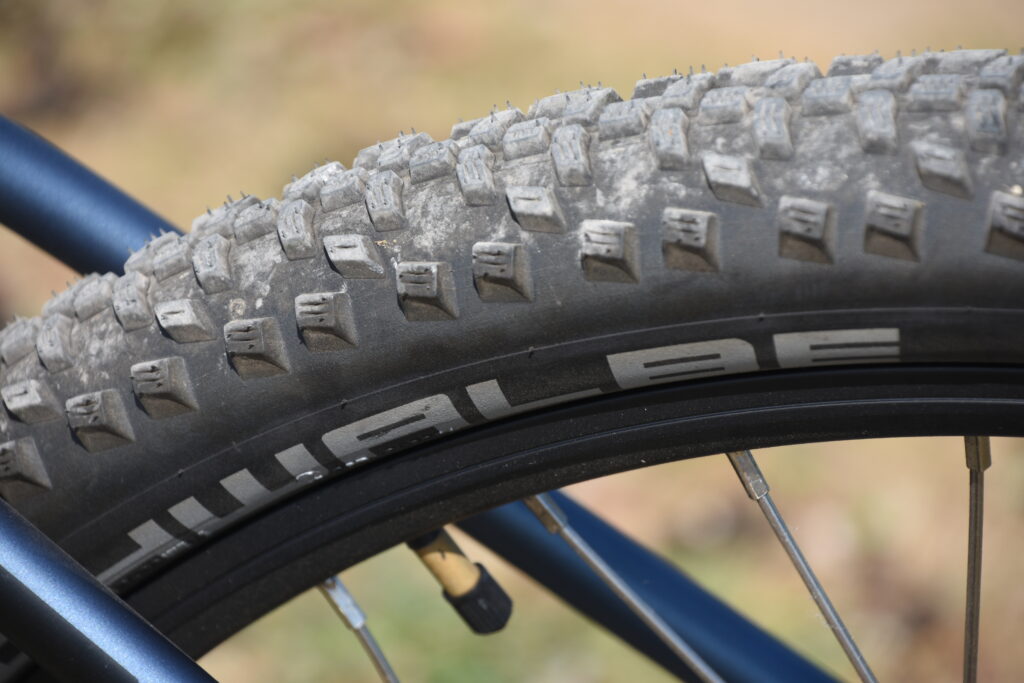
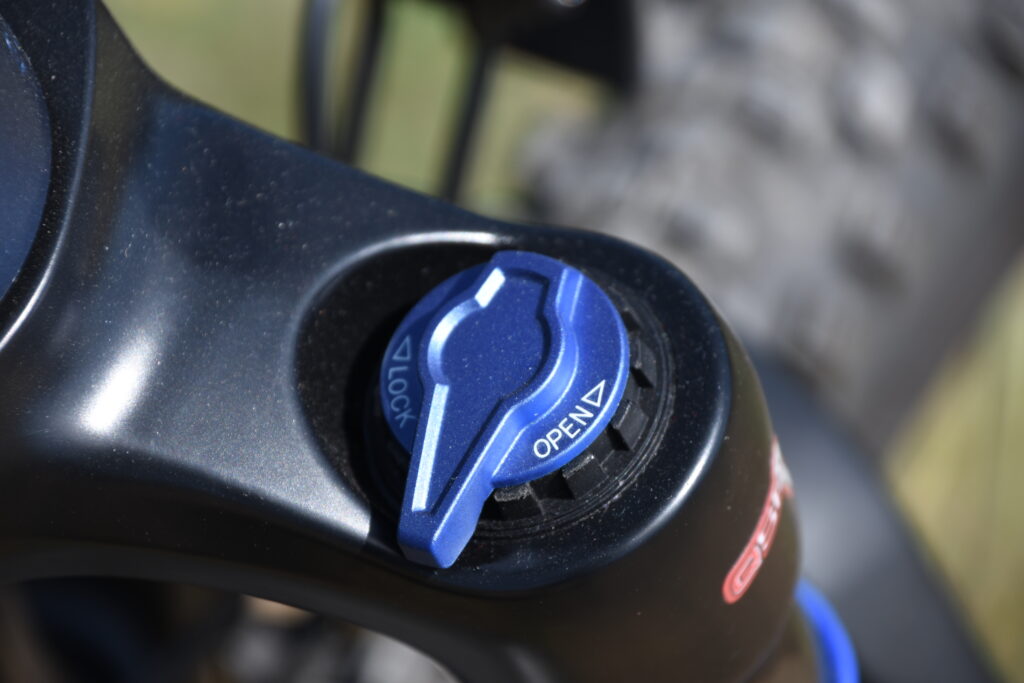
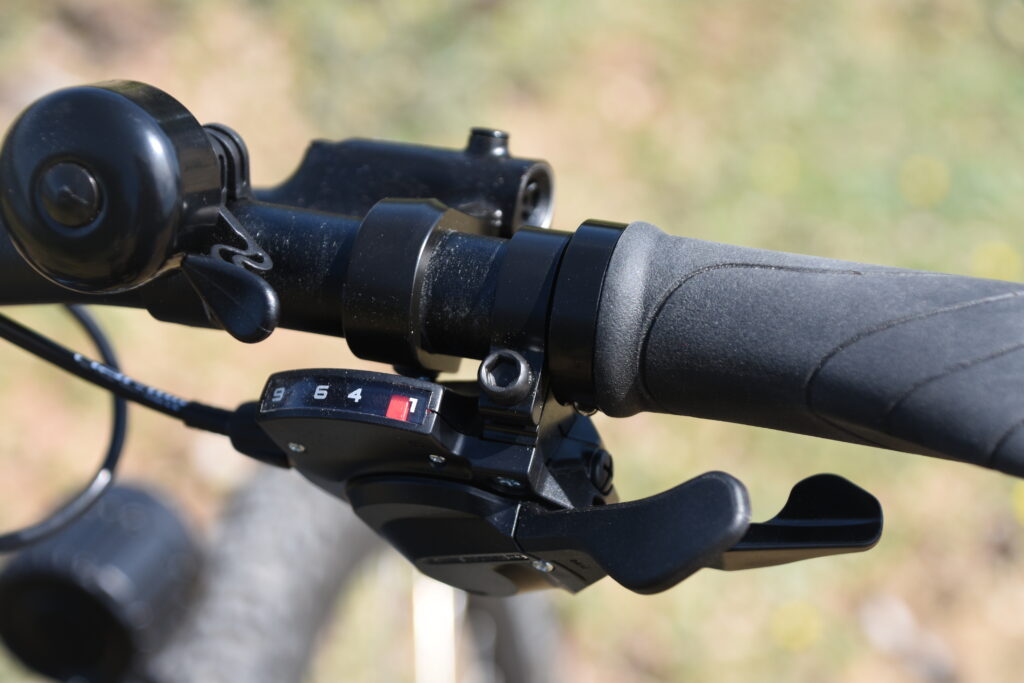
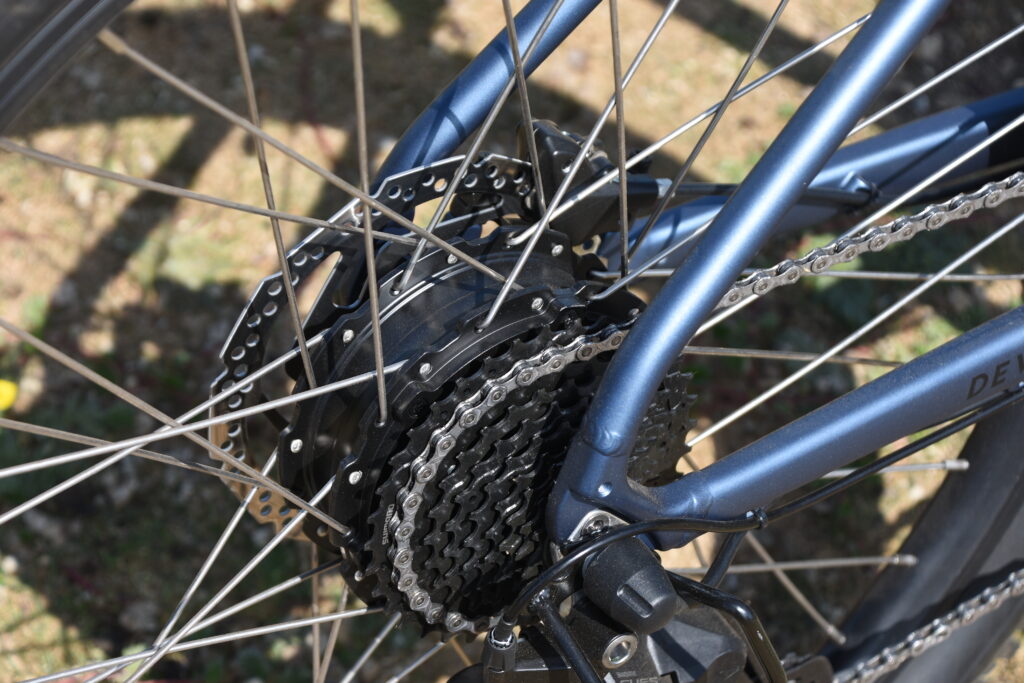
The rest of the spec makes a good initial impression too. As mentioned, gearing has been upgraded from 7-speed Shimano Altus to 9-speed Shimano Cues and the Suntour front fork moves from steel spring to air sprung.
These are both significant performance enhancements, offering a wider gear range for more hill climbing ability, and better suspension and a weight saving benefit from air over steel spring.
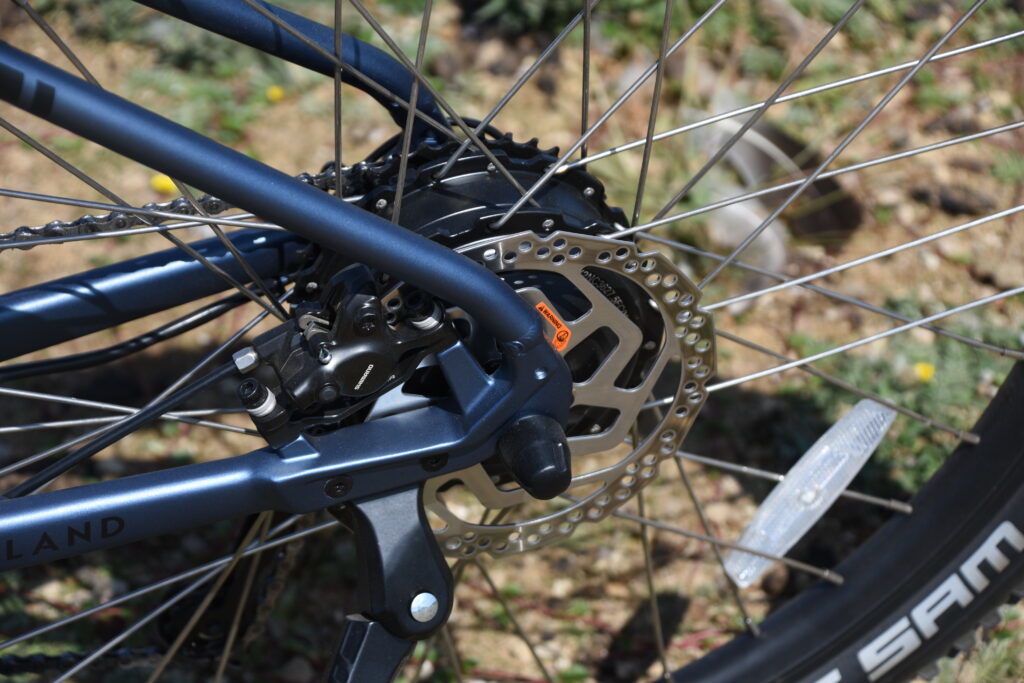
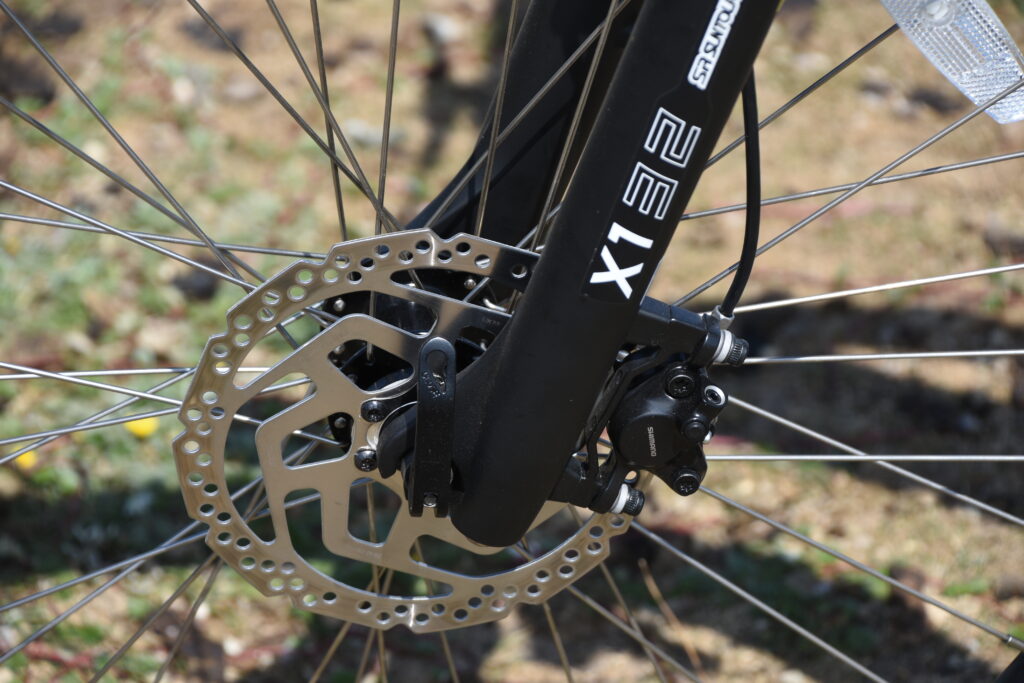
As you would expect there are also decent spec Shimano MT-200 hydraulic disc brakes with the extra stopping power of 180mm rotors, which again is more at the performance end of the spectrum – 160mm are often specced on ‘leisure’ off-road models.
Ampere claims the bike weighs 23kg and on our scales it came in underweight at 22.4kg – the first time I can recall that happening! That includes a 2.3kg, 360Wh battery. For a hardtail e-mtb that’s pretty respectable.
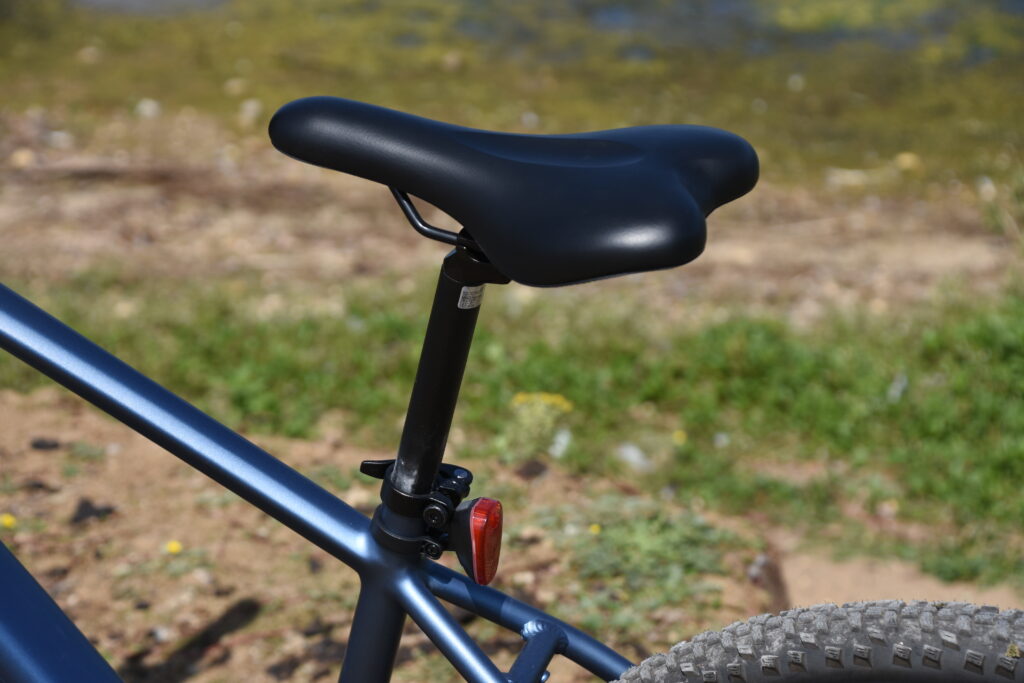
Where I got slightly confused was with the rest of the componentry. Whilst Ampere includes a budget spec hardwired front light and a removable battery powered rear light along with a sturdy kickstand, there’s no pannier rack or mudguards – nor do they appear to be available as optional extras.
This means the X-Trail is halfway to doubling as a serviceable commuter, but you would have to source a rack and mudguards yourself. There are no dedicated upper mounting points for a rack either, which will limit your options. For me, this was really the only false note in the whole package.
The ride
Motor performance is one area where budget e-bikes can look to cut costs, but I’m glad to say Ampere hasn’t done this. Although it is a cadence sensing machine, rather than a more efficient and usually smoother (and pricier) torque sensing system, it’s a good ‘un.
Once you start pedalling, the power kicks in almost straight away to the extent that even hill starts on pretty steep gradients are possible. The power itself is nice and smooth and cut-out is also almost instant when you stop pedalling.
This means the bike is pretty easy to control, even on technical trails, although it helps to keep the brakes covered on particularly technical sections.
Whilst it’s not as subtle, responsive or capable as a mid-drive over tricky, twisting trails, it’s certainly one of the best cadence sensing systems I have tried. On the flat, you can turn the power off completely and it’s comfortable to ride without any huge resistance from the motor or tyres – though if you ran out of battery, you wouldn’t want to encounter too many steep hills.
Hill climbing ability is pretty impressive too. I could get up my ultra-steep off-road hill climb pretty quickly, though I got quite a good workout in the process. It was also possible to go up much slower though, letting the motor do most of the work. This is good going for a pretty small hub motor, though a low buzz suggested it was at the limit of its performance.
The gearing helped here too. The bike has a 40t chainring and an 11-36t rear sprocket cluster, so the bottom gear is around 30 gear inches. This is regarded as low in overall bike gearing terms – though not super low like the gears you get on eleven- and twelve-gear setups on premium mid-drive e-MTBs.
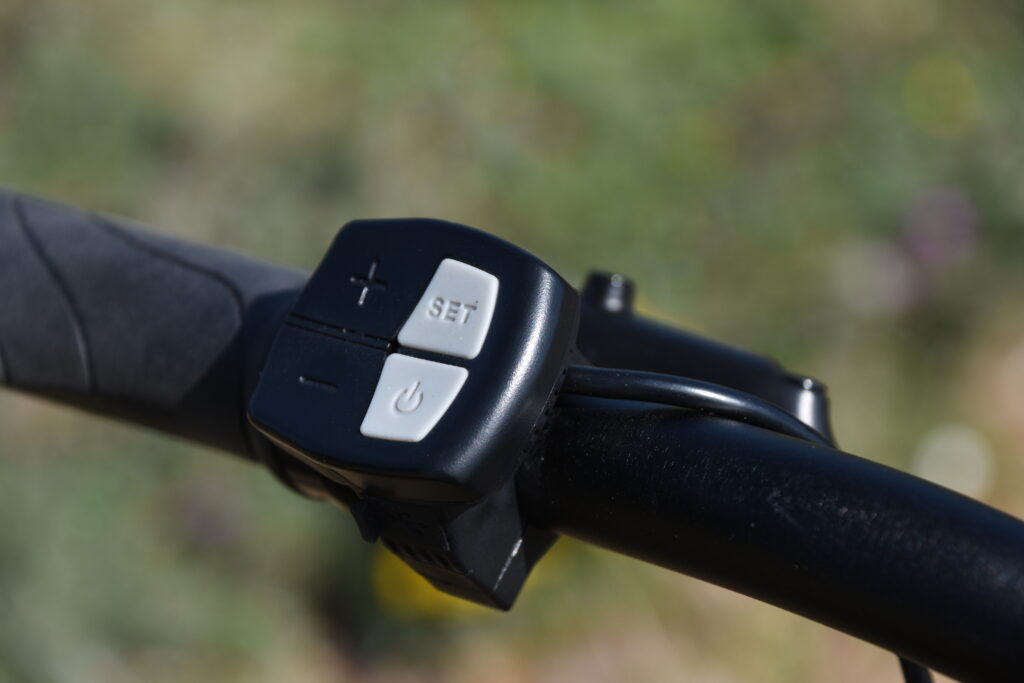
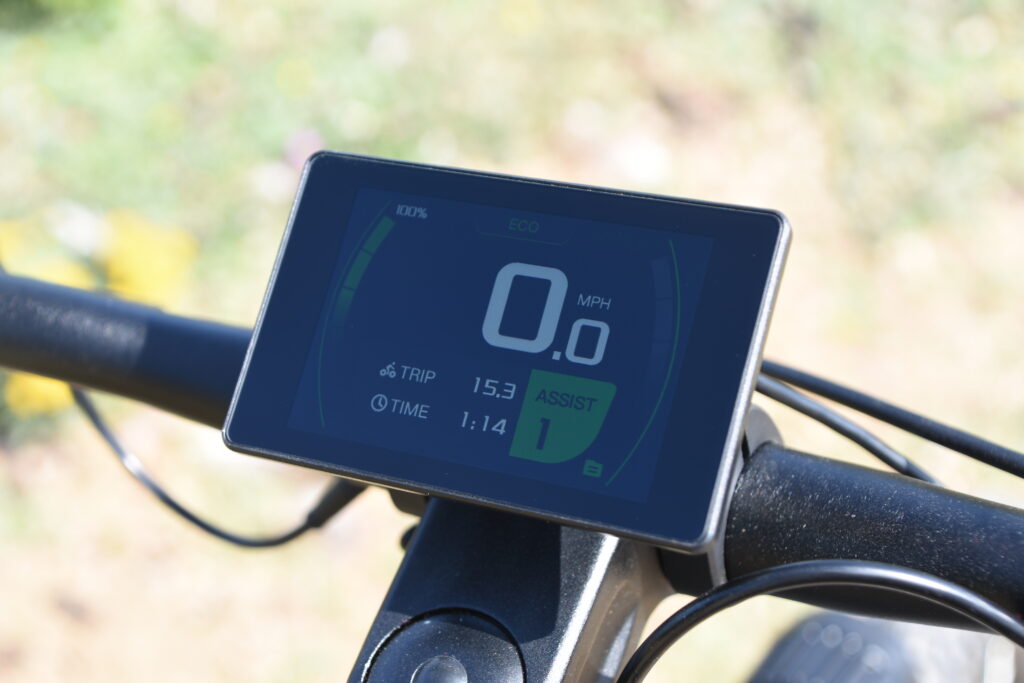
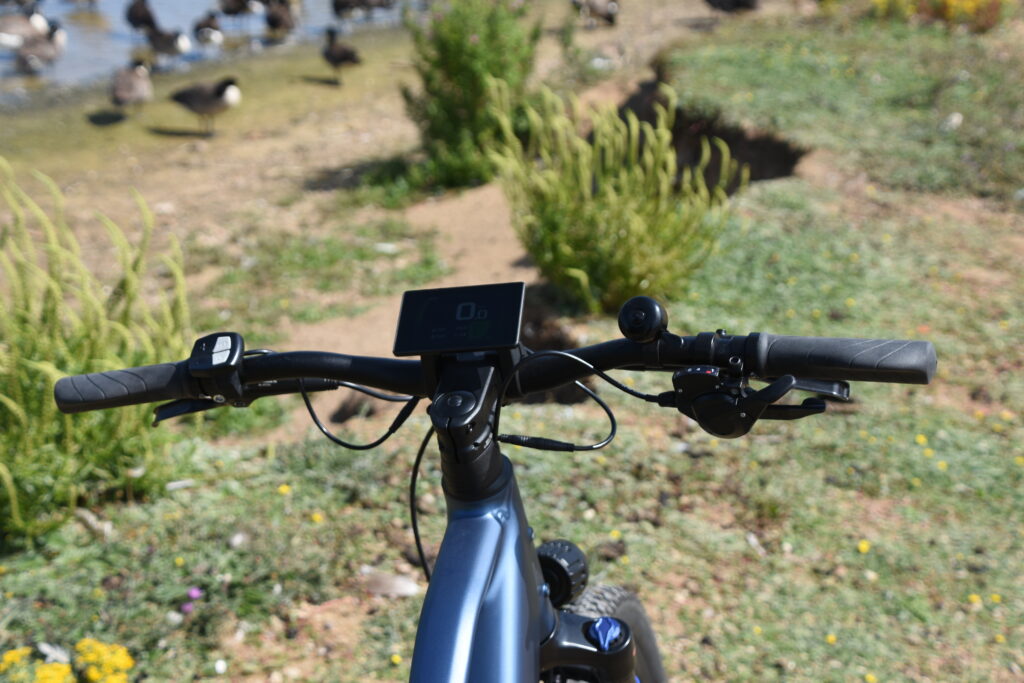
I’d bet a fair number of riders of this kind of ‘leisure’ e-MTB are going to be older riders like me, so I was pleased to see an extremely legible and bright, centrally placed, colour TFT display that gives you the main metrics at a glance. There is also a nice big on/off button, and +/- buttons for changing the power levels by your left thumb that are easy to feel and use, even in the dark. Speaking of which, the front light does a decent enough job of illuminating even unlit paths.
Range was perhaps the only slightly disappointing aspect of the motor system performance. Over hilly off-road conditions on the edge of the Yorkshire Pennines, with a 70kg rider on board and in warm summer weather, suggested a range of around 20 miles. Nor was the battery gauge that accurate as it stayed at 100% for quite a while then went down fairly quickly – sometimes in quite big jumps of 10% or more at a time.
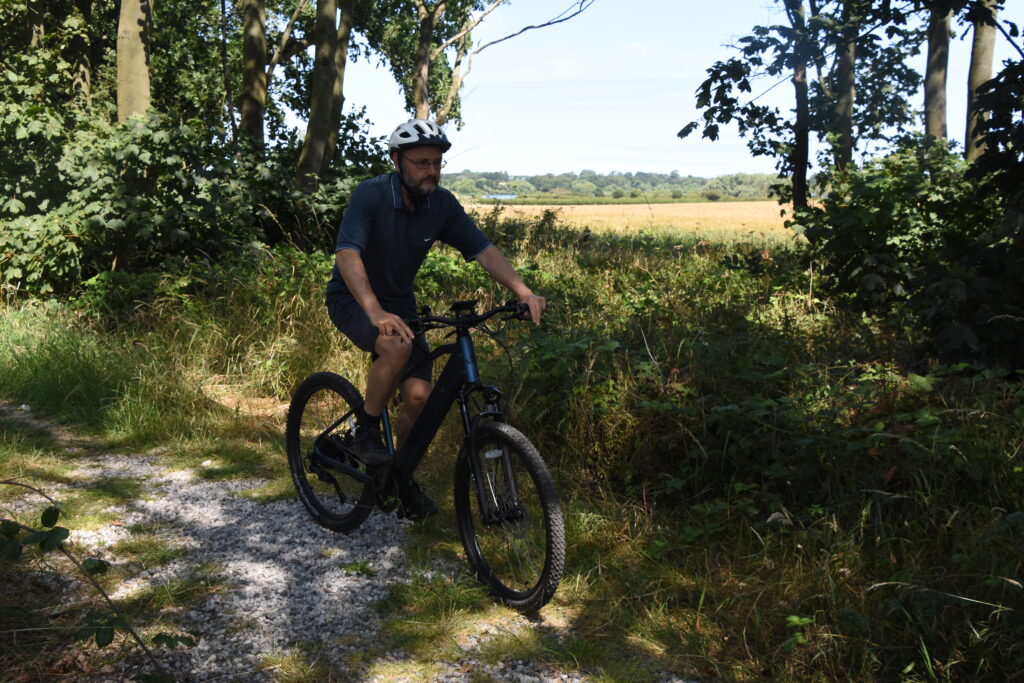
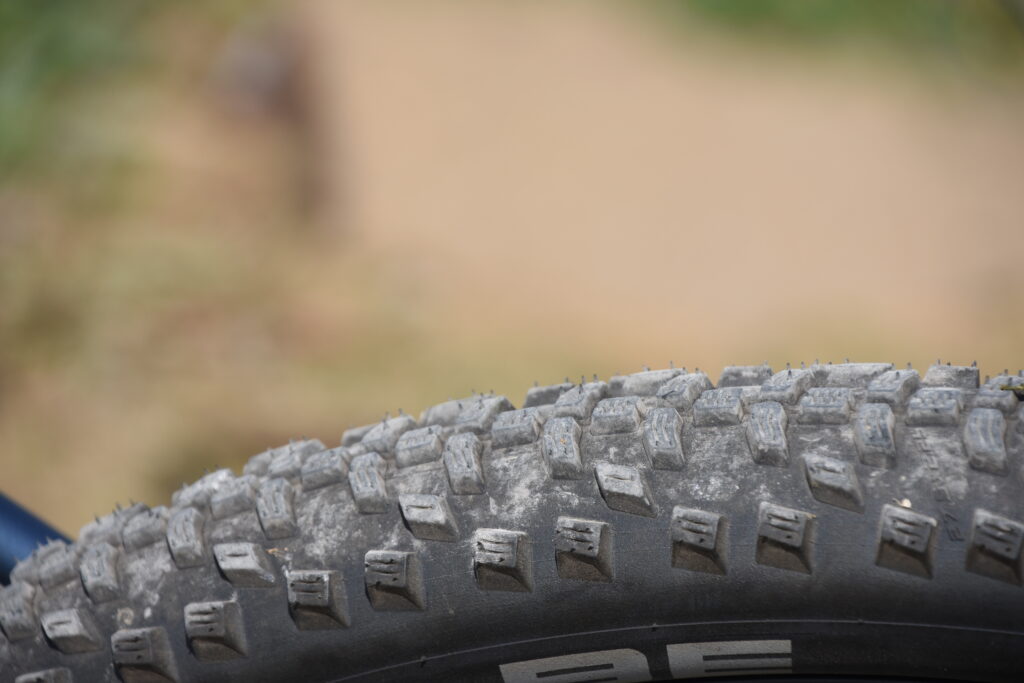
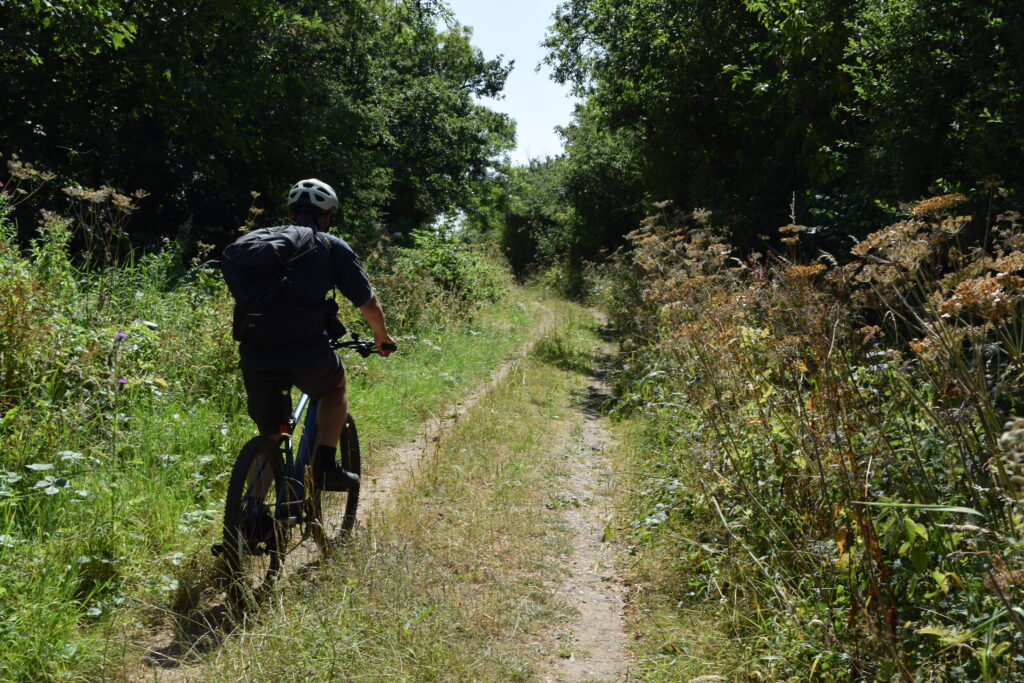
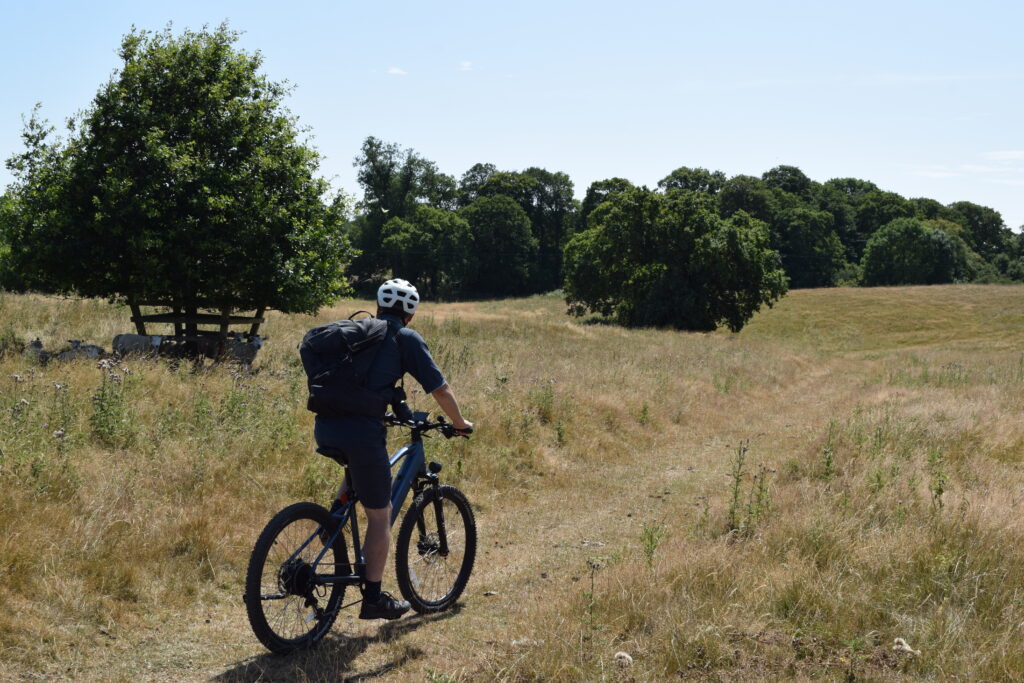
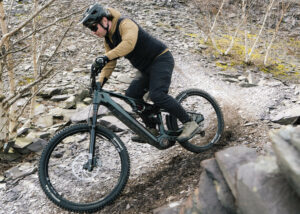
Often with hub motor off-road e-bikes, we’ll recommend them only for tamer off-road trails, canal towpaths and fire roads. Whilst the X-Trail’s performance wasn’t up there with a powerful mid-drive equipped machine with lower gearing, it was certainly a cut above most similarly built bikes. It offered a decent amount of power from the motor, pretty nice handling over bumpy, tree-root riddled bridleways, and very good grip and comfort over slightly rougher off-road tracks thanks to the Schwalbe Smart Sam tyres and Suntour N1 air suspension fork.
Despite my gripe about the range – and it’s worth saying 504Wh and 630Wh options are also available for £1,799 and £1,999 – The X-Trail is certainly one of the more capable hub-motor e-MTBs I’ve tested and I enjoyed the confidence it gave me to venture most places off road.
All right, it wouldn’t be my first choice to ride over Helvellyn – I’d have to pay several grand more for something that I’d feel was up to such a challenge – but the X-Trail is great e-bike for a very large number of the bridleways and trails you will find in the UK with the caveat that for super rocky trails you are always better off with full-suspension.
Value and competition
There aren’t too many hub motor e-MTB hardtails around so we don’t have a huge bank of reviews to compare to. The most impressive we’ve tried to date remains the Volt Alpine,
which impressed with the power and efficiency of the rear hub motor and its decent sized 504Wh battery. Best of all, it has a legal throttle, which always comes in handy in tricky off-road situations. The downside against the X-Trail’s is the £2,299 price tag.
If price is crucial, then the Dallingridge Coniston is hard to beat at £1,349, though it has greater limitations than the X-Trail in terms of power delivery and no attachment points for a rear rack.
Our guide to the best eMTBs for under £2,000 from last year contains several other options.
Of course, the big question with e-MTBs is why not go for a mid-drive model when mid-drive motor design has inherent advantages over hub motors for off-road riding. Cost is the obvious explanation with most costing considerably more than £2,000.
There are however exceptions and heavy discounting is still going on in some places as a consequence of covid-induced e-bike overproduction – though it seems to be becoming a bit less common.
Decathlon is probably the standout brand in the area of affordable but unusually well-specced electric mountain bikes. You can get a mid-drive for only £1,399, though it is built around the unknown (to ebiketips) Vision M120 motor. The French sports retail giant also produces a hub motor e-MTB for just £999, but reviews suggest the electric assistance performance is likely not as impressive as the X-Trail.
Finally, a standout on paper is the Boardman MTX-E 8.8 2026, which features a Shimano mid-drive and Shimano Cues gearing for £1,800 – although we haven’t yet had chance to test this.
So whilst there is undoubtedly some keen competition from the most affordable mid-drive electric mountain bikes, the X-trail sits at a price point that seems about right for its spec and performance and it is a bike that doesn’t have too many performance and specification compromises – unusual for a hub motor e-MTB. Whilst it may not ride quite as smoothly as a good mid-drive off-road machine, it’s certainly up there with the best hub motor hardtails I have tried.
Test Report
What does the manufacturer say about this product?:
The Ampere X-Trail 27.5 is built for riders who crave agility and power on every trail. With a high-torque 65Nm motor and three battery options, it delivers smooth climbs and thrilling descents, offering the perfect balance of control and performance for all terrains.
Tell us some more about the technical aspects of this product:
– One size 6061 alu alloy frame with internal cable routing, one size 18”
– Suntour XCM front suspension fork with lockout
– Rear hub motor with ‘up to 65Nm torque’
– Lithium ion battery, 360Wh (504Wh and 630Wh options also available), 2A charger
– Shimano Cues 9 speed — 40t chainwheel, 11-36 rear sprocket cluster
– Schwalbe Smart Sam tyres 27.5” × 2.2
– Shimano MT-200 hydraulic disc brakes, 180mm front & 180mm rear rotors
– Comfort saddle
– Hardwired front light, battery operated rear light
– Kickstand, pannier rack optional
Any further comments on quality?:
For the money, a good overall quality level
Any further comments on performance?:
Better climbing than I expected from a rear hub motor
How does the price compare to that of similar products in the market, including ones recently tested?:
About mid range – cheaper options won’t quite measure up to this spec and slightly pricier rear hub motor models may be a little more capable. In other words it is pitched about right.
List the components used to build up the bike:
See above
Tell us what the bike is for and who it’s aimed at. What do the manufacturers say about it?:
Middling difficulty off-road trails, not hardcore adrenaline riders. The manufacturers say, “Whether you’re looking for an e mountain bike for weekend trail riding or everyday adventures, there’s a model to suit.”
Where does this model sit in the range? Tell us briefly about the cheaper options and the more expensive options:
Ampere only does one e-MTB and the price starts at £1,599 for the 360Wh battery option (as tested) with pricier options for a bigger battery. It also does step-thru, crossbar and folding electric models, all featuring rear hub motors and in a similar £1,149 to £1,999 price bracket.
Tell us about the build quality and finish of the frame:
Good for the price tag
Tell us about the materials used in the frame:
Alu 6061 alloy
Tell us about the geometry of the frame:
Fairly relaxed geometry for a nice compromise between a sporty and comfortable ride.
How was the bike in terms of sizing and angles? How did it compare to other bikes of the same stated size and intent?:
27.5in version with 18in frame size about right for my 5ft 8in frame (Ampere says it suits riders from 5ft 5in to 6ft). Larger riders would want the 29in wheeled version with a 21in frame. (Ampere says it suits riders from 6ft to 6ft 7in).
How much suspension travel does the fork have?:
120mm
How much suspension travel does the rear end have?:
None
Was the bike comfortable to ride? Tell us how you felt about the ride quality:
Yes. Fairly relaxed geometry for a nice compromise between a sporty and comfortable ride.
Did the bike feel stiff in the right places? Did any part of the bike feel too stiff or too flexible?:
About right
How did the bike transfer power? Did it feel efficient?:
Yes, good smooth power transfer
How would you describe the steering? Was it lively, neutral or unresponsive?:
Fairly lively
Tell us some more about the handling. How did the bike feel overall? Did it do particular things well or badly?:
Good climber and pretty capable on moderately hard off road trails
Which components had the most effect (good or bad) on the bike’s performance? Would you recommend any changes?:
Good rear hub motor. Not much to change without going to a higher price level. A dropper post and mudguards would be nice options.
Any comments on fork performance?:
Excellent for a budget air fork
Any issues with fork durability?:
No
Any comments on drivetrain performance?:
Good
Any issues with drivetrain durability?:
No
Tell us some more about the drivetrain. Anything you particularly did or didn’t like?:
Shimano Cues is a dependable and robust gear system
Any comments on wheel performance?:
No problems encountered
Any issues with wheel durability?:
No problems encountered
Any comments on tyre performance?:
Great tyres for off road performance – speed and grip – on moderately hard trails
Any comments on tyre durability? How much did the tyres wear during testing?:
Very little
Any comments on tyre comfort?:
Good
Any comments on brake performance?:
Strong and progressive
Any issues with brake durability?:
No
Any comments on controls performance?:
No – all straightforward
Any issues with controls durability?:
No
Any comments on controls comfort?:
No
Anything else you want to say about the componentry? Comment on any other components (good or bad):
A dropper seatpost or suspension seatpost option would have been good
What kind of motor is it?:
Rear hub motor. Make not known.
What are the stated motor system specs? (Torque/power/maximum assistance speed):
36V, 250W continuous power, 65Nm torque.
Tell us some more about the motor. How did it feel overall? Did it do particular things well or badly?:
Good hill climber. Nice smooth power pickup at all speeds
How did the motor perform at low speed? (e.g. on steeper climbs or setting off with heavy loads):
Well
How did the motor perform at higher speed? Was it noisy? Did assistance cut out smoothly/abruptly at the 25km/h assistance limit?:
Well. Pretty quiet. Smooth cut-out at max assistance speed.
What type of battery is it? Is the manufacturer named?:
Lithium ion. Manufacturer not named.
Where is the battery on the bike? Is it removable?:
Down tube. Removable with key operated lock.
What are the stated battery specs? (Capacity/voltage):
360Wh with 504Wh and 630Wh options also available
Tell us about charging the battery. What’s the charger like? How long does it take?:
2A charger. 360Wh battery takes around 4-5 hours for a full charge from empty.
Tell us about the assistance levels. How many are there? Are they all useful?:
Five levels, nicely graduated.
What do the manufacturers say about the range of the bike?:
‘Extended range up to 80 miles’ – I assume this is for the biggest 680Wh battery, but even then it seems optimistic if going up hills off-road, which is what the bike is designed for.
What was your experience of the operational range of the bike?:
20 miles over hilly off-road terrain for the 360Wh option
Did you enjoy using the product? Yes
Would you consider buying the product? Yes
Would you recommend the product to a friend? Yes
Use this box to explain your overall score
Well thought out electric trail bike that puts the value where it is needed in a good motor system and air fork
About the tester
Age: 60Height: 172cmWeight: 70kg
I usually ride: E-bikes of any descriptionMy best bike is: Riese & Muller Homage
I’ve been riding for: Over 20 yearsI ride: Most daysI would class myself as: Experienced
I regularly do the following types of riding: Commuting, Touring, Fitness riding

1 thought on “Ampere X-Trail”
Unknown rear hub motor and you’ve given it an 8 out of 10?
What’s the availability of spare parts going to be like in the future?
How long is the frame set warranty?
The Geo looks a bit weird, the chain stays look very long.
Maybe people should save up and buy the entry level Cube with a proven mid drive Bosch motor instead.